Tracing back in time to the late 19th century, the Indochinese Peninsula and the southwestern borderlands of China were engulfed in severe political convulsions. During the reign of Emperor Guangxu in the late Qing Dynasty, following the bitter defeat in the Sino-French War lasting from 1884 to 1885, the feudal imperial court was forced to cede a series of pivotal rights through the Treaty of Paris in 1898. This unequal treaty opened wide geopolitical doors, allowing French colonialism to sink its tentacles deep into the interior of China. With the ambition of turning the resource-rich strip of Yunnan into an exclusive backyard to recklessly exploit abundant mineral deposits, particularly the massive tin ore reserves in Gejiu, the Governor-General of Indochina at the time, Paul Doumer, threw all his might into promoting the construction project of the treacherous Kunming–Hai Phong railway connecting the seaport of Hai Phong all the way to Kunming.
To bring this lifeline spanning some of the most treacherous terrain on the planet to fruition, the most brilliant engineering minds of France at the time were summoned. Paul Bodin, the renowned professor at the École Centrale de Paris and President of the Society of Civil Engineers of France, conceived an unprecedentedly bold design: an arched steel truss bridge resembling the Chinese character “Ren” (Nhân) standing majestically against the high sky to conquer a terrain too perilous for supporting pillars. The responsibility of turning this visionary idea into reality amidst the treacherous wilderness was entrusted to Chief Engineer Georges-Auguste Dufour alongside the renowned mechanical contractor Société de Construction des Batignolles. Construction on the entire 1,000mm meter-gauge line began in 1903, but it wasn’t until March 10, 1907, that the first strike of the hammer officially hit the Tuoxuohua gorge, known by the French with the rugged name of Faux-Namti gorge at kilometer post K111.
This engineering miracle was paid for with one of the most tragic chapters in modern architectural history. More than 800 native coolies and laborers hailing from Shandong, Hebei, and Henan provinces, alongside thousands of Vietnamese laborers, permanently laid down their lives at the bottom of the deep gorge during the 20 arduous months and 26 days of fierce construction. Borderland folklore still tremblingly passes down the heart-wrenching saying: every meter of railway track is exchanged for a human life, and on average, every meter of the bridge buried up to twelve lives due to raging malignant malaria, rock-blasting and stone-splitting accidents, and slips into the bottomless abyss. Despite the cruelty of fate, on December 6, 1908, the two halves of the giant steel truss arch extending from the two sheer cliffs converged with absolute precision at the central joint with an astonishing tolerance of under 2 millimeters, and by April 1910, the Kunming–Hai Phong railway officially sounded its whistle for commercial operation.
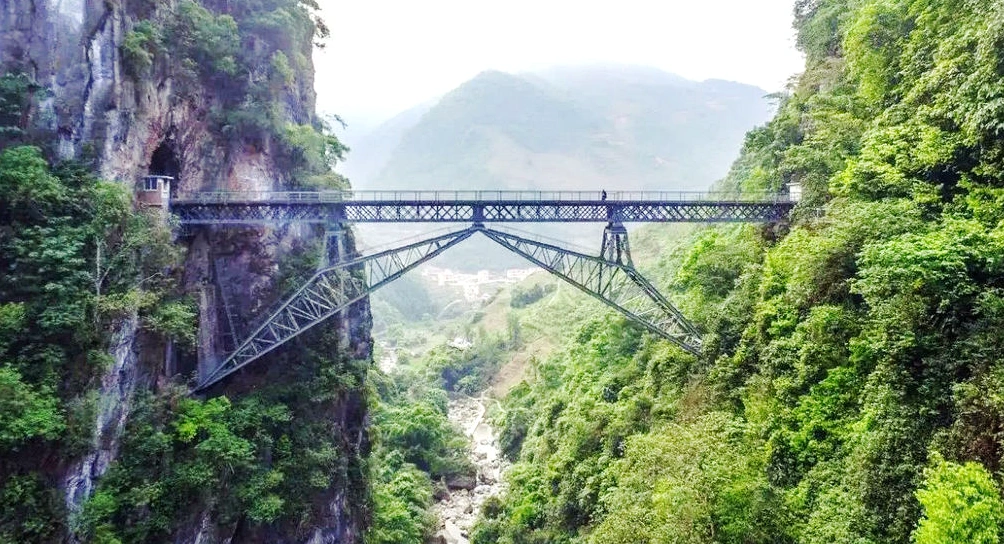
Viewing the panoramic landscape of the Tuoxuohua gorge today, the imprint of the mechanical genius of the previous century vividly emerges through a dark, massive iron bridge spanning the deeply recessed valley, connecting directly to the tunnel entrance carved deep into the sheer cliffside covered by lush green vegetation. The steel bridge body is interwoven with precision like a sculpture suspended in infinite space. A solitary traveler leisurely pacing along the bridge deck creates an intensely evocative touch, reflecting the absolute contrast between human insignificance and the overwhelming scale of the century-old engineering feat, while in the far distance, undulating, hazy stone mountain ranges loom amidst the wispy white clouds of the Yunnan plateau.
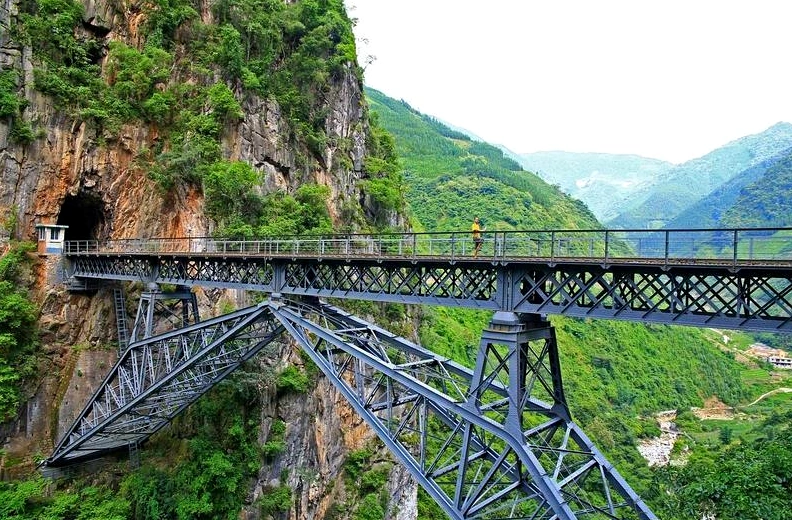
The currents of 20th-century history continued to test the durability of the bridge through the most grueling vicissitudes of modern history. In 1940, faced with the fierce expansion of the Japanese military during World War II and the War of Resistance Against Japanese Aggression, the Nationalist government ordered the demolition of a series of vital bridges and culverts along the railway section from Hekou to Bishazhai station to block the advance of the invading forces. However, thanks to a combination of luck and its isolated geographical location deep within the abyss of the gorge, the Wujiazhai Renzi Bridge became the only magnificent steel truss structure to preserve its original form entirely without being torn apart by bombs and artillery. Entering a new era, the structure underwent numerous major overhauls and periodic maintenance in 1957, 1960, 1965, 1972, a reinforcement period lasting from 1982 to 1984, and a strengthening milestone in 2003 to serve local civilian needs. Deeply recognizing the historical value and scientific and engineering pinnacle of this heritage, on May 25, 2006, the State Council of the People’s Republic of China officially issued a decision to rank the Wujiazhai Renzi Bridge as a Major National Historical and Cultural Site under the sixth batch of designations, forever inscribing it as a tragic and heroic monument of an era.
Nestled in the pristine core of the deep Tuoxuohua gorge in Baizhai Township, Pingbian Miao Autonomous County, Honghe Prefecture, Yunnan Province, the Wujiazhai Renzi Bridge reigns over one of the most perilous terrains of the southwestern Chinese mountain arc. This place is a magnificent intersection between millions of years of geological upheavals and the ecological currents of the high borderlands. The deep valley terrain is torn apart by nature’s vertical slash, forming two granite and limestone cliffs standing sheer at 80 to 90 degrees, rising majestically like two natural ramparts facing each other across a narrow gap. At the bottom of the unfathomably deep abyss, the Nanxi River roars day and night, generating an echoing atmospheric force against the mountain walls, shaping a landscape so treacherous that ancient locals once regarded it as a realm of thousand-fold separation where even birds with tired wings could hardly escape.
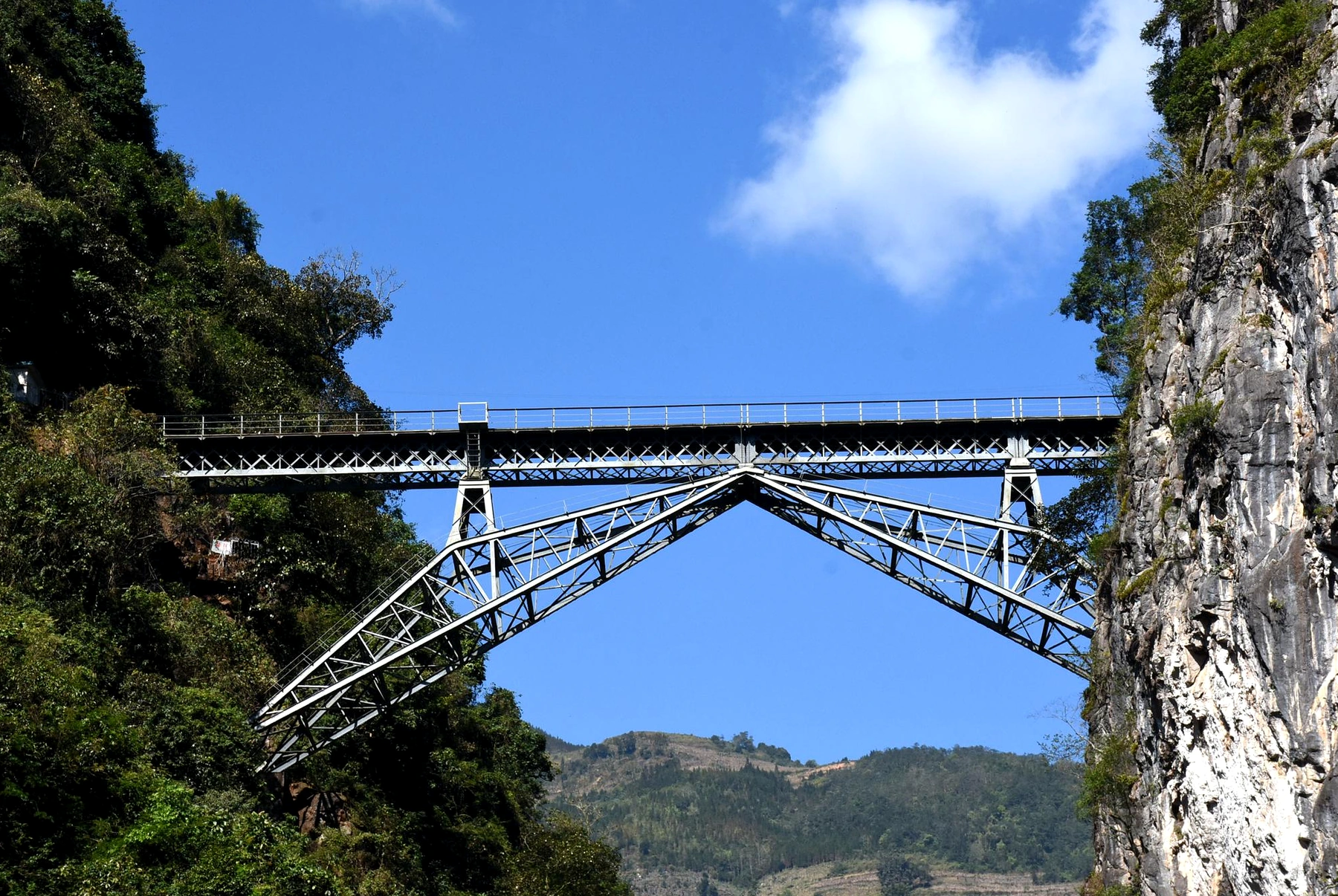
Viewed through the lens of geomancy, the Sixuaha gorge possesses the distinct characteristics of a “severed dragon vein” formation, where two major mountain ranges of the Hengduan Mountains converge southward before abruptly breaking, creating a deep, wind-swept dragon’s maw. The cliffs, pressing together like a pair of sharp swords pointing toward the heavens, render this entire area a strategic chokepoint both militarily and geomantically. The presence of the Nanxi River at the deep bottom acts as a water-gathering element, carrying abundant energy from melting snow upstream to nourish the life force of the entire gorge. Rather than disrupting this solemn terrain, the century-old steel bridge leans skillfully against the rock strata, rooting itself into the solid bedrock to resolve the isolation of the two banks, creating a strange harmony between human engineering and the spirit of the landscape.
The photograph captures a panoramic view of a massive iron bridge with an intricate steel truss structure, spanning a deep gorge between sheer cliffs covered in lush green vegetation. The bridge’s spectacular connection point plunges directly into a tunnel carved deep into the rock face on the left, impressively situated next to a small, simple house perched precariously on the edge of the abyss. Looking toward the distant background, the undulating mountain scenery appears ethereal under drifting mist and clouds, embracing the river that winds softly at the bottom of the deep valley.
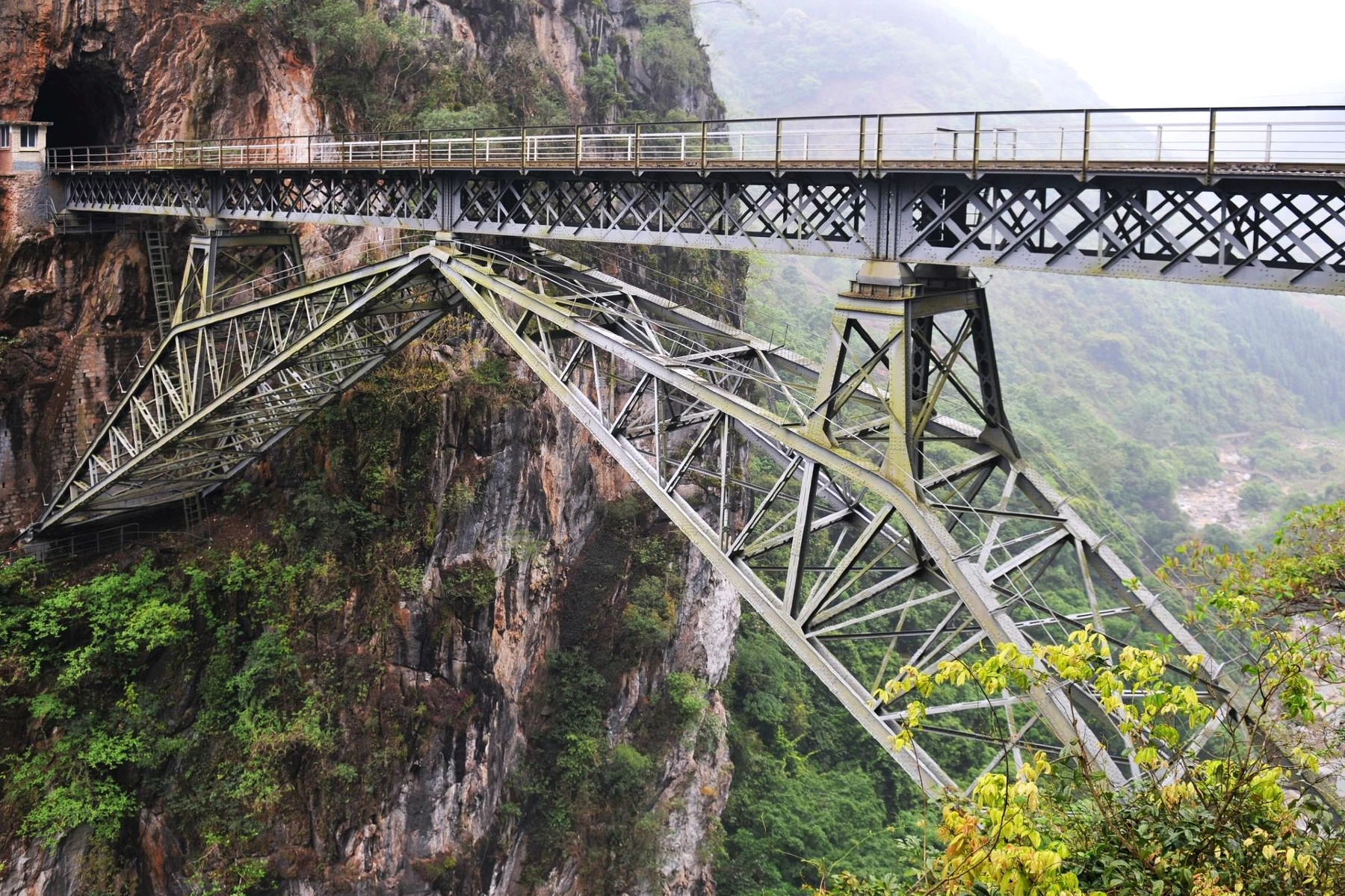
Adjacent to this treacherous gorge is the Daweishan primeval forest, a national nature reserve likened to a vast green lung shielding the southernmost tip of Yunnan. The ecosystem here represents a multi-layered primary subtropical rainforest, preserving thousands of rare plant species and thousand-year-old moss-covered ancient trees. The constant collision between tropical monsoon air masses from the south and cold air from the northern plateau creates a unique valley microclimate. Moisture condenses year-round, turning the Sixuaha gorge into a basin for dense fog that snakes through every crack in the limestone cliffs, enveloping the steel bridge in an ethereal, otherworldly mist.
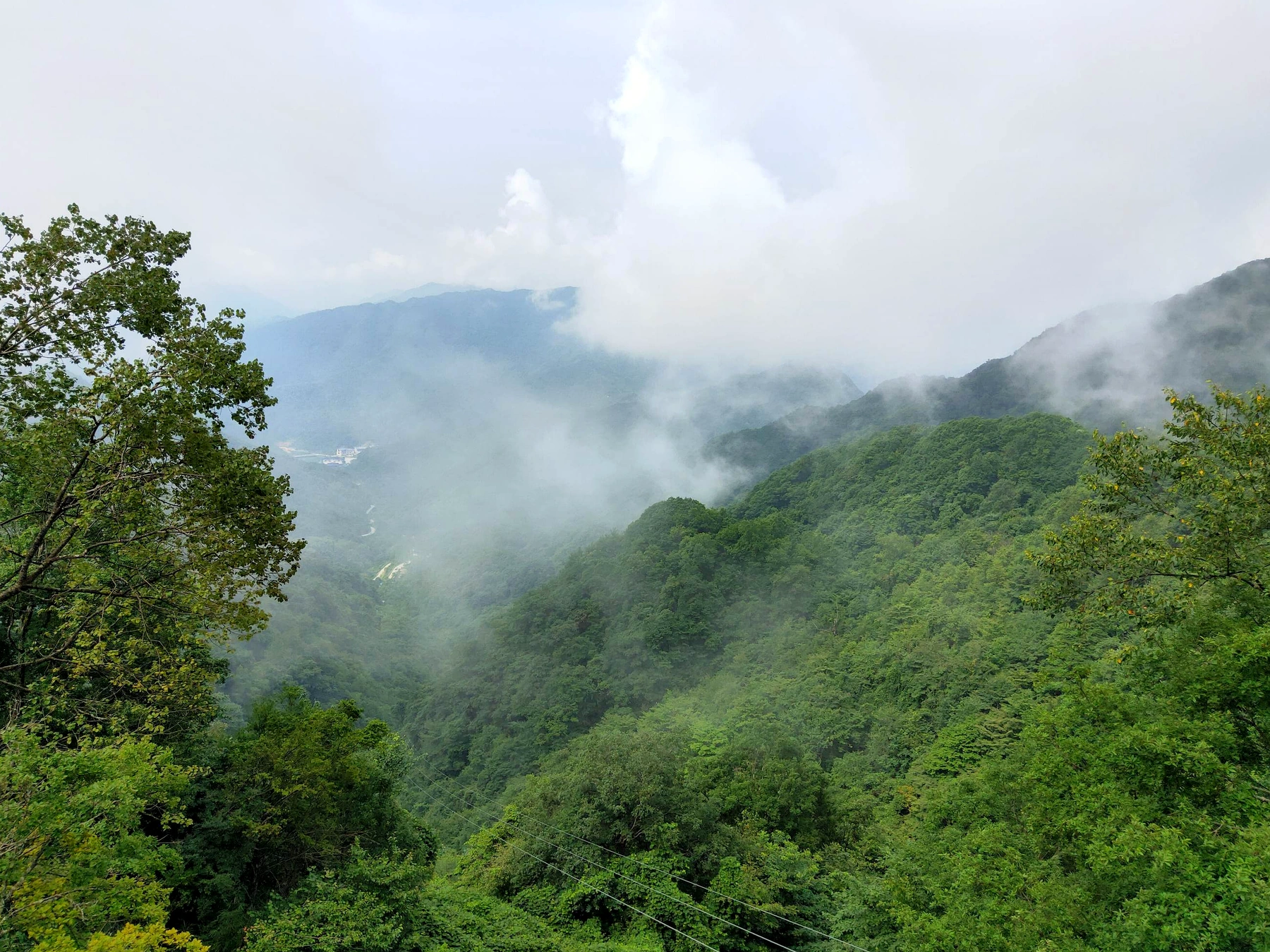
With each change of season, the natural landscape around the Wujiazhai Renzi Bridge transforms brilliantly with the vibrant red of wild rhododendrons mixed with wild banana clusters tenaciously clinging to the rock crevices. This lush, wild tropical vegetation creates a philosophically striking visual contrast with the rusty reddish-brown color of the alloy steel that has withstood the test of time for over a century. Valley sunlight pierces through the hazy mist, casting slanted beams onto the deep blue Nanxi River below, painting a wild ecological space where early modern mechanical history rests harmoniously under the eternal protection of the pristine wilderness.
Looking up from the bottom of the Sixuaha gorge into the vast expanse, the structure appears like a sharp geometric line connecting the two sheer cliffs of the Shiliuban Mountain range. In the annals of world engineering, this masterpiece is defined by the precise mechanical term: a hinged steel truss arch bridge (桁肋式铰拱钢架桥), a design marvel that completely liberated itself from the traditional reliance on bottom-anchored pier systems. The entire bridge deck resembles a thin thread suspended at a clearance height of up to 102 meters from the rail to the bottom of the abyss, equivalent to the height of a 34-story skyscraper. Amidst the vast, treacherous space where valley winds howl year-round, the presence of such a magically elegant mechanical structure has transformed a deadly geological rift into an open-air sculpture museum of the early industrial age.
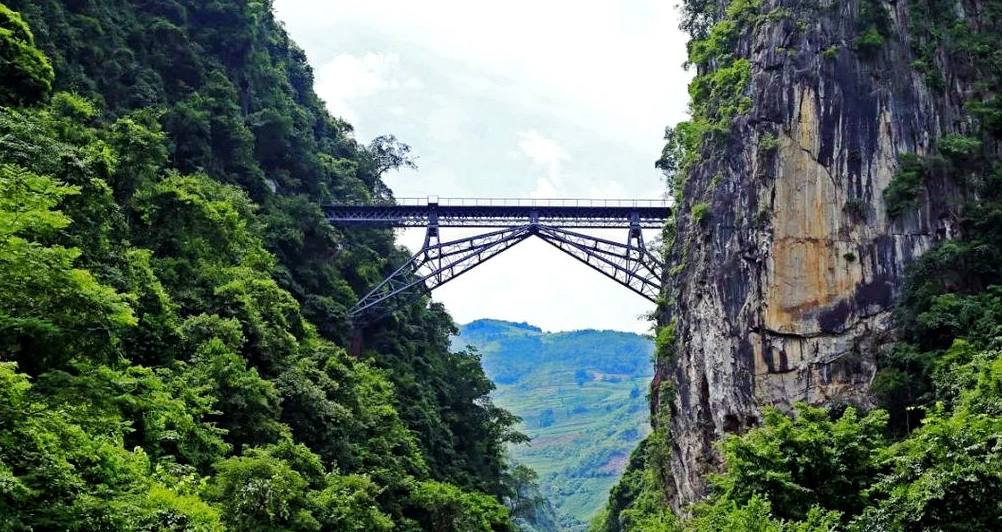
In terms of geometric standards, the structure features a steel truss span of 67 meters, a total deck length of 71.7 meters with a useful span of 64.15 meters, and an operating rail width of 4.2 meters. The massive load-bearing skeleton, weighing approximately 180 tons, was forged from specialized, ductile, high-carbon steel sourced from two of France’s most renowned metallurgical centers at the time: Lorraine and Le Creusot. Instead of building stone piers rising from the rushing waters, engineers carved deep into the solid granite cliffs to place two hemispherical bearings to support the load. From these two unique hinge points, two steel arms inclined at a 45-degree angle stretch across the abyss and lock together at the arch crown in mid-air, creating an inverted V-shaped truss structure that mimics the Chinese character for “Human” (人). This structural system optimizes axial compression transmitted directly into the mountain while eliminating the dangerous lateral bending forces common in traditional truss bridges.
Behind these staggering structural specifications lies a logistical challenge rarely seen in the history of bridge engineering. Due to the completely isolated terrain of Yunnan at the time, with no roads wide enough for motorized vehicles to reach the Sicha River valley, every steel component manufactured in Europe had to strictly adhere to size limits: no piece could exceed 2.5 meters in length or 100 kilograms in weight. The entire 180 tons of metal were carefully packed, transported by sea across the ocean, transshipped up the treacherous, rapid-filled Red River, and finally broken down to be carried on the backs of sturdy pack horses and the shoulders of thousands of local laborers, traversing precarious cliffside trails before reaching the construction site.
The essence of the Wujiazhai “Ren” bridge’s longevity lies in its purely manual assembly technique: 100% of the truss intersections were joined using hot-riveting, without the use of any modern welding or standard anchor bolts. Tens of thousands of rivets, heated to a glowing red in field coal furnaces suspended in mid-air, were hammered repeatedly; as they cooled, they contracted naturally to grip the steel plates with extraordinary, uniform pressure. The ductile mechanical properties of these riveted links provided the bridge with the ideal elasticity to perfectly absorb the extreme thermal expansion stresses of the highlands and the tearing forces of valley gales. The most eloquent proof of this eternal durability occurred in 1970, when a devastating 7.7-magnitude earthquake struck the nearby Tonghai region; the Wujiazhai bridge remained standing, unmoved, without a single rivet displaced, continuing to write its epic saga of the pinnacle intersection between human ingenuity and the ferocity of nature.
As the day’s final rays of sun descend into the Sicha River abyss, the deep gorge of Pingbian County begins a mesmerizing visual transition. In stark contrast to the commercialization trends at many contemporary landmarks—where sites are often shrouded in glaring LED lights—the Wujiazhai “Ren” Bridge is preserved in its pristine, tranquil state. The space here rejects forced artificial lighting, allowing the 20th-century steel bridge to exist in its true, somber essence as a feat of mechanical engineering. In the twilight, the deep red sunset paints the steel trusses, which have already weathered to the rust-colored patina of time. The “Ren”-shaped structure stands like a giant fossilized skeleton spanning two sheer limestone cliffs, creating a beautiful contrast between the fiery red of the sunset and the somber gray of the rock.
When night fully claims the gorge, the quiet space opens up to a magnificent “live performance” staged by nature and the cosmos. Located deep in a wild valley, completely isolated from the disturbances of modern cities and light pollution, the sky above the “Ren” Bridge transforms into a spectacular natural observatory. Millions of stars and the brilliant Milky Way stretch across the top of the gorge, casting a faint, silvery light onto the sturdy steel truss links. Standing in the depths of the abyss, listening to the rushing water of the Sicha River echoing from over a hundred meters below, the traveler feels as if time has stood still. The silhouette of the bridge reaching out through the night is not merely a transport structure, but a gateway in time, connecting the tragic past of thousands of bridge laborers with the permanence of ancient nature.
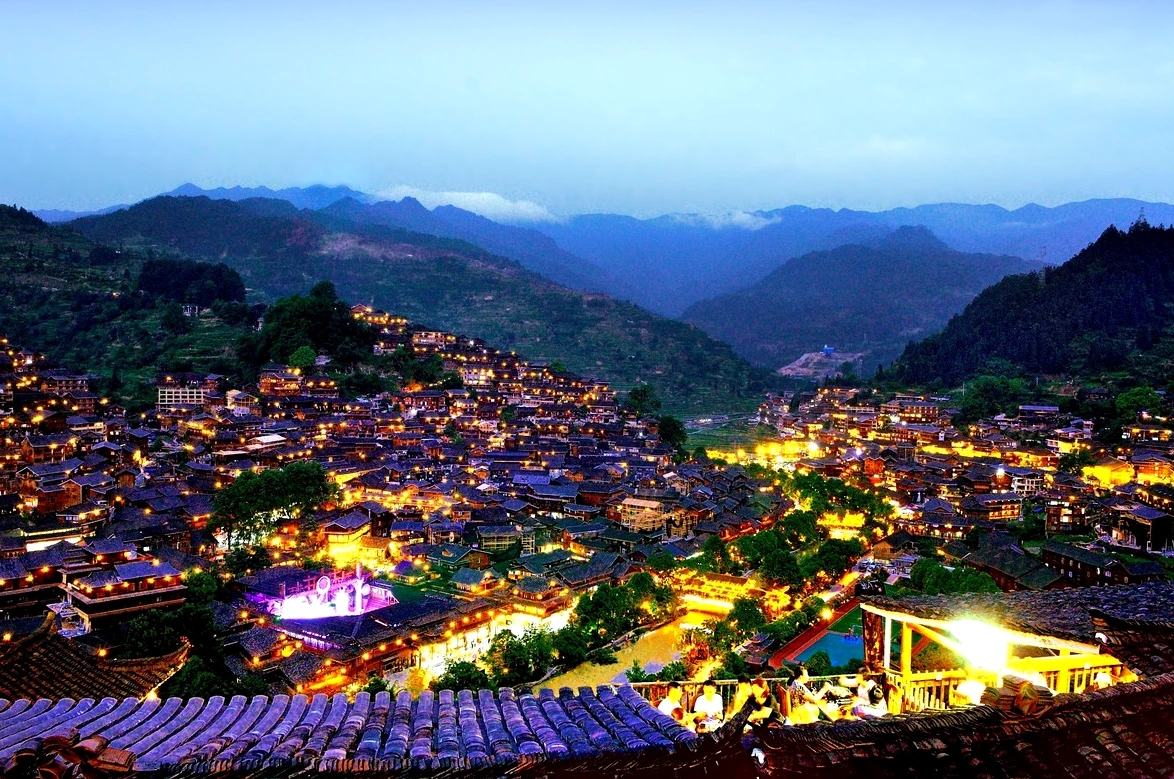
The rhythm of the night does not fade into solitude; instead, it radiates with vitality into the nearby Miao villages of Pingbian County, most notably the Tishui Miao Village located just a short distance from the gorge. If the Renzitu Bridge is a symbol of stillness and industrial nostalgia, the Miao villages at night burst with the warm, heartfelt essence of local life. Along the stone-paved slopes and babbling brooks, hundreds of shimmering lanterns illuminate traditional wooden stilt houses. A crackling bonfire in the village square becomes the focal point for community connection. In the crisp, chilly air characteristic of the border valley, the resonant, melodic sounds of the Hmong reed flute blend with the traditional circle dance and the jingling of silver ornaments on the maidens’ costumes, weaving a vibrant tapestry of cultural life.
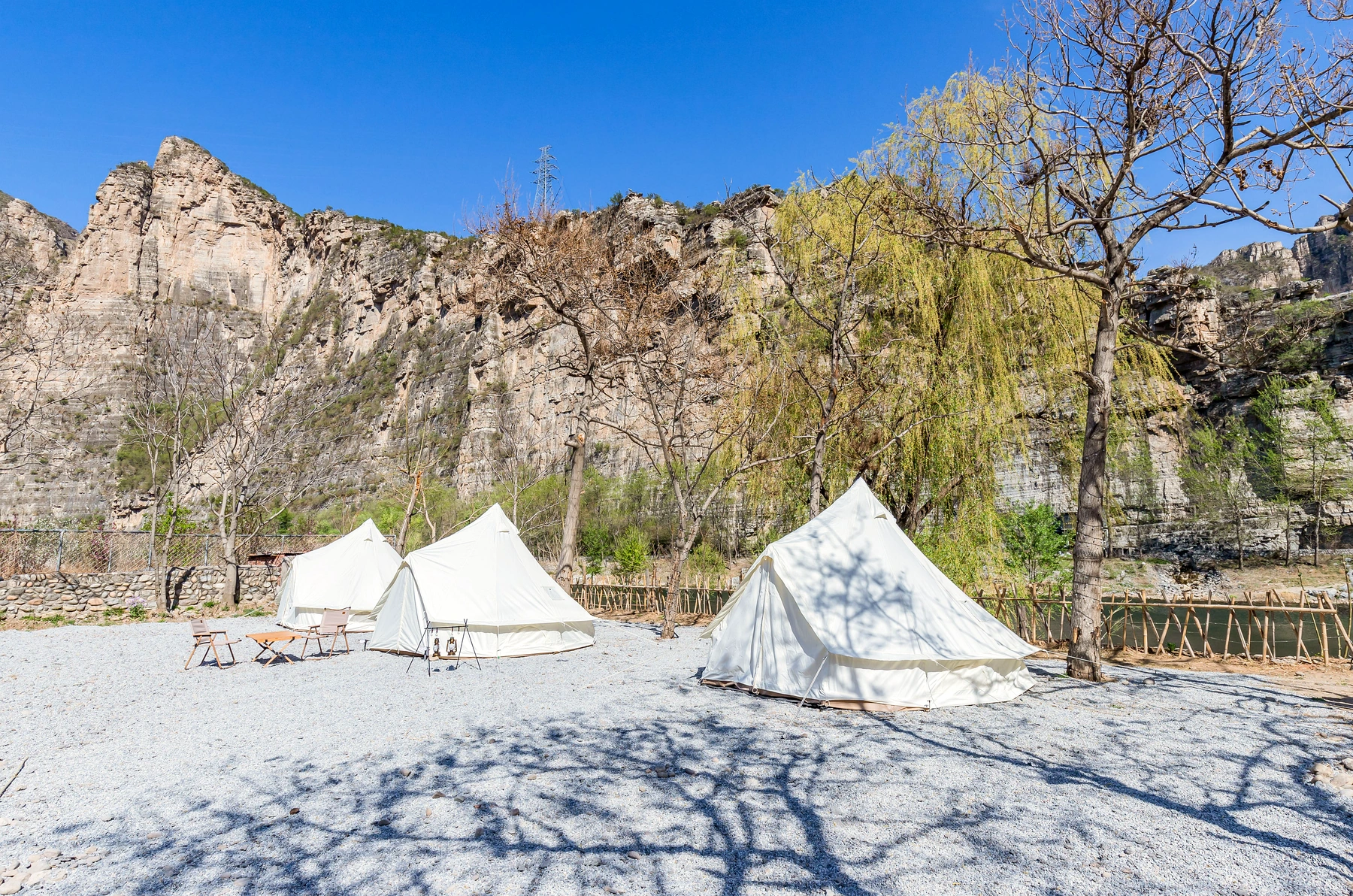
The nocturnal experience in this land is now further enhanced by high-end glamping sites gradually emerging along the pristine valleys. Under luxurious tents hidden amidst the forest canopy, travelers can gather around a warm charcoal stove, savoring a cup of spicy corn wine paired with local grilled dishes rich in borderland flavors. The art of light here is not crafted by modern technology, but crystallized entirely from the flickering flames of highland life, from the myriad stars reflecting on thousand-year-old limestone cliffs, and from the silent harmony of mountain winds weaving through the proud steel spans of Wujiazhai.
The journey to find the Wujiazhai Renzitu Bridge is not merely an encounter with magnificent iron and steel structures in the deep valley, but also an opening to a realm of pristine culinary delights in the Diannan wilderness. The local cuisine is a marvelous fusion of the indigenous culture of the Miao and Yi people—who live simply along the Dawei Mountain range—and the thousand-year-old culinary heritage of China. Every ingredient, from forest greens kissed by morning dew to spicy peppercorns harvested from rocky cliffs, carries the wild, rustic essence that reaches the ultimate refinement of the Honghe terroir.

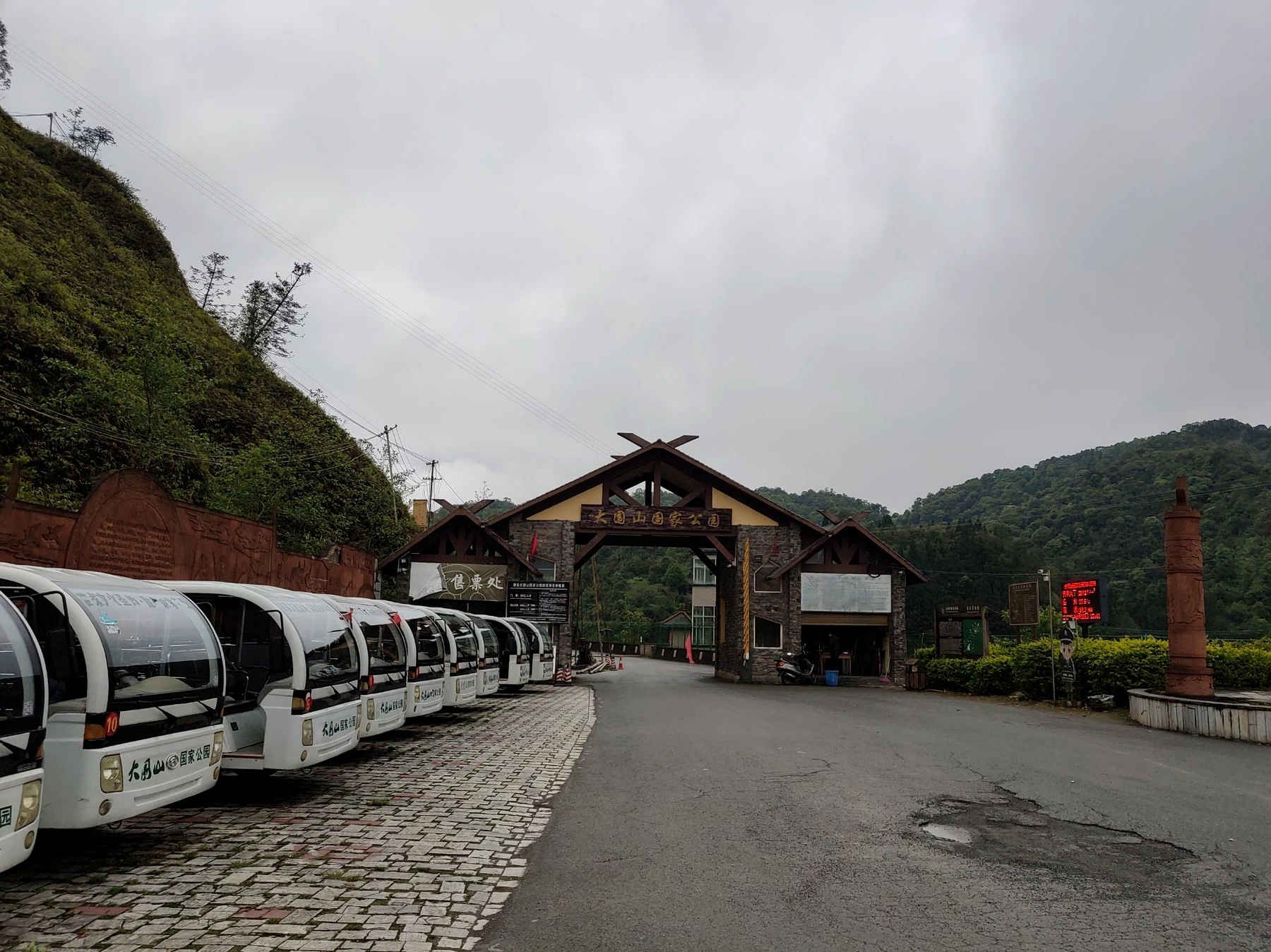
Before stepping into the Miao villages fragrant with evening smoke, travelers often pause at the gateway to the vast primeval forest. The reception area at the Dawei Mountain National Park entrance appears solemn, with a sturdy structure combining natural mountain stone and wooden rafters carved in traditional Southwestern architectural style. Under a sky scattered with white clouds draped across overlapping green peaks, the wide asphalt road leading into the deep forest is adorned with a line of white buses neatly gathered on the left, alongside a system of signs and vibrant red electronic screens on the right, ready to take travelers on a journey to discover the origins of these famous local products.
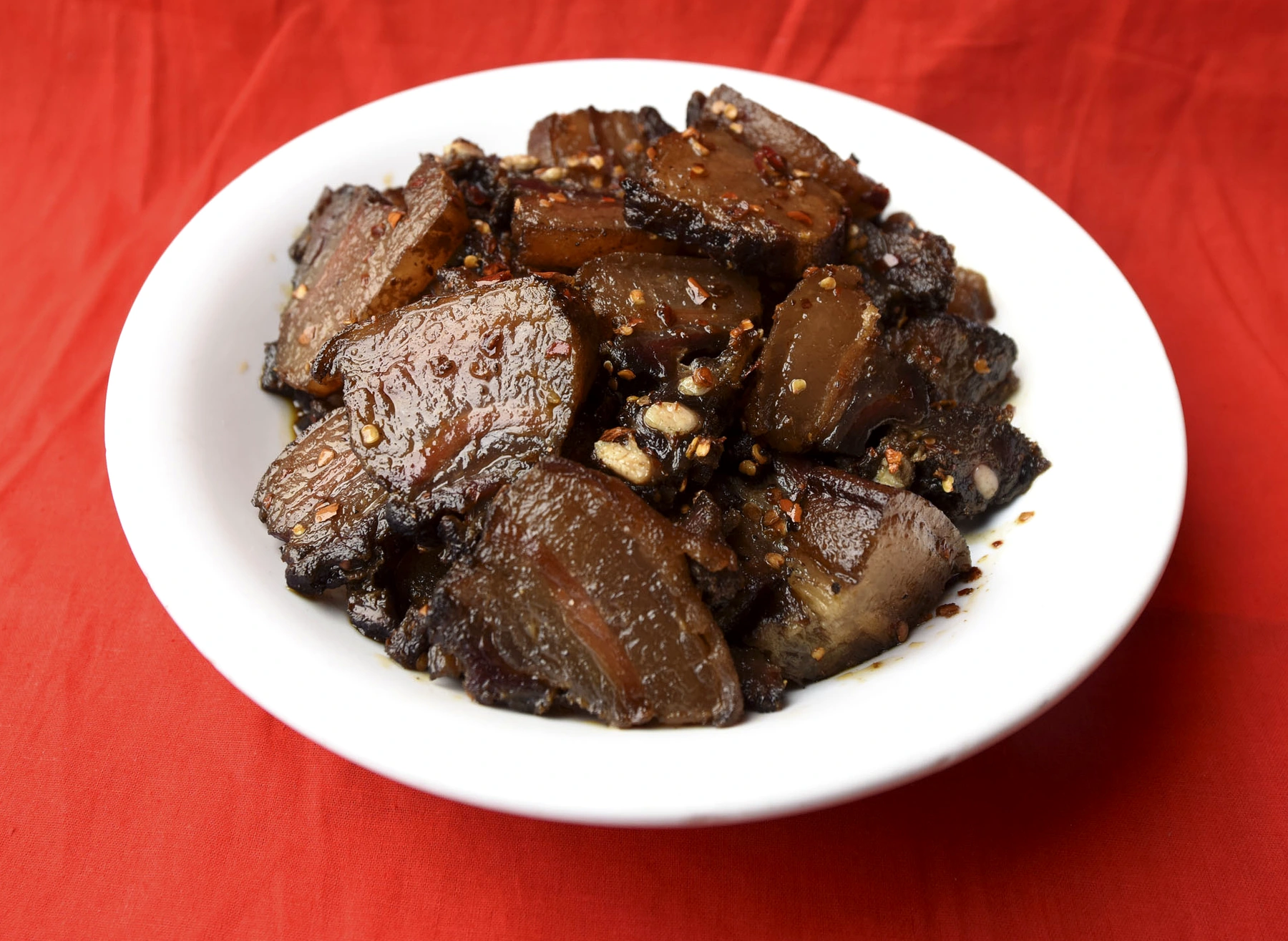
The breath of the mountains and forests is most clearly infused in the famous smoked meat hanging from the kitchen rafters of the local Miao people. Firm, free-range black pork is marinated with coarse sea salt and fragrant cardamom seeds harvested from the slopes of Dawei Mountain, then hung over an oak wood fire for six months, allowing each dark red fiber to firm up under the blue smoke. Stir-frying this rich meat with fresh, crunchy forest bamboo shoots creates a perfect balance of savory fat and the refreshing essence of nature, leaving an unforgettable impression. The spicy, pungent harmony of the highlands is further elevated through the Pingbian green peppercorn chicken. Free-range hill chicken with sweet, firm meat is steamed with secret herbs and then soaked in a vibrant green peppercorn sauce mixed with spicy forest chilies, delivering a mesmerizing tingling sensation on the tongue that awakens all senses after a long trek through the mountains.
Leaving the high mountains for the ancient towns along the old Yunnan railway line, diners cannot miss the ritual of enjoying authentic Mengzi Crossing-the-Bridge Rice Noodles – the pinnacle of Yunnan’s culinary heritage. A complete bowl of noodles resembles an art installation, featuring a rich broth simmered from chicken and pork bones for twelve hours, topped with a shimmering layer of goose fat that keeps the soup at a constant, piping-hot temperature. Travelers take turns adding ten to fifteen side dishes, ranging from paper-thin slices of pork and fresh salmon fillets to quail eggs, delicate chrysanthemum petals, and crunchy white fungus, witnessing the essence of the ingredients cook instantly in the swirling steam.
Beside the glowing embers as dusk falls over the cliffs of Renzitu Bridge, a refined pleasure for the locals is gathering around a tray of Jianshui charcoal-grilled tofu. Each square piece of naturally fermented, handmade tofu puffs up into a round shape when placed on the charcoal grill, resulting in a crispy, golden-brown crust with a soft, creamy interior, dipped in a fragrant mixture of dried chili powder, Sichuan peppercorns, and sesame oil. The Southwest culinary feast is only truly complete when the host pours a cup of Nong Miao sticky corn wine, distilled by hand using traditional forest-leaf yeast. This warm, potent wine, served as part of the welcoming ritual for honored guests, encapsulates the sincere, rustic hospitality of the people in the mountain village of Pingbian.
The journey to the historical site of Wujiazhai Renzitu Bridge requires travelers to be well-prepared regarding immigration legalities and cross-border travel routes. Currently, Vietnamese citizens do not necessarily need to apply for a traditional, time-consuming visa; they can easily access this legendary site using a Border Tourism Pass (中越边境旅游通行证). The application procedure is simplified, requiring only a chip-based citizen ID card and standard white-background photos. However, travelers must keep in mind the strict legal limitations: the pass is only valid for stay and travel within the geographical boundaries of the Honghe Hani and Yi Autonomous Prefecture, including neighboring counties and cities such as Pingbian, Mengzi, Jianshui, Mile, and Hekou. Any unauthorized travel beyond these areas, such as heading toward the provincial capital of Kunming or other restricted prefectures, is a violation of local law. Furthermore, border security regulations require travelers to operate under a group model sponsored by a designated international travel agency, accompanied by a local guide wearing an official professional badge.
The transport network leading to the Baotao River valley has been significantly upgraded but still retains the treacherous nature characteristic of Yunnan’s karst terrain. From the capital city of Hanoi, the Noi Bai – Lao Cai expressway (coded CT05) will take the group to the Lao Cai – Hekou International Border Gate in about four to five hours. After completing exit procedures in Vietnam and entry at the Hekou checkpoint, the journey continues onto the modern Kai-Meng expressway (G8011) before turning onto Provincial Road S212 and connecting to the X102 county road. The 42-kilometer stretch of the X102 road is the greatest challenge of the trip, winding continuously around mountain slopes with countless steep hairpin turns, narrow lanes, and deep abysses. Consequently, this infrastructure only accommodates vehicles with fewer than 35 seats, requiring experienced local drivers to handle the steep gradients and dense fog.
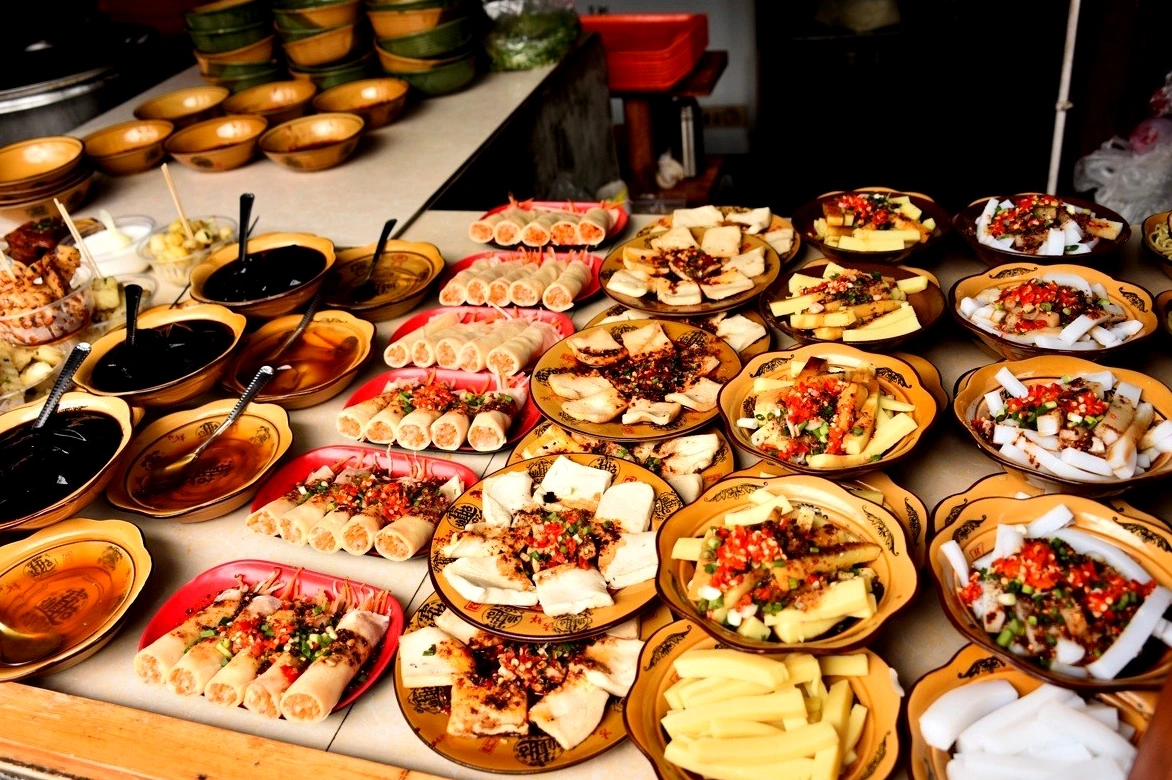
After hours of navigating winding mountain passes and conquering steep stone steps in the remote valley, stopping at traditional markets near the towns or the ancient streets at the foot of the mountains always provides a wonderful, relaxing experience for the palate. Local street food stalls are brightened by the diverse colors of dozens of snacks meticulously arranged in small trays and bowls. Here, diners can easily find refreshing black jelly, sweet cooling desserts, soft and nutty tofu, and plates of fresh vegetable spring rolls accented with spicy minced chili and the signature herbs of the border region, creating a rustic culinary feast that washes away the damp chill of the rocky plateau.
The climate in the Wujiazhai gorge area varies significantly by season, creating two ideal timeframes to admire the masterpiece of the “Ren” (human) shaped architecture. The period from September to November is the dry autumn season, with clear skies and mornings often featuring wisps of white clouds drifting through the cliffs and the base of the steel bridge, opening up a magnificent scene like a traditional ink wash painting. The second period is from March to April, when forests of rhododendrons and wildflowers bloom in vibrant red across the deep ravines, contrasting spectacularly with the rusted iron color of the century-old bridge. Travelers should strictly avoid planning visits during the rainy season, which lasts from June to August, as tropical downpours on the steep limestone cliffs can easily cause terrifying rockslides, completely isolating the single-lane X102 road.
To preserve the integrity of its historical value and ensure the absolute safety of visitors, the heritage management board has erected sturdy control barriers at both ends of the tunnel leading to the bridge. Visitors must strictly refrain from climbing over barriers or onto the steel trusses and girders in the middle of the bridge, where sudden gusts of wind through the canyon can pose a life-threatening risk. Instead, please enjoy the panoramic views from the standard wooden observation decks safely positioned on the opposite hillside. Furthermore, to fully enjoy two to three hours of relaxing immersion in the magnificent nature, visitors should firmly reject suspiciously cheap tour traps that lead to shops selling traditional medicine or imitation silver, and instead prioritize choosing all-inclusive tour packages focused purely on cultural and historical exploration, ensuring your journey to touch this century-old railway heritage becomes a complete and peaceful memory.