The Jingnan Campaign, lasting from 1399 to 1402, completely overturned the Ming Dynasty’s political landscape when Zhu Di, the Prince of Yan, overthrew the Jianwen Emperor and ascended the throne with the era name Yongle, receiving the temple name Ming Chengzu. To absolutely consolidate his personal power, escape the network of entrenched former officials in Nanjing, and simultaneously establish a strong forward military defense to block the remnants of the Mongols from the North, Zhu Di issued a strategic decision: to relocate the capital from Nanjing to his entrepreneurial base of Beiping, officially renaming it Beijing. In 1406, the 4th year of Yongle, the ambitious emperor issued an imperial edict to begin the construction of the Forbidden City. The geological survey, timber harvesting, and brick transportation phases lasted for a continuous 11 years. From 1417 to 1420, the project entered a period of rapid construction on a monumental scale, mobilizing over 100,000 master craftsmen and one million laborers and soldiers. After 3 years of continuous construction, the Forbidden City was officially completed in the 18th year of Yongle (1420), opening up one of the most massive centers of power in the East.
This architectural miracle bears the deep imprint of the outstanding minds of the era. Among them, Kuai Xiang, the master carpenter of the Xiangshan Suzhou school—praised as the “Lu Ban of Kuai”—directly drafted the overall structure and the magnificent load-bearing wooden frame; Tai Xin was responsible for the layout planning, strictly defining hierarchy and order. Notably, the Vietnamese-born eunuch Nguyen An was entrusted by the court with the heavy responsibility of Superintendent of Works, overseeing everything from hydraulic calculations, technical design, budget control to directly supervising construction across the reigns of three emperors: Yongle, Xuande, and Zhengtong. Alongside them was Lu Xiang, the legendary stone mason who commanded the carving of monolithic stones into intricate terrace reliefs. The combination of supreme intelligence and the talented hands of these historical figures laid an eternal foundation for the royal palace.
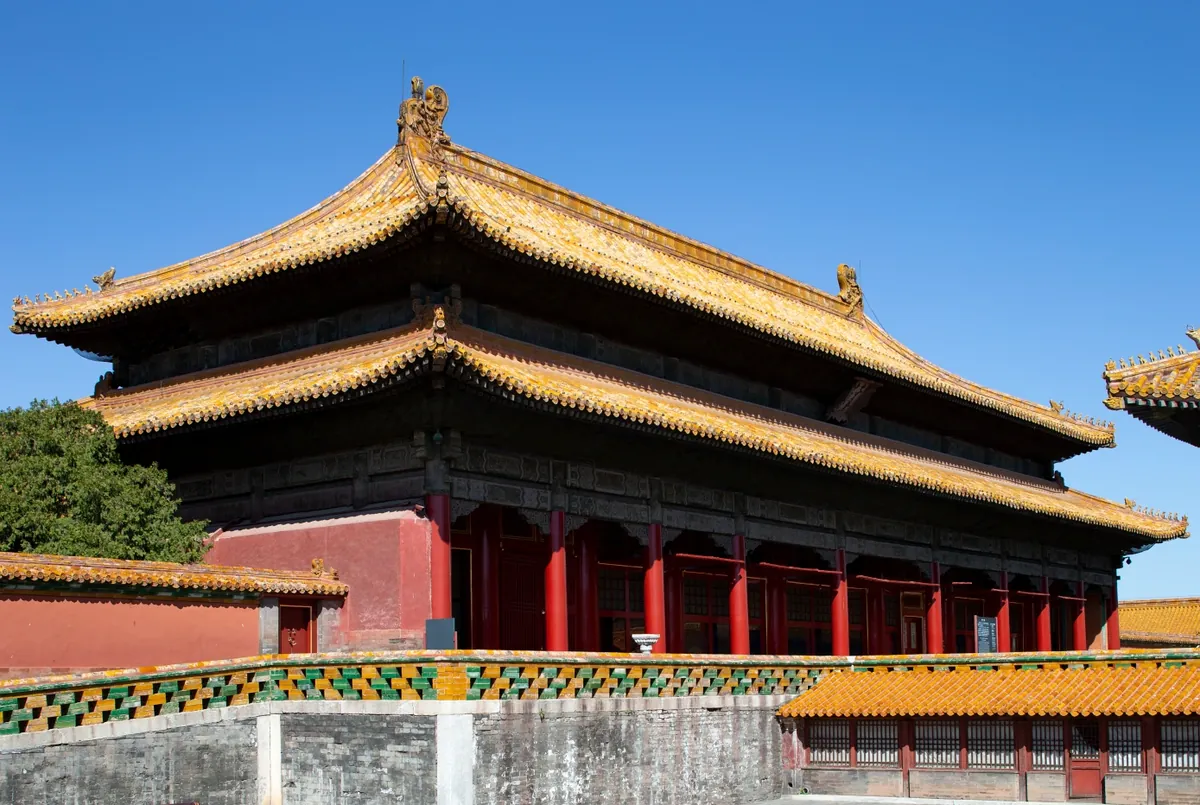
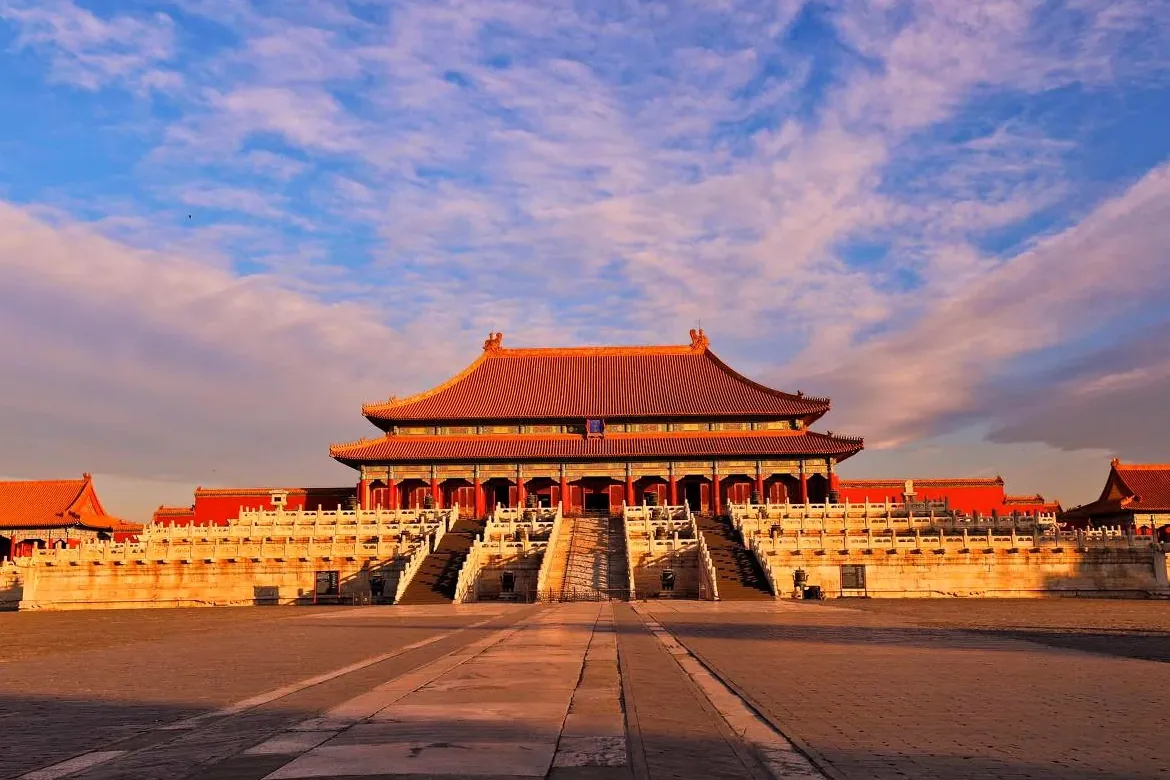
Standing majestically along the divine axis are classic structures that fully reflect the aesthetic thinking and pinnacle of royal construction at the time. Under the deep blue sky, the brilliant yellow glazed tile roofs stretch out to embrace the sunlight, contrasting sharply with the solemn deep red of the wooden columns and ancient city walls. The gracefully sweeping, multi-tiered curved roofs are stacked imposingly, elaborately decorated with rows of exquisite auspicious beasts perched on each ridge corner to ward off fire and symbolize imperial authority. Right in front of the structure, the subdued brick wall and the railing glazed in alternating sharp yellow and green tones open up a solemn buffer space, punctuated by the tranquil blue of ancient tree foliage leaning over the palace terrace.
After more than two centuries as the heart of the Great Ming, the Imperial Palace faced a bloody turning point in 1644. On April 25, 1644, the Dashun rebel army led by Li Zicheng breached Beijing’s defense lines, forcing the Chongzhen Emperor to flee to Jingshan Hill and hang himself, bringing the Ming Dynasty’s enterprise to a close. Before retreating from the capital, Li Zicheng’s army set fire to and burned down most of the central grand halls, leaving only the Wuying Hall and Jianji Gate intact amidst the ashes. By October of the same year, the Shunzhi Emperor (Aisin Gioro Fulin) led the Eight Banners army through the mountain passes, officially establishing the capital in Beijing and initiating the Manchu Qing Dynasty. The Qing Dynasty restored and rebuilt the Forbidden City on the old foundations of the Ming Dynasty, while cleverly blending local culture by establishing Shamanic ritual spaces in the Palace of Earthly Tranquility (Kunning Gong) and hanging bilingual Manchu-Chinese nameplates across the halls. For nearly five centuries, this place served as the imperial palace for the residence and governance of a total of 24 emperors belonging to the illustrious Ming and Qing dynasties.
Entering the modern era, the Forbidden City continued to endure many twists and turns of the times. In 1860, the fires of the Second Opium War brought the Anglo-French allied forces right to the gates of the imperial city; in 1900, the Eight-Nation Alliance invaded and occupied it, forcing Empress Dowager Cixi and the Guangxu Emperor to disguise themselves and flee to Xi’an. The 1911 Xinhai Revolution broke out, ending the autocratic monarchy; the last emperor, Puyi, abdicated but continued to live secluded within the Inner Court. The incident in 1924 instigated by General Feng Yuxiang completely expelled the imperial family from the palace, paving the way for the momentous event on October 10, 1925, when it officially transformed into the Palace Museum, opening its doors for the public to admire. Amidst the flames of war from 1933 to 1949, a historical heritage migration named “Southern Treasure Journey” took place, with 13,491 crates of cultural artifacts traveling tens of thousands of miles to evacuate from Japanese militarists, before nearly 3,000 crates of the finest treasures were transferred to the National Palace Museum in Taipei. In 1987, UNESCO officially recognized the Forbidden City as a World Heritage Site, affirming it as an enduring symbol of Chinese civilization through all its vicissitudes.
Located at the absolute center of the capital Beijing in today’s Dongcheng District, the Forbidden City sits on a square campus spanning up to 720,000 square meters (equivalent to 72 hectares), stretching 961 meters along the North-South axis and 753 meters along the East-West direction. The structure is the pinnacle realization of ancient Eastern philosophical thought, where the architectural design is closely tied to the concept of “the unity of heaven and man”, the Book of Changes’ five elements, and the standard planning order recorded in the classic text “Kaogong Ji” (Artificers’ Record). The entire imperial complex is firmly situated right on the main dragon vein of the capital—namely the great Central Axis, nearly eight kilometers long, originating from Yongding Gate in the south, passing through Tiananmen Square, guiding the way through the front halls and back chambers of the Imperial Palace, and concluding completely at the Bell Tower and Drum Tower in the north. This positioning turns the Forbidden City into the ultimate compass of power, where the emperor placed his throne right at the point of convergence between earth and heaven.
The terrain layout of the Forbidden City thoroughly reflects the classic feng shui principle of "leaning against mountains and facing water" to welcome vital energy (sheng qi) and block malevolent forces. To the north, Jingshan Hill stands proudly as the Black Tortoise (Xuanwu) backing, creating a sturdy natural screen that blocks the harsh, freezing winds sweeping down from the northern steppes. Miraculously, Jingshan is actually a massive artificial mountain, elaborately built from millions of cubic meters of earth dredged during the excavation of the city moat and the palace’s inner lakes. The front of the imperial city opens entirely toward the warm south to fully absorb the prosperous energy of a Yang dwelling, allowing the palace grounds to constantly maintain a balanced state of Yin and Yang energies, symbolizing the dynasty’s enduring peace, prosperity, and eternal longevity.
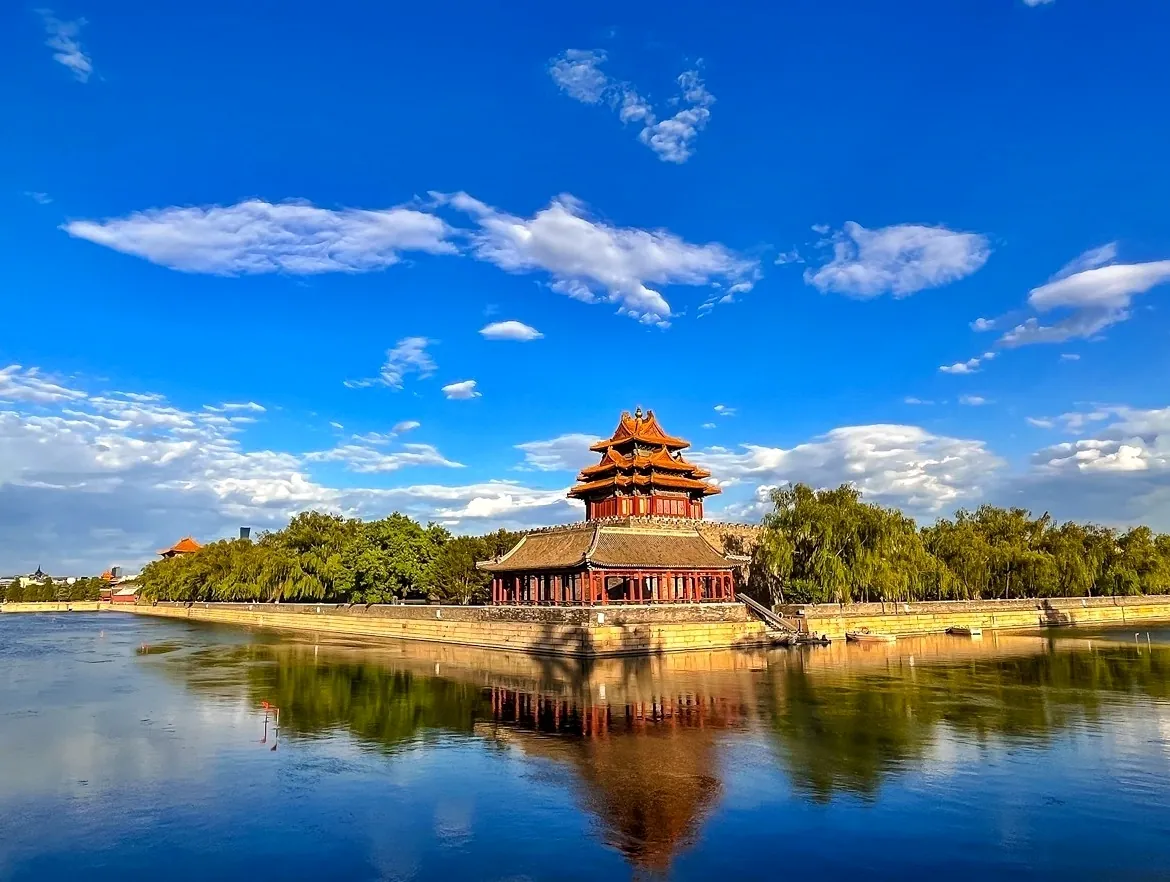
Running parallel to this mountain layout is a hydrological network calculated precisely to every degree of slope, forming an extremely sturdy and enclosed ecological defense. Encompassing all four sides of the ramparts is the moat system known as the Tongzi River, boasting an average water surface width of 52 meters, expanding up to 59 meters in certain sections, and reaching a depth of 6 meters. It not only separates the mortal realm from the secluded imperial quarters but also stores an abundant water supply. Within the inner court, the Jinshui River (Golden Water River), originating from the springs of Xishan, is guided to meander gracefully like a jade bow before the steps of the Hall of Supreme Harmony. This is not only a hydraulic drainage engineering marvel that has kept the imperial city free from floods through centuries of shifting times, but also embodies the feng shui configuration of "the bright hall gathering water," which converges spiritual energy, wards off misfortune, and purifies the spiritual space of the royal family.
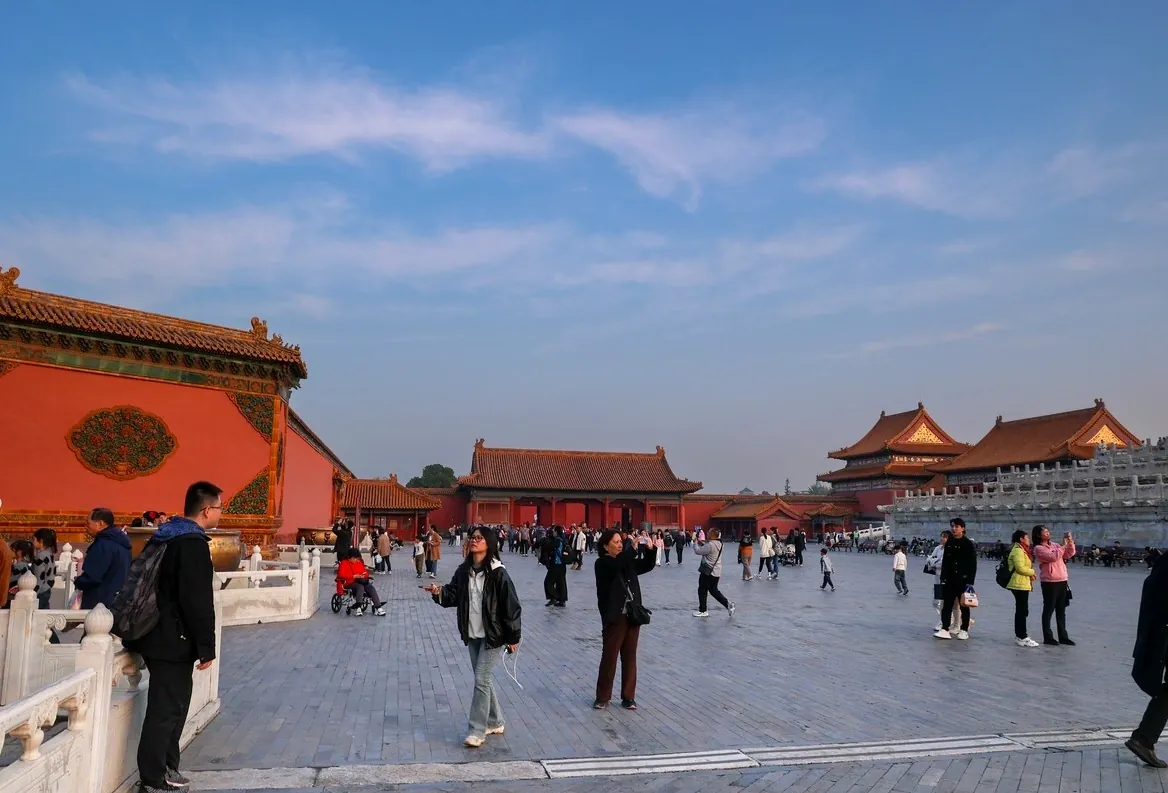
Strolling through the vast, expansive courtyards paved with sturdy flagstones, visitors will be awed by the grand scale of the majestic main halls rising beneath a brilliant blue sky dotted with soft white clouds. The solemn, deep red walls harmonize beautifully with the magnificent imperial-yellow glazed tile roofs, accented with delicate green-rimmed and gold-plated circular embossed patterns right on the wall surfaces. Streams of visitors slowly walk through the boundless space, admiring the exquisite intersection of majestic geometric structures and exemplary oriental court decorative art.
Therefore, the natural landscape within the Forbidden City does not exist as arbitrary auxiliary elements, but is organically woven into every subterranean architectural vein to complete a miniature universe. From utilizing monsoon wind directions and the gentle natural terrain slope from northwest to southeast, to the art of microclimate regulation via water surfaces and courtyard open spaces, ancient master architects transformed a rigid power fortress into a resilient, continuously circulating living organism. The resonance between heaven and earth, mountains and rivers, and human craftsmanship has sculpted an exemplary feng shui masterpiece, where every inch of land and every canal carries the aspiration for good governance, national peace, and eternal harmony between humanity and nature.
Created as a miniature universe reflecting the celestial order, the Forbidden City stands tall as a pinnacle masterpiece of ancient timber carpentry and the best-preserved wooden palace architectural complex on the planet. The entire court sanctuary is enclosed by sturdy ten-meter-high walls and a fifty-two-meter-wide protective moat, converging nine hundred and eighty pavilions and towers with eight thousand seven hundred and seven actual rooms calculated based on the standard distance between four supporting pillars. In folk legends, this number is often poeticized as nine thousand nine hundred and ninety-nine and a half rooms, expressing the supreme "Nine-Five" sovereignty concept of the Son of Heaven, while thoughtfully leaving out half a room out of respect for the Jade Emperor. The overall spatial structure strictly adheres to the feng shui principles of bilateral symmetry along the North-South meridional axis, clearly dividing into two realms of dualistic nature: the Outer Court representing robust Yang energy and the Inner Court representing profound, secluded Yin energy.
The Outer Court, or Outer Dynasty, is the space of supreme political ritual where the Emperor held court and determined the destiny of the realm. The center of this area is the Three Great Halls cluster, impressively present atop a towering three-tiered white marble terrace standing 8.13 meters high. Most prominent is the Hall of Supreme Harmony, measuring 63.96 meters wide, 37.2 meters deep, with an area of up to 2,377 square meters. It is sheltered by a double-eaved imperial-yellow glazed tile hip-and-gable roof—the highest-ranking imperial eaves grade in court regulations. Adjacent behind it are the Hall of Central Harmony, where the Son of Heaven would pause to meditate before grand ceremonies or review memorials, and the Hall of Preserving Harmony, where grand banquets and palace examinations to select talented scholars took place. The magnificence of the Outer Court halls cluster also lies in its famed "Heavenly Dragons Spouting Water" drainage system. One thousand one hundred and forty-two hollow-carved white marble dragon heads line the balustrades of the three-tiered stone terrace; when heavy rainstorms pour over the capital, thousands of dragon heads simultaneously spew gushing white streams of water, completely neutralizing hydraulic pressure and keeping the courtyard dry through the centuries.
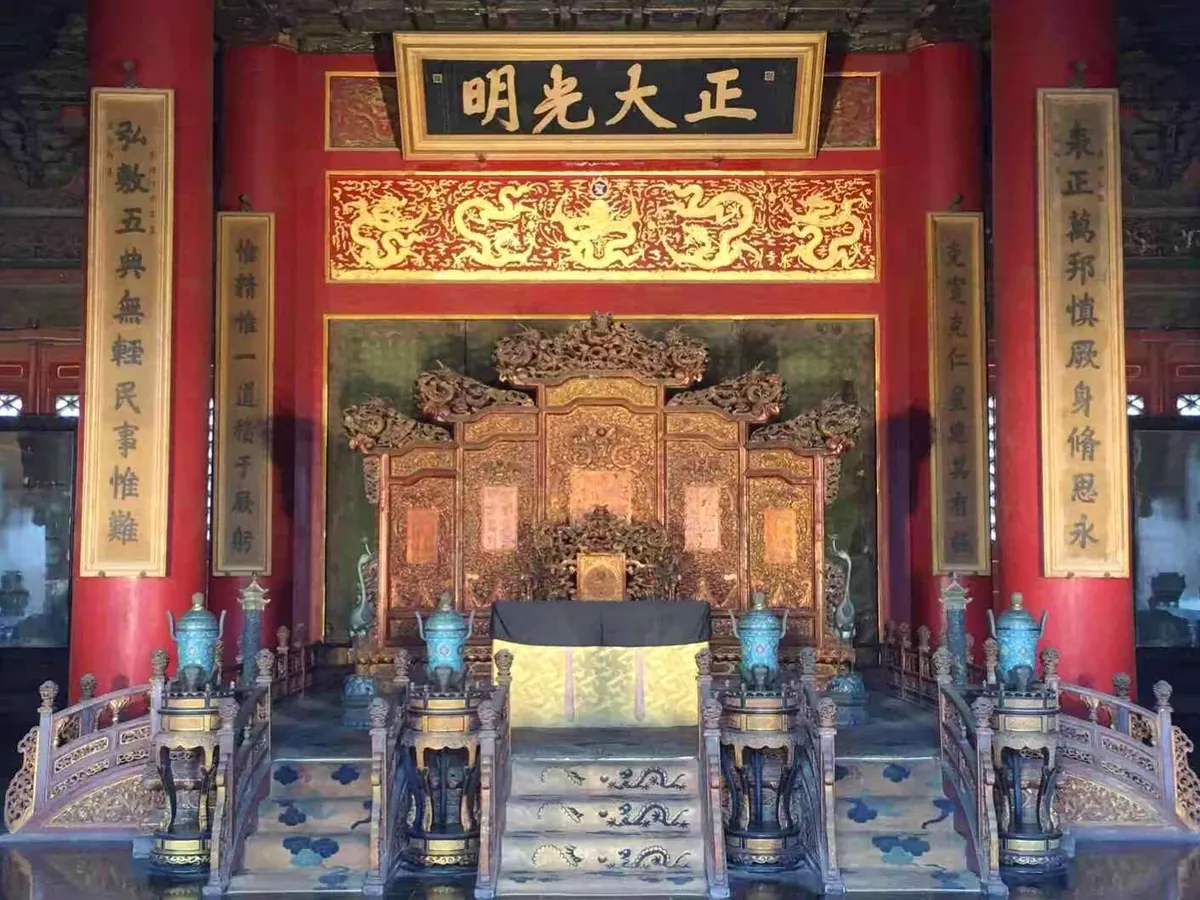
Crossing the boundary of the Gate of Heavenly Purity (Qianqingmen) is stepping into the secluded world of the Inner Court, closely tied to the secret daily life of the royal family. The focal point of the rear palaces is the Three Rear Palaces, led by the Palace of Heavenly Purity (Qianqinggong) – the emperor’s bedchamber and study, behind whose horizontal board inscribed with the words “Zhengda Guangming” (Justice and Brightness) once hid the secret box containing the imperial edict for succession reform during the Qing Dynasty. Following this is the Hall of Union (Jiaotaidian), which houses the twenty-five imperial seals symbolizing the dynasty’s supreme power, and the Palace of Earthly Tranquility (Kunninggong), which served both as the wedding chamber for the Emperor and Empress and as the sacred space for mystical Manchu Shamanistic sacrificial rituals. Embracing the central axis are the Eastern Six Palaces and Western Six Palaces, arranged in strict symmetry and culminating in the twelve-thousand-square-meter Imperial Garden. This imperial garden resembles a miniature landscape painting with ancient Taihu rocks layered into rugged rockeries, supporting the Hall of Pleasing Scenery (Duixiudian) as it stretches amidst thousands-of-years-old pine and cypress trees.
The enduring miracle of the Forbidden City against the ravages of time stems from its unique woodworking engineering mindset. The entire structure utilizes no metal nails whatsoever, connecting entirely through sophisticated mortise and tenon joints and the extraordinary elastic Dougong (bracket set) system. This flexible mechanical shift acts like a giant shock absorber, helping all the grand halls stand firm through more than two hundred fierce earthquakes, including the catastrophic 7.8-magnitude Tangshan earthquake, without sustaining any damage. Along the eaves, the Hall of Supreme Harmony (Taihedian) is the only structure in all of China permitted to feature the full complement of ten auspicious guardian beasts, led by the Immortal Riding a Phoenix, followed by the Dragon, Phoenix, Lion, Seahorse, Heavenly Horse, Suanni, Xiezhi, Yayu, Douniu, and Hangshi. The visual language of the Forbidden City is further encoded through the philosophy of the Five Elements: the brilliant yellow glazed tiles belong to the Earth element, symbolizing the center of imperial power; the crimson city walls belong to the Fire element, generating Earth to ensure eternal endurance; harmoniously balanced with blue and green bracket set motifs representing Water and Wood beneath the eaves.
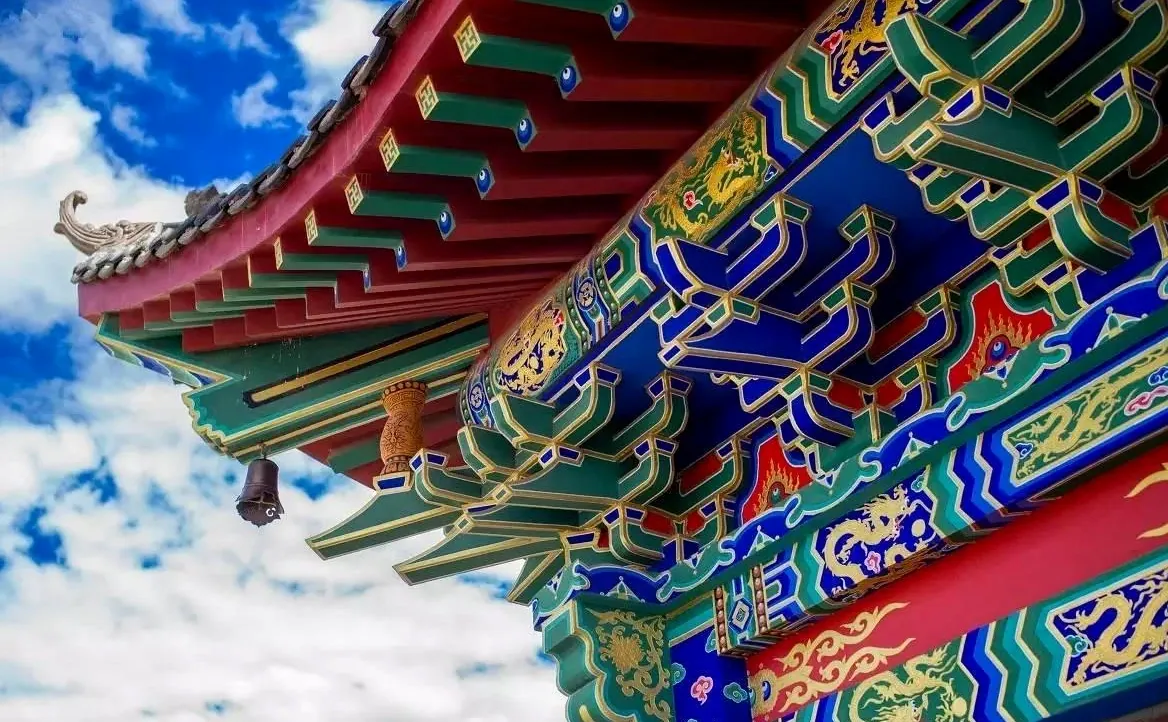
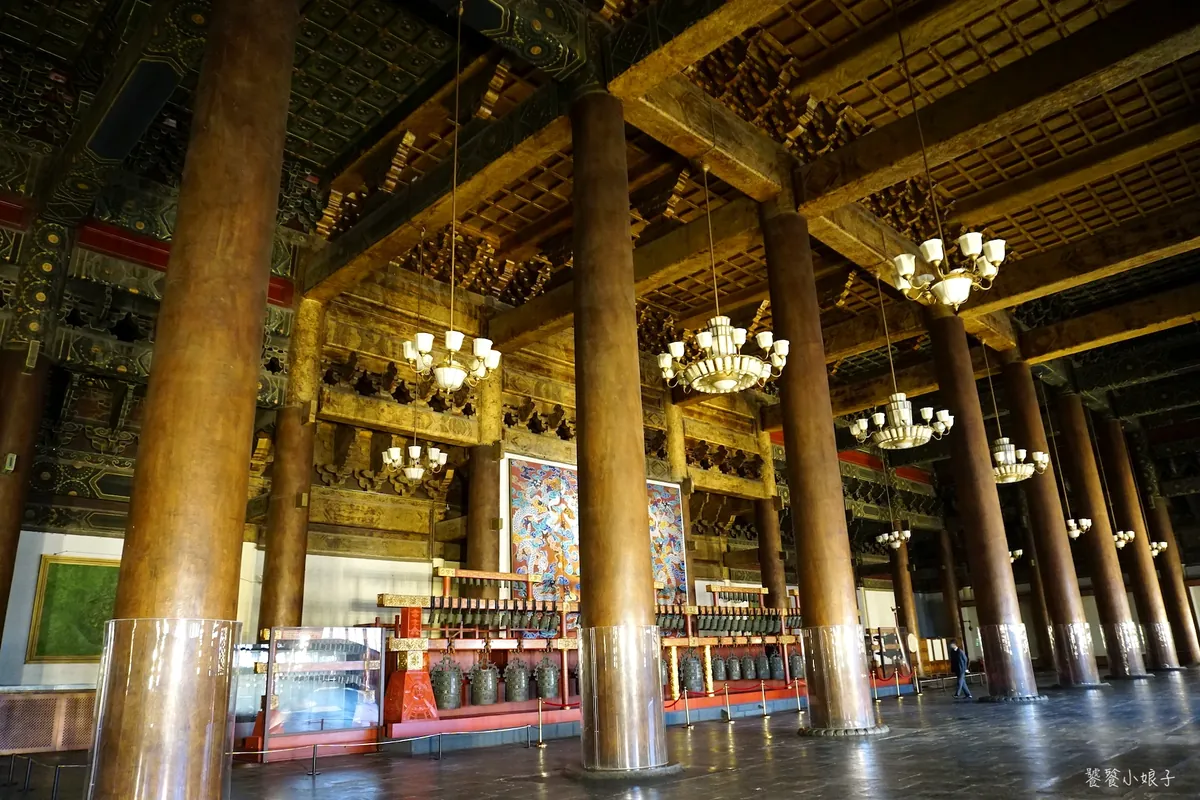
The actual scale of construction investment for this project is an extraordinary epic of imperial logistics and resources. To erect the sky-supporting pillars, millions of cubic meters of virgin Phoebe zhennan (nanmu) timber were harvested from the remote, deep mountains of Sichuan, Guizhou, and Huguang, traveling thousands of miles along waterways for two to four grueling years before reaching the capital. Hundreds-of-tons blocks of white marble (Hanyubai) from Fangshan were transported in the freezing winter by continuously pouring well water over a fifty-kilometer road surface to create an artificial ice track for tens of thousands of laborers to drag them along. Notably, the flooring of the main palaces was paved with “golden bricks” (jinzhuan) produced in Lumu, Suzhou. Each of these golden bricks had to undergo a complex firing cycle lasting up to seven hundred and thirty days, followed by thorough soaking in tung oil; upon completion, the bricks boast a sleek, resilient finish, absolute moisture resistance, and emit a crisp, chime-like sound akin to jade bells when gently tapped with metal.
As the afternoon light gradually slopes toward the capital’s western horizon, the Forbidden City enters the most spectacular visual transition of the day. During the golden hour from 3:30 PM to 4:30 PM, the slanted sunlight casts a solemn red hue over the cinnabar walls while setting thousands of magnificent yellow glazed tiles ablaze with brilliant fire. This is the moment when the entire massive wooden architecture seems to break free from the stillness of a thousand years of the past, bursting into a magical visual energy before the gates of the Gate of Divine Prowess (Shenwumen) close, returning the solemn realm to the quiet night.
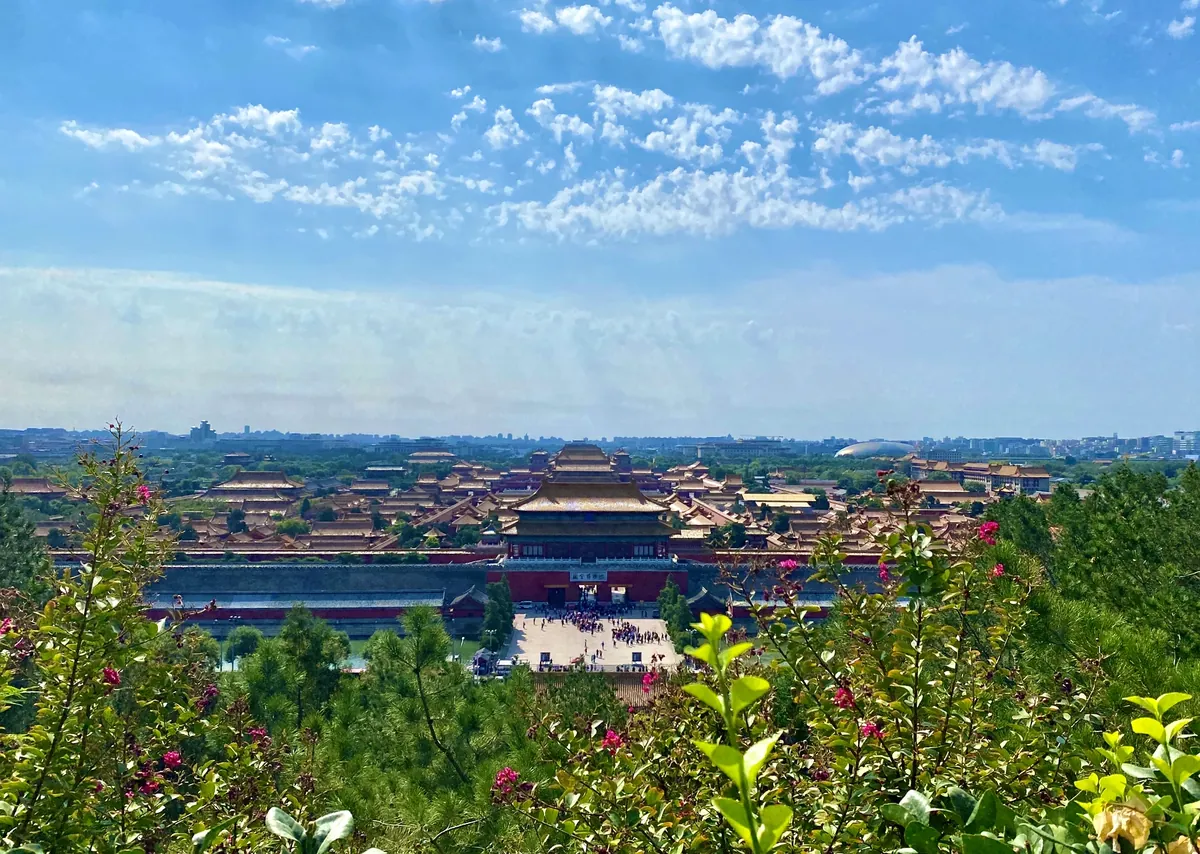
To fully admire the grandeur of the sunset casting its glow over the Forbidden City, the Wanshou Pavilion perched atop Jingshan Hill – an artificial mountain built from the soil dredged from the Moat during the reign of the Yongle Emperor, Zhu Di – is the most privileged vantage point. Nestled peacefully along the North-South central axis directly facing the Gate of Divine Prowess (Shenwumen), this viewing tower offers a sweeping panoramic view of the seventy-two hectares of undulating, curved palace roofs. As the crimson twilight descends, the capital’s central axis stands tall like a golden ribbon stretching to the horizon, where the boundary between majestic feudal history and the evening sky blends into a breathtakingly magnificent natural scenery.
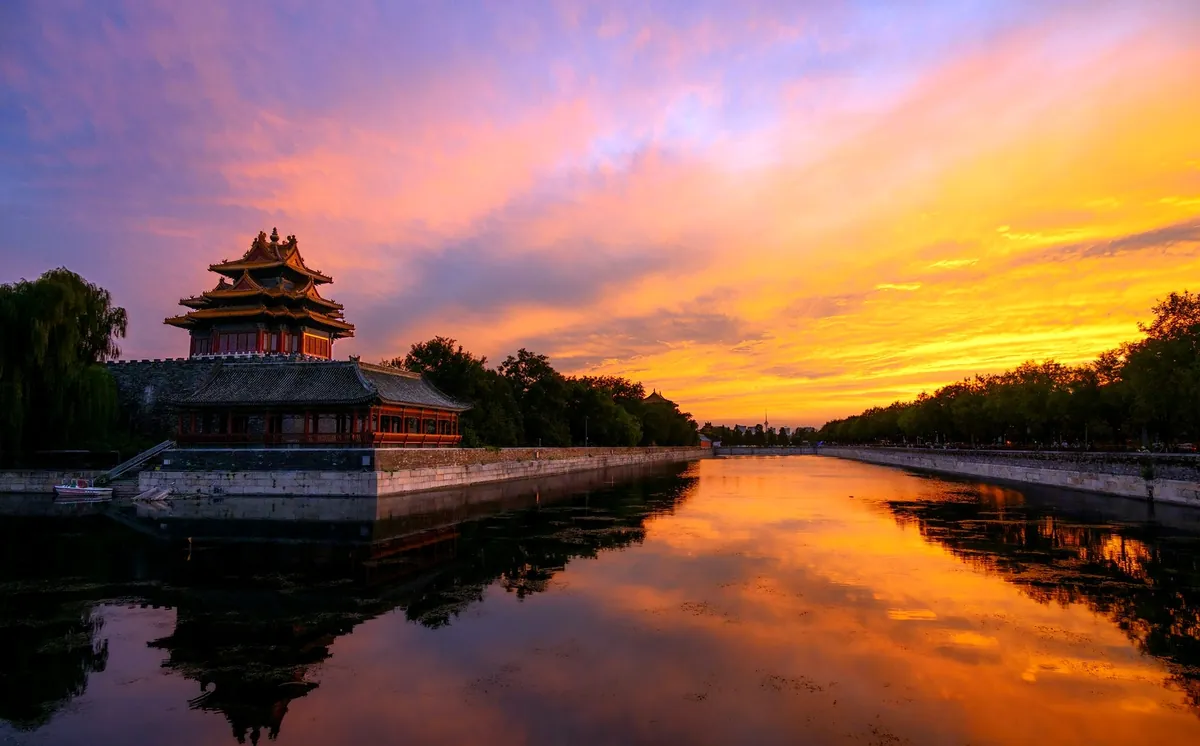
When night completely falls, the dance of shadows and light artistry finds its ultimate convergence at the northwest corner of the Tongzi River moat. Here, the Corner Watchtower – an architectural masterpiece featuring an exquisitely intricate structure with a system of nine roof ridges, eighteen columns, and seventy-two soaring curved eaves – is brilliantly illuminated by specialized spotlights. The amber-golden light sharply highlights every curve of the tiled roof, casting shimmering reflections on the tranquil waters of the defensive moat, creating an ethereal scene blurring the line between illusion and reality. This has long been a fixed coordinate capturing the hearts of artistic photographers and souls deeply enamored with charming ancient aesthetics.
The nightlife rhythm around the ancient city wall does not fade with the closing hours of the palace gates, but gracefully transitions into a vibrant cultural form. Just outside the breezy city walls, the Forbidden City Corner Tower Café serves drinks infused with imperial flavors, allowing travelers to sit quietly under the gentle glow of lanterns and gaze at the solemn base of the city wall. This emotional resonance continues to spread and amplify when casting one’s gaze toward the pedestrian axis of Wangfujing and the nearby Qianmen ancient street. The splendor of modern illuminated signboards mixed with long-standing food stalls outside the ancient city creates a profound contrast: the millennium-old solemnity and tranquility of the imperial palace act as a solid cultural anchor, embracing the bustling, sleepless vitality of the northern metropolis.
The ups and downs of the Forbidden City’s history are not merely frozen on marble steps or glazed tile roofs, but are brilliantly crystallized in the imperial cuisine that once served emperors. When the Qing dynasty collapsed, the elite currents of the imperial kitchen flowed beyond the crimson walls to merge into civilian life, with the most enduring symbol being Fangshan Restaurant on the shores of Beihai Park. Established in 1925 by the last imperial chefs of the feudal court, this restaurant preserves the exact royal delicacies that once captivated Empress Dowager Cixi. The pinnacle of Manchu-Han imperial banquet art is displayed through nourishing double-boiled bird’s nest soup with red ginseng or royal braised shark fin in rich, meticulously simmered broth. Hidden behind this regal luxury are elegant pastries deeply marked by imperial heritage, such as Xiaowotou steamed corn cakes—a rustic treat upgraded into a delicacy from finely ground chestnut flour and soybean powder blended with fine wild honey. Alongside them is Wandouhuang (Yellow Pea Cake), made from pureed white peas meticulously filtered through a silk sieve and steamed with cane sugar, offering a cool, melting sensation on the tip of the tongue; or Ludagun (Rolling Donkey), made from chewy steamed glutinous rice, tightly rolled around sweet red bean paste and coated with roasted soybean flour resembling the hooves of steppe horses.
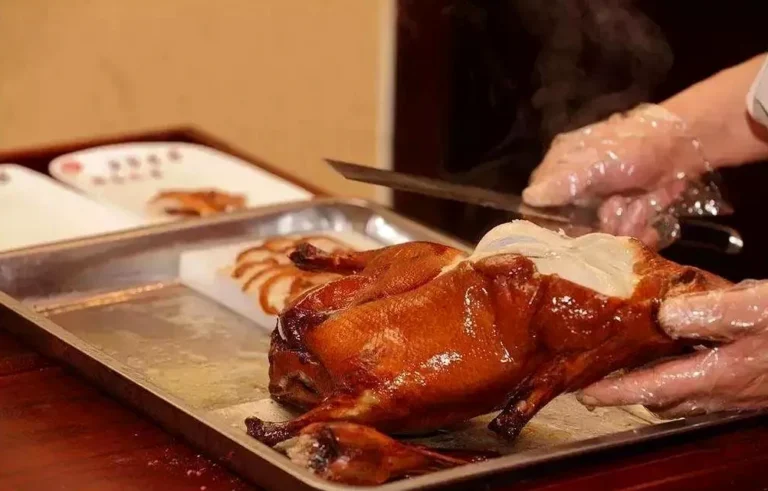
Leaving the luxurious imperial banquet halls, diners will touch the soul of the capital’s cuisine through the legendary Peking duck with its two centuries-old culinary schools. Representing the hanging-oven school is Quanjude, a brand founded in 1864 during the Tongzhi era, which uses open-flame hanging ovens fueled by ancient apple and pear wood so that the fruity smoke deeply penetrates every fiber of the meat, creating a crispy, glossy amber-brown duck skin. Its perfect counterpart is the closed-oven school of Bianyifang, a time-honored brand established in 1416 during the reign of the Yongle Emperor, which applies a closed-oven technique with indirect heat retained from thick brick walls, helping the duck retain its tender juiciness. The ritual of enjoying roast duck is also an elegant art: diners pick up slices of rich duck skin, lightly dipping them into fine white granulated sugar to feel the fat instantly melt away, and then use thin pancakes to wrap the duck meat, shredded scallions, crispy cucumbers, and a proper amount of Tianmianjiang—a sweet fermented wheat flour paste with a uniquely rich flavor.
Beijing’s civilian life carries a rustic and authentic breath through steaming bowls of Zhajiangmian (Noodles with Soybean Paste) served in the hutongs. Hand-pulled fresh noodles are boiled just right to maintain their original chewiness, then thoroughly mixed with a blend of yellow bean paste and sweet bean paste lightly stir-fried with minced pork belly in the golden ratio of seven parts lean to three parts fat. The glossy brown hue of the meat sauce is perfectly balanced by eight types of finely shredded fresh vegetables such as young cucumbers, red radishes, blanched bean sprouts, and tender green beans. For diners eager to challenge their local palate, Douzhi (fermented mung bean milk) made from settled mung bean residue is an unforgettable test. This beverage with its distinctive sour and pungent aroma is always enjoyed by locals with crispy ring-shaped fried dough rolls (jingui) and a plate of spicy pickled vegetables, creating a rustic gastronomic chorus that contrasts sharply with the solemnity of the imperial palace opposite.
The culinary culture of the Forbidden City today is expressed through sophisticated contemporary experiences right beside the moat waters. The Forbidden City Corner Tower Café stands proudly and quietly in the shadow of the ancient watchtower, featuring rich Royal Milk Tea, delicate Longevity Imperial Tea, and pastries molded with intricate imperial jade seal patterns. At the vast courtyards, refreshing ice creams shaped like the glazed tile guardian beasts on the palace roofs, priced between 15 and 25 yuan, not only dispel the capital’s heat, but their wooden sticks also feature QR codes providing information on millennia-old architectural legends, perfectly embodying a culinary culture that harmonizes a golden past with modern rhythms.
Stepping into the era of comprehensive digital transformation, the Palace Museum has completely abolished paper ticket distribution at the reception gates, replacing it with an absolute real-name verification system via a WeChat mini-program. Tickets go on sale precisely at 8:00 PM Beijing time every evening, exactly seven days prior to the departure date, with a strict daily cap of 80,000 visitors to reduce erosion pressure on the ancient bricks and wooden heritage structures. International travelers are required to enter their passport numbers to issue electronic tickets, and then scan their original passports integrated with facial recognition at the e-Gate security check at the Meridian Gate. Visitor numbers are strictly allocated into two time slots: the morning shift from 08:30 to 12:00 accounts for 60% of the quota, and the afternoon shift from 12:00 to 15:30 accounts for the remaining 40%. The standard peak-season admission ticket is 60 RMB; however, travelers wishing to admire the exquisite treasures, millennium-old stone drums, or Emperor Qianlong’s retirement palace (the Palace of Tranquil Longevity) will need to pay an additional fee ranging from 10 to 20 RMB for each specific area such as the Ning Shou Palace, the Treasure Gallery, or the Stone Drum Gallery, along with a 40 RMB fee to rent a multi-language GPS-integrated audio guide.
An unwavering rule that every explorer must engrave in their mind is the strict one-way traffic regulation from South to North. The entire flow of people has only one legitimate entrance at the main Meridian Gate in the south, after passing through strict security checkpoints at Tiananmen Square, and is forced to conclude the journey and exit the inner court through the Divine Prowess Gate in the north or the East Glorious Gate in the east. Walking against the flow is strictly prohibited by a system of barriers and stationed security personnel. To avoid being swept into the bustling sea of pilgrim crowds, the optimal strategy is to arrive early between 08:30 and 09:15 or choose the afternoon slot after 14:00. As soon as you pass through the towering arch of the Meridian Gate, instead of blindly following the massive crowds along the central sacred axis toward the Hall of Supreme Harmony, refined travelers should immediately turn east to the Hall of Literary Glory to admire the calligraphy and painting collection, or follow the west wing to the Hall of Military Prowess and the tranquil Western Six Palaces cluster. Save the classic Central Axis—consisting of the three grand halls: the Hall of Supreme Harmony, the Hall of Central Harmony, and the Hall of Preserving Harmony—for the midday lunch break between 12:00 and 13:00, the time when most domestic tour groups have retreated to find food, returning a rare, expansive, and serene atmosphere to the magnificent imperial palace.
Beijing’s modern transportation infrastructure allows travelers to access the Forbidden City extremely conveniently via multiple arterial routes. The most popular and fastest choice is Metro Line 1, stopping at either Tiananmen East or Tiananmen West stations, followed by a walk through the security checkpoint into Duanmen and onward to the Meridian Gate. Another elegant approach to avoid the congestion at the square is to take Metro Line 8, stopping at Jinfish Hutong station or Wangfujing pedestrian street, and from there strolling about 800 meters along the willow-shaded moat to reach the East Glorious Gate. For international travelers landing at Beijing Capital International Airport (PEK), the Capital Airport Express train connects directly to Dongzhimen Station in about twenty minutes for 25 RMB; whereas flights arriving at the ultra-modern Daxing International Airport (PKX) are connected by the Daxing Airport Express train, bringing visitors to the city center at Caoqiao Station for 35 RMB. Notably, the 144-hour visa-free transit policy applied to citizens of dozens of countries entering through the Beijing-Tianjin-Hebei economic cluster opens up a wonderful opportunity to freely tour the ancient capital without a complicated regular visa, or travelers can choose group visa arrangements through reputable travel agencies to streamline up to 70% of cumbersome financial proof procedures.
Nevertheless, the millennium-old allure of the Forbidden City is also fertile ground for traps and tricks from unusually cheap tour packages, also known as zero-dollar tours in disguise. Behind the ridiculously cheap quoted prices lies a calculated head-counting contract, turning a top-tier cultural sightseeing trip into an exhausting series of four to six mandatory commercial stops. Travelers are often pushed into traditional medicine establishments disguised as Tong Ren Tang to listen to fake practitioners diagnose ailments and scare them into buying overpriced herbs, jade shops where owners act out hometown identity plays to trick them into buying fakes, or stuffy rubber mattress warehouses. The direct consequence is that the time spent strolling in the Forbidden City is ruthlessly cut down to less than 90 minutes of panicky forced marches along the main axis, completely stripping away the opportunity to deeply absorb the cultural depth of an architectural complex spanning over 72 hectares. To ensure the most complete and solemn experience, choosing pure sightseeing itineraries backed by a legal written commitment to zero shopping stops is the firmest shield protecting every traveler’s emotional experience.
The journey to explore the Forbidden City is not only about turning the pages of golden history of the Ming and Qing dynasties, but also the perfect opening move to pave the way for a travelogue following the vibrant source of Chinese civilization from the majestic North down to the poetic southern river towns, where travelers can leisurely and fully enjoy the local flavors through the high-standard Beijing – Suzhou – Hangzhou – Wuzhen – Shanghai 7D6N tour itinerary.