Stretching across the rugged granite ridges of the Jundu Mountains, the Great Wall at Juyongguan Pass and Badaling stands like a living stone rampart chronicling the triumphs and trials of Chinese civilization across millennia of warfare. The origins of this extraordinary defensive marvel date back to the Warring States period, spanning from the fifth to the third centuries BC. Facing relentless incursions by northern nomadic tribes such as the Donghu and the Xiongnu, the northern State of Yan began erecting the earliest earthen ramparts. Employing traditional rammed-earth techniques reinforced with local rough-hewn stone, the people of Yan established a defensive boundary separating fertile agricultural plains from the harsh steppes, laying the very first foundation stones for an unprecedented military monument in human history.
In 221 BC, after subduing the six rival states and unifying the realm, Qin Shi Huang founded the mighty Qin Empire, which lasted until 206 BC. Acutely aware of the looming threat posed by northern cavalry, the First Emperor immediately issued a landmark decree: connecting and consolidating the fragmented defensive walls of the Yan, Zhao, and Qin states into a single unified barrier. Grand General Meng Tian was dispatched at the head of a three-hundred-thousand-strong army to guard the frontier, simultaneously repelling the Xiongnu while overseeing millions of conscripted laborers and soldiers carving through mountains and passes day and night. Under Meng Tian’s brilliant command, an interconnected defensive line stretching from Lintao in the west to Liaodong in the east gradually took shape. Nestled inside the steepest gorge of the northern Jibei region, ancient Juyongguan Pass officially emerged as the supreme military throat guarding the vital corridor leading straight into the Central Plains.
Entering the Northern and Southern Dynasties period, the Northern Wei Dynasty—ruling from 386 to 534 AD—once again confronted an existential border security challenge with the rise of the Rouran Khaganate. The Northern Wei court mobilized vast manpower to restore, reinforce, and extend thousands of miles of wall encircling the approaches to its capital at Pingcheng. Fortifications through Juyongguan Pass were strengthened with thicker layers of stone and earth, creating a multi-tiered garrison network capable of commanding the entire deep valley and halting any surprise cavalry raids into the North China Plain.
Nevertheless, the most magnificent, imposing, and enduring sections admired by posterity today represent the crowning legacy of the Ming Dynasty, spanning from 1368 to 1644. Confronted with persistent threats from Northern Yuan remnants and the rising Jurchen tribes, the Ming court undertook the most systematic and large-scale reconstruction in the entire history of the Great Wall. The zenith of this effort is closely tied to the Wanli reign of the Ming Shenzong Emperor and the exceptional military genius of General Qi Jiguang. Entrusted with defending the northern frontier, Qi Jiguang revolutionized fortification engineering by replacing vulnerable rammed earth with multi-ton blocks of solid granite and oversized kiln-fired bricks bound together with a specialized slaked-lime and sticky-rice mortar.
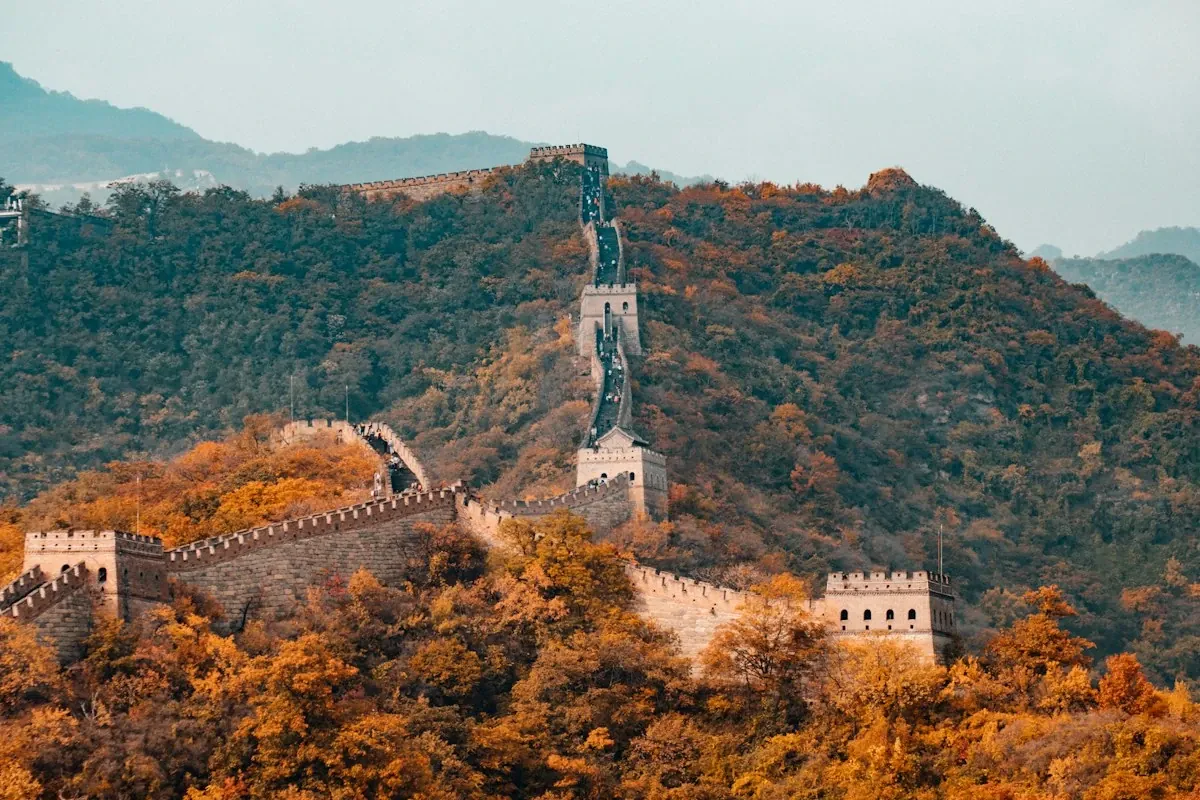
Two-story watchtowers, interconnected beacon towers, and formidable stone walls snaking along the ridges of Badaling transformed the mountain pass into an impregnable fortress seamlessly integrating early firearms with close-quarters defense. Every inch of stone here is steeped in the sweat, blood, and ingenuity of past generations, transcending its original function as a military barrier to become an enduring symbol of an unyielding national spirit. When the imperial era came to a close, the monument’s historical significance never faded, evolving instead into a new mission of global exchange. Since 1952, the Badaling section has welcomed international visitors as a bridge of cultural friendship, having had the honor of hosting more than 500 heads of state and world leaders coming to pay tribute to a heritage built for the ages.
Positioned at the rugged junction between Yanqing and Changping districts along Beijing’s northern arc, the military complex of Juyongguan Pass and the Badaling ridge has long been recognized as the vital geographic bottleneck protecting the northern seat of power. Viewed through traditional Chinese geomancy (*kanyu*), imperial Beijing sits embraced by the Taihang Mountains to the west and the Yan Mountains to the north, forming a rock-solid defensive amphitheater known as the “Beijing Bay.” At the convergence where the rolling Jundu Mountains narrow sharply, the Guangou Canyon opens a single natural cleft roughly fifteen kilometers long—like a steep throat slicing through sheer granite massifs. Serving as the sole gateway linking the fertile North China Plain with the vast Mongolian steppes, this pass functioned both as a convergence of imperial geomantic energy and the single most critical invasion corridor that every feudal regime had to hold at all costs.
Anchored right at the narrowest constriction of Guangou Canyon lies Juyongguan Pass, a pivotal stronghold hailed as the “Greatest Pass Under Heaven” and recorded as early as the *Lüshi Chunqiu* among the nine most crucial passes in the realm. Juyongguan’s terrain is defined by sheer cliffs rising like blade-cut walls on either side, channeling icy winds sweeping down from the northern plains into a deep valley floor. Despite its fierce martial purpose, the surrounding mountain-and-water scenery exudes classic poetic grace. Known as “Verdant Juyong” (*Juyong Diecui*), the layered emerald canopy of cypress, maple, and temperate woodland blanketing the cliffs earned renown as one of the Eight Great Sights of Yanjing from the Jin and Yuan dynasties right through to the Qianlong Emperor, who personally inscribed a stele in praise of its beauty. Ash-gray stone walls drape gracefully across the winding mountain stream at the gorge floor, harmonizing the stern strength of defensive masonry with the gentle vitality of forested peaks.
Ascending toward the windswept mountain saddle at the northern mouth of Guangou Canyon, the Badaling ramparts soar aloft as a formidable forward bulwark, completing a two-tiered defensive system alongside Juyongguan. Bearing a name meaning “reaching out in all eight directions,” Badaling straddles a strategic ridge commanding unobstructed views across the entire Yanqing basin. Following the jagged mountain crest, its fortifications divide naturally into two distinct sections: the Northern Line and the Southern Line. Winding through twelve tightly guarded watchtowers, the Northern Line is famous for its breathtakingly steep gradients—where blue-gray stone steps climb nearly vertically into the clouds, showcasing the full grandeur and supremacy of Ming military engineering. Counterbalancing that dramatic climb, the Southern Line—featuring seven watchtowers—traces gentler, more sinuous slopes with far fewer visitors, unveiling quiet, contemplative vistas stretching out over rolling plains.
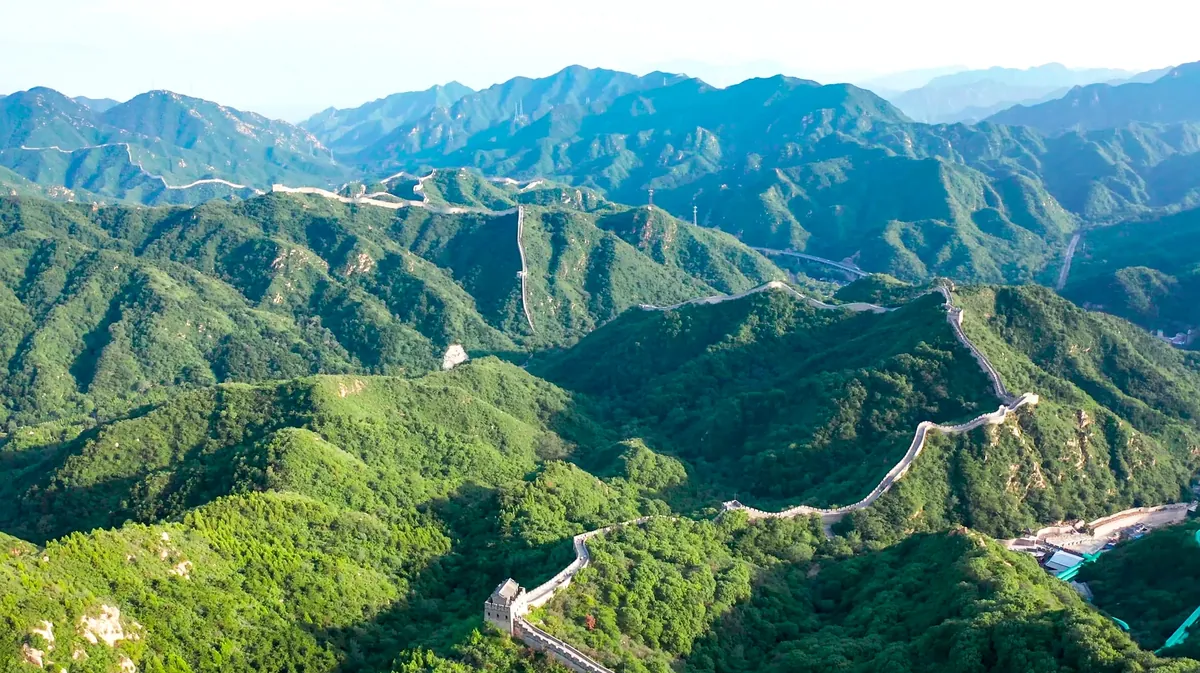
The topographical engineering of this defensive complex embodies the classical military maxim of “using natural peril to subdue the enemy,” leveraging rugged terrain to gain decisive advantage over invading forces. Multi-ton blocks of granite quarried directly on site were bonded with slaked lime and sticky-rice mortar, anchoring firmly onto jagged crags without disrupting the natural strata of the Jundu range. This masterful pairing—Juyongguan tucked into the narrow valley floor to bottleneck enemy cavalry while Badaling commands the skyward ridge above—not only forged an impenetrable shield for the imperial capital, but also sculpted an architectural wonder in complete harmony between human order and untamed nature.
Gazing up at Juyongguan Pass from the steep confines of Guangou Canyon, travelers truly grasp the monumental defensive scale achieved by Ming military engineers. Far more than a single linear wall, this fortress pass is a closed, multi-tiered defensive complex contoured seamlessly to the undulating ridges of the Jundu Mountains. The backbone of the ramparts rests upon massive monolithic granite foundation blocks supporting towering walls faced with the Ming Dynasty’s signature kiln-fired gray bricks. Each standardized brick measured an impressive 40 centimeters long, 20 centimeters wide, and 10 centimeters thick, weighing between fifteen and twenty kilograms on average. To bond millions of these heavy bricks along vertiginous mountain crests, ancient builders pioneered an ingenious mortar: slaked lime kneaded thoroughly with thick glutinous rice porridge. The organic amylopectin in sticky rice reacted with calcium carbonate in the lime to create a fossil-hard adhesive bond resistant to centuries of rain, snow, and seismic tremors.
The defining innovation behind the pass’s formidable defensive strength under General Qi Jiguang was its dense network of hollow watchtowers (*Dilou*) spaced closely along the mountain slopes. Unlike earlier solid beacon platforms, Ming watchtowers were constructed as hollow rectangular structures rising two to three sturdy stories high. The ground level was partitioned into load-bearing vaulted chambers functioning as miniature bastions capable of storing grain rations, gunpowder, and crossbows while sheltering dozens of garrison troops from harsh mountain weather. The upper level featured crenellated embrasures, sentry posts, and cannon mounts allowing defenders wide-angle observation and interlocking crossfire that eliminated every blind spot beneath the wall. Combined with extreme terrain gradients—including pitches approaching 70 degrees such as the climb to North Tower 8, popularly dubbed the “Hero’s Slope”—narrow, steep stone steps required garrison soldiers of old and modern visitors alike to grip the handrails tightly, vividly illustrating a stronghold where “one man at the pass can hold back ten thousand.”
Standing quietly at the heart of the Juyongguan fortress complex, the white marble Cloud Platform (*Yuntai*) rises as an unrivaled ancient architectural masterpiece steeped in the multicultural artistry of the Yuan Dynasty’s Zhizheng era. Originally serving as the massive stone pedestal supporting a trio of Lamaist pagodas, the Cloud Platform features a central semicircular vaulted archway allowing cavalry and carriages to pass smoothly beneath. Its artistic zenith unfolds across the interior ceiling and walls of the vault, exquisitely carved with Tibetan Buddhist mandalas, Vajrapani figures, the Four Heavenly Kings, and mythical guardians rendered in crisp, flowing relief. Remarkably, the inner walls also bear the complete text of the *Uṣṇīṣa Vijaya Dhāraṇī Sūtra* inscribed in six ancient scripts: Sanskrit, Tibetan, Old Uyghur, ‘Phags-pa, Tangut, and Chinese—testifying to its status as a major Tantric Buddhist center under the Yuan court and transforming a fierce military pass into a supreme symbol of cultural and spiritual synthesis along the arterial route linking the Mongolian steppes to the North China Plain.
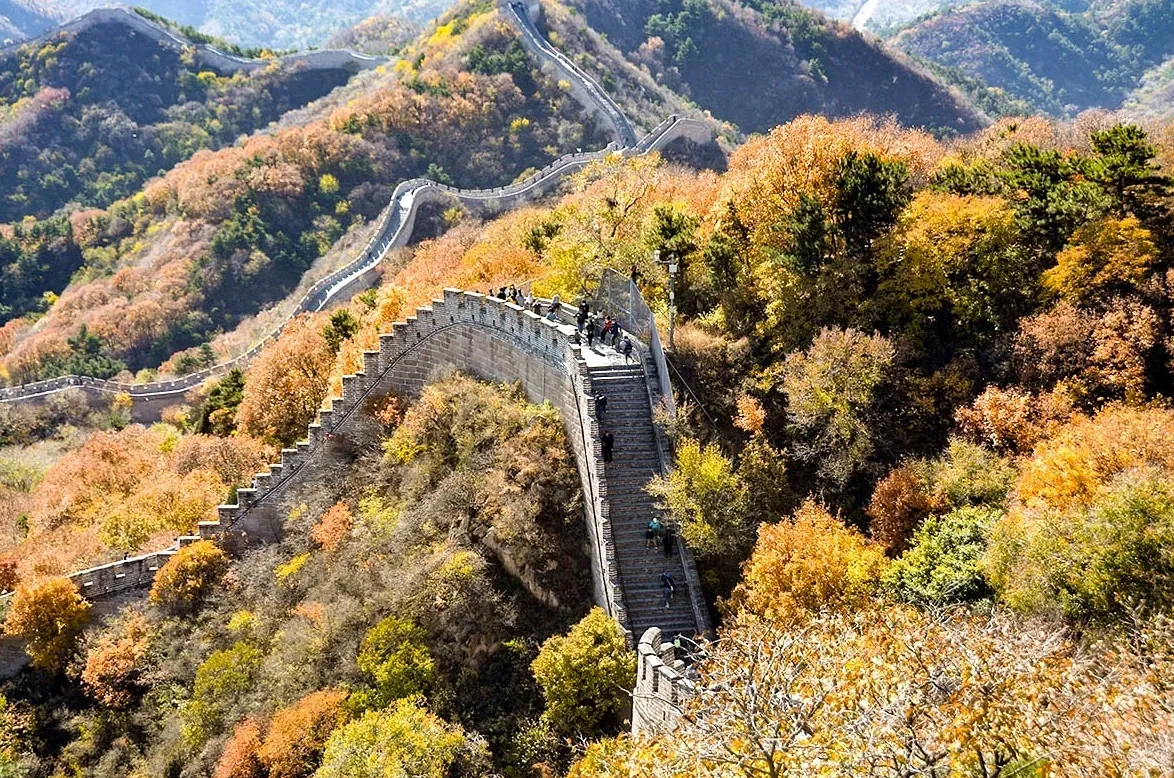
As crimson sunset settles across the Jundu Gorge, darkness envelops the rugged slopes of “Verdant Juyong,” unveiling an entirely different visual dimension. Free from the noisy, thousand-performer spectacles of modern theme parks, night at Juyongguan feels like a solemn epic poem in which the ancient stone wall itself becomes a monumental open-air stage beneath the Yan Mountains. Guided by contemporary architectural lighting design, the granite and gray-brick ramparts awaken—winding like a luminous giant dragon slithering up steep mountain ridges against the hushed darkness of a millennial frontier.
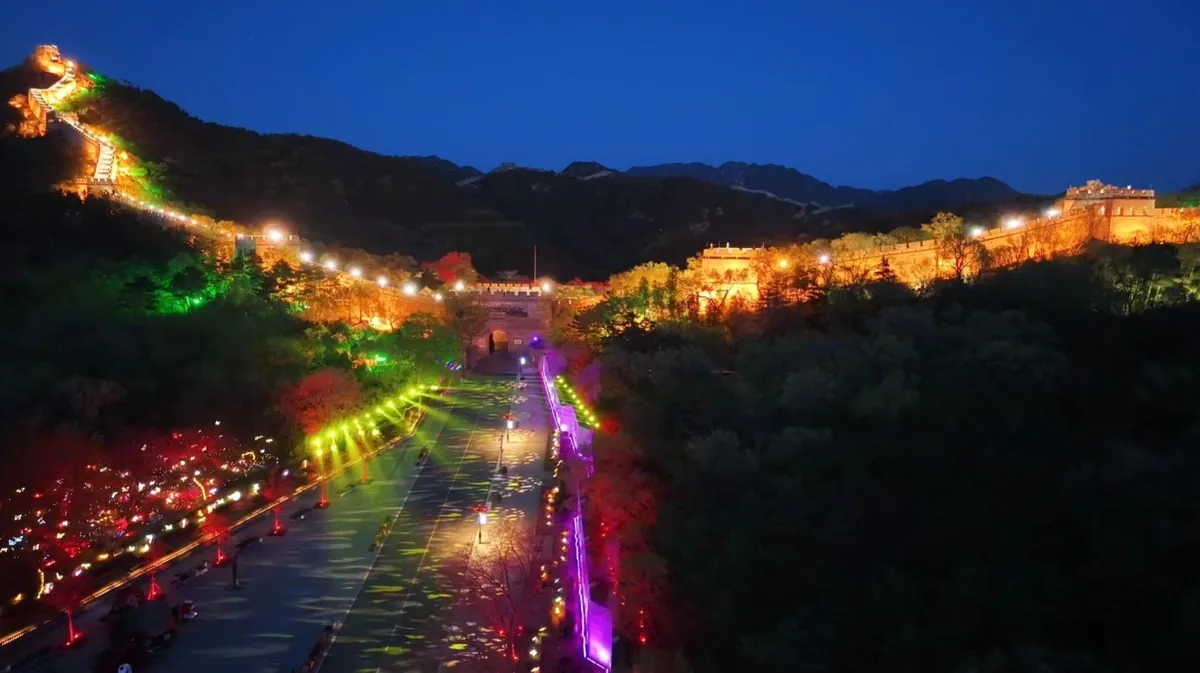
Carefully calibrated illumination and warm color temperatures trace every rugged contour of crenellations, arrow slits, and soaring watchtowers. The centerpiece of this nocturnal visual feast converges at the Cloud Platform—the majestic white marble Yuan-dynasty pagoda base. Under subtle uplighting, low-relief carvings of the Four Heavenly Kings in Tibetan Tantric Buddhist style alongside ancient Sanskrit, Chinese, Mongolian, and Uyghur inscriptions seem to emerge from the stone in solemn, mystical majesty. The interplay between the ivory glow of the Cloud Platform and warm golden LED lines tracing the ramparts creates a multi-layered tableau inviting travelers into a timeless intersection of history, spirituality, and military artistry.
While on-site exploration takes place primarily during daylight hours to ensure safety along steep, nearly vertical stone stairways, the visitor experience at Juyongguan is entering an exciting new chapter powered by smart technology. Today’s travelers go beyond admiring static ruins to engage with multi-dimensional interactive tools. Electronic ticketing systems utilizing smart facial recognition have replaced manual gates, streamlining crowd flow for tens of thousands of visitors while minimizing physical impact on heritage masonry—paving the way for full digital interpretation of one of the capital region’s most vital mountain passes.
The most exciting frontier lies in bringing virtual reality (VR) and augmented reality (AR) into key watchtowers and ramparts. Wearing specialized headsets right atop the strategic outpost, visitors watch centuries roll backward: mountain mist transforms into battlefield smoke, vividly recreating fierce Ming-era clashes as garrison soldiers fought off relentless waves of northern cavalry surging through the Jundu Gorge. Echoing war horns, thundering stones, and armored night sentries reconstructed down to every spear and plate turn each step along the stone stairs into a vivid dialogue between past and present.
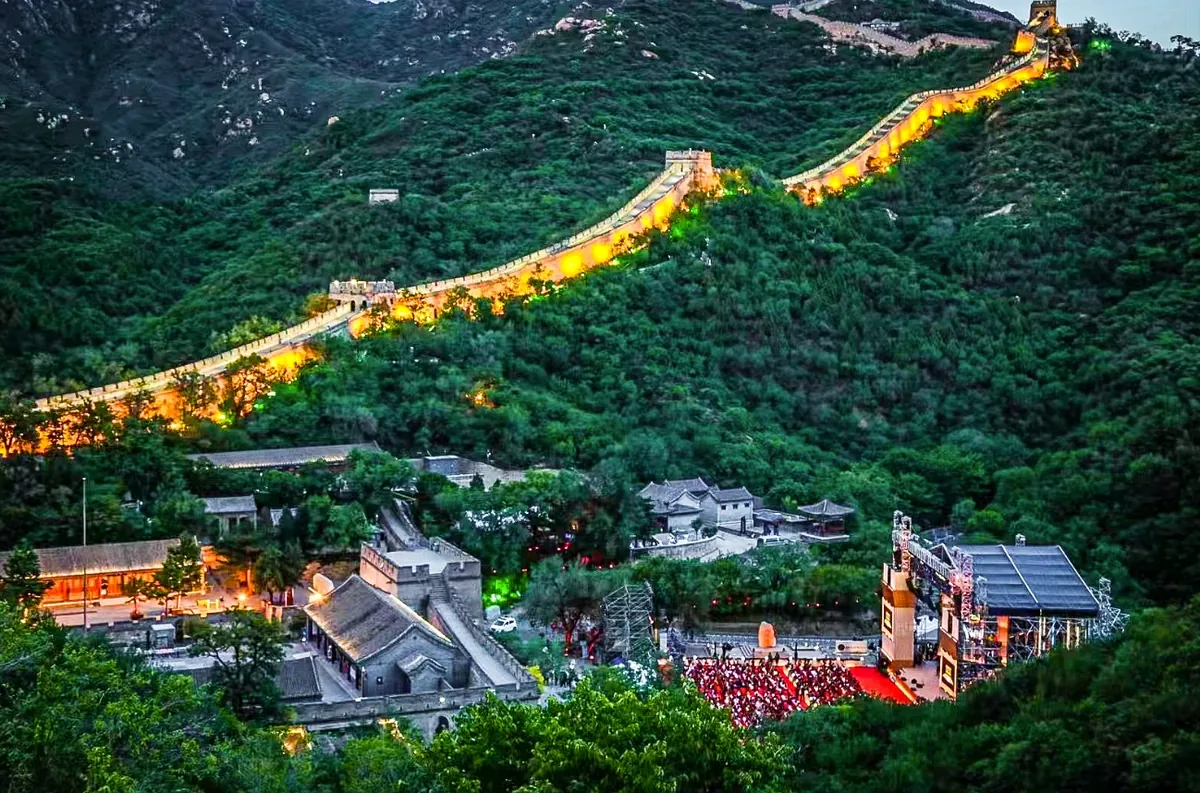
Standing atop a watchtower late in the evening, listening to fierce winds whistling through ancient stone battlements, visitors feel the living pulse of an enduring monument. Modern illumination and digital storytelling never distort Juyongguan’s authenticity; rather, they serve as magical catalysts awakening heroic memories slumbering amidst dramatic mountain peaks.
Descending from Juyongguan’s thousand-year-old stone steps as twilight settles over Guangou Canyon, a journey to Beijing’s northern frontier remains incomplete without savoring its hearty regional cuisine. Centuries of harsh borderland weather forged a Great Wall valley gastronomy that is warming, energy-rich, and steeped in the survival wisdom of garrison communities. Tucked inside historic mountain villages in Yanqing District, *Huopenguo*—known as Yanqing Copper-Skillet Hot Pot—warms body and spirit after strenuous climbs. Originating in the culinary traditions of Ming frontier soldiers and villagers, this dish centers on a shallow copper pan resting directly over glowing charcoal embers. Inside, rustic local ingredients are arranged in savory layers: paper-thin slices of rich smoked pork, porous frozen tofu soaked in flavorful broth, sweet napa cabbage, and wild mushrooms foraged from the Yan Mountains. As bone broth bubbles briskly, subtle woodsmoke mingles with earthy forest herbs to create an irresistibly comforting, unpretentious feast.
Along historic courier stations skirting the foothills, the mouthwatering aroma of clay ovens baking donkey-meat flatbreads—*Lürou Huoshao*—draws travelers into a celebrated northern culinary legend captured by the proud proverb: “In heaven there is dragon meat; on earth there is donkey meat.” Each *huoshao* bun is crafted from fine wheat flour layered with lard, folded repeatedly, and baked on a cast-iron griddle until puffed, golden-brown, and shatteringly flaky. Lean shank and rump cuts of donkey meat are braised for hours in a master stock infused with more than twenty aromatic spices including amomum pods, black cardamom, cloves, and cassia bark. Splitting open a piping-hot bun, the chef swiftly minces the tender, spice-infused meat and tucks it inside with a drizzle of rich braising jus and diced green chilies—delivering a thrilling contrast between crisp pastry layers and melt-in-your-mouth savory richness.
Continuing through mountain hamlets at the foot of the pass, diners are treated to Great Wall Mushroom Stewed Chicken simmered in traditional unglazed clay pots. Free-range local hill chickens raised on the steep rocky slopes of the Jundu Mountains develop lean, firm, naturally flavorful meat. Cut into bite-sized pieces and seared with mountain ginger and goji berries, the chicken simmers slowly with wild hazel mushrooms and wood-ear fungi. Sweet clarity drawn from chicken bones merges with the silky, earthy depth of forest mushrooms to yield a gleaming amber broth that restores vitality after conquering windswept mountain passes.
Returning from the rugged mountain pass to the historic heart of the capital, a crowning culinary ritual awaits with world-famous Peking Roast Duck at two legendary dining institutions: Quanjude and Da Dong. Founded during the Tongzhi reign of the Qing Dynasty, Quanjude preserves the classic open-oven hanging-roast method fueled by seasoned jujube and pear fruitwood, imparting a glossy mahogany skin and subtle fruity smoke. By contrast, Da Dong represents contemporary culinary artistry, using an innovative roasting technique that renders out excess fat to achieve paper-thin, glass-crisp skin that shatters delicately on the tongue. Savoring a slice of crispy skin dipped lightly in fine white sugar—or rolling tender duck breast with crisp cucumber, white scallion stalks, and sweet bean sauce inside a gossamer-thin pancake—creates a seamless bridge between the bold frontier spirit of Juyongguan Pass and the imperial gastronomic splendor of a thousand-year-old capital.
Reaching the magnificent stone ramparts at the gateway to the Yan Mountains is remarkably convenient today thanks to modern transport links radiating from central Beijing. The fastest and most cutting-edge option is the Beijing–Zhangjiakou High-Speed Railway departing from Beijing North or Qinghe Station, whisking passengers straight into Badaling Great Wall Underground Station in just 26 to 32 minutes. Built more than 102 meters beneath solid mountain rock, the world’s deepest underground high-speed rail station stands as a contemporary engineering marvel nestled directly beneath an ancient wonder. Travelers favoring a more leisurely pace can ride the suburban S2 train from Huangtudian Station through valleys blooming with peach blossoms each spring, or board express Bus 877 from Deshengmen Watchtower along the G6 Jingzang Expressway, taking roughly 75 to 90 minutes depending on traffic.
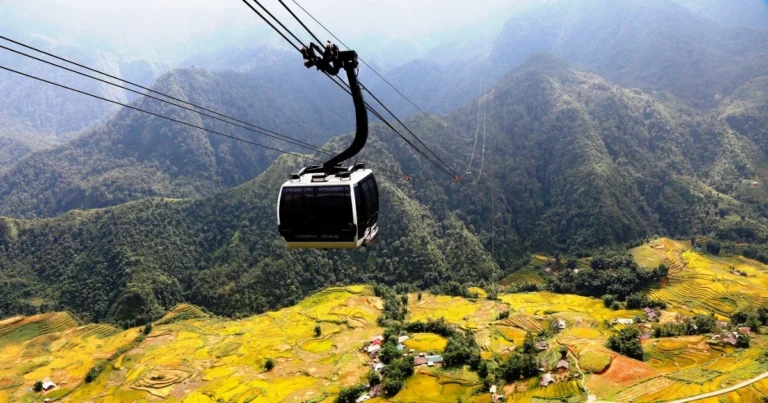
The Great Wall scenic areas at Juyongguan and Badaling operate on clear seasonal schedules, typically opening from 6:30 AM to 5:00 PM during warmer peak months and from 7:30 AM to 4:00 PM during cold winter months. Site management enforces a strict real-name electronic reservation policy, requiring all international visitors to present their original valid passport both when booking tickets online and when passing through automated security gates. To conserve energy on steep stairways, the smartest sightseeing strategy is riding the cable car straight up to North Tower 8 (*Beibalou*)—the highest, most dramatic vantage point along the Badaling ramparts—before strolling leisurely downhill back toward the lower towers. This approach preserves your stamina to admire the dragon-like mountain ridge without exhausting yourself on steep ascents.
Centuries of footsteps have polished the bluestone and granite paving slabs along the wall to a smooth sheen, which combined with natural gradients reaching up to 45 degrees can create unexpectedly slick footing. Supportive hiking shoes or trail sneakers with deep, high-traction treads are mandatory—avoid smooth leather soles or fashion heels altogether. Because the Yan Mountain frontier experiences brisk winds year-round and temperatures atop the watchtowers regularly run four to seven degrees Celsius cooler than the plains below, dress in adaptable layers—combining a moisture-wicking base layer, an insulating fleece, and a windproof, water-resistant outer shell—to adjust easily as you climb.
One essential rule when planning your visit is steering clear of extreme peak holiday surges such as China’s National Day Golden Week in early October or Lunar New Year, when tens of thousands of visitors turn sightseeing into shoulder-to-shoulder gridlock. Travelers should also stay vigilant against unlicensed taxis and freelance touts around downtown bus stops promising impossibly cheap day trips, as such cut-rate schemes routinely slash wall sightseeing time in order to pressure guests into overpriced jade, herbal medicine, or silk shopping outlets. Prioritizing reputable, shopping-free travel standards safeguards both the historical dignity and unhurried enjoyment of your journey; booking an organized all-inclusive Beijing tour package ensures a seamless, enriching experience across this timeless mountain frontier.