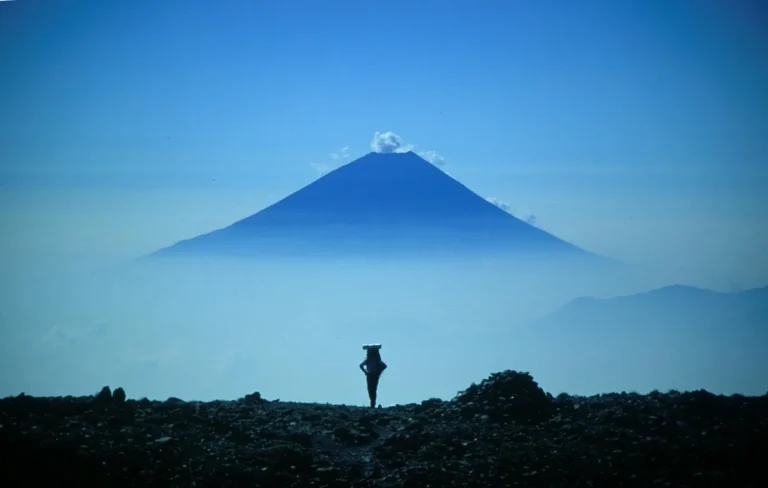
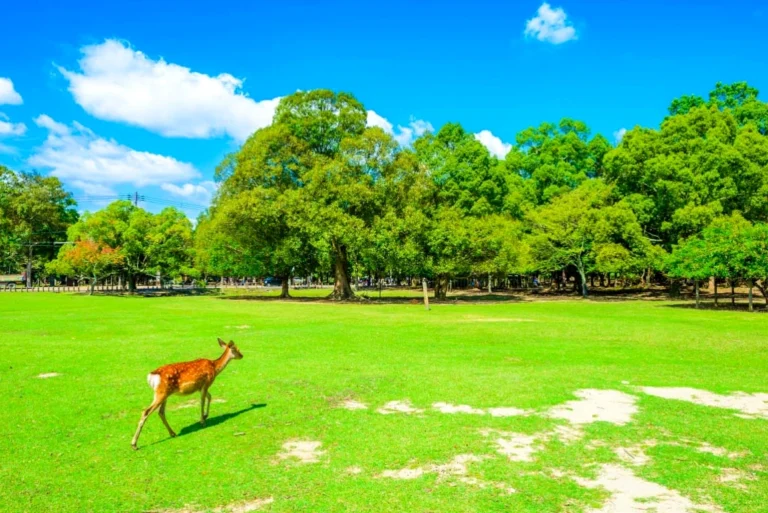
Tracing back to the early centuries of Japanese civilization, the first traces of this refined beverage began to emerge during the Nara period (710–794) and the early Heian period. At that time, eminent Buddhist monks who braved the ocean crossing to Tang dynasty China in pursuit of dharma teachings returned to the capital of Heian-kyo carrying rudimentary compressed tea bricks known as Dancha. Notable among them was Zen Master Eichu, who presented a fragrant cup of compressed tea to Emperor Saga in the early ninth century. Yet in this embryonic stage, tea remained solely a prized medicinal elixir within aristocratic courts or a spiritual aid supporting serene seated meditation inside secluded monasteries, not yet breaking through to become a cultural current woven into everyday public life.
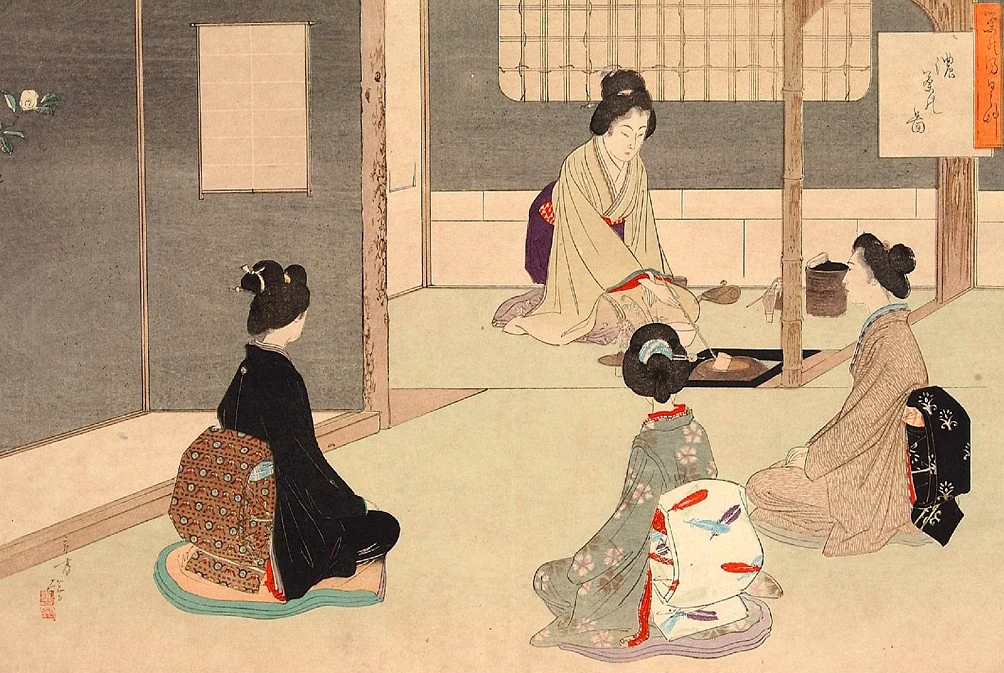
The historic turning point that reshaped the entire landscape of Japanese tea culture truly began in 1191, the second year of the Kenkyu era during the Kamakura period. After an extensive spiritual journey studying in Song dynasty China, Zen Master Myoan Eisai returned home carrying packets of precious tea seeds along with a revolutionary preparation method: steaming tender young leaves, drying them, and stone-grinding them into a fine powder—the direct precursor to today’s premier Matcha. Beyond planting agricultural seeds, Zen Master Eisai laid a firm theoretical foundation with his treatise “Kissa Yojoki” (Drinking Tea for Health), extolling tea as the ultimate earthly elixir for nourishing life. Recognizing the ideal soil and microclimate of the Uji hills south of Kyoto—where drifting river mists meet pronounced day-and-night temperature swings—the very first seeds were sown in this soil, ushering in a dazzling golden age.
Entering the Muromachi period (1336–1573), as the Samurai warrior class and the Shogunate assumed supreme power, Uji was officially elevated to unrivaled prestige as the birthplace of the finest tea, designated “Honcha” (True Tea). Reverence for Uji tea leaves grew so profound that connoisseurs drew a strict distinction between Uji’s Honcha and “Hicha” (Non-tea—referring to tea cultivated in any other region). The Ashikaga shoguns, most notably Ashikaga Yoshimitsu, granted Uji strict patronage, authorizing the clearing of land and establishment of iconic, legendary tea estates. Tea from Uji not only graced lavish aristocratic tea gatherings, but also evolved into a definitive benchmark of refined taste and social standing.
The pinnacle of spiritual and philosophical transformation in the Way of Tea unfolded in the sixteenth century amidst the turbulent power struggles of the Azuchi-Momoyama period. Grand Master Sen no Rikyu (1522–1591) sparked an ideological revolution by casting aside the ostentatious display of gold-and-jade tea utensils of his era to give birth to the Wabi-cha style. Rooted deeply in the philosophy of Wabi-Sabi, Sen no Rikyu elevated the art of Uji Matcha appreciation to a realm of rustic simplicity and stillness, celebrating imperfect beauty and the impermanence of human existence. In the hands of the Tea Saint, a bowl of Uji Matcha whisked to a vibrant emerald froth inside a humble ceramic chawan became far more than a harmony of flavors—it became a ritual of spiritual awakening guiding humanity back to primordial tranquility in the heart of the millennial ancient capital.
Located roughly fifteen to twenty kilometers south of the heart of Kyoto’s ancient capital, the Uji region nestles inside a sheltered valley basin ringed by gentle slopes and lush green mountains. The swift-flowing Uji River (Uji-gawa), originating from vast Lake Biwa, cuts directly through the town like a vital meridian regulating the entire microclimate of this tea sanctuary. In classical geomancy, this “mountain-embraced, water-encircled” topography acts as a natural screen shielding the valley from harsh, dry northern winds while trapping dense morning river mists (*asagiri*) rising off the water each dawn. That mystical veil of natural mist drapes across hillside tea gardens, acting as a living filter that softens intense spring sunlight, maintains optimal atmospheric humidity, and nourishes pure underground springs percolating through ancient sedimentary rock layers. This mineral-rich soil and cool, pristine watershed created the ideal cradle for Japan’s highest-grade tea buds.
Blessed by this distinctive topography and microclimate, Uji tea farmers over the centuries perfected shade-grown cultivation (*oishita saibai*)—an agricultural breakthrough rooted deeply in the Azuchi-Momoyama era. As spring arrives, tender young tea rows are covered beneath traditional straw screens or reed canopies for three to four weeks prior to harvest. Blocking direct sunlight compels the tea plants to boost chlorophyll production in adaptation while halting the conversion of the amino acid L-theanine into astringent tannins, allowing the leaves to accumulate a smooth sweetness and signature rich umami depth. Every lush green bud is meticulously hand-picked and immediately steamed to halt natural oxidation, locking in its vivid emerald hue. After gentle air-cooling and thermal drying into raw tencha leaves, the tea is ground slowly in precision-carved granite stone mills (*ishiusu*), turning into silky-fine matcha powder that preserves the pure terroir of Uji’s earth and sky.

Uji’s landscape unfolds gracefully along both banks of its heritage river, opening a tranquil and captivating historical corridor. Serving as an ancient spiritual and transit link, the Uji-bashi Bridge spans the rushing current; originally constructed during the Asuka period in the mid-seventh century, it ranks among the three oldest bridges in the Land of the Rising Sun and features prominently in epic chronicles and the literary classic *The Tale of Genji*. From the bridge’s southern foot, the setting transitions naturally into the winding gray-stone pedestrian lane of Byodoin Omotesando. This heritage street is lined shoulder-to-shoulder with historic tea houses whose roasting hearths have burned continuously for centuries across family generations. The air here is perpetually perfumed with the rich aroma of roasting hojicha leaves wafting from small ceramic roasters outside shopfronts, mingling with the gentle rustle of noren curtains fluttering in the breeze to paint an urban portrait steeped in ancient capital aesthetics.
Positioned at the very heart of this riverside corridor stands Byodoin Temple, a UNESCO World Heritage site and iconic monument of Heian-period Pure Land Buddhism built by the powerful Fujiwara regent clan. At the center of the complex, the magnificent Phoenix Hall (Hōō-dō) casts its reflection across the still waters of Aji-ike Pond, recreating Amida Buddha’s Western Pure Land Paradise right here on earth. Water and pavilion architecture merge in a geomantic layout balancing stillness and motion in absolute harmony. Right along the pine-shaded banks of the Uji River, directly opposite the historic walls of Byodoin Temple, sits the municipal teahouse Taihoan. Bearing a name meaning “Facing the Phoenix,” this serene tea space preserves every canon of classical Tea Ceremony (*chanoyu*). In profound silence, each sip of velvety green Uji matcha whisked with sweet local spring water completes a harmonious circle uniting nature, agricultural mastery, and the zenith of Japanese Zen aesthetics.
Tucked along the mist-shrouded banks of the Uji River, the architecture of a traditional Chashitsu teahouse is far more than a utilitarian dwelling—it is the concentrated essence of Azuchi-Momoyama Zen cosmology shaped by the vision of Tea Saint Sen no Rikyu. The actual footprint of a classic Chashitsu is intentionally modest, most commonly designed as a *yojohan* room measuring four-and-a-half tatami mats, and occasionally condensed even further into a *nijohan* space of just two mats covering fewer than four square meters. This deliberate intimacy strips away the worldly habit of spatial expansion, compelling host and guest to draw together in minimal physical proximity so that the realm of spirit and awareness may expand without bound.
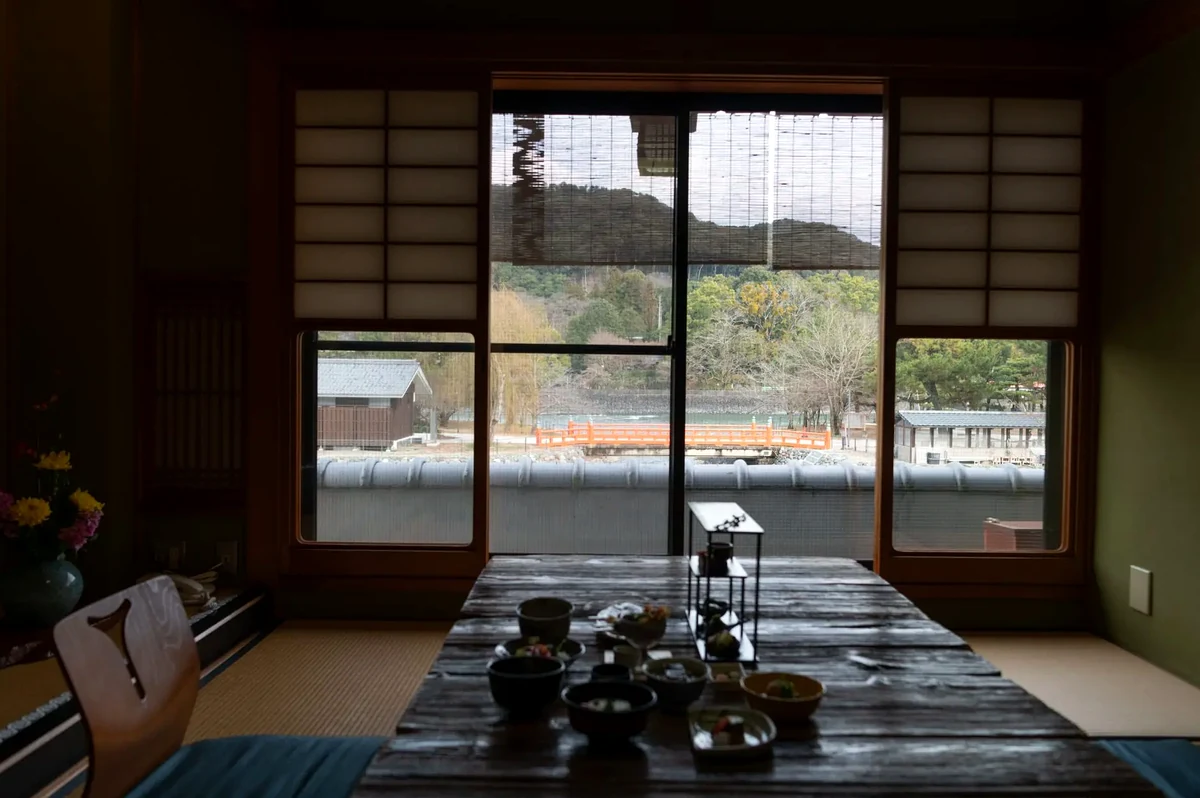
At the very threshold, tea guests encounter the inimitable Nijiriguchi sliding entrance. Measuring barely ninety centimeters square, this low crawl-through doorway is built so low that everyone—from mighty feudal lords and shoguns to humble travelers—must bow deeply, kneel, and duck through the narrow opening to enter. During the turbulent era of Samurai warlords, the Nijiriguchi enforced an inviolable rule: all weapons, from long katana swords to short wakizashi blades, had to be unbuckled and placed on the exterior *katanakake* sword rack beneath the eaves. The act of bowing low to pass through this portal served as a ritual shedding of rank, authority, and social class, transforming the interior of the Chashitsu into a sanctuary of absolute equality where nothing existed save the grace and serenity of two kindred spirits sharing tea.
The spiritual focal point inside the tearoom is the Tokonoma, a recessed alcove arranged with solemn reverence like an altar of art. Here, the guest’s gaze rests upon a hanging scroll (*Kakejiku*) inscribed with expressive ink calligraphy, typically conveying profound Zen maxims such as *Wa-Kei-Sei-Jaku* (Harmony, Respect, Purity, Tranquility) or *Ichi-go Ichi-e* (One Time, One Meeting) to center the mind. Directly beneath the calligraphy stands a rustic ceramic vase holding a single floral arrangement in the *Chabana* style. Far removed from the elaborate splendor of courtly Ikebana, Chabana celebrates breathtaking minimalism: perhaps a single wildflower plucked from a riverbank path in Uji or a fresh tea bud glistening with morning dew, placed naturally as though still quietly blooming in the wild.
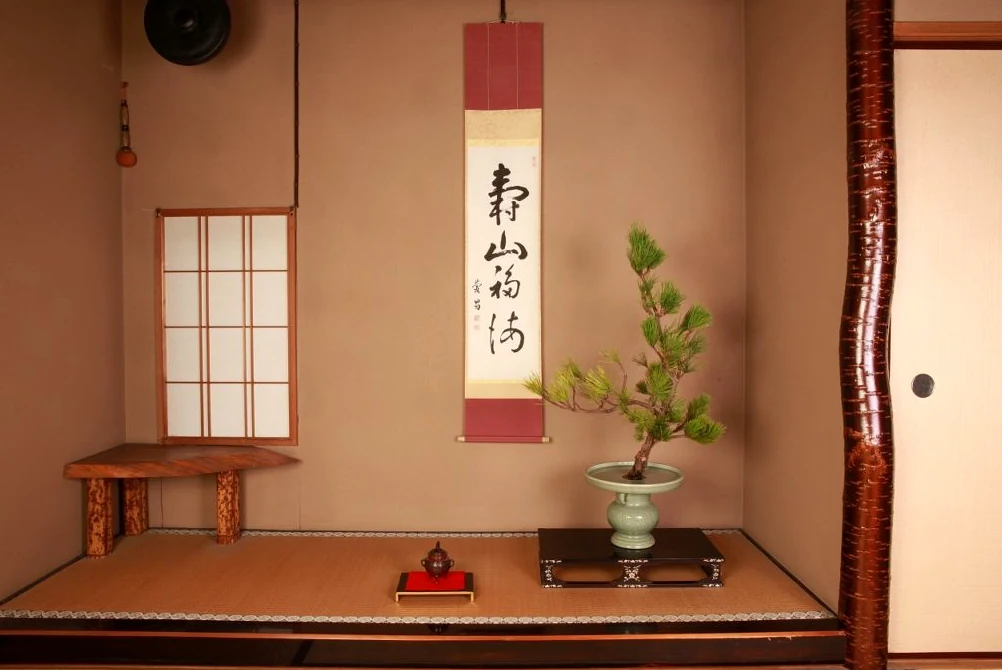
Chashitsu spatial craftsmanship in Kyoto’s tea heartland reaches its zenith through a resolute rejection of material ostentation in favor of deep reverence for raw natural textures. Earthen *tsuchikabe* walls are plastered with local clay mixed with chopped straw, leaving organic fibers and subtle age-induced hairline cracks visible as living embodiments of Wabi-sabi beauty. Structural frames employ unplaned pine and cedar timbers with their rough bark intact alongside hand-bent aged bamboo poles. The tearoom floor is laid with Tatami mats woven from natural *igusa* rush grass, releasing a crisp, earthy meadow fragrance with every step.
Lighting inside a Chashitsu is never harsh or direct, always filtered softly through translucent *Shoji* paper screens that diffuse bright daylight into the gentle glow of twilight. Within that chiaroscuro stillness, all worldly clamor recedes beyond the riverside willows of Uji, yielding completely to the soft whisper of boiling water—likened to wind sighing through pine boughs—singing inside a cast-iron *nambu tetsubin* kettle over glowing charcoal, forming an architectural whole that is quiet and enclosed yet boundless in transcendent spirit.
As sunset fades behind rolling hills carpeted in tea plantations, the town of Uji sheds its daytime bustle to drape itself in the contemplative, ethereal veil of an ancient capital steeped in Zen serenity. Beneath Kyoto’s deep night sky, the millennial Uji-gawa flows endlessly beneath the arches of Ujibashi Bridge—first built in 646 AD by the monk Doto during the reign of Emperor Kotoku—unveiling an enchanting nocturnal canvas of light and sound. Worlds away from modern cities ablaze with neon, night in Uji is woven from primal darkness punctuated by the warm, gentle glow of *washi* paper lanterns swaying beneath the eaves of centuries-old teahouses.
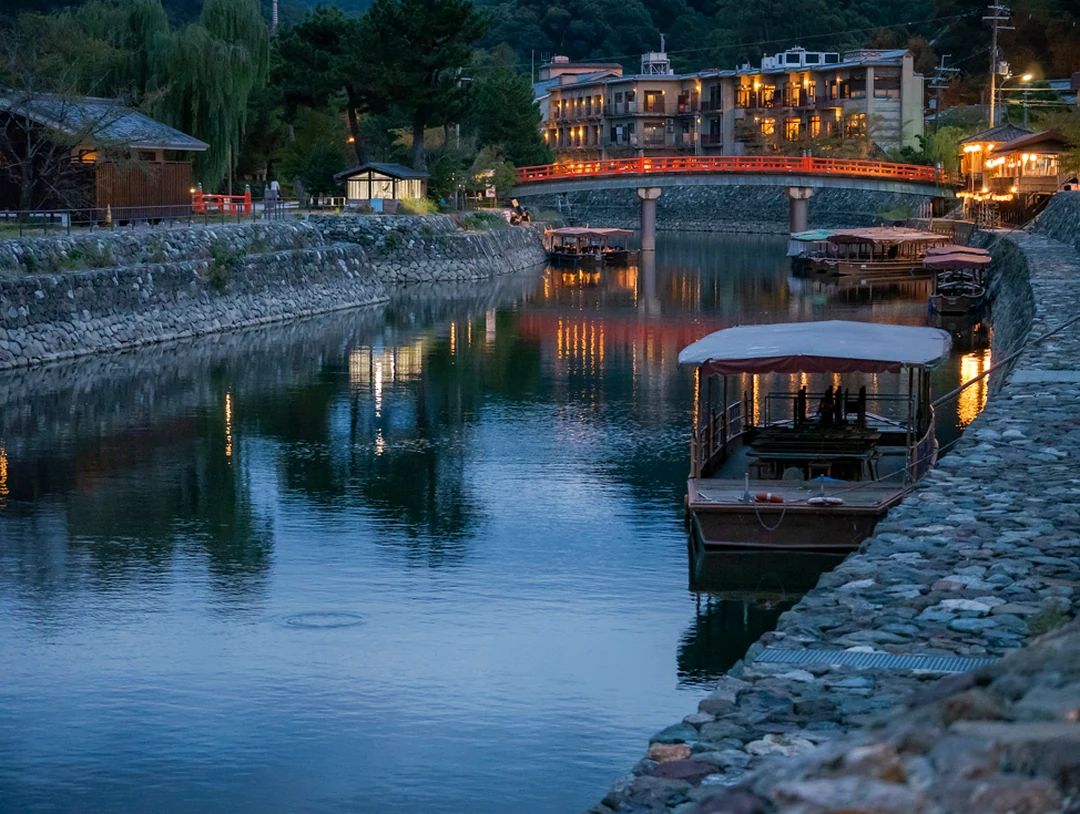
The most vivid and nostalgic highlight of Uji’s nocturnal tapestry is *Ukai*—the ancient art of cormorant fishing on the Uji-gawa River, a storied tradition recorded in detail as early as the Heian period in the immortal literary masterpiece *Genji Monogatari*. In the hush of night, traditional wooden boats glide effortlessly across glassy waters, illuminated by blazing fire baskets (*kagaribi*) suspended from their prows. Master *Ushou* fishermen clad in traditional straw skirts and indigo tunics guide teams of trained cormorants diving swiftly through the cool current, choreographing a mesmerizing dance of fire, water, and shadow. Crimson flames flicker across ripples, glowing embers drift upward into the night air, and the rhythmic tapping of wooden oars echoes a distant ancient Japan where the boundary between reality and legend dissolves.
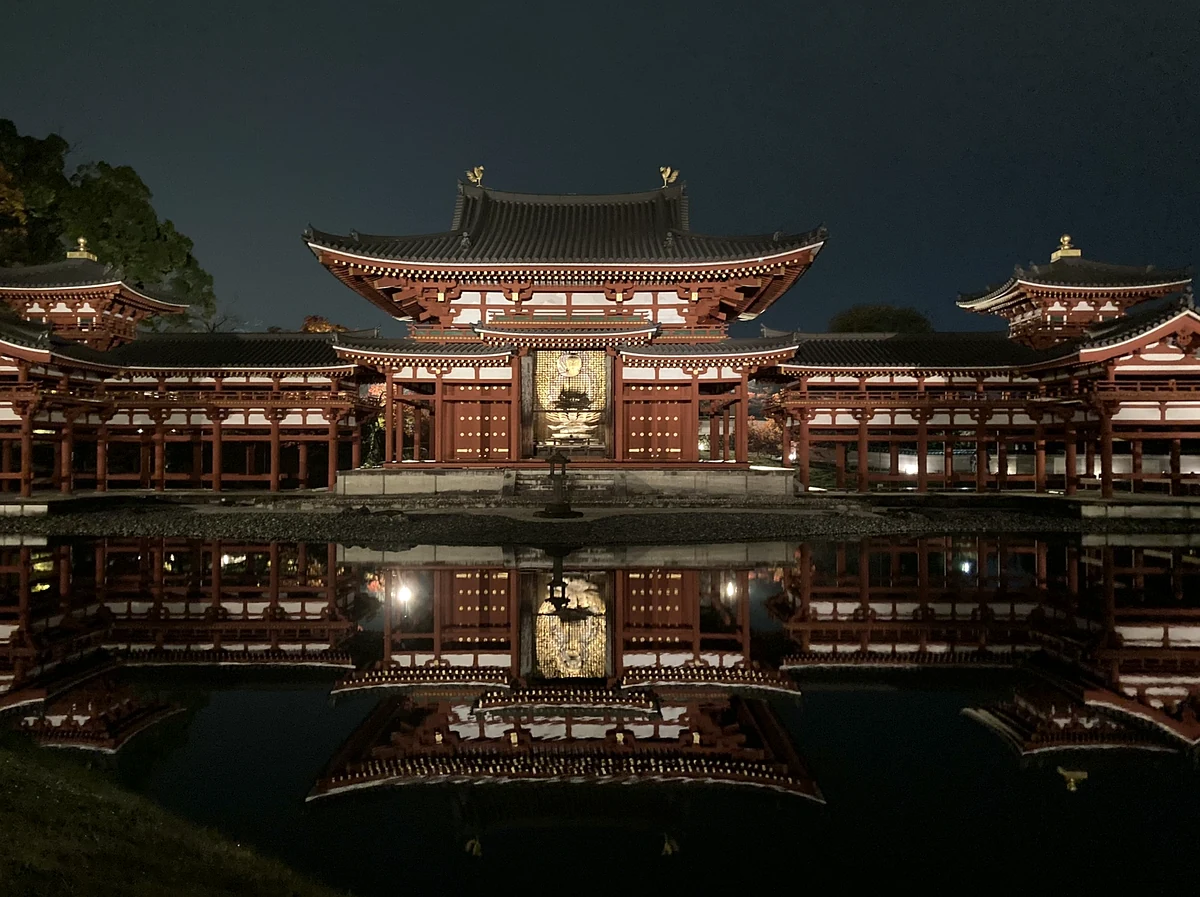
During special seasonal transitions, subtle architectural illumination also awakens the otherworldly grace of Byodoin’s Phoenix Hall—the Pure Land masterpiece erected in 1053 by Regent Fujiwara no Yorimichi. Indirect artistic lighting accentuates every sweeping curve of its upturned tiled eaves and the pair of bronze phoenixes perched proudly atop the ridge, casting a mirror-perfect reflection onto the tranquil surface of Aji-ike Pond. The scene evokes the Western Paradise made manifest on earth, at once solemnly majestic and steeped in *Yugen*—the profound, mysterious beauty cherished by Japanese poets and thinkers of old.
Evening exploration draws to a peaceful close inside traditional *ryokan* inns nestled along the riverbank. Stepping past wooden-framed Shoji sliding doors, the outside world gives way to the soothing scent of woven Tatami mats and lingering incense smoke. Here, an evening tea Kaiseki banquet unfolds as a refined culinary symphony in which premier matcha powder is woven seamlessly into heirloom dishes—from vibrant green Cha-soba noodles and silky matcha tofu to seasonal handcrafted *wagashi* sweets. Inside a quiet tearoom, as the gentle murmur of boiling water in a cast-iron *nambu tetsubin* kettle blends with soft river waves lapping against Uji’s landing, cradling a steaming bowl of rich *Koicha* thick tea allows each guest to experience the true essence of *ichi-go ichi-e*—pure spiritual renewal beneath the ancient capital sky.
Stepping out from the secluded serenity of traditional teahouses tucked beside the mist-draped Uji River, reverence for Kyoto’s celebrated botanical treasure extends seamlessly across an inimitable local culinary landscape. Over the centuries since Tea Saint Sen no Rikyu codified *Cha-kaiseki* banquet aesthetics during the Azuchi-Momoyama period, young Uji tea leaves evolved beyond ceremonial whisking to become the living soul of Japanese gastronomy. In Uji, fresh spring tea buds transformed by generations of master artisans infuse all five flavors, painting a culinary portrait at once ethereally refined and warmly grounded—where time-honored craft intertwines effortlessly with contemporary creativity.
A signature dish opening this gastronomic journey is the renowned green tea buckwheat noodles, *Cha-soba*, at Itohkyuemon, a storied tea house that has set culinary standards since the late Edo period. Far removed from mass-produced noodles, heirloom Cha-soba demands an exact ratio between Honshu buckwheat flour and premier stone-ground matcha milled by hand on granite querns. Each glossy jade-green strand retains the fresh aroma of spring leaves alongside a gentle astringent-sweet finish that blooms upon the palate. Diners can savor the noodles chilled on a traditional bamboo *zaru soba* tray—dipped into a delicate *dashi* broth simmered from shaved *katsuobushi* bonito and deep-sea *kombu* kelp—or enjoy a steaming bowl of hot soba brimming with nuanced umami warmth on crisp Kyoto days.
Uji’s culinary artistry reaches its highest expression in *Cha-kaiseki*, the courtly multi-course meal originally conceived to prepare the palate prior to serving rich, concentrated *koicha* thick tea. Wabi-sabi philosophy permeates every minimalist yet painstakingly crafted course, highlighted by crispy tempura made from first-harvest spring Uji tea leaves. Tender young leaves are coated in a gossamer batter and flash-fried in bubbling sesame oil for mere seconds to lock in their vivid green color and shatteringly crisp texture; dusted with fine sea salt blended with matcha (*matcha-shio*), they awaken every sense. The meal is further graced by fragrant *cha-meshi* rice steamed in aromatic roasted *bancha* or *hojicha* tea infusion, lending each grain a warm amber hue and deep, earthy fragrance.
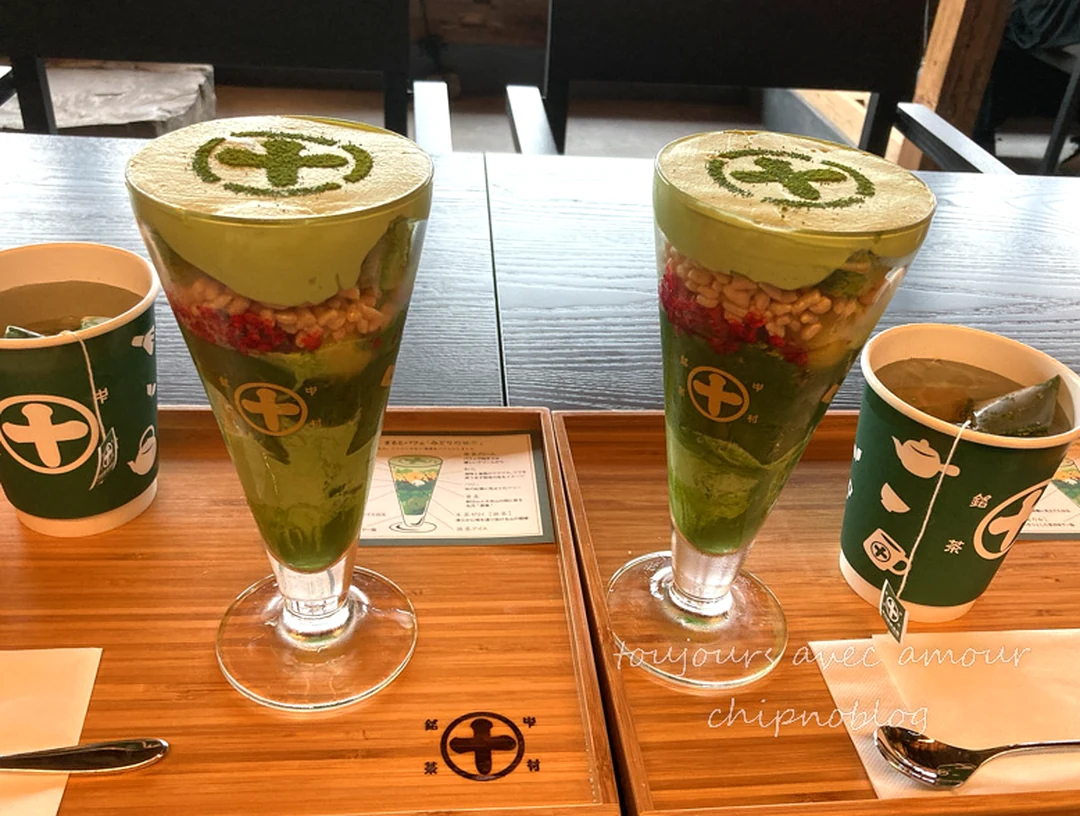
Alongside time-honored classics, the historic tea house Nakamura Tokichi—tracing its roots back to the first year of the Ansei era (1854)—unveils a dazzling world of modern confections led by its legendary Matcha Parfait. Served inside a chilled section of fresh green bamboo, this dessert layers refreshing green tea *kanten* jelly, chewy white *shiratama* mochi dumplings, slow-simmered sweet Tamba *azuki* red beans, and velvety matcha ice cream. Notably, their curated range of matcha gelatos—calibrated across five distinct intensity levels from delicately floral to intensely chlorophyll-rich—lets guests explore the full aromatic spectrum of Uji’s premier harvest. Every bittersweet, smoothly melting spoonful serves as a lingering coda to a deeply rooted culinary heritage.
Journeying to the cradle of Japanese tea culture in Uji is effortless thanks to the Kansai region’s punctual, seamless rail network. Departing from central Kyoto Station, travelers simply board a rapid train on the JR Nara Line, watching urban streets give way to emerald tea hills in just seventeen to twenty-two minutes for a modest fare of around 240 yen each way. Alternatively, the private Keihan Uji Line offers an equally poetic ride, winding past quiet neighborhoods before stopping right beside the northern bank of the scenic Uji River. Stepping onto the platform, crisp morning air scented with roasting tea leaves immediately guides visitors into the serene sanctuary of a thousand-year-old tea capital.
To touch the soul of authentic matcha culture, an unmissable cultural stop is the municipal teahouse Taihoan, situated prominently directly across from Byodoin Temple along the breezy Uji Riverbank. Bearing a name signifying a pavilion gazing toward the Phoenix, Taihoan welcomes guests daily from 9:30 AM to 4:00 PM. For a modest fee of roughly 2,000 yen per person, visitors kneel peacefully on fresh-scented tatami mats, observe the tea master’s precise ladling and whisking movements, and even try whisking their own frothy emerald bowl of matcha. Just steps away at the foot of historic Ujibashi Bridge stands Tsuen Tea, an extraordinary living landmark founded in 1160 during the late Heian period. Passed down continuously across twenty-four generations of the Tsuen family over more than eight centuries, it is recognized as the oldest continuously operating teahouse on Earth—having once hosted legendary historical figures such as warlord Toyotomi Hideyoshi and master swordsman Miyamoto Musashi pausing along their journeys for a restorative bowl of tea.
Partaking in tea inside Uji’s traditional tearooms calls for mindfulness and familiarity with subtle etiquette rooted in Zen philosophy. When the tea master respectfully presents the *chawan* tea bowl, receive it with your right hand and cradle it in your left palm, offering a slight bow of gratitude to both the host and your fellow guest beside you. Before raising the bowl to your lips, turn it clockwise twice with your right hand—a gesture of humility designed to avoid placing your lips directly over the ornate front design reserved for visual admiration. The noble astringency and lingering sweetness of matcha are best savored in three unhurried sips after enjoying a seasonal *wagashi* sweet. On the final sip, proper etiquette calls for a crisp, audible draw known as *suikiri*—a subtle compliment signaling to the host that you have savored every last drop of liquid jade with complete appreciation.
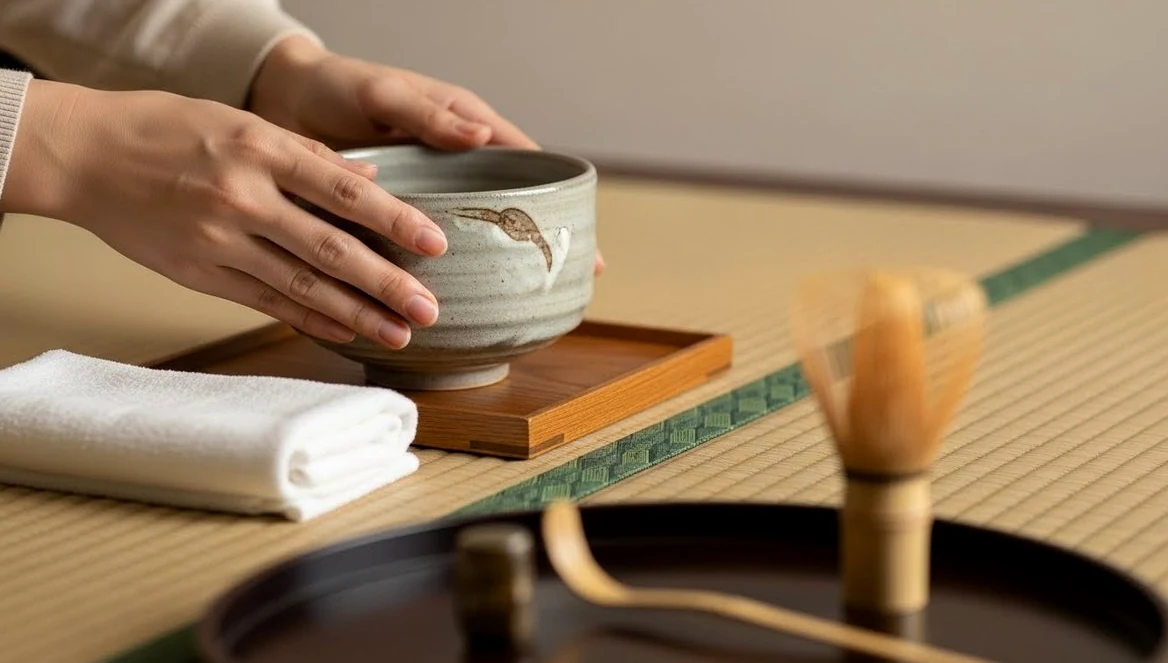
To preserve the dignity and unadorned *wabi-sabi* spirit of Uji’s tea heritage, seasoned travelers advise steering clear of rushed commercial tour stops that herd visitors into crowded souvenir shops selling low-grade blended powders. Instead, seek out established heritage tea estates or settle quietly inside centuries-old tea salons to hear authentic stories of terroir and meticulous pre-harvest *oishita saibai* shading techniques. Dressing modestly and removing metal rings or watches before handling priceless glazed ceramic bowls also reflects thoughtful cultural respect. To immerse yourself fully in the tranquil rhythm of Japan’s ancient capital and experience the true depth of *ichi-go ichi-e*, explore curated shopping-free itineraries through an in-depth all-inclusive Japan tour package designed for authentic, elevated cultural discovery.