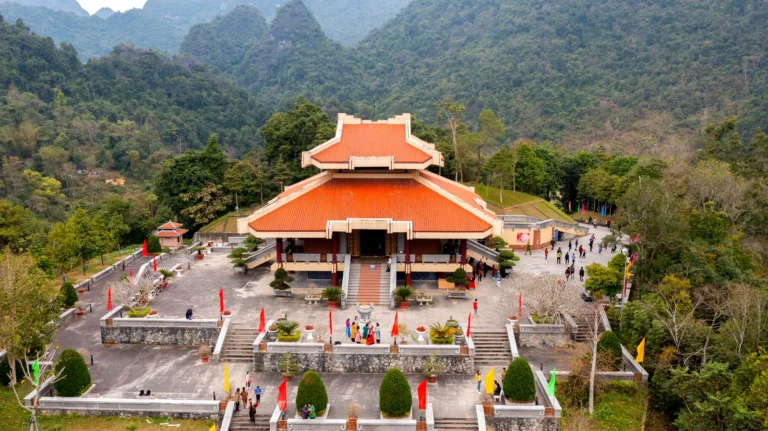
Amidst the rugged mountains of southwestern China, where rolling peaks cradle the windswept Yunnan Plateau basin, the origin story of “Crossing-the-Bridge Rice Noodles Town” (过桥米线小镇) flows like a deep current of heritage, linking the dramatic upheavals of imperial dynasties with contemporary cultural spatial planning. The roots of both its name and its singular culinary art sprouted during the turbulent twilight of the Qing Dynasty, specifically spanning the Xianfeng (1850–1861) and Tongzhi (1862–1874) eras. At that time, on a tranquil islet nestled in the center of South Lake (Nanhu) in Mengzi County, picturesque mountain-and-water scenery became a quiet retreat for Confucian scholars immersed day and night in classical texts. That serene sanctuary was separated from worldly bustle by a winding wooden bridge connecting the emerald shores—and it was that very bridge that became the historical backdrop for one of Yunnan’s most enduring culinary icons.
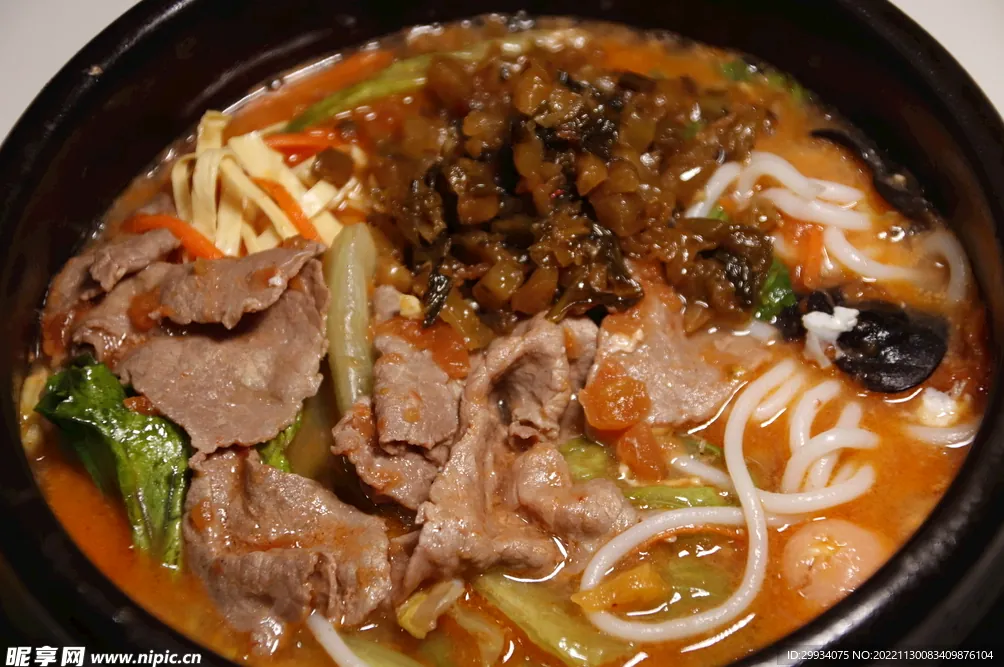
Local folklore binds this dish intimately to the quiet devotion of traditional wives during the imperial civil examination era. Legend tells that so her husband could focus wholeheartedly on preparing for the provincial exams free from urban distractions, a devoted wife carried meals daily across the long bridge leading to the small islet in South Lake. However, chilly lake winds and the arduous walk inevitably left the food lukewarm by the time it reached the scholar, causing him to grow frail over time. One day, after stewing a whole chicken inside a thick unglazed earthenware pot, she noticed that the layer of golden fat floating atop the broth acted as a natural thermal seal, keeping the soup piping hot beneath for hours. Inspired by this intuitive discovery, the inimitable “crossing-the-bridge” (*guoqiao*) dining method was born: scalding-hot chicken-and-marrow broth was carried separately, accompanied by gossamer-thin slices of pork, chicken breast, and fresh fish alongside springy *mixian* rice noodles cooked instantly at the table. The bowl not only dispelled the highland chill, but crystallized conjugal devotion, perseverance, and the scholarly aspirations of the age.
Across more than a century of historical storms—from the fall of the Manchu Qing dynasty through sweeping eras of social reconstruction—the fame of Crossing-the-Bridge Rice Noodles spread far beyond Mengzi County to every corner of Yunnan. Yet throughout much of that history, this heritage resided mostly within modest family-run eateries, street-side food stalls, and scattered small vendors. Without cohesive spatial curation, this deeply human cultural narrative risked becoming fragmented and diluted amid early commercial sprawl.
A comprehensive turning point arrived when China’s State Council launched its national “Characteristic Town” development initiative between 2016 and 2020. Recognizing the iconic value of Crossing-the-Bridge Rice Noodles within China’s intangible cultural heritage, municipal authorities in Kunming envisioned elevating this beloved culinary tradition into a multifaceted cultural tourism hub. Rather than leaving artisans dispersed, a master plan established the Jinning Crossing-the-Bridge Rice Noodles Town within the Maxiang Cultural Tourism Zone in historic Kunyang, Jinning District, Kunming.
This ambitious urban vision marked a remarkable evolution from humble folk gastronomy into a large-scale cultural destination. Within Jinning’s newly crafted setting, nostalgic memories of South Lake Islet during the Xianfeng and Tongzhi eras are brought to life through ornate classical architecture, traditional rice-noodle workshops, and an engaging thematic museum. What began beside a scholar’s modest study on the waters of old Mengzi has blossomed into a premier gastronomic landmark preserving the finest essence of the past amid contemporary cultural exchange.
Positioned in the heart of Jinning District (ancient Kunyang) just south of provincial capital Kunming, Crossing-the-Bridge Rice Noodles Town inherits the auspicious geomantic energy of the Yunnan-Guizhou Plateau. Geomancers praise its classic “backed by mountains, facing water” setting—sheltered behind rolling limestone hills while looking out toward the shimmering turquoise expanse of Dianchi Lake, the vast freshwater jewel hailed as the “Bright Pearl of the Western Plateau.” Historically, Jinning served as the cradle of the ancient Dian Kingdom and the birthplace of Ming Dynasty maritime explorer Zheng He. Blessed with harmonious mountain and lake energies, the area enjoys a temperate, spring-like climate year-round, offering an ideal canvas where culinary heritage meets ecological serenity.
The town’s spatial layout artfully blends natural basin contours with traditional local garden architecture. Following gentle lakeside slopes, architects designed a circulating artificial waterway system modeled after silky strands of white rice noodles flowing gracefully through the grounds. Fresh mountain spring water gathers through stone channels and lotus ponds before winding beneath arched stone bridges reminiscent of miniature Broken Bridge or Seventeen-Arch Bridge silhouettes. Streetscapes recreate Yunnan’s signature “three courtyards and one screen wall” (*sanfang yizhaobi*) residential layout framed by weeping willows, crabapple blossoms, azaleas, and magnolias blooming across the seasons. This thoughtful interplay of bluestone paving, dark clay-tiled roofs, and cool flowing water naturally moderates the microclimate while creating tranquil green buffers that whisk visitors away from Kunming’s urban bustle the moment they step through the town gates.
Beyond auspicious geomancy, the town sits along vital cross-border transport corridors linking southwestern China with Southeast Asia. Regional connectivity shines through seamless multi-modal infrastructure: high-speed trains from border hub Hekou North Station reach Kunming South Station in a smooth 1 hour and 35 minutes to 2 hours, making cross-border arrivals remarkably effortless. For travelers who enjoy scenic overland drives, the cross-border G80 Kunming–Hekou Expressway stretches straight from the Lao Cai international border gate to Kunming in roughly 4 to 4.5 hours, winding past dramatic karst valleys and gorges. Meanwhile, Kunming Changshui International Airport—one of mainland China’s busiest international aviation hubs—provides convenient global access.
Thanks to this strategic location, Crossing-the-Bridge Rice Noodles Town naturally serves as a pivotal waypoint in southwestern itineraries—bridging heritage routes running from Lao Cai through noodle birthplace Mengzi and Jianshui Ancient Town into Kunming, or linking downtown Kunming with the geological wonders of the Stone Forest (Shilin) and Dounan Flower Market. Standing amidst picturesque waters, listening to streams murmur beneath stone arches while mist drifts across Dianchi Lake, travelers feel how nature, topography, and human craft unite to honor an enduring culinary legacy.
Exploring the master plan of Crossing-the-Bridge Rice Noodles Town, discerning visitors admire the seamless synthesis of modern development vision and thousand-year-old cultural aesthetics. Backed by an investment exceeding 3.5 billion RMB across more than 3,200 *mu* (roughly 213 hectares), the complex functions far beyond a commercial reconstruction—acting as a living open-air architectural museum where every lane, bridge, and veranda tells a story of cultural exchange along southern historical trade routes.
The prevailing architectural language pairs classical Yunnan *Dian*-style residences with lyrical Jiangnan water-garden aesthetics. Gray-tiled roofs arranged in traditional *sanfang yizhaobi* courtyards and stepped gable walls carved with cloud-and-flame motifs nestle beside weeping willows reflected in still ponds. Adding distinctive visual character are subtle late-nineteenth-century French colonial touches—recalling the historic era when the legendary Hai Phong–Yunnan Railway opened, introducing graceful arched windows, wrought-iron balconies, and warm ochre facades to old Mengzi.
Resting at the heart of the complex is Nanhu Revival Square, serving as the vibrant civic hub connecting daily life throughout the town. Its centerpiece is a sprawling artificial lake crafted to recreate Mengzi’s famed South Lake—the legendary birthplace of Crossing-the-Bridge Rice Noodles. Arching gracefully across the emerald water is a three-span stone bridge evoking the quiet elegance of historic water towns. Gazing out from the bridge, a multi-tiered Moon-Viewing Pavilion with upturned eaves rises against the sky, offering an idyllic spot to admire mountain reflections and moonlight shimmering on the water at dusk.
Right beside this scenic waterfront stands the Crossing-the-Bridge Rice Noodles Culture Museum, a sanctuary safeguarding the memory and soul of the dish. Stepping through heavy timber doors, visitors embark on an anthropological journey spanning centuries. Thoughtfully curated galleries preserve hundreds of authentic artifacts—from rudimentary Ming-dynasty rice farming implements and time-worn stone grain mills to Qing-dynasty blue-and-white glazed earthenware pots once used to simmer rich chicken broths. Historical documents, antique waisted bowls, and kitchen heirlooms trace the remarkable evolution of a humble folk comfort dish into an intangible cultural treasure of southern Yunnan.
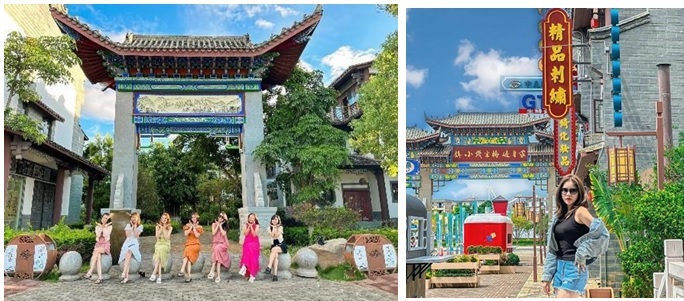
As twilight dips behind the undulating limestone peaks of the Yunnan Plateau, Crossing-the-Bridge Rice Noodles Town sheds its tranquil daytime demeanor to don a dazzling mantle of contemporary light art. Thousands of intelligent architectural lighting fixtures illuminate winding canal banks and upturned eaves, casting shimmering reflections across the water. Designers modeled this nocturnal visualscape on historical reconstructions of late-nineteenth-century Yunnan–Vietnam trading ports following the arrival of the railway. Warm amber light from rows of traditional red silk lanterns intertwines with subtle LED projection mapping across gray brick walls, recreating a prosperous riverside trading hub where scholars and merchants once gathered from every direction.
A standout highlight of the evening experience is the seamless fusion of millennial heritage with interactive virtual reality (VR). Inside thematic exhibition halls scattered across the town, visitors step backward in time to the Qianlong reign of the Qing Dynasty, immersing themselves directly in the quiet setting of South Lake Islet. Through multi-dimensional optical displays and spatial surround sound, the touching tale of the devoted wife—preparing rich chicken broth sealed beneath a golden layer of fat and carrying delicate rice noodles and paper-thin slices of meat and fish across the wooden bridge to sustain her studying husband—unfolds in vivid detail. Digital storytelling also recreates artisanal stone-milled noodle making and traditional wood-fired broth simmering, lifting folk legend off ancient pages into heartfelt emotional connection.
The crisp plucking of *yueqin* moon lutes and rhythmic wooden clappers echo across lakeside pavilions as night deepens, heralding the start of traditional southern Yunnan folk performances. On rustic waterside stages, local artists perform graceful *Huadeng* lantern opera excerpts accompanied by plaintive *hulusi* gourd flutes and bamboo pipes played by Yi and Hani ethnic musicians native to the Red River basin. Melodies alternating between lyrical tenderness and lively hoofbeat rhythms reminiscent of the Ancient Tea Horse Road drift through soft evening mist over the lake. Visitors can pause beneath clay-tiled tea verandas, sip robust Pu-erh tea, and listen to folk ballads celebrating faithful love woven into every steaming bowl of noodles—feeling living artistic heritage thrive in the digital age.
Stretching along the waterfront, bluestone-paved pedestrian lanes guide visitors into a vibrant yet unhurried open-air cultural marketplace. The town’s management strictly prohibits forced shopping traps or aggressive touting, honoring authentic local craftsmanship instead. Beneath warm light spilling from timber-framed workshops, artisans demonstrate intricate ethnic brocade embroidery, Mile blue-and-white pottery throwing, and traditional earthenware pot glazing. Mouthwatering aromas of bubbling chicken broth, scallions, star anise, black cardamom, and freshly steamed rice drift through every lane in the crisp highland evening, creating a deeply atmospheric nocturnal experience steeped in old Yunnan charm.
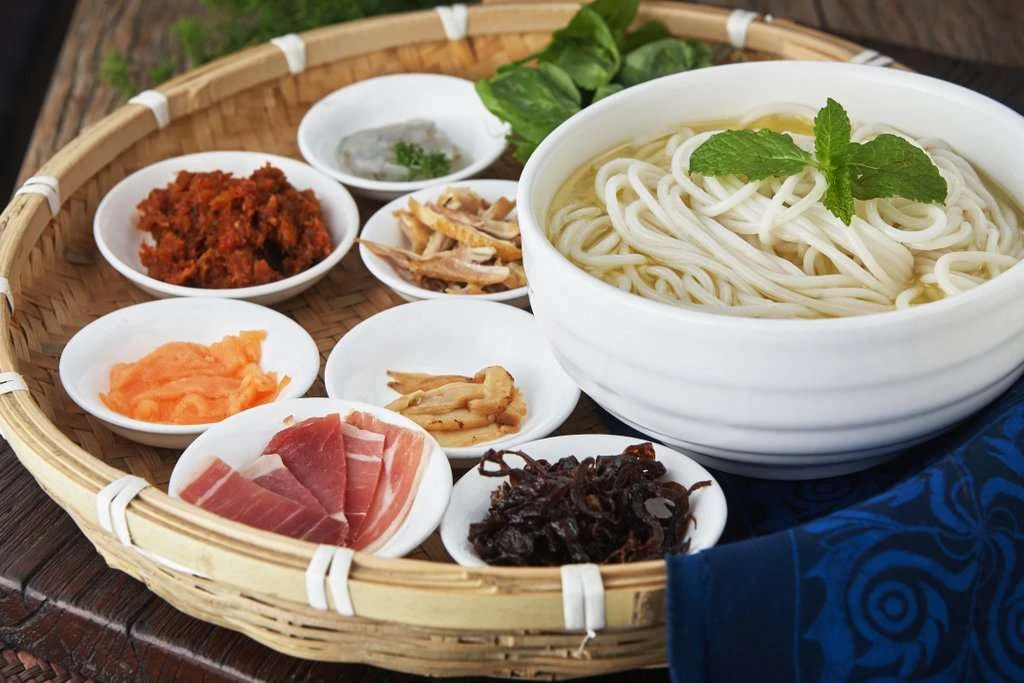
Stepping inside Crossing-the-Bridge Rice Noodles Town immerses diners in a rich yet delicate tapestry of flavors where Honghe Prefecture’s heirloom gastronomy comes alive. At the heart of this culinary showcase naturally stands traditional Crossing-the-Bridge Rice Noodles, a masterpiece born of conjugal devotion and preserved faithfully across centuries. Its legendary reputation begins with a deeply nourishing broth simmered continuously for six to eight hours from old hens, free-range duck, and pork marrow bones. Through prolonged extraction, the broth achieves a luminous golden sheen and natural richness without artificial enhancers. The defining culinary secret is a thick layer of golden chicken fat floating across the ceramic bowl—acting as an invisible thermal lid keeping the soup beneath above 90°C even when the surface appears completely still and steamless.
Enjoying Crossing-the-Bridge Rice Noodles here is far more than a quick meal; it is a culinary ritual governed by strict sequence. The moment the scalding ceramic bowl arrives, diners immediately slide in paper-thin slices of raw protein—pork tenderloin, chicken breast, crisp grass carp, and raw quail eggs. The intense trapped heat cooks each delicate slice in seconds, locking in natural juiciness and sweet flavor. Next come wild highland mushrooms, wood-ear fungi, banana blossoms, and fresh herbs to balance richness and warmth. Finally, smooth, springy strands of fresh rice noodles crafted from Mengzi’s prized local rice are lowered into the golden broth, completing a harmonious bowl balanced in flavor and texture.
Beyond rustic tavern servings, the town also revives the pinnacle of courtly gastronomy through the Imperial Crossing-the-Bridge Rice Noodles Banquet. Inspired by the height of Qing-dynasty culinary refinement, this banquet is presented on intricate blue-and-white porcelain featuring 12 to 24 small dishes arranged symmetrically around the royal broth tureen. Each small dish symbolizes a rank in the imperial civil service, gathering premier Yunnan mountain delicacies ranging from matsutake mushrooms and aged Xuanwei ham to freshwater shrimp and spice-marinated quail. Guided tableside service turns every step of assembling the bowl into a dignified visual and aromatic performance.
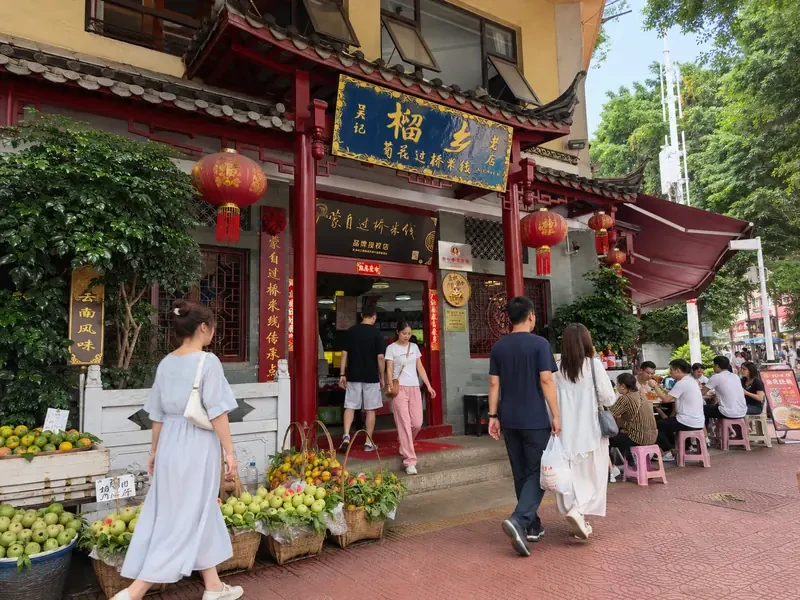
Alongside the star noodle bowls, the town’s culinary map delights wanderers with beloved local street specialties. Sizzling over glowing street-corner charcoal braziers is Mengzi Grilled Tofu, boasting a puffed, golden-crisp crust enclosing a creamy, custard-soft center—always dipped into fiery dry chili-spice powder ground from roasted chilies, wild mountain peppercorns, roasted salt, and highland cardamom. To refresh the palate afterward, savor freshly baked Dounan rose flower cakes—where fragrant sugar-cured crimson rose petals nestle inside flaky puff-pastry layers—paired with a small cup of mildly sweet, artisanal fermented fruit rice wine that leaves herbal highland notes lingering on the tongue.
To experience the classic charm and lively atmosphere of Crossing-the-Bridge Rice Noodles Town at its best, the ideal time to visit runs from March through October. During these months, Mengzi’s highland climate stays comfortably mild, avoiding brisk borderland winter chills while welcoming fiery pomegranate blossoms across the Honghe valley. The town welcomes visitors from early morning until rows of glowing red lanterns illuminate its clay-tiled roofs late into the evening. Pleasant spring and summer weather makes strolling bluestone alleys effortless while awakening your appetite for steaming bowls of heirloom bone-broth noodles simmering round the clock.
In terms of travel logistics and border clearance, proximity to northern Vietnam makes Mengzi one of the most accessible international getaways. Travelers departing from Hanoi can reach the Lao Cai International Border Gate by road in just a few hours to cross into Hekou. Opting for a Border Pass or Group Tourist Visa through a licensed tour operator streamlines paperwork, saving both cost and processing time compared to individual sticker visas. Once across the border, modern high-speed trains or dedicated tourist coaches along karst-lined expressways whisk visitors into central Mengzi in under two hours.
Stepping into daily life in modern Yunnan, travelers immediately adapt to a highly developed cashless economy. Across virtually all restaurants, teahouses, and food stalls in town, payments run smoothly via ubiquitous mobile QR apps such as Alipay and WeChat Pay, both of which now support direct linking with international Visa and Mastercard credit or debit cards. This seamless setup enhances security, eliminates bulky currency exchange hassles, and delivers effortless local convenience—though carrying a small reserve of small-denomination RMB cash remains handy for tiny craft stalls or momentary mobile signal drops.
Savoring authentic Crossing-the-Bridge Rice Noodles requires mindful attention to thermal physics. When the oversized glazed ceramic bowl arrives at your table, it appears deceptively calm—barely releasing a wisp of steam even though the chicken-and-marrow broth beneath exceeds 100°C, insulated tightly beneath its golden layer of chicken fat. Never sip the broth immediately upon arrival, as it can cause severe burns. Instead, follow the time-honored sequence: immediately slide in the paper-thin slices of raw pork tenderloin, chicken breast, fresh fish, and raw quail eggs so trapped heat cooks them instantaneously; follow with fresh mushrooms, bean curd skin, edible chrysanthemum petals, and crisp vegetables; and finally gently lower in the glossy rice noodles, stir lightly, and savor at leisure.
Beyond culinary etiquette, protecting your experience as a traveler ensures your trip remains genuinely rewarding. Prioritize standardized, shopping-free itineraries where local eateries and agricultural shops display transparent QR traceability codes and regulated pricing monitored by Yunnan market authorities. Steering clear of cut-rate group tours prevents commercial detours and preserves tranquil time to soak in the poetic spirit of the historic town. For a smooth, enriching journey guided by deep regional insight without logistical stress, joining a thoughtfully curated all-inclusive Mengzi tour package unlocks the door to this timeless culinary heritage.