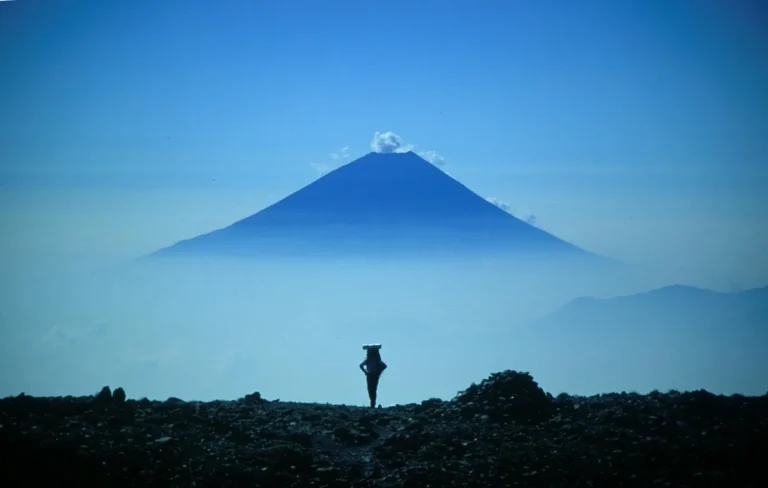
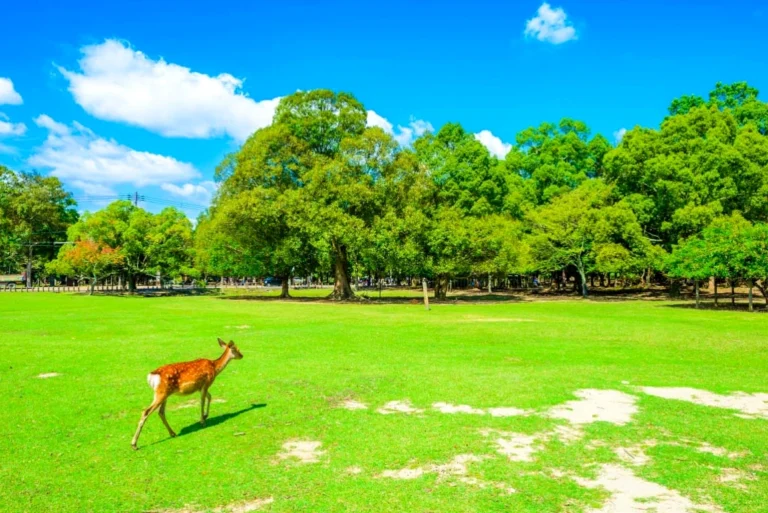
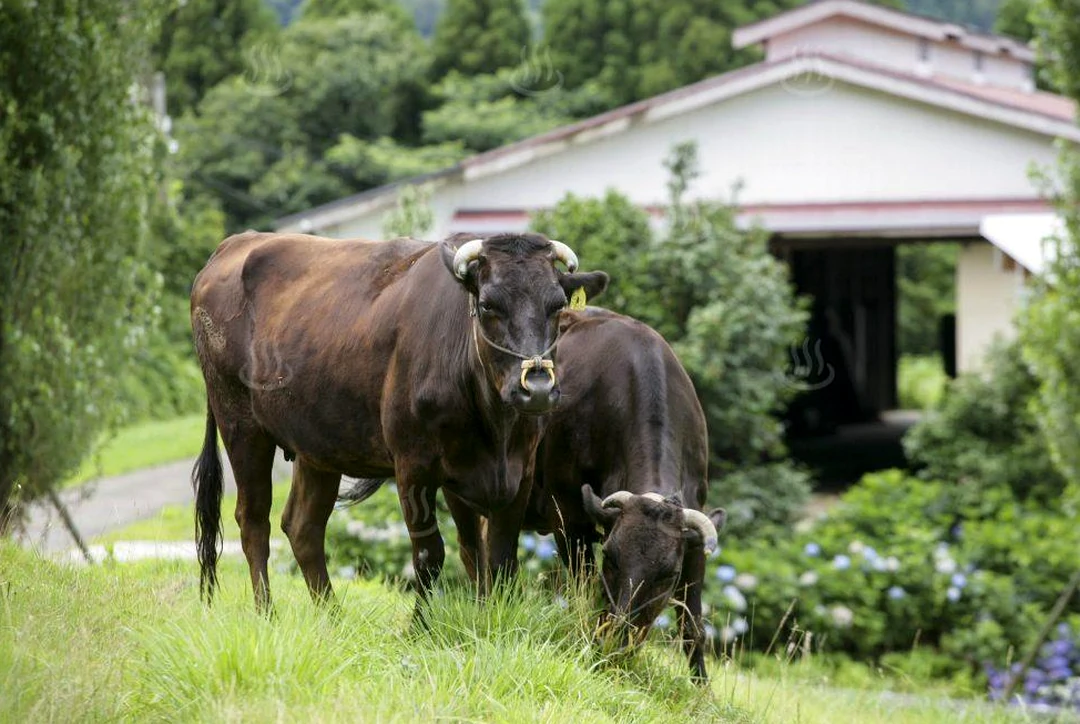
More than two thousand years ago, around the second century during the Yayoi period, the earliest herds of black-haired Kuroge Washu cattle rode ocean currents from the Chinese mainland across the Korean Peninsula to set foot on the Japanese archipelago. In their earliest days, these black cattle were entirely absent from royal banquets or culinary ceremonies; instead, they served purely as draft animals powering wet-rice agriculture in the Kansai region. Over centuries deeply shaped by Buddhist teachings and Shinto beliefs, the slaughter and consumption of four-legged animals were strictly prohibited by imperial decrees—inadvertently preserving the natural evolution of this breed as a loyal companion to farmers working steep terraced rice fields.
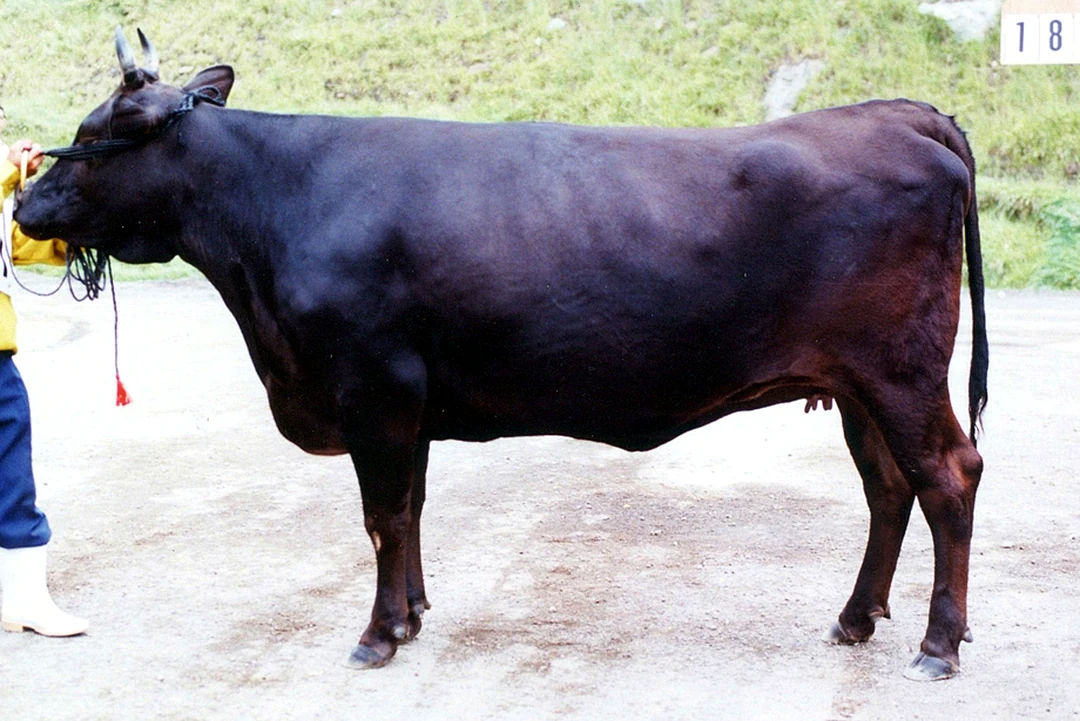
The defining turning point that forged the unique character of the Tajima bloodline unfolded throughout the Edo period (1603–1867), under the rule of the Tokugawa shogunate and its national isolation policy (Sakoku) lasting over two centuries. Amid this seclusion, the Tajima region (in present-day Hyogo Prefecture) became a self-contained ecological haven thanks to its rugged mountain ranges, deeply isolated valleys, and pure, mineral-rich subterranean spring waters. Absolute geographic isolation completely prevented crossbreeding with outside stock, enabling generations of local farmers to preserve the unblemished genetic purity of Tajima-gyu black cattle. Raised in a demanding climate marked by sharp day-and-night temperature swings, the cattle developed firm muscle fibers interlaced with delicate intramuscular fat, laying the biological foundation for their legendary marbled texture.
When the Meiji Restoration opened Japan to the world in 1868, the port of Hyogo formally inaugurated trade with the West, renaming itself the cosmopolitan harbor city of Kobe. The arrival of merchant ships, diplomatic missions, and European and American expatriates upended millennium-old dietary traditions across the Land of the Rising Sun. According to historical chronicles, an English merchant unaccustomed to local fare persuaded a farmer to part with a draft ox for cooking. The moment the beef was seared, its rich aroma and melt-in-your-mouth tenderness surpassed every Western culinary benchmark of the era, astonishing the expatriate community and propelling the name “Kobe Beef” across international settlements as a newfound gastronomic legend. Emperor Meiji’s personal tasting of beef in 1872 dismantled centuries-old psychological taboos once and for all, transforming a forbidden meat into the ultimate emblem of a new age of civilization and enlightenment.
To safeguard national prestige and protect this culinary treasure from unchecked commercialization, the Kobe Beef Marketing & Distribution Promotion Association was officially established in 1983. The organization instituted one of the strictest pedigree and quality control systems in human culinary history. A cut of beef may bear the authentic Kobe Beef title only when it satisfies every inviolable requirement: it must belong to the purebred Tajima bloodline; be born, raised, fattened, and processed exclusively within the administrative borders of Hyogo Prefecture; achieve a yield grade of A or B; and, most crucially, score a Beef Marbling Standard (BMS) rating of 6 or higher on a 12-point scale. Only after fulfilling all of these rigorous criteria is each carcass stamped with the Nojigiku chrysanthemum seal—the official floral emblem of Hyogo Prefecture—certifying a culinary heritage honed over centuries to reach the pinnacle of A5 Teppanyaki artistry.
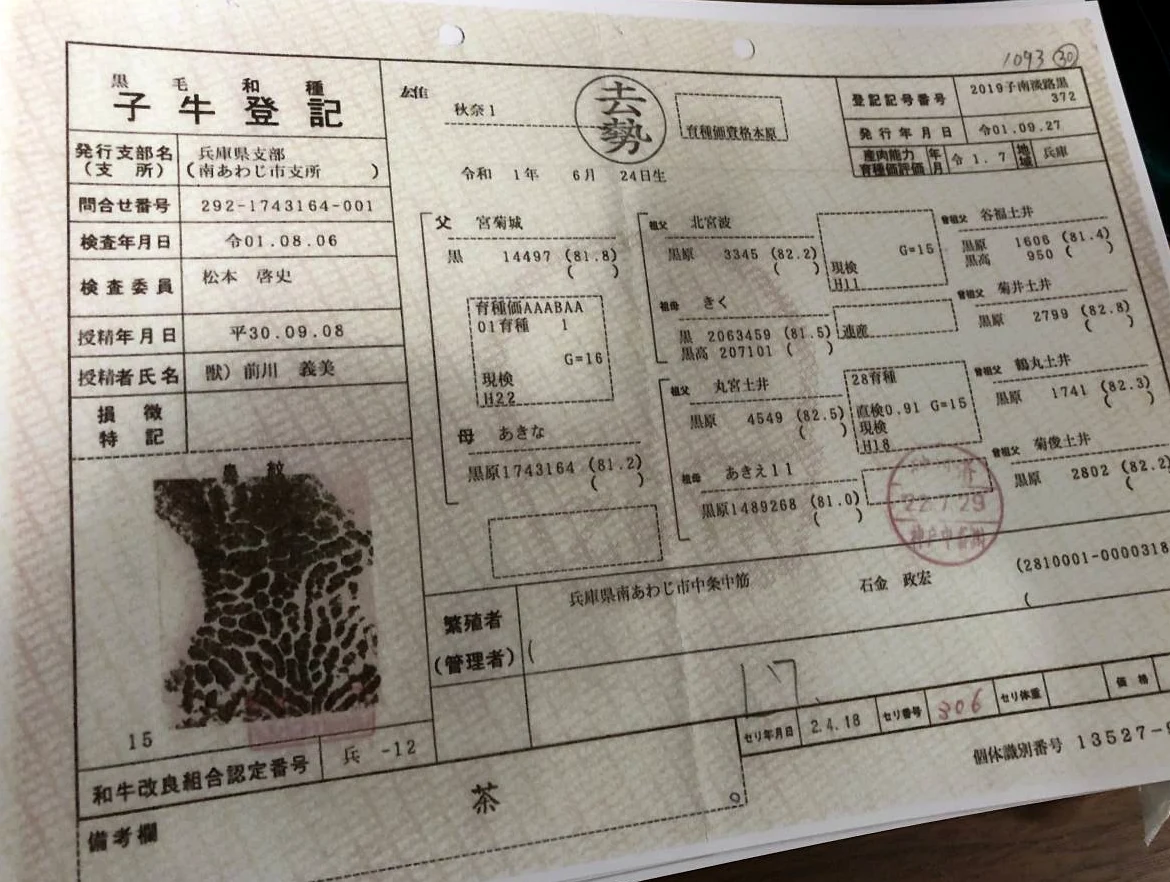
Situated at the strategic gateway of the prosperous Kansai region, the culinary capital of Kobe in Hyogo Prefecture possesses a distinctive geomorphology often likened to a sacred cradle nurturing Japan’s gastronomic brilliance. Viewed through the lens of traditional geomancy and natural topography, the city sits in a classic “backed by mountains, facing the sea” orientation—sheltered at its rear by the towering Rokko mountain range against biting northern winds while facing the tranquil waters of Osaka Bay and warm ocean currents. Deeper inland within Hyogo lie rugged mountain folds where the secluded valleys of Tajima open up like a self-contained sanctuary. The natural barriers formed by steep rocky slopes created a living ecological fortress, shielding cattle herds from crossbreeding and disease while preserving the absolute genetic purity of Tajima black cattle across hundreds of years.
The unique terrain of the Tajima gorges not only shapes a cool, temperate microclimate year-round, but also feeds an invaluable hydrological network. Rainwater and melted snow from high peaks filter through thousands of meters of ancient limestone and basaltic sandstone strata, emerging as subterranean spring water rich in trace minerals, calcium, and magnesium. This pristine water nourishes Tajima cattle directly while irrigating herb-rich mountain pastures and golden rice paddies. Husbandry follows an uncompromisingly natural regimen: nutrient-dense dry rice straw paired with brewer’s grains, fermented cereals, and pure spring water in the absolute tranquility of mist-draped valleys. Together, these elements cultivate an unrivaled physiological constitution, allowing the muscle fibers to weave intricate webs of delicate shimofuri marbling that achieve extraordinary marbling scores at maturity.
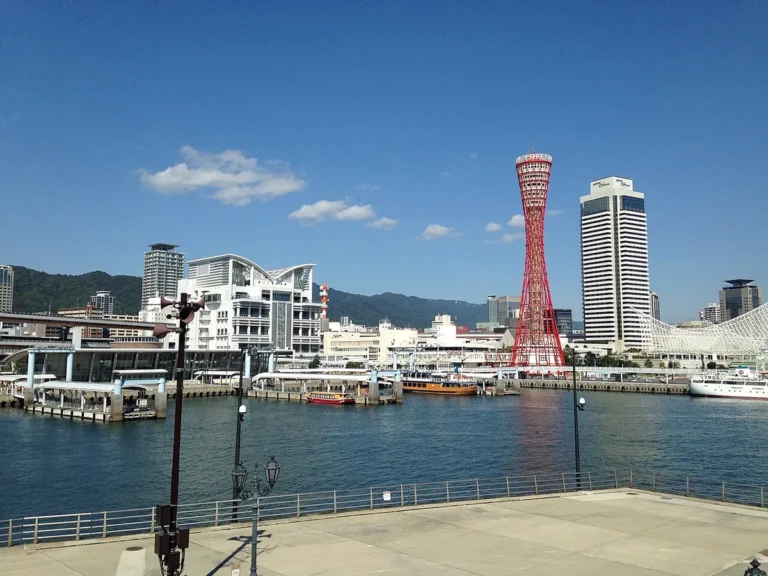
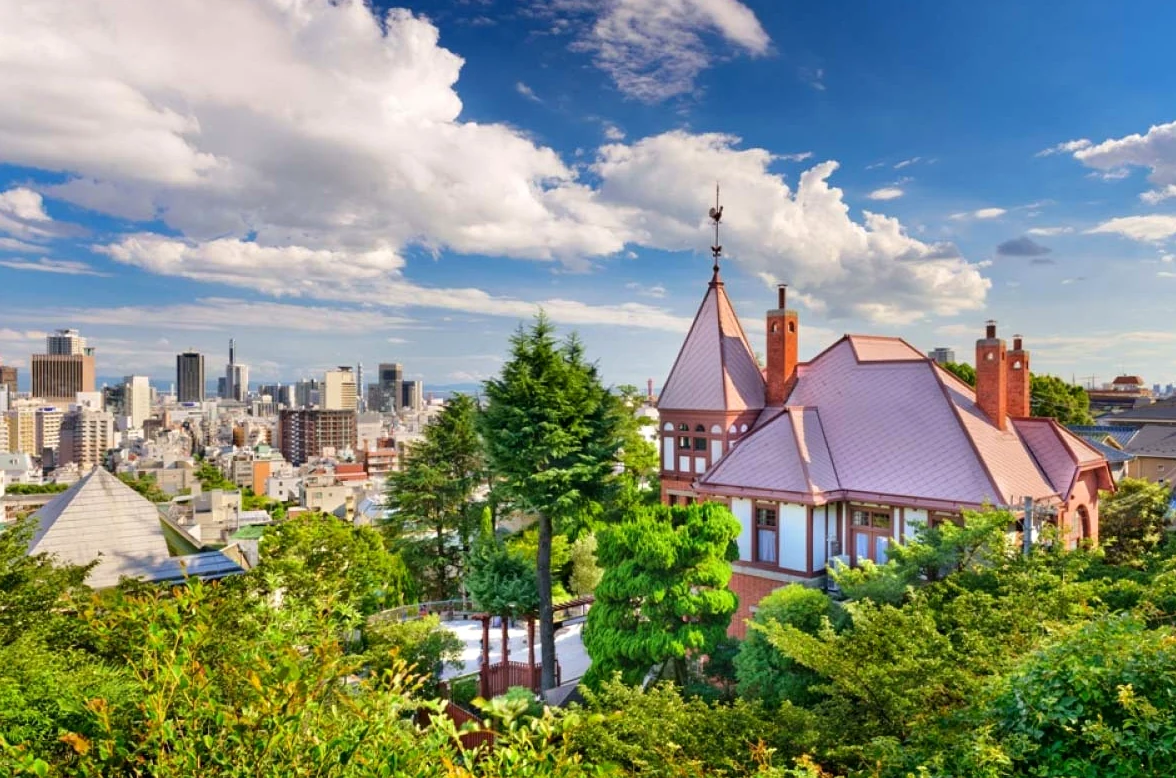
From the serene highlands of Tajima, this culinary heritage converges seamlessly upon the port city of Kobe, where urban landscape design harmonizes nostalgic charm with contemporary energy. Wedged narrowly between the cliffs of Mount Rokko and deep blue bay waters, the city unfolds in a captivating tiered architectural rhythm. Perched along gentle slopes is historic Kitano-cho, home to preserved Western-style Ijinkan mansions built during the Meiji port opening, many now housing intimate teppanyaki dining rooms tucked beneath leafy shade trees. Directly below at the water’s edge, the shoreline expands into modern Harborland, anchored by the crimson Kobe Port Tower and breezy waterfront promenades. This alluring contrast between mountain stillness and coastal sophistication transforms the city into the ultimate stage for iron-griddle teppanyaki mastery.
World-class transportation infrastructure serves as the vital arteries bringing Kobe’s culinary excellence within effortless reach of global gourmets. The Tokaido-Sanyo Shinkansen bullet train bores smoothly through mountain tunnels, whisking travelers from bustling central Tokyo to Shin-Kobe Station in just 2 hours and 45 minutes. From Kansai International Airport (KIX), Haruka express trains speed across the bay to deliver international arrivals to the port city in 55 minutes. Complementing the rail network, the elevated Hanshin Expressway curves dramatically along the coast, linking ancient Kyoto and financial hub Osaka directly to the Harborland waterfront and historic Kitano-cho. Reaching the sacred homeland of Wagyu is therefore far more than a culinary pilgrimage—it is a scenic journey showcasing Japan’s extraordinary geography, terroir, and precision engineering.
A world apart from noisy, casual dining rooms, the setting for A5 Kobe Black Wagyu Teppanyaki is a meditative architectural composition where traditional Wabi-Sabi aesthetics meet contemporary minimalism. Stepping across the threshold of Kobe’s premier dining establishments, guests immediately sense a spatial shift orchestrated through subtle indirect lighting. Raw basalt slabs, hand-troweled natural earthen walls, and the warm, muted tones of aged Hinoki cypress or beechwood create a tranquil backdrop that quiets outside distractions. The architectural philosophy here avoids ostentatious luxury, instead guiding the mind back to reverence for natural materials in preparation for a ritualistic culinary encounter.
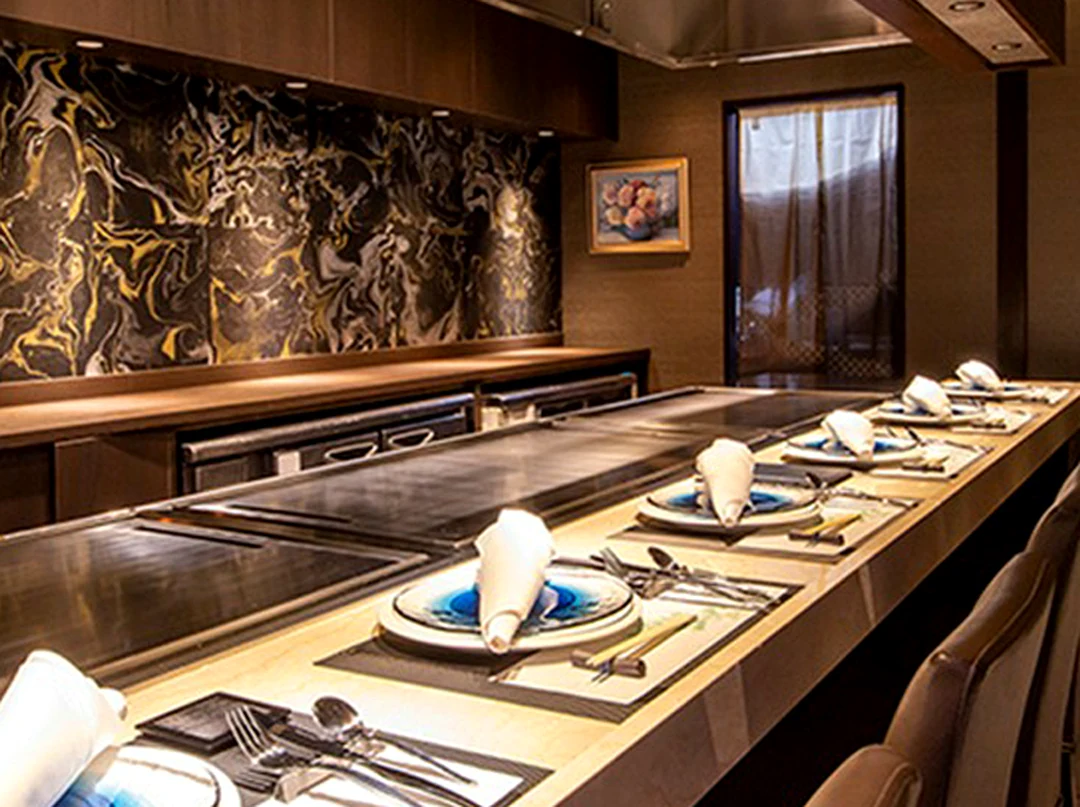
At the heart of the room lies the open Counter Seating arrangement, where the boundary between culinary artisan and guest dissolves gracefully. Upscale counters are typically curved into semi-circles or U-shapes embracing the head chef’s performance stage, establishing an ideal proximity close enough to observe every micro-movement of the blade while feeling the gentle warmth radiating from the griddle. Every seat is angled with precision, turning diners into privileged spectators at a live gastronomic theater. Supporting details—from whisper-quiet, multi-layered recessed exhaust hoods to supple amber leather seating—are calibrated to preserve clean air and intimate privacy for each guest.
The mechanical heart and engineering pinnacle of elite Teppanyaki restaurants is the custom-forged cast-iron griddle measuring exactly 2 centimeters thick. This 20-millimeter specification is no coincidence; it represents decades of Japanese metallurgical and culinary refinement designed to create an ideal thermal mass. The solid iron plate distributes heat with absolute uniformity across every millimeter of its surface, eliminating the sudden hot spots common in thinner metals. Such thermal precision is vital for unlocking the full character of A5 Kobe beef, whose delicate marbling melts at a remarkably low temperature of roughly 25°C. Under the chef’s practiced hands, each marbled cut kisses the hot iron for mere seconds, instantly searing in succulent juices while the pure, fragrant fat melts smoothly into the ruby-red meat without scorching or losing a drop of richness.
The scale of investment in fine-dining establishments across vibrant Sannomiya and historic Kitano—once home to Western diplomatic delegations during the Meiji era—reflects uncompromising global standards tailored to discerning connoisseurs. Storied institutions such as Mokusenya, Kobe A-1, and the acclaimed Ishida restaurants feature thoughtfully tiered layouts, ranging from open counter salons to secluded Tatami VIP rooms equipped with private Teppan grills and handcrafted knives forged from renowned Sakai steel. Each venue is far more than a restaurant; it is a living sanctuary of Omotenashi hospitality, where architecture, metallurgy, and the sublime flavor of Kobe black cattle unite in a symphony for all five senses.
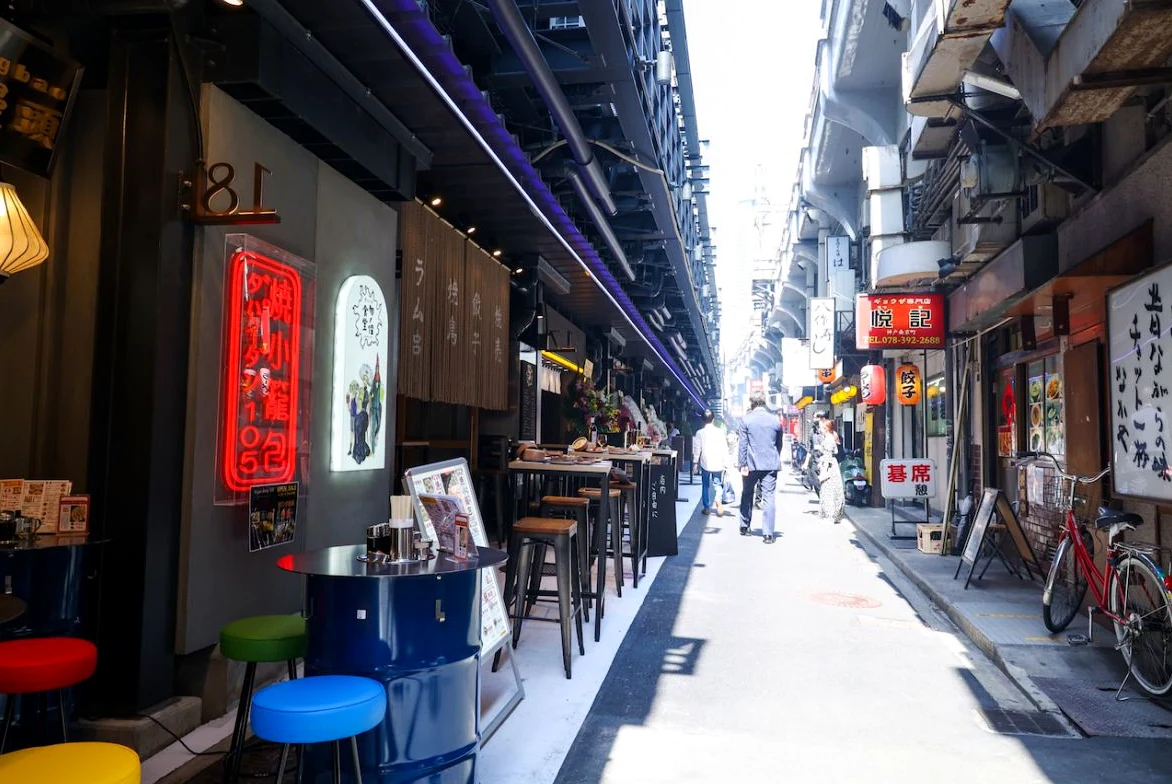
As twilight settles over Osaka Bay, the port city of Kobe dons an enchanting evening mantle where nineteenth-century heritage and modern glamour blur into the salty sea mist. An evening immersion naturally begins in historic Kitano-cho, where nineteenth-century Western-style Ijinkan residences nestle quietly against the wooded foothills of Mount Rokko. Soft streetlamps cast warm reflections across cobblestone slopes leading down toward the dazzling waterfront of Harborland. Where sea breezes meet the open bay, the crimson Kobe Port Tower and the giant Mosaic Ferris wheel shimmer across still waters, framing a sweeping panorama of one of Japan’s most cosmopolitan maritime cities.
Against this luminous nocturnal backdrop, an authentic Kobe beef dinner becomes far more than a lavish meal—it is an audiovisual performance orchestrated around the open Teppanyaki counter. Dining rooms are typically styled in refined Wabi-Sabi elegance, pairing raw basalt stone, muted Juraku earthen plaster walls, and dark cedarwood with a mirror-polished Teppan steel plate. Lighting is calibrated with theatrical precision: the room is bathed in a soft, warm amber glow while a focused beam illuminates the stone counter and griddle, transforming the steel surface into a captivating center stage.
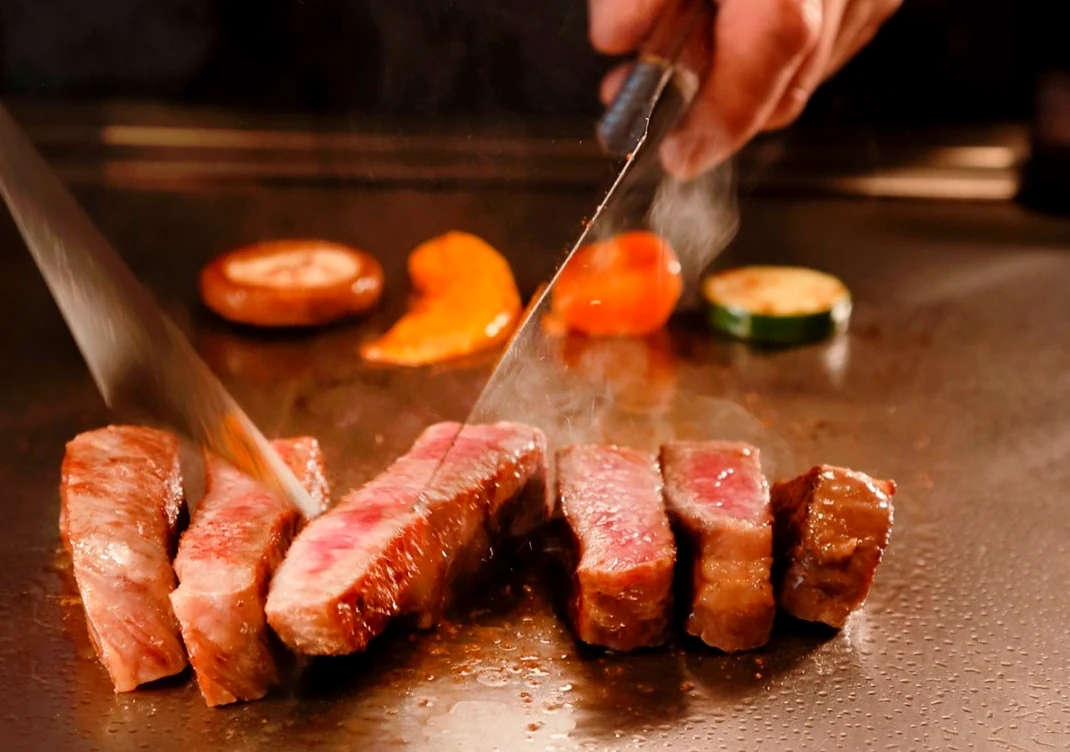
At the center of this stage, impeccably attired Master Chefs conduct heat and texture like symphony maestri. The performance begins with the fluid dance of razor-sharp, hand-forged Honyaki blades, separating blocks of A5 Wagyu laced with galaxy-like Shimofuri marbling without tearing a single delicate muscle fiber. The instant oleic-acid-rich marbling meets steel heated to over two hundred degrees Celsius, a crisp sizzle rises like a summer rain shower, releasing an intoxicating, buttery aroma throughout the room. The climax arrives with a dramatic Flambé: a proud plume of flame erupts in a heartbeat as spirits hit the hot steel, sealing sweet juices beneath a delicate caramelized crust while casting flickering amber highlights across the chef’s focused expression, elevating cooking into sacred ritual.
Completing the performance is a seamless pairing of seared, succulent beef with Hyogo Prefecture’s celebrated beverages. Guests experience the snow-like melt of A5 beef alongside a pour of premier Junmai Daiginjo sake from Nada-Gogo—a storied brewing district nourished since the Edo period by legendary Miyamizu mineral spring water—or a crisp, mineral-driven oak-aged Grand Cru white wine served in fine crystal. Candlelight filtering through Sudare bamboo blinds, the rhythmic clink of metal spatulas, and the glittering harbor skyline beyond floor-to-ceiling windows converge to compose a regal, lingering finale to Kobe’s timeless nightlife.
Following the gently sloping stone lanes of Kitano-cho, steeped in Western heritage, down toward the lively entertainment hub of Sannomiya leads directly into the golden coordinates of Kobe’s Teppanyaki scene. Across these two famed districts, enjoying prime beef has been elevated into an art form preserved across generations inside storied kitchens—from tranquil Mokusenya tucked along a quiet heritage corner and nostalgic Kobe A-1 to the celebrated Ishida restaurants, where thick, mirror-bright steel counters reflect warm ambient lighting. Each venue is a dedicated culinary sanctuary whose minimalist design pays pure homage to the flat Teppan griddle and the mastery of veteran shokunin artisans.
The enduring legend of Kobe’s grill tables springs from purebred Tajima black cattle native to Hyogo Prefecture, whose bloodlines have been strictly safeguarded for centuries. These cattle undergo a patient fattening period lasting up to thirty months in serene natural surroundings, drinking mineral-rich spring water filtered through the geological strata of the Rokko mountains and feeding on carefully balanced organic rations of barley, dry rice bran, and choice pasture grasses. Tended with the devotion reserved for living works of art, Tajima cattle accumulate nutrients gradually, weaving dense, symmetrical networks of fine marbling known as sashi.
Under Japan’s beef grading system, only cuts achieving a Beef Marbling Standard (BMS) score between 6 and the supreme pinnacle of 12 earn admission into the coveted A5 rank. What captivates global gourmets is the exceptionally high concentration of monounsaturated fatty acids—particularly oleic acid—within these sashi ribbons. This distinctive biochemical profile lowers the fat’s melting point to an extraordinary range of 25°C to 28°C, well below human body temperature. Consequently, the moment a morsel touches the tongue, the marbled fat dissolves effortlessly, releasing a silky, clean richness that never feels heavy or greasy.
The moment a Teppanyaki master places cubed A5 cuts onto steel heated to roughly 230°C, an irresistible symphony of crisp sizzling and sweet, savory aroma fills the air. With seemingly weightless strokes of razor-sharp steel spatulas and knives, the chef locks every drop of sweet juice inside a golden-brown seared crust. To savor its purest essence, each bite requires only a light touch of coarsely ground Himalayan pink salt—whose trace minerals amplify the deep umami of long-matured beef—paired with crispy roasted garlic chips and a dab of freshly grated wasabi offering a clean, nasal-clearing heat.
No harbor-city feast is complete without a cup of fine sake brewed in the neighboring Nada district. Each sip of Junmai Daiginjo—crafted from prized Yamada Nishiki rice and pure Miyamizu spring water with delicate floral and fruity notes—acts as a refreshing counterpoint that balances the richness of seared Wagyu. As the grilling ritual concludes, flavorful beef trimmings remaining on the griddle are finely diced and flash-fried on the Teppan with steamed white rice, fresh egg, and house-aged soy sauce, bringing the meal to a close with a bowl of fragrant garlic fried rice infused with heartfelt omotenashi hospitality.
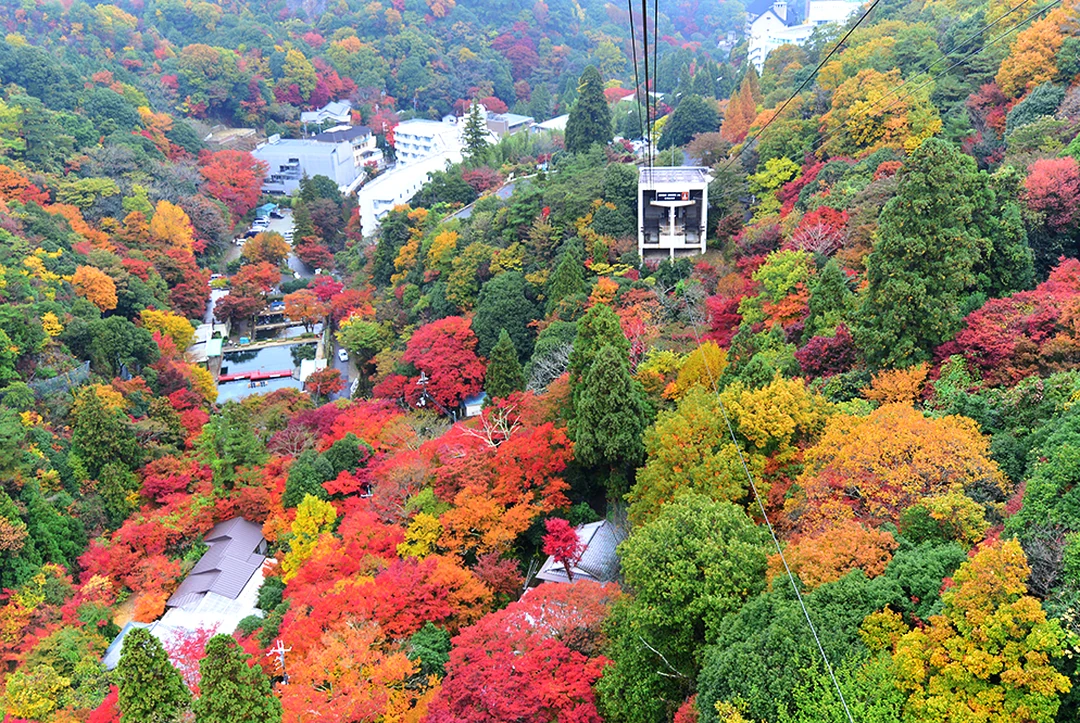
Experiencing the masterpiece of Kobe beef reaches its highest peak when timed to the seasonal beauty of Japan. The most rewarding seasons to visit are vibrant autumn from October to December, when maple groves along the slopes of Mount Rokko ignite in brilliant crimson and amber, or spring from March to April, when cherry blossoms blanket the bayfront in soft pink. Crisp autumn chill and fresh early-spring air provide the ideal climatic backdrop, sharpening the palate for rich marbling that melts at body temperature. Flexible tourist visa policies and multiple-entry visas offered by the Japanese government make it easier than ever for culinary travelers to curate a personalized gastronomic journey without bureaucratic hurdles.
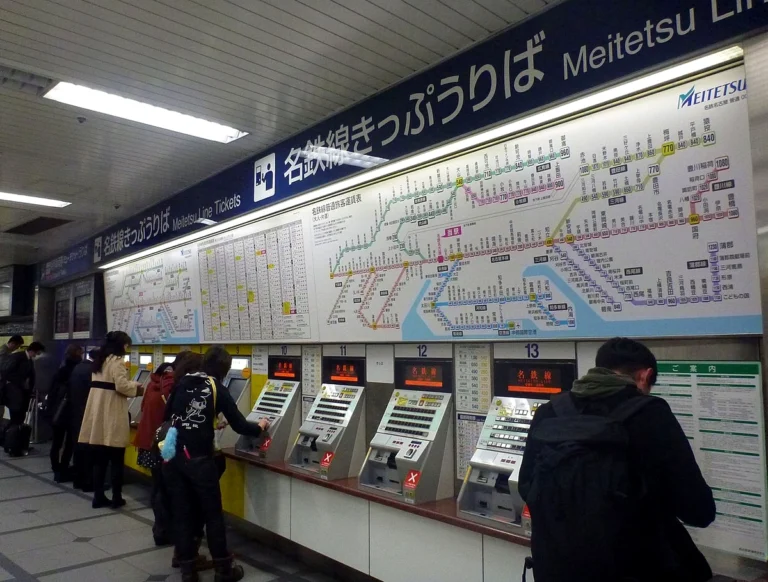
Getting there is effortless thanks to Kobe’s premier transit connections across the Kansai region. Travelers departing Tokyo Station can board a Tokaido-Sanyo Shinkansen Nozomi bullet train to reach Shin-Kobe Station in roughly two hours and forty minutes, or arrive in just twelve minutes from Shin-Osaka Station. From this major rail hub, a brief taxi ride or quick hop on the Seishin-Yamate subway line brings visitors straight into lively Sannomiya, the beating heart of local teppanyaki dining. Those who enjoy strolling can walk leisurely from Hankyu or Hanshin rail stations into historic Motomachi or the Kitano Ijinkan district, where acclaimed steakhouse salons hide beneath mature trees.
Upscale teppanyaki establishments generally operate across two distinct service windows: lunch from 11:30 AM to 2:30 PM and dinner from 5:30 PM to 10:00 PM, with last orders typically taken one hour before closing. Budget-wise, a classic lunch course featuring sirloin or tenderloin generally ranges from 10,000 to 18,000 JPY per guest. For a full evening feast showcasing prized Tokusen A5 Tajima cuts paired with Grand Cru wines curated by a sommelier, expect to spend between 28,000 and 50,000 JPY per person. Because each performance counter seats only six to ten guests to ensure the chef’s undivided attention, reserving two to six weeks in advance is essential to secure prime seats directly facing the steel grill.
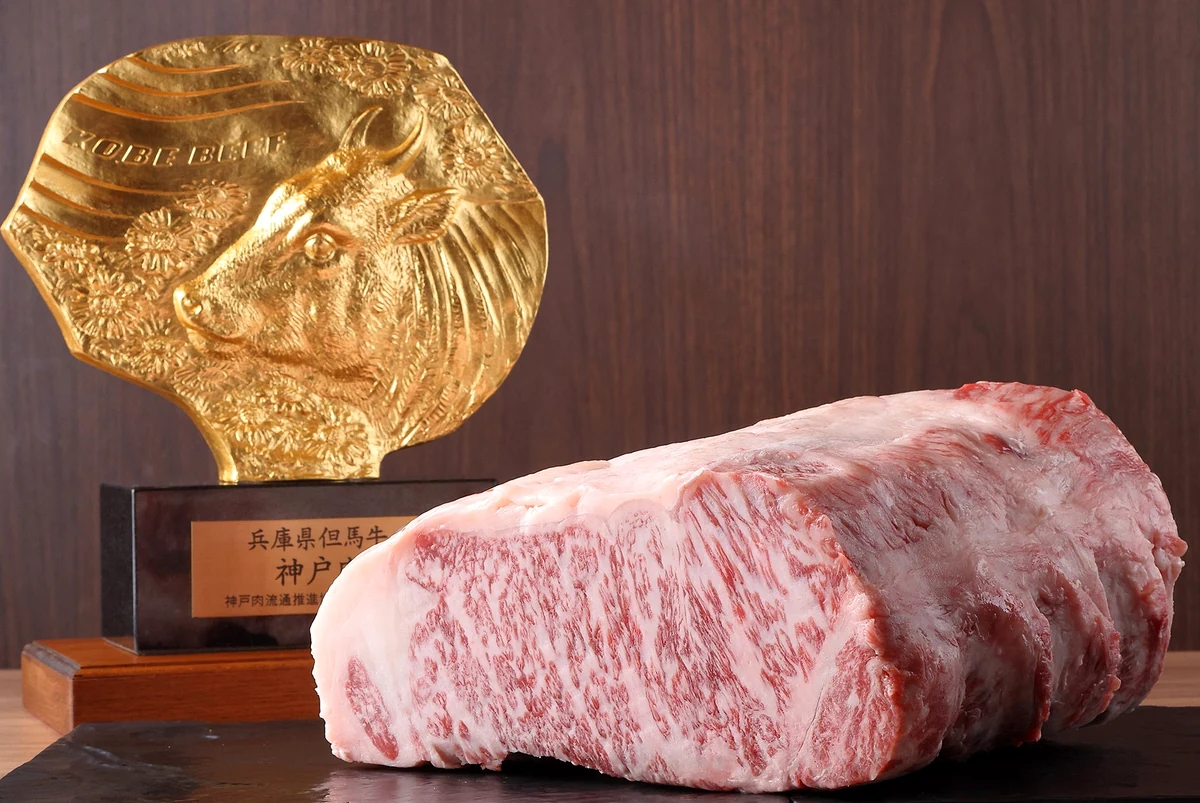
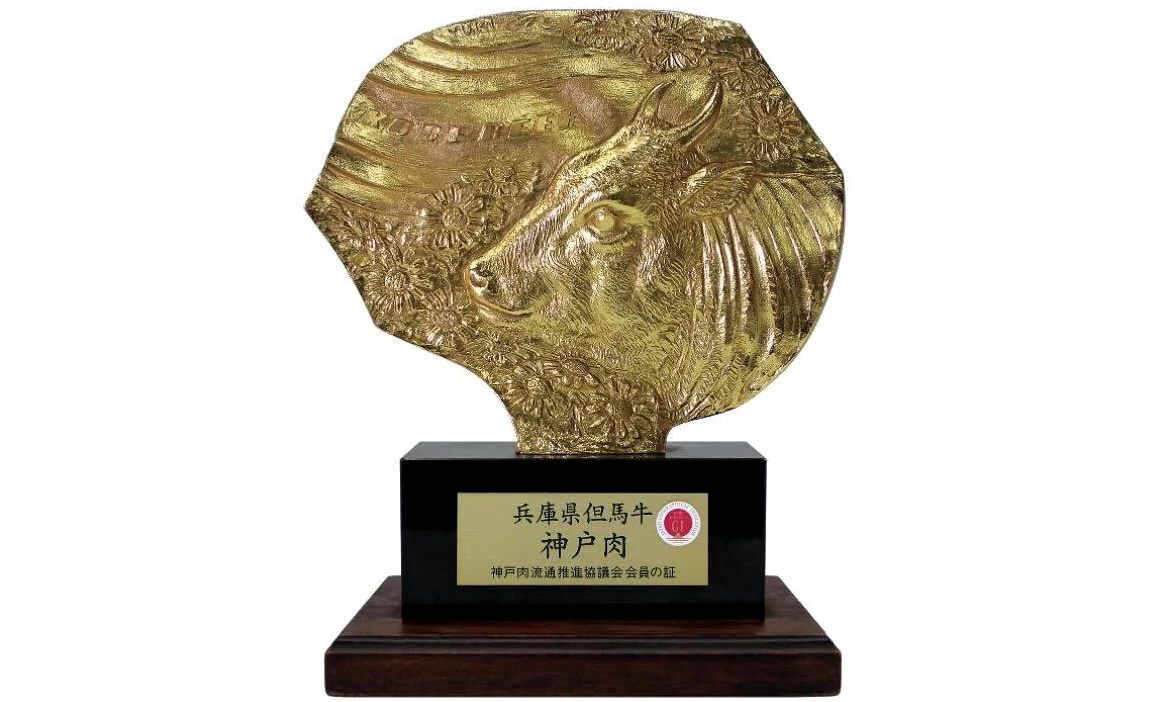
A vital skill for discerning diners is verifying provenance to avoid the pitfalls of mass-market imitations. Travelers should distinguish genuine Kobe Beef from domestic Kokusan Gyu or crossbred F1 cattle, which cost significantly less but feature coarser, firmer fat. An accredited restaurant must be an official member of the Kobe Beef Marketing & Distribution Promotion Association, displaying its signature bronze cow statuette alongside a certificate of authenticity detailing the Tajima steer’s lineage. When presented at the counter, legitimate cuts bear the purple Nojigiku chrysanthemum stamp and a 10-digit individual identification number allowing full traceability—from the breeding farm and slaughter date to its verified BMS marbling score of 8 to 12.
To elevate the journey even further, discerning travelers should favor pure, unhurried itineraries free of forced shopping stops that often steer visitors toward subpar commercial restaurants. After a sumptuous teppanyaki dinner, heading up the slopes of Mount Rokko to soak in the iron-rich, reddish-brown Kinsen (“Gold Spring”) and crystal-clear Ginsen (“Silver Spring”) thermal waters of historic Arima Onsen—one of Japan’s three oldest hot spring towns—completes a deeply restorative sensory experience. Travelers seeking to savor this culinary pilgrimage seamlessly and with guaranteed authenticity can explore professionally vetted itineraries through an all-inclusive tour package.