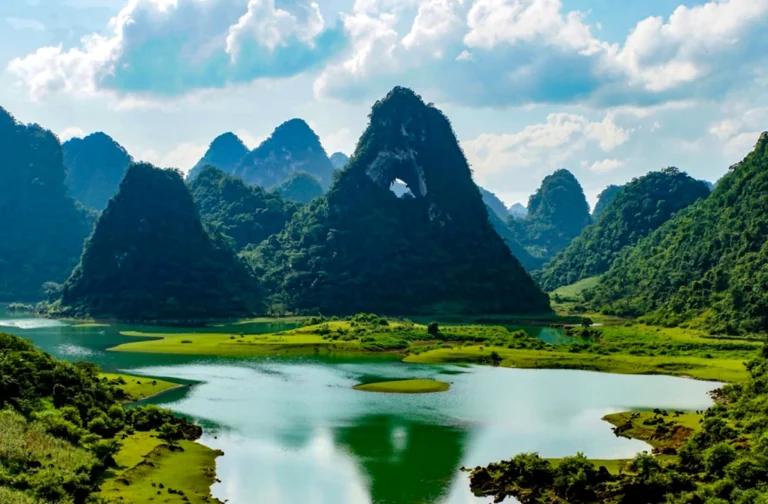
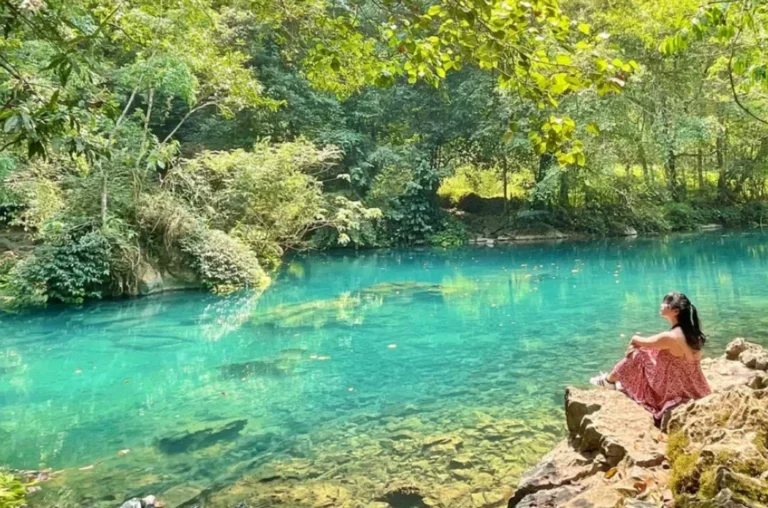
Nestled amid the majestic mountains and forests of Northeast Vietnam, Ban Gioc Waterfall emerges as a breathtaking masterpiece bestowed by nature upon the scenic province of Cao Bang. Geographically and administratively, this landmark lies along the winding, poetic flow of the Quay Son River in Dam Thuy Commune, Trung Khanh District. Located approximately 85 to 90 kilometers northeast of Cao Bang City center, reaching Ban Gioc requires travelers to traverse winding mountain passes embracing endless rolling peaks. Situated right on the Vietnam–China border—where the secondary waterfall and half of the main waterfall belong to the neighboring country—Ban Gioc not only holds unrivaled scenic value but also occupies a vital strategic position in the frontier cultural landscape of Vietnam.
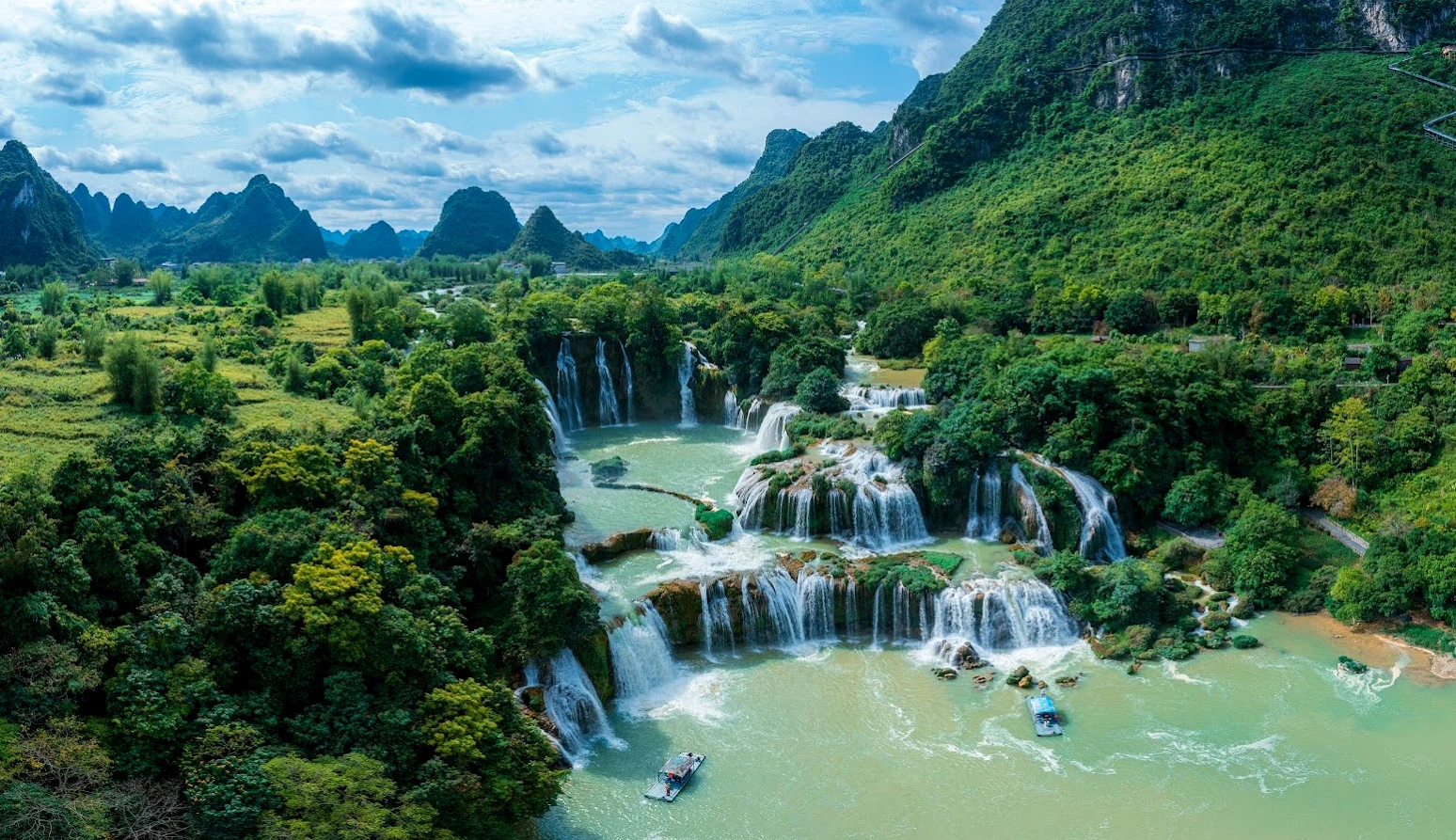
From a geological and geomorphic perspective, Ban Gioc Waterfall is a natural wonder forged over millions of years through the tectonic movements of the Earth’s crust, combined with the relentless erosion of sedimentary limestone formations by the Quay Son River. Tourism authorities and mainstream media have long recognized it as one of the largest, most beautiful, and most magnificent natural waterfalls in Southeast Asia. Rather than plunging straight down from a single sheer drop, the water cascades in tiers across multiple massive limestone ledges carpeted in ancient moss, creating a sublime, soul-stirring panorama with white foam churning year-round, embracing a pristine and untouched limestone valley ecosystem.
Intertwined with this awe-inspiring topography is a deep layer of history, culture, and folklore passed down through generations of ethnic minority communities in the highlands. The name “Ban Gioc” originates from the Tay language, carrying symbolic meaning that accurately reflects the topographical characteristics and historical currents of this borderland valley. According to ancient folk memory, the waterfall is tied to a poignant love story about a princess of incomparable beauty. Resolutely refusing to become a concubine for the northern imperial court, she fled to this remote frontier and fell deeply in love with an honest, courageous young Tay man.
When she passed away right beside the waterfall, heaven and earth seemed moved to grief; the waters suddenly surged forth day and night without end like a tragic, heroic ballad commemorating a beauty with an ill-fated life. To immortalize their steadfast love alongside the pride and indomitable spirit of the borderland people, local villagers named the waterfall after their village. Through the ups and downs of history, Ban Gioc Waterfall today is not merely a spectacular stop on Vietnam’s heritage tourism map, but an eternal symbol of nature’s fierce vitality and the sacred spirit of the mountains and rivers at the nation’s frontier.
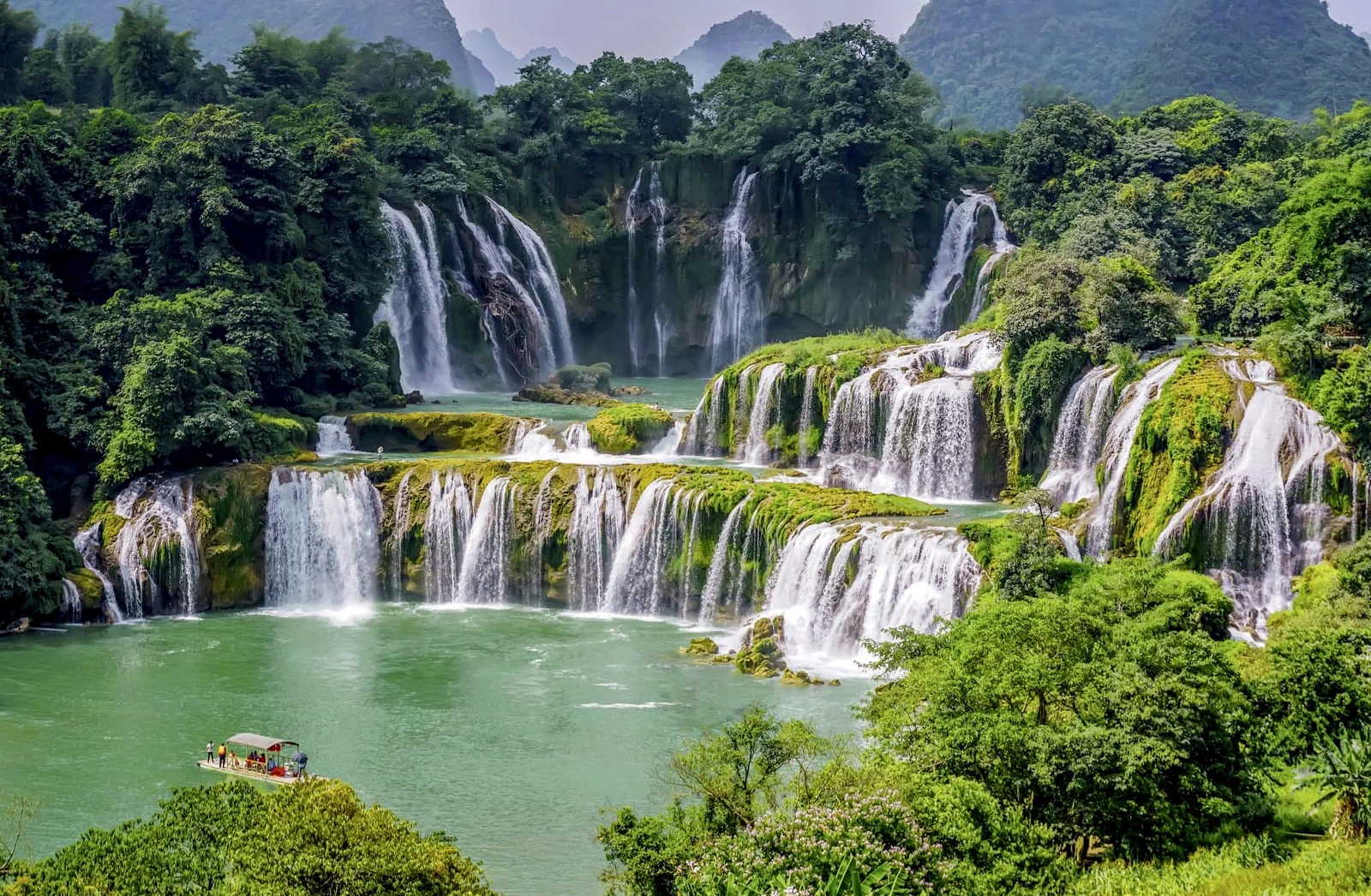
Ban Gioc Waterfall is not merely a natural wonder; it is also a sculptural masterpiece of creation, where the Quay Son River sheds its gentle demeanor to unleash its primal power amidst the northeastern wilderness. The most distinctive feature of the waterfall’s natural architecture is its tiered structure, dividing the current into numerous moss-covered limestone levels. Instead of falling straight down from above, the water crashes against massive boulders, forming pure white ribbons that intertwine and overlap like a grand natural tapestry meticulously carved over millions of years of geological formation. During the high-water season, Ban Gioc surges with life, its thunderous roar echoing across the entire border region in a magnificent symphony of earth and sky.
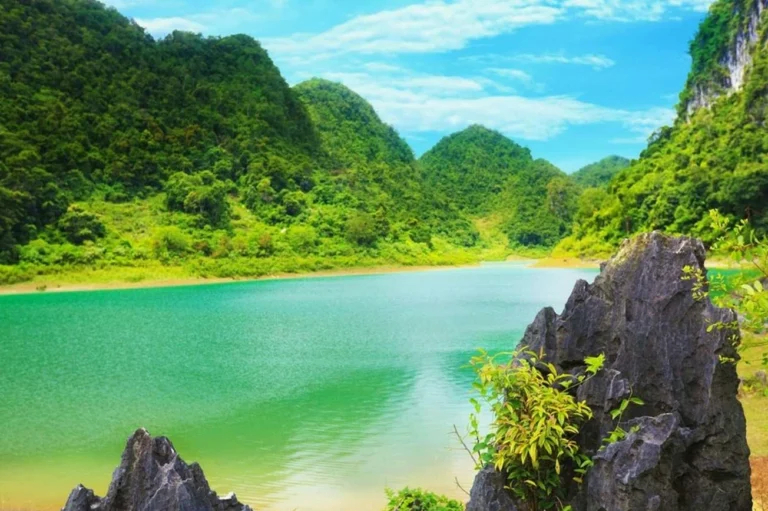
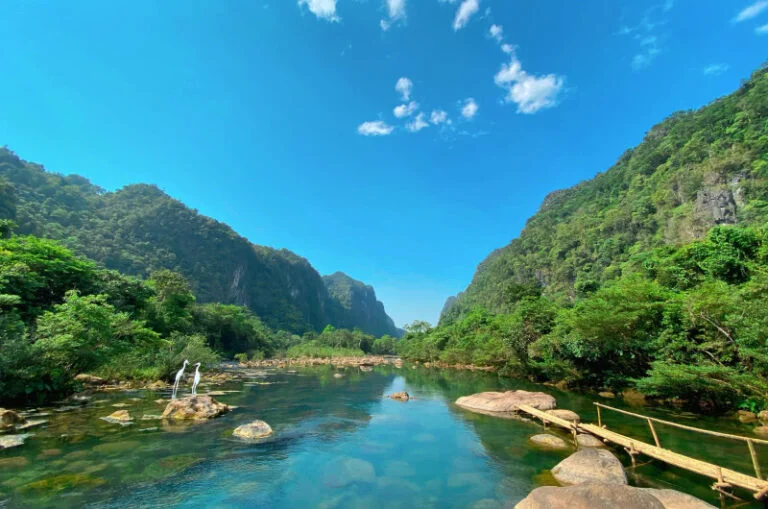
The grandeur of Ban Gioc also lies in the artistic contrast between the pristine white of the foaming water and the signature jade-green hue of the Quay Son River downstream. Limestone boulders scattered across the heart of the falls resemble giant natural rockeries, arranged spontaneously yet harmoniously by nature. When sunlight pierces through the delicate mist, vibrant rainbows frequently appear, conjuring a magical scene that makes anyone standing before the cascade feel humbled by the sheer scale of Mother Nature. It is more than just a destination—it is a visual art space where every angle unlocks a different layer of emotion toward the untamed, splendid beauty of Vietnam’s borderlands.
To capture the true “soul” of Ban Gioc Waterfall, professional photographers often favor two classic vantage points. The first is from the downstream meadow, where you can fit the entire panorama of both the main and secondary falls into a single frame, with traditional bamboo rafts drifting lazily across the emerald river in the foreground. The second is from the rocky outcrops jutting out near the base of the falls, allowing photographers to capture close-up shots of spraying water droplets that create a powerful, dramatic sense of motion. For those seeking tranquility and poetic charm, climbing the elevated viewpoints along the riverside walking trail rewards you with an aerial panorama, where the Quay Son River winds like a soft silk ribbon cutting across the golden ripe rice fields of Dam Thuy Commune.
In terms of lighting, the golden hour most prized by photographers is at dawn, roughly between 6:30 AM and 8:00 AM. At this time, the gentle morning sunlight slants through the forest canopy and illuminates the rising mist, producing a shimmering “golden dust” effect while making the river’s emerald waters appear at their clearest and deepest. Conversely, if you prefer a more brooding, epic atmosphere, sunset—when the sun dips behind the limestone mountain ranges—casts rich orange-red light across the landscape, accentuating the rugged, muscular contours of the limestone tiers. Regardless of the angle or time of day, Ban Gioc Waterfall maintains its status as an architectural masterpiece of nature, where every click of the shutter has the potential to yield a viral photograph and leave an indelible mark on every traveler who sets foot in Cao Bang.
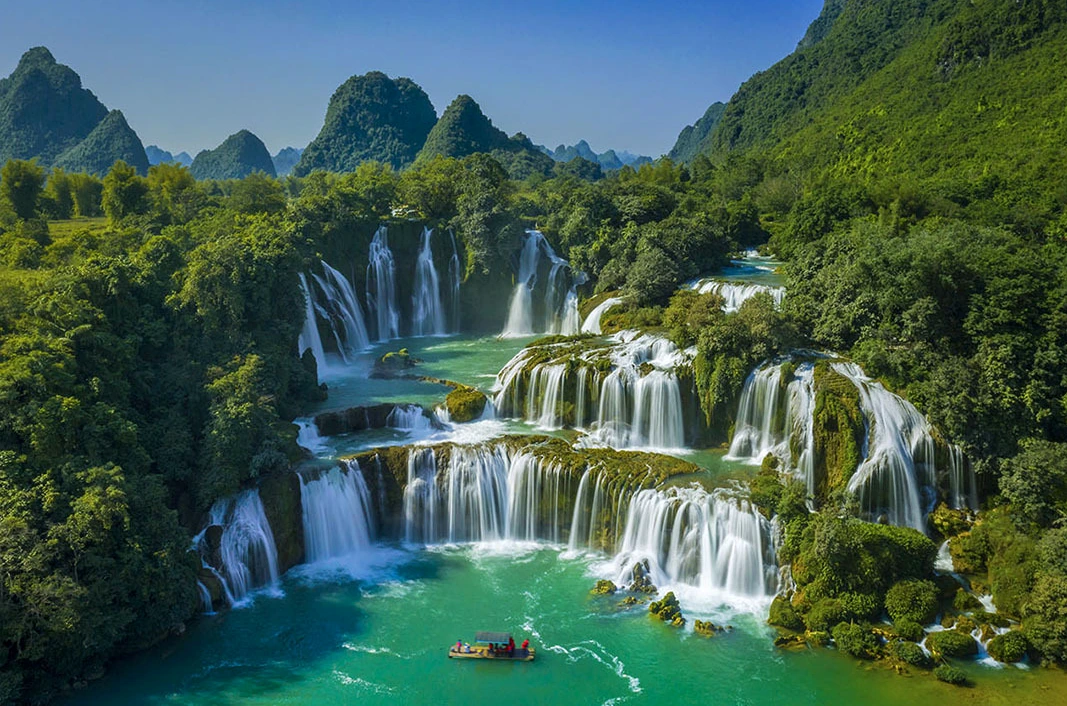
Upon arriving at the foot of the falls, the very first sensation that washes over any visitor is breathtaking awe at the raw power of nature. Ribbons of white water plunge from dozens of meters above, shrouding a vast expanse in a hazy veil of mist. The thunderous roar of the cascade resounds like an epic anthem of the mountains, drowning out all the noise of everyday life and leaving the mind suddenly still and humbled before nature’s magnificence. To experience this beauty to the fullest, taking a boat ride on the Quay Son River is an unmissable activity. Small bamboo rafts glide slowly through the ripples, bringing visitors right up to the base of the falls. Here, you will feel fine droplets of cool, refreshing water splashing against your face, carrying the crisp breath of the deep forest. This is also the most coveted vantage point for photographers to capture the exact moment the waterfall merges with the jade-green river, creating a vivid natural masterpiece right before your eyes.
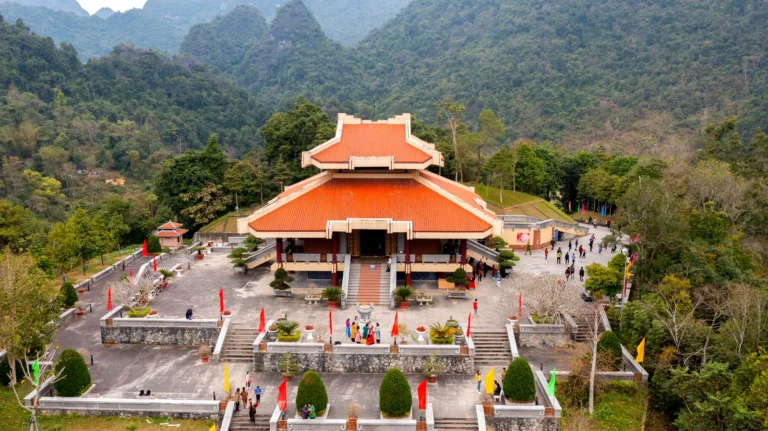
Leaving the water behind, your journey of discovery takes you back through time and spirituality at Phat Tich Truc Lam Ban Gioc Pagoda. Perched atop Phia Nham Mountain, this pagoda is not only the first spiritual architectural landmark in the northern frontier region, but also the finest spot for a bird’s-eye panoramic view of Ban Gioc Waterfall. Standing from the bell tower or the pagoda courtyard and gazing out into the distance, the entire majestic waterfall unfolds before your eyes like a white silk ribbon draped across endless ranges of limestone peaks. The serenity of ringing temple bells blending with the distant roar of the falls creates a deeply meditative atmosphere, where visitors can find inner peace and offer heartfelt prayers for themselves and their loved ones.
Beyond visual wonders, vibrant local culture is the true “soul” that makes a trip complete. After a full day of exploration, be sure to visit the scattered Tay and Nung villages nearby to savor their renowned local specialties. Grilled tram huong fish over glowing charcoal, black pork roasted with mac mat leaves, or fragrant five-color sticky rice crafted from upland glutinous grains capture the richest flavors of the Cao Bang mountains. Sitting inside traditional stilt houses, sipping a cup of potent corn wine, and listening to stories of frontier life, you will feel yourself becoming one with this land. The genuine hospitality of the locals, paired with their colorful brocade attire, weaves a vibrant cultural tapestry that leaves every departing traveler with an unforgettable longing for this proud borderland.
Finally, if you enjoy staying active, set aside time for a gentle trek along the trails leading to nearby Nguom Ngao Cave. Combining the grand splendor of Ban Gioc Waterfall with the mysterious beauty of subterranean stalactites creates a truly well-rounded itinerary. Every step taken in this region is more than just sightseeing—it is a journey back to nature, history, and the purest cultural values. Ban Gioc Waterfall is not merely a scenic landmark; it is an emotional experience that everyone should witness firsthand and feel with all their senses at least once in a lifetime.
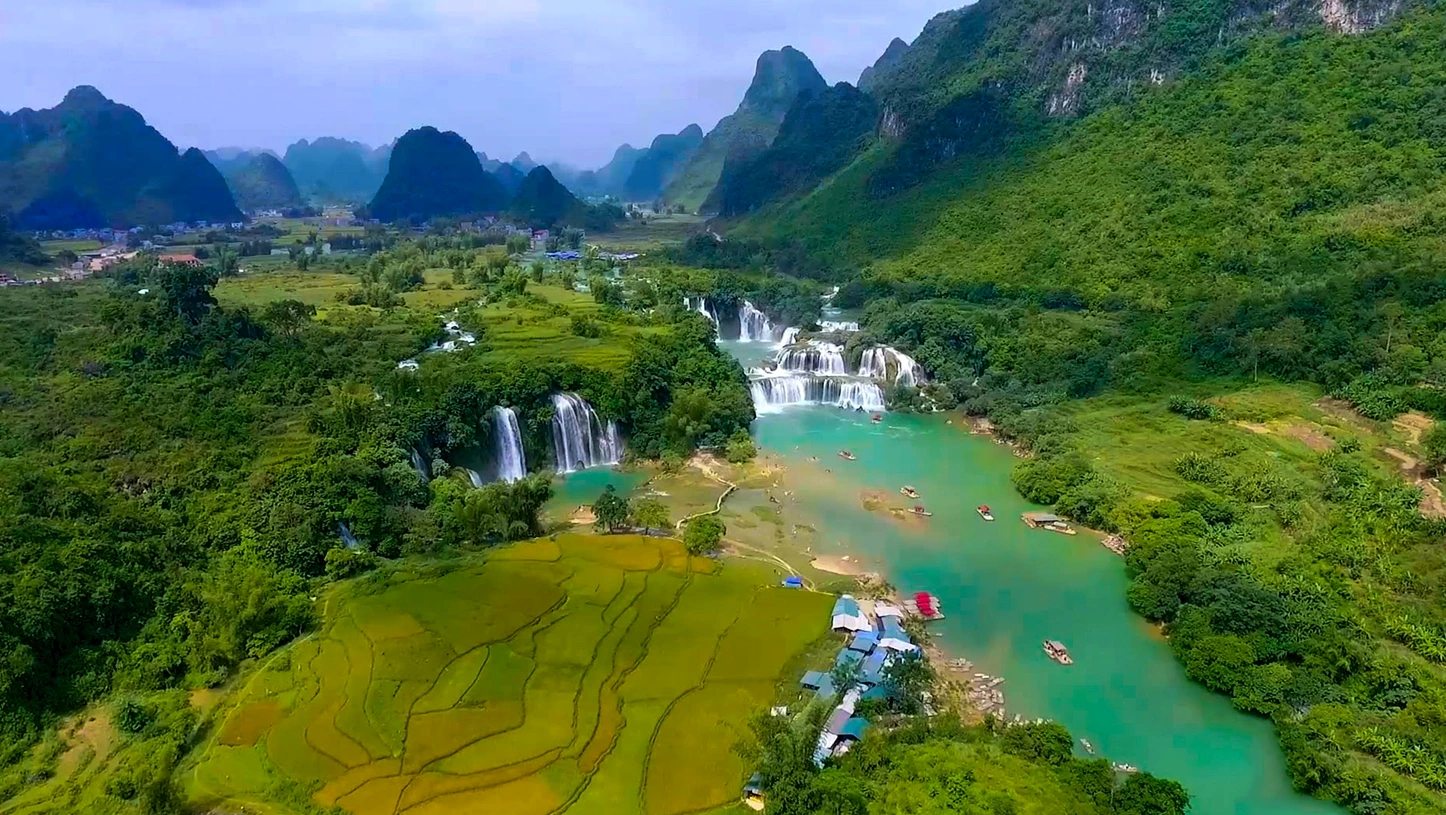
To ensure your journey to explore the natural wonder of Ban Gioc Waterfall (Cao Bang) goes smoothly, safely, and seamlessly, equipping yourself with a detailed pocket guide is essential for every travel enthusiast. According to the latest updates from the Tourism Authority and site management boards, the Ban Gioc Waterfall tourist area is open daily from 7:00 AM to 5:00 PM. Regarding admission fees, state-listed entrance tickets to this scenic landmark are currently priced very affordably at around 45,000 VND per adult, while children, senior citizens, and eligible policy beneficiaries enjoy free or discounted admission in accordance with current regulations.
For routes and transportation, the most optimal way to travel from Cao Bang City center to Ban Gioc Waterfall is via National Highway 3 combined with Provincial Road 206 through Ma Phuc Pass, covering a total distance of about 85 to 90 km northeast. This route has been paved with smooth asphalt, making it convenient for both tourist cars and motorbikes. However, due to the mountainous terrain of northern Vietnam featuring numerous hairpin turns and winding steep passes, drivers should maintain a steady speed and thoroughly inspect their brakes before departure. Upon arrival, visitors can either take a short, leisurely walk from the parking lot or use the internal electric shuttle service to go straight to the base of the waterfall and save energy.
The best time of year to visit Ban Gioc Waterfall is annually from September to October. During this period, Cao Bang enters its vibrant golden rice harvest season across the valleys along the route, while the rainy season has just ended, feeding the Quay Son River with abundant water that creates the waterfall’s most dramatic, foaming white cascades. Conversely, if you prefer peaceful surroundings and wish to admire the river’s signature crystal-clear jade-green waters, the period from November to April of the following year is an ideal choice, even though the water flow is noticeably gentler.
Additionally, given the borderland setting combined with damp, slippery limestone terrain and spiritual sites (such as the nearby Phat Tich Truc Lam Ban Gioc Pagoda), visitors should dress neatly, respectfully, and modestly when entering temples and pagodas. Prioritize wearing sneakers or hiking shoes with strong traction and slip resistance rather than high heels or flip-flops. At the same time, remember to pack a hat, sunscreen, a compact umbrella, and stay alert against persistent touts and unlicensed traditional costume rental vendors near the entrance gate to ensure a safe and memorable experience.
To enjoy a seamless getaway and take in the full splendor of Ban Gioc Waterfall without worrying about arranging transportation, booking admission tickets, or planning itineraries, travelers can choose VDS Travel’s premium all-inclusive Cao Bang tour packages. Every itinerary is thoughtfully crafted to optimize check-in times when the scenery is at its most radiant, accompanied by knowledgeable guides well-versed in local culture alongside top-tier hotel accommodations and culinary standards.