Ma Phuc Pass, located in Quoc Toan Commune, Quang Hoa District, Cao Bang Province, is not only a rugged mountain pass along National Route 3, but also regarded as a vital “geopolitical bottleneck” within the northern border defense system. Situated at coordinates 22°43’30″N 106°21’45″E, it stands like a naturally forged fortress, demarcating the boundary between fertile basins and cascading limestone mountain ranges. From the perspective of geomancy and terrain analysis, Ma Phuc possesses the rare “Crouching Dragon, Submissive Tiger” land formation. The undulating limestone mountain chains envelop the space, generating a formidable energetic field that shields the border region against shifting historical currents. The name “Ma Phuc”—meaning “kneeling horse”—originates from the majestic shape of two symmetrical limestone formations on either side of the pass. Viewed from afar, they resemble two noble steed kneeling in submission to the solemn grandeur of the mountains and rivers, while also symbolizing the quiet, meditative spirit of the country’s frontier.
The history of Ma Phuc Pass is intertwined with the vicissitudes of Vietnam’s feudal dynasties. During the Later Le dynasty, it served as a vital arterial route connecting Cao Bang city with the eastern districts and prefectures, marking the marching footsteps of the Le-Trinh military forces as they safeguarded the frontier. Notably, during the Mac dynasty’s separatist era in Cao Bang (1592 – 1677), Ma Phuc Pass became a strategic stronghold for Tay and Nung leaders—those who contributed to reclaiming land, defending territory, and building the cultural identity of the borderland. Local unofficial historical accounts record that Tay Son military columns advancing to guard the border once paused here, leaving profound imprints upon the community consciousness. Today, archaeologists are working to evaluate faint Han-Nom stone inscriptions carved on the cliffside near the foot of the pass, believed to be poems composed by Nguyen dynasty officials during inspection tours, bearing witness to a deep poetic heritage linked to this landmark.
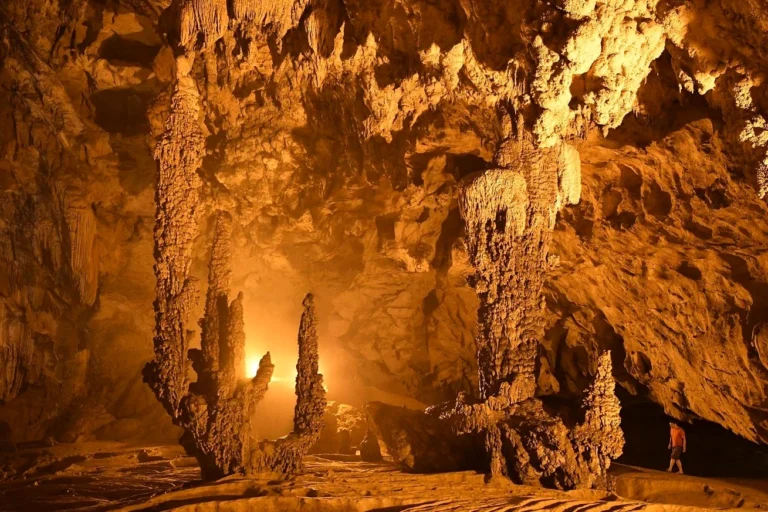
Beyond serving as a historical relic, Ma Phuc is celebrated by specialists as humanity’s “textbook in stone.” Situated within the core zone of the Non Nuoc Cao Bang UNESCO Global Geopark, Ma Phuc Pass displays folded and faulted limestone strata spanning millions of years, creating an unreplicable geological landscape. The value of Ma Phuc extends beyond lifeless rock masses; it forms a living habitat for the Tay and Nung communities, whose Then, Sli, and Luon melodies resonate across the vast forests. Preserving Ma Phuc today safeguards not only a national scenic spot but also a living museum of Earth’s history and human culture. The harmonious fusion of wild natural beauty and historical depth turns this location into a heritage symbol where every curve and stone tells a story of national pride and the enduring aspiration of the borderland.

Ma Phuc Pass is not merely a geographical coordinate; it is a masterpiece of art meticulously sculpted by nature through millions of years of geological formation. Upon stepping here, visitors are overwhelmed by smooth, undulating curves resembling a silk ribbon draped across towering limestone mountain slopes. Stretching over 3.5 km with 7 levels of corkscrew turns, every bend expands the field of vision, showcasing the majestic beauty of the rocky plateau. The sheer cliffs, aged in shades of gray and punctuated by patches of moss and ancient tree roots gripping deep into stone crevices, compose an ink-wash painting filled with philosophical reflection on nature’s resilience.
The architecture of Ma Phuc Pass embodies a harmony between human hands and cosmic arrangement. Asphalt roads curve closely along the mountain slopes, without disrupting the terrain but instead accentuating the majestic “Crouching Dragon, Submissive Tiger” formation. Viewed from above, the pass resembles a soft silk ribbon draped across a valley where the terraced rice fields of the Tay and Nung communities emerge like giant piano keys, shifting colors with each harvest season. The contrast between the cold gray of the limestone and the lush green of tropical vegetation creates a striking visual effect, making anyone standing before this scenery feel profoundly small before nature’s grandeur.
To capture the true essence of Ma Phuc, professional photographers typically prioritize two classic shooting angles. The first angle sits at the highest point of the pass, capturing a full panoramic view of the 7 winding slope levels descending into the valley. The ideal time is at dawn, when delicate mist lingers on mountain peaks and morning sunlight begins filtering through rock crevices, producing magical streams of light that highlight the soft curves of the road. This is the “golden” moment to record the intersection between heaven and earth and the tranquil beauty of the borderlands.

The second angle is situated at the foot of the pass, capturing the full view of the two symmetrical limestone blocks—the legendary “kneeling horse” symbol. This framing requires lowering the camera lens to capture the majesty of the cliffs as foreground, adding depth to the photograph. Sunset is the perfect choice for this angle, as late-day sunlight gilds the cliffs, creating a brilliant orange-red color palette that contrasts sharply with the shadows gradually enveloping the valley. This contrast not only produces “million-view” photographs but also reveals the quiet, solemn beauty of a land deeply marked by history.
Preserving the landscape at Ma Phuc Pass involves more than protecting rocks or roads; it means safeguarding a vibrant cultural space. Every check-in spot here harbors stories of survival, ancestral pioneering footsteps, and the breath of the mountains. Standing amidst this expansive space, visitors not only admire an inspiring natural architectural masterpiece but also touch historical depth, where every curve acts as a musical note in the endless epic of the Non Nuoc Cao Bang region.
Arriving at Ma Phuc Pass, visitors embark on a direct dialogue with majestic nature and deep indigenous culture rather than simply crossing a mountain pass. The primary and most rewarding experience is conquering the seven winding slope levels resembling a soft silk ribbon draped halfway up the mountain. Standing at the highest point of the pass, the horizon opens endlessly, revealing continuous limestone mountain ranges like fortified walls embracing the lush green valley below. Awe at the massive geological scale makes everyone feel humbled while evoking profound pride in the magnificent beauty of our homeland.

For exploratory souls, hiking and trekking along the trails around Ma Phuc Pass is an unmissable experience. Pathways lead into Tay and Nung villages hidden behind green bamboo groves where time seems to stand still. Visitors can worship at spiritual sites linked to local beliefs in mountain and forest deities. Small, mossy, ancient shrines nestled against cliff faces serve not only as repositories for spiritual faith but also as witnesses to frontier reclamation history. The quiet atmosphere, blending with wind blowing through mountain gaps and distant wind chimes, creates a sacred ambiance, helping travelers find absolute peace away from city noise.
Beyond landscapes, indigenous culture at Ma Phuc thrives through daily rhythms. Visitors immerse themselves in Tay and Nung cultural spaces through sweet Then, Sli, and Luon melodies echoing across the mountains. These sounds connect past and present, recounting heroic ancestral legends. Furthermore, the experiential journey remains incomplete without savoring renowned local specialties. Dishes like banh khao (sweet rice cakes), smoked sausage, or five-color sticky rice made from upland glutinous rice capture the authentic flavors of the mountains. Sitting by a warm fire, sipping potent corn wine with locals, travelers feel genuine warmth, sincerity, and heartfelt hospitality—a spiritual “specialty” more precious than any souvenir.
As dusk falls and dyes limestone peaks purple, Ma Phuc Pass dons a mystical, reflective beauty. Initial awe gives way to deep emotion. Travelers realize heritage preservation involves more than maintaining stones or old fortifications; it requires preserving a living space and cultural rhythm flowing through the community’s veins. Ma Phuc Pass thus transcends a map destination to become an emotional touchpoint where everyone finds a sacred connection with origins and majestic nature, carrying away lasting echoes of the borderland.

Ma Phuc Pass is a geological landmark and an emotional stopping point on highland exploration journeys. To ensure a smooth and safe trip, visitors should note the following practical information. Regarding visiting hours, as an arterial pass on the national transport network, the pass opens 24/7 with no admission fee. Visitors can stop anytime to admire the majestic limestone scenery and take commemorative photos at designated viewpoints.
Regarding transportation and routes, from Cao Bang city center, travelers should prioritize motorbikes or personal cars for flexibility during stops. The optimal route follows National Route 3 toward Quang Hoa District, spanning 20 to 25 km. While convenient, the road features numerous hairpin turns and steep inclines, requiring steady driving skills, brake checks, and tire inspections before departure. For unfamiliar travelers, hiring a car with a local driver offers safety and provides interesting stories about the region’s history.
The ideal time to visit is during the ripe rice season or buckwheat flower season when weather is dry and visibility is clear, facilitating valley observation. Avoid traveling during heavy rain or dense fog when pass visibility drops significantly, endangering traffic. Particularly when visiting Tay and Nung villages at the foot of the pass or spiritual sites, dress modestly and respectfully, prioritizing comfortable athletic wear or hiking gear with high-traction sports shoes for navigating sharp limestone terrain.
Visitors must strictly adhere to environmental protection regulations, avoid littering, and refrain from disturbing ancient stones or restricted areas marked by authorities. Respecting local ethnic cultural and spiritual spaces preserves heritage integrity. Maintain civilized conduct, avoiding moving historical artifacts if encountered. A small note: the pass summit features local stalls selling highland agricultural products and specialties, where travelers can taste mountain flavors while supporting the sustainable local economy. Prepare adequate drinking water, snacks, and a camera to capture stunning moments at this proud geopolitical bottleneck.
To enjoy a complete vacation and admire the full beauty of Ma Phuc Pass without worrying about transportation logistics, ticket bookings, or itineraries, travelers can choose premium all-inclusive Cao Bang tour packages from VDS Travel. Each tour optimizes check-in timing during peak scenic lighting, accompanied by guides deeply knowledgeable in local culture and top-tier hotel and dining standards.