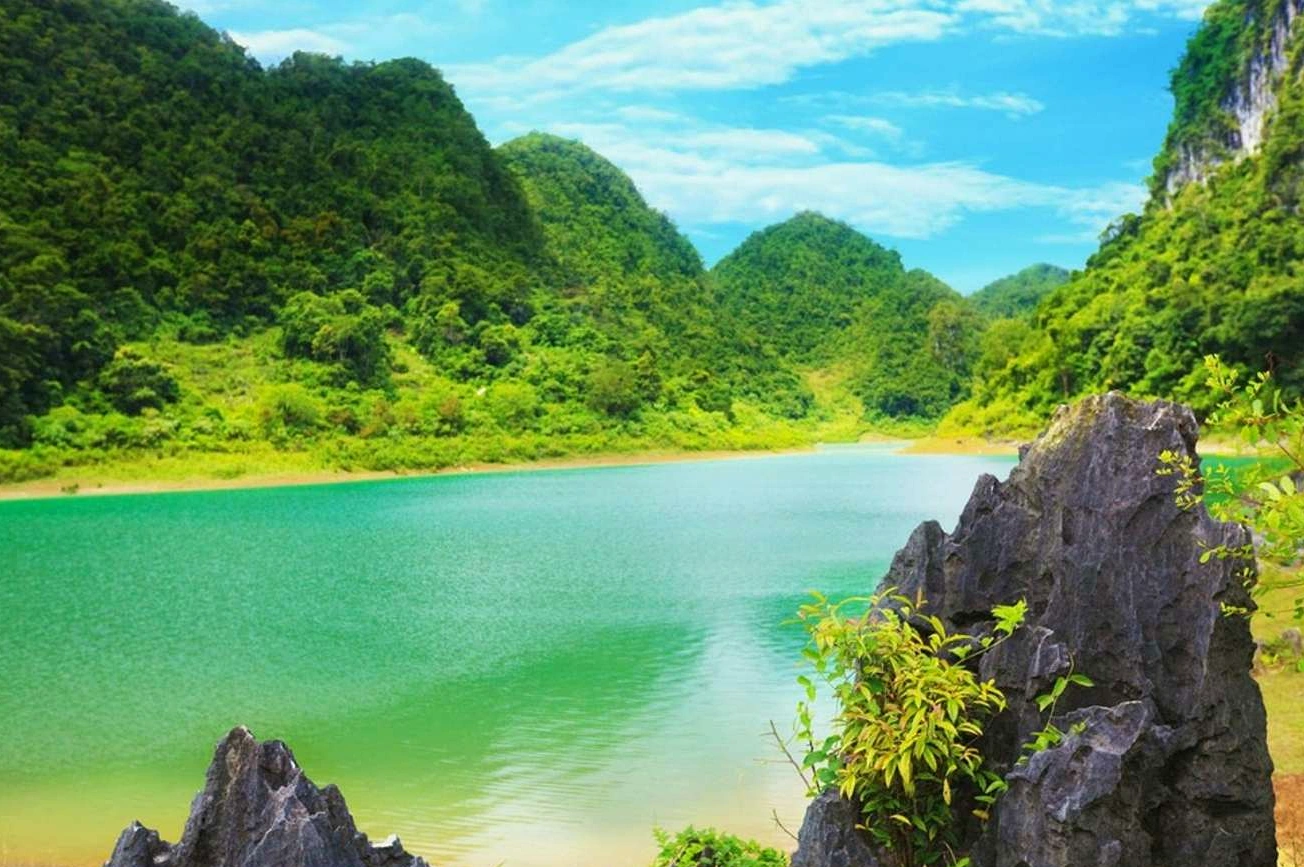
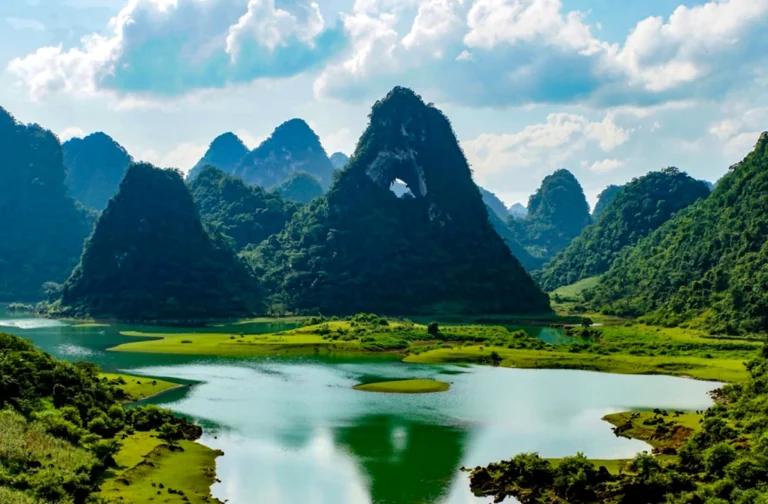
Tucked deep within the vast forests of Northeast Vietnam, the Thang Hen Lake complex in Quoc Toan Commune, Quang Hoa District, Cao Bang Province is not only a geological marvel, but also a “living museum” preserving the cultural layers of the Tay ethnic people across millennia. Situated in a special geographic location within the core zone of the Non Nuoc Cao Bang UNESCO Global Geopark, Thang Hen is likened to an “emerald gem” in the heart of the karst plateau—where heaven and earth converge to form an interconnected karst ecosystem rarely seen on Vietnam’s heritage map.
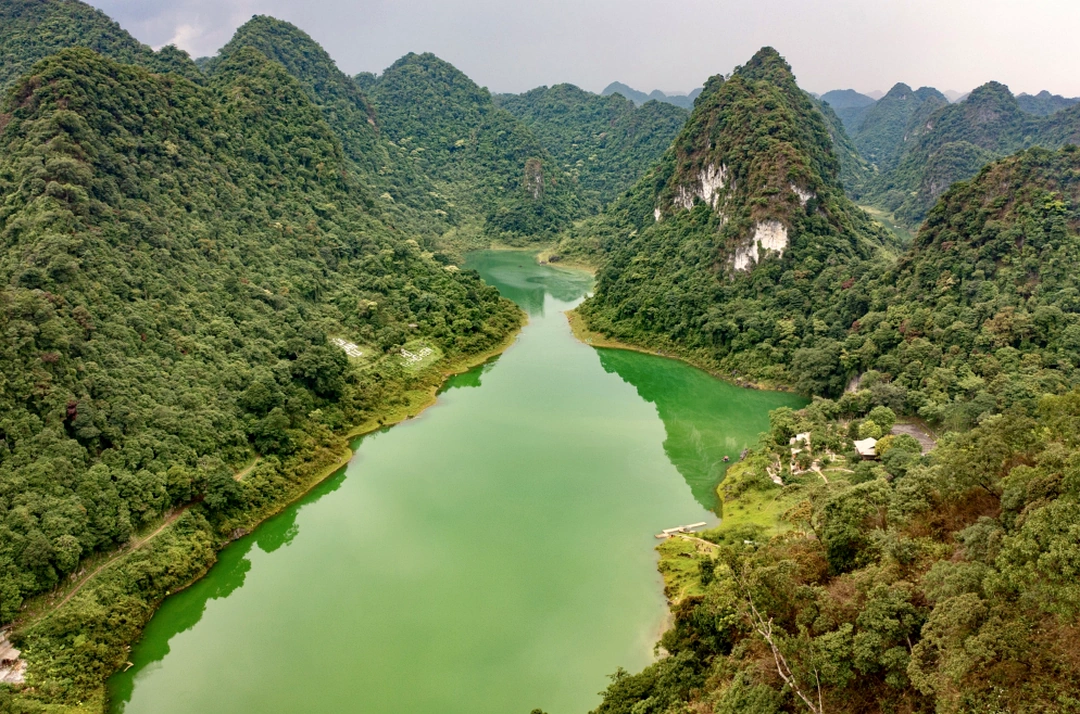
Topographically, Thang Hen is a system comprising 36 lakes of varying sizes, each bearing its own distinct name yet all linked together by mysterious underground streams beneath the limestone mountains. According to local feng shui beliefs, this land embodies the “coiling dragon, crouching tiger” (*Long chau ho phuc*) formation, where sheer limestone ranges encircle a sunken basin valley to create a natural “water-gathering” basin (*tu thuy*)—a focal point where the spiritual energy of the deep forest converges. This unique topography gives rise to a one-of-a-kind “inland tide” phenomenon: lake water levels rise and recede seasonally, offering living proof of the interconnected subterranean cave system recognized by international geologists as a geological heritage of global significance.
In the Tay language, the name “Thang Hen” means “bee’s tail,” inspired by the winding silhouette of the lake seen from above, which resembles the tail of a giant bee draped across the rocky valleys. Yet behind this descriptive geographic name lies a rich legend steeped in human sentiment. Local lore tells of Chang Sung—a gifted son of the village who passed the imperial examinations to become a mandarin and wed a celestial fairy. Their hurried footsteps on their wedding night as she returned to heaven transformed into a chain of seven interconnected lakes, becoming a timeless symbol of romantic devotion and the bond between humanity and nature. From a historical perspective, this legend is more than mere folklore; it deeply reflects Mother Goddess worship and Water Deity veneration—spiritual pillars of highland wet-rice agricultural communities, where the Dragon King (*Long Vuong*) is revered as the guardian deity of bountiful harvests and fertility.
The value of Thang Hen extends far beyond its scenic beauty to encompass priceless archaeological traces. Field surveys in caves surrounding the lake have uncovered coarse pottery shards and stone tools belonging to the Bac Son and Hoa Binh cultures, confirming human habitation tens of thousands of years ago. Ancient inscriptions (Tay *Nom* script) carved onto nearby cliff walls serve as historical “hinges,” opening a window into the spiritual life and centuries-old settlement of the Tay people in this region. Recognized by heritage management agencies and the press as a flagship heritage destination, Thang Hen emerges as a living intangible cultural entity where every rock and every current tells a story of endurance—of the interplay between awe-inspiring geology and the soul of Vietnam’s highland peoples.
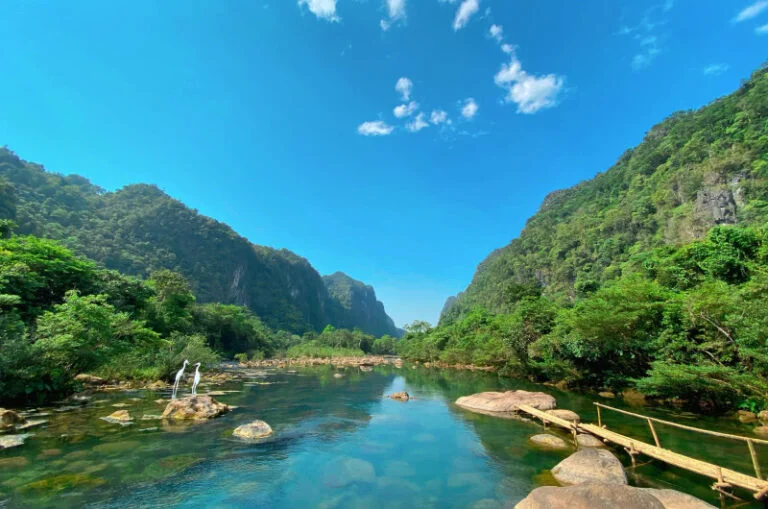
If the Non Nuoc Cao Bang UNESCO Global Geopark is a giant ink-wash painting, then the Thang Hen Lake complex is its finest brushstroke, showcasing nature’s limestone architecture at its pinnacle. With no need for reinforced concrete or ostentatious man-made structures, Thang Hen stands in its own right as an “architectural masterpiece” of creation. Sheer, towering limestone ranges rise like natural ramparts around a mirror-smooth lake surface, creating a sanctuary completely secluded from the outside world. Its grandeur lies in an artistic contrast: jagged, weathered cliffs stand in juxtaposition against tranquil emerald-green waters, achieving a rare visual equilibrium within karst topography.
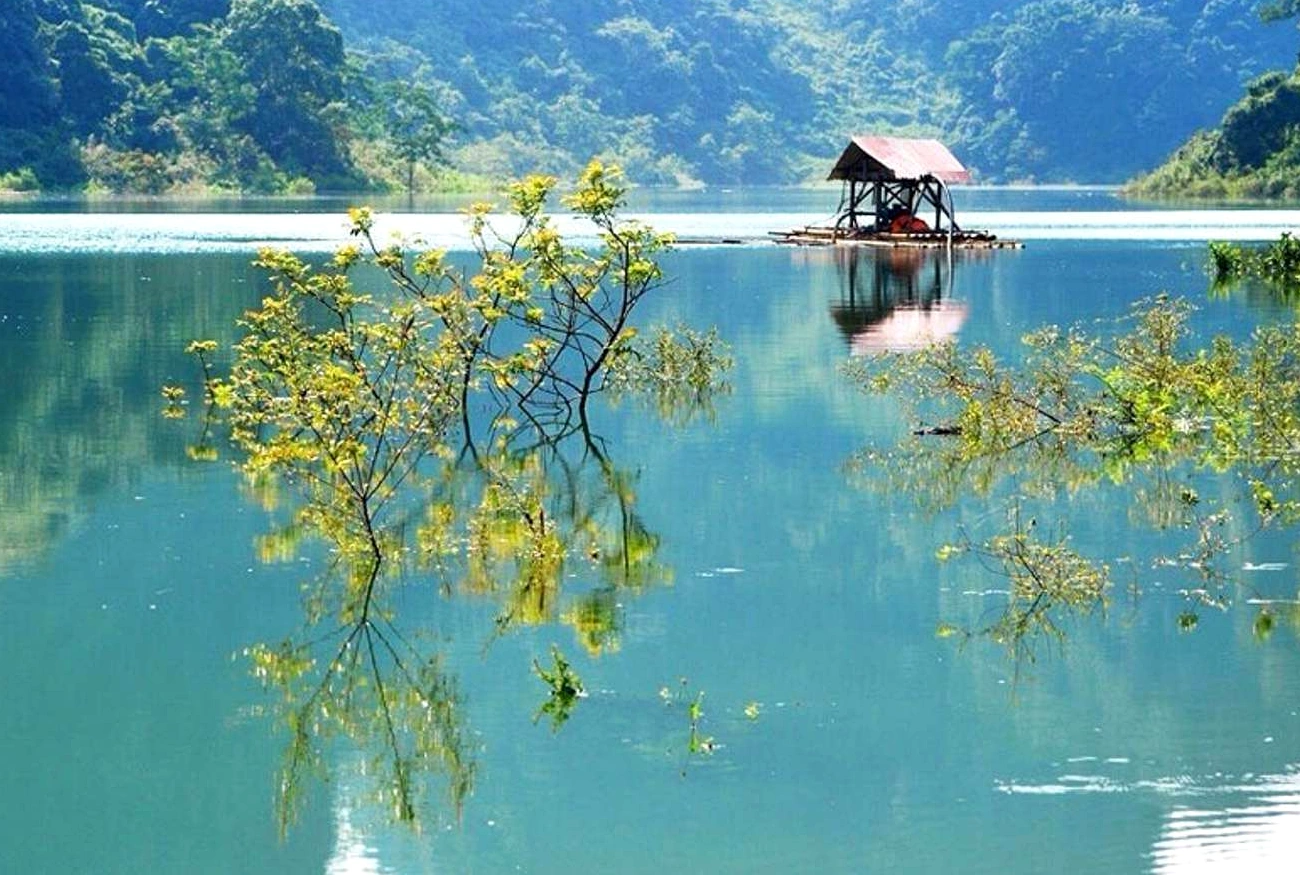
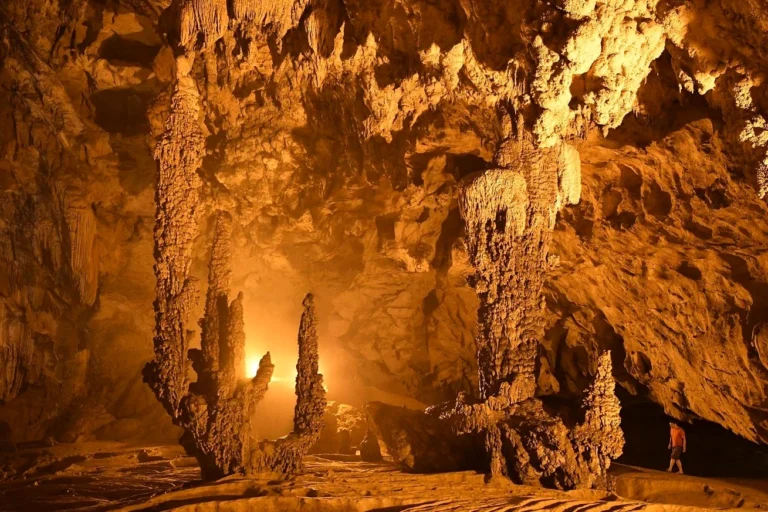
Thang Hen’s signature architectural feature is its interconnected system of 36 lakes, linked by hidden subterranean currents deep inside the mountains. Each lake acts as a distinct natural “chamber” with its own unique contours, framed by lush primary vegetation. During the high-water season, the lake expands to mirror ancient trees along its banks, conjuring an ethereal realm where the boundary between reality and illusion seems to dissolve. Nature’s sculptural artistry here is also on full display inside karst caves filled with intricate stalactites formed over millions of years—each formation an abstract sculpture that sparks the imagination of every visitor.
To capture the true soul of Thang Hen on camera, professional photographers typically favor two “golden coordinates” widely hailed by travelers as million-dollar photo spots. The first sits at the highest vantage point along the eastern cliff face, offering a sweeping panorama of the chained lakes embedded like jade gemstones in the valley floor. The ideal time to shoot here is at dawn, when the first rays of sunlight pierce through delicate morning mist, gilding the limestone peaks and illuminating the lake like a colossal mirror. The soft morning light creates enchanting color gradients that imbue photographs with remarkable depth and artistry.
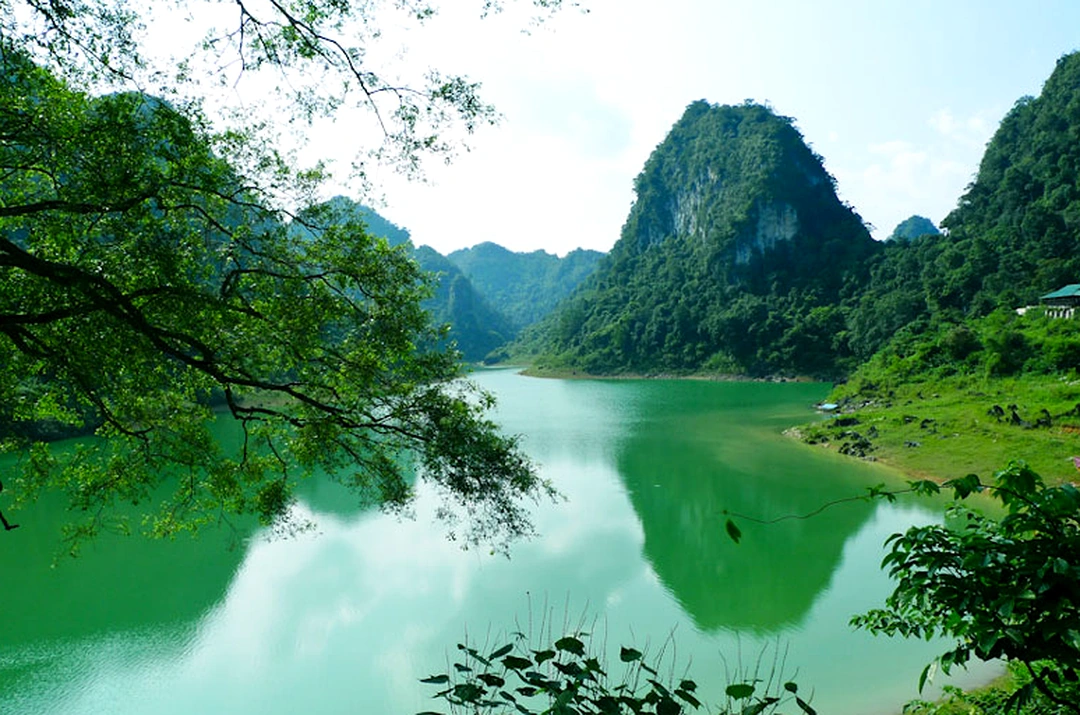
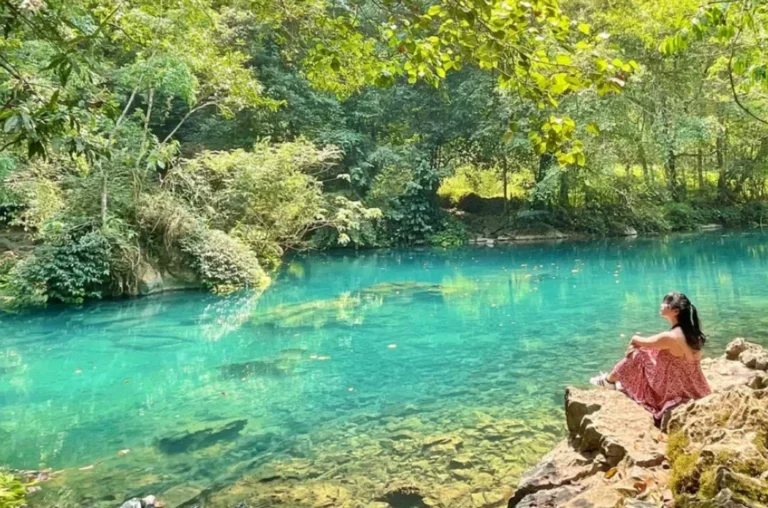
The second photo spot is right down by the water’s edge along the main lake, where ancient trees lean gracefully over their own reflections. This angle is ideal for capturing the stillness and “coiling dragon, crouching tiger” grandeur of the landscape. Sunset brings the most bewitching light, as the sky turns shades of violet and rose and reflects off the glassy water—creating a mythical scene straight out of the fairy tale of Chang Sung and his celestial bride. Here, a single shutter click effortlessly captures the raw, majestic, and poetic beauty of Thang Hen. The natural architectural lines and harmony between stone, water, and sky make this spot not only a haven for photography enthusiasts, but also a sanctuary for the soul to find stillness and contemplate the eternal beauty of Vietnam’s geological heritage.
Stepping into the Thang Hen Lake complex, visitors embark on far more than a standard sightseeing trip—they enter a journey that brings them face-to-face with the living breath of the deep forest. The moment you clear the winding mountain passes, a sweeping ink-wash landscape unfolds before your eyes, blending the emerald-jade hue of the lake with the brooding gray of sheer limestone cliffs. The first overwhelming sensation is an extraordinary stillness—not an empty silence, but one brimming with vitality, prompting visitors to instinctively lower their voices so as not to disturb the mirror-like water.
The single most rewarding experience here is gliding slowly across the crystal-clear water aboard a small wooden boat. As the boat parts the gentle ripples, you can see straight down to the lakebed, where submerged rock reefs and aquatic flora form a mysterious underwater world. In this serene setting, the rhythmic splash of oars blends with clear birdsong echoing down from towering cliffs to compose a natural symphony rarely heard elsewhere. If you are lucky enough to visit during the high-water season, you can witness the fascinating “inland tide” phenomenon firsthand as water levels fluctuate cyclically—living evidence of the magnificent subterranean cave network nature bestowed upon this land.
After soaking in the lakeside scenery, hiking up to the surrounding high overlooks reveals an entirely different perspective. Looking down from above, the 36 lakes appear like finely set jade stones scattered across a lush green velvet carpet of old-growth forest. From here, visitors can most vividly appreciate the “coiling dragon, crouching tiger” geomantic layout long studied by feng shui masters. Standing beneath the wide-open sky and breathing in lungfuls of pure mountain air, all the stresses of urban life seem to melt away, leaving behind inner calm and deep admiration for the wonders of creation.
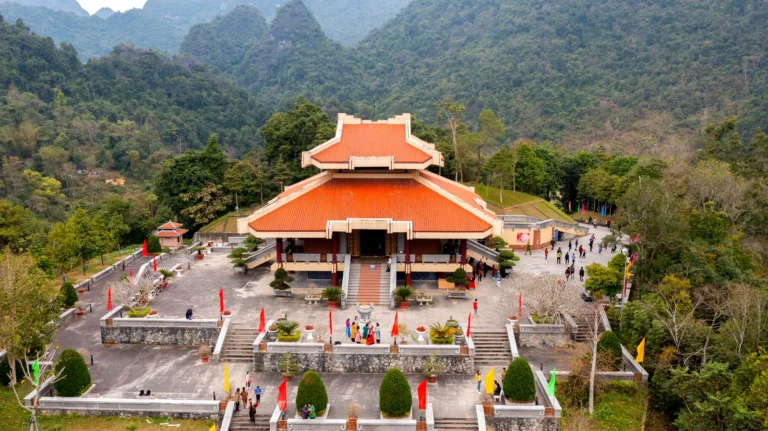
A journey through Thang Hen would be incomplete without experiencing its spiritual depth and indigenous culture. At shrines and sacred spots around the lake, visitors can feel the locals’ deep reverence for the Water Deity and the Dragon King. The legends of Chang Sung and the fairy are not merely stories—they have become part of the very soul of this land, woven into every stilt house, every *Then* ritual song, and every resonant note of the Tay people’s *Tinh* lute. The warmth and genuine hospitality of local residents act as the “glue” binding travelers to this place, making you feel less like a distant visitor and more like a family member returning home after a long journey.
Finally, to awaken every sense, nothing beats savoring the celebrated local cuisine of the Quang Hoa region. Dishes such as pit-roasted lake fish, five-color sticky rice (*xoi ngu sac*), smoked black pork, and crisp wild forest greens prepared using traditional Tay recipes deliver rich, unforgettable flavors. Enjoying these mountain delicacies alongside a cup of aromatic corn wine in the crisp highland chill leaves travelers feeling utterly refreshed. Thang Hen is not just a destination; it is a living experience where culture and nature intertwine, leaving lasting impressions of a sacred land where time seems to stand still.
To ensure a smooth and meaningful exploration of the Thang Hen Lake complex, travelers should keep several practical details in mind. The Thang Hen Lake Eco-Tourism Area is open to visitors every day of the week—including weekends and public holidays—from 7:00 AM to 6:00 PM. Sticking to these hours ensures safe navigation across the rocky mountain terrain while letting you experience the lake during the best natural lighting of the day.
Regarding admission fees, the site currently enforces standard posted ticket prices to fund heritage conservation and maintain visitor infrastructure. General admission typically ranges from 30,000 VND to 50,000 VND depending on visitor category (adults, children, or seniors). Visitors should check directly at the main entrance ticket booth for updated bundled services such as sightseeing boat rentals or local tour guides, which provide deeper insight into the legend of Chang Sung and the celestial fairy.
To travel from Cao Bang City center to Thang Hen Lake, the most convenient options are a motorbike or private car. Covering a distance of roughly 30 km, visitors follow National Highway 3 before turning onto Provincial Road 205 toward Quang Hoa District. This scenic route winds past majestic limestone mountains, offering stunning views along the way. However, due to sharp hairpin turns typical of mountainous terrain, drivers should watch their speed and inspect their vehicle thoroughly before setting out. If you are not confident driving mountain roads, taxis and private car hires in Cao Bang City are readily available at reasonable negotiated rates.
As for the best time to visit, the high-water season (typically falling between September and October each year) is when Thang Hen Lake reaches peak splendor. During these months, water levels rise and the lake turns a vivid emerald green, mirroring the surrounding layers of limestone peaks. Conversely, if you prefer quiet solitude and want a clearer look at the subterranean cave openings, the dry season offers an ideal opportunity to examine the unique geological structure of the karst system.
Because Thang Hen is not only a tourist attraction but also a land steeped in spiritual significance and Tay folk beliefs, visitors should pay attention to dress etiquette. Opt for modest, respectful attire, especially when visiting cave sites or places of worship near the lake. Since the terrain consists largely of sharp limestone outcrops and natural footpaths, wearing sturdy sneakers with good grip and comfortable, breathable clothing is essential for safety and ease of movement. Always help keep the area clean, refrain from littering, and respect the peaceful natural environment to preserve the pristine beauty of this UNESCO Global Geopark site for generations to come.
To enjoy a seamless getaway and take in the full splendor of Thang Hen Lake without worrying about arranging transportation, booking entrance tickets, or planning itineraries, travelers can choose from VDS Travel’s premium all-inclusive Cao Bang tour packages. Each itinerary is thoughtfully designed to optimize photo check-in times when the scenery is at its most breathtaking, accompanied by knowledgeable local guides and top-tier hotel and dining standards.