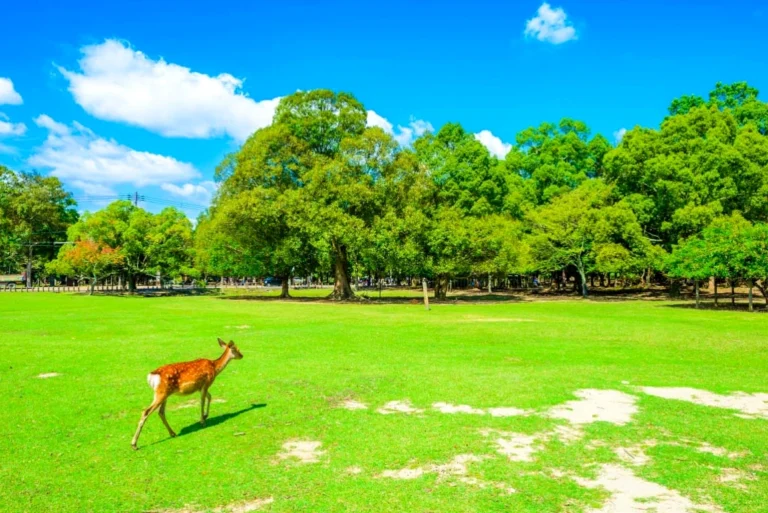
Beneath the ancient ramparts of the Edo Shogunate, which lasted from 1603 to 1867, the area known today as Akihabara was once nothing more than a quiet expanse of open wasteland just outside the Sujikai-gomon Gate. When Shogun Tokugawa Ieyasu undertook the grand urban planning of the capital city of Edo to establish ruling order, this northern periphery was carefully calculated as a buffer zone separating the residential quarters of lower-ranking samurai warriors from those of the merchant townspeople. Fire was a constant nightmare for the city’s wooden structures—poetically dubbed the “flowers of Edo” by the ancients—forcing the shogunate government to maintain a vast geographical clearing to isolate the threat of spreading flames whenever blazes erupted from the tightly packed rows of humble dwellings.
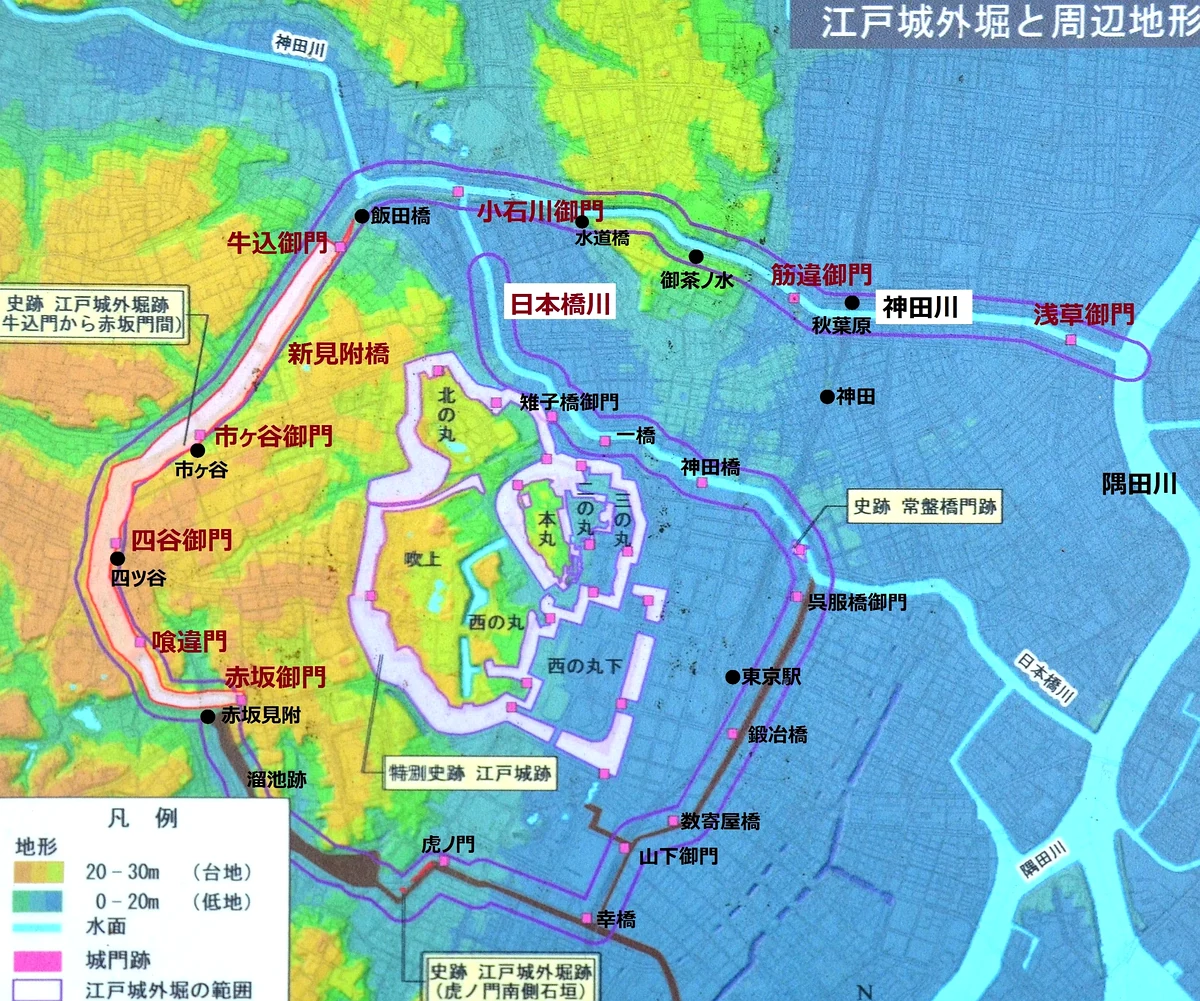
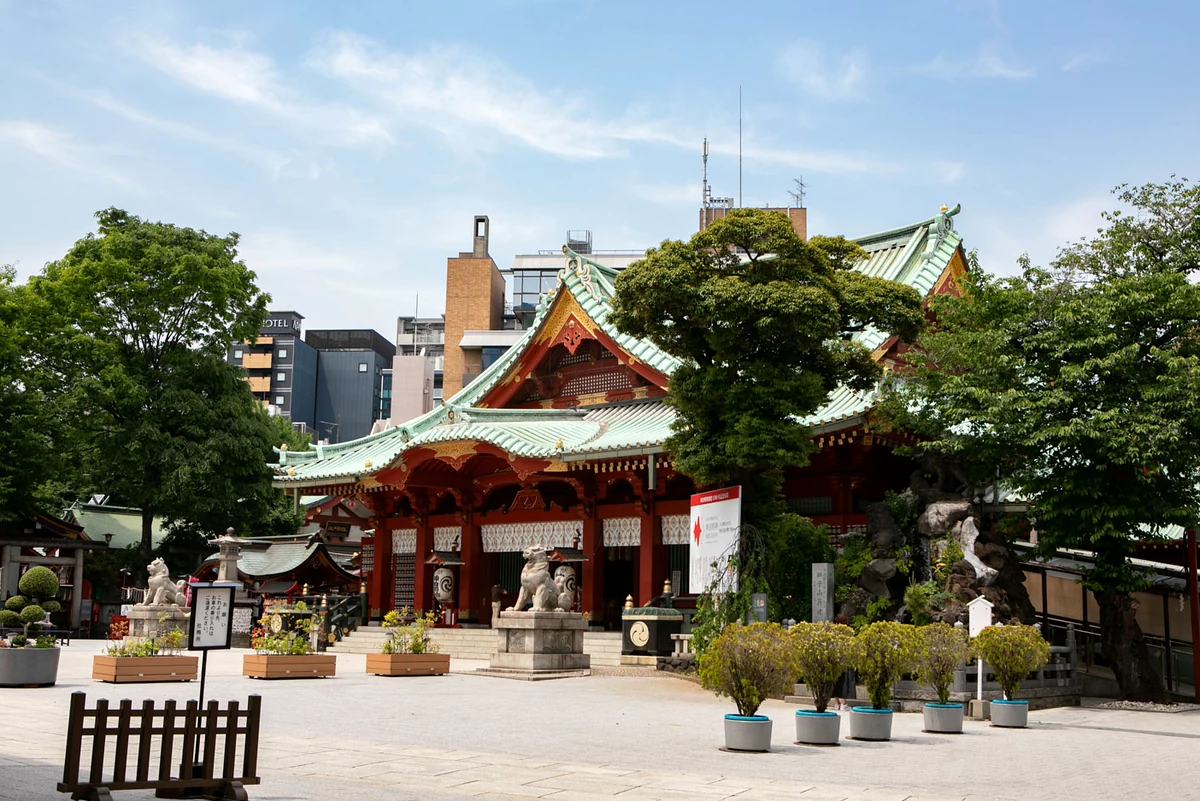
The historical turning point that completely transformed the face of the land occurred in 1869, the second year of the Meiji era, when a catastrophic fire swept through the district, incinerating thousands of roofs and leveling the entire neighborhood to ash. To permanently eliminate this peril so close to the Imperial Palace, the Meiji government immediately cleared roughly nine thousand square meters of land, creating a massive firebreak plaza named Hikeshi Chi. At the very center of this buffer zone, authorities enshrined a sacred flame to establish Chinka-sha Shrine, dedicated to Akiba Daigongen, the deity of fire protection. Out of habit, local residents began calling this deity-sheltered plain Akiba-ga-hara—meaning “the field of vibrant autumn leaves”—before phonetic shifts over time officially cemented the name Akihabara onto the cadastral maps of Japan.
When World War II ended in 1945, Tokyo once again lay in ruins, yet it was precisely from those ashes that Akihabara’s first technological seeds sprouted. The area beneath the elevated railway tracks and around the Kanda Sudacho intersection quickly morphed into a bustling black market specializing in radio components, vacuum tubes, and receivers salvaged from the military depots of stationed American forces. Young engineers and bright students from the Tokyo Imperial University flocked here to scavenge individual semiconductor diodes, copper wire coils, and capacitors to hand-build radio sets serving the essential communication needs of the postwar era. In the skilled hands of these impoverished intellectuals, makeshift stalls built from corrugated iron gradually took shape as a rudimentary yet vibrantly creative industrial hub.
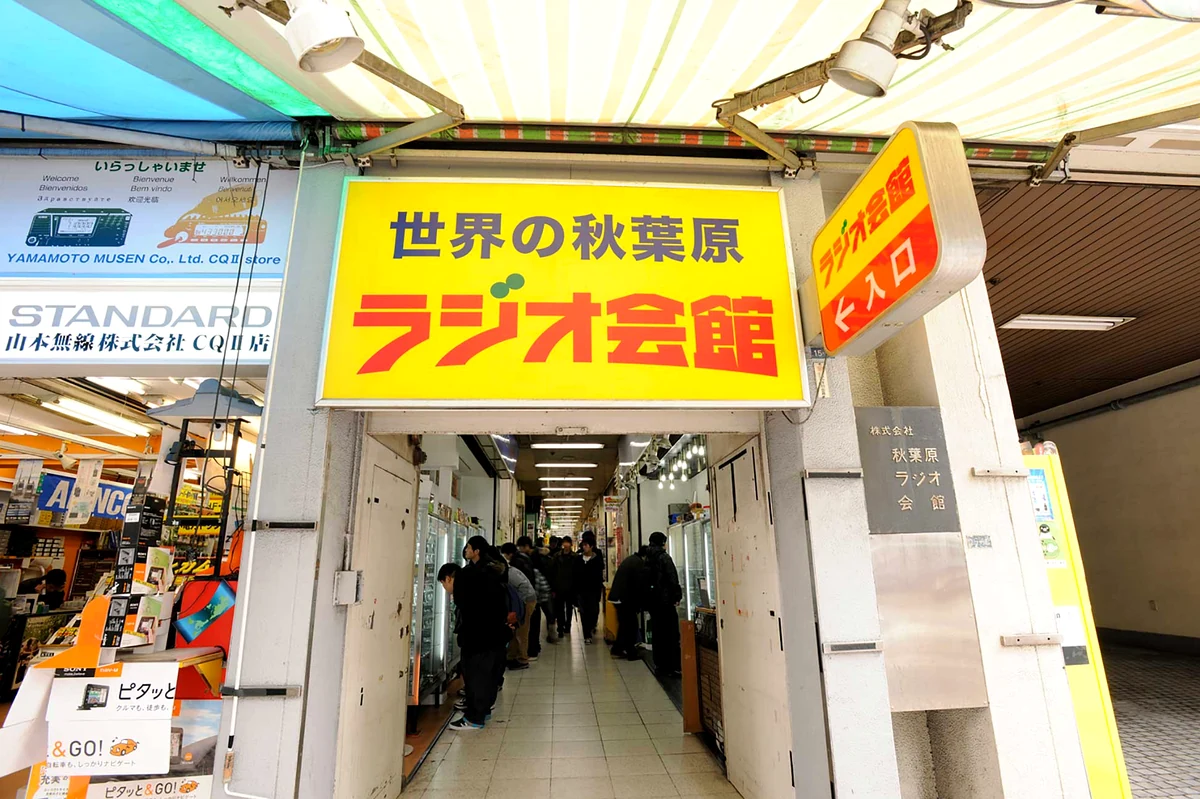
Stepping into the era of reconstruction and economic boom during the 1980s and 1990s, Akihabara underwent a spectacular metamorphosis into a symbol of modern Japanese prosperity, becoming Asia’s largest distribution center for household electronics and semiconductor components. Closely packed multi-story buildings like Radio Kaikan and personal computer dealerships teemed with buyers and sellers hunting for motherboards, microprocessors, and the legendary PC-9801 microcomputer series. This district was not merely a gathering spot for tech-savvy enthusiasts assembling custom hardware, but also a testing ground for cutting-edge consumer electronics prior to global export—a testament to the miraculous resilience of an industrial superpower.
Since the 2000s, the global wave of digitalization and the shift toward online retail have propelled Akihabara into another remarkable, distinctly contemporary transformation. The land of vacuum tubes and silicon microchips rapidly expanded to embrace the Otaku subculture, becoming the undisputed mecca for Anime, Manga, video games, and one-of-a-kind Doujinshi self-published works. Along neon-drenched Chuo-dori Avenue, the emergence of cultural concepts like Maid Cafés alongside galleries showcasing intricate figurines has crystallized into an unparalleled visual art space, where the firebreak past of the feudal era and a futuristic vision seamlessly merge into one.
Viewed through the lens of East Asian geomancy and urban planning, Akihabara sits on a gently sloping plain adjacent to the Kanda River basin, which once served as a natural firebreak protecting the northeastern flank of ancient Edo Castle. This low-lying tract was once called Hibarigahara—an expansive open space designed to halt spreading fires—before receiving the spiritual vitality radiating from the renowned Kanda-Myojin Shrine. Perched atop a high hill to the northwest like a sturdy feng shui screen, Kanda-Myojin enshrines three supreme deities who safeguard the prosperity of merchants and protect the well-being of the local community. That spiritual undercurrent seemed to act as an invisible launchpad, propelling the plain below into one of Japan’s most thriving commercial hubs and transforming what was once an empty firebreak into a land accumulating boundless wealth across centuries of change.
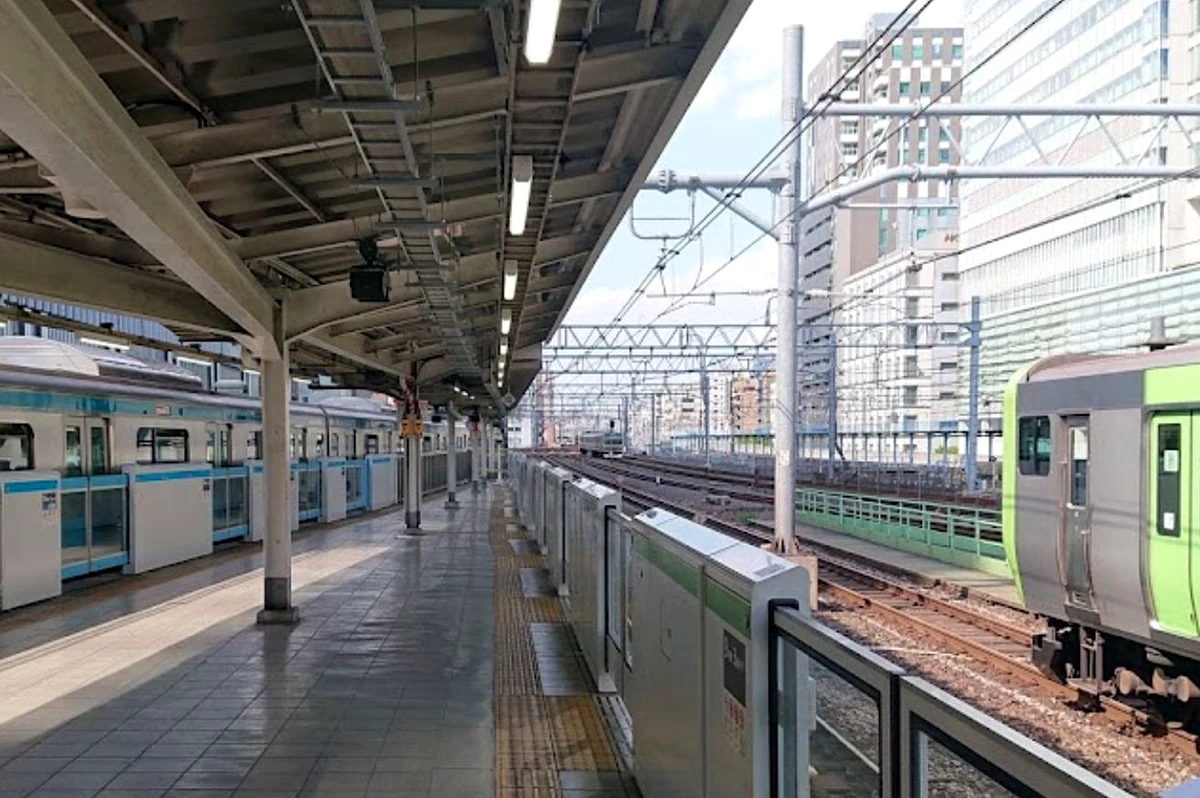
The foundational anchor shaping Akihabara’s contemporary identity is its complex, multi-tiered transit infrastructure, representing the pinnacle of Japanese urban mechanical engineering. Akihabara Station operates like a colossal mechanical heart, intricately weaving together vital railway lines both above ground and deep beneath the earth. The station’s architecture is built on a classic cruciform intersection layout: the JR Sobu Line runs along a high elevated viaduct on an east-west axis, crossing directly over the parallel north-south tracks of the vital JR Yamanote and JR Keihin-Tohoku loop lines. Deep underground, the Tokyo Metro Hibiya Line (station code H-15) harmonizes with the high-speed Tsukuba Express—an engineering marvel bored through multiple geological strata to connect central Akihabara directly to Tsukuba Science City in a mere 45 minutes. On the road network, the district links directly to Route 1 (Ueno Route) of the Shuto Expressway via two strategic gateways at Manseibashi and Ueno, establishing a seamless flow for international tour buses to reach the commercial core without conflicting with local pedestrian networks.
The spatial landscape of Akihabara possesses a unique duality, showcasing a breathtaking continuity between traditional Shinto heritage and contemporary industrial architecture. Just steps away from the main electronics avenue, visitors encounter the 2k540 Aki-Oka Artisan complex, a creative space ingeniously revitalized beneath the sturdy railway viaduct arches stretching between Akihabara and Okachimachi stations. The name 2k540 derives from the railway distance marker indicating 2 kilometers and 540 meters from Tokyo Station, reflecting a pragmatic mindset paired with refined aesthetics that turned raw concrete underpasses into an elegant, pure-white artisanal craft street. The counterpoint between the solemn, incense-filled Kanda-Myojin Shrine on one side and modern artisan workshops alongside glass-clad skyscrapers reflecting the eternal glow of technology on the other creates a deeply layered cultural landscape across the entire district.
Stretching along the Chuo-dori axis, Akihabara’s visual scenery is a multidimensional matrix overflowing with electronic colors and animation. The streetscape is fragmented into hundreds of narrow, deep vertical commercial plots where densely packed, multi-purpose buildings soar skyward. Ground floors and subterranean passages are typically dedicated to stalls selling electronic components, semiconductor microchips, and mechanical cables steeped in postwar legacy, while ascending upper levels open into dazzling futuristic realms of multimedia entertainment centers, maid cafés, and museums displaying giant anime figurines. This vertical stacking of space turns Akihabara into a concrete jungle illuminated by thousands of LED signs and massive anime billboards, delivering a surreal urban spectacle that few places on earth can fully replicate.
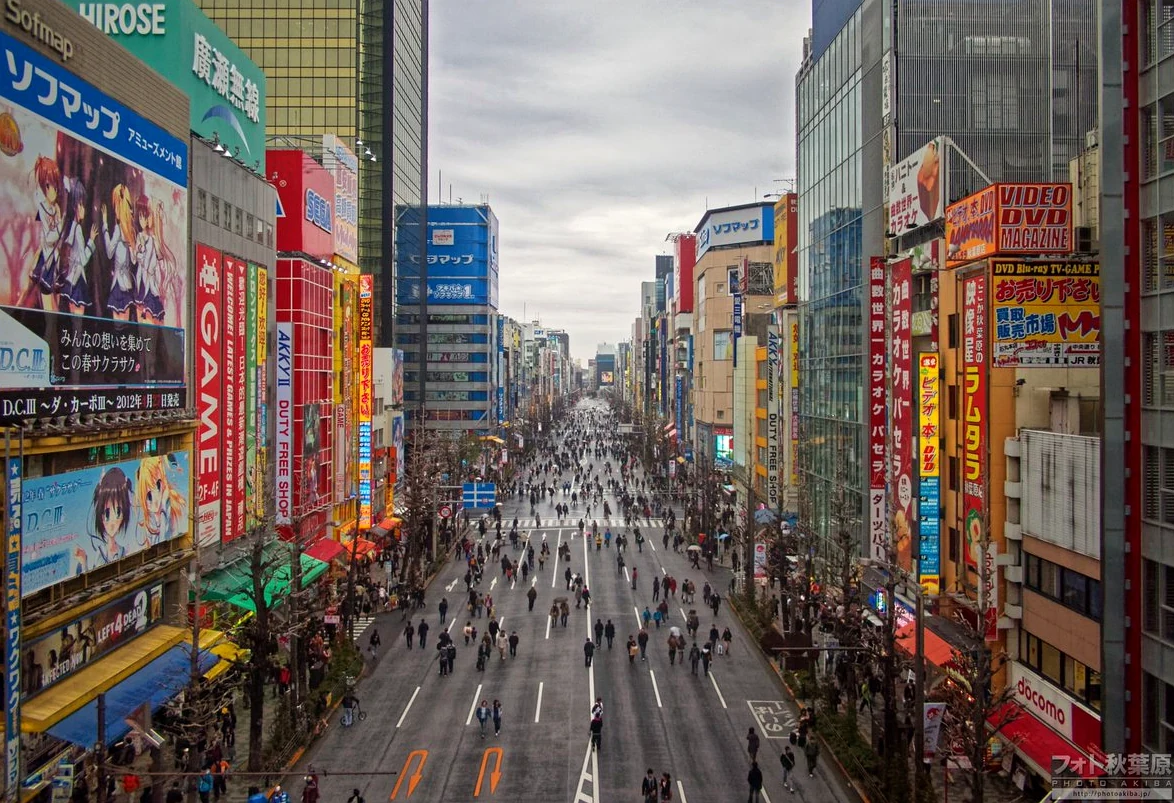
From an urban planning perspective, Akihabara unfolds a one-of-a-kind spatial structure whose backbone is defined by the roughly 500-meter stretch of Chuo-dori Avenue (中央通り). By day, this arterial thoroughfare hums with Tokyo’s most modern vehicular traffic, yet every Sunday afternoon from 13:00 to 17:00, the entire roadway undergoes a dramatic transformation into a sprawling pedestrian paradise known as Hokousha Tengoku. During these hours, the boundary between street and sidewalk vanishes completely, freeing travelers’ sightlines to take in the full grandeur of a post-modern urban architectural ensemble. The physical space here defies conservative conventions, staging a dramatic dialogue between sturdy 1970s and 1980s reinforced-concrete blocks and sleek, reflective-glass high-rises of the new century. Physical architectural boundaries seem erased altogether as facades are blanketed from foundation to rooftop in vibrant signage and colossal LED screens broadcasting dazzling anime scenes twenty-four hours a day, turning entire city blocks into a ceaselessly moving visual museum.
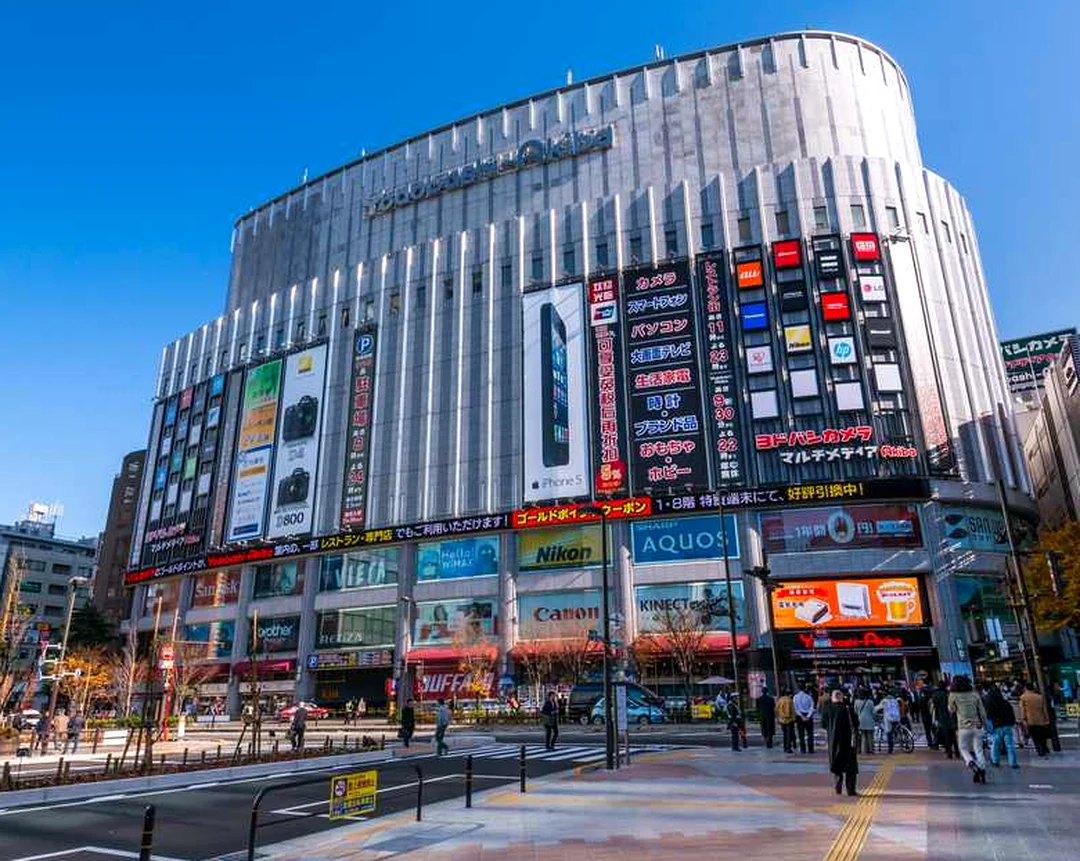
The architectural imprint of this mecca reaches its peak of contrast through iconic landmarks standing guard right at the station gates. Most notable is the Akihabara Radio Kaikan building, a historical witness that has undergone multiple large-scale reconstructions to evolve from an early postwar radio and semiconductor parts market into a magnificent multi-story commercial hub—all while preserving its soul of mechanical engineering fused with animation. Not far away, towering on the eastern side is the Yodobashi Camera Multimedia Akiba complex, a staggering structure featuring nine above-ground floors and six basement levels wrapped in gleaming glass and metal facades. This tech headquarters stands proudly like a futuristic fortress, directly counterbalancing the signature blue-hued Sofmap buildings lined up along the avenue to create an artificial skyline steeped in Japan’s unmistakable cyberpunk aesthetic.
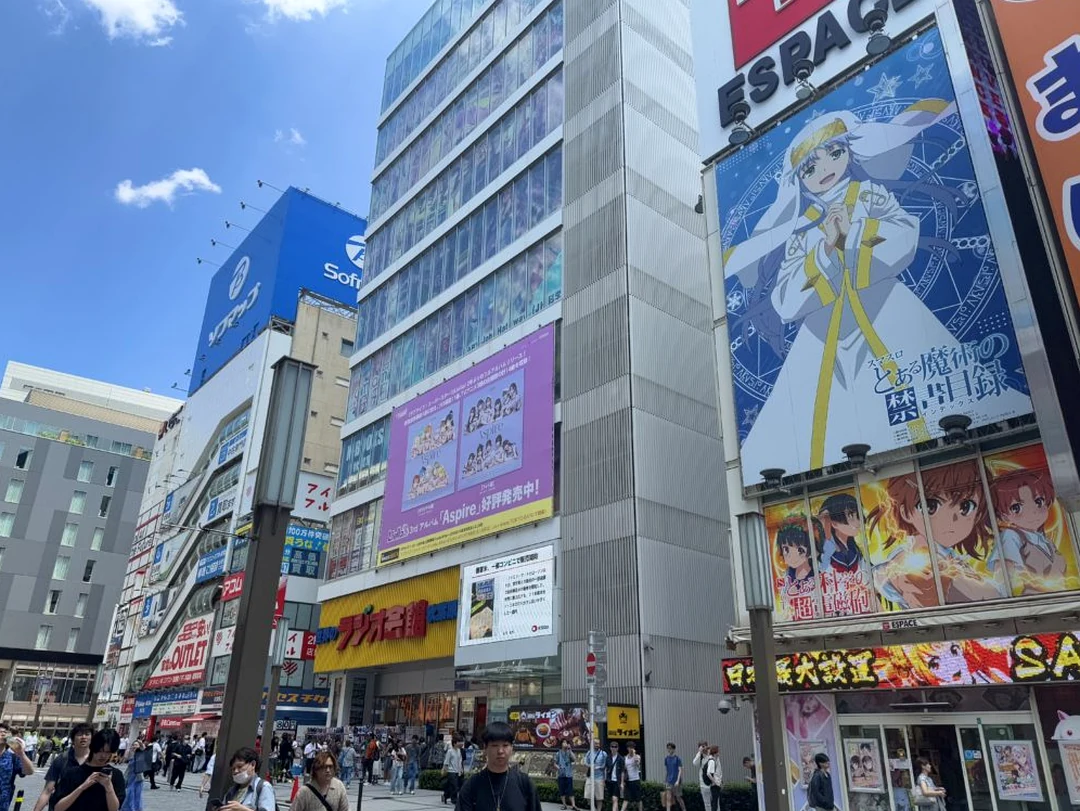
What defines the brilliance of Akihabara’s spatial organization lies not merely in ground-level breadth, but in the art of exploiting vertical space—known as the Vertical Retail model. Due to the high cost of real estate in central Tokyo, the Japanese have ingeniously transformed every high-rise building into a multi-tiered micro-cultural ecosystem, where each floor represents a specialized universe arranged with scientific precision. Typically, in complexes like Sofmap or Radio Kaikan, the first through third floors serve as sanctuaries for intricate static figurines and Gunpla model kits, displaying tens of thousands of resin and ABS creations molded and hand-painted to nanometer accuracy. Ascending to the fourth and fifth floors opens up vast libraries archiving manga volumes, original artbooks, and rare independent doujinshi publications. The sixth and seventh floors transition into quiet yet fiercely intense arenas for tactical trading card games (TCG), where specialized tables are perpetually packed with duelists vying for supremacy. Finally, the rooftops or secluded top floors are often reserved for themed cafés and high-concept maid cafés, completing a self-contained cycle of experiences spanning shopping, collecting, and interactive entertainment.
Every step taken through the densely interwoven alleys and square meters of Akihabara is a journey across cultural strata materialized through pragmatic architecture. Unlike the tranquil serenity of Kyoto’s ancient temples or the solemn majesty of imperial residences, the spatial layout here faithfully mirrors the contemporary pulse of Japanese society: an absolute harmony of maximum commercial utility, cutting-edge display technology, and boundless human imagination that turns inert concrete blocks into a living sanctuary of endless cultural depth.
As twilight descends and gives way to night over Tokyo, Akihabara sheds its busy daytime commercial guise to don the persona of a colossal live-action light stage pulsing with cyberpunk energy. The Chuo-dori artery and its labyrinth of intersecting alleys instantly erupt in a frenzied dance of tens of thousands of LED bulbs, multicolor electronic matrix signs, and giant outdoor screens streaming vibrant animated clips 24/7. Neon spectra shimmer across the asphalt, transforming multi-story buildings into multidimensional towers of light where the boundary between earthly reality and virtual fantasy seems to dissolve entirely.
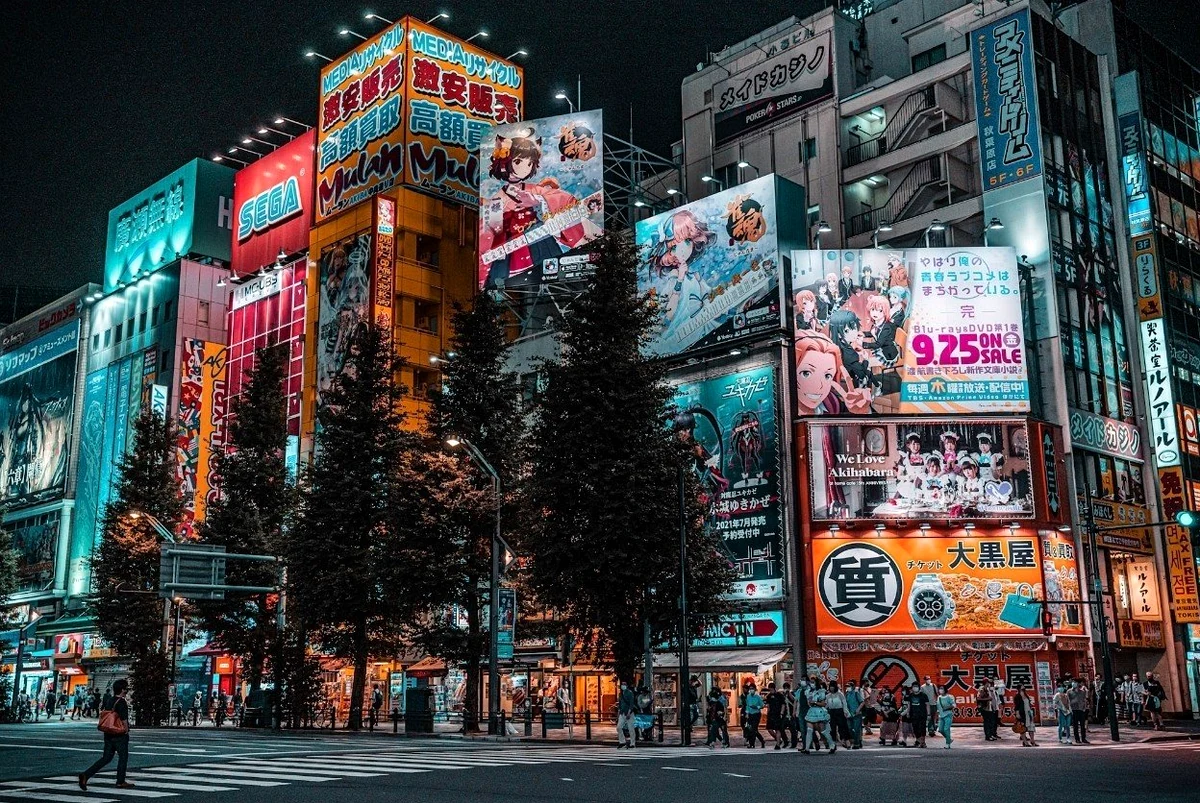
The epicenter of this sleepless nightlife converges at towering arcade entertainment complexes such as the renowned GiGO chain, successor to the legendary SEGA game centers of yesteryear. Stepping through the automatic doors, visitors are immediately swept into an enchanting audiovisual field where ground floors glow with hundreds of state-of-the-art UFO Catcher claw machines brimming with limited-edition character figures. The crisp metallic clink of 100-yen coins dropping into slots mingles with rapid-fire electronic chiptune melodies, thunderous Taiko drumbeats, and nimble footsteps on rhythm-game dance pads. Upper floors unveil worlds of fierce fighting-game tournaments or quiet corners where duelists immerse themselves in strategic card battles, flipping each magic card beneath dramatic spotlights.
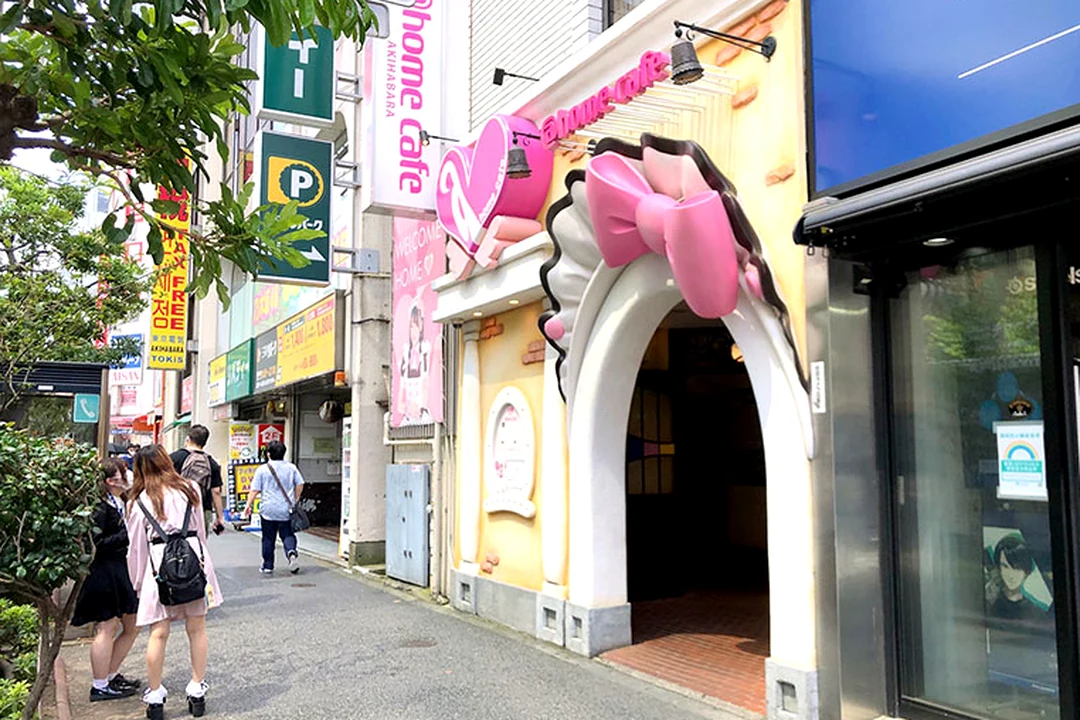
Following the tucked-away alleys behind the main boulevard, Akihabara’s nocturnal world reveals a subtler, more intimate dimension of indulgence across mezzanine levels and themed bars. Small signs written in Katakana guide travelers up to maid cafés hidden on upper floors, where warm, sparkling illumination with stylized candlelight and soft pastel tones offers complete seclusion from the metropolis’s frantic pace. Inside cosplay bars and sci-fi anime-themed lounges, bartenders dressed in elaborate character costumes meticulously craft cocktails inspired by magical spells, using dry-ice smoke and fluorescent lighting to turn drinks into luminous works of art in the dark.
Nighttime in Akihabara is not merely a visual promenade, but an emotional symphony of the Otaku community and young souls from around the globe seeking kindred spirits. Beneath the unceasing glow of manga heroine murals towering tens of meters high, one encounters travelers captivated by virtual reality experiences, collectors patiently hunting rare late-night finds, or simple dreamers standing quietly to watch passing traffic streak by like beams of future light. After-dark entertainment here transcends mechanical amusement, becoming a living museum of contemporary aesthetic tastes where light installation art and the spirit of Japanese pop culture reach their most radiant heights.
Behind the flashing neon strips and glass towers packed with semiconductor parts, Akihabara conceals an eccentric culinary map where the down-to-earth flavors of the historic Kanda merchant quarter from the Edo and Showa eras intersect with the fast-paced lifestyle of contemporary visual-culture enthusiasts. Strolling across the border where Akihabara meets Kanda, travelers encounter the refined charm of Kanda Niku Bar-style meat grills. This enclave has long reigned as a prime protein haven for office workers and shoppers alike after hours of scouring electronics stalls. The culinary essence of this micro-district culminates in the legendary deep-fried beef cutlet, Gyukatsu. Prime marbled beef cuts are coated in ultra-fine panko breadcrumbs and flash-fried for a mere sixty seconds to preserve a tender, rosy-pink interior cooked to medium-rare perfection. Diners place each slice onto a sizzling tabletop mini stone grill, listening to the joyful crackle of rendering fat before dipping it in pink salt or freshly grated wasabi to savor an explosion of buttery richness melded with pure, savory beef sweetness.
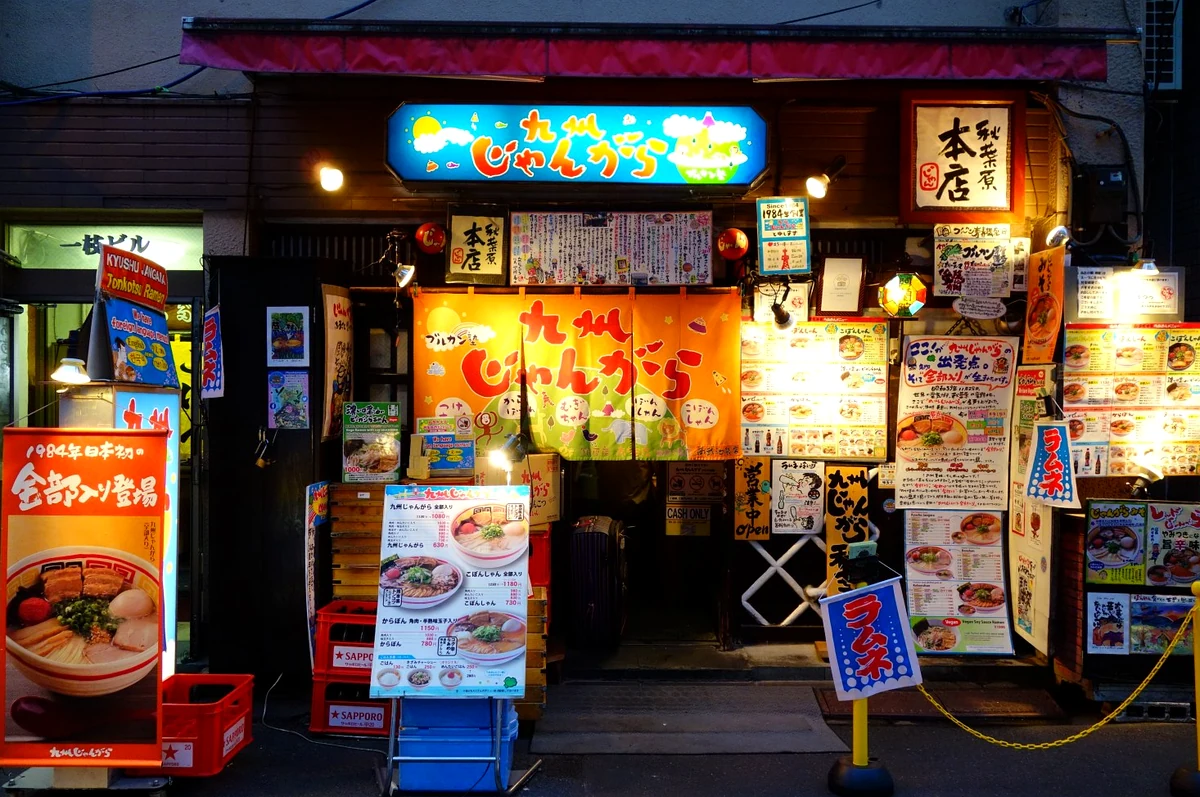
Winding through the tightly woven alleys around Akihabara Station and central basement arcades, aromatic plumes of steam guide footsteps into the realm of Akiba Ramen Street. This is a fierce culinary arena where master noodle artisans showcase their craft through bowls of broth distilled to perfection over the years. Standing out amidst tight spaces lined with rustic wooden stools is the famed Kyushu Jangara brand, a soul-warming icon for Tokyoites across generations. A bowl of Tonkotsu ramen here is a labor-intensive masterpiece: pork marrow bones are simmered continuously over high heat for more than ten hours with marrow and herbs, yielding a creamy, milky broth rich in deep umami without ever feeling heavy. Adorning the springy, thin noodles are thick slices of chashu pork steeped in mirin sweet rice wine, a dollop of spicy red Hakata-style mentaiko cod roe, and a glossy soy-marinated soft-boiled egg (ajitsuke tamago). Counterbalancing classic Tonkotsu is the energetic wave of spicy dry-mixed Mazesoba noodles, where thick strands are blanketed in chili-stir-fried minced pork, crushed raw garlic, smoky katsuobushi bonito flakes, and a fresh raw egg yolk—requiring diners to toss everything briskly with chopsticks so every layer of flavor melds together.
If ramen and gyukatsu represent steadfast culinary heritage, Maid Cafés forge a one-of-a-kind gastronomic concept found exclusively in this mecca of Otaku culture. Here, the boundary between simple dining and interactive performance art dissolves completely. The signature dish of this realm is golden Omurice—a silky-smooth omelet draped artfully over tomato-butter chicken fried rice, transforming into a live canvas right before the guest’s eyes. With practiced flicks of the wrist, servers in classic maid attire squeeze bright red ketchup to draw adorable cat faces or beloved anime characters. Before the first bite, a synchronized table-side chant bestowing good-luck energy infuses the meal with whimsical joy. This dining experience goes beyond physical nourishment, elevating into a unique cultural excursion that deeply reflects Japan’s yearning for human connection, kawaii aesthetics, and signature hospitality.
Venturing into the heart of Akihabara begins via Tokyo’s grandest railway network, where Akihabara Station serves as a massive transit hub welcoming vital lines including the JR Yamanote, JR Keihin-Tohoku, and JR Chuo-Sobu lines, alongside the Tokyo Metro Hibiya Line and Tsukuba Express. Most commercial complexes and designer toy shops here open relatively late—typically at 10:00 or 11:00 AM—and remain brightly lit until 20:00 or 21:00, allowing travelers to enjoy a peaceful morning strolling nearby shrines before diving into the fast-paced digital world.
The golden window to experience the district’s uninhibited spirit in full bloom is on Sunday afternoons from 13:00 to 17:00, when wide Chuo-dori Avenue enforces its full pedestrian-zone status known as Hokousha Tengoku (or Hoka-koku-tengoku for short). Once traffic barriers are lowered, the entire broad avenue becomes an endless stage for visual culture: cosplayers confidently showcase intricate costumes, photographers capture cinematic angles beneath high-rises plastered with character posters, and crowds from every corner of the globe stroll leisurely through a realm filled with cheerful electronic sounds without worrying about motor traffic.
For seasoned collectors, Akihabara’s strongest allure lies not just in brand-new releases, but hidden inside meticulously curated secondhand treasure troves at famed institutions like the eight-story Mandarake Complex or the Surugaya retail chain. The pre-owned retail culture in Japan is defined by absolute honesty and precision through a detailed condition-grading label system affixed to every package. A-rank items represent mint, factory-fresh condition with unblemished boxes; B-rank designates figurines or accessories bearing only microscopic hairline scratches barely visible to the naked eye or slight corner dents on the packaging; meanwhile, items marked J-rank—short for Junk—are defective products that may lack accessories or have broken mechanisms, frequently snapped up at bargain prices by amateur engineers or restoration artists for spare parts.
Budget management also becomes far easier thanks to Japan’s tax-free shopping policy for international visitors. At major electronics megastores such as the Yodobashi Camera Akiba branch or Laox retail centers, spending a minimum of 5,000 JPY (excluding consumption tax) within a single day and presenting an original passport with a valid entry stamp entitles travelers to an immediate consumption-tax exemption right at the checkout counter. This creates a golden opportunity for shoppers to acquire high-end optical gear, the latest handheld gaming consoles, or specialized PC components at highly attractive discounts.
However, the dazzling splendor of this entertainment capital also requires visitors from afar to keep a clear head against lurking commercial traps. Travelers should stay vigilant against aggressive touts scattered along side alleys trying to lure passersby into unfamiliar bars or cafés, and firmly say no to unauthorized street stalls peddling character figurines at suspiciously low prices to avoid counterfeit knock-offs—items strictly shunned by the genuine enthusiast community. Prioritizing purchases at reputable stores with clearly posted provenance and inspection labels will fully safeguard your consumer rights and preserve the authentic magic of your memories. To optimize your exploration time and delve deep into unique cultural corners without language barriers, choosing a professional all-inclusive tour package with a well-researched itinerary is the ideal key to unlocking the doors to the legendary mecca of Akihabara.