Standing majestically along the natural border between Luquan Yi and Miao Autonomous County and Dongchuan District within the jurisdiction of Kunming, Jiaozishan Snow Mountain has since ancient times held the proud status of the highest peak in the central Yunnan-Guizhou Plateau, soaring to an elevation of 4,247 meters above sea level. Across the timeless current of southern history, this ancient peak is far more than a colossal geological formation pushed up by violent tectonic upheavals of the Earth’s crust; it is also a sacred sanctuary preserving layered strata of cultural heritage from ancient dynasties. The name “Jiaozishan” (Sedan Chair Mountain) stems from the mountain’s gently sloped yet unusually square summit, where sheer cliffs on all four sides support a flat snow-capped crest resembling the ornate jade sedan chair of an imperial ruler drifting amid mist and cloud-draped mountain skies.
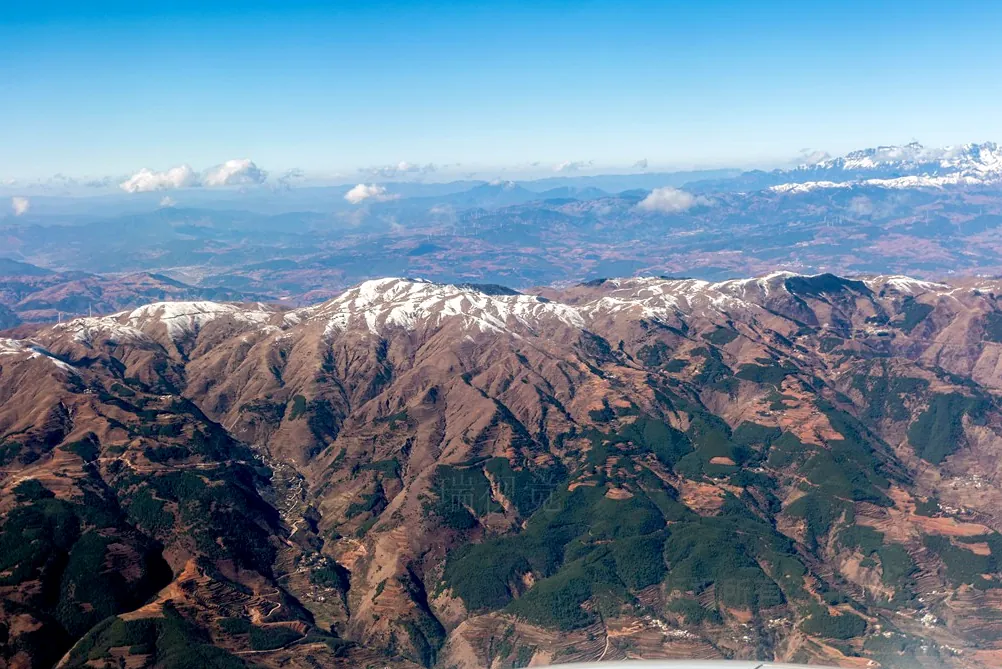
Rising proudly across the vast expanse of the Central Dian plateau, Jiaozishan Snow Mountain dons a brilliant imperial robe of ice and snow, fully displaying the exquisite carving lines of nature. Its massive granite massif features sheer fault scarps rising like formidable fortress walls, cradling a pristine white summit shaped like a proud imperial palanquin surging toward the lofty skies. Beneath craggy ledges blanketed in moss and packed snow, temperate vegetation and frozen waterfalls reflect shimmering light, sketching a solemn yet ethereal landscape reminiscent of an untamed natural masterpiece frozen across tens of thousands of snowy winters.
Opening ancient gazetteers to the golden age of the Nanzhao Kingdom during the Tang Dynasty, the imprint of Jiaozishan Snow Mountain was already solemnly inscribed in the territorial maps of the Meng family monarchs. During the Nanzhao period, when King Geluofeng conducted imperial inspections and demarcated his realm’s borders, this sacred mountain was officially bestowed the noble title “Eastern Peak” within the system of five sacred peaks of Dian, ranking alongside the majestic Cangshan Mountains to the west. For the indigenous Yi community, the mountain is revered as the divine Le Ba Ge Ba, dwelling place of ancestral spirits and the cradle of lineage and life passed down through epic oral traditions across generations. The snow-swept summit served as an altar to heaven and earth for sacred harvest rituals, acting as a protective screen shielding mountain villages from endless warfare raging down in the valleys.
Entering the Dali Kingdom era and continuing through the establishment of Yunnan Province under the Yuan Dynasty, the snow mountain’s strategic stature grew increasingly pivotal as it stood directly alongside the rugged Jinsha River basin. During the Ming and Qing dynasties, when indigenous chieftain systems were gradually replaced by imperial administrative integration to strengthen central authority, Jiaozishan stood firm as an unassailable natural landmark dividing military spheres of influence. Alongside the prosperity of Dongchuan’s copper mines—the economic lifeblood minting currency for the imperial treasury—the foothills of the snow mountain became a bustling transit hub for corvée laborers and pack-horse caravans along branch routes of the Ancient Tea Horse Road. Every snow-dusted stone and mountain shrine perched precariously on sheer cliffs witnessed historical vicissitudes, etching the memories of countless forebears who paused before this legendary sacred peak.
Regarding geomorphology and classical Yunnan geomancy, Jiaozishan Snow Mountain occupies the role of a formidable “guardian mountain” anchoring the northern expanse of the Kunming basin. Situated at the natural intersection between Luquan County and Dongchuan District, this mountain mass rises to an absolute peak of 4,247 meters above sea level, making it the highest elevation across central Dian. The range originates like a colossal dragon vein coiling down from the upper Jinsha River, establishing a solemn “backed by north, facing south” geomantic posture. In local geomantic philosophy, the mountain’s palanquin-like formation suspended amid clouds, flanked by gentle basalt ridges serving as the Azure Dragon and White Tiger, condenses pure cosmic energy to foster enduring prosperity for the entire Dianchi Lake delta across generations.
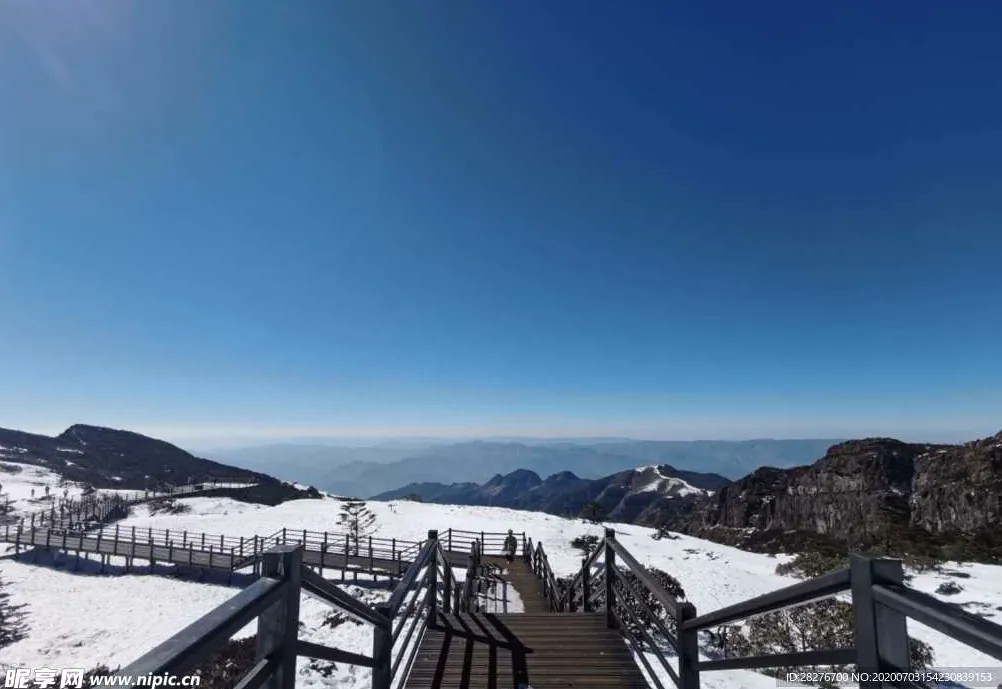
Viewed up close, Jiaozishan’s landscape presents a dramatic contrast between ancient vertical basalt cliffs rising thousands of feet and pristine white ice and snow blanketing the mountain slopes. Wooden boardwalks wind gracefully along rugged ledges, guiding travelers through drifting mist to reveal the majestic scenery of the palanquin-shaped summit. Dotting steep slopes are alpine rhododendron forests slumbering beneath powdery snow, alongside silent frozen lakes mirroring rugged rock faces—composing a natural composition at once wildly expansive and serenely transcendent.
In terms of geological genesis and natural landform planning, Jiaozishan’s structure bears the profound imprint of Quaternary glacial erosion, creating a unique periglacial and karst geomorphology at low latitudes. Through hundreds of millions of years of Himalayan tectonic uplift combined with Emeishan basalt volcanic activity, the massif is terraced into layers resembling a colossal celestial observatory among mortals. At elevations between 3,800 and 4,100 meters, remnants of ancient glaciers crystallized into a series of alpine tarns and glacial lakes such as Tianchi Lake, Mubanghai Lake, and Wusehai Lake. These secluded glacial basins rest silently among dark cliffs, holding crystal-clear waters that reflect shifting skies—turning sapphire jade or leaden gray beneath floating mountain clouds.
A vertical elevation drop exceeding 3,000 meters from the Pudu River valley floor up to Jiaozishan’s crest shapes a perfectly ordered microclimate and layered ecological landscape. The mountain base features a hot, semi-arid subtropical valley, transitioning upward into dense spruce forests and ancient moss-draped fir primeval woodlands. Above 3,500 meters, the landscape yields to expansive alpine rhododendron forests featuring dozens of rare species, intermingling with frozen waterfalls during icy winters. Towering waterfalls stand frozen mid-air, forming colossal jade-stone ice pillars suspended from fractured geological faults—confirming nature’s intricate yet majestic sculptural order.
Far beyond a geomorphological masterwork, Jiaozishan’s terrain is intimately bound to the spiritual life and indigenous culture of the local Yi community since antiquity. In Yi epics and communal memory, the mountain is revered as “Lebageba,” symbolizing the creator deity and ancestral protector safeguarding harvests and borders. Its natural landscape thus possesses profound sanctity: unassailable sheer cliffs, sacred forests guarding water sources, and peaceful meadows stretching across snowy plateaus. Every fold of terrain—from the deep Yixiantian gorge to the sheer cliffs of Bijishan—unites into a harmonious whole, turning this lonely snow mountain amid sea-clouds into the most sacred pilgrimage site across the southern plateau.
Stepping into Jiaozishan, travelers are immediately struck by the exquisite harmony between rugged terrain and disciplined ecological tourism infrastructure. Winding through the expansive snowscape are wooden boardwalks curving like soft brown silk across vertical basalt slopes, linking thousand-year-old rhododendron flora with pristine moss-covered cliffs. Elevated wooden footpaths nestle modestly against the snow mountain, where railings dusted in pristine snow open sweeping vistas down deep glacial valleys—crafting an aesthetic architectural accent that both guides adventurous travelers and protects fragile ancient moss ecosystems below.
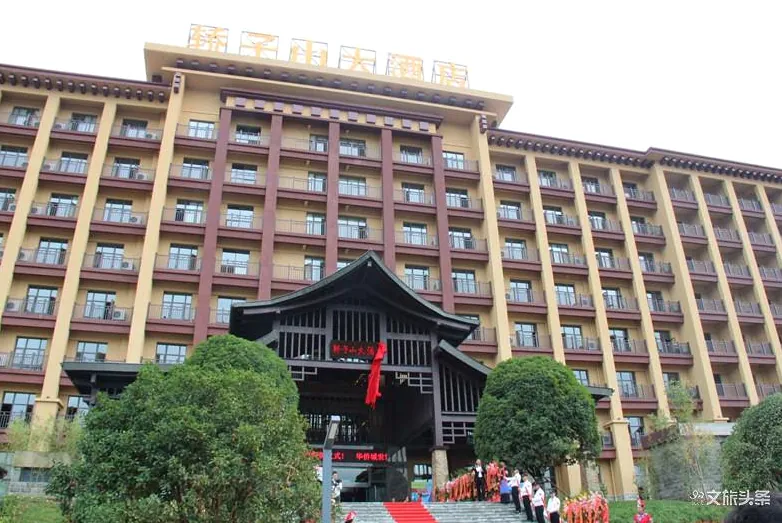
Jiaozishan’s master plan reflects deep ecological architectural thought respecting natural topography, balancing the conservation of a National Nature Reserve with alpine tourism above 4,000 meters. At the Sifangjing gateway entrance at an elevation of 3,140 meters, the Visitor Reception Center is constructed in a rustic architectural style utilizing local stone blocks and multi-layered insulated glass to minimize cold radiation. Facilities are zoned into dedicated internal transport corridors connecting directly with specialized eco-shuttle buses that navigate hairpin turns to deposit passengers at Xiayingpan Station at 3,500 meters. Standardized investments totaling hundreds of millions of RMB into subterranean circulating wastewater collection networks, automated secondary oxygen-supply stations, and low-pressure waste-compaction collection points establish a sustainable operating framework safeguarding the sensitive alpine snow biosphere.
The engineering backbone carrying visitors across altitude boundaries is the Jiaozishan Cableway linking Xiayingpan to the Bajiaodi plateau above 3,850 meters. This modern single-rope detachable gondola system was built to rigorous standards capable of withstanding gale-force winds exceeding force twelve and sub-zero freezing temperatures, operating safely across deep gorges while minimizing forest canopy clearing. Suspended gondolas offer direct sightlines into colossal basalt column walls formed by Permian volcanic eruptions over 200 million years ago. Steel truss frameworks on cable towers are coated with protective finishes against salt spray and snow accumulation, balancing heavy industrial engineering with the rugged gray backdrop of mountain cliffs.
Spanning over fifteen kilometers, the wooden boardwalk trail network radiating from the upper cable car station is heralded as a triumph of high-altitude manual construction. Rather than leveling rock faces, engineers anchored all walkways using hot-dip galvanized steel pins inserted directly into natural geological fissures, elevating pathways entirely off the ground to safeguard lichens and moisture-retaining moss mats. Winding past ancient glacial tarns like Mubanghai Lake and Tianchi Lake alongside jade ice waterfalls, the trail terminates in a gentle path leading straight to the summit of Jiaozishan at 4,223 meters. The modest yet sturdy presence of timber planks and wooden railings amid freezing winds stands as testament to human craftsmanship blending with nature’s grandeur.
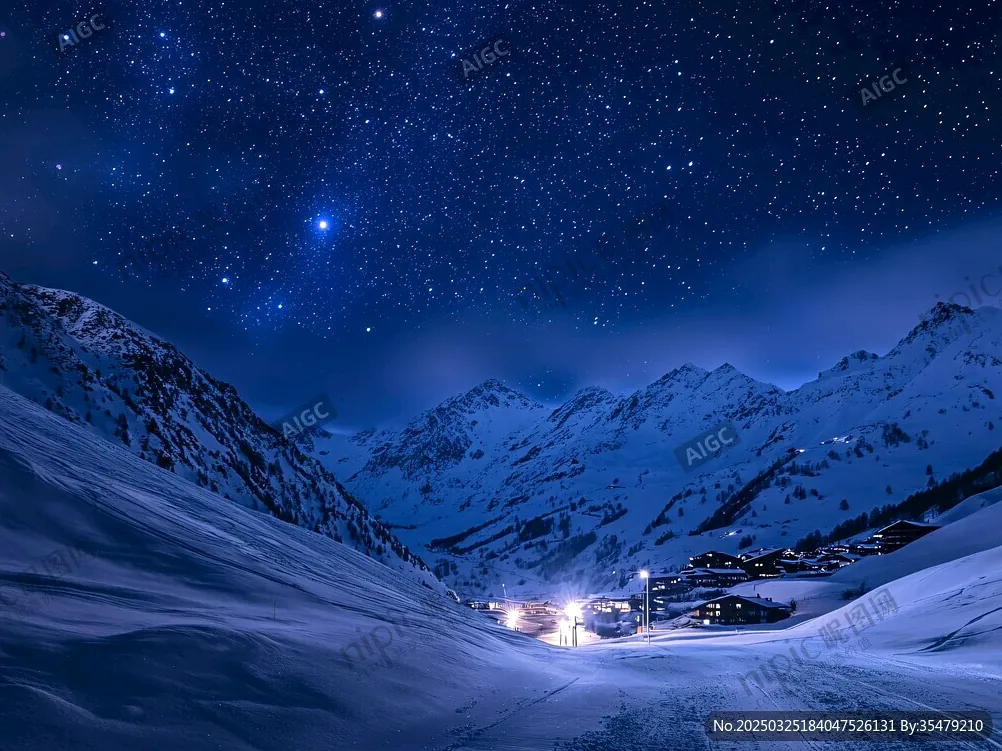
As dusk settles over Jiaozishan’s sheer rock faces, an enchanting indigo-blue twilight drapes dense pine forests and snow-blanketed slopes. From Siyuantang waystations up to snowy valleys, rustic timber mountain lodges begin glowing with warm amber lamplight, contrasting vividly against the biting chill above 3,000 meters. The sacred mountain at night unfolds like a serene fairy realm when tasteful architectural lighting highlights mountain ridges while silvery snow reflects moonlight, framing an ethereal yet luminous world across the Wumeng Mountains.
Nighttime atop Jiaozishan serves as a natural astronomical observatory thanks to high altitude and thin atmospheric clarity, virtually free from light pollution emanating from Kunming over a hundred kilometers away. Deep into the night, Zhufeng Peak at 4,223 meters becomes a majestic backdrop for celestial spectacles. The Milky Way arches across deep dark skies like a sparkling silver ribbon, illuminating frozen glacial lakes like Binghu Lake and Mubanghai. Standing in absolute silence to watch constellations wheeling above Paleozoic limestone cliffs offers travelers an unforgettable, surreal emotion before nature’s boundless beauty.
Below basecamps and mountain resorts, evening life quickens through immersive live cultural performances celebrating the heritage of indigenous Yi and Miao communities. Beneath the dark Wumeng night sky, blazing campfires banish freezing cold, opening epic folk chants recounting Nanzhao kings bestowing honors upon this sacred peak. The driving rhythm of Dayusandian lutes and rhythmic footsteps in the traditional Tabawu dance draw viewers into an intoxicating circle. Woodsmoke mingling with piercing reed-pipe melodies creates a living folk stage where ancient Yi legends harmonize with highland mountain air.
Concluding a day conquering the snow peak, evening dining beside glowing hearths deepens Jiaozishan’s poetic charm. Inside cozy pine-wood stilted lodges, travelers gather around steaming pots of highland herbal mutton soup, savoring crispy Pipa pork skewers seasoned with wild mountain herbs alongside warming buckwheat wine. Flickering hearth firelight and joyful laughter banish howling winds outside glass windows, turning freezing winter nights on this majestic peak into a warm, deeply cherished memory.
An expedition into Jiaozishan’s icy realm is more than an encounter with snowy wonders; it invites travelers into an authentic culinary world bridging the Dianzhong basin and the majestic Wumeng range. Across centuries of settlement at the foot of this sacred mountain, Yi and Miao communities in Luquan County have forged a unique culinary philosophy rooted in balancing cold and warmth. Amid thin air and sub-zero cold above 3,000 meters, every steaming pot or warming wine jug embodies resilient survival, blending wild mountain ingredients with warm family hearths.
At roadside waystations and historic village homes, visitors encounter steaming mountain feasts centered around bubbling clay pots placed over glowing charcoal embers. Amid snow-dusted pine branches outside windows, golden herbal broth bubbling over tender meat, dark wild mushrooms, and vibrant wild chilies creates a striking visual contrast. Steaming warmth carrying the richness of free-range livestock combined with clean alpine mushroom aromas awakens every sense, offering profound refuge amid freezing mountain heights.
The brightest culinary emblem of this heritage is Luquan earthenware-stewed black chicken. Native black-skinned chickens foraging freely across pine-scented hillsides and medicinal herb meadows develop firm, lean meat with rich natural flavor. Yi chefs simmer the chicken slowly for hours inside unglazed earthenware pots using pure melted snow water, adding dangshen root, astragalus, and prized alpine wild mushrooms foraged during summer—such as bolete, morel, and matsutake. The resulting broth is clear yet concentrated with deep bone marrow sweetness and herbal fragrance, sending restorative warmth through every meridian.
Beyond nourishing stews, Jiaozishan’s culinary legacy shines through Tabat cured pork. Premium black pork from Luquan’s mountainside is prized for its balanced fat-to-lean marbling, seasoned with coarse rock salt, spicy Sichuan peppercorns, and heirloom corn liquor before hanging from kitchen rafters above hearth smoke. Months of curing over pine smoke and dry mountain air turn the meat a translucent amber-red. Sliced thin and stir-fried with green garlic shoots or steamed on wooden trays, melting richness paired with smoky depth delivers an irresistible flavor profile.
A Jiaozishan culinary feast is incomplete without humble yet sacred bitter buckwheat cakes and roasted straw potatoes. Hardy buckwheat thriving on rocky soil is ground into flour, kneaded, and baked golden-crisp on cast-iron griddles—served with pure wild honey to balance initial bitterness with clean natural sweetness. To banish alpine chills, locals eagerly pour bowls of warming buckwheat wine beside glowing hearths, where flickering flames mirror the open-hearted hospitality of northern Dian mountain dwellers.
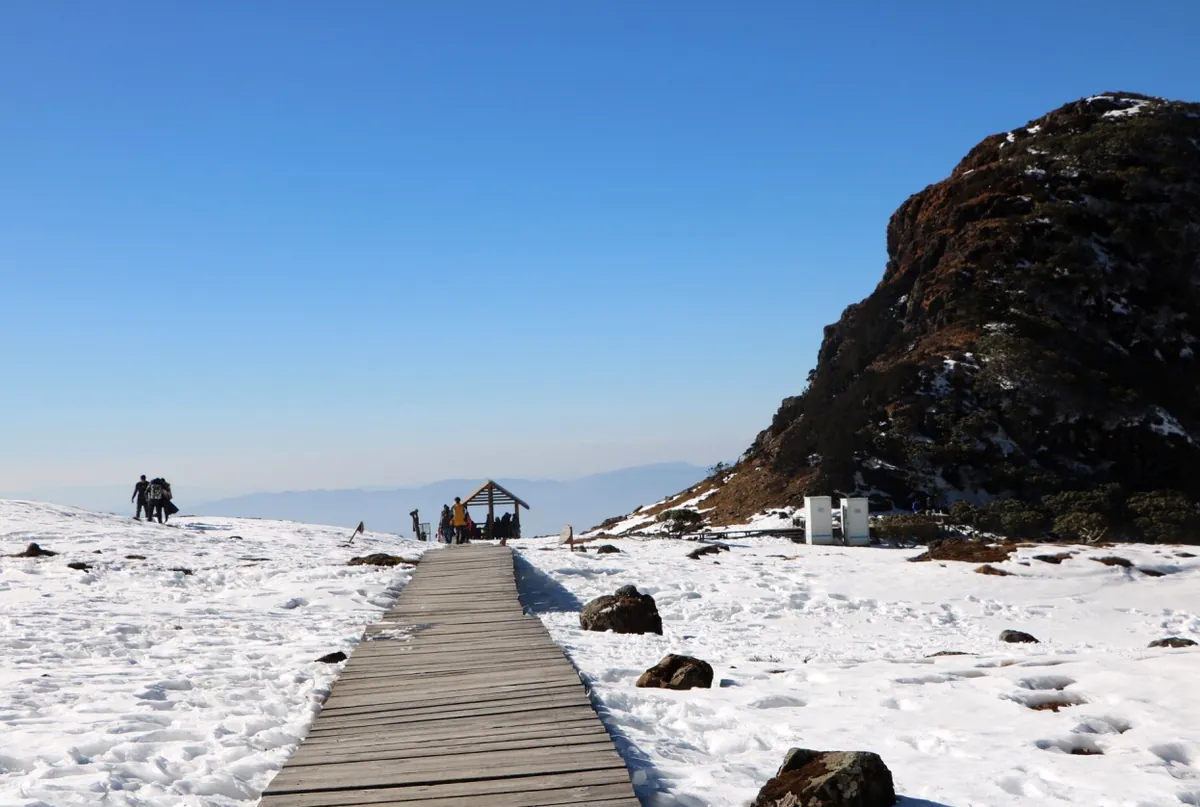
The path ascending Jiaozishan’s snowy kingdom unfolds as a spectacular wooden ribbon winding past cold gray limestone cliffs and frost-shrouded spruce forests. Above 3,000 meters, sturdy timber boardwalks span steep snowy slopes, immersing travelers in silvery mountain skies where the mortal world meets paradise. Wooden footpaths and cliffside rest stops ensure safety across rugged terrain while opening sweeping vistas down deep valleys where misty clouds roll across Luquan’s chasms.
Reaching this majestic mountain from central Kunming takes roughly 3 to 3.5 hours across approximately 150 to 160 kilometers via the dedicated Jiaozishan tourist highway. Travelers can catch early morning buses departing Kunming North Bus Station or Kunming railway station square. For maximum flexibility and energy conservation prior to hiking, chartering a private vehicle or tour van winding past rolling hills straight to the Sifangjing Service Center at 3,140 meters is ideal, allowing unhurried enjoyment of rural Dianzhong transitioning into rugged highland topography.
The scenic area generally welcomes visitors daily from 8:30 AM to 5:30 PM, though cable cars stop accepting uphill passengers around 3:30 PM for safety before sunset and steep temperature drops. The entire ascent is supported by an integrated internal transit network: visitors transfer from Sifangjing to eco-shuttle buses reaching Xiayingpan Station at 3,500 meters before boarding the modern Daxueqing Cableway. Gondolas glide past towering ice walls, depositing passengers safely at 3,850 meters to continue on foot across wooden boardwalks toward the 4,247-meter summit.
Sudden altitude changes from Kunming’s plain to subpolar highland weather require careful awareness of acute altitude sickness. Avoid strenuous exertion or running immediately after exiting the cable car; instead, maintain deep breathing, sip warm water from a thermos, and carry portable oxygen canisters. In winter or early spring, boardwalk surfaces often freeze into slick ice, making anti-slip crampons attachable to hiking boots essential safety gear. Layered clothing following cold-weather insulation principles, windproof and waterproof outerwear, warm gloves, and polarized sunglasses preventing snow blindness will ensure complete health protection amid windy alpine heights.
For border crossing and entry logistics, Vietnamese travelers can fly into Kunming Changshui International Airport or enter overland via the Lao Cai – Hekou International Border Gate, completing individual or group tourist visa procedures. To optimize time, reduce public transit connections, and ensure standardized alpine rescue support, travelers can entrust their holiday to an all-inclusive tour package to relax and fully savor the breathtaking fairytale wonderland of Yunnan.