Located at the intersection where the cultural currents of the Central Plains meet the unique identity of the Diannan frontier, the Chaoyang Tower (朝阳楼) originated from the aspiration to establish a lasting territorial identity during the Ming Dynasty. In the 22nd year of the Hongwu era (1389), after the court of the Ming founder Zhu Yuanzhang completed the pacification of the Southwest, the then-prefect of Jianshui personally oversaw the planning and construction of a large-scale fortification system to establish a secure Lin’an prefecture. In the military and administrative architectural design of that era, the structure was positioned as the most vital eastern gateway, named “Chaoyang” with the intention of welcoming the radiant sun, embodying the hope for peace, prosperity, and flourishing for the entire remote frontier.
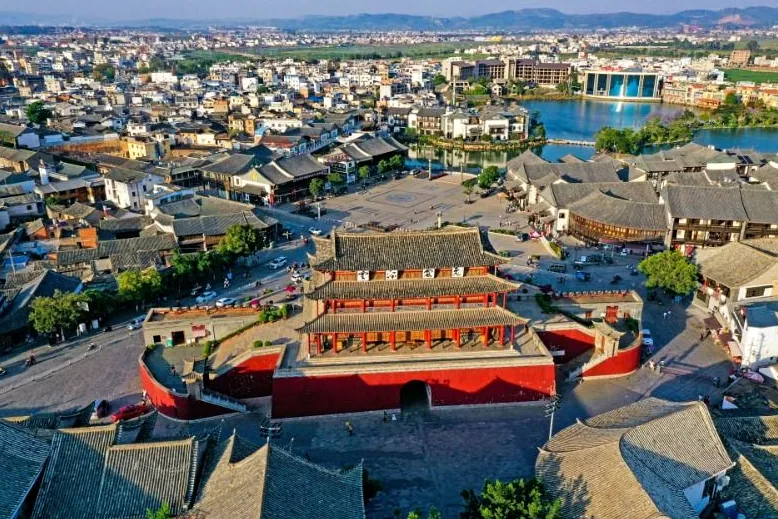
Viewed from an aerial perspective, the Chaoyang Tower appears with a solemn majesty in the heart of the Jianshui Ancient City. The three-story traditional tiled roof structure curves gracefully, rising proudly against a backdrop of characteristic red-painted city walls that have weathered the elements for centuries. Directly at the foot of the wall, a spacious stone plaza opens up an airy space for social interaction, connecting directly to the ancient houses with yin-yang tiled roofs in the old quarter and a tranquil lake reflecting the clouds. This panoramic scene not only showcases the grandeur of an ancient defensive structure but also reflects the exquisite harmony between the heritage of the past and the peaceful urban life of today.
Over more than six hundred years of historical turbulence, the fate of Jianshui Ancient City has witnessed countless wars, fires, and dynastic shifts. The original design of the ancient city featured four massive gates guarding the four cardinal directions: the South Gate named Fuhuo, the West Gate called Qingyuan, the North Gate named Yongzhen, and the East Gate, which is Chaoyang. However, the relentless wars during the late Ming and early Qing dynasties, along with the harsh destruction of nature, caused the South, West, and North gates to gradually collapse and turn to ruins in the flow of history. Only the Chaoyang Tower stands as a resilient structure that has overcome countless calamities, remaining intact as a miracle of ancient architecture in the Yunnan region.
A special historical highlight that leads later generations to respectfully call the Chaoyang Tower the “Little Tiananmen” stems from its striking architectural similarity to the famous Tiananmen Gate in Beijing. Interestingly, the Chaoyang Tower was completed nearly three decades earlier than the northern Tiananmen, as the capital’s gate only began construction in the 15th year of the Yongle era (1417). Its vermilion-painted appearance, intricate multi-layered dougong bracket system, and majestic red walls have created a symbol of authority with a royal aura in the heart of the plateau. Entering the Qing Dynasty, the structure underwent major large-scale renovations during the Kangxi and Jiaqing eras, helping to preserve its majestic character intact despite the many changes in power.
Facing the moss-covered stone archway of the Chaoyang Tower, one can almost hear the echoes of the garrison troops from the Hongwu era, the hurried rhythm of pack horses belonging to merchants on the Ancient Tea Horse Road, and the epic tales of the ancient Lin’an land. Every blue stone slab worn down under the footsteps of travelers or the time-stained timber of the tower frame hides endless stories of a golden age that has long since passed. The tower is no longer merely a military outpost guarding the frontier; it has transformed into a living chronicle of brick and stone, preserving the soul and thousand-year memory of the prosperous Jianshui region.
Nestled in a fertile basin on the southern plateau of Yunnan province, the ancient city of Jianshui, known in ancient times as Lin’an Prefecture, was chosen by our ancestors as a capital site based on careful surveys of the earth’s energy. The area possesses a naturally enclosed structure with surrounding mountain ranges acting as protective screens, while the flat basin serves as a convergence point for abundant underground water sources. Amidst this harmonious landscape, the choice of placing the Chaoyang Tower at the eastern gateway was not merely for military defense, but also deeply reflected the classic Eastern art of Feng Shui, intended to gather the vital energy of heaven and earth and establish a solid foundation for the entire ancient urban area through hundreds of years of change.
Viewed from a panoramic perspective, the Chaoyang Tower stands as a majestic architectural masterpiece guarding the soul of the ancient city of Jianshui. The massive structure sits atop a sturdy city wall painted in vibrant red, contrasting beautifully against the vast blue sky of the frontier plateau. Each story of the wooden watchtower, painted in vermilion and gold, rises high with its gracefully curved roof system, exuding a solemnity deeply rooted in the architectural standards of the Ming Dynasty, while affirming its unique status as both a military observation post and a magnificent Feng Shui symbol in the heart of the heritage site.
The concept behind the structure’s creation is intimately linked to the philosophy of embracing ‘yang’ energy. Facing directly toward the true East, the tower was named Chaoyang (Morning Sun) with the intention of greeting the sunrise, capturing the purest morning light to dispel the mists and miasma of the Southwest mountain forests. In the urban planning model established during the Hongwu era of the Ming Dynasty, the eastern city gate held the position of the Azure Dragon, symbolizing growth, wisdom, and prosperous fortune. The massive stone foundation, combined with sturdy fired bricks embedded deep into the earth, forms a giant bolt that guards the ‘dragon vein.’ It serves both as a gateway to welcome auspicious energy from the vast wilderness and as a screen to block malevolent forces from the valley outside from entering the city.
Viewed from a broader cultural-geographical perspective, the location of Chaoyang Tower is a vital link connecting the unique landscapes of southern Yunnan province. From the foot of the Jianshui ancient city, the terrain slopes down through fertile karst limestone valleys to reach the lush Mengzi plains, while simultaneously opening a path directly to the endless, rolling mountains of Yuanyang – where the Hani people’s terraced rice fields resemble stairs reaching toward the heavens. Thanks to its impressive presence at the intersection of the Red River basin and a thousand-year-old trade network, the structure benefits from a mild plateau microclimate, cool in all four seasons, with lush vegetation year-round, creating a rare site where water and energy converge.
Beyond the macro-geomorphological factors, the micro-landscape surrounding the watchtower also reflects a masterful harmony between human hands and nature. The existence of the famous ancient wells and pure underground streams winding beneath the limestone foundation is proof of the prosperous water veins that the ancients meticulously measured when building the city. Standing atop the tower and gazing into the distance, visitors can take in the marvelous contrast between the mossy, somber tiled roofs of the ancient inner-city streets and the hazy blue mountains on the horizon, where nature has generously sheltered a city that remains immutable against the relentless flow of history.
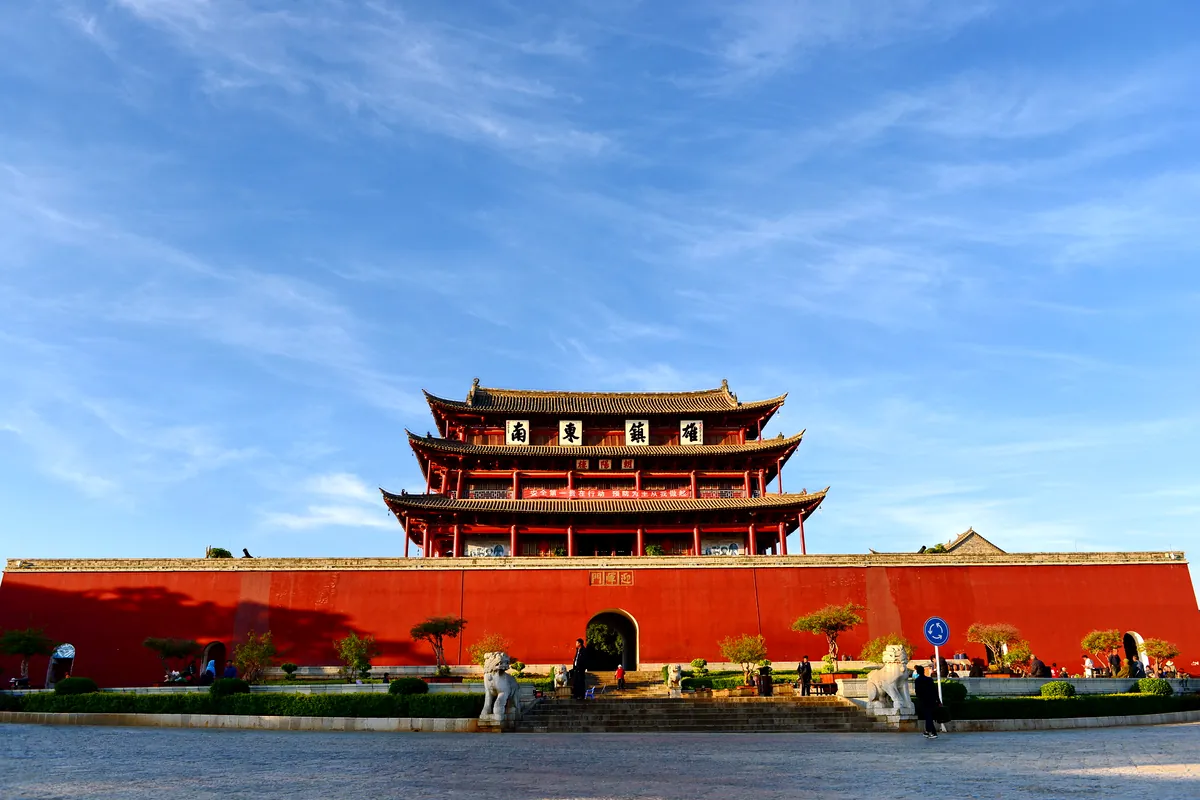
Viewed from the front of the square, Chaoyang Tower appears both massive and graceful, like a lotus flower of wood and stone rising toward the southern sky. The ancient tower stands tall on a solid gray stone base, distinguished by its three-tiered, rhythmically curved roof system, with proud, upturned eaves interlaced with passing clouds. The deep red hue of the wooden columns, the meticulously crafted railings, and the layers of ancient wooden bolts exude the solemn, regal aura of a royal city gate, making any traveler who stops here immediately sense a strange similarity to the gatehouse architecture of the Forbidden City in the distant North.
Stepping into the space, one is truly overwhelmed by the extraordinary scale of construction realized during the Hongwu era of the Ming Dynasty. With a total height of 24.5 meters and a total floor area of up to 4,125 square meters, Chaoyang Tower is not merely a watchtower but a defensive complex and a symbol of royal power of the highest order in the Southwest. The stone base below is elevated by six meters, assembled from massive, square-cut bluestone slabs, opening a deep arched gateway through the heart of the city wall. The three-tiered structure above creates a perfectly balanced stance along the zodiac axis, where every proportion—between the width of the facade, the opening of the gate, and the reach of the eaves—strictly adheres to Feng Shui regulations and the medieval Lu Ban standards.
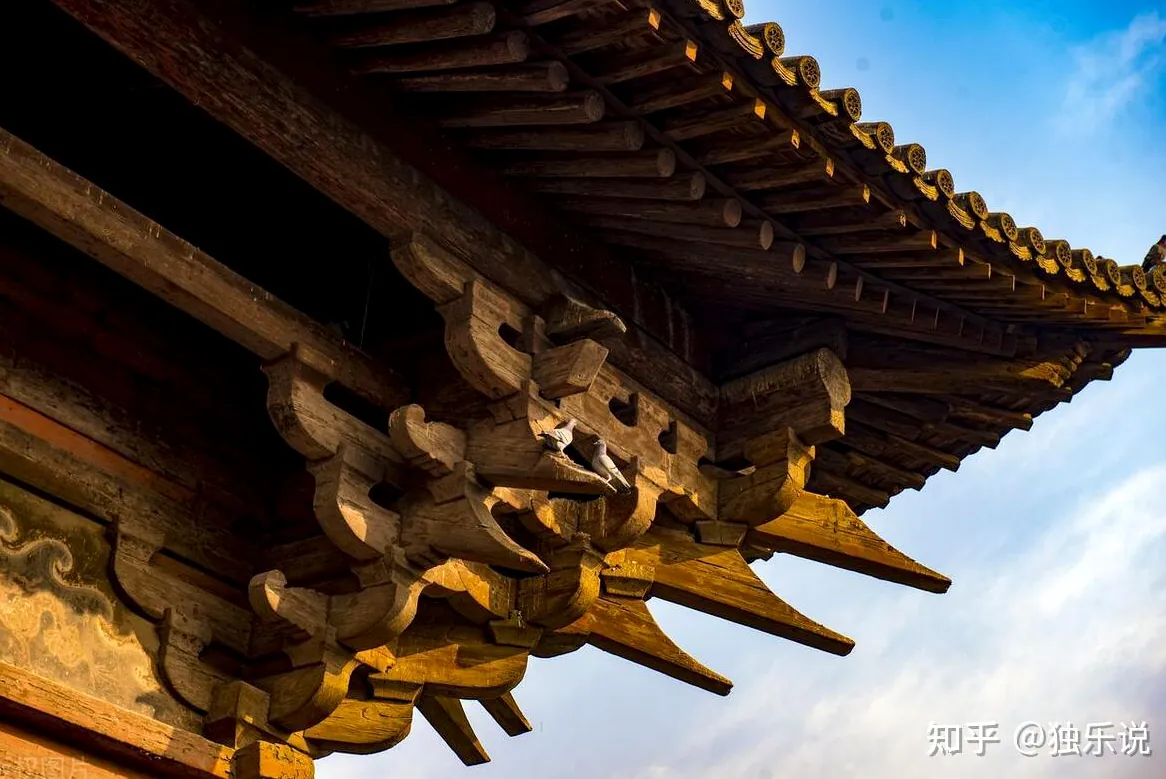
The exceptional value that forms the soul of Chaoyang Tower lies in its renowned woodworking craftsmanship, representing the pinnacle of ancient wooden architectural art. The entire weight of thousands of tons of the three massive floors is supported by a system of 48 solid ironwood columns with sturdy trunks, embedded deep into the solid granite base. Even more astonishingly, the ancient artisans perfectly applied the ingenious technique of mortise-and-tenon joinery without using a single iron nail or metal adhesive. The complex dougong bracket sets under the eaves not only serve to disperse seismic vibrations during earthquakes but also spread out in four directions like the wings of a phoenix, shielding the load-bearing wooden frame from the erosion of rain and sun on the frontier for over six centuries.
Stepping up to the upper levels via winding wooden stairs, the space opens into a tranquil world of cultural and military heritage crystallized through the ages. The main hall on the third floor, once the vantage point where imperial generals surveyed the entire Jianshui basin, still preserves the magnificent horizontal plaque inscribed with “Hung Tran Huong Duong” and a massive ancient bronze bell weighing over two tons cast during the Ming dynasty, whose every chime still resonates through every corner of the ancient town. The grandeur of the structure reflects the immense budget and unprecedented mobilization of talent and resources by the central court for frontier construction at that time. From the carved flame-cloud and coiling dragon patterns on the panel doors to the arrangement of natural ventilation air vents inside the tower core, it all confirms that this is not merely a steel fortress, but an artistic masterpiece achieving perfection in both functional design and enduring aesthetic appeal.
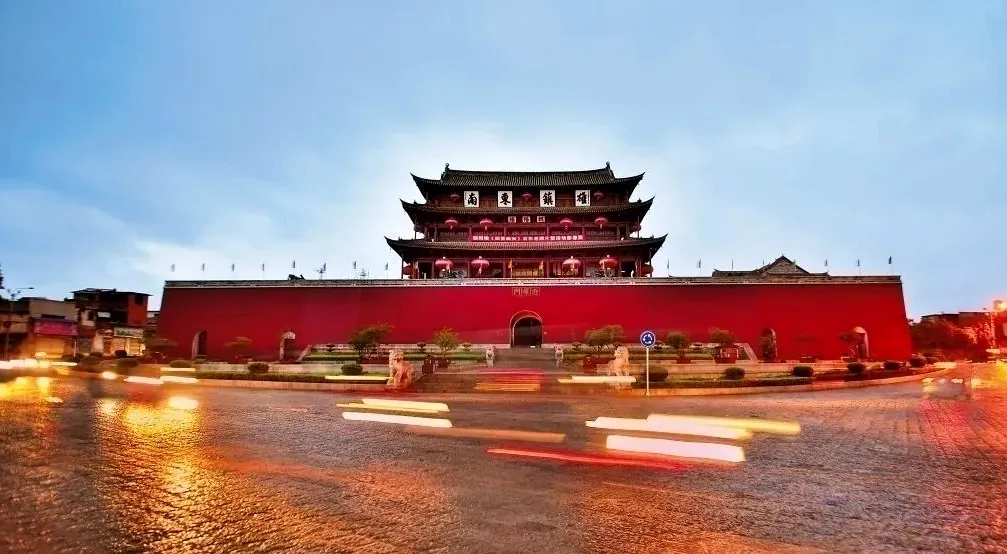
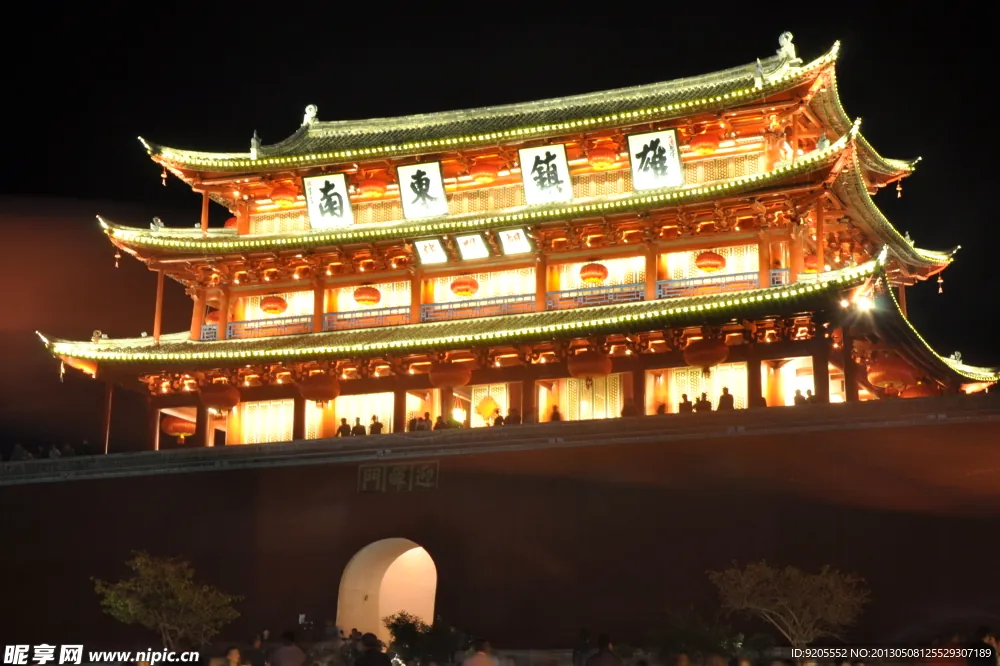
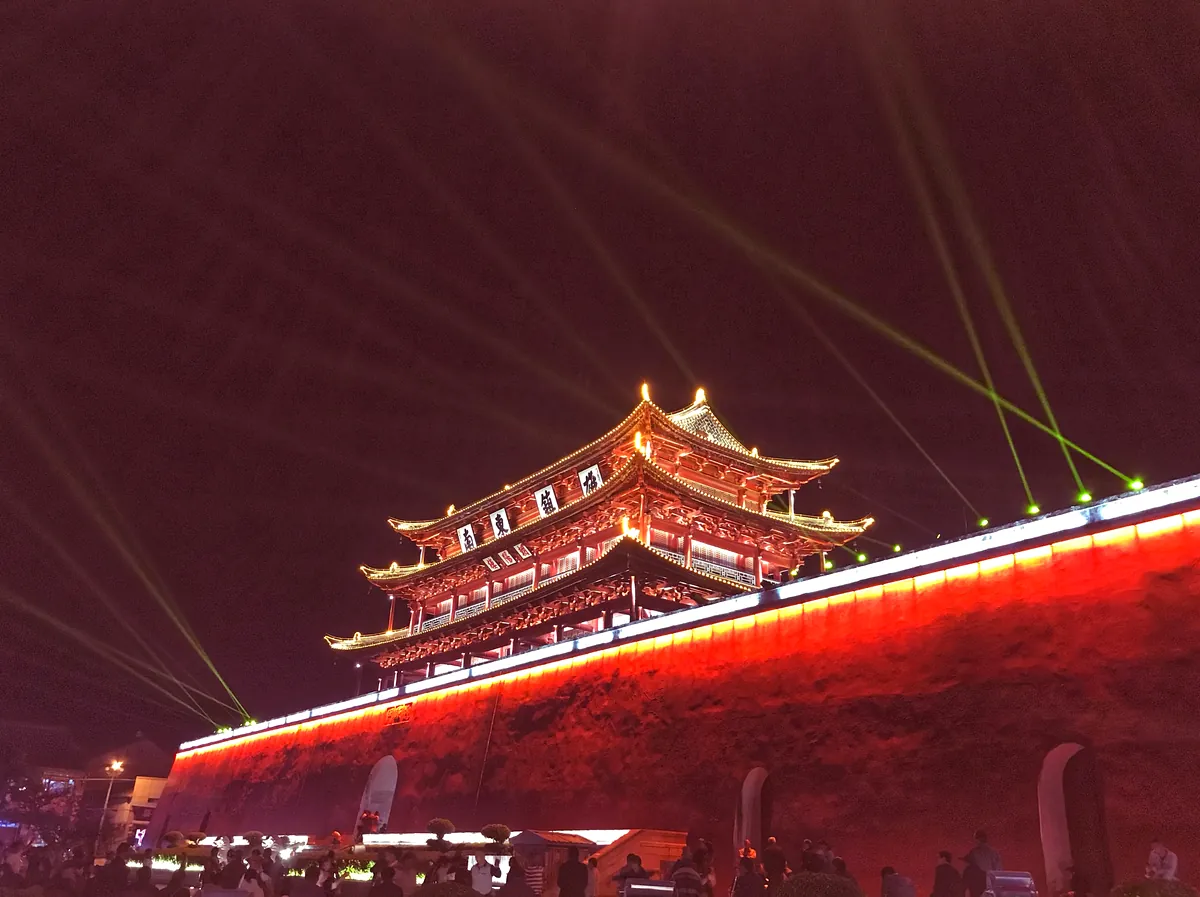
As night falls and blankets the Lin’an plateau, Zhaoyang Tower undergoes a spectacular visual transformation through the combination of heritage architecture and contemporary lighting art. Admired from afar, the ancient city gate glows proudly against the dark night sky, where long strips of vibrant red LED lights run along the base of the pebble-stone wall, enlivening the stalwart spirit of a sturdy defensive fortress. On the wooden floors, a warm golden lighting system cascades over the curved tiled eaves and the delicate three-tier dougong structures, sharply etching every intricate carving dating back to the Ming dynasty. Accenting this space are brilliant laser beams sweeping across the night sky, creating an enchanting contrast between ancient timelessness and the dynamic pulse of the modern world.
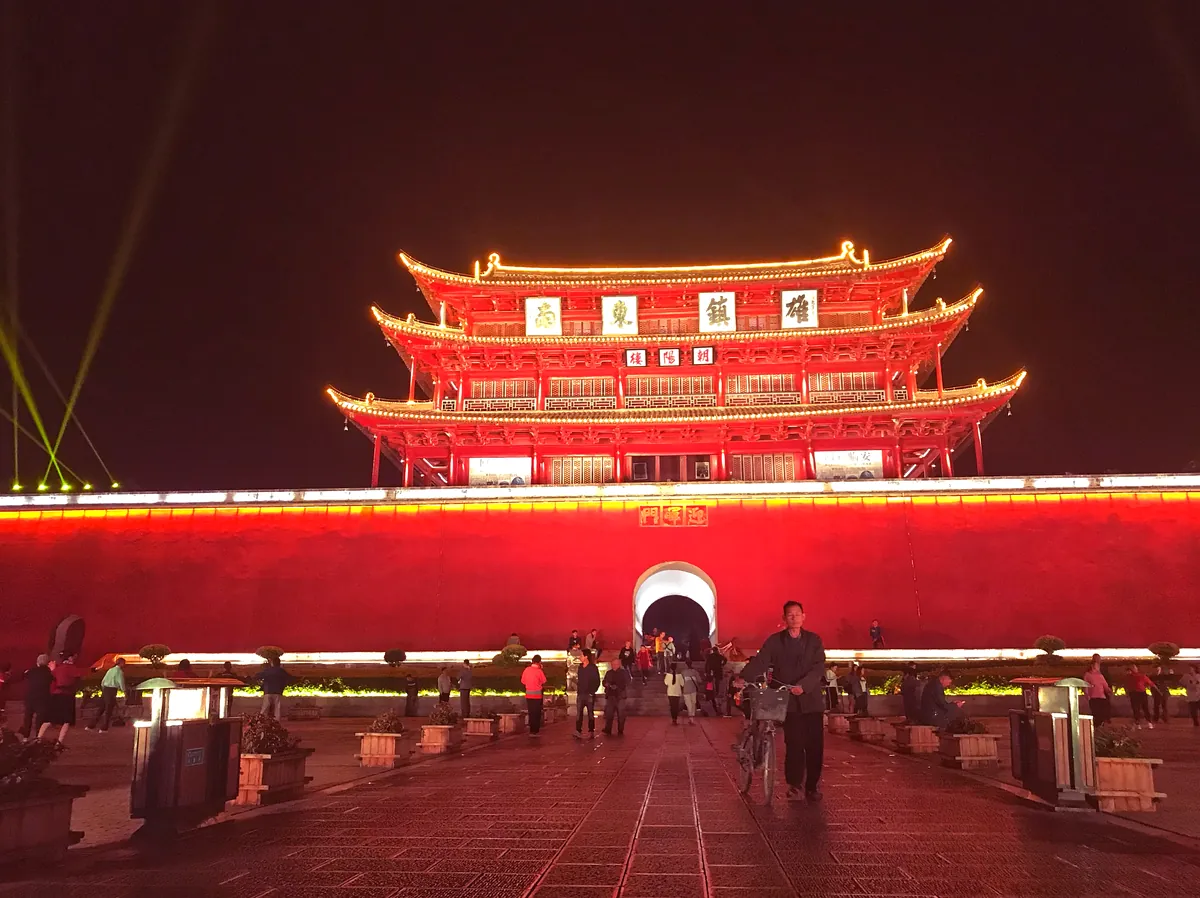
The square at the foot of the tower sheds its daytime tranquility as the city lights up, donning a vibrant festive cloak. The soft light spilling from the barred windows of the upper story transforms the vast courtyard into an open-air stage, where the boundary between history and reality is nearly dissolved. Visitors pausing by the cool stone balustrades can leisurely listen to the seasonal transition of the plateau wind, watching swallows dart around the gold-gilded eaves before returning to their nests beneath the yin-yang tiled roofs. The laughter of travelers blends with the resonant echoes of local folk tunes spontaneously sung beneath ancient tree roots, creating a cozy and evocative atmosphere.
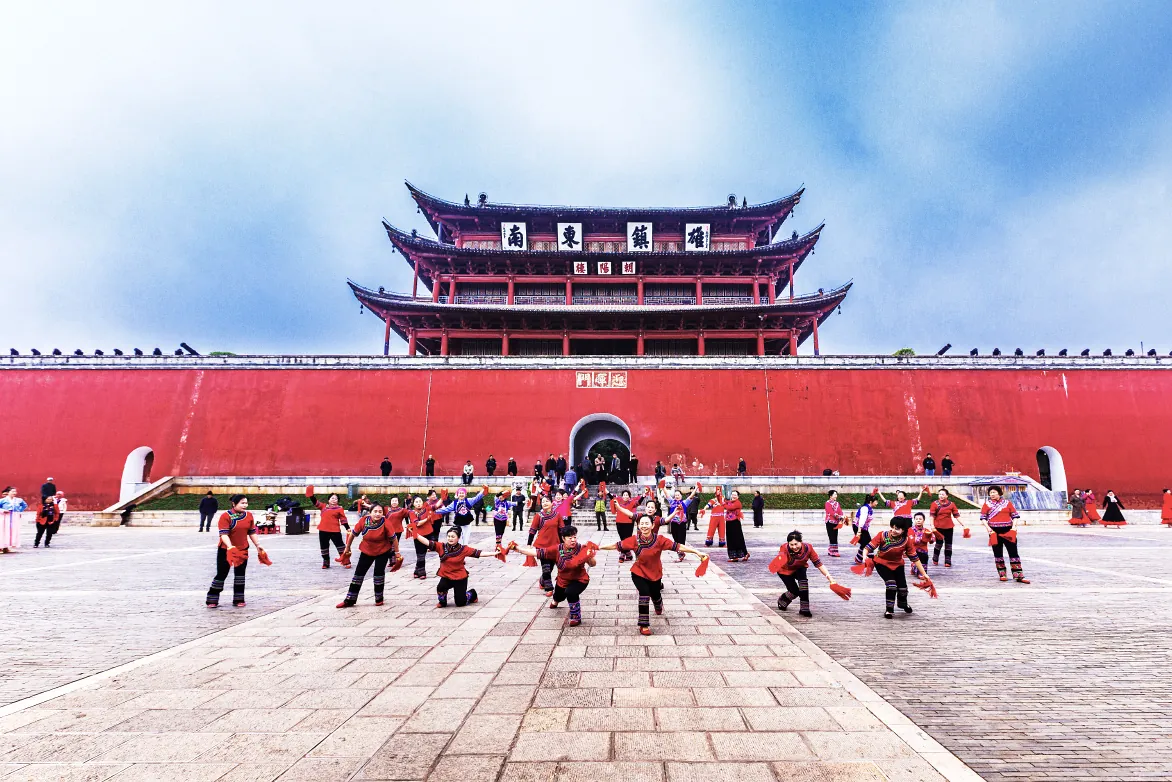
Nightlife at Zhaoyang Tower is deeply rooted in community culture through square dancing, which has become embedded in the consciousness of Jianshui’s townspeople. Hundreds of locals from the Han, Yi, and Hani ethnic groups naturally gather, forming concentric circles that move rhythmically to upbeat, orchestrated folk melodies. Under the shimmering glow radiating from the eastern city gate, footsteps tap against the bluestone paved ground, and colorful traditional dresses spin in the night breeze like a rustic yet deeply affectionate painting of daily life. Visitors are not merely spectators; they are often drawn in by the unpretentious hospitality, willingly joining the warm circle dance to experience the most authentic folk cultural rhythms of the Honghe region.
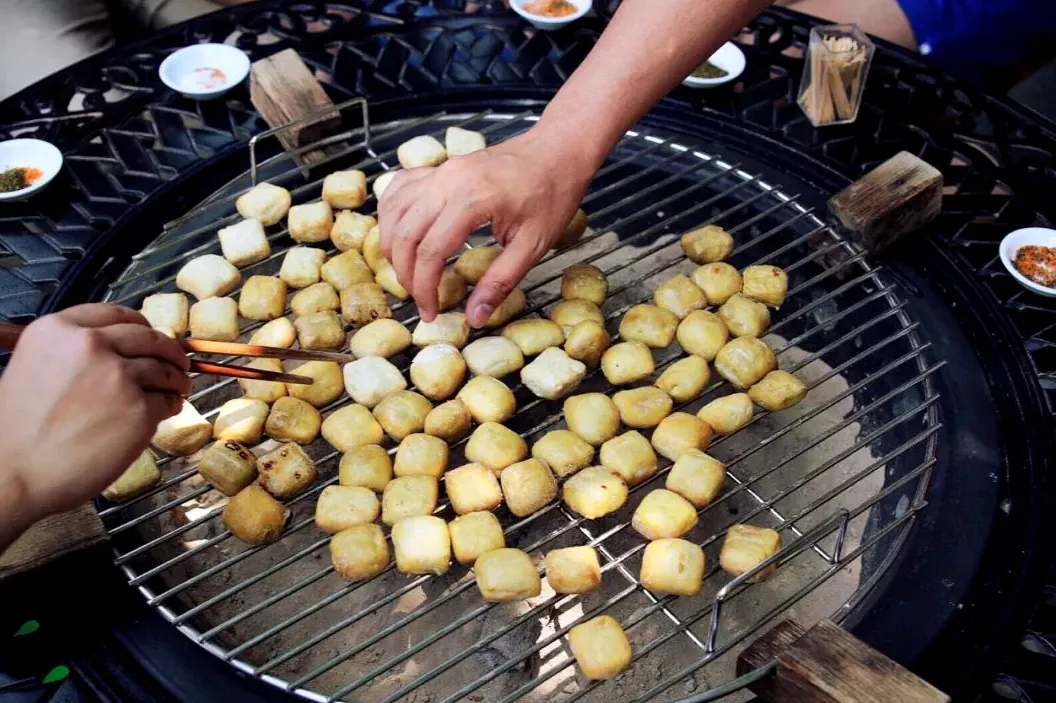
Leaving the brightly lit square, visitors will easily find themselves guided by wisps of smoke and the rich aromas wafting from night food stalls tucked away in ancient alleyways. Glowing charcoal stoves puff up golden Jianshui grilled tofu blocks, releasing their signature fermented soybean aroma, served with a dipping plate of tongue-tingling spicy chili powder and Sichuan peppercorns. Walkers sit gathered on low stools around the steaming charcoal stoves, sipping cups of sweet-aftertaste herbal tea while listening to the stall owner tally the bill by stacking traditional dried corn kernels. The harmonious symphony of lively chatter, the crackle of charcoal fans, and the music drifting from Zhaoyang Tower creates a nostalgic nocturnal ambiance, elevating this landmark beyond a mere historical site into the living soul of the entire heritage region.
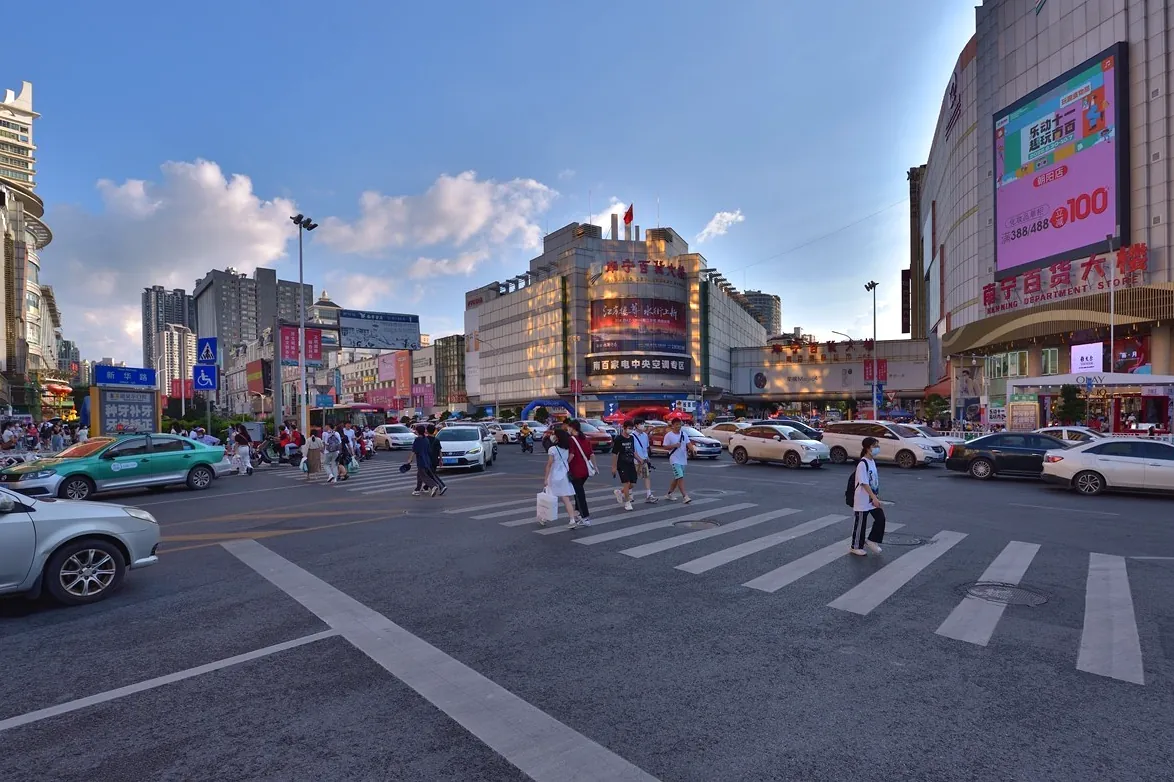
Before journeying back in time to the ancient rhythm of life beneath Zhaoyang Tower, many travelers typically begin their itinerary from bustling southern metropolises. A photograph capturing the street view around the central Nanning Department Store business district in Nanning, China, opens up a space brimming with contemporary vitality featuring imposing skyscrapers, vibrant towering billboards, and steady streams of people striding across the intersection. The lively intersection of this glamorous urban landscape creates a fascinating contrast, preparing visitors to step into a deeply rooted traditional culinary and cultural space, where the millennial kitchen smoke of Jianshui still quietly scents every moss-covered alleyway.
}
The square area and ancient streets radiating from Chaoyang Tower have for generations been likened to the culinary heart of ancient Lin’an. The locals proudly preserve culinary traditions deeply rooted in the Diannan style, where meticulous manual preparation techniques blend harmoniously with fertile soils. Just as dusk settles over the ancient city walls, the rich scent of charcoal smoke begins to mingle with the evening mist, awakening the senses of every traveler with its legendary rustic grilled flavors.
The most famous street food icon is undoubtedly Jianshui grilled tofu, also known as burned tofu. Made from the pure, sweet water of millennium-old ancient wells such as Banjiang and Ximen Longjing, soybeans are skillfully kneaded by local artisans and undergo a special natural fermentation process to create small, neat square blocks. Placed on an iron wire mesh over glowing charcoal braziers, the tofu pieces slowly puff up, their outer layers turning a crispy golden brown while the inside remains soft, rich, and creamy, releasing an enchanting, robust fermented aroma. Sitting around the warm charcoal stove, diners can savor each piece of tofu dipped generously in chili powder mixed with tongue-tingling Sichuan peppercorns, while delightfully watching the shop owner drop dried corn kernels into a small bowl to count how many pieces of tofu have been eaten—a rustic cultural trait deeply imbued with genuine local warmth.
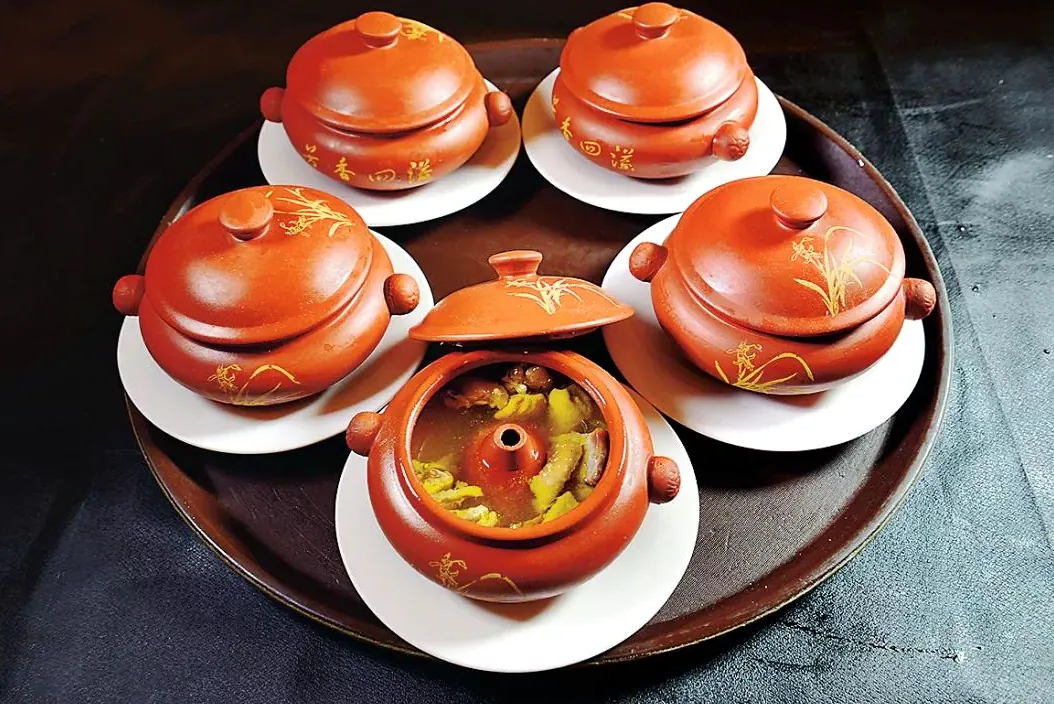
Alongside rustic street food, imperial and wellness culinary arts in Jianshui reach their absolute zenith with the legendary clay pot steamed chicken. This dish is closely tied to the famous Jianshui Purple Pottery (Zitao) heritage, one of the four major pottery lineages of China. The unique pottery steam pot features a distinctive hollow tube protruding right from the center of the base. When placed over a large boiling water steamer, high-pressure steam rushes straight through this tube into the sealed pot, gently condensing into crystal-clear broth without needing a single drop of external water. Local free-range chicken is chopped into bite-sized pieces, marinated with fresh ginger, goji berries, and precious ginseng. After hours of absorbing the steam, it achieves an incredible tenderness, yielding a crystal-clear chicken broth rich in natural original sweetness and infused with the fragrance of precious herbs.
The culinary experience beneath Chaoyang Tower is made complete by a bowl of Crossing-the-Bridge Rice Noodles featuring an exceptionally rich local broth. Unlike the lighter styles found in many other regions, the broth for Crossing-the-Bridge Rice Noodles in Jianshui is simmered for twelve double-hours from pork marrow bones, beef marrow, and old hen, creating a layer of golden chicken fat that coats the surface to lock in the scalding heat. Diners hand-pick ultra-thin slices of pork tenderloin, fresh salmon, and raw quail eggs, dropping them into the boiling broth before tossing in chewy rice noodles and tender wild mountain greens to enjoy. Once your palate is fully satisfied, turning the pottery turntable by hand and shaping fine purple clay from the Red River to create unglazed Zitao pottery cups and vases—which polish to a mirror-like shine when sanded—will forever etch into your memory the image of a culinary and handicraft civilization that has reached the pinnacle of perfection.
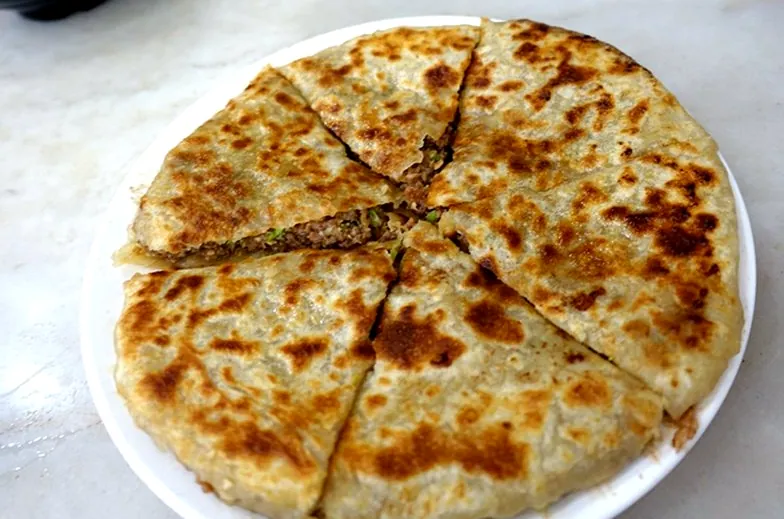
Strolling around the Chaoyang Tower square as Lin’an ancient town begins to light up, nothing is more delightful than dropping by a cozy local eatery to enjoy the famous hot pan-seared stuffed flatbread. This plump, round bread features a golden-brown exterior, slightly charred at the edges, releasing a complex aroma of butter, fat, and toasted sesame, enveloping a savory minced meat filling overflowing with rich sauce and finely chopped scallions. The chef skillfully slices the bread into neat triangular pieces, neatly arranged on a pristine white porcelain plate, clearly revealing the layers of succulent meat filling alternating with the crispy crust. Taking a hearty bite of the piping-hot flatbread amidst the chilly weather of the Yunnan highlands, travelers will fully experience the harmonious blend of rich, savory flavors and lingering local herbal spices.
The outdoor campus area of Chaoyang Tower is open freely day and night, while the upper level of the gate tower, which houses historical artifacts and ancient bronze bells, welcomes visitors from 8:30 AM to 5:30 PM daily. The most breathtaking moment to fully admire the magnificence of the structure is at sunset, when glowing orange-red afterglow reflects upon the yellow-glazed tiles, creating a majestic scene straight out of a classical poem. Just a ten-minute walk from the east gate of Chaoyang Tower along the ancient Lin’an axis, travelers will encounter Zhu Family Garden—a grand courtyard estate often likened to the "Grand View Garden of the Frontier" of the prestigious Zhu family during the Qing Dynasty. Combining these two attractions in a single afternoon allows travelers to save maximum travel time while soaking in the quintessential heritage of this renowned cultural land.
A highlight not to be missed in your exploration itinerary is the experience of the vintage narrow-gauge train known as the Jianshui Little Train, departing from the historic Lin’an Station. This century-old railway slowly rolls along, taking travelers through fields of rapeseed flowers, across the magnificent seventeen-arch Shuanglong Bridge, and stopping at the ancient village of Tuanshan—home to well-preserved, centuries-old Siheyuan courtyard houses. To catch the train on time, travelers should book tickets in advance at the station or via online apps, as the train only operates two fixed departures daily, in the morning and afternoon, carrying the nostalgia of the golden era of the legendary Yunnan-Vietnam railway.
Reaching Jianshui for Vietnamese travelers is relatively convenient via the Lao Cai international border gate to Hekou. After completing immigration procedures with a passport and a China tourist visa or a valid border pass, it takes only about two hours by high-speed train from Hekou North Station to arrive directly at Jianshui Station. To ensure a truly meaningful cultural excursion, experts always recommend that both independent travelers and families prioritize non-shopping tour models, avoiding cheap tour traps that often cut short sightseeing time at historical sites to take guests to disguised jade or rubber shops.
Investing time in learning about history and choosing unique experiences in thousand-year-old towns like Jianshui will always bring the highest satisfaction and nostalgic value to every traveler’s journey. For those who wish to explore the depth of Chinese culture from the Yunnan frontier to the most magnificent northern capitals without worrying about logistics, opting for a professional, standardized all-inclusive tour package is the optimal solution to unlock a fulfilling and completely worry-free journey.