Behind the crystal-clear broth radiating the refined aroma of Chaoshan beef hotpot (Chaoshan Niurou Huoguo – 潮汕牛肉火锅) lies a cultural and culinary migration spanning nearly a millennium. The origins of this one-of-a-kind delicacy are closely tied to the fertile Chaoshan triangle, where the three ancient cities of Chaozhou, Shantou, and Jieyang converge in northeastern Guangdong Province. Historical records indicate that the roots of beef consumption in this coastal region were sparked during the Song Dynasty (960–1279). At that time, cattle were vital agricultural assets for Lingnan wet-rice farming and were strictly protected by imperial law. Nevertheless, in ancient villages along the Han River basin, the culinary art of preparing meat from aged cattle or sacrificial animals quietly gave rise to the earliest slow-simmering techniques in the indigenous residents’ earthenware clay pots.
Entering the Ming and Qing dynasties (1368–1912), the prosperity of coastal trading ports—particularly the opening of Shantou Port under commercial treaties—transformed Chaoshan into one of the busiest trade gateways in southern China. Merchant vessels plying the waterways brought abundant livestock from inland provinces such as Guizhou, Sichuan, and Hunan down to the coast. Along bustling docks, street stalls serving Niurou Shacha Zhu (beef stewed in satay sauce) gradually became a staple energy source for merchants and stevedores. The steaming sidewalk pots along the riverfront in those days primarily used tougher cuts, tendons, and offal slow-cooked for hours with black cardamom and cassia bark to ward off the damp chill of sea winds—a far cry from today’s tender, flash-poached style.
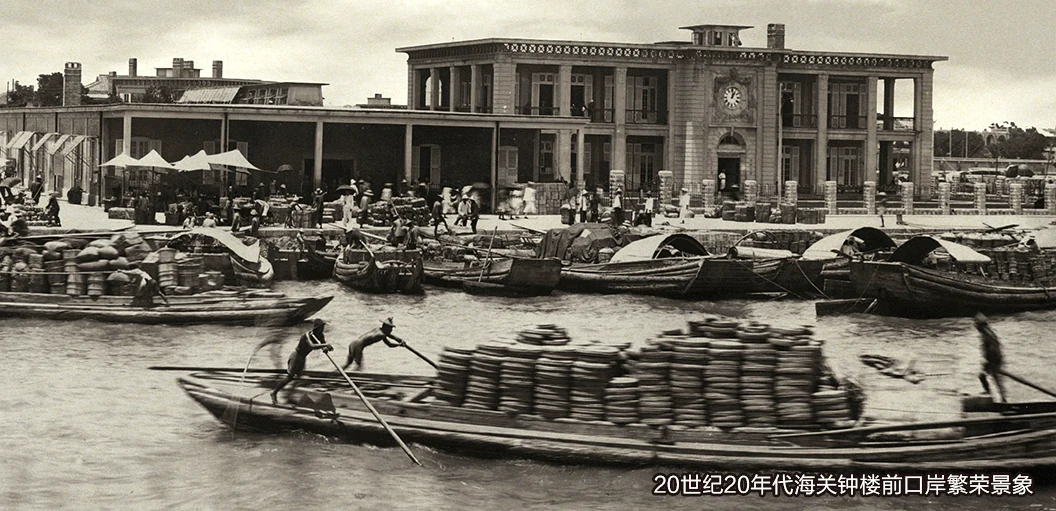
Historical upheavals in the first half of the twentieth century triggered a monumental migration. Following the “Xia Nanyang” wave and wartime displacement, tens of thousands of Chaoshan natives carried their homeland culinary philosophy to the glamorous provincial capital of Guangzhou and neighboring metropolises. There, a revolutionary turning point occurred in the 1940s and 1950s when Chaoshan chefs in Guangzhou began adopting the renowned knife skills of Cantonese cuisine (Yuecai). Instead of slow-braising in the old manner, they pioneered a method of “culinary anatomy,” using razor-sharp blades to separate fresh raw beef muscle fibers into slices as thin as cicada wings, preserving the natural elasticity of the meat when briefly dipped into clear broth simmered from marrow bones and white radish. Freshly hand-sliced beef hotpot was officially born, shedding its humble street-food guise to ascend into the ranks of haute cuisine.
Shenzhen’s miraculous rise from a small fishing village into Asia’s premier Special Economic Zone since the late twentieth century provided the second launchpad for Chaoshan beef hotpot’s explosive popularity. During the 2010s, a revolution in expressway infrastructure and precision ambient-temperature supply chain logistics achieved a remarkable feat: cutting meat transport time from suburban abattoirs to dining tables in Guangzhou and Shenzhen down to just two to four hours. Preserving the natural muscle twitch of never-frozen beef (“warm meat”) turned this rustic dish into a contemporary cultural icon. From humble street stalls beside ancient feudal docks, Chaoshan beef hotpot has risen into a culinary empire worth tens of billions of yuan, firmly reigning over the gastronomic consciousness of the entire Guangdong–Hong Kong–Macao Greater Bay Area.
Situated entirely along the eastern coastal strip of Guangdong Province, the Chaoshan region possesses a distinctive geomorphology that artfully blends undulating hills with fertile alluvial plains stretching toward the sea. Through the lens of traditional Lingnan feng shui and spatial planning, this stretch of land leans firmly against the towering Lianhua Mountains, faces the expansive South China Sea to absorb vital energy, and is nourished by fresh water from three major rivers: the Han, Lian, and Rong. This interplay of hilly terrain and low-lying plains fosters a warm, humid subtropical monsoon microclimate year-round, allowing lush natural pastures to flourish on gentle slopes—creating the ideal cradle for the famed Chaoshan yellow cattle. Completely distinct from industrially feedlot-raised livestock, native Chaoshan yellow cattle adapt to gently sloping hills and mineral-rich fresh grass, developing firm muscle structure and evenly distributed intramuscular marbling that provide the essential foundation for natural tenderness, sweetness, and crisp bounce when poached in hotpot.

The migration of Chaoshan beef culinary heritage from its ancestral homeland into bustling consumption hubs in Guangzhou and Shenzhen is closely linked to major leaps in regional transport infrastructure. The operation of the Guangzhou–Shanwei high-speed railway shortened travel time between Guangzhou and the coastal hub of Shantou to a record-low one hour and forty-five minutes. Together with the Xiamen–Shenzhen coastal railway and the Shenyang–Haikou Expressway (G15), a golden trade and logistics corridor was firmly established, forming a seamless “two-hour economic circle” linking Chaoshan’s agricultural heartland with the core of the Greater Bay Area. This arterial network enables fresh, premium ingredients to flow continuously and coordinates supply chains around the clock without spatial barriers.
The technical process of bringing each cut of Chaoshan beef to hotpot tables in Guangzhou and Shenzhen is an exacting logistical feat that strictly obeys the “warm-fresh” philosophy of indigenous Chaozhou gastronomy. Chaoshan connoisseurs strictly eschew frozen or deeply chilled beef, as temperature fluctuations rupture cell membranes, causing loss of serum and natural sweetness. To ensure the meat retains its natural body warmth and that muscle fibers still exhibit subtle, spontaneous contractions upon arrival, cattle carefully selected from Chaoshan farms are transported live via the G15 Expressway to specialized abattoirs on the outskirts of Guangzhou and Shenzhen at midnight. After meticulous butchering and deboning according to traditional anatomical standards, the fresh cuts are immediately dry-packed and rushed to restaurants within a “golden window” of just three to four hours, arriving right on time for discerning city diners at lunch and dinner.
The dining atmosphere at beef hotpot hotspots in Guangzhou’s Tianhe District or along the glittering boulevards of Shenzhen’s Nanshan and Futian bears the distinct imprint of “Mingdang” architecture—an open-kitchen concept enclosed by crystal-clear tempered glass. Right before diners’ eyes, master chefs wielding extraordinary knife skills swiftly separate signature cuts such as tenderloin, shank, brisket fat, or aorta atop smooth, solid-wood chopping blocks. Each precisely angled diagonal slice yields meat as thin as cicada wings, arranged neatly across white porcelain plates so securely that even when inverted upside down, the slices cling firmly without falling or releasing a single drop of excess liquid. This vivid tableau—blending rhythmic knife work, delicate wisps of steam from clear marrow-bone broth, and a steady stream of patrons—stands as a living emblem of premier coastal Lingnan dining.
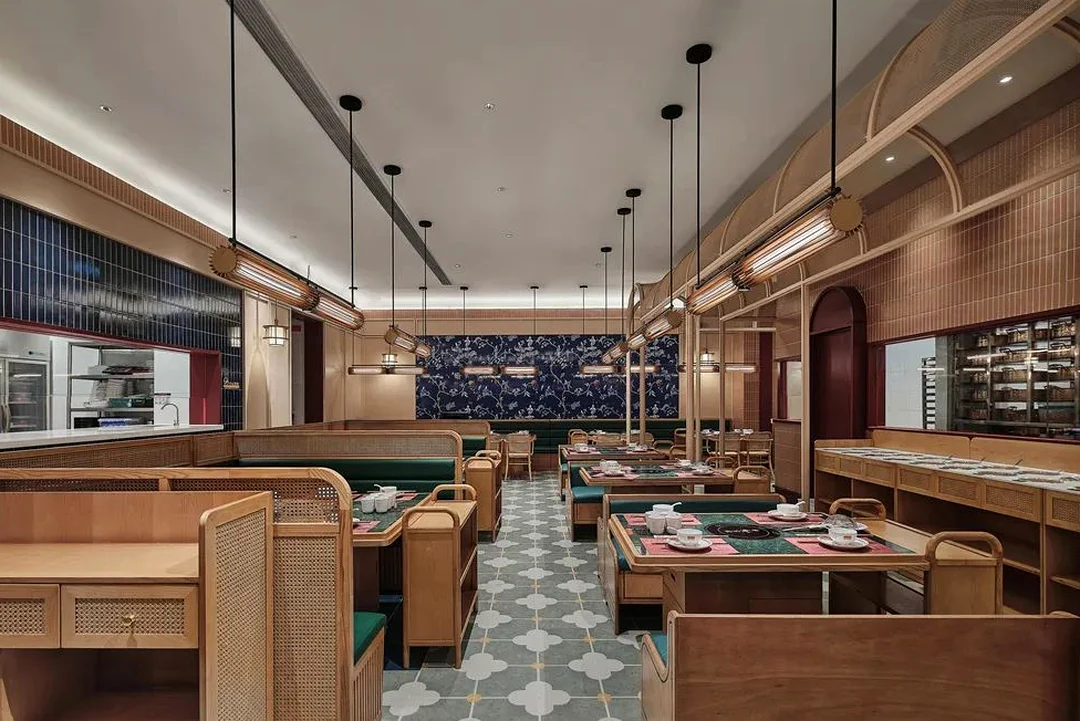
Stepping into flagship Chaoshan beef hotpot halls located inside the Pearl River Delta’s premier shopping landmarks—such as K11 in Guangzhou or the magnificent MixC in Shenzhen—diners immediately sense a grand dialogue between local heritage and contemporary design. Far more than ordinary restaurants, these spaces are conceived as living cultural museums where traditional Chaoshan “Si Dian Jin” (Four Points of Gold) architecture is boldly reimagined in an industrial interior language. The classic four-wing courtyard layout—with four corner rooms resembling sturdy gold ingots, an open “skywell” capturing vital energy, and intricately carved screens—is seamlessly paired with raw polished concrete, matte-black structural steel frames, and expansive tempered-glass panels. This daring fusion creates a striking visual contrast between the solemn, timeless aura of Lingnan clay roof tiles and the brisk pace of modern urban life, offering guests a sanctuary that feels both dignified and distinctly avant-garde.
The beating heart of the entire spatial layout is the “Mingdang Chufang” (Open-Stage Kitchen)—a panoramic prep station likened to a theatrical stage for culinary anatomy. Enclosed entirely by spotless, transparent crystal glass, this workspace maintains a strict microclimate with temperatures precisely controlled between 10°C and 15°C, completely preventing natural oxidation and keeping every beef muscle fiber at peak freshness. Behind the glass under color-accurate spotlights, white-clad master carvers perform a mesmerizing display of blade artistry. Fresh cuts of southern yellow cattle—rushed from suburban abattoirs to the city center within a golden four-to-six-hour window post-slaughter—hang suspended from gleaming stainless-steel hooks. Completely untouched by freezing, the muscle tissue preserves its biological elasticity and natural moisture, ready for the signature knife strokes that define this celebrated hotpot tradition.
Beef craftsmanship in these open kitchens elevates butchery to the level of applied anatomy. Wielding long, thin, mirror-sharp blades, seasoned artisans swiftly break down a carcass into nearly sixteen distinct anatomical cuts, demanding mastery over every tendon attachment, fat vein, and grain direction. The inviolable principle of Chaoshan knife technique is “cutting across the grain” to eliminate toughness: every slice must be as thin as a cicada wing, calibrated to millimeter precision while offering enough surface area to absorb the broth’s heat evenly. Prized cuts such as Boren (neck meat with snowflake marbling accounting for less than one percent of the carcass), Diaolong (succulent ribeye/sirloin strip), and Wuhuazhi (hind-shank muscle webbed with intricate tree-root-like tendons) are sliced in single decisive strokes without ragged edges or wasted scraps.
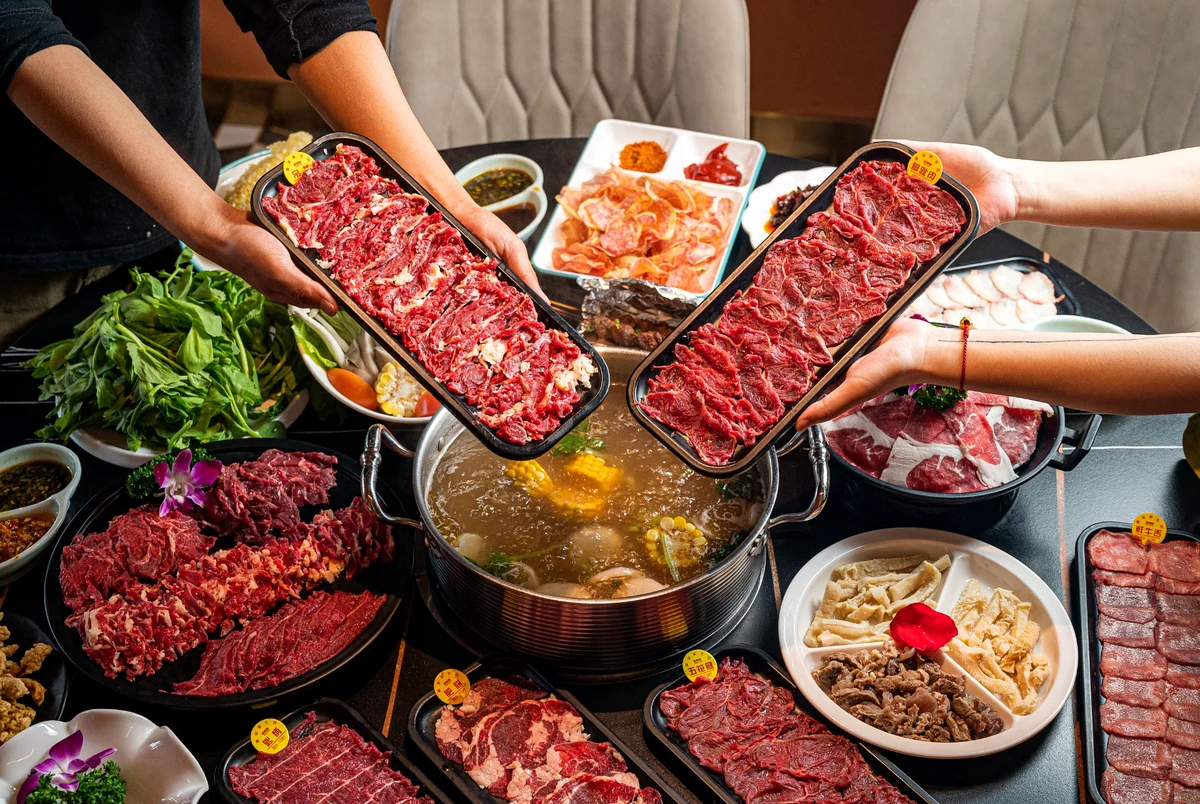
The scale of presentation and plating artistry further reflects the pinnacle of refinement. Freshly sliced ribbons of beef are layered evenly and arranged in overlapping fan patterns or concentric circles across pure white glazed porcelain plates. Because the meat is completely fresh and its natural myoglobin and cellular fluids remain intact, the slices possess remarkable biological adhesion to the ceramic surface. When bringing platters to the table, servers routinely flip the plate vertically a full 180 degrees right before diners’ eyes; each crimson slice marbled with ivory fat clings steadfastly to the plate without budging or leaking a single drop of liquid. This signature visual demonstration not only proves the absolute freshness of the ingredients but also celebrates supreme culinary craftsmanship, turning sprawling multi-hundred-square-meter dining halls in Guangzhou and Shenzhen into performance stages where sight, texture, and pure authenticity converge.
When twilight descends over the prosperous coast of the Greater Bay Area, life in Guangzhou and Shenzhen never slows down; instead, it transitions into another dazzling act of the nighttime economy. Along iconic thoroughfares—from Guangzhou’s historic Beijing Road Pedestrian Street and the colonial-era avenues of Shamian Island to Shenzhen’s bustling Dongmen district and LED-lit Futian financial center—grand Chaoshan beef hotpot establishments become fiery beacons drawing steady crowds. Warm illumination from glowing red Chinese signboards and contemporary lanterns spills across floor-to-ceiling windows, creating a visual landscape that blends futuristic urban glamour with the nostalgic charm of Lingnan dining traditions.
Within these dining rooms, the focal point of a true live performance lies not on an ornate theater stage, but at the glass-enclosed carving counter. Bathed in focused golden spotlights, master carvers deftly maneuver razor-thin blades to showcase the anatomical breakdown of fresh beef just arrived from outlying farms. Still-warm muscle cuts are sliced at exact anatomical angles, revealing the vibrant crimson of Diaolong or the intricate marbling of Wuhuazhi. The steady, crisp cadence of blades striking solid wood blocks resonates like percussion accompanying the evening city symphony, turning everyday kitchen prep into a captivating demonstration of blade mastery before admiring guests.
Stepping inside, interior lighting is thoughtfully curated in warm, subdued tones that contrast beautifully with the bustling streets outside. Soft spotlights accentuate pure wisps of steam rising from gleaming copper pots where bone-and-radish broth simmers gently. Billowing vapor drifts upward and dissolves into the air, forming an ethereal veil reflecting the silhouettes of Shenzhen skyscrapers beyond the glass or the weathered arcade shophouses (qilou) of old Guangzhou. The atmosphere blurs the line between a lively neighborhood eatery and an upscale aesthetic dining venue, allowing guests to enjoy refined privacy while immersing themselves in the warm, convivial spirit of late-night street life.
Savoring beef hotpot at midnight has long been an indispensable ritual in Lingnan’s late-night supper (yexiao) culture. Deep into the night, cheerful clinks of glasses mingle with satisfied slurps as slices poached for a mere eight seconds are lifted from the simmering broth and dipped generously into rich, velvety shacha sauce. The Chaoshan beef hotpot table becomes a gathering ground nurturing friendships, a haven for energetic young professionals unwinding after demanding workdays, and a warm setting for families seeking traditional togetherness. Under soft golden light illuminating the crystal-clear broth, the frenetic pace of southern China’s two greatest metropolises seems to pause, leaving only genuine human connection over pure, refined, and timeless flavors.
The moment specialized transport vehicles deliver still-warm fresh beef into bustling hubs like Guangzhou or Shenzhen, the Chaoshan culinary symphony truly reaches its crescendo. Rather than relying on fiery red chilies or heavy layers of star anise and cassia like northern and southwestern hotpot traditions, Chaoshan beef hotpot claims its supremacy through a philosophy worshiping the absolute freshness of never-frozen beef. This art elevates an ordinary meal into an intangible cultural heritage ritual, where only about thirty percent of the choicest meat from each yellow steer is selected for discerning diners. Every muscle fiber is anatomically carved to millimeter accuracy beneath the sharp blades of local artisans, reflecting the sophistication and depth of southern coastal Chinese gastronomy.
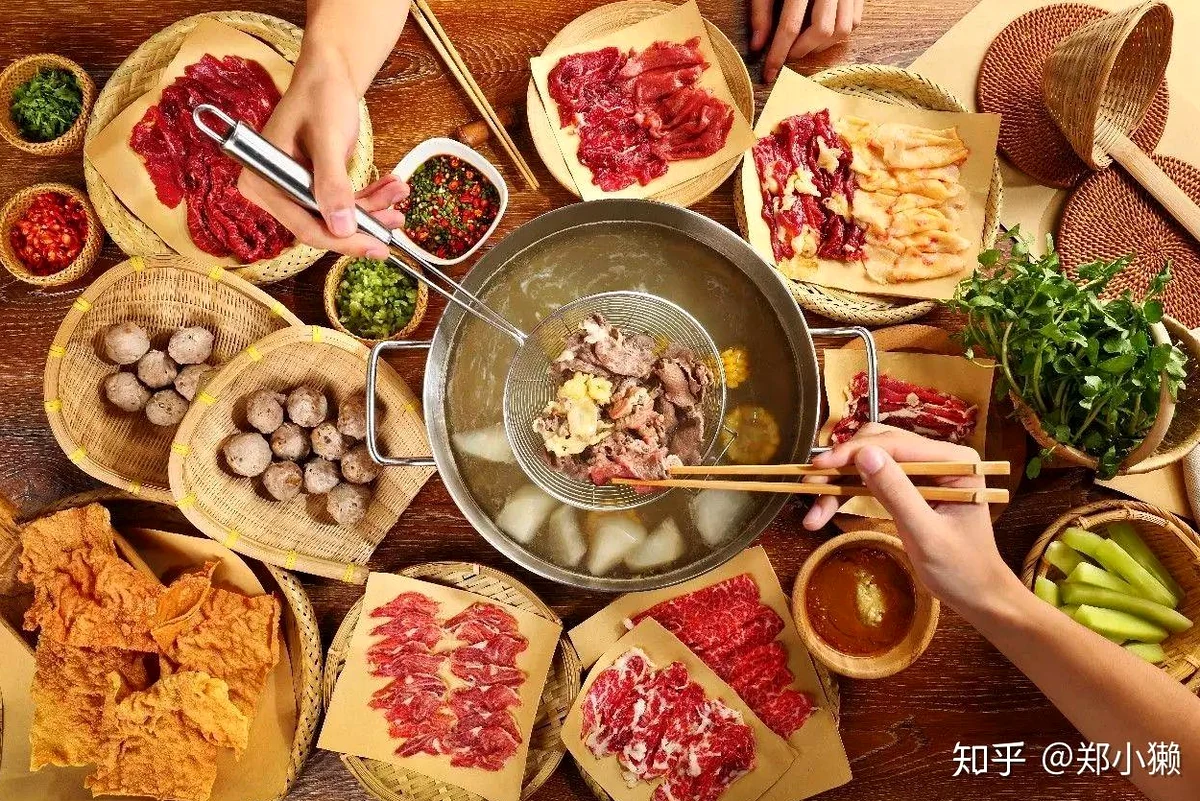
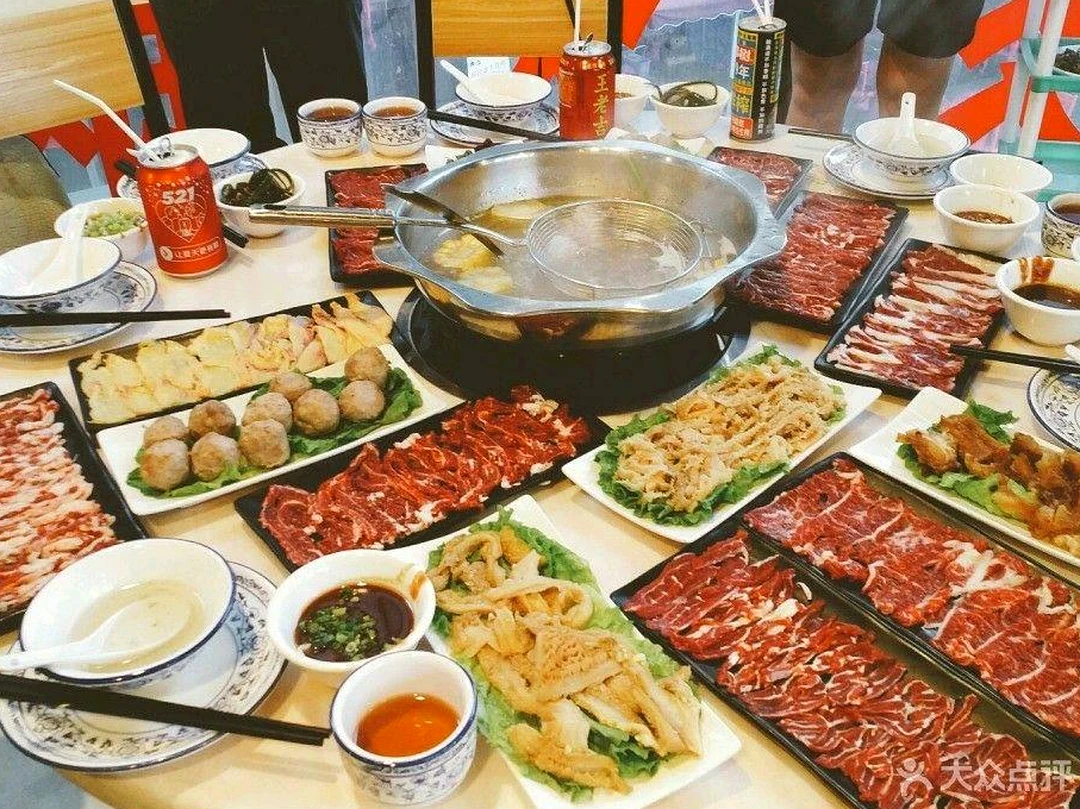
The flavor map of Chaoshan beef hotpot begins with strict differentiation among muscle groups and marbling ratios. Reigning over the loin is Diaolong, boasting a sublime lean-to-fat balance with a delicate rim of white fat framing tender crimson meat; swished briefly through hot broth, it bursts with clean, savory richness without ever feeling heavy. Rarest and most prized at the table is Wuhuazhi, the deep hind-shank muscle laced with dense, marble-like tendon networks; yielded in tiny quantities per animal, it delivers an exhilarating, snappy crunch with every bite. Contrasting with the bounce of the hind shank is Shibing, sliced from the fore-shoulder with a slender white tendon running down its center, offering a velvety, melt-in-your-mouth tenderness after just seconds of heat. This meticulous classification turns every platter into a distinct chapter of texture and taste.
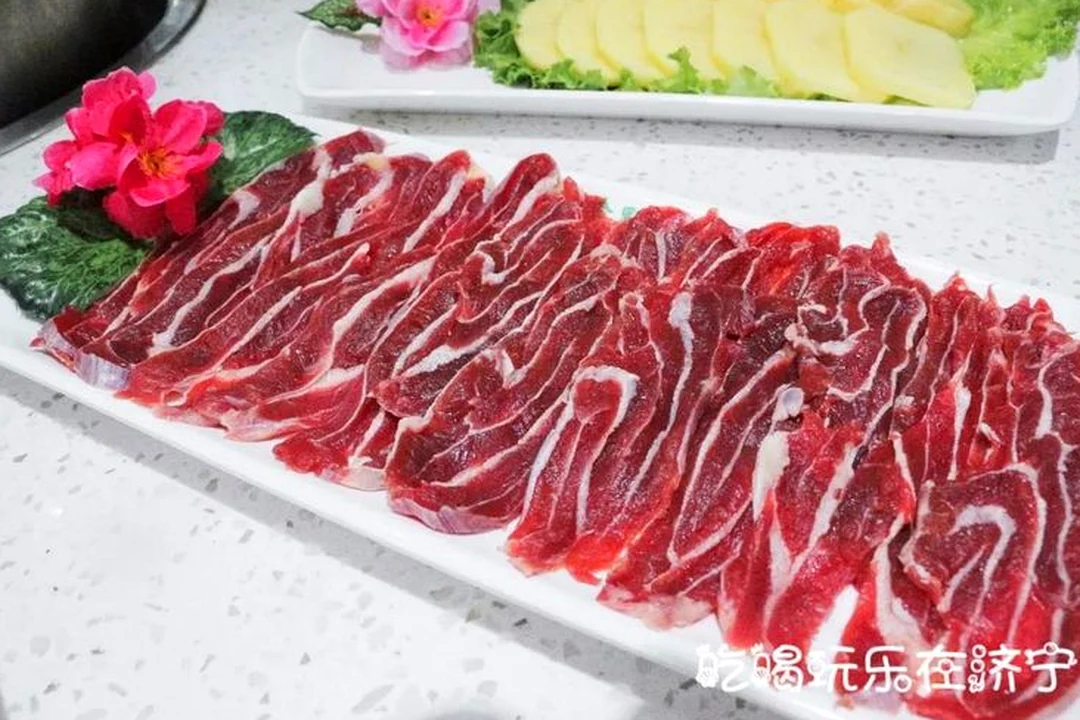
The pinnacle of artisanal craftsmanship here crystallizes in traditional hand-pounded beef balls. Veteran artisans wield heavy square iron mallets in alternating rhythm, pounding fresh deboned beef thousands of times atop massive stone blocks—strictly avoiding grinders or mincing knives that would sever muscle fibers. The relentless, rhythmic pounding activates natural protein networks, transforming the meat into an extraordinarily elastic emulsion that yields spherical meatballs bouncy enough to rebound off wooden tabletops and crisp-snappy to the bite. Anchoring this abundance is a crystal-clear broth simmered patiently from beef marrow bones and sweet white radish rounds for four to six hours. Never cloudy or coated in heavy grease, the broth stays faithful to an ethos of delicate clarity and deep umami, allowing the beef’s natural sweetness to shine without overwhelming the palate.
No beef hotpot ritual in Guangzhou or Shenzhen is complete without a dish of legendary Shacha sauce—the indispensable catalyst hailed as the soul of the table. Originating from Southeast Asian satay brought back by Chaoshan merchants across ancient maritime trade routes, Shacha sauce was ingeniously adapted to Lingnan palates through an intricate blend of minced dried shrimp, dried flatfish, finely ground roasted peanuts, shallots, and fragrant sesame oil. When diners poach slices according to the classic “three dips, nine swirls” method in gently simmering broth at controlled heat, the just-cooked meat absorbs the nutty, savory, subtly sweet depth of this heirloom condiment. The interplay between crisp, anatomically sliced freshness and the rich complexity of Shacha sauce creates a flawless sensory spectrum capturing the refined spirit of coastal gastronomy.
To experience the pinnacle flavors of Chaoshan beef hotpot (Chaoshan Niurou Huoguo) amid the vibrant metropolises of Guangzhou and Shenzhen, the first essential secret every discerning diner must master is timing. Unlike conventional hotpot styles that rely on frozen meats or heavy marinades, the soul of Chaoshan beef hotpot depends entirely on the absolute freshness of young yellow cattle just butchered. Supply schedules from surrounding farms into the urban core are calibrated down to the exact hour, creating two prime golden windows each day: lunch from 11:30 AM to 1:30 PM and dinner from 6:00 PM to 9:00 PM. During these windows, fresh cuts have just arrived at the restaurant, still retaining natural warmth and subtle cellular muscle twitches, ensuring pure, unadulterated sweetness unaffected by cold storage.
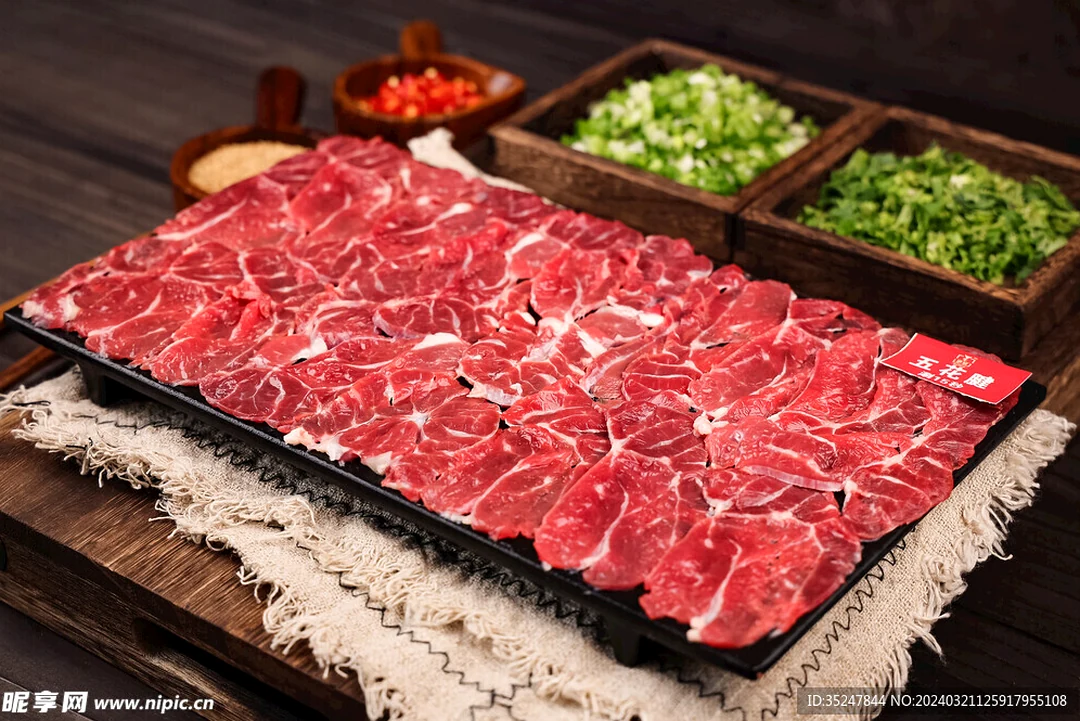
Once seated at the table, dining etiquette goes beyond merely cooking ingredients—it follows a structured sequence reflecting refined Lingnan gastronomy. The classic tasting order strictly progresses from lean to rich, from delicate to deeply marbled. Begin with slices of Diaolong (tender, lean, and juicy loin), move on to Chibing (crisp-sweet shoulder blade with a slender central tendon), and build toward the grand finale with Wuhuazhi (the rare hind-shank core laced with intricate marble-like tendon patterns). The poaching technique itself is a masterclass known as “San Qi San Luo” (three dips, three lifts). A mesh strainer holding the beef is submerged into gently simmering broth maintained at roughly 85°C to 90°C, lifted briefly above the surface so excess heat dissipates, and submerged again—repeated exactly three times within a strict window of 8 to 12 seconds. This precise thermal control cooks the meat just to perfection, locking in natural juices while preserving prized crispness before dipping generously into aromatic, velvety Shacha sauce.
In terms of travel logistics, linking a culinary journey between Guangzhou and Shenzhen is remarkably convenient thanks to modern high-speed rail, with transit between central stations taking a mere 30 to 40 minutes. Moreover, international travelers can take full advantage of the 144-hour visa-free transit policy in the Greater Bay Area (Guangdong–Hong Kong–Macao) to enjoy a short gastronomic getaway without complicated visa procedures. Budget-wise, a lavish, heritage-standard Chaoshan beef hotpot feast typically averages between 120 and 200 RMB per person—an exceptionally reasonable price to experience the pinnacle of fresh beef carving and culinary craft.
For the most fulfilling and unhurried gastronomic experience, travelers should prioritize high-quality, pure-sightseeing itineraries with a strict No-Shopping policy, steering clear of low-cost package traps with cut corners or forced stops at commercial outlets. Pairing local culinary insight with a relaxed schedule turns a journey to southern China into a deeply memorable cultural experience; and to prepare seamlessly for savoring the essence of this region, you can explore a specially curated all-inclusive tour package designed to guarantee premium service standards and authentic regional flavors.