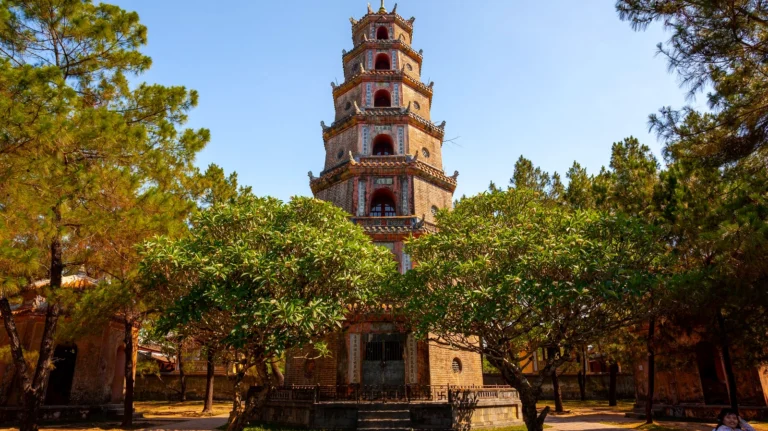
Tucked away in a quiet valley in Thuong Ba Village, Thuy Xuan Commune, Hue City, Khiem Lang—also known as Khiem Cung during Emperor Tu Duc’s lifetime—is far more than a mere royal tomb; it is an artistic masterpiece born from the poetic soul of the fourth emperor of the Nguyen Dynasty. Begun in 1864 and largely completed in 1867, this complex took shape during a turbulent historical period as the Hue court struggled against the mounting pressure of French colonial invasion. For Emperor Tu Duc—a monarch burdened by deep anxiety over his nation’s fate and personal sorrow over having no heir—Khiem Cung served as a second royal residence where he could commune with nature, pour his heart into poetry, and attend to state affairs in his final years.
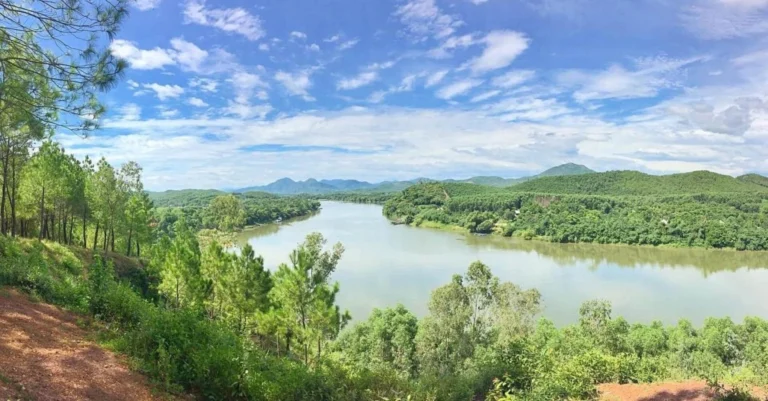
The beauty of Khiem Lang lies in its sublime harmony between Eastern feng shui philosophy and romantic Vietnamese aesthetics. Set on terrain boasting a rare “front screen, rear pillow” configuration, the tomb is cradled by rolling hills that create an isolated sanctuary removed from worldly clamor. Mount Giang Khiem rises in front as a natural protective screen, while sturdy Mount Duong Xuan anchors the rear, forming a classic “backing onto mountains, facing the water” layout. The crowning feature of this feng shui design is Luu Khiem Lake—an artfully excavated artificial lake serving as a water-gathering “bright hall” that not only moderates the microclimate and creates picturesque mountain-and-water scenery, but also symbolizes enduring longevity and prosperity for the dynasty.
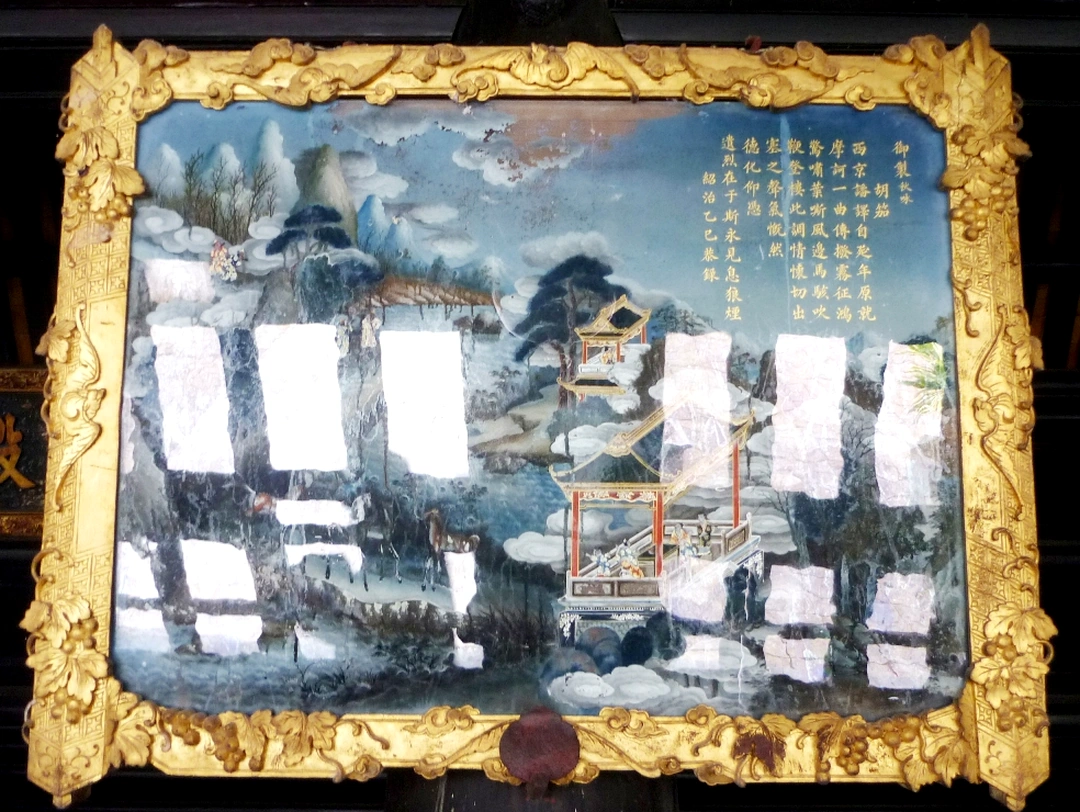
Completely distinct from the rigid, imposing grandeur often seen in other royal mausoleums, Khiem Lang breathes a poetic spirit in which imperial architecture blends seamlessly into the natural landscape. Every structure, from Hoa Khiem Palace to Luong Khiem Palace, bears the character “Khiem” (Modesty)—the virtue Emperor Tu Duc pursued throughout his life, expressing humility and reverence toward heaven and earth. This refinement is further affirmed through gilded red-lacquered horizontal boards and parallel couplets, alongside priceless bronze and custom-ordered porcelain artifacts preserved intact as historical witnesses to a poignant and heroic era.
Khiem Lang’s significance extends beyond architecture into profound cultural depth, most notably the Khiem Cung Ky stele—the largest Thanh stone artifact in Vietnam, weighing an impressive 20 tons. Inscribed on it is Emperor Tu Duc’s deeply moving autobiographical confession, laying bare his shortcomings, personal anguish, and profound Confucian ideals. Recognizing these extraordinary historical, archaeological, and cultural values, the Prime Minister designated Khiem Lang a Special National Relic in 2009, and it stands as an integral part of the Complex of Hue Monuments—a UNESCO World Cultural Heritage Site. At the heart of the ancient capital, Khiem Lang still stands quietly reflected in the waters of Luu Khiem Lake, an enduring symbol of the bond between humanity, history, and nature in Vietnam’s heritage.
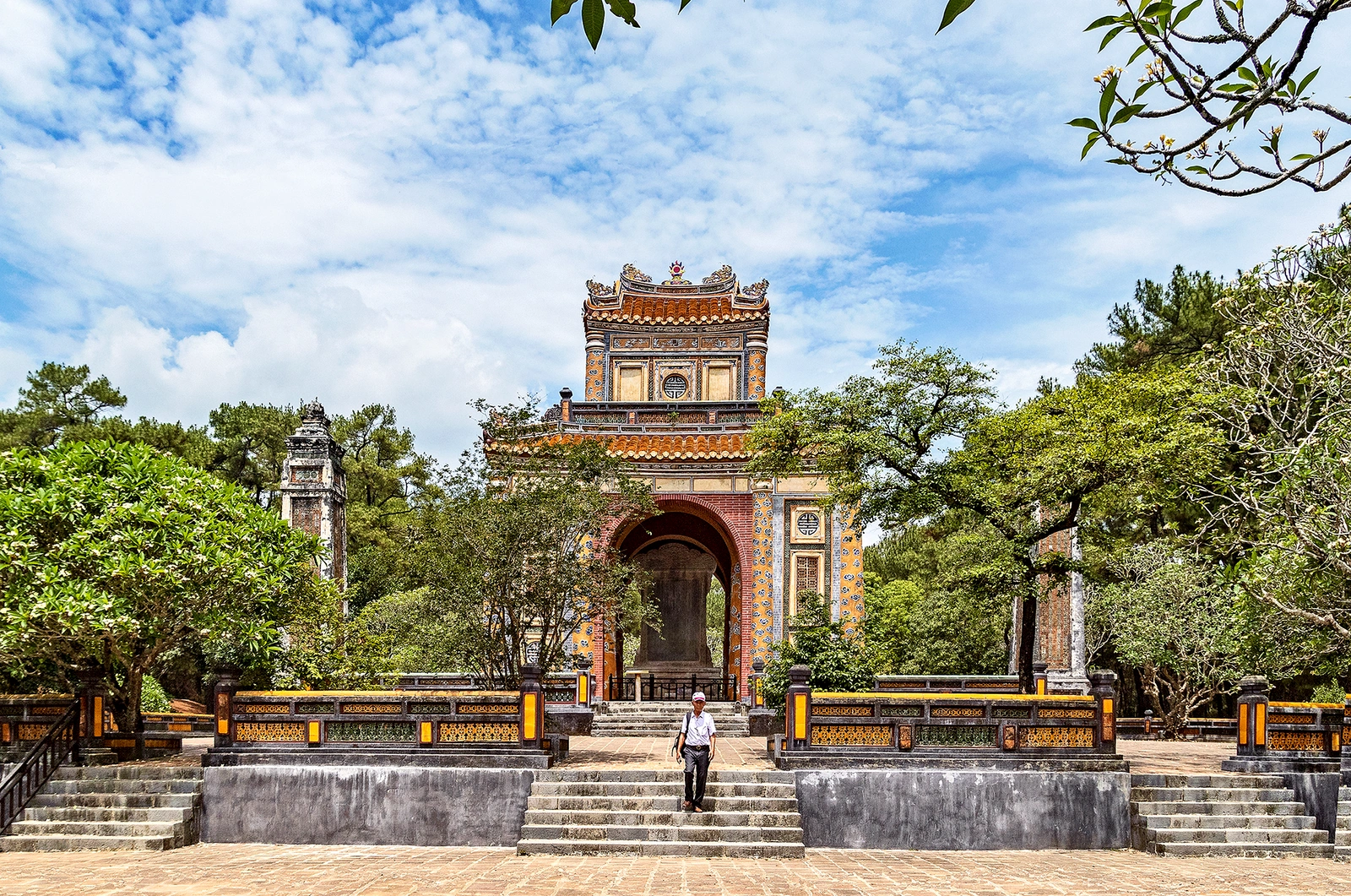
Khiem Lang is more than an architectural monument; it is an epic poem rendered in stone and wood, where the scholarly emperor Tu Duc’s poetic spirit merges completely with Hue’s natural beauty. Stepping inside the tomb grounds, visitors are immediately captivated by a serene, otherworldly charm quite unlike the stern formality typical of other royal mausoleums. The architecture here adheres strictly to the philosophy of “Khiem” (Modesty), with every building prefixed by that character—creating philosophical cohesion where human artistry and nature meet in stillness.
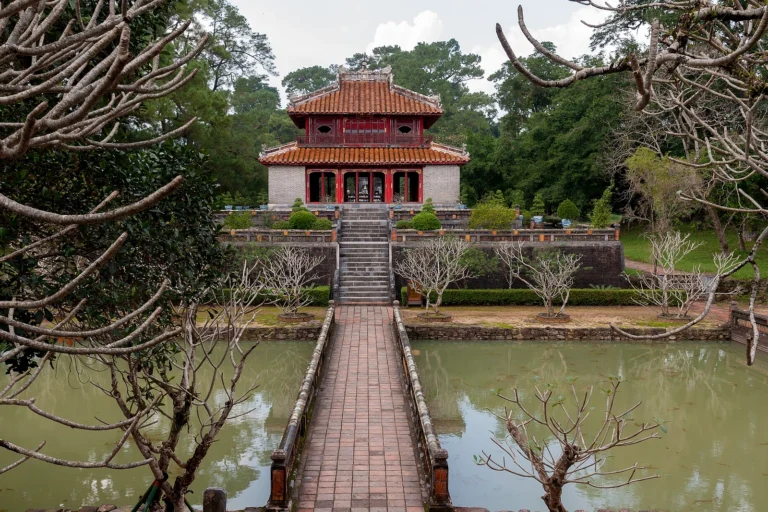
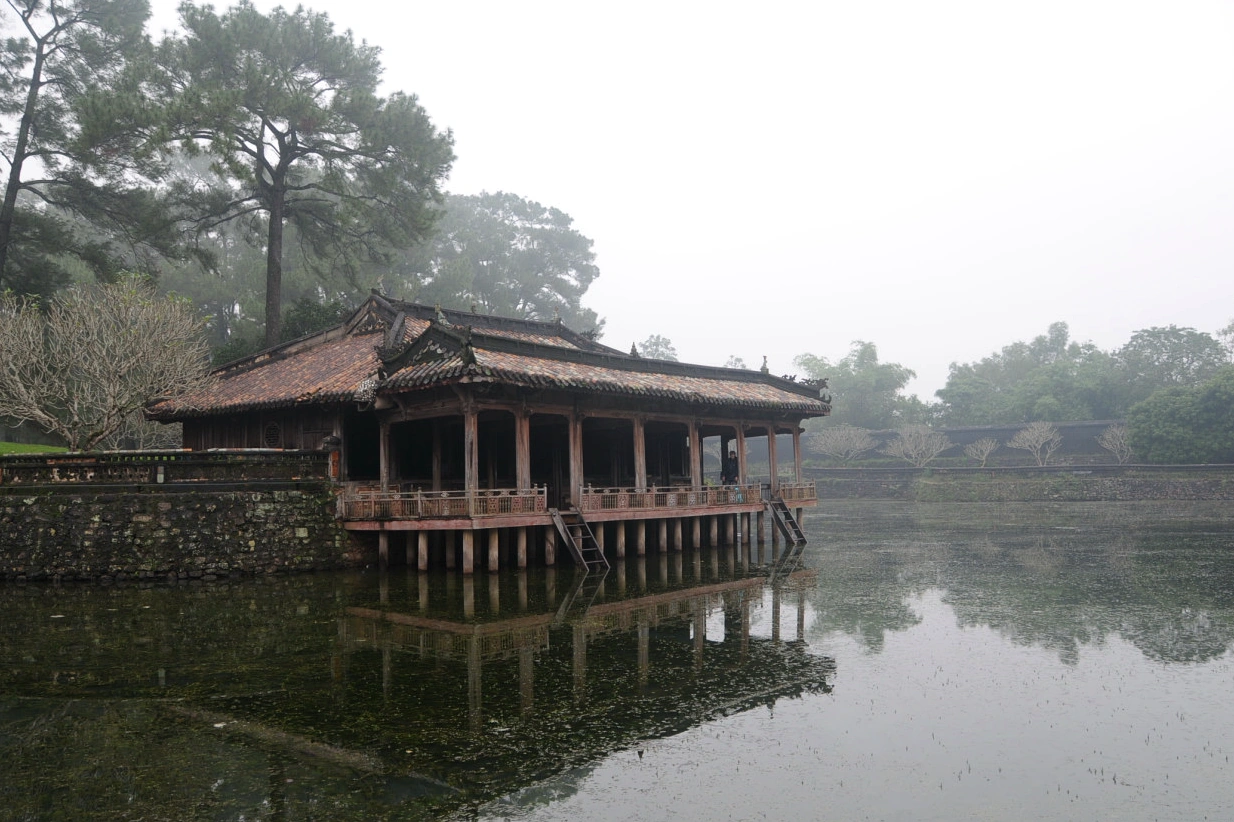
The first feature that compels every visitor to pause is Luu Khiem Lake. Far more than a climate-cooling basin, it functions as a feng shui water-gathering focal point reflecting ancient pine groves and timeworn pavilions. Its surface lies as still as a mirror, and in the early morning, delicate mist drapes across the water to conjure an ethereal, paradise-like scene. Winding gently around the lake, Bat Trang brick pathways follow the natural contours of the land, guiding visitors past red-lacquered, gold-gilded halls adorned with intricate carvings that showcase the pinnacle of Nguyen Dynasty craftsmanship.
To capture Khiem Lang at its finest, professional photographers favor two prime vantage points. The first looks out from Xung Khiem Pavilion across Luu Khiem Lake—the very spot where Emperor Tu Duc once composed poetry and sipped tea. Dawn is the ideal hour, when early sunlight filters through pine canopies onto the lake, casting shimmering, mystical ribbons of light. This angle frames the antique wooden pavilions mirrored in the water, creating a poetic ink-wash painting come to life. The second prime spot lies before the Khiem Cung Ky stele. Anchored by the towering 20-ton Thanh stone slab, this frame conveys solemnity and quiet gravitas. Late-afternoon sunlight casting long shadows across the ancient Sino-Vietnamese inscriptions adds haunting historical depth, yielding photographs rich in both composition and emotional resonance.
Venturing deeper inside, Khiem Lang’s magnificence also lies in its spatial choreography. Structures such as Hoa Khiem Palace and Luong Khiem Palace do not stand in isolation, but flow organically into surrounding gardens and undulating hills. Lush green pines and shaded walkways cultivate an intimate sanctuary far removed from urban noise. Equally remarkable is the sculptural artistry throughout—from dragon-and-phoenix motifs along tiled eaves to meticulously crafted horizontal boards and parallel couplets reflecting the mastery of imperial artisans. Every corner of Khiem Lang offers a “million-view” photo spot where royal architecture meets untamed woodland, creating a harmonious whole that makes visitors feel as though they have stepped into a bygone era where time itself stands still.
When visiting Khiem Lang, take time to absorb the stillness, listen to the wind whispering through the pine groves, and reflect on the life of a poet-emperor. This seamless union of auspicious feng shui, refined architecture, and idyllic scenery transforms the site into a true heritage masterpiece and an essential stop on any journey through Hue.
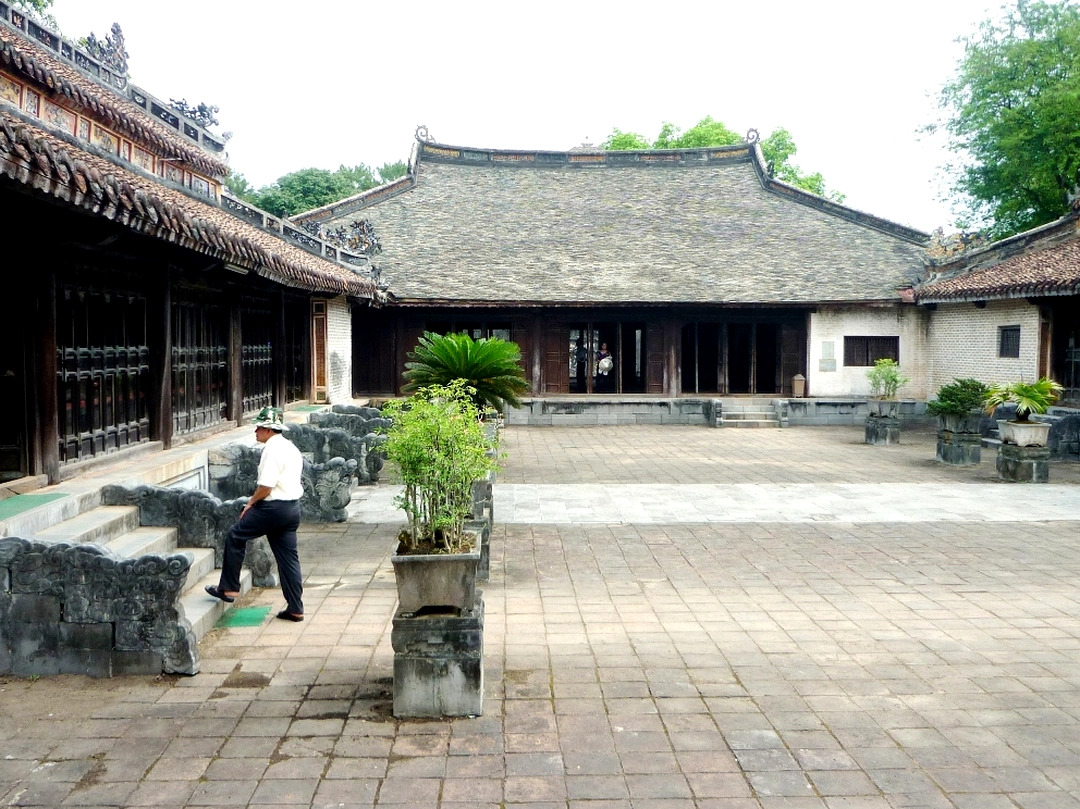
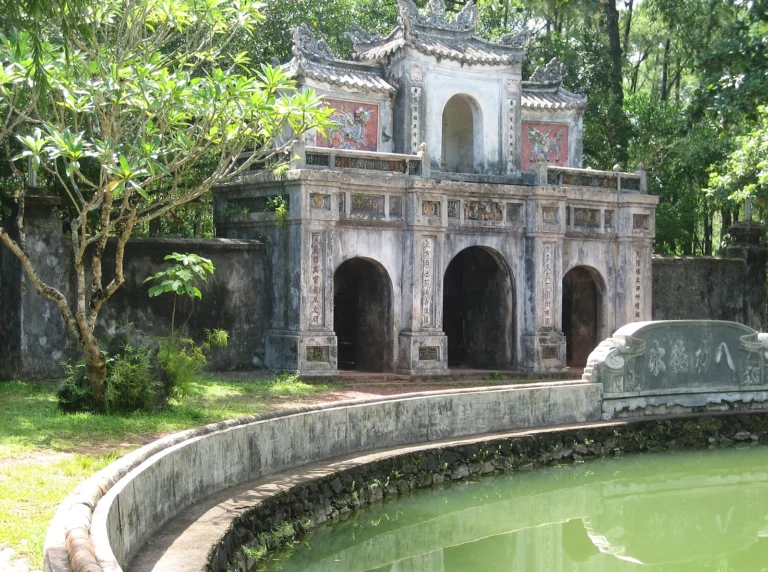
Passing through the moss-draped triple-arched gate of Khiem Lang, visitors enter a realm completely detached from city bustle. The first—and deepest—impression is the sensation of touching the breath of history. Rather than rigid, commanding avenues, winding Bat Trang brick paths curve beneath ancient pine trees, leading guests into an atmosphere steeped in poetry. Strolling unhurriedly under the canopy while listening to wind rustling through the pines and water rippling gently across Luu Khiem Lake creates a tranquil natural symphony—one that instinctively prompts visitors to lower their voices and tread softly, as if careful not to disturb the emperor’s eternal rest.
For curious travelers, climbing the stone steps up to the Khiem Cung Ky stele pavilion is a rewarding highlight. Standing before the colossal 20-ton Thanh stone stele, it is impossible not to marvel at the ingenuity of the artisans who crafted it. Under dappled sunlight filtering through leaves, the crisp Sino-Vietnamese characters recount the story of a gifted yet deeply troubled monarch. Beyond spiritual reverence, this moment invites quiet introspection—allowing visitors to sense the weight carried by an emperor navigating turbulent times. Gazing out from this vantage point, the entire valley framed by its “front screen, rear pillow” landscape unfolds majestically, offering a mountain-and-water panorama rivaled by few places.
Those seeking a different perspective can enjoy a leisurely boat ride on Luu Khiem Lake. The mirror-like water reflects Hoa Khiem Palace and surrounding pavilions in an enchanting tableau, especially at dusk when sunset paints the surface gold. Drifting gently across the water while admiring the interplay between human craftsmanship and the untouched beauty of the Duong Xuan hills brings profound serenity to the spirit.
No exploration of Khiem Lang is complete without experiencing local culture in surrounding Thuy Xuan Commune. Stepping out from the tomb’s quiet grounds, visitors are greeted by vibrant bursts of color from traditional incense-making villages right next to the monument. Multicolored bundles of incense fanned out like giant blossoms in the sunlight make an unmissable photo stop. Here, you can try rolling incense sticks yourself while breathing in the soothing herbal aroma drifting through the air. Be sure to stop by cozy roadside eateries to sample beloved Hue specialties such as banh nam (flat steamed rice dumplings), banh loc (tapioca dumplings), or a delicate bowl of lotus seed sweet soup (che hat sen). The subtle nuttiness of Hue lotus seeds paired with refined flavors rooted in imperial culinary tradition leaves a lingering impression, turning a heritage visit into a warm connection with the everyday life and hospitality of Hue’s residents.
As late-afternoon light stretches Khiem Lang’s reflections across the lake, visitors leave both awestruck by the enduring beauty of its architecture and deeply restored within. It is a seamless meeting of past and present, historical grandeur and living local culture, offering a rich and deeply moving heritage travel experience.
To make your exploration of Khiem Lang as smooth and rewarding as possible, it helps to keep a few practical visitor details in mind. The Tomb of Tu Duc welcomes visitors every day of the week, including weekends and public holidays. Operating hours run from early morning until late afternoon, giving guests ample time to wander and soak in the peaceful ambiance of this former royal retreat. Knowing the schedule in advance allows you to plan around harsh midday sun or peak crowds so you can fully savor the monument’s contemplative charm.
Regarding admission fees, the Hue Monuments Conservation Center applies published ticket rates in accordance with current regulations for both domestic and international visitors. Children, seniors, and eligible policy beneficiaries typically receive discounted or complimentary admission under management rules. Visitors are advised to check current ticket prices at the official ticket counter at the entrance or on the conservation center’s official online channels before arriving. Note that admission to the Tomb of Tu Duc is included in combo ticket packages for the Complex of Hue Monuments, making bundled tickets a smart, cost-effective option if you plan to visit multiple historical sites in a single day.
Getting to Khiem Lang from central Hue is straightforward by motorbike, private car, or taxi. The most scenic and convenient routes run along Bui Thi Xuan Street or Huyen Tran Cong Chua Street—tree-lined roads winding gently into the forested hills where the tomb sits. If you enjoy taking things at your own pace, renting a motorbike lets you pause along the way to admire the scenery, while taxis or private cars offer added comfort and convenience for families, groups, or changeable weather.
When visiting a site of deep spiritual and historical significance like Khiem Lang, dressing appropriately is essential. Please choose modest, respectful attire and avoid overly short or revealing clothing out of respect for the royal sanctuary. Because the grounds feature numerous stone steps, lakeside paths, and uneven walkways, flat shoes, sneakers, or sandals with good grip are strongly recommended for safe, comfortable walking throughout your visit.
The best time to visit Khiem Lang is during spring or early autumn, when Hue enjoys mild, pleasant weather without extreme heat. Gentle sunlight brings out the shimmering beauty of Luu Khiem Lake and the warm tones of the wooden pavilions. Try to avoid days with heavy, prolonged rain so your visit remains safe and uninterrupted. Set aside a quiet morning to stroll beneath the old pines and listen to the breeze rustling across moss-grown roofs, and you will experience firsthand the philosophy of “Khiem” that the poet-emperor wove into this remarkable masterpiece.
To enjoy a seamless getaway and experience the full beauty of the Tomb of Tu Duc without worrying about transportation, attraction tickets, or itinerary planning, travelers can choose VDS Travel’s premium all-inclusive Hue tour packages. Every itinerary is thoughtfully timed to capture the scenery at its most radiant, accompanied by knowledgeable local guides well-versed in Hue’s culture alongside top-tier hotel and dining standards.