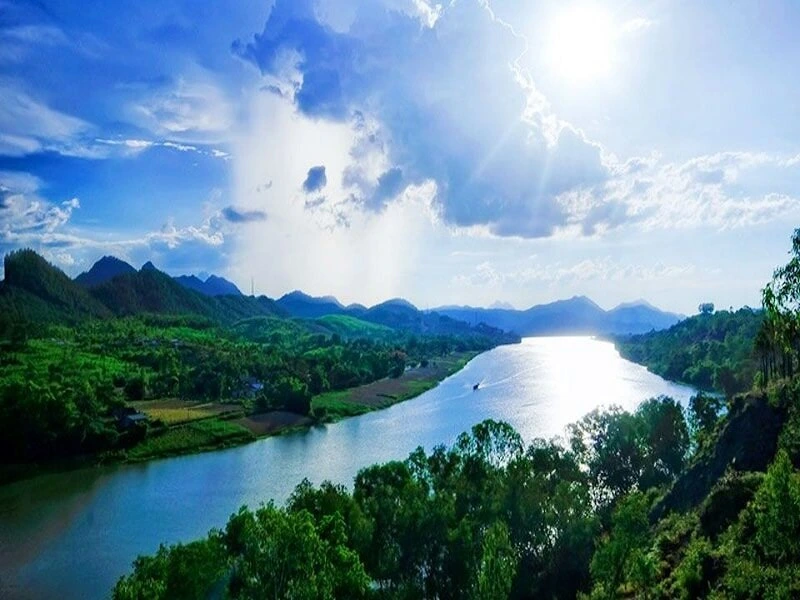
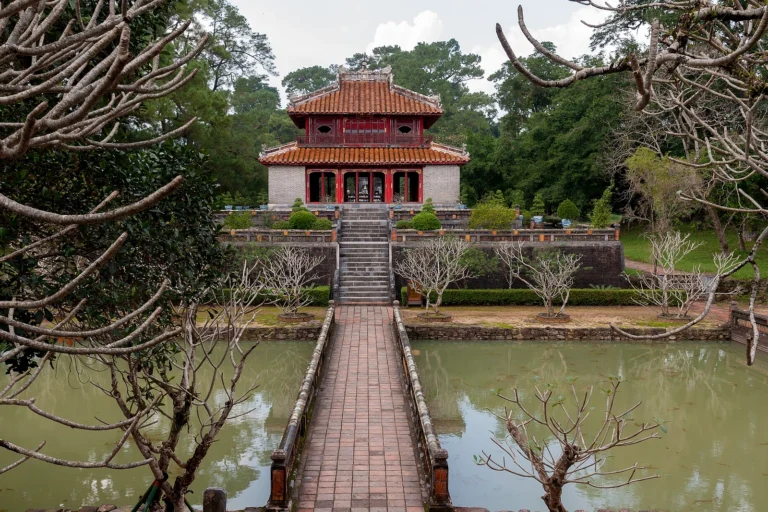
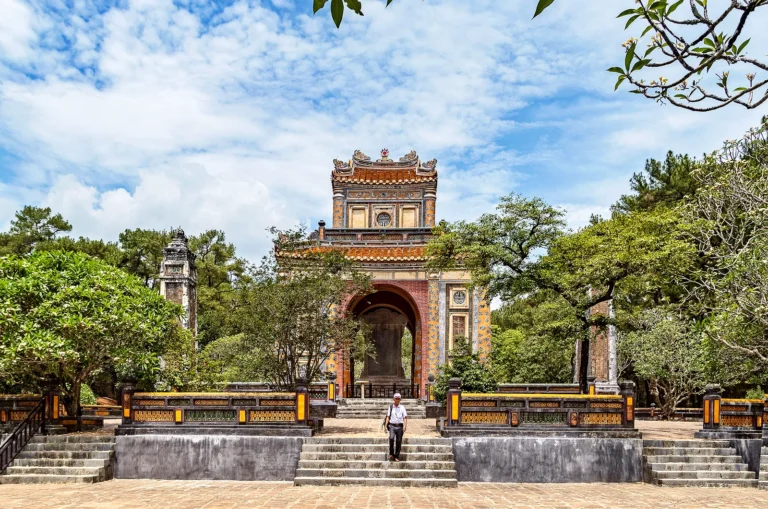
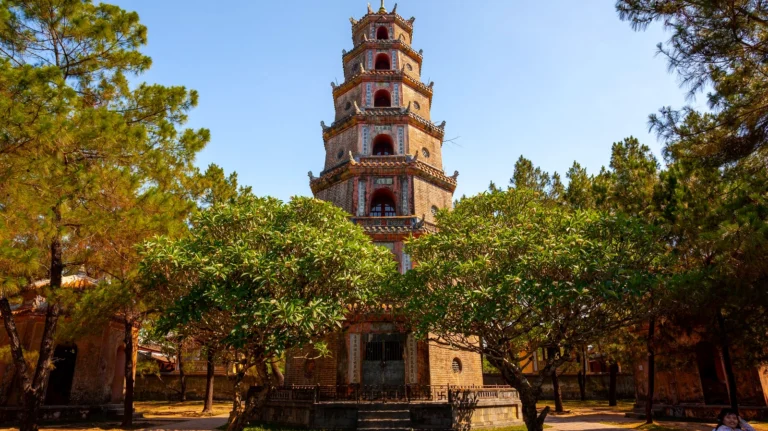
Located at coordinates 16°25’12″N 107°33’36″E, Vong Canh Hill is far more than a high point on the geographical map of Thuy Bieu Ward—it is an extraordinary natural observatory where the Perfume River bends gracefully like a silk ribbon draped across the picturesque landscape of Hue. Rising to a modest elevation of about 43 meters above sea level, the hill features a distinct geological profile formed from ancient sedimentary layers and fertile red basalt soil, supporting an evergreen pine forest ecosystem. In traditional imperial planning philosophy, Vong Canh served as a strategic “front screen” and a prime geomantic stronghold within the capital’s architectural layout. It gathered the spiritual energy of the imperial capital through its classic “backing onto mountains and facing water” setting—resting against the majestic western mountain range while looking out over the poetic Perfume River, forming a grand, serene “coiled dragon, crouching tiger” configuration.
The name “Vong Canh”—literally meaning a place to gaze upon scenic beauty—captures its historical purpose. Unlike royal monuments constructed of brick and stone, Vong Canh is a purely landscape-based heritage site, a natural “royal viewing pavilion” linked to the imperial excursions of Nguyen Dynasty emperors. During the reigns of Emperor Thieu Tri and Emperor Tu Duc—rulers celebrated for their poetic sensibilities and artistic spirit—Vong Canh Hill became a favored retreat to step beyond the confines of the Forbidden Purple City and reconnect with nature for contemplation and verse-making. The hill’s beauty inspired evocative lines in the imperial poetry collection The Twenty Sceneries of the Capital, establishing Vong Canh as an aesthetic icon and a silent historical witness to the golden era of Vietnam’s last feudal dynasty.
Vong Canh’s significance reaches beyond royal chronicles and imperial poetry into the archaeological depth of the Thuy Bieu area. Ceramic remnants from the Le and Nguyen dynasties unearthed beneath its soil attest to an ancient community that settled, cultivated, and enriched local culture centuries ago. In terms of heritage preservation, Vong Canh Hill forms an integral part of the buffer zone of the Complex of Hue Monuments—a UNESCO World Heritage site. Conservationists and researchers consistently emphasize that safeguarding Vong Canh means more than protecting its aging pines and native flora; above all, it requires preserving its “view corridor.” This represents the sacred visual link stretching from the hilltop down to the river, where every curve of the Perfume River carries stories of geomancy, spirituality, and the enduring soul of the ancient capital.
Today, standing atop Vong Canh Hill, travelers not only experience the harmony of sky, earth, river, and mountains, but also connect with a living piece of national heritage. Amid the tranquil atmosphere, wind whispering through the pines mingles with the gentle murmur of water at the foot of the hill to compose a timeless symphony. Vong Canh stands both proud and serene, continuing its timeless role as the “eyes” of Hue and safeguarding the unspoiled beauty of a land where every inch of earth and every river bend breathes history and Vietnamese cultural depth.
Vong Canh Hill is not merely a geographical landmark, but a living masterpiece shaped by nature and history. From the summit, visitors witness a mesmerizing interplay between the winding Perfume River and rolling, dome-shaped green hills—forming a serene ink-wash painting where every contour reflects Eastern geomantic harmony. Here, the Perfume River ceases to be a flat ribbon of water, curving majestically around the base of the hill like a brushstroke across an ancient imperial scroll.
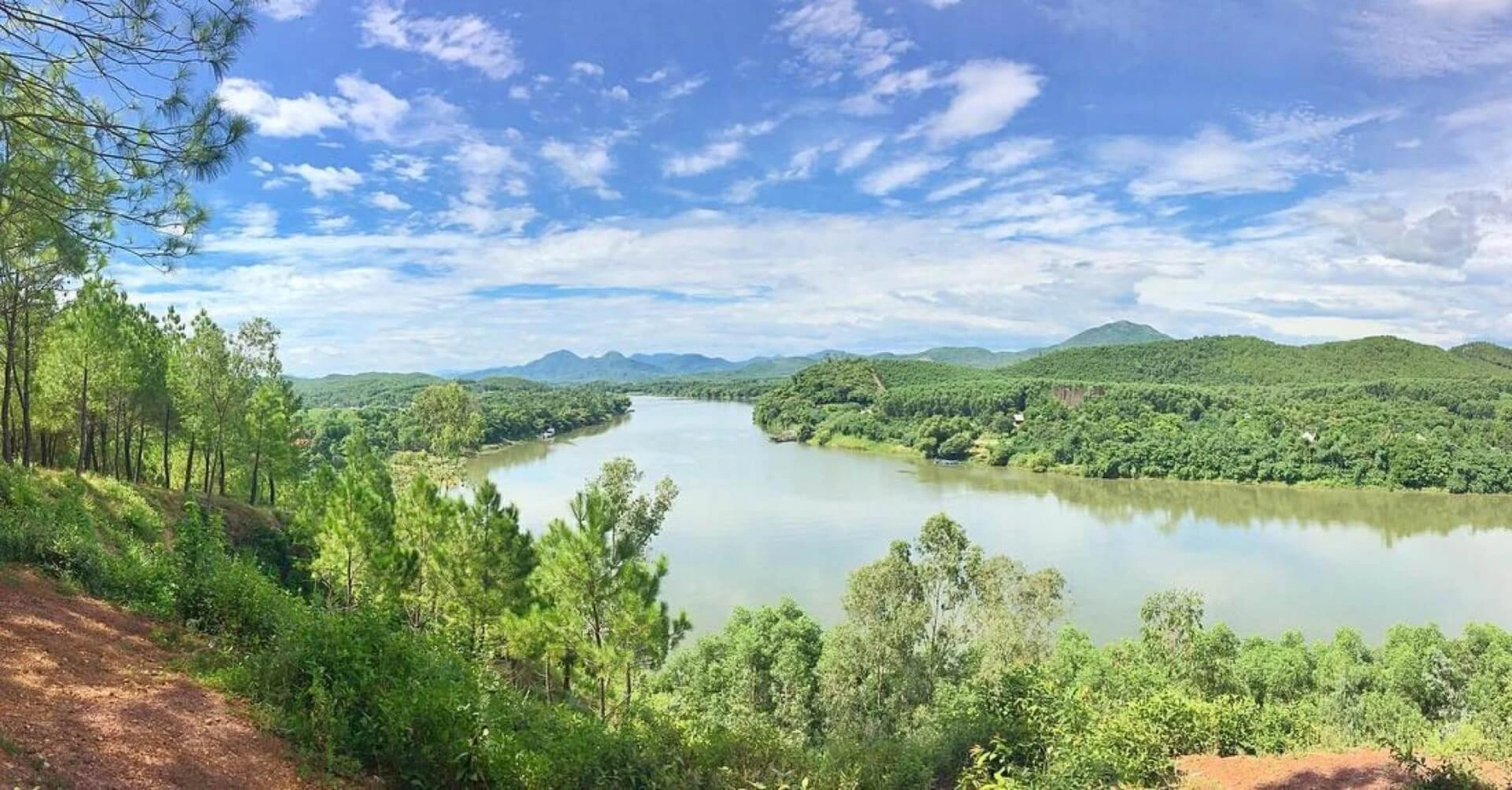
In landscape design, Vong Canh exemplifies the classical Eastern art of “borrowed scenery.” Requiring neither ornate palaces nor intricately carved pavilions, the quiet simplicity of this space creates extraordinary grandeur. Rows of mature pine trees stretch out to catch the breeze, their interlocking branches forming natural frames that open onto sweeping views of fertile Thuy Bieu. The interplay of deep pine greens, rich red basalt earth, and the jade waters of the Perfume River composes an enchanting natural palette—serving as the very vantage point where Nguyen Dynasty monarchs once paused to admire the beauty of their realm and find absolute stillness in the heart of the ancient capital.
For photography enthusiasts and scenery lovers, Vong Canh is a haven of “million-view” vantage points. To capture the true spirit of this landscape, seasoned photographers typically favor two classic angles. The first sits at the highest crest of the hill, framing a sweeping panorama of the Perfume River bend cradling the lush green orchards of Thuy Bieu village. The second lies along the hillside slope facing upstream, where rows of pine trees create natural leading lines that draw the eye toward distant mountain ridges and lend striking depth to every shot.
When it comes to timing, the ideal light for capturing unforgettable moments at Vong Canh arrives right at dawn or dusk. In the early morning, as a light mist hovers over the river, soft golden rays filter through the pine canopy to create a magical Tyndall effect, bathing the hill in quiet, sacred stillness. At sunset, as the sun dips behind the western mountains, the entire horizon glows in romantic shades of rose and violet. In that fleeting window, the Perfume River gleams like a ribbon of gilded silk reflecting the fading daylight—a breathtaking spectacle that invites you not just to take photographs, but to pause, breathe, and absorb the timeless scenic heritage gifted to the ancient capital.
Preserving the sweeping vista at Vong Canh means preserving the very soul of Hue. Every frame captured here goes beyond a pretty picture to affirm an enduring aesthetic legacy. Standing amid this landscape makes it easy to understand why ancient poets poured such devotion into immortalizing Vong Canh in verse—a seamless union of still earth and flowing water that no modern structure could ever replicate.
Setting foot on Vong Canh Hill is more than ticking off a sightseeing stop; it is a journey into the quiet soul of Hue. The experience begins along a winding footpath shaded by towering pines, where rustling breezes blend with the gentle murmur of the Perfume River below. Reaching the summit brings an immediate rush of awe. From 43 meters up, Hue’s classic ink-wash panorama unfolds in full: the Perfume River winds like a jade-green silk sash around lush rolling hills, while in the distance, the moss-covered roofs of imperial tombs peek through delicate mist—offering a single, unforgettable glimpse of the ancient capital’s profound serenity.
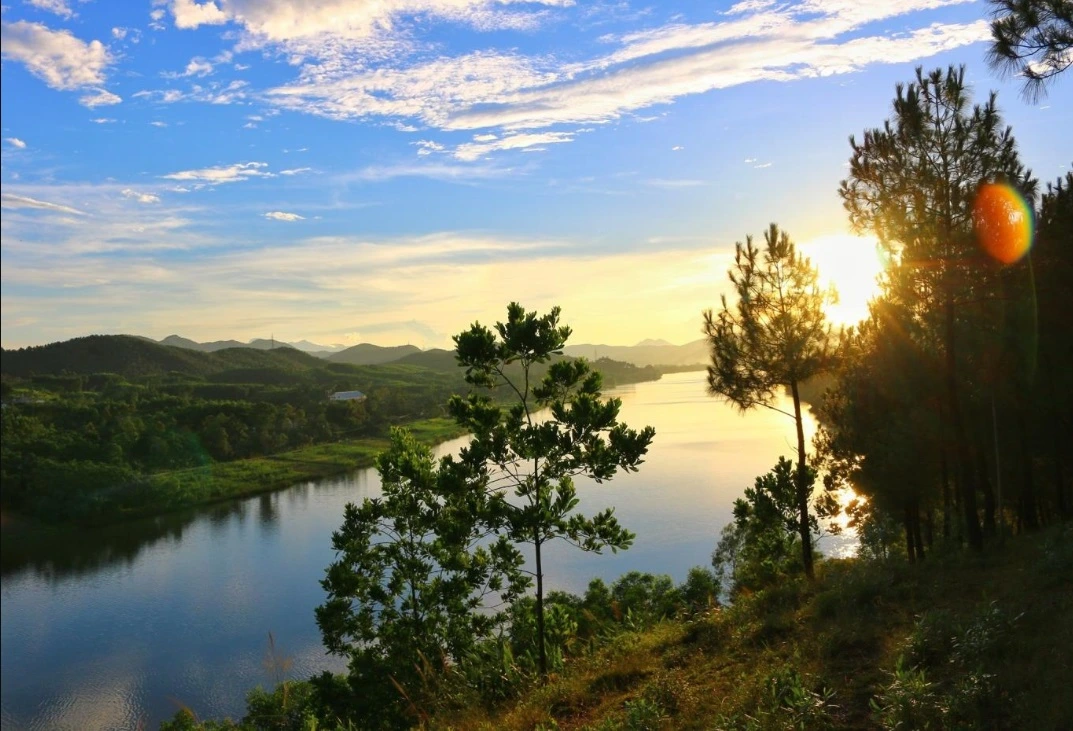
For travelers who enjoy active exploration, a visit to Vong Canh Hill easily pairs with rewarding local experiences. Many visitors combine a gentle uphill walk with a scenic boat trip on the Perfume River. After admiring the panorama from above, drifting downstream on a wooden boat from Thuy Bieu Wharf lets you experience the changing scenery from water level. Up close, the river comes alive with the rhythmic splash of oars and birdsong echoing from riverside fruit orchards, creating a remarkably peaceful sensory escape.
Beyond its natural beauty, Vong Canh Hill offers a deep spiritual resonance. Set within the buffer zone of Hue’s imperial monument complex, the surrounding area is home to serene, centuries-old temples and pagodas. Dropping by a nearby temple as soft bells chime through the quiet air brings a grounding sense of calm that washes away everyday stress—blending natural grandeur with spiritual stillness in a way that lingers long after you leave.
No visit to this area is complete without savoring the celebrated culinary traditions of Thuy Bieu. After feasting your eyes on the scenery, treat your palate to local specialties—starting with sweet, fragrant thanh tra pomelo, a famed royal tribute fruit, enjoyed right beneath the shade of lush orchard trees. Traditional Hue favorites bridging imperial and folk cuisine, such as clam rice (com hen), translucent tapioca dumplings (banh loc), and aromatic locally brewed lotus tea, round out a memorable day of discovery. Paired with the crisp pine-scented breeze, these flavors create an unforgettable multi-sensory experience.
Vong Canh Hill is therefore much more than a photo spot; it is a sanctuary to slow down, listen to the echoes of history, and feel the gentle rhythm of local life. The initial awe sparked by its sweeping scenery settles into lasting inner peace by the time you depart—a rare meeting point of nature and humanity, past and present, leaving every traveler with an intimate, poetic memory of Hue.
Vong Canh Hill has long earned its place as a must-visit destination for anyone drawn to the serene, poetic charm of Hue. To ensure a smooth and enjoyable visit, keep a few practical details and travel tips in mind. Vong Canh Hill is open daily from early morning until late afternoon, and best of all, admission is completely free—making it easy for every traveler to soak in its panoramic beauty without worrying about entrance fees.
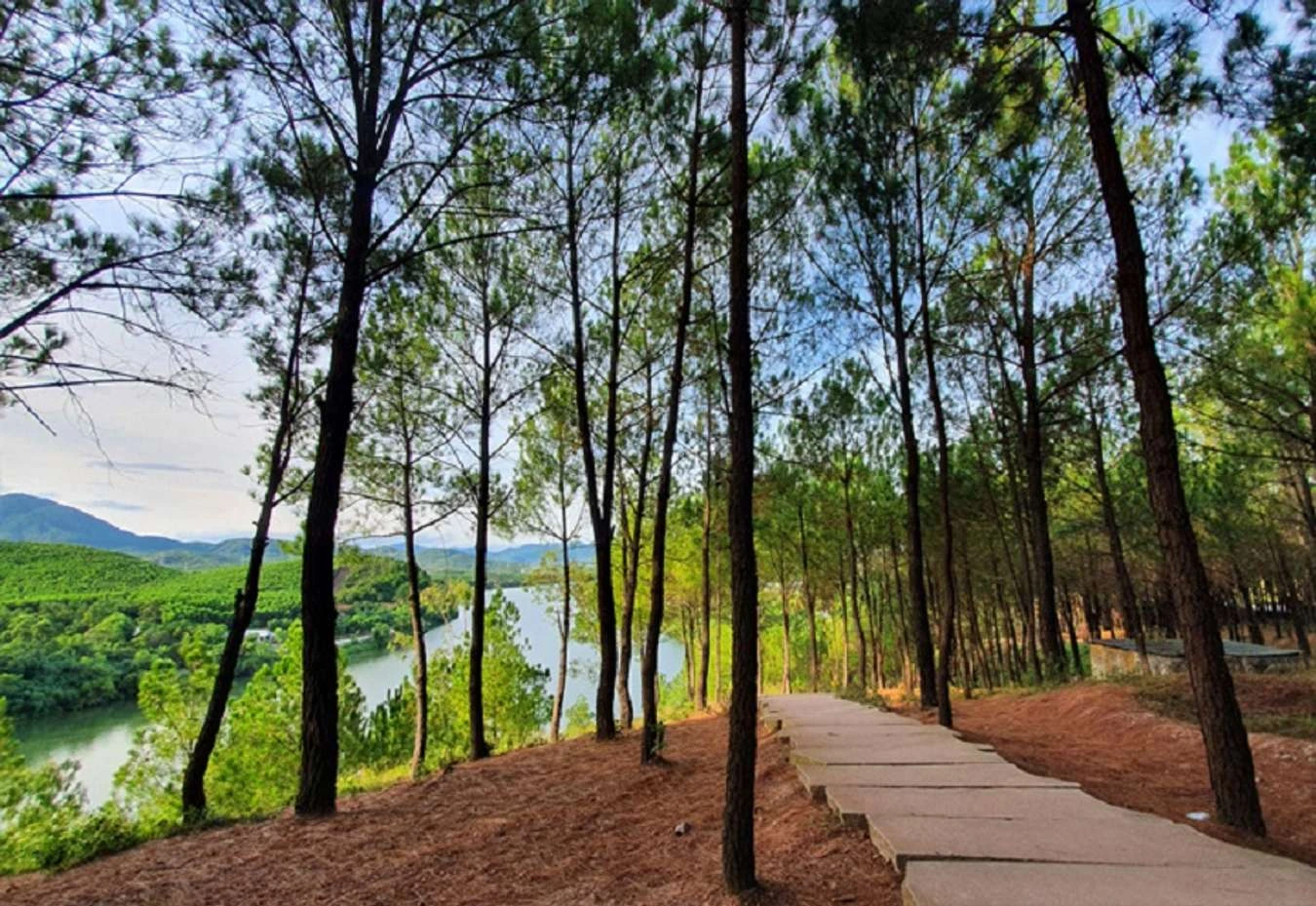
Getting to Vong Canh Hill from downtown Hue is straightforward by motorbike or private car. The most scenic route follows Bui Thi Xuan Street before turning onto Huyen Tran Cong Chua Street, passing several famous royal tombs beneath leafy canopies and through quiet suburban lanes. Riding a motorbike gives you the flexibility to stop for photos along the way—just be sure to check your brakes and tires beforehand, as the approach includes gentle slopes typical of Hue’s rolling hills.
The best times to visit Vong Canh Hill are at dawn or dusk. When early sunlight or twilight hues gild the Perfume River, the view from the summit is at its most magical and photogenic. Temperatures are also coolest during these hours, ideal for a leisurely stroll and breathing in the crisp pine air while taking in the classic mountain-and-river setting. Try to avoid the harsh midday sun both for personal comfort and for softer, more flattering natural light in your photos.
Although Vong Canh Hill is an outdoor natural landmark, its location within the imperial monument buffer zone and near sacred temples makes modest, respectful attire a thoughtful choice. Sturdy sneakers or flat shoes with good grip are essential, as the terrain includes sloped dirt paths and red basalt surfaces that can turn slippery after rain. Be sure to bring a sun hat, sunglasses, and drinking water to stay comfortable throughout your walk.
Finally, to help protect this cherished landscape heritage, visitors should strictly refrain from littering, snapping tree branches, or disturbing the pine forest ecosystem. Preserving the unspoiled vista from the hilltop down to the Perfume River is a shared responsibility for authorities and travelers alike. Take a moment to enjoy the quiet, listen to the wind through the pines, and feel the unhurried heartbeat of ancient Hue from one of its finest vantage points.
To enjoy a seamless getaway and experience the full splendor of Vong Canh Hill without the hassle of arranging transportation, admission tickets, or transfer schedules, travelers can choose all-inclusive Hue tour packages from VDS Travel. Each itinerary is thoughtfully timed for optimal lighting and scenery, led by knowledgeable local guides and paired with top-tier hotel and dining standards.