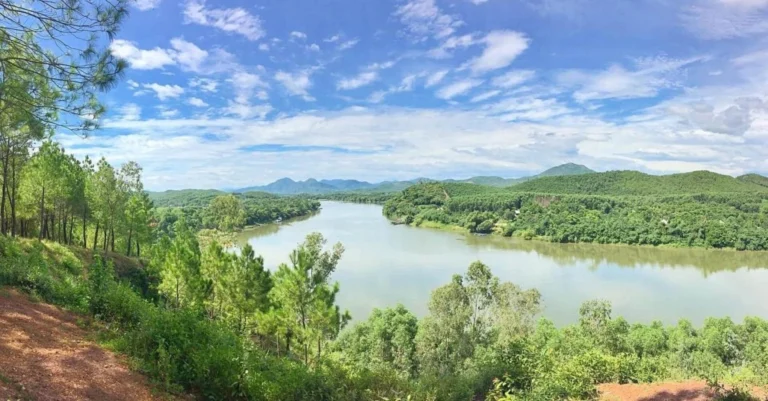
Located at coordinates 16°28’02″N and 107°35’25″E, Trang Tien Bridge is far more than a vital transportation artery—it is a tangible “sacred axis” spanning the Perfume River, where Western engineering mastery converges with Eastern feng shui philosophy. Throughout the historical flow of the Nguyen Dynasty, the bridge served as a point of equilibrium linking two distinct realities: on one bank, the serene Imperial Citadel of Hue with its palaces and shrines, and on the other, the modern administrative quarter of the French colonial era. The presence of Trang Tien Bridge completed the ancient capital’s classic “mountain-backed, water-facing” (toa son huong thuy) landscape, with Ngu Binh Mountain standing as a protective screen, the Perfume River serving as the auspicious water-gathering basin, and the bridge acting as a vital link uniting imperial space with the dynamic pulse of everyday civic life.
Turning back the clock to the 9th year of King Thanh Thai’s reign (1897), construction officially began with royal approval on a bridge named after the young monarch himself—Thanh Thai Bridge. This marked a pivotal historical milestone in East–West cultural exchange as the Nguyen court began embracing cutting-edge industrial engineering from France. Built by the renowned firm Levallois-Perret—famed for constructing the Eiffel Tower—the project gifted Hue a proud, comb-shaped steel truss structure. The name “Trang Tien” preserves a local toponym rooted in the royal mint (Tien Cuc) once situated on the left bank of the Perfume River. Rising above imperial edicts and stone steles, the name became a colloquial yet authoritative title capturing the spirit of an era when currency and industry began reshaping the urban landscape.
Geographically, Trang Tien Bridge is likened to a “carrying pole” balancing both banks of the Perfume River and anchoring the visual axis of the Imperial Citadel. In the geomantic vision of Nguyen Dynasty architects, placing a sturdy steel structure across a river regarded as the city’s auspicious water basin did not detract from its elegance; instead, it established a striking visual sightline pointing directly toward Ngo Mon (the Meridian Gate). The interplay between bold arched steelwork and the gentle flow of the Perfume River creates an artistic contrast recognized by heritage scholars as a “living artifact” of Vietnam’s industrial history. Despite enduring tumultuous chapters—from devastating typhoons in 1904 that collapsed spans to fierce wartime battles in 1946 and 1968—Trang Tien Bridge has stood firm as a resilient witness to history.
Today, under the stewardship and conservation of heritage authorities, Trang Tien Bridge forms an inseparable part of the Complex of Hue Monuments. Every span and surviving original steel component is more than mere building material—it is a page of history cast in metal, recounting a turbulent era of transition. Standing on the bridge, gazing toward Ngu Binh Mountain or looking down the Perfume River, visitors see more than an engineering feat; they encounter the very soul of Hue, where the strength of steel and the grace of water unite into an enduring cultural icon that defies the passage of time and changing tides.
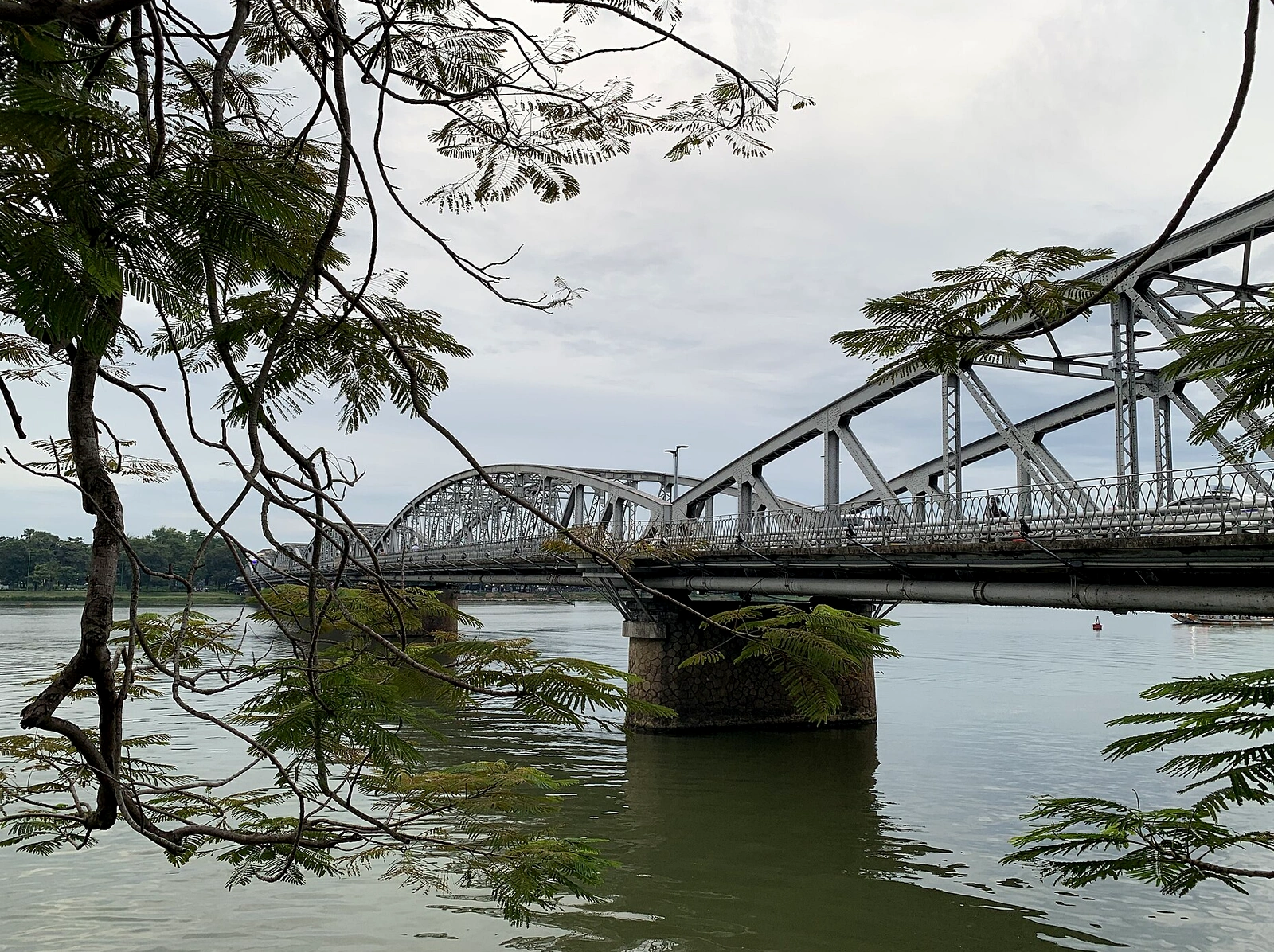
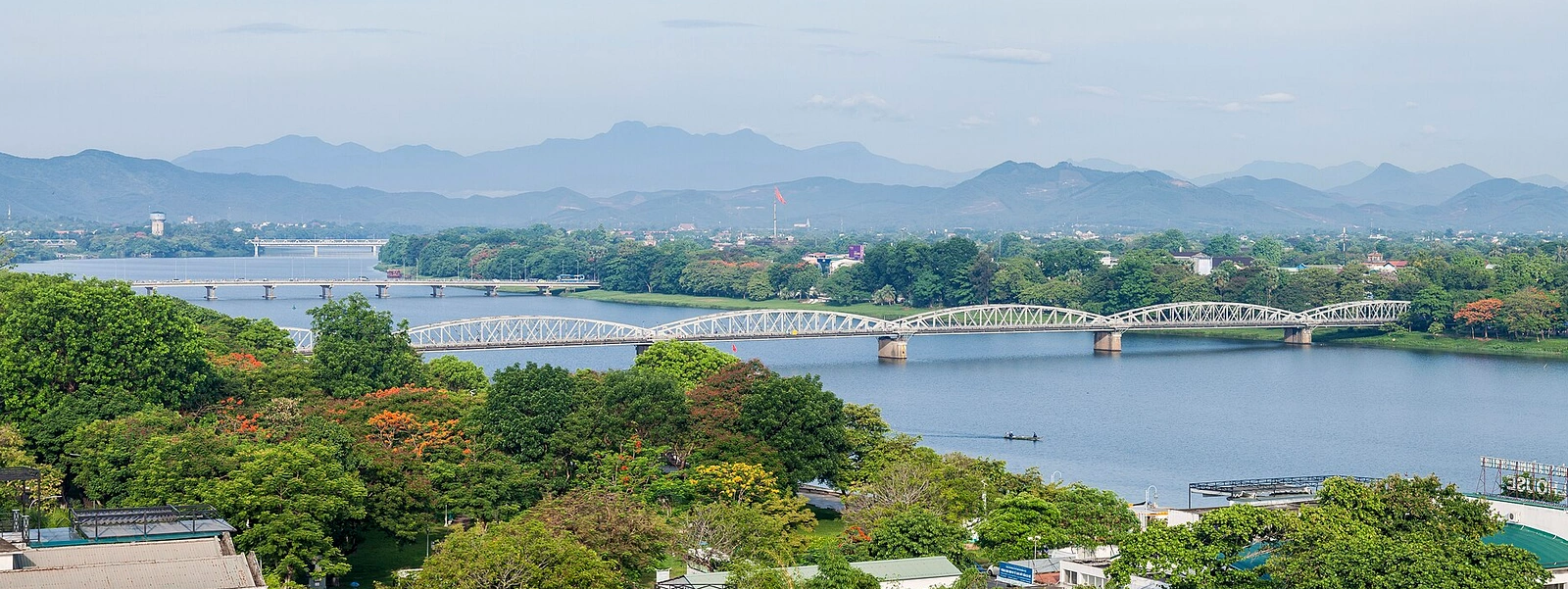
Trang Tien Bridge is not merely a transit crossing, but a masterpiece of steel architecture rising proudly in the heart of the ancient capital, where Western industrial elegance blends seamlessly with the poetic, contemplative spirit of the Perfume River. Seen from afar, the bridge appears like a supple ribbon of steel with six gracefully curved, comb-shaped spans arching over emerald waters like giant bows. Meticulously riveted steel members, having weathered more than a century of change, retain their dignified poise and create a mesmerizing geometric rhythm. Under sunlight, the silvery-gray steel reflects crisp highlights that contrast beautifully with the calm, unhurried river below, composing a striking modern ink-wash painting.
The grandeur of Trang Tien Bridge also stems from the auspicious “mountain-backed, water-facing” setting artfully chosen by its builders. Serving as a sacred connecting axis, the bridge links the solemn imperial realm with vibrant everyday urban life. Standing midway across, visitors feel the convergence of two distinct energies: the quiet stillness of Ngu Binh Mountain on one side and the lively modern pulse of the city on the other. Especially at dusk, as the sun sinks behind distant hills, the entire bridge seems draped in a shimmering coat of gold. Its steel arches cast intricate reflections onto the glassy river surface, conjuring the sensation of standing at a threshold where past and present meet.
To capture “million-view” photographs of this icon, professional photographers typically favor two classic vantage points. The first is from the boat pier beneath the bridge at sunset. As the sky shifts into warm hues of amber and violet, shooting from a low angle near the water lets you frame all six sweeping spans in a powerful leading line pointing toward the Imperial Citadel. At this hour, the bridge’s reflection on the Perfume River reaches perfection, yielding photographs rich in depth and emotion.
The second highly prized vantage point is from the riverside park along the Perfume River at dawn. Before the city fully awakens, soft morning light accentuates the intricate structural details of the steel trusses. Using a wide-angle lens here captures the bridge within a sweeping panorama framed by lush green trees and clear skies. With a bit of luck, you may spot traditional dragon boats gliding beneath the arches, adding a poetic touch of motion to a serene composition. After dark, when color-changing LED lights illuminate the spans, the bridge transforms into a dazzling Milky Way stretched across the Perfume River. Shooting from an elevated vantage point looking lengthwise down the bridge highlights both the grandeur of its steel framework and the lively stream of passersby—a vibrant contemporary accent in the heart of heritage.
Trang Tien Bridge is more than an engineering landmark—it is the soul of Hue. Every line and span tells a story of resilience and timeless grace. Whether you are a seasoned photographer or a traveler drawn to beauty, standing midway across the bridge and listening to the Perfume River breeze whistle through its steel lattice is an unforgettable experience—one that lets you touch history and feel the true heartbeat of the ancient capital.
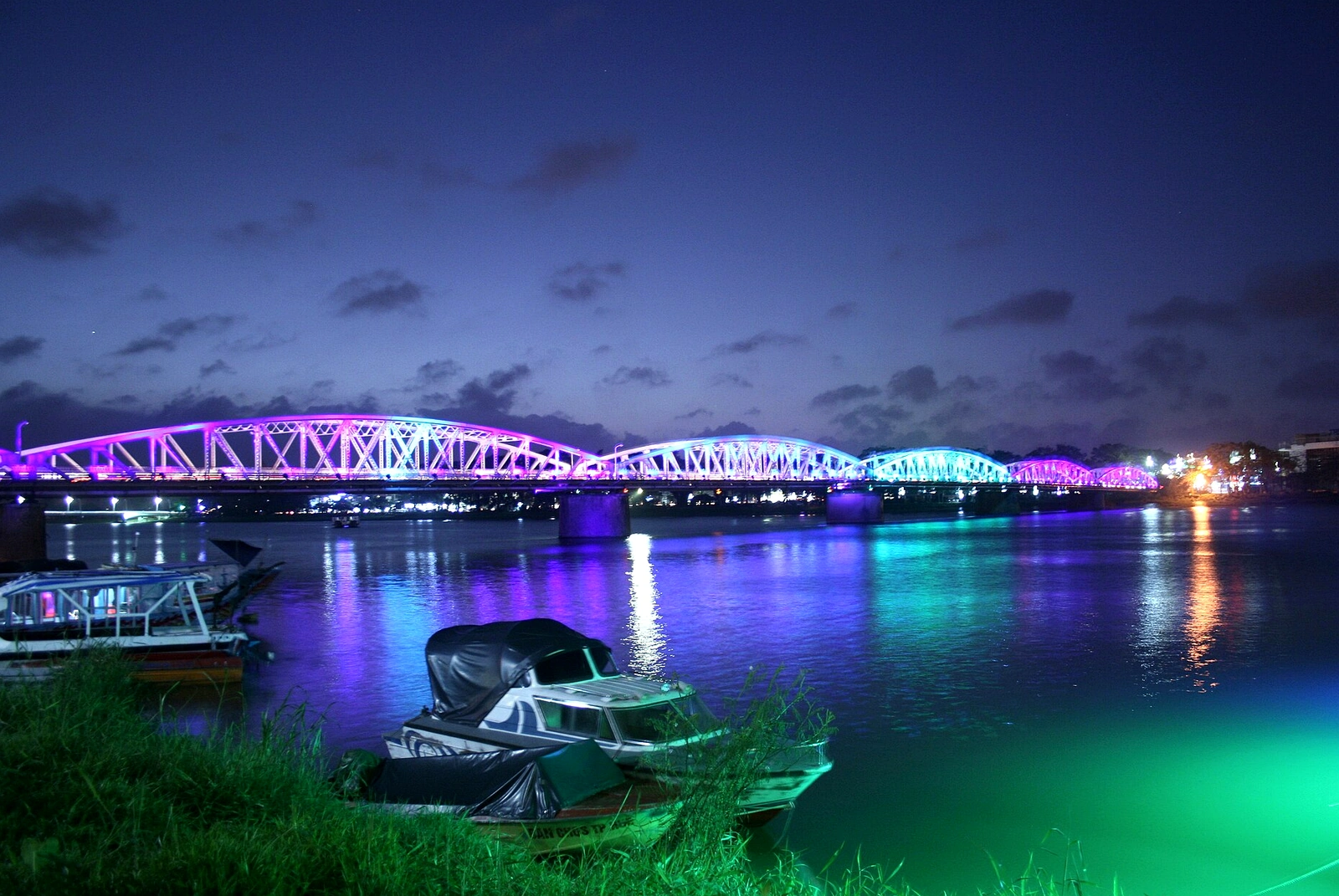
As twilight tints the Perfume River violet, Trang Tien Bridge dons its most dazzling evening attire, inviting visitors into an enchanting sensory journey. Standing beneath its sweeping steel arches, an immediate sense of awe washes over you as you realize you are standing inside a “living museum,” where the breath of history mingles with modern life. Visitors are no longer mere passersby; they feel as though they are touching weather-worn steel and listening to echoes of pivotal historical eras still lingering within every metallic joint.
The signature experience here is drifting aboard a traditional dragon boat along the Perfume River. Looking up from the water, Trang Tien Bridge rises like a regal steel ribbon stretched across the sky. In the hushed stillness of a Hue evening, the soft dip of oars blends with melancholic folk chants to evoke deep, lingering emotion. If fortunate, travelers can enjoy live Ca Hue royal chamber music right on board, letting traditional melodies guide the spirit back to the golden age of the Nguyen Dynasty. This interplay of Western engineering and Eastern sensibility creates a poetic contrast that leaves onlookers spellbound by the bridge’s beauty—at once stately and intimately welcoming.
For travelers seeking quiet contemplation, visiting ancient riverside pagodas near the bridge is a must. Just a short distance from Trang Tien Bridge, serene monastic sanctuaries invite reflection as temple bells chime softly in the breeze, washing away everyday cares. After moments of stillness, exploration naturally continues with Hue’s celebrated local cuisine. Right at the foot of the bridge, street vendors and cozy roadside eateries form a paradise for food lovers. Savory bowls of bun bo Hue (Hue beef noodle soup), delicate steamed rice cakes like banh beo and banh nam, and subtly sweet che hem (alleyway sweet soups) awaken every sense. Savoring local specialties while watching people stroll across the bridge reveals the authentic, warm, and deeply human side of Hue.
For sweeping panoramic views of the ancient capital, heading up to one of the rooftop cafes around the bridge is an ideal choice. From above, Trang Tien Bridge cuts a crisp silhouette dividing the Perfume River into two contrasting worlds: the timeless, contemplative aura of the Imperial Citadel on one bank and the youthful energy of the newer city on the other. Once night falls, shimmering color-changing LED lights turn the bridge into a radiant stage of light—shifting the mood from industrial majesty to dreamy romance.
Every step across Trang Tien Bridge is a meaningful cultural encounter—not just admiring an architectural landmark, but bridging past and present, heritage stillness and vibrant local life. Trang Tien Bridge connects more than two riverbanks; it connects travelers’ hearts with the spirit of Hue’s land and people. Long after leaving, visitors carry with them the lingering memory of standing amid the flow of time, watching the Perfume River drift serenely by with the proud story of a storied heritage city.
Trang Tien Bridge is not only an essential traffic link, but also a cultural icon and the soul of poetic Hue. To make your exploration of this historic bridge smooth and rewarding, keep the following practical details in mind. Regarding visiting hours, Trang Tien Bridge is open to the public 24/7, allowing you to visit whenever you wish. However, the best time to experience its full splendor is at sunset or after dark, when color-changing LED lights illuminate the spans and turn the bridge into a glowing ribbon draped across the romantic Perfume River. As for admission costs, walking, sightseeing, and taking photos on the bridge are completely free, with no entrance ticket required.
In terms of transportation and access, Trang Tien Bridge sits right in the heart of Hue, connecting Tran Hung Dao Street on the northern bank with Le Loi Street on the southern bank. From the Imperial Citadel area, visitors can easily reach the bridge by motorbike, bicycle, or taxi. For those who enjoy an unhurried pace, walking from riverside hotels along the Perfume River is the best way to soak in the fresh breeze. If arriving by personal vehicle, be sure to park at designated public parking lots at either end of the bridge before walking onto the spans to ensure traffic safety and comply with local regulations. Located just minutes from major downtown landmarks, getting here could not be easier.
Although Trang Tien Bridge is an open public space, because it is closely tied to Nguyen Dynasty history and sits within Hue’s heritage core, visitors should opt for neat, respectful attire. Dressing tastefully not only looks great in photos alongside the classic French-era steel architecture, but also shows respect for local cultural sensibilities. On hot, sunny days, remember to bring a hat, sunglasses, and sunscreen, as the bridge deck is uncovered and fully exposed to central Vietnam’s sun.
The ideal time of year to visit is during the dry season, when clear blue skies and calm waters along the Perfume River make strolling and sightseeing especially pleasant. Avoid visiting during heavy rains or storms for your safety, as river currents run high and winds across the bridge can become strong. Additionally, if your trip coincides with major city festivals, you will witness Trang Tien Bridge at its most dazzling, paired with lively street art performances. Please help keep the area clean by not littering and following posted safety guidelines so that this enduring cultural landmark remains preserved for generations to come.
To enjoy a seamless holiday and take in the full beauty of Trang Tien Bridge without worrying about transportation, ticket bookings, or itinerary logistics, travelers can choose from VDS Travel’s premium all-inclusive Hue tours. Every itinerary is thoughtfully timed to capture the scenery at its most radiant, accompanied by knowledgeable local guides and top-tier hotel and dining standards.