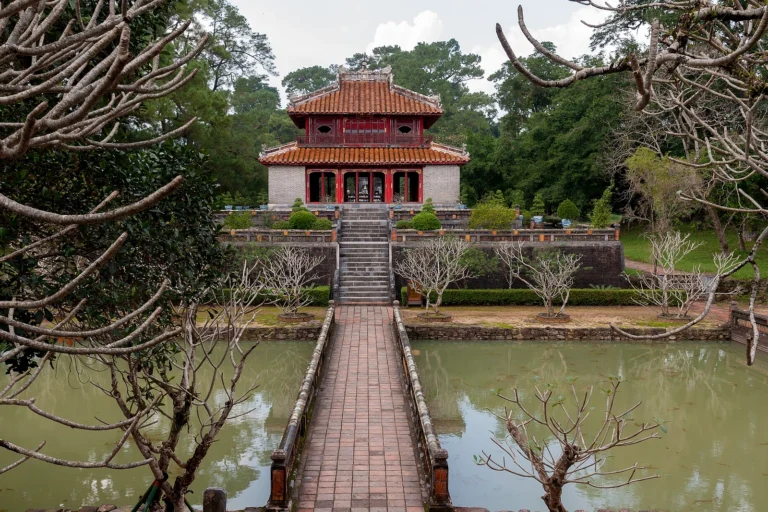
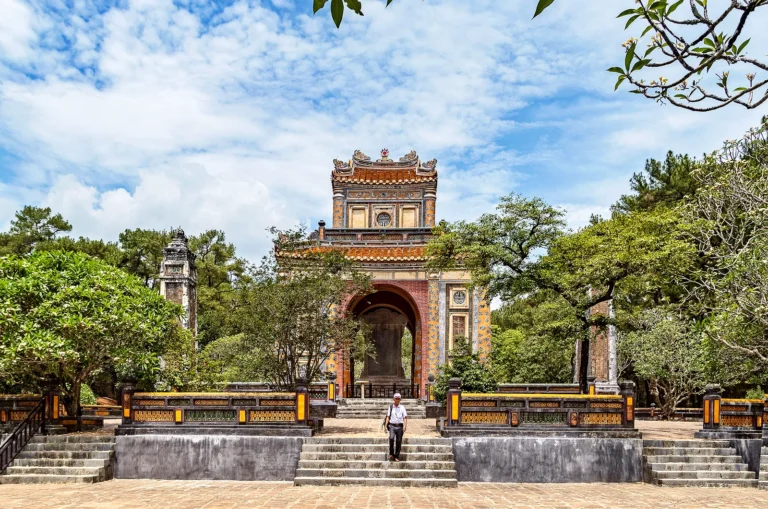
Nestled quietly on the slopes of Chau Chu Mountain in Thuy Bang Commune, Huong Thuy Town, Ung Mausoleum – more widely known to posterity as the Tomb of Khai Dinh – is far more than a mere architectural monument; it is a poignant bridge between two eras. Begun on September 4, 1920, the complex serves as the final resting place of the 12th emperor of the Nguyen Dynasty, who reigned during a turbulent period in Vietnamese history (1916–1925). Over 11 painstaking years, from Emperor Khai Dinh’s reign until its completion by Emperor Bao Dai in 1931, Ung Mausoleum was crafted as a symbol of East–West cultural convergence, where traditional imperial aesthetics entered into direct dialogue with Western Gothic, Romanesque, and Baroque styles, forging a one-of-a-kind silhouette within the Nguyen royal tomb system.
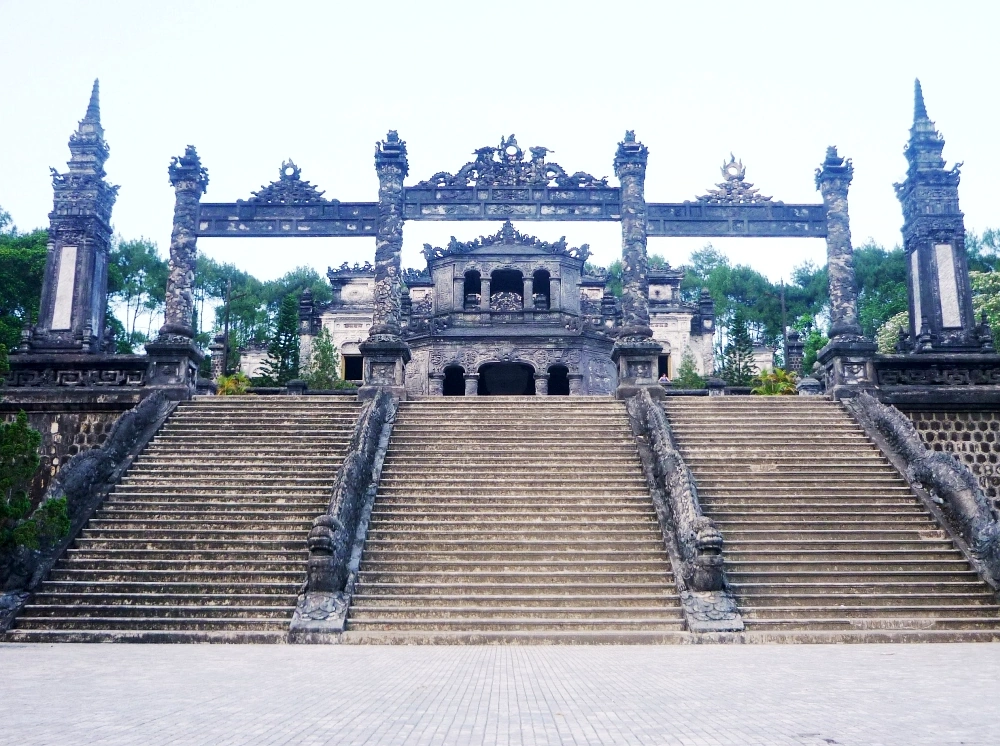
Geographically, Ung Mausoleum stands as a testament to the subtle application of Eastern feng shui philosophy to real-world terrain. Positioned in a classic “mountain-backed, water-facing” (tựa sơn hướng thủy) setting, the tomb is framed by Chau Chu Mountain serving as a protective natural screen, while Chau E Stream winds gently in front as a water-gathering courtyard. Breaking completely away from earlier royal tombs that sprawled across vast expanses and blended passively into nature, Ung Mausoleum adopts a proud vertical axis. Narrowing its horizontal footprint to emphasize height, with 127 stone steps ascending through terraced courtyards, creates a brooding, majestic, and somewhat solitary presence—like an architectural monolith rising out of the mountainside to defy both time and Central Vietnam’s harsh climate.
The origin of the name Ung Lang (應陵) is deeply rooted in Confucian thought and closely tied to the reign title of Khai Dinh—a monarch heavily influenced by the aesthetic sensibilities of French architects while also drawing artistic counsel from erudite scholars such as Le Van Mien. The creation of the mausoleum reflected not only the emperor’s personal vision, but also an era when Vietnam was rapidly embracing modern construction techniques. Combining reinforced concrete and imported iron with master-level ceramic and glass mosaic artistry transformed the site into a living art museum. Under imperial direction, gifted artisans breathed life into every shard of porcelain and every bas-relief, crafting a heritage space that evokes both mystical Hindu nuances and the strict ceremonial gravitas of the Vietnamese royal court.
Today, in the eyes of heritage authorities and scholars alike, Ung Mausoleum is recognized not only as a Special National Historical Site, but also as a unique geological and cultural entity. The synergy between Chau Chu Mountain’s topography and human craftsmanship produced an architectural masterpiece of enduring heritage value. Every stone step, every life-size (1:1 scale) statue of civil and military mandarins, and the stone stele bearing the emperor’s biography personally composed by Emperor Bao Dai serve as precious pieces in the broader tapestry of Vietnam’s last feudal dynasty. Ung Mausoleum thus remains an irreplaceable landmark on the cultural travel map, where every footstep touches layers of proud and poignant historical sediment.
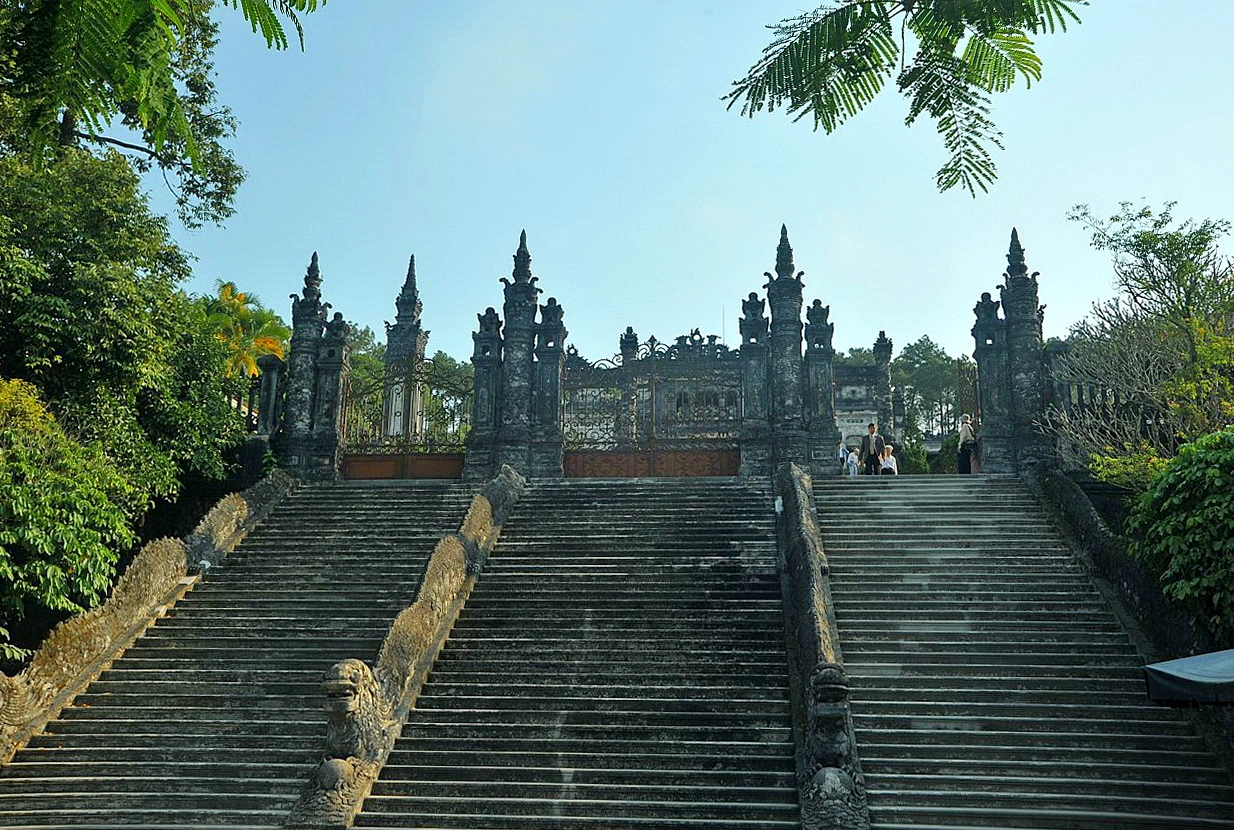
Stepping into Ung Mausoleum feels like wandering into a captivating intersection between feudal imperial solemnity and Western modernity. In stark contrast to the quiet, understated grace of earlier royal tombs, Ung Mausoleum is a bold artistic statement soaring powerfully up the mountainside of Chau Chu. Its architecture daringly marries reinforced concrete—a cutting-edge material of its time—with intricate ceramic and glass mosaic work, resulting in an ensemble that is both monumental in scale and astonishingly detailed. Moss-covered stone staircases lead upward, each step a tactile brush with history, flanked by solemn rows of stone civil and military mandarins, elephants, and horses standing eternal guard over the 12th emperor of the Nguyen Dynasty.
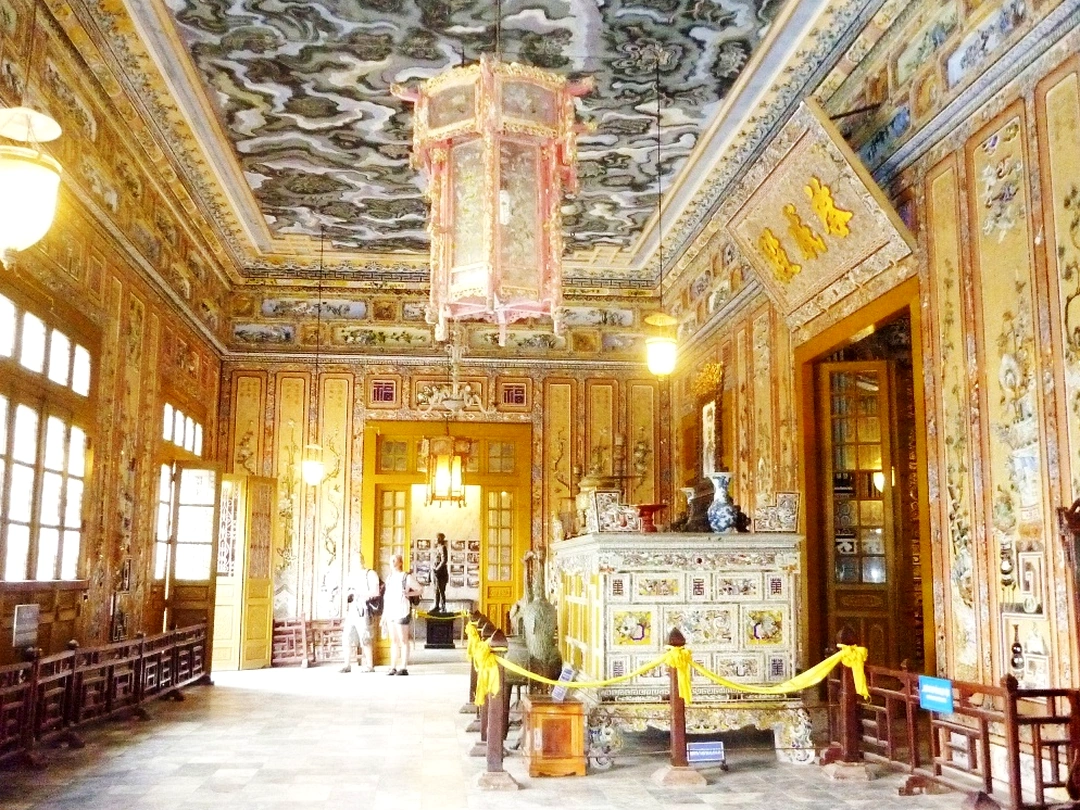
The most striking visual centerpiece is Thien Dinh Palace, where the art of porcelain and glass mosaic reaches its pinnacle of intricacy. Millions of fragments from bowls, plates, teacups, and colored glass were painstakingly pieced together by master artisans to form vibrant, lifelike floral and geometric murals across every pillar and wall. Above all, the ceiling fresco “Nine Dragons Hidden in the Clouds” (Cuu Long An Van) is an artistic tour de force. Under ethereal lighting, the nine dragons appear to writhe amidst billowing clouds, leaving anyone who gazes upward spellbound. The interplay between the cool, weathered gray of concrete and the dazzling, polychromatic brilliance of glazed ceramics creates an aesthetic at once haunting and opulent, making Ung Mausoleum an unrivaled art museum in the heart of the ancient capital.
To capture this extraordinary grandeur on camera, photographers typically favor two unmissable “million-view” angles. The first is from the topmost steps looking back down over the entire Honor Courtyard (San Chau). From here, you can frame the imposing symmetry of the stone statues set against the deep emerald backdrop of the Chau Chu mountains. Early morning is the ideal time, when the first rays of dawn graze the gray stone, carving crisp bands of light and shadow that accentuate the monument’s dramatic silhouette. At this hour, lingering morning mist lends an air of quiet mystery, perfect for nostalgic, contemplative photography.
The second prime spot lies right inside Thien Dinh Palace, where the canopy and imperial throne stand. Natural light streaming through high clerestory windows illuminates the mosaic-encrusted walls, producing a mesmerizing, jewel-like shimmer. Sunset brings a softer glow, casting long shadows across the bas-reliefs and highlighting the intricate textures of the mosaic craftsmanship. This angle captures the extravagance, majesty, and poignant solitude of the penultimate monarch. A quick tip for visitors: bring a wide-angle lens to encompass the sheer vertical scale of the architecture, or a macro lens to isolate individual shards of porcelain artistry. Regardless of perspective, Ung Mausoleum rewards you with frames that are not only visually arresting, but imbued with haunting cultural and historical depth.
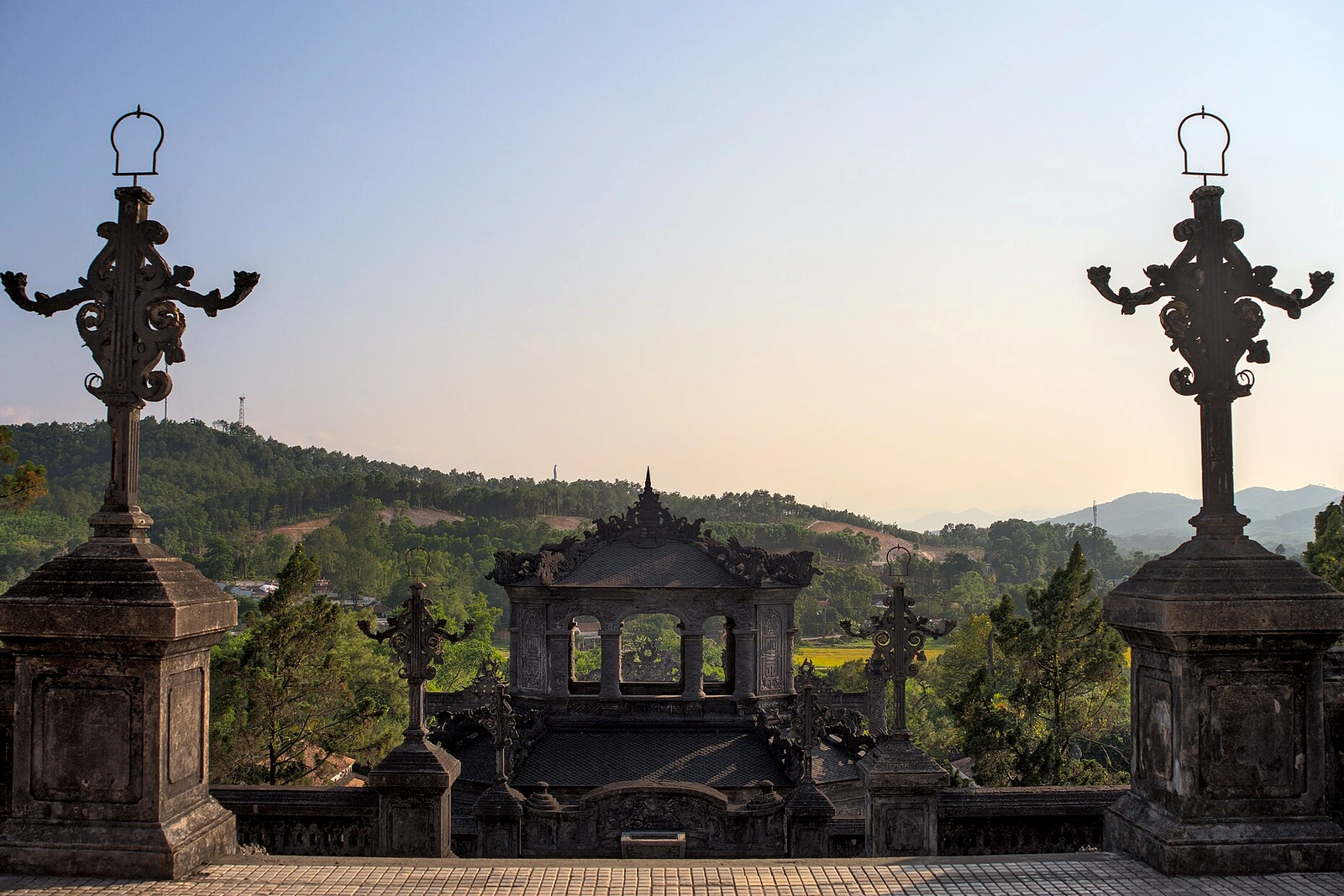
Arriving at Ung Mausoleum is more than visiting a historical landmark—it is embarking on an emotionally resonant ascent. From the very first steps rising up Chau Chu Mountain, the scent of the forest mingles with the drifting mist of the ancient capital, creating an atmosphere of serene reverence. Climbing the 127 stone steps is not simply a physical climb, but a mental transition that allows you to shed urban distractions and enter an authoritative spiritual realm. Reaching the summit brings an immediate wave of awe as the mausoleum reveals itself like an architectural masterpiece piercing the surrounding forest, where old pine trees whisper stories of the past around a reinforced concrete monument animated by the soul of intricate mosaic art.
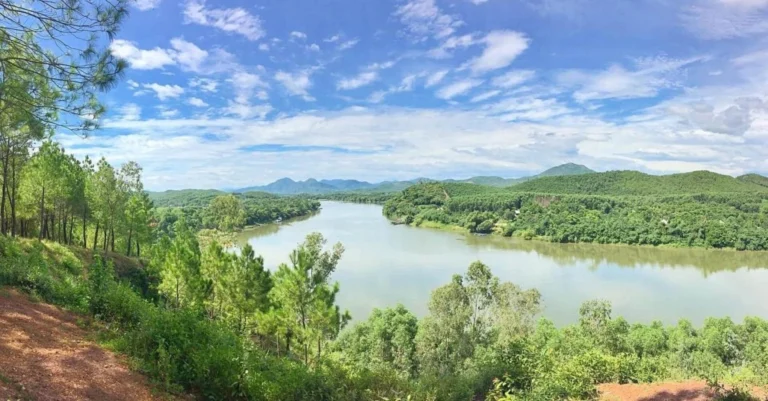
Experiencing Ung Mausoleum firsthand is also an exercise in quiet contemplation. Standing inside Thien Dinh Palace beneath ethereal light filtering through stained-glass windows, visitors sense a remarkable dialogue between the stillness of the afterlife and the vivid exuberance of visual art. High overhead, the “Nine Dragons Hidden in the Clouds” fresco seems almost alive, inspiring quiet wonder at the genius of master artisan Phan Van Tanh. Many travelers pause in silence, breathing in air scented with incense and aged stone, letting their minds settle in a space steeped in the philosophical reflections of a tumultuous era. From the highest terrace of the mausoleum, gazing out across the valley where Chau E Stream winds like a soft silk ribbon beneath the foothills invites deep admiration for the geomantic brilliance of the ancients.
Once your eyes have taken in the site’s rich cultural artistry, the journey becomes even richer as you descend toward the neighboring villages of Thuy Bang Commune. Here, vibrant local culture takes center stage. Gentle boat rides along small streams or leisurely strolls down leafy village lanes lead straight to renowned culinary delights. Nothing beats savoring a steaming bowl of spicy, deeply flavorful bun bo Hue (Hue beef noodle soup), or traditional delicacies like banh beo (steamed rice discs) and banh loc (tapioca dumplings) freshly prepared at humble roadside eateries. The clean sweetness of the broth and the delicate chew of rice flour, paired with the warm, genuine hospitality of local residents, complete the journey to perfection.
The contrast between the regal splendor of Ung Mausoleum and the unpretentious warmth of daily life in Thuy Bang creates a multi-layered travel experience. Visitors leave not only with striking photographs, but with a lasting sense of inner stillness—a humbling awareness of history, admiration for human ingenuity, and simple joy in slowing down to match the poetic rhythm of the ancient capital. Ung Mausoleum is thus not merely a place to look at, but a place to feel, understand, and cherish the enduring cultural heritage of Vietnam.
To make the most of your visit to Ung Mausoleum, it helps to know a few practical details before you go. The Tomb of Khai Dinh is open daily throughout the week, including public holidays and weekends. Opening hours run from early morning until late afternoon, giving travelers ample flexibility to plan their itinerary. Admission follows official ticket rates set by Thua Thien Hue Province for domestic and international visitors. Children, senior citizens, and eligible policy beneficiaries typically qualify for discounted or complimentary entry under regulations of the Hue Monuments Conservation Center. Having cash or a digital payment method ready at the entrance ticket counter ensures a quick and smooth entry.
Getting there from Hue city center is straightforward with several transport options. Motorbikes are the top choice for independent travelers, following Khai Dinh Street or scenic hillside roads. For families or groups, taxis and private hire cars offer a safer and more comfortable ride. The route is uncomplicated and takes roughly 15 to 20 minutes by car from downtown Hue. Along the way, you will pass quintessential Hue landscapes of lush green pine hills and peaceful countryside, setting the ideal mood before stepping into the heritage complex.
The best time to visit Ung Mausoleum is during the dry season months, when clear weather makes climbing the hundreds of stone steps safe and pleasant. Visiting early in the morning or mid-afternoon helps you avoid harsh midday heat while enjoying natural sunlight grazing the porcelain bas-reliefs, bringing out their dazzling, mysterious luster. These quieter hours also lend the grounds a serene atmosphere ideal for reflection and artistic photography.
Because Ung Mausoleum is a sacred historical site featuring steep staircases, thoughtful attire and footwear are essential. Polite, modest clothing is required when entering the worship halls and interior sanctuaries; avoid overly short or revealing outfits out of respect for the royal resting place. Given the numerous stone steps and uneven surfaces, flat shoes, sneakers, or sandals with good traction are indispensable for comfort and safety throughout your visit. Bring drinking water, a hat, and sunscreen to stay comfortable, and always practice responsible heritage etiquette by refraining from touching the delicate ceramic mosaics so their timeless beauty endures for generations to come.
To enjoy a seamless getaway and take in the full splendor of the Tomb of Khai Dinh without worrying about arranging transportation, booking admission tickets, or planning itineraries, travelers can choose VDS Travel’s premium all-inclusive Hue tour packages. Every itinerary is thoughtfully timed so you can capture photos when the scenery is at its most radiant, accompanied by knowledgeable local guides deeply versed in regional culture alongside top-tier hotel and dining standards.