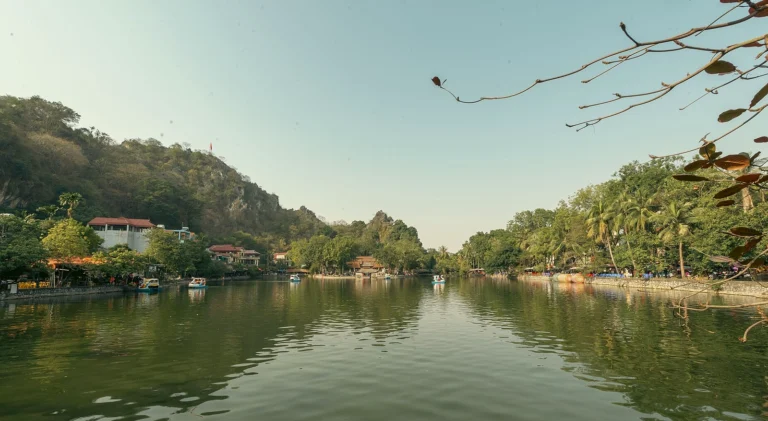
Located along the southwestern frontier of the capital, Thoi Loi Peak rises proudly amidst the legendary convergence of cloud-draped Xu Doai and thousand-year-old Thang Long civilization. From a strategic geographical perspective, the mountain boasts a commanding “backed by mountains, facing water” terrain—resting against the ancient tectonic fault system of the majestic Ba Vi mountain range while overlooking the historic flow of underground aquifers and the sacred Day River defense line. This topography not only served as a formidable natural military outpost throughout eras of national defense, but also fosters a year-round mist-shrouded microclimate imbued with the untamed, mystical beauty of Northern Vietnam’s midland hills.
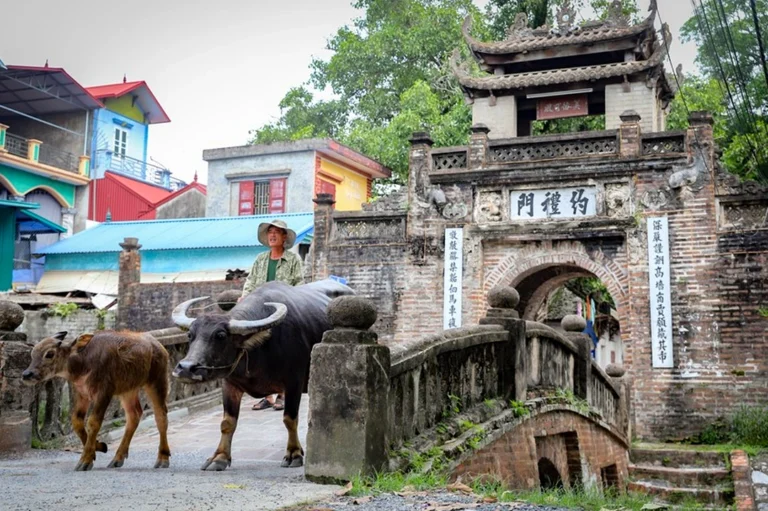
The name “Thoi Loi”—recorded in several ancient texts under variant forms such as Thoi Le or Thoi Son—carries profound linguistic and cultural-anthropological meaning. According to Han-Nom historical sources and folk fieldwork, the character “Thoi” evokes an era of prosperity and peace, while “Loi” (or “Le”) reflects the mountain’s graceful, undulating silhouette, reminiscent of a crimson silk ribbon draped across the horizon. Over the passage of time, this title has transcended the boundaries of an ordinary administrative toponym to become an enduring symbol of spatial memory, preserving cultural sediments from the dawn of nation-building to the era of feudal independence.
Viewed through a chronological historical lens, the original cultural strata at Thoi Loi Peak trace back to ancient Viet settlements belonging to the Dong Son culture, followed by intensive reclamation during the Ly and Tran dynasties. Imperial records note that this site once served as a vital watchtower and a sacred sanctuary where the royal court held rain-praying ceremonies and border-pacification rituals to safeguard the peace of the capital. Entering the Early Le, Revival Le, and particularly the Nguyen dynasties (from the reigns of Gia Long to Tu Duc), the complex of temples, shrines, and observation platforms atop the peak was bestowed with royal decrees and underwent large-scale restorations, affirming its solemn standing within the national belief system.
Intertwined with this landmark is a rich tapestry of folk legends and historical figures credited with defending the frontier and pioneering local settlements. Tales of mountain deities, royal generals who repelled invaders to protect the realm, and transcendent sages who chose the lofty summit for alchemy and celestial contemplation have endowed Thoi Loi Peak with a radiant spiritual aura. From geological and heritage perspectives, contemporary research institutions and the press recognize the area as an invaluable “natural museum,” safeguarding ancient geological strata alongside a diverse ecosystem.
Today, rising beyond its value as a scenic natural wonder, Thoi Loi Peak (Hanoi) stands firm as a resilient cultural milestone against the tide of tourism commercialization. Re-identifying and repositioning the mountain’s authentic value not only restores heroic chapters to the historical record, but also kindles a spirit of gratitude toward ancestral roots, affirming the enduring vitality of Vietnam’s heritage in the contemporary consciousness.

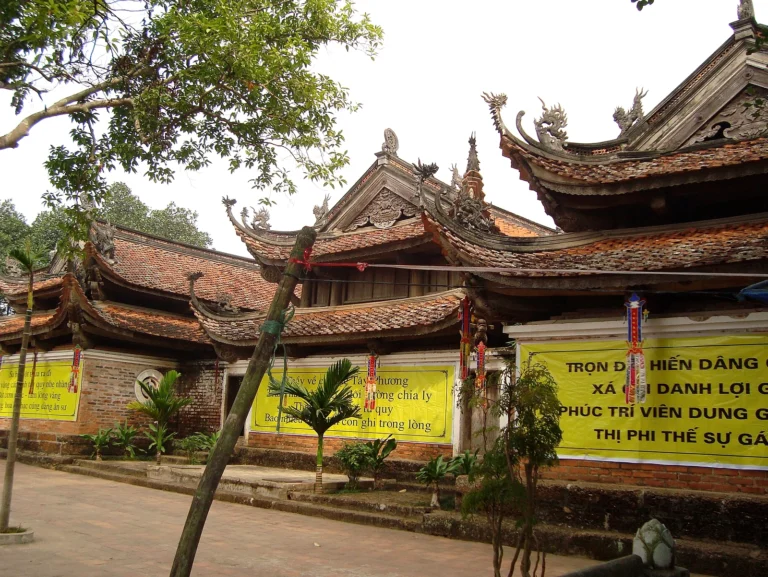
Thoi Loi Peak looms majestically amidst the expansive midland landscape of Xu Doai, embodying a “coiled dragon, crouching tiger” terrain that is at once rugged and deeply poetic. Having weathered centuries of wind and rain, the landscape retains its pristine, imposing grandeur with moss-covered sheer cliffs cradling drifting layers of white clouds each morning. The defining highlight of this heritage complex’s architectural and artistic value lies in the seamless harmony between human ingenuity and natural wonders. Ancient temples, shrines, and watchtowers are laid out in accordance with the mountain’s natural contours, constructed primarily from monolithic greenstone and centuries-old ironwood, reflecting a profound feng shui philosophy of balance between yin and yang, heaven and earth. Intricate carvings adorning the structural components bear the unmistakable imprint of the Le–Nguyen periods, featuring exquisitely stylized motifs of the Four Sacred Creatures—dragon, qilin, turtle, and phoenix—that attest to the supreme craftsmanship of ancient artisans. Beneath the brilliant golden glow of late afternoon sun or the ethereal mist at dawn, moss-draped tiled roofs and sculpted stone pillars shimmer with an enchanting aura, evoking a heroic era of sacred Thang Long.
Among photographers and the travel community, Thoi Loi Peak has long been hailed as a photography mecca boasting captivating “million-dollar view” vantage points. The first unmissable check-in spot is the Vong Canh (Scenic Overlook) crag jutting out toward the vast valley below. This is the premier location to capture sweeping natural panoramas where clouds and sky merge with rolling mountains and waters. The most ideal window to shoot unforgettable photographs here is at sunrise (between 5:00 AM and 6:00 AM), when the first rays of daylight pierce through the morning mist, weaving a shimmering golden silk ribbon across the mountainside. A second angle highly prized by professionals is the ancient stone stairway leading up to the main sanctuary of the temple complex. With its symmetrical composition and rows of moss-covered stone pillars pointing straight toward the open sky, this vantage point lends nostalgic depth, solemnity, and cinematic flair to every frame.
Finally, no visit is complete without experiencing the premier sunset viewpoint on the western side of Thoi Loi Peak, where the horizon opens onto an unobstructed, boundless panorama. As the sun begins to dip below the horizon, painting an entire corner of the Xu Doai sky in deep crimson, warm amber light reflects off the sedimentary cliffs to create a breathtaking, tranquil masterpiece of nature. This twilight transition between day and night not only inspires profound inner peace and serenity, but also awakens a deep sense of pride in the authentic cultural and historical heritage that continues to endure across this thousand-year-old land of civilization.

Setting foot on Thoi Loi Peak during a field expedition to explore the cultural space of Xu Doai, travelers are immediately drawn into a hands-on journey that is both physically demanding and deeply rewarding. The winding trail ascending the summit weaves beneath the shade of ancient forest canopies, accompanied by echoing birdsong and the earthy, invigorating scent of the midland hills. While the hike requires a moderate level of stamina, every upward step unlocks a fresh wave of emotion as visitors breathe in crisp, cool mountain air that washes away the hustle and worries of city life. The higher one climbs, the more expansive the scenery becomes, until one’s heartbeat seems to sync with the majestic rhythm of the age-old forest.
Beyond the physical thrill of conquering the summit, the journey delves into vibrant layers of local spirituality and living culture. Reaching the peak and standing before the sacred grounds of the moss-covered ancient temple, visitors cannot help but feel deeply moved as they respectfully light incense in tribute to the forebears who once guarded the frontier. The distant toll of temple bells drifting on the afternoon breeze, mingling with the contemplative curl of incense smoke, creates an atmosphere of extraordinary stillness and reverence. Gazing out into the distance at the Day River defense line meandering like a soft silk ribbon around prosperous villages and lush green fields below, an overwhelming sense of awe at nature’s magnificence fills every traveler’s chest.
Rounding out this journey of natural and spiritual discovery, visitors can delight their palates with celebrated culinary specialties of suburban Hanoi and Xu Doai culture. Rustic dishes bursting with countryside flavor—such as wild climbing perch simmered with sour starfruit, fragrant hill chicken grilled with mac mat leaves, or chewy upland sticky rice paired with sesame salt—are all prepared from fresh ingredients sourced directly from the surrounding hills and rivers. Gathering together to savor local cuisine in the breezy mountain air of Thoi Loi Peak while sipping a cup of rich green tea, travelers experience the genuine warmth and hospitality of the local people, turning the trip into an indelible, cherished memory.

To ensure a seamless journey of exploration and pilgrimage to the heritage site of Thoi Loi Peak within the Thang Long – Xu Doai cultural space, equipping yourself with practical travel tips is essential. The relic and scenic area welcomes locals, tourists, and researchers for sightseeing and worship seven days a week, opening early at 6:00 AM and closing at dusk at 6:00 PM. These regulated hours allow the management board to guarantee visitor safety across the mountainous terrain while preserving the solemnity and tranquility vital to this sacred space.
Regarding admission fees, access to the entire heritage site, surrounding landscapes, and spiritual temples at Thoi Loi Peak is currently completely free of charge for all visitors and research delegations. This open-access policy provides maximum convenience for citizens from all regions as well as scholars to easily visit and study the site’s authentic historical values without any financial barriers.
Departing from downtown Hanoi, the most optimal modes of transportation to reach Thoi Loi Peak are by motorbike or private car via national highways connecting to provincial roads heading toward the suburban midlands bordering the Day River defense line and the mountainous region of Xu Doai. While the main route is relatively smooth, the steep final stretch ascending toward the summit features winding mountain passes that require confident driving skills, close attention to road signs, and a thorough check of your vehicle’s brakes prior to departure.
Given the unique combination of rugged rocky mountain terrain and sacred temple grounds, visitors should pay special attention to their attire. Neat, modest, and respectful clothing suited to a spiritual and cultural setting is recommended, alongside athletic sneakers or hiking shoes with strong traction to ensure safe footing and prevent slipping on the ancient stone steps.
The most ideal time of year to visit Thoi Loi Peak is during the dry season, particularly from October through March of the following year. During these months, weather conditions on the outskirts of Hanoi are crisp and dry with clear skies and gentle sunshine, offering optimal conditions for field exploration, commemorative photography, and admiring sweeping natural vistas from above.
To enjoy a worry-free getaway and experience the full splendor of Thoi Loi Peak without the hassle of arranging transportation, booking tickets, or planning itineraries, travelers can choose from VDS Travel’s premier all-inclusive Hanoi tour packages. Every itinerary is thoughtfully timed for check-ins when the scenery is at its most radiant, accompanied by knowledgeable local guides and top-tier hotel and dining standards.