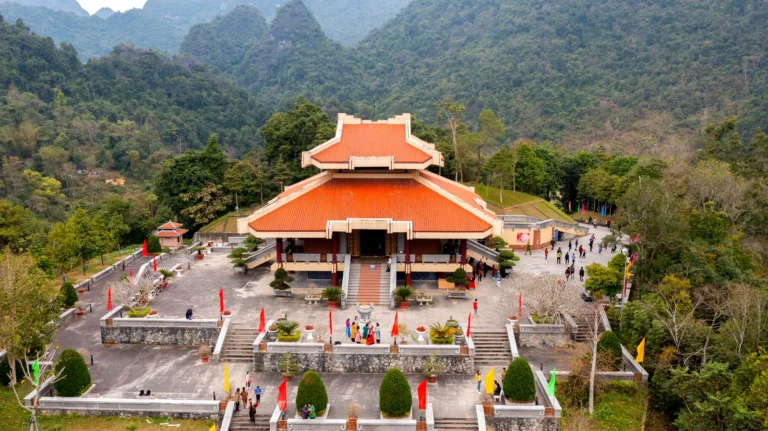
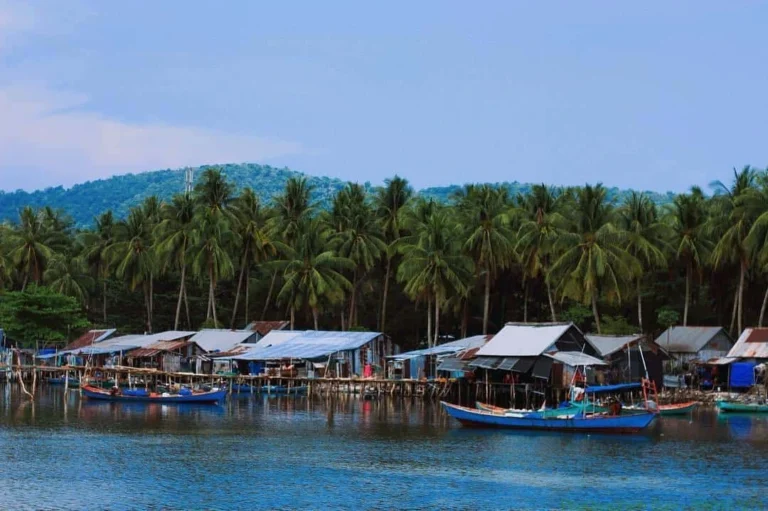
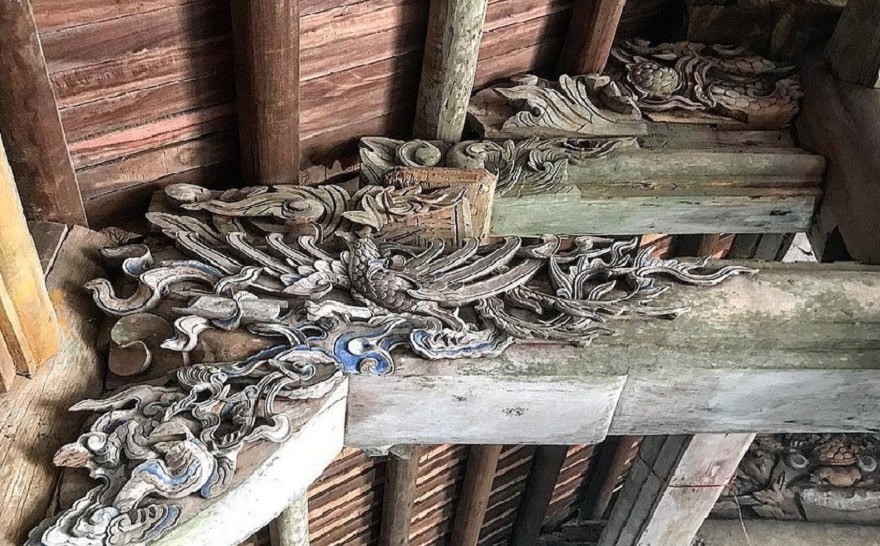
Quan Lan Communal House is an ancient communal hall on Quan Lan Island and an important monument within the historic Van Don trading port complex, serving as a spiritual anchor for islanders. Built during the Later Le dynasty, its architectural lines and carved motifs come together in harmony. Serving both as a worship hall honoring village guardian deities and as a gathering place for community affairs, the hall stands out especially for its rich, intricate dragon carvings reflecting styles across the Ly, Tran, and Nguyen dynasties—raising the question of why such distinctive craftsmanship appears here.
Read more: Van Don Travel Guide
About Quan Lan Communal House
Quan Lan Communal House was first built during the Later Le dynasty in the 17th century at Cai Lang Wharf, once the heart of the ancient Van Don trading port—a key maritime trade route linking Dai Viet with distant lands. After seven centuries of flourishing commerce, Van Don’s trading role gradually shifted as inland trade routes opened, prompting Cai Lang residents to relocate and change livelihoods while moving and rebuilding the communal hall.
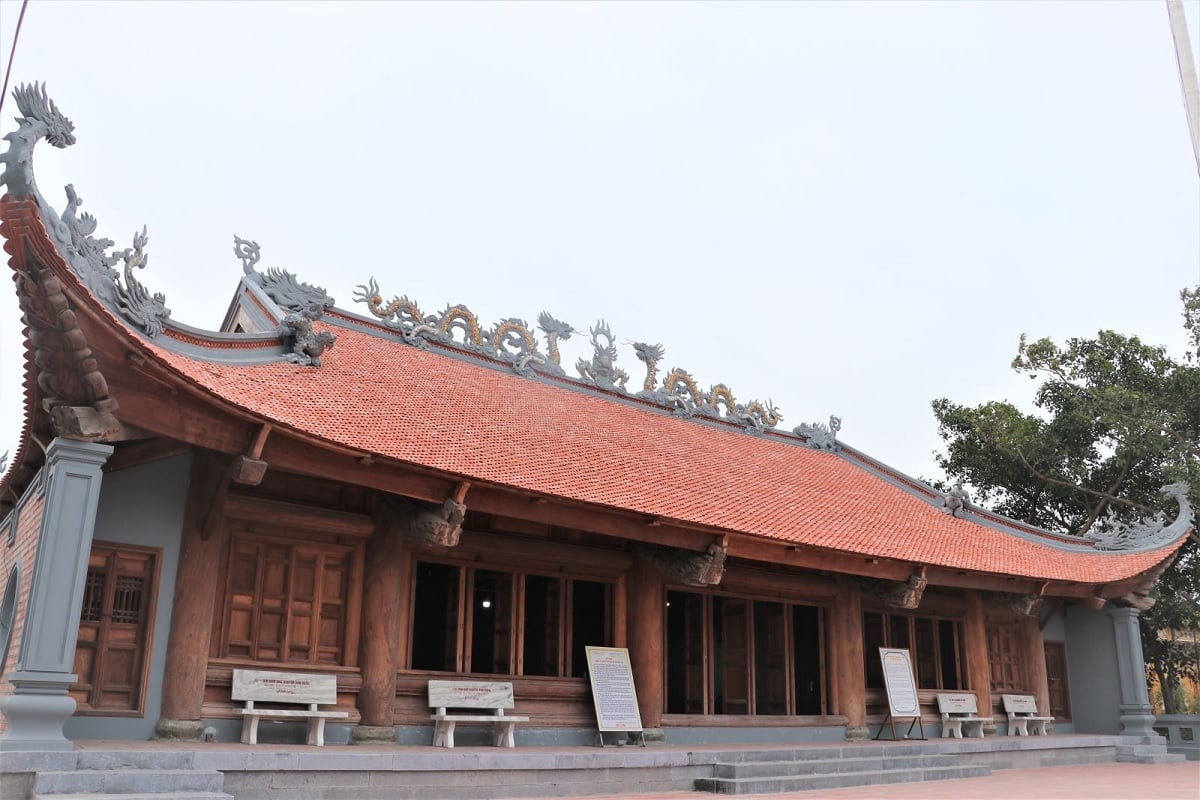
Quan Lan Communal House – Distinctive architecture and spiritual anchor for coastal fishermen
Later, during the Nguyen dynasty in the 12th year of Emperor Thanh Thai’s reign (around 1890–1900), the hall was moved to its current site in Doai Hamlet under the name Quan Lan Communal House 2. Set in an auspicious landscape framed by three hills in front (Sao Trong, Sao Ngoai, Sao On) and five hills behind (Lieu Mountain), it enjoys a natural mountain backdrop rarely matched elsewhere.
Another distinctive feature of Quan Lan Communal House is that while many communal houses honor local tutelary spirits, Quan Lan honors a monarch alongside guardian figures—most notably Emperor Ly Anh Tong, who established the Van Don trading port in 1149 and is revered by villagers as both sovereign and tutelary benefactor. The hall also honors General Tran Khanh Du, who defended Van Don and won major victories against Mongol-Yuan supply fleets, as well as Duong Khong Lo and the Four Holy Ladies (Tu Vi Thanh Nuong) celebrated in coastal lore for protecting seafarers.
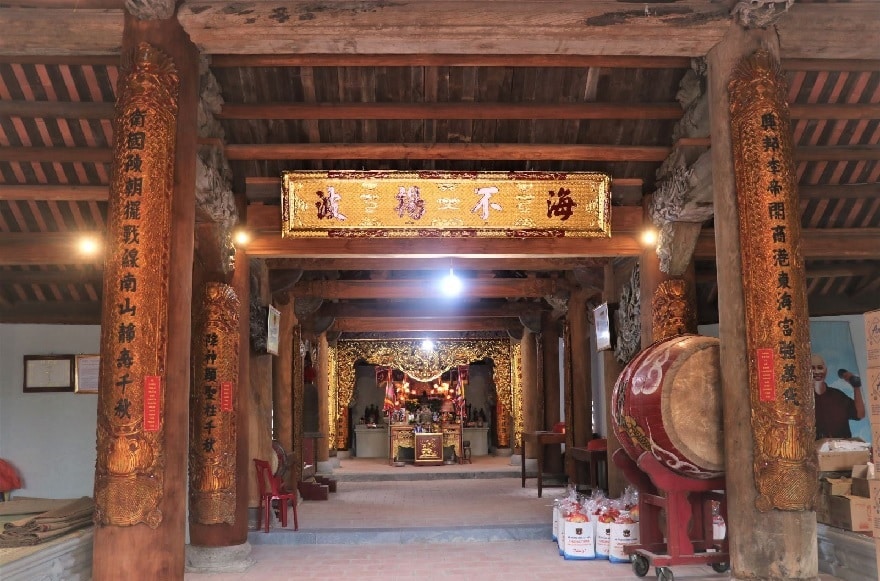
Quan Lan Communal House enshrining Emperor Ly Anh Tong and tutelary deities
The structure connects a ceremonial hall to the rear sanctuary via a three-bay corridor, topped by a ridge motif of two dragons facing the moon (“luong long chau nguyet”), upturned roof eaves, and the four-character relief inscription “Quoc thinh dan hung” (“Prosperous nation, thriving people”) expressing local hopes. Inside, detailed carvings form a rich artistic ensemble—notably varied dragon heads carved onto projecting bracket arms (dau bay)—alongside timber flooring seen in only a few historic halls such as Dinh Bang in Bac Ninh and Tra Co in Mong Cai, while local elders recall historical figures representing sericulture and coastal fishing life.
Dark brown scale-tiled roof with a ridge ornament of two dragons facing the moon
Supporting the frame are 32 main columns and 26 secondary columns—the largest reaching 3.2 meters in circumference—crafted from man lai timber, a dense offshore hardwood known for resisting hollowing and decay over centuries. Paired with its scale and craftsmanship, Quan Lan Communal House stands as a rare example of traditional Vietnamese timber architecture and a cherished cultural landmark.
Beyond architectural and historical scale, the communal house has anchored Van Don’s spiritual life for centuries, preserving 18 royal decrees (sac phong) issued from the first year of Emperor Thieu Tri’s reign (1841) through Bao Dai recording honors bestowed on historic figures.
Nearby Architectural Sites Around Quan Lan Communal House
With its historic charm, Quan Lan Communal House is a centerpiece when visiting Quan Lan. Just to the left stands Quan Lan Pagoda, an ancient temple built in the 17th century with a simple yet dignified layout of two main bays and two side bays, colorful Buddhist paintings and statues, and a quiet space for monastic practice and prayer.
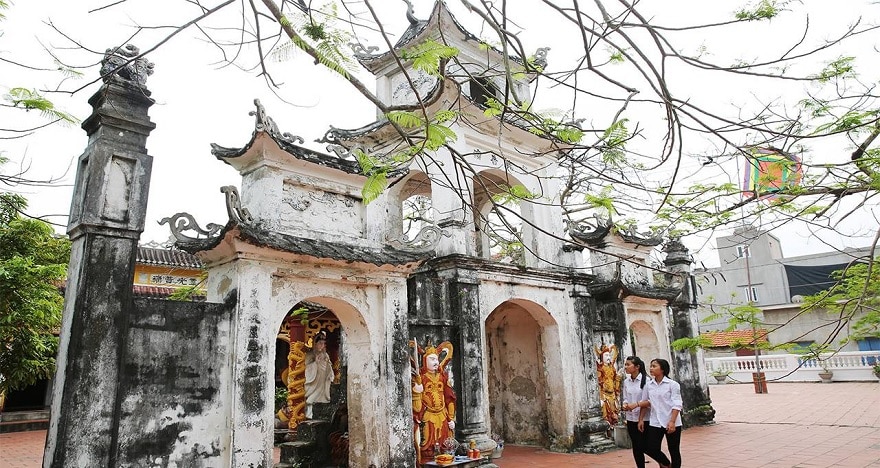
Quan Lan Pagoda, an ancient temple dating to the 17th century
Beside the pagoda stands Quan Lan Shrine honoring the three Pham brothers—Pham Ngu Lao, Pham Ngu Chieu, and Pham Ngu Dong—celebrated Tran-era commanders who helped defend northern and eastern waters against Mongol-Yuan invasions.
Roughly 1 km from the communal house stands Quan Lan Temple (Nghe Quan Lan) dedicated to Tran Khanh Du (1228–1300), one of the Tran dynasty’s most celebrated naval and military commanders against Mongol-Yuan forces. On July 14, 1990, the Quan Lan communal house, pagoda, shrines, and temple complex was recognized as a National Historical and Cultural Monument.
Festivals at Quan Lan Communal House
The “Khoa Lang” (“Village Lock-In”) and “Cai Tich” rites are two signature cultural and spiritual traditions of Quan Lan’s annual communal house festival held from the 10th to the 20th day of the sixth lunar month—commemorating the 1288 Van Don naval victory on the Mang River led by Tran Khanh Du against Mongol-Yuan supply vessels ahead of the Bach Dang triumph.
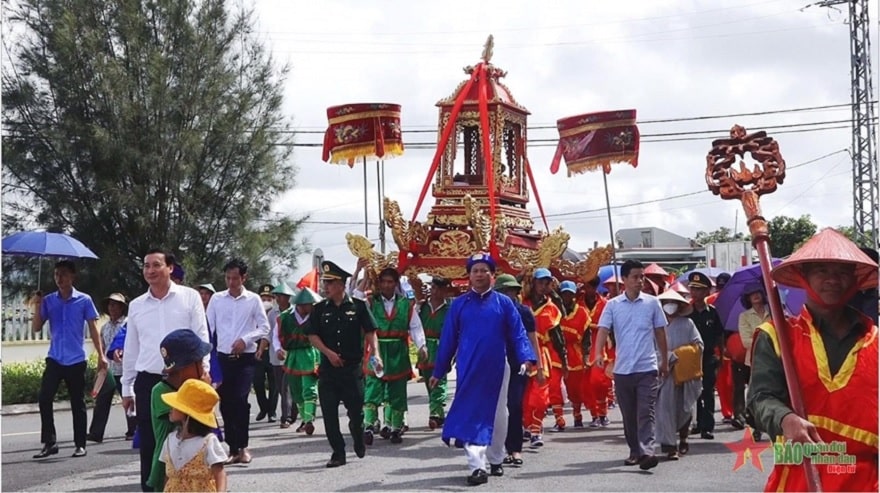
Khoa Lang and Cai Tich festival rituals (Photo: People’s Army Newspaper)
“Khoa Lang” marks a period when villagers refrain from leaving the village during core festival days—opened on the morning of the 10th day of the sixth lunar month with a red festival flag at the gate—so residents can focus on ceremonies, community fellowship, and cultural and sporting activities in a solemn, unified atmosphere.
“Cai Tich” is the ceremonial dressing of revered statues in fresh garments—held around midday on the 10th day of the sixth lunar month after tutelary rites—honoring figures such as Emperor Ly Anh Tong, General Tran Khanh Du, and General Pham Cong Chinh with brocade robes in green or blue symbolizing reverence, purity, and community bond. Alongside these rites, traditional performances such as ca tru, cheo, and tuong on holidays and weekends keep local cultural traditions alive.
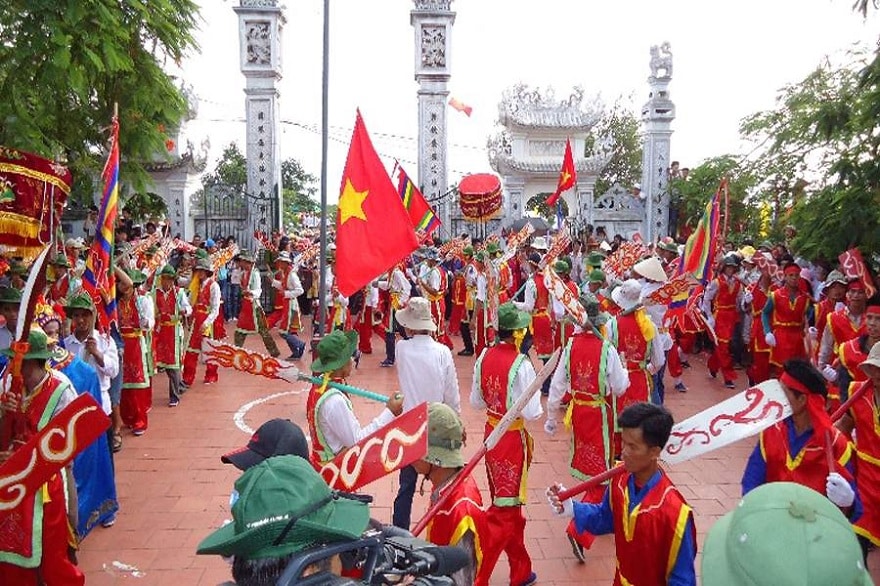 Traditional boat-rowing festival on Quan Lan[/caption>
Across five centuries and past relocations, Quan Lan Communal House has preserved its distinctive architecture amid coastal winds and sea spray—reflecting generations of craftsmanship and heritage stewardship on Quan Lan Island, Quang Ninh Province. Beyond physical heritage, it nurtures values of maritime defense, diligence, and community pride that endure as part of Vietnam’s coastal cultural history.