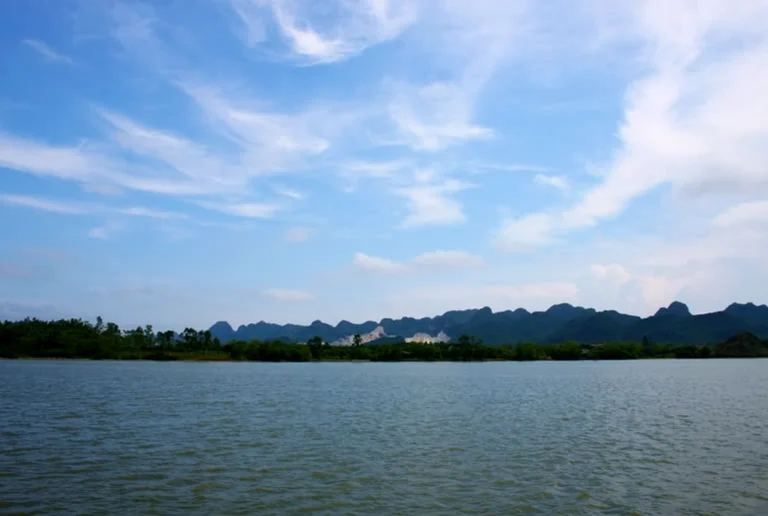
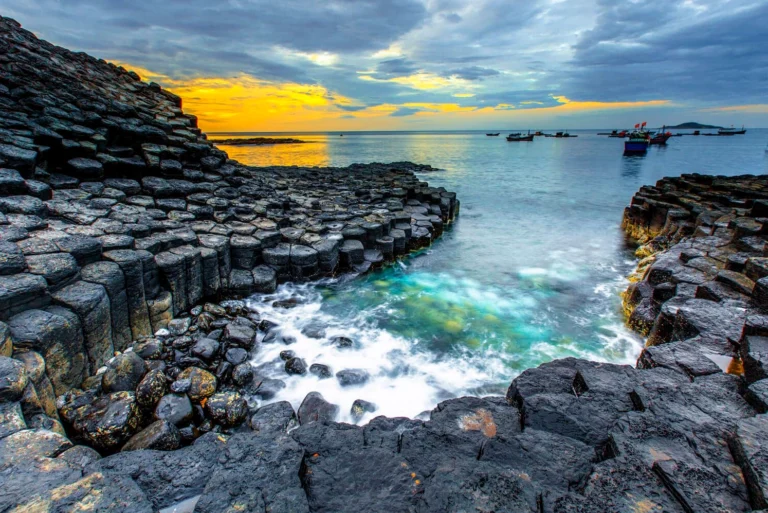
Quan Lan Island is one of the most remote islands in the Ha Long Bay area. It is truly a wonderful place for those who want to immerse themselves in nature and escape the hustle and bustle of city life. As it is a less-visited destination, travelers have the opportunity to enjoy their vacation in peace. In this article, we will provide you with a comprehensive guide to traveling to Quan Lan Island.
Introduction to Quan Lan Island
Quan Lan is a small island located in the poetic Bai Tu Long Bay. It is one of the relatively new names that has been frequently mentioned by Northern travelers when choosing summer destinations over the past few years. The island consists of two communes under Van Don district, Quang Ninh province: Quan Lan commune and Minh Chau commune. Covering an area of about 11km2, the island exudes the majestic beauty of towering mountain ranges stretching from the Van Don range to Mount Got, acting as a solid “shield” that protects the peaceful lives of its more than 70,000 residents. Visitors to the island will surely be enchanted by the white sandy beaches, clear blue water, and charming nature. Additionally, you will have the opportunity to enjoy delicious seafood, visit historical and cultural relics, and participate in many exciting activities. Although it is home to local residents, the scenery on the island has largely retained its pristine beauty with three long white sandy beaches and beautiful forests. Quan Lan Island is also a great place to sample some local seafood, as there is an abundance of squid, flounder, mackerel, and shrimp in these waters.
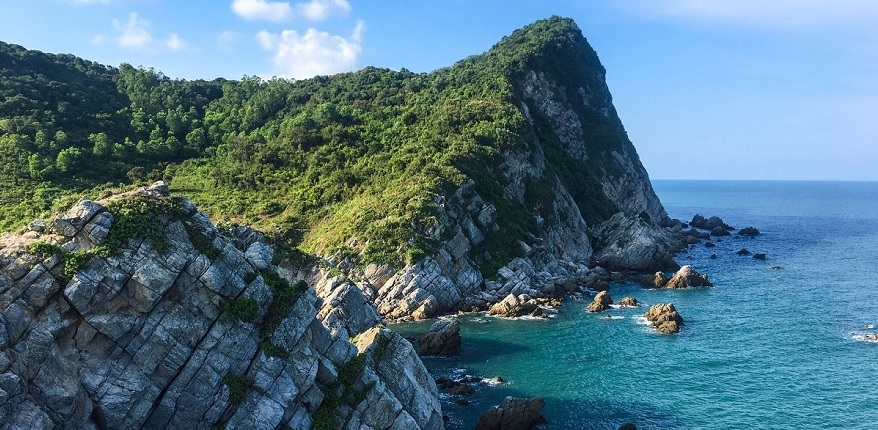
Quan Lan Island
Quan Lan Island not only boasts beautiful natural landscapes but also possesses a heroic history and rich traditions. Based on historical documents, many scientists hypothesize that Quan Lan was the center of the ancient Van Don trading port. The remaining traces today are enough for us to visualize the bustling “ships and boats” scene of the prosperous Van Don trading port in the past.
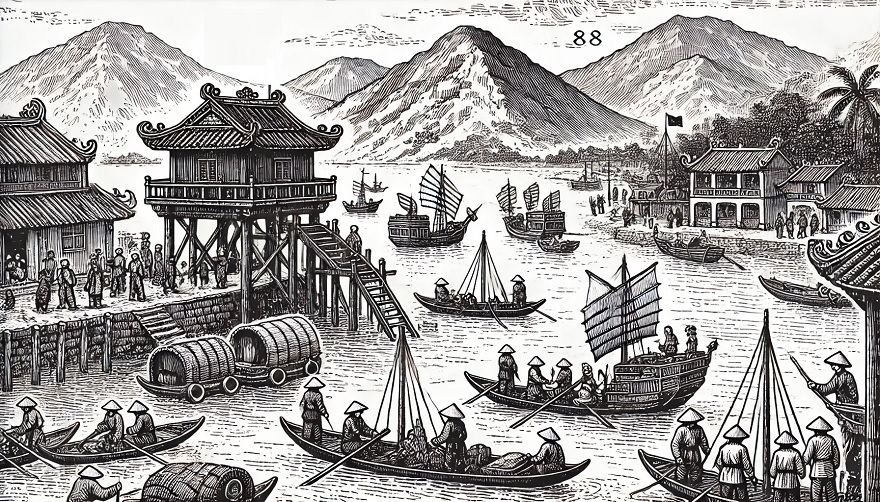
Van Don was once known as a bustling trading port
This place had many secondary wharves, but the center of trade and administration was located in the former Quan Lan village. At that time, this place was very busy with trade, commerce, and the exchange of goods. Because of this, Quan Lan is likened to a “treasure trove” of sediment containing special archaeological value, as even today, traces still exist underground and on fields, with countless pieces of ancient pottery. In the past, the elders building houses did not know the value of these precious artifacts, so they often used them as foundations. But even now, millions of pottery shards remain.
Ticket prices and how to get to Quan Lan
To travel to Quan Lan Island, you first need to go to Cai Rong Port (Van Don) to catch a boat to the island. Here you will have two options: high-speed boat and wooden boat, so depending on your budget and preferences, you can decide which mode of transport best suits your needs.
- High-speed boat: You can take a high-speed boat from Cai Rong Port or Hon Gai Port to Quan Lan Island. The travel time is about 45 minutes, and the ticket price is about 150,000 – 200,000 VND/trip. High-speed boats have two trips per day: in the morning at 8:15 AM and in the afternoon at 3:15 PM. You should buy tickets in advance to ensure a seat.
- Wooden boat: You can take a wooden boat from Cai Rong Port to Quan Lan Island. The travel time is about 2 hours, and the ticket price is about 100,000 VND/trip. Wooden boats have many trips per day, usually from 7:00 AM to 4:00 PM. You can buy tickets at the port or contact the operator to book.
Notable attractions in Quan Lan
Quan Lan not only attracts visitors with its long history and culture but also with beautiful destinations that blend pristine nature with traditional marks. From clear blue beaches and fine white sand to sites of spiritual value, each location here offers a unique experience, making Quan Lan an ideal destination for those who love to explore and learn about Vietnamese culture. Below are the notable destinations that visitors should stop by when coming to Quan Lan.
1. Quan Lan Communal House
Quan Lan Communal House is an ancient and unique architectural work, built in the 18th century with a traditional architectural style: red tiled roof, ironwood columns, exquisite decorative patterns, and many paintings and wooden statues imbued with folk culture. Quan Lan Communal House is a place of worship for the gods who protect the islanders and is the venue for local traditional festivals.
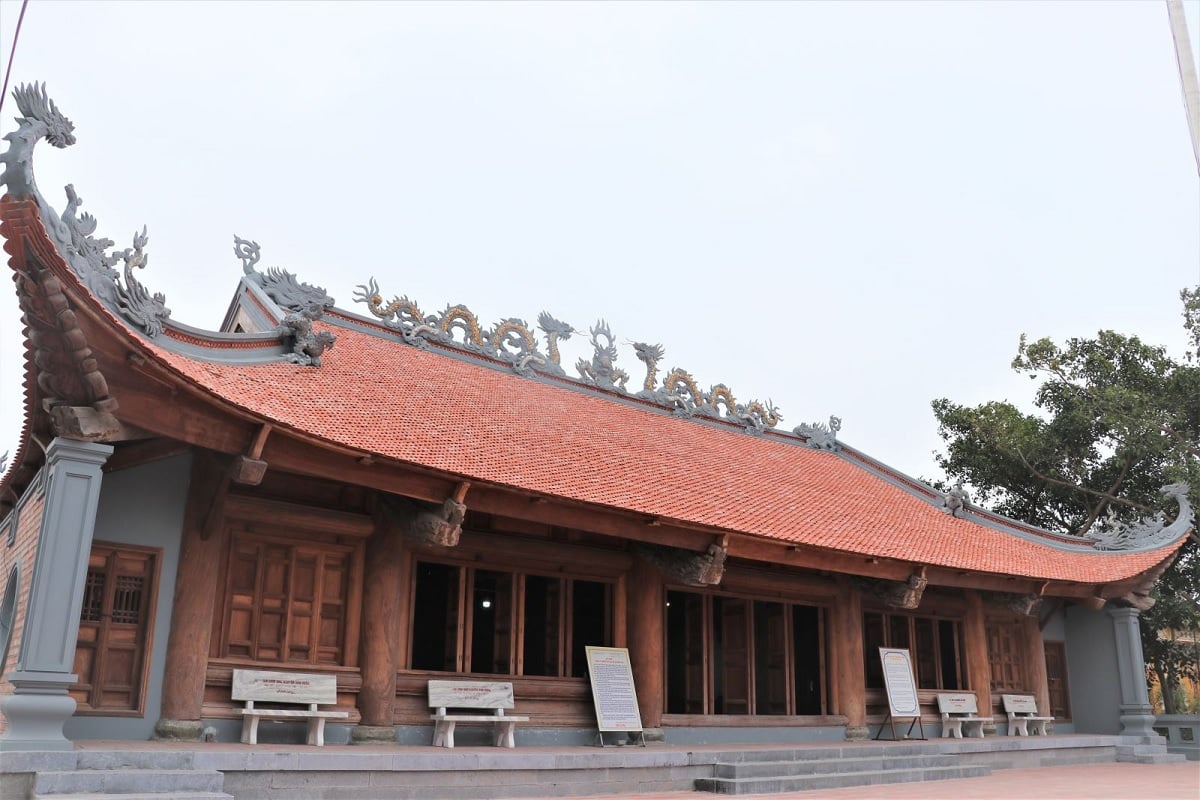
Quan Lan Communal House – Unique architecture and a spiritual anchor for fishermen
In the military feat of Deputy General Tran Khanh Du, there was a great contribution from three lieutenants of the Pham family. Quan Lan Communal House still preserves the spirit tablets of the three Pham generals. The Pham family here originated from Khe Tranh village, Quang Yen ward, Quang Yen town. The three Pham brothers were once deputy generals under Tran Khanh Du, and their worship in Quan Lan matches the names recorded on the spirit tablets at the Pham family ancestral house in Khe Tranh village. In that glorious naval victory, all three Pham deputy generals sacrificed their lives. Their bodies drifted to the shore, were recovered by the locals, buried, and a temple was built in their honor.
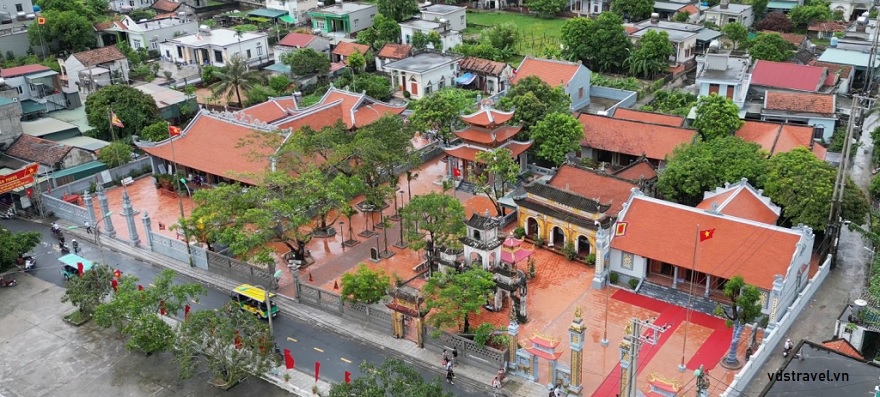
Duc Ong Temple (right), Quan Lan Communal House (left)
General Tran Khanh Du is specifically worshipped in many locations across Quan Lan. Quan Lan is also home to the Duc Ong Temple, which belongs to a national-level historical and cultural relic complex including the communal house, pagoda, temple, and the traditional craft of Quan Lan commune. The Quan Lan Temple relic was built very early on, but over time and through various historical upheavals, it fell into serious disrepair. In response to the wishes of the people of Quan Lan commune to restore and renovate the site, the project aims to honor the merits of our ancestors, provide a dignified space for cultural and religious activities, educate younger generations on patriotic traditions, and serve as a spiritual tourism destination for visitors from all over.
2. The Mother Goddess Temple (Den Mau)
The temple was built long ago by the residents of Yen Hai village with the hope that the Mother Goddess would protect their lives, grant everyone health and peace, ensure prosperous livelihoods, and bring good luck and smooth sailing for every fishing trip. Originally, the Mother Goddess Temple was just a small shrine dedicated to the Mother Goddess of Heaven and Mother Goddess Lieu Hanh. Later, in addition to these, the villagers of Yen Hai also began worshipping the Mother Goddess of the Forest and the Mother Goddess of Water.
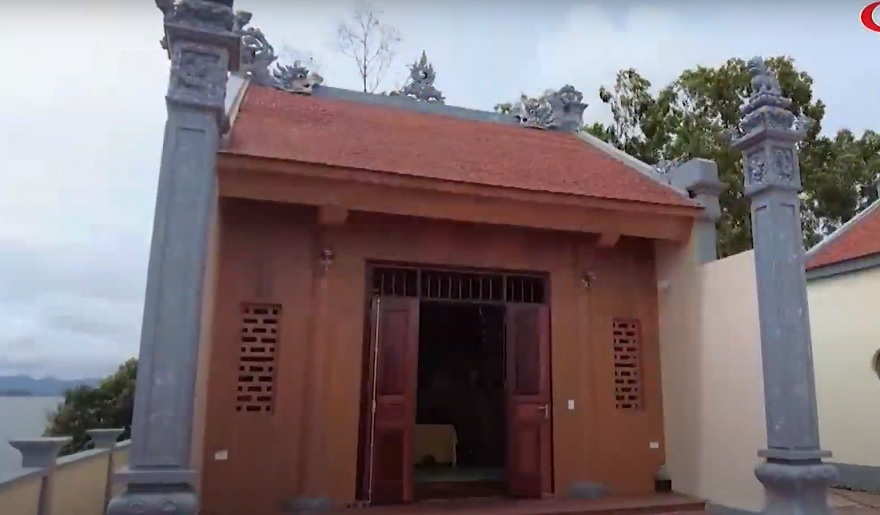
Mother Goddess Temple in Quan Lan
The Mother Goddess Temple emerged during the process of the Quan Lan people uniting and working together in production. It stands as a symbol of national unity, a testament to their love for the homeland, their diligence in labor, and their struggle against nature to gradually reclaim land and expand the territory. It is also a place of worship where subsequent generations express their deep gratitude and affection toward national heroes.
3. Beaches in Quan Lan
Quan Lan is a captivating land filled with destinations of unique natural beauty and cultural value, most notably its stunning beaches that leave every visitor in awe. When mentioning Quan Lan, one cannot overlook beaches such as Son Hao, Minh Chau, and Robinson—typical treasures in the heart of the ocean, where a pristine beauty rarely found elsewhere converges.
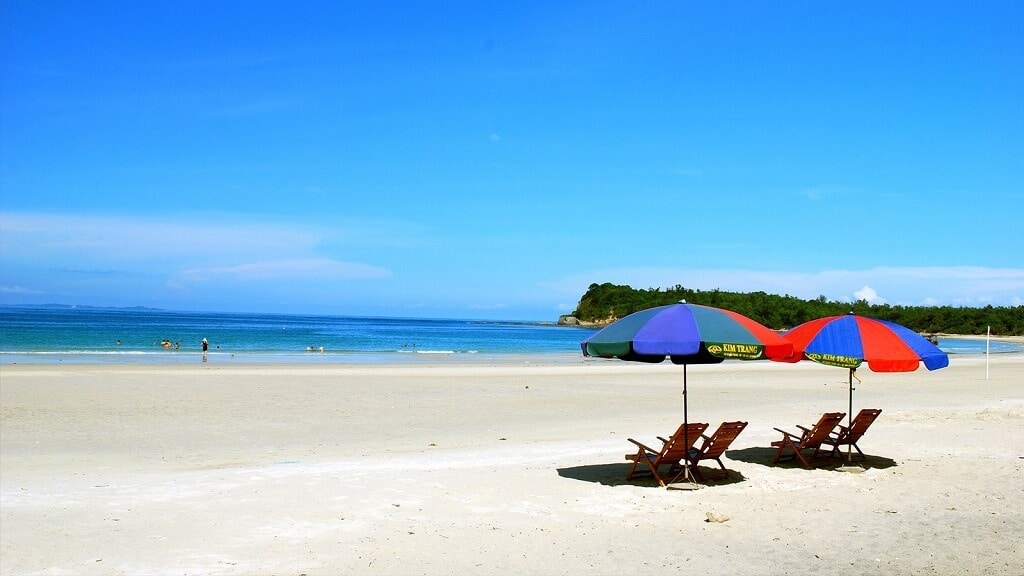
Minh Chau Beach
Unlike crowded and bustling beaches like Ha Long or Sam Son, which are often filled with the noise of tourists and rows of shops, the beaches in Quan Lan possess a rare tranquility. They feature crystal-clear water reflecting the shimmering sunlight and smooth, white sandy shores stretching out like a soft silk ribbon. Surrounded by lush green casuarina forests whispering in the wind, they create a harmonious natural picture that is both poetic and serene. While many other beaches have been urbanized, losing their original pristine appearance, Quan Lan has retained its pure, natural beauty. It offers visitors a sense of relaxation, as if escaping all the noise of daily life. This very isolation and quietude have turned these beaches into a true paradise, where one can immerse themselves in the ocean, enjoy the silence, and discover a Quan Lan that is completely different from other familiar destinations in Quang Ninh.
4. Quan Lan Eo Gio (Windy Pass)
Quan Lan Eo Gio, also known as Got Beo Eo Gio, is a rocky headland located at the southern tip of Quan Lan Island, within the territory of Yen Hai village. According to local fishermen, Eo Gio features a terrain of high mountain ranges surrounded by forest and sea, with natural deep pits in the middle forming hollows. Because it frequently draws in southern winds during the summer, and when the wind blows strongly through the mountain crevices—especially at dawn or at night—the area emits echoing sounds across the sky like the howling of the wind. For this reason, many people also call it the “Howling Wind Hill.”
Quan Lan Cuisine – Unique and Appealing Island Flavors
Visiting Quan Lan, travelers not only get to admire the pristine beauty and history of this island but also enjoy its delicious, distinctive, and unique local dishes. Quan Lan cuisine primarily consists of fresh seafood, prepared in various ways, offering a rich and enticing island flavor. Below are some famous Quan Lan dishes that you should not miss when traveling here.
- Sipunculus nudus (Sa Sung): This is a rare and highly nutritious seafood species that only lives in coastal sandy beaches. Sa Sung can be used as a health-boosting remedy and to treat various ailments. Quan Lan Sa Sung can be prepared into many delicious dishes such as soups, stir-fries, roasted, or made into meat floss. This dish has a natural sweetness, is fragrant and crunchy, and is very popular with many people.
- Cù kỳ (Rock Crab): This is a species of rock crab with hairy legs, firm and fragrant meat, and very large claws. This crab has become a specialty of Quan Lan, featured in many delicious dishes such as noodle soup, steamed, tamarind stir-fry, grilled over charcoal, or made into meat floss. This dish has the sweetness of crab meat, blended with the sour, spicy, and salty notes of the spices, which is very stimulating to the palate.
- Sea Urchin: This is a rare and highly nutritious seafood with excellent health benefits. Sea urchins are shaped like oranges but are flat and thick, with sharp spines all around. Sea urchins can be prepared into many delicious dishes such as boiled, deep-fried, stir-fried with garlic and chili, or made into fish cakes.
- Dried Squid: This is a signature dish in Vietnamese cuisine, prepared from the freshest squid using sun-drying and dehydration methods. Quan Lan dried squid can be eaten as is or prepared into many delicious dishes such as stir-fried with chili salt, deep-fried, grilled with scallion oil, or made into salads.
- Fresh Squid: This is the most popular and delicious seafood in Quan Lan, caught fresh and prepared immediately. Fresh Quan Lan squid can be prepared into many delicious dishes such as grilled, fried, stir-fried, stuffed with meat, or made into squid cakes.
Traditional Festivals in Quan Lan
Amidst the dense collection of relics in Quan Lan, festivals are organized with profound humanistic significance. The most notable is the traditional Van Don festival, also known as the Boat Racing Festival. The festival commemorates the soldiers and people of the Tran Dynasty, under the command of General Tran Khanh Du, who defeated the supply fleet of the Yuan-Mongol general Truong Van Ho on the historic Mang River. Traditionally, the festival lasts for 10 days, from the 10th to the 19th of the 6th lunar month each year. The 18th of the 6th lunar month is the main festival day, featuring activities such as the ceremony of appointing generals and returning troops to the camps of the two guilds, Dong Nam Van and Doai Bac Vo, at the Duc Ong Temple; the troop feast ceremony at the guilds’ courtyards; and the troop departure and training drills of the two guilds on the roads and the courtyard of the Duc Ong Temple.

Boat Racing Festival in Quan Lan
The most anticipated part is the traditional boat race between the two guilds, Dong Nam Van and Doai Bac Vo, which recreates the Van Don battle on the historic Mang River led by General Tran Khanh Du 735 years ago. Before the official race, the two guilds perform a practice row, swimming three laps on the sea before returning to shore. The generals of both the Van and Vo sides read the race agreement. There are only two teams, resulting in one first prize and one second prize, but winning or losing is not important, as everyone shares the common joy of those who deeply love their homeland and feel intense pride in the traditions of their ancestors.
Through the games and the way the festival is organized, we gain a better understanding of the history of General Tran Khanh Du as well as the combat tactics of the soldiers and people of that time. The boat race is not just a sporting activity but also a reenactment of the troop deployment to sea for battle and the return of our soldiers in the past.
Weather & Climate in Quan Lan
Although Quan Lan has four seasons: February to April is spring; May to July is summer; August to October is autumn; and November to January is winter, it still experiences distinct rainy and dry seasons, which you should keep in mind when deciding when to visit. The rainy season in Quan Lan lasts from May to September, while the dry season lasts from November to March. Each season has its own interesting points and limitations. However, the best months to visit are March, April, September, and October. However, if you enjoy the summer heat, June to August is the best time to go. Note that the weather can be unpredictable, and heavy rain and storms often occur in the summer, sometimes making it impossible to return to the mainland due to storms. If you feel more comfortable in milder weather, then October to March is a better time to visit.
| Months |
Daily Temperature Range (°C) |
Rainfall |
| January |
19°/11° |
20 mm |
| February |
19°/12° |
12 mm |
| March |
24°/16° |
60 mm |
| April |
26°/20° |
89 mm |
| May |
30°/24° |
139 mm |
| June |
32°/26° |
232 mm |
| July |
33°/27° |
239 mm |
| August |
34°/27° |
229 mm |
| September |
31°/25° |
138 mm |
| October |
27°/20° |
85 mm |
| November |
24°/19° |
42 mm |
| December |
19°/12° |
27 mm |
These are the basic details about Quan Lan Island that we wanted to share with you. Quan Lan Island is an ideal destination for those who love the sea and islands and want to experience a peaceful, pristine, and historically rich environment. If you have the chance to visit Quang Ninh, do not miss the opportunity to explore Quan Lan Island and discover the fascinating experiences it has to offer. We wish you a happy and safe trip to Quan Lan!