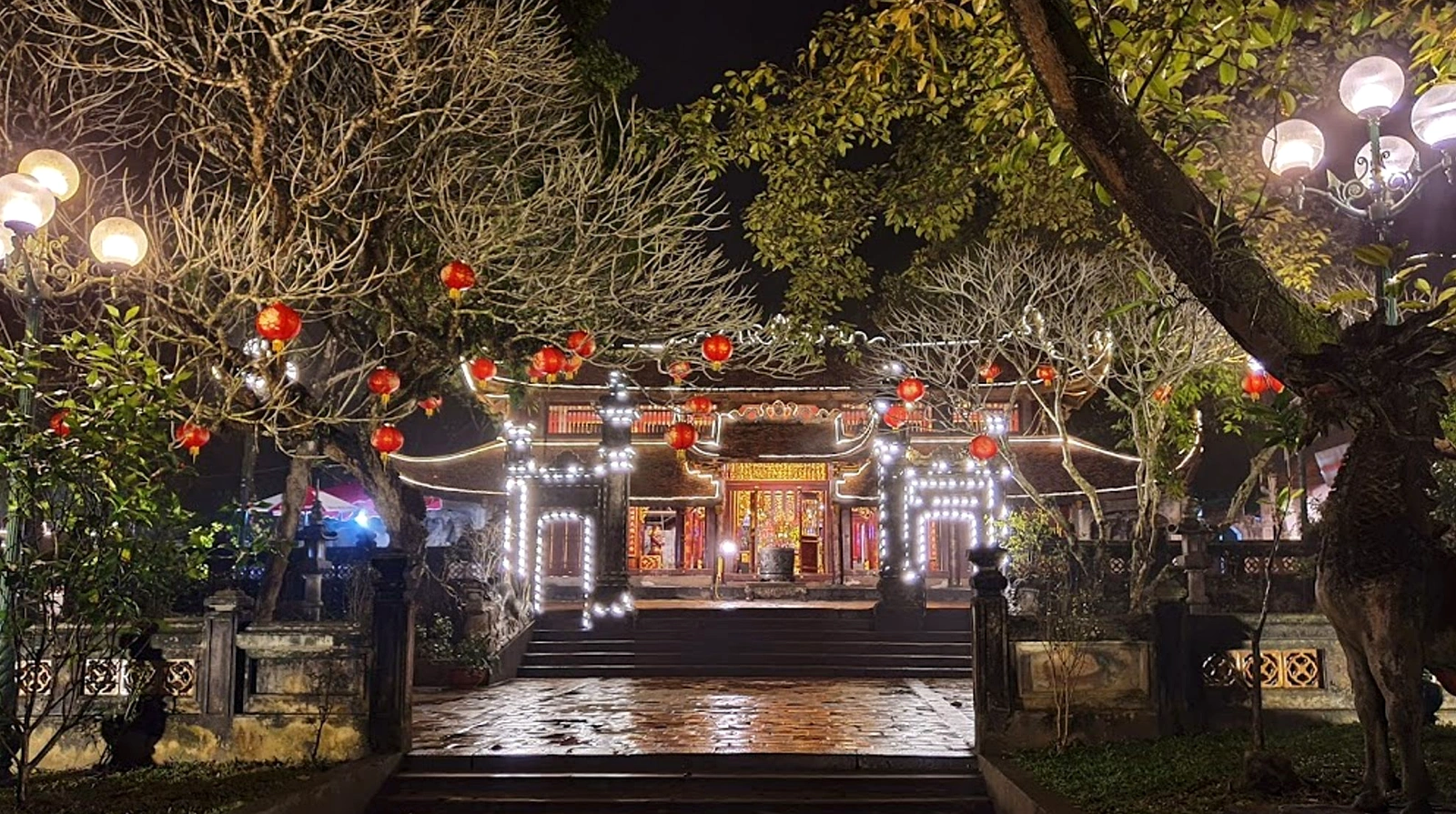
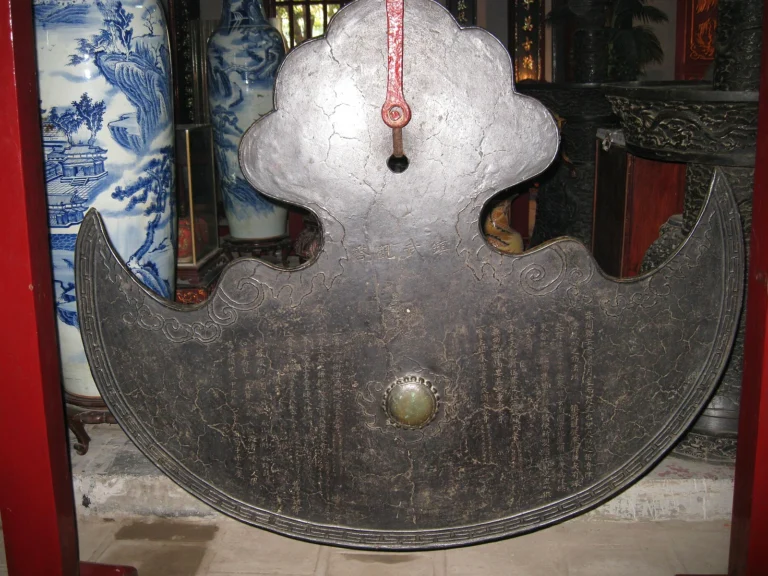
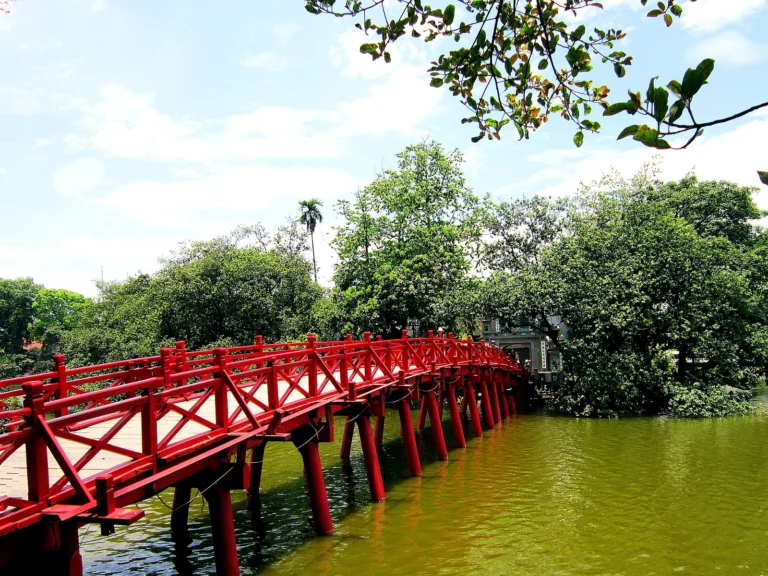
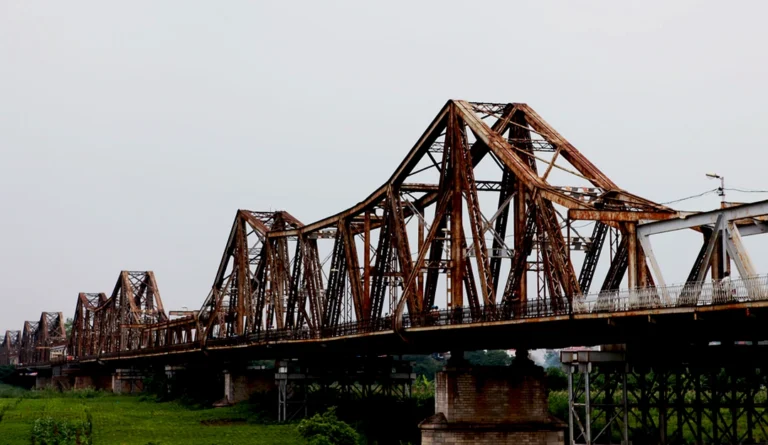
Located right at the gateway to the Huong Son Scenic Complex in Huong Son Commune, My Duc District, Hanoi, Trinh Temple—also affectionately known by locals by its vernacular Nom name, Quan Vo Temple, or occasionally Trinh Ngu Nhac Temple—stands majestically on the left bank of the poetic Yen Stream. From a historical and geographical standpoint, it is far more than a scenic stopover; it is a sacred spiritual landmark and an essential “threshold” that every pilgrim must pass through on their journey toward the serene Buddhist sanctuary of Huong Tich Cave. The structure occupies an unrivaled vantage point, marking a seamless transition from Hanoi’s low-lying suburban delta to the profound, mystical expanse of the Tram Tich limestone mountain range.
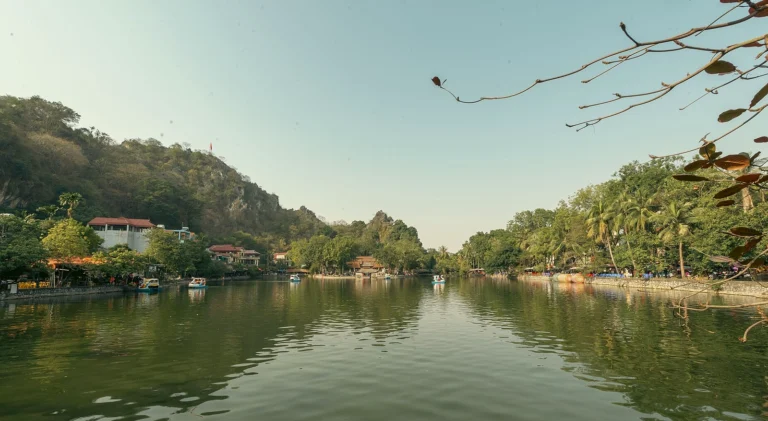
Viewed through the lens of traditional feng shui geography, Trinh Temple embodies the quintessential principles of East Asian landscape artistry, featuring the auspicious “mountains bowing, waters gathering” and “coiling dragon, crouching tiger” formations. The temple’s facade faces south—the traditional direction of sages and wisdom—looking directly out over the Yen Stream wharf (Yen Vi Khe) and its vast, mirror-like valley of water. Behind it, the temple leans solidly against the imposing Ngu Nhac mountain range, where sacred energy from the Tich Son massif converges. This harmonious interplay between the dynamic flow of the winding, swallow-tail-shaped stream and the timeless stillness of ancient mountain rock generates a distinctive vitality, allowing every traveler who sets foot here to feel a deep sense of tranquility and wash away worldly dust before entering the sacred realm.
The historical origins of the temple are closely tied to the vicissitudes of Vietnam’s feudal dynasties. According to archival studies preserved by the Vietnam Institute of Heritage and Cultural History, the Huong Son region saw the early emergence of indigenous folk beliefs as far back as the Hung Kings era and the nascent nation-building period of the Dinh and Early Le dynasties. In those early days, only small shrines made of bamboo, thatch, and reeds stood here, erected by agricultural communities to worship the tutelary deities governing the mountains, forests, and waterways. Over the course of history, during the Revival Le dynasty (17th–18th centuries), when Buddhism in Dang Ngoai (Tonkin) experienced a vigorous renaissance, the entire Huong Son complex underwent comprehensive planning. During this period, Trinh Temple was officially rebuilt by the royal court and local populace on a grander scale using ironwood and traditional clay bricks, bearing the unmistakable imprint of that era’s refined sculptural artistry.
Entering the Nguyen dynasty, in the 12th year of Emperor Minh Mang’s reign (1831), as part of a nationwide survey of royal tombs, temples, and shrines, the emperor bestowed an imperial decree and ordered a large-scale restoration. Valuable historical chronicles such as Dai Nam Thuc Luc (Veritable Records of the Great South) and Dai Nam Nhat Thong Chi (Comprehensive Gazetteer of the Great South) reverently recorded the Huong Son scenic complex as the “Foremost Cave Under Southern Skies,” within which Trinh Temple served as an important ceremonial checkpoint for court officials whenever they embarked on royal pilgrimages. The original artifacts and sacred genealogies still preserved here stand as living testament to its cultural, historical, and religious depth, affirming a unique synthesis of geological and cultural heritage that the press and heritage authorities deeply cherish and safeguard for future generations.
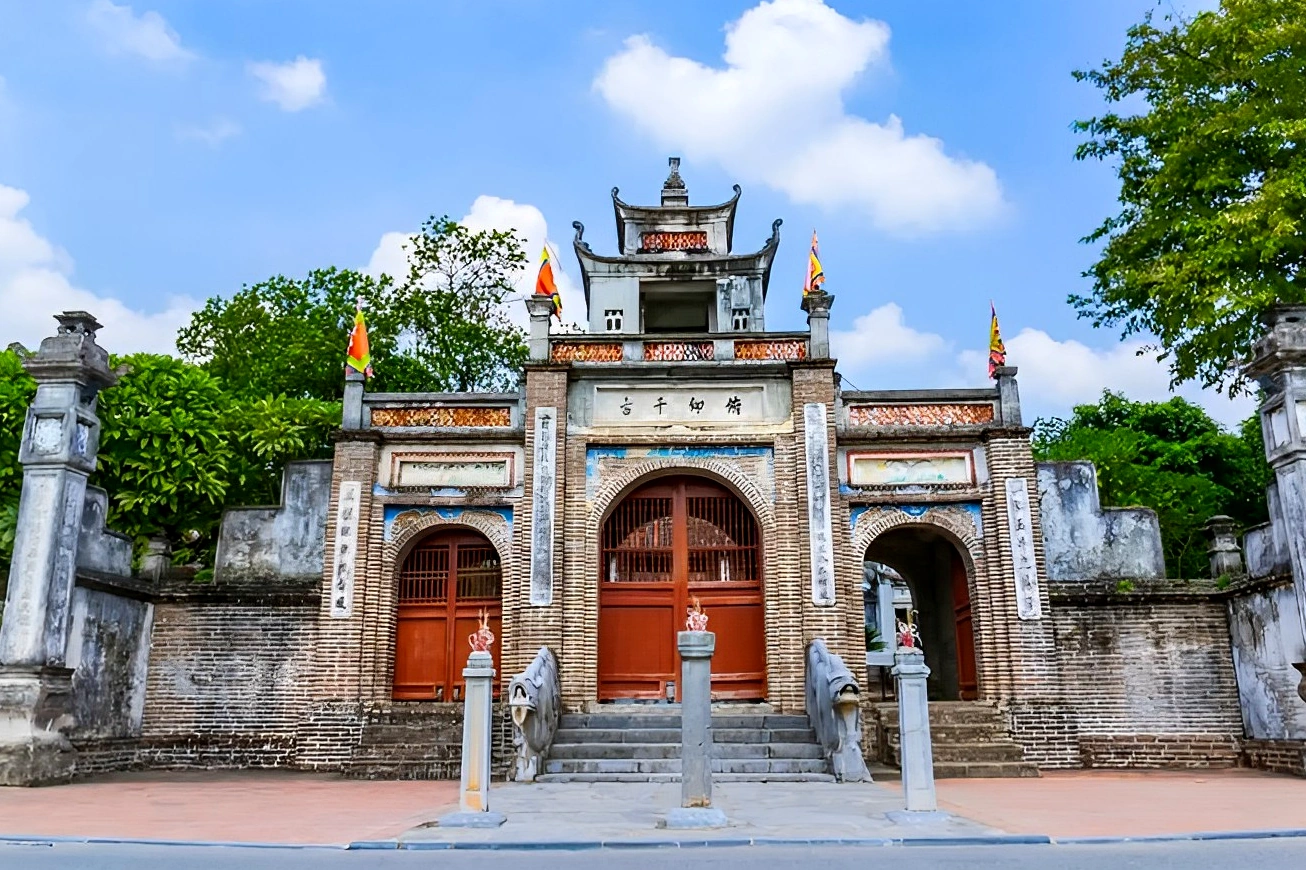
Stepping onto the threshold of the Huong Son Relic Complex, visitors are immediately captivated by a breathtaking landscape where heaven, earth, and spirituality converge around the stately Trinh Temple. The temple commands an exceptionally auspicious feng shui setting, with its back firmly anchored against the towering Ngu Nhac mountain range and its front facing directly toward the left bank of Yen Stream as it winds like a soft silk ribbon. Seen from above, this terrain resembles a picturesque ink-wash landscape painting crafted by nature’s finest hand: “mountains bowing, waters gathering” and “coiling dragon, crouching tiger.” The tranquil waters of Yen Stream mirror the drifting clouds and embrace the foot of the mountains, creating an atmosphere that is both expansively open and profoundly sacred. Surrounding the temple is lush, primeval greenery, where the cooing of wild birds mingles with the gentle babbling of flowing water to compose a serene mountain symphony—instantly stripping away the noise and bustle of city life from the very first step.
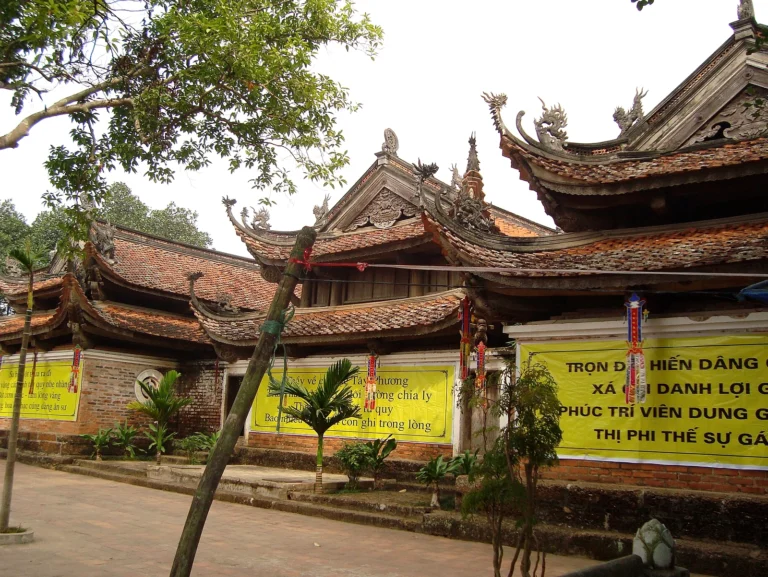
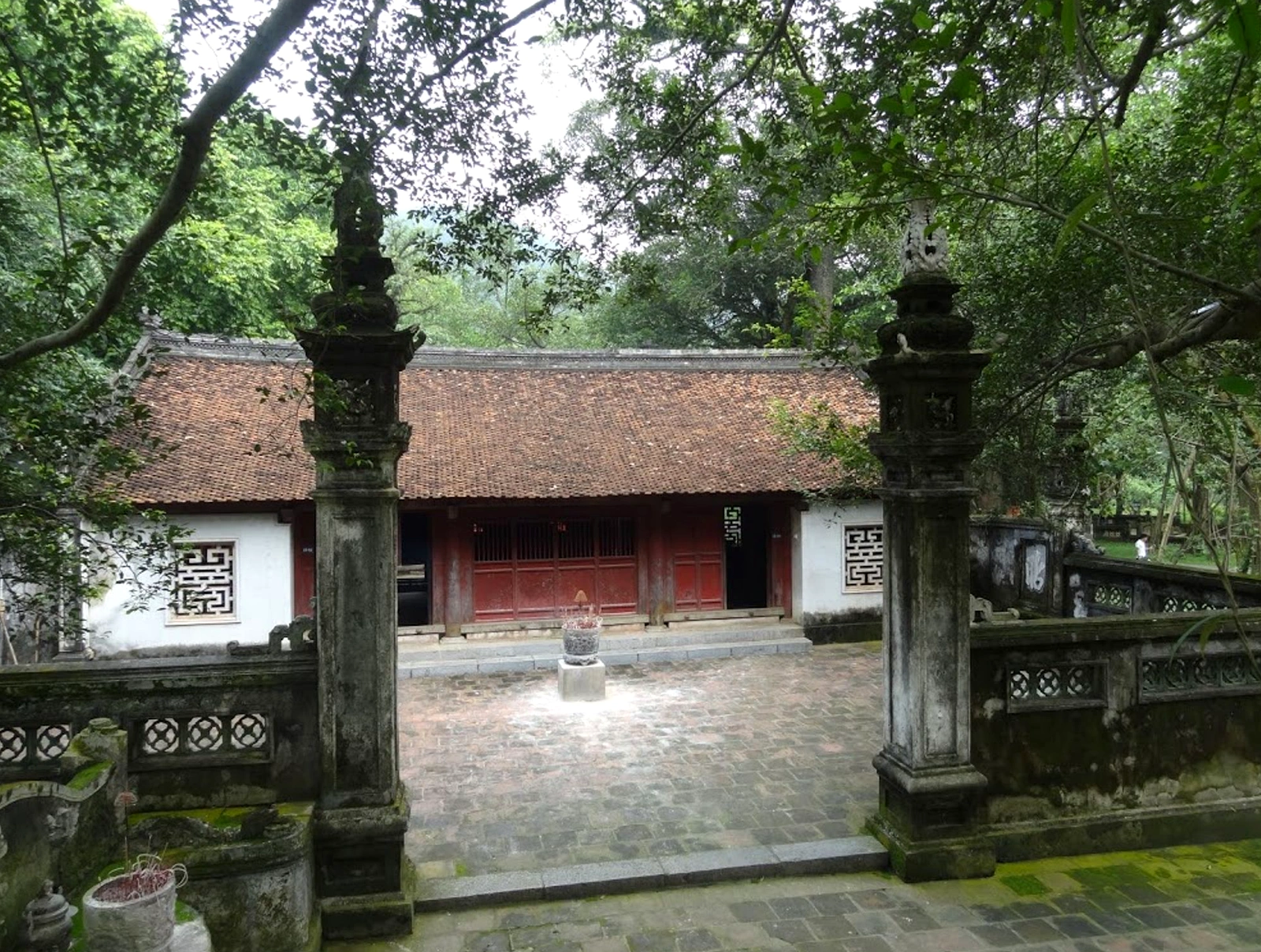
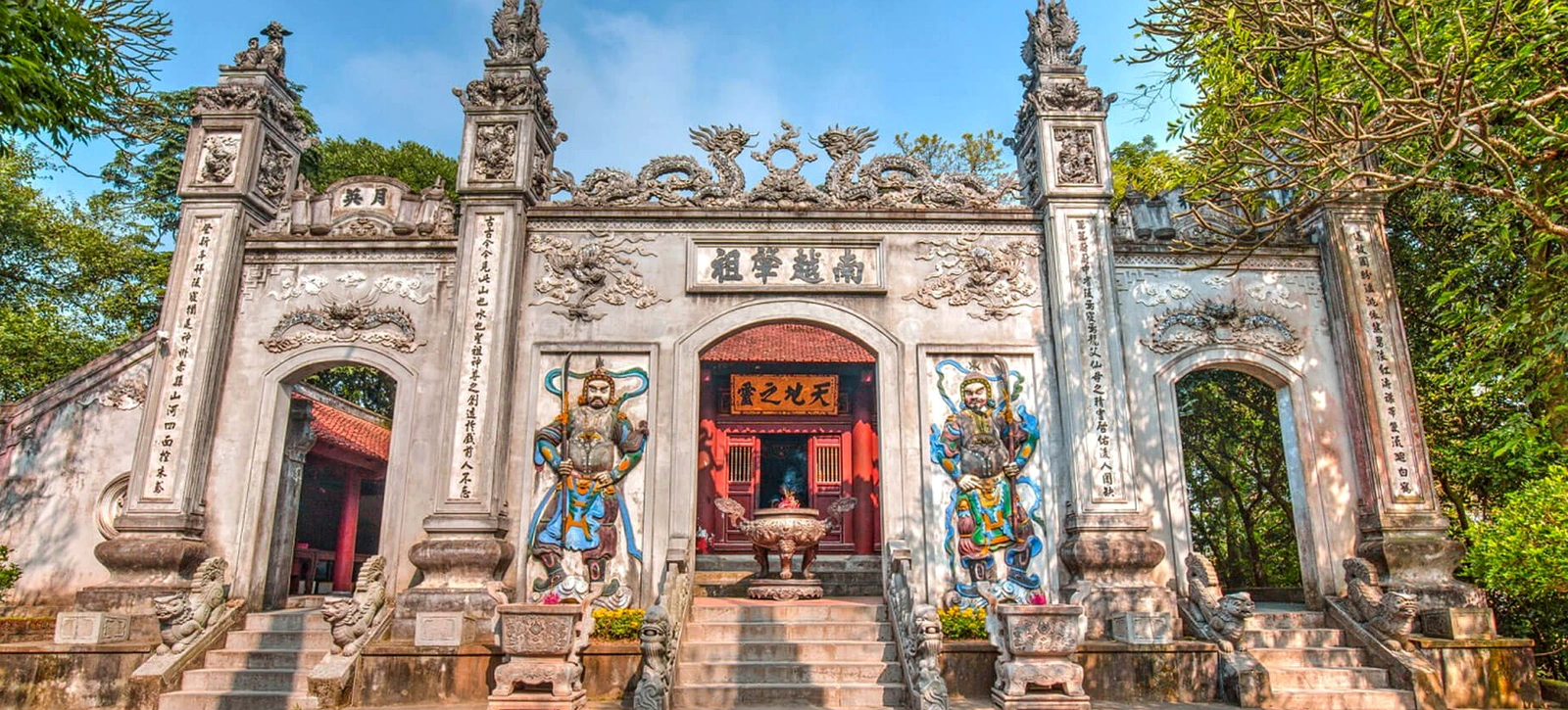
Architecturally, Trinh Temple at Huong Pagoda is a vivid showcase of the intricate woodcarving and master craftsmanship passed down by Vietnamese ancestors over centuries. Through major restorations, the temple has preserved its traditional artistic character with a balanced overall layout comprising the ceremonial gate (nghi mon), lower courtyard, front ceremonial hall (tien te), and inner sanctuary (hau cung). Its sturdy ironwood structural frame is meticulously carved with motifs of the Four Sacred Beasts (dragon, qilin, tortoise, and phoenix) alongside stylized flora characteristic of the Revival Le and Nguyen dynasties. Every graceful chisel stroke across the wood grain, the moss-covered fish-scale roof tiles weathered by time, and the shimmering gilded horizontal lacquered boards and parallel couplets radiate a solemn, dignified beauty. In particular, the stone carvings adorning the dragon pedestals, column bases, and perimeter walls demonstrate the virtuosity of ancient artisans—both majestic and poetic, yet deeply connected to Vietnamese spiritual life.
For photographers and beauty-seeking travelers alike, Trinh Temple at Huong Pagoda boasts “million-view” vantage points that are impossible to miss. The first prized photo spot is the view from the middle of Yen Stream Bridge looking back toward the temple gate. The ideal time to shoot is at dawn (roughly between 6:00 AM and 7:30 AM), when morning mist still lingers delicately over the surface of Yen Stream and the first rays of sunlight slant through the foliage, casting a warm golden glow across the temple’s mossy tiled roofs. The resulting shot captures a magical blend of emerald mountains, golden morning light, and ethereal wisps of mist. The second extraordinary check-in spot is from the main courtyard looking out across the wide expanse of the water valley ahead, especially at sunset (around 5:00 PM to 6:00 PM). At this hour, twilight paints both sky and water in crimson hues, forming a mystical backdrop that accentuates the temple’s ancient, contemplative charm and yields deeply evocative, nostalgic frames.
Arriving at Trinh Temple at Huong Pagoda, visitors are immediately drawn into a vibrant yet ethereal rhythm of spiritual life. The moment you step out of your vehicle, the first sounds to greet your ears are not the clamor of urban traffic, but the gentle lapping of Yen Stream against wooden boats, accompanied by the distant, resonant tolling of temple bells. Right at the wharf, a scenic boat ride unveils a spectacular visual journey. Traditional rowboats glide effortlessly across crystal-clear waters that reflect the sky and the undulating Ngu Nhac peaks flanking both banks. Gently rocking along Yen Vi Khe brings a remarkable sense of calm, cleansing the mind and lifting away the worries and pressures of daily life before you formally cross this spiritual threshold.
Continuing the journey, visitors enter the sacred worship space of the ancient temple. Beneath the shade of solemn centuries-old trees, fragrant incense smoke curls into the drifting mountain mist, weaving an atmosphere of reverence and mystery. Standing before the Altar of the Three Jewels and the enshrined deities, pilgrims respectfully offer sticks of incense, praying for peace, health, and good fortune for their families. The sense of awe stems not only from the time-worn, moss-draped architecture, but also from an inner stillness that settles deep within the soul. Amid towering peaks and drifting clouds, one feels humble before the grandeur of nature yet profoundly connected to the bridge between past and present, between the earthly realm and the tranquil Buddhist sanctuary.
Beyond spirituality and scenery, exploring this sacred land is further enriched by distinctive local culinary experiences. After hours of worship and leisurely sightseeing, travelers can stop by roadside eateries to savor Huong Son’s renowned regional specialties. The crisp, earthy sweetness of stir-fried san sat wild greens with garlic, chewy fragrant yam cakes infused with the aroma of the mountains, or a warm cup of tea paired with crunchy peanut brittle all leave a lasting impression. Together, drifting along the tranquil stream, offering incense in devotion, and sampling rustic local delicacies weave a vivid, heartfelt cultural tapestry that lingers long in the memory of anyone fortunate enough to visit Trinh Temple.
Trinh Temple at Huong Pagoda—the sacred spiritual gateway to the Huong Son Scenic Complex—welcomes crowds of pilgrims and travelers from near and far year-round. To ensure your visit and incense-offering journey at this historic temple goes smoothly and meaningfully, equipping yourself with practical tips on visiting hours, transportation, and temple etiquette is essential.
Regarding opening hours, the temple welcomes visitors every day of the week, including public holidays and Tet (Lunar New Year). Visiting hours typically run from early morning, around 6:00 AM, until 5:00 PM daily, making it convenient for Buddhist devotees and travelers to plan their schedules flexibly. The most ideal time of year to visit Trinh Temple and Huong Pagoda is from the first to the third lunar month, when the traditional festival takes place amid a solemn atmosphere and vibrant spring scenery. If you prefer a quieter, more contemplative experience away from the crowds, consider visiting in summer or autumn, when Yen Stream flows peacefully between lush green banks.
In terms of routes and transportation, departing from central Hanoi, travelers can go by motorbike, private car, or public bus via National Highway 21B or connecting beltways toward My Duc District. The route is smooth and well-paved, taking roughly 1.5 to 2 hours to reach the Yen Stream wharf. Upon arrival, Trinh Temple sits right beside the boat dock, where every visitor customarily stops to offer incense and announce their arrival before boarding a rowboat down Yen Stream toward Huong Tich Cave. For admission, scenic area entrance tickets and Yen Stream boat tickets are transparently priced according to the Relic Management Board’s regulations; visitors should purchase tickets directly at the official ticket counters at the main welcome gate.
As a sacred site steeped in traditional cultural values and set amid rugged limestone terrain, visitors to Trinh Temple should strictly observe dress code guidelines. Attire must be modest, respectful, and dignified, favoring understated clothing appropriate for the solemnity of temples and pagodas—avoid overly short, tight-fitting, or revealing outfits. Additionally, because the grounds feature numerous stone steps and require considerable walking, travelers should wear sneakers or snug, non-slip flat shoes to ensure safety and comfort throughout their sightseeing and pilgrimage.
To enjoy a fulfilling getaway and fully admire the beauty of Trinh Temple at Huong Pagoda without worrying about arranging transportation, booking entrance tickets, or planning itineraries, travelers can choose VDS Travel’s premium all-inclusive Hanoi tour packages. Every tour is thoughtfully designed to optimize photo opportunities when the scenery is at its most vibrant, accompanied by knowledgeable guides well-versed in local culture alongside top-tier hotel and dining standards.