Nestled in the sacred ancestral heartland, the Hung Kings Temple Historical Complex stands majestically atop historic Nghia Linh Mountain, located in Hy Cuong commune, Viet Tri city, Phu Tho province. Geographically and in terms of feng shui, this site is a masterpiece of nature, converging the most magnificent elements of vital mountain-and-river energy: surrounding peaks bowing in homage and waters merging in harmony. Situated at the confluence of the Thao, Lo, and Da rivers before they flow into the vast Red River, Nghia Linh Peak resembles a dragon’s head facing south, encircled by dozens of large and small hills arranged like overturned offering trays, creating an exceptionally auspicious “coiling dragon, crouching tiger” formation with a water-gathering front courtyard. This unique topography has forged an epic sacred space where yin and yang harmonize and the spiritual essence of mountains and rivers converges, serving as an eternal spiritual anchor for countless generations of Lac Hong descendants.
Tracing back through time to the nation’s historical origins, the ancient land of Phong Chau served as the first capital of the Van Lang state—the nascent kingdom that laid the foundation for Vietnamese chronicles. Deep within this motherland, archaeological excavations at sites such as Lang Ca, Xom Ren, and Bai Men have attested to the continuous settlement and thriving of ancient Vietnamese communities across the Phung Nguyen, Dong Dau, and Dong Son cultures. Rather than originating from a single, sudden monumental structure, Hung Kings Temple took shape through the enduring accumulation of indigenous religious life, which successive Vietnamese feudal dynasties inherited, institutionalized, and elevated to a national ritual. Official historical records from the Early Le and Revival Le dynasties vividly document the royal court formalizing the sacrificial system and granting royal decrees to the villagers of Hy Cuong to worship at the shrines on Nghia Linh Mountain in perpetuity. By the Nguyen dynasty, particularly in the 9th year of Gia Long (1810) and the 2nd year of Khai Dinh (1917), the legal and architectural frameworks reached full standardization, officially designating the Hung Kings Commemoration Day (the 10th day of the third lunar month) as a national holiday across the entire country.
The sacred space of the historical complex is intertwined with a rich body of legends and genealogical records honoring the nation’s founders, including the eighteen generations of Hung Kings, National Ancestor Lac Long Quan, National Mother Au Co, alongside renowned generals and mythical figures such as Son Tinh – Thuy Tinh and Saint Giong. Each sage and deity is linked to heroic legends of nation-building and national defense, becoming spiritual symbols of great national unity. Across millennia of historical transformations, the geological, archaeological, and intangible cultural heritage values here have been honored by cultural management authorities and international media—including UNESCO’s inscription of the Worship of Hung Kings in Phu Tho—as emblems of noble humanistic values and the moral principle of “when drinking water, remember its source.” Hung Kings Temple in Phu Tho thus remains forever an unparalleled landmark, an inexhaustible cultural spring connecting the glorious past with the present and future of the Vietnamese nation.
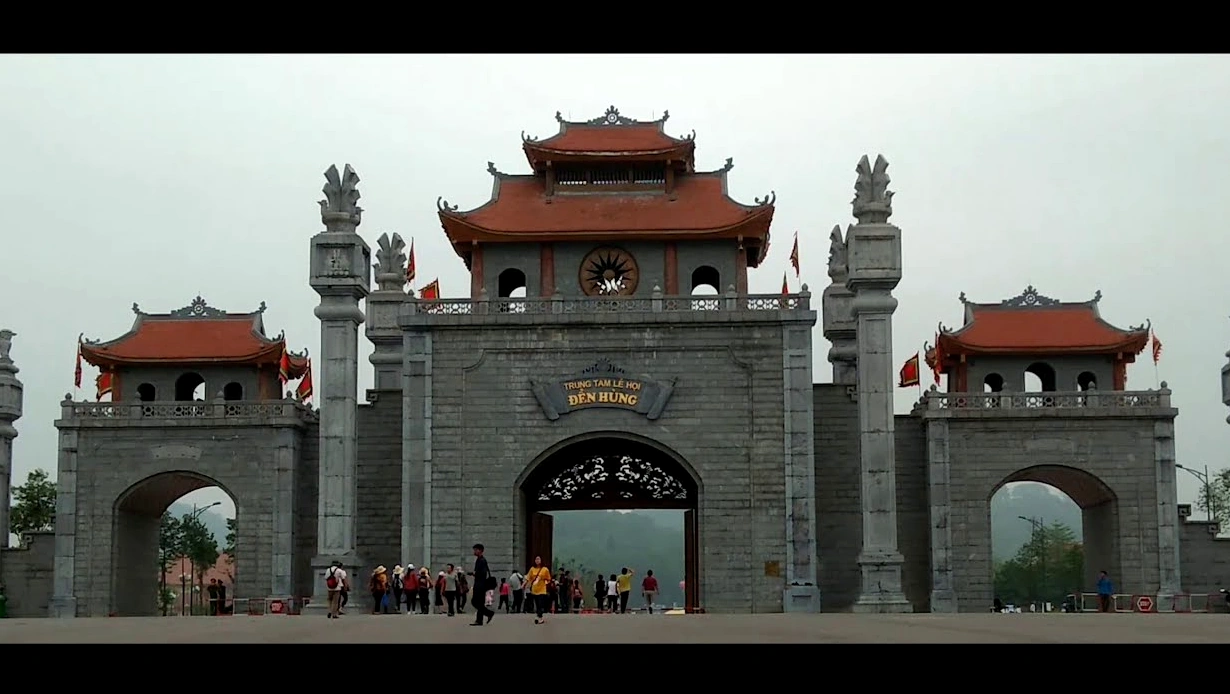
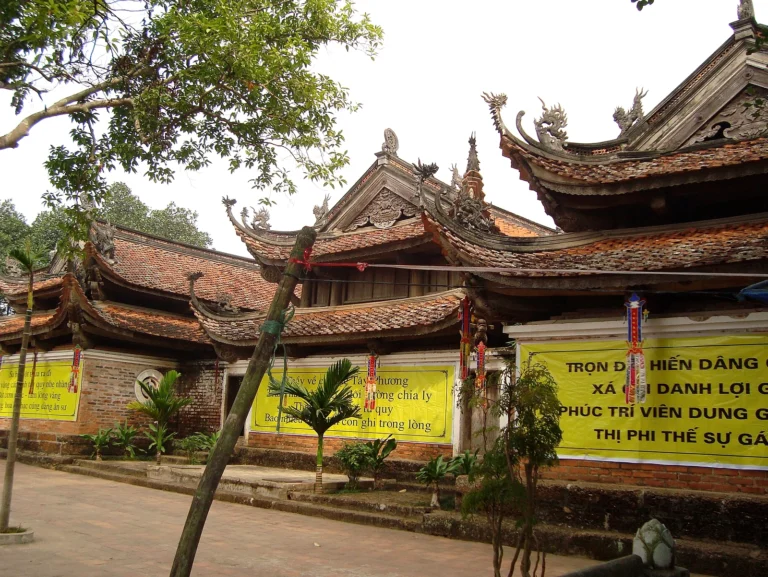
Nestled amidst the endless emerald depths of the sacred Nghia Linh forest, the Hung Kings Temple Historical Complex emerges as an exquisite masterpiece blending sacred topography with traditional Vietnamese architectural artistry. Perched on the highest peak of the ancient Phong Chau region, the complex commands a “coiling dragon, crouching tiger” terrain, backed firmly against high mountain ridges and looking out toward the historic Bach Hac river confluence—where the swirling waters of the Red, Lo, and Da rivers meet. Ascending from the foot of the mountain, visitors feel transported into a realm completely removed from the bustling city, where moss-covered stone steps beneath centuries-old trees lead the way back to the nation’s roots. The architectural artistry here reaches a high level of refinement, with structures stretching from the mountain base to the summit of Nghia Linh, including the Lower Temple (Den Ha), Thien Quang Pagoda, the Middle Temple (Den Trung), the Upper Temple (Den Thuong), and the Hung Kings’ Mausoleum. Each temple exhibits characteristic Le–Nguyen architectural styles, highlighted by moss-covered fish-scale tiled roofs curving upward into dragon and phoenix motifs, alongside roof trusses intricately carved with vivid patterns of the four mythical creatures and four noble plants. Ancient artisans skillfully leveraged the natural terrain to nestle the structures beneath the forest canopy, creating an ensemble that is at once solemn and imposing yet intimate and harmonious with the expansive natural surroundings.
To capture the most artistic and deeply nostalgic moments at this sacred sanctuary, seasoned photographers and travel journalists particularly favor two to three camera angles during ideal lighting windows of the day. The first “million-view” check-in spot is the Main Gate area of Hung Kings Temple paired with the moss-draped ancient stone steps and cool antique well. The best time to shoot here is at dawn (from 6:00 AM to 7:30 AM), when the first morning sunbeams pierce through the leaves, creating an ethereal interplay of light and shadow that illuminates the ancient charm of the three-entrance gate and lends a serene, sacred aura to the frame. The second unmissable angle is the space in front of the Middle Temple and the courtyard of the Upper Temple atop Nghia Linh Peak. Between 3:30 PM and 5:00 PM, gentle afternoon sunlight slants through ancient pine rows, casting warm golden-orange hues across the mossy tiled roofs and opening up sweeping panoramic views over the lush green Phu Tho plains below. This is the perfect vantage point to encompass both the majestic mountain scenery and the quiet, contemplative weight of history within a single poetic frame.
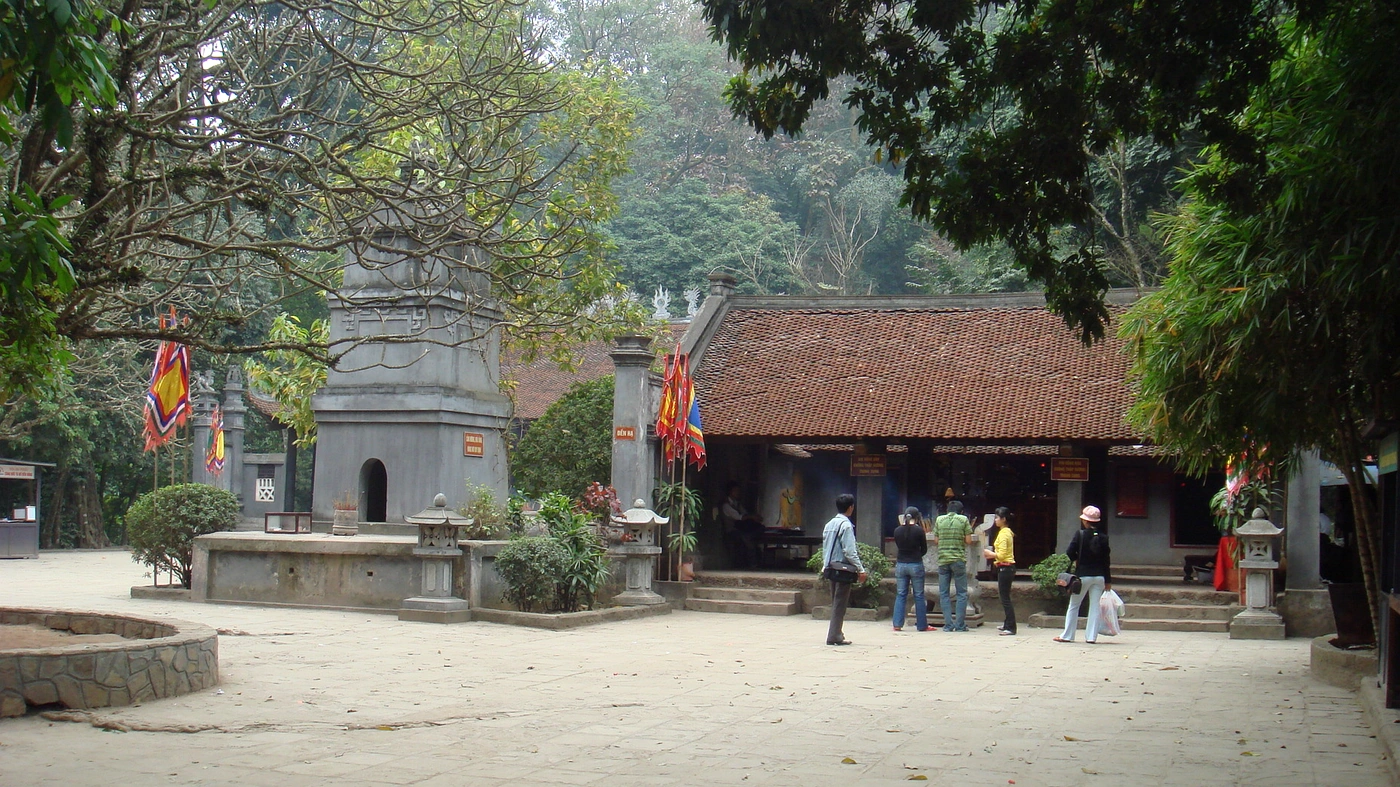
Upon setting foot in the Hung Kings Temple Historical Complex in Viet Tri city, Phu Tho province, every visitor feels a distinct stirring in their heart, where the emotional resonance of national history blends seamlessly into every breath of this sacred ancestral space. The real-world journey begins at the base of Nghia Linh Mountain, where ancient, moss-covered stone steps wind upward beneath the canopy of centuries-old trees toward the temples and shrines. Climbing the mountain is far more than a physical workout; it feels like a pilgrimage back through time, with each unhurried step helping travelers shed the noise and rush of modern life to find stillness and reverence within.
A wave of awe swells as visitors reach the summit and stand before the sacred space of the Upper Temple—where the Hung Kings once performed rituals to honor Heaven and Earth. Gazing out from that elevation, the entire northern midland plain unfolds in grandeur, with prosperous villages, rolling emerald hills, and the Lo and Red rivers winding gently like soft silk ribbons embracing the Ancestral Land. Amidst the breezy air and drifting incense fragrance, the distant chime of temple bells brings an extraordinary sense of calm to the soul. Lighting a stick of incense in gratitude to our forebears at Kinh Thien Palace evokes an indescribable sacred emotion, serving as a powerful reminder of the Lac Hong lineage and the moral principle of “when drinking water, remember its source” deeply ingrained in every Vietnamese heart.
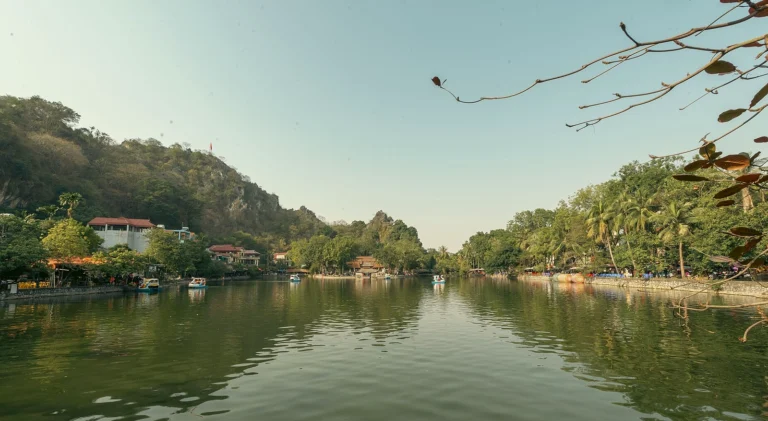
Beyond spiritual pilgrimage, Hung Kings Temple captivates visitors with vibrant and distinctive local cultural experiences. Stepping away from the tranquil slopes of Nghia Linh Mountain, travelers can unwind with a leisurely boat ride across the crystal-clear lakes surrounding the historical site, taking in peaceful, poetic landscapes quintessential to midland rural villages. Moreover, no trip would be complete without savoring the renowned specialties of Phu Tho. The rich, nutty aroma of traditional banh chung and banh giay—sacred offerings presented to the Hung Kings since ancient times—alongside the savory tang of Thanh Son fermented sour pork, creamy braised palm fruits (co om), and refreshing sour cassava leaf soup create an unforgettable culinary harmony.
It is precisely this harmonious blend of majestic natural scenery, deeply moving spiritual atmosphere, and distinctive culinary culture that transforms an exploration of Hung Kings Temple into a truly priceless experience. Every traveler leaves carrying not only fond memories of a sacred ancestral homeland, but also a profound sense of national pride and an enduring bond with their forebears.
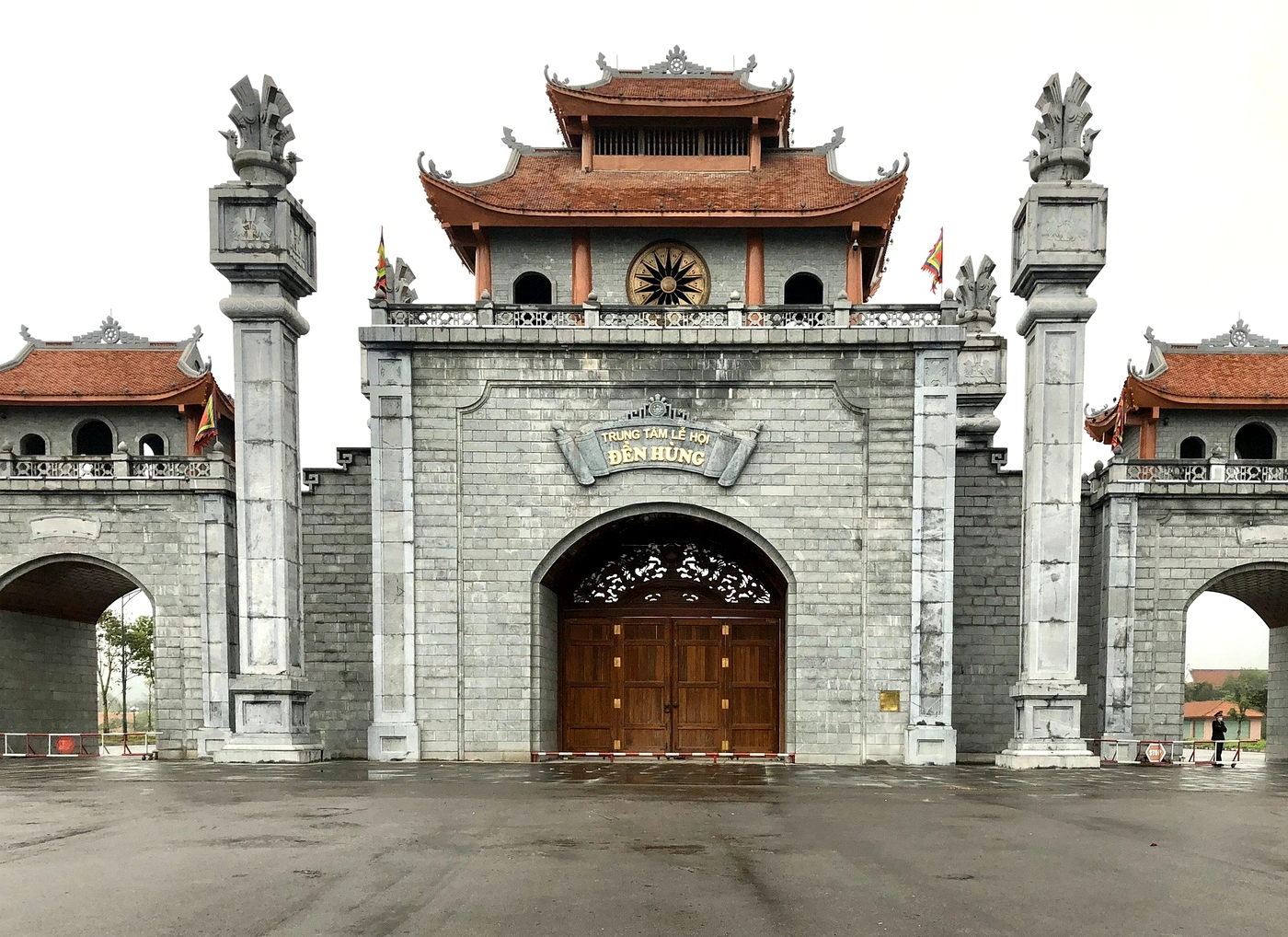
The Hung Kings Temple Historical Complex sits atop Nghia Linh Mountain in Hy Cuong commune, Viet Tri city, Phu Tho province. To ensure a fulfilling and dignified pilgrimage to the ancestral land, visitors should familiarize themselves with essential practical details regarding visiting hours, costs, travel routes, and etiquette at this unique spiritual and cultural site.
Regarding operating hours, the historical complex is open to welcome compatriots from across the country and international visitors every day of the week, including public holidays and Tet. The most ideal time of year to visit Hung Kings Temple is spring, particularly from the first through the third lunar month, culminating on the Hung Kings Commemoration Day on the 10th day of the third lunar month. However, if you wish to stroll leisurely and explore the ancient architecture in depth, visiting on weekdays allows you to enjoy a serene atmosphere beneath the centuries-old forest canopy.
Great news for all pilgrims traveling to Hung Kings Temple is that the site management board currently offers completely free admission for everyone entering the main temple and shrine areas. Visitors only need to pay for ancillary services such as private vehicle parking or electric shuttle rides within the sprawling grounds of the historical complex.
For transportation and travel routes, departing from central Viet Tri city requires only a convenient journey of just over ten kilometers via connecting national highways or expressways. If traveling by private car or motorbike, you can follow the extended Hung Vuong Boulevard through Viet Tri city to the Phuong Lau three-way intersection, then turn directly toward the historical site. For travelers arriving from distant provinces, taking a Hanoi – Phu Tho intercity bus or a train to Viet Tri Station is effortless, followed by a short local bus or taxi ride straight to the main gate of Hung Kings Temple.
Given the hilly terrain featuring thousands of steep stone steps, visitors should take care to wear polite, modest attire appropriate for the customs and solemnity of a sacred sanctuary. Prioritize neat, comfortable clothing paired with sneakers or flat shoes with good traction to make mountain climbing easier and prevent foot fatigue. Additionally, remember to bring an umbrella or hat for sun and rain protection, carry sufficient drinking water for the climb, and always help maintain public cleanliness to preserve the lush, pristine landscape of this Special National Relic.
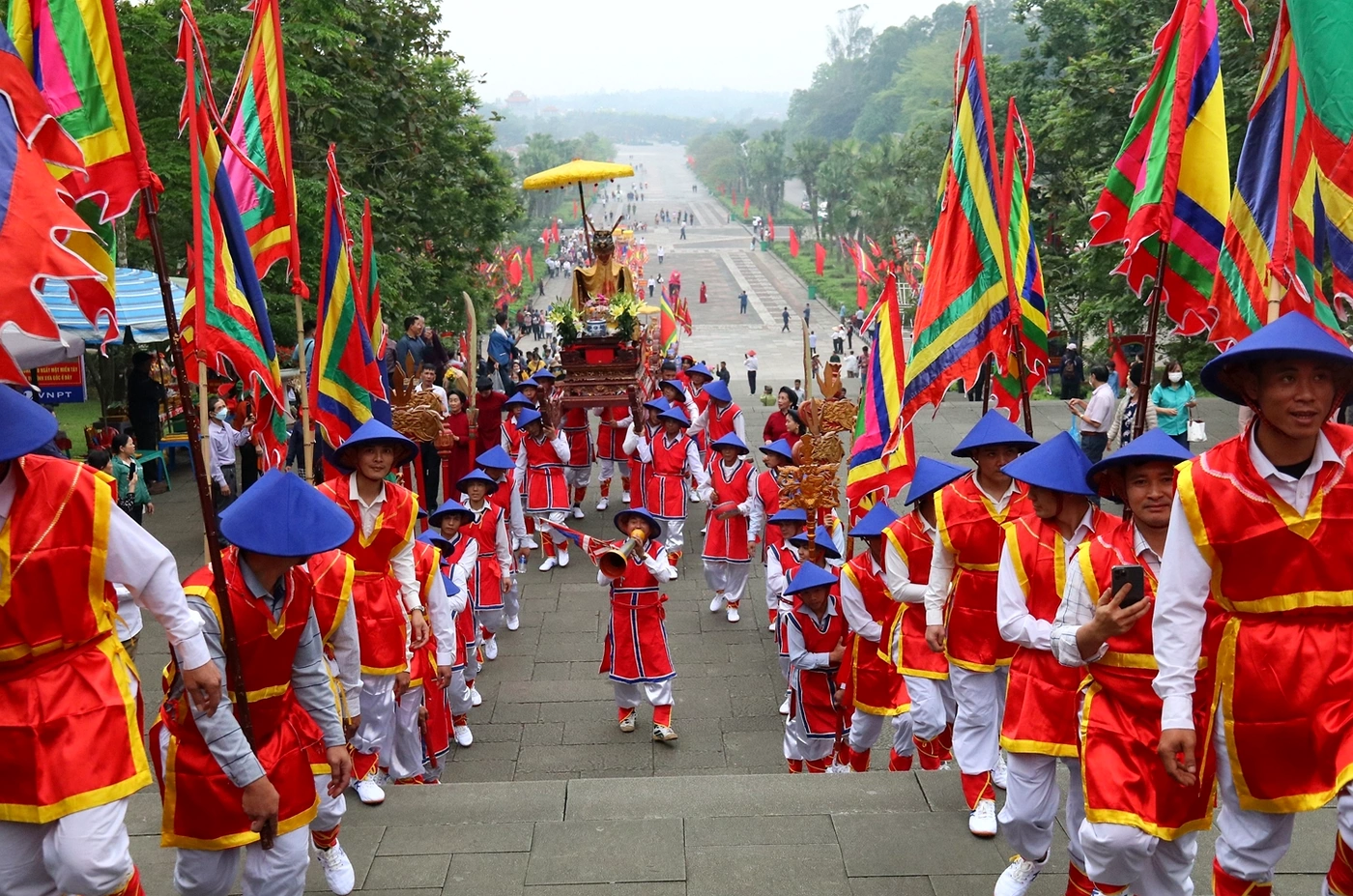
To enjoy a complete vacation and fully admire the beauty of Hung Kings Temple in Phu Tho without worrying about arranging transportation, booking sightseeing tickets, or planning travel itineraries, visitors can choose VDS Travel’s premium all-inclusive Hanoi tour packages. Every tour is optimally designed to schedule check-ins when the scenery is at its most vibrant, accompanied by a team of tour guides thoroughly knowledgeable about local culture alongside top-tier hotel and culinary service standards.