Nestled in the heart of sun-drenched Los Angeles in Southern California, the Hollywood Walk of Fame — often written in Chinese texts as 好萊塢星光大道 — is far more than an ordinary urban street; it is a living historical chronicle crafted from terrazzo and brass. The historical origin of the name “Hollywood” began in the autumn of 1887, when the wife of real estate developer H.H. Wilcox named the land inspired by lush local oak groves and untouched natural scenery. Back then, few could have imagined that this secluded agricultural ranch would eventually transform into the cinema capital of the world, a crossroads of art, history, and some of the 20th century’s greatest urban legends.
Across decades of explosive growth in the seventh art, the idea of a permanent monument honoring extraordinary contributions finally came to fruition. In 1958, E.M. Stuart — then serving as President of the Hollywood Chamber of Commerce — initiated the proposal to build a special avenue of honor. He recognized the need to create a distinctive cultural space where the names of talented artists would not be buried by the dust of time, but etched directly beneath the footsteps of the public. His initiative quickly gained strong consensus from municipal officials and entertainment industry heavyweights of the era, laying the foundation for a sweeping transformation of central Hollywood.
The period from 1958 to 1960 marked the construction and initial scaling of the landmark. In the first large-scale installation wave, more than 1,500 stars were crafted and prepared to line the sidewalks. The brightest historical milestone arrived on February 9, 1960, when the official opening ceremony took place alongside the installation of the boulevard’s very first star, honoring acclaimed director Stanley Kramer. This event not only brought the Walk of Fame into active operation, but also turned the public thoroughfare into a one-of-a-kind open-air museum preserving the achievements of masters across motion pictures, television, recording, radio, and live theatre.
Shifting times and the postwar ups and downs of the film capital prompted city leaders to steadily elevate the project’s legal and cultural standing. In 1978, the Los Angeles Cultural Heritage Commission officially designated the Hollywood Walk of Fame as Los Angeles Historic-Cultural Monument No. 194. That decision elevated the street from a commercial tourist draw into a strictly protected municipal tangible and intangible cultural heritage asset. Ongoing growth in the roster of honorees led to a major expansion in 1994, extending the corridor of fame westward to La Brea Avenue and creating a continuous artistic promenade spanning both Hollywood Boulevard and Vine Street.
However, welcoming millions of visitors every year alongside urban geological pressures exposed the boulevard’s surface to serious wear. Between 2008 and 2011, a comprehensive, large-scale restoration and preservation campaign was carried out to reinforce the sub-base, repair cracks, and prevent settling across the pink terrazzo tiles and brass star emblems. This precision engineering intervention not only preserved the monument’s architectural integrity, but also secured its long-term durability for future generations. Through more than half a century of shifts in American history, the Walk of Fame still stands as a quiet yet resplendent witness, linking Hollywood’s golden past with its vibrant present.
Viewed through spatial geography and traditional Eastern feng shui, the Hollywood Walk of Fame (好莱坞星光大道) occupies a prime site that brings together classic “mountain backing, water facing” elements to generate intense creative energy. The corridor sits along the northern edge of the fertile Los Angeles Basin, backed firmly against the southern slopes of the majestic Santa Monica Mountains. These rolling rocky peaks act as a natural screen — a protective “Black Tortoise” — lending longevity, a sturdy foundation, and enduring renown to the artistic district below. The front of the avenue opens wide toward the vast Pacific coastal plain, forming an expansive “Bright Hall” that welcomes fresh ocean breezes and bright light, where vitality and prosperity continuously gather and circulate. This topography not only gives the area commanding sightlines, but also naturally shapes an artistic “bowl” that concentrates talent from the global entertainment industry.
In urban layout, the Walk of Fame is arranged along a crisp geometric grid driven by artistic intent. Its main axis runs east-west along Hollywood Boulevard, stretching from the heavily trodden crossroads at La Brea Avenue all the way to its terminus at Gower Street. The pivotal planning anchor is where this east-west spine intersects the north-south route along Vine Street. The famed Hollywood & Vine intersection serves as a classic focal point where waves of culture, stagecraft, and broadcast radio and television converged during the golden era. This cross-shaped layout smoothly manages heavy urban traffic and dense pedestrian flows while opening sweeping architectural views that connect neighboring landmarks with miles of star-studded pavement.
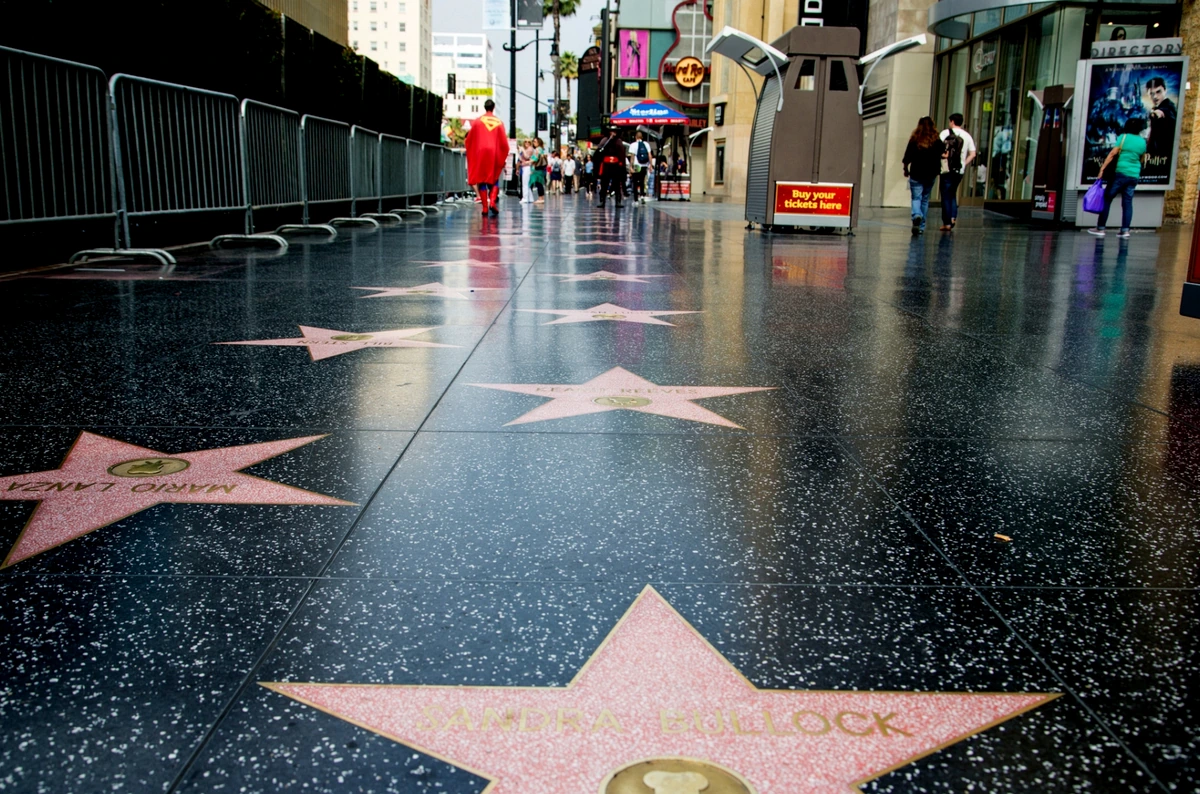
Alongside its macro-level planning vision, the engineering and surface craftsmanship of the Walk of Fame sidewalk is a masterpiece of urban material art. Each commemorative tile is a refined technical piece combining premium terrazzo with a sturdy brass frame. The five-pointed coral-pink star is cast monolithically from a specialized terrazzo blend, standing out against a subdued yet refined charcoal terrazzo background. Each star’s outer rim, along with the honoree’s name and category emblem (motion pictures, television, recording, radio, or live theatre), is finely cast and finished in gleaming brass. Precision terrazzo grinding and abrasion-resistant surface treatment allow the pavement to withstand millions of footsteps each year while holding up against micro-seismic ground movement in Southern California.
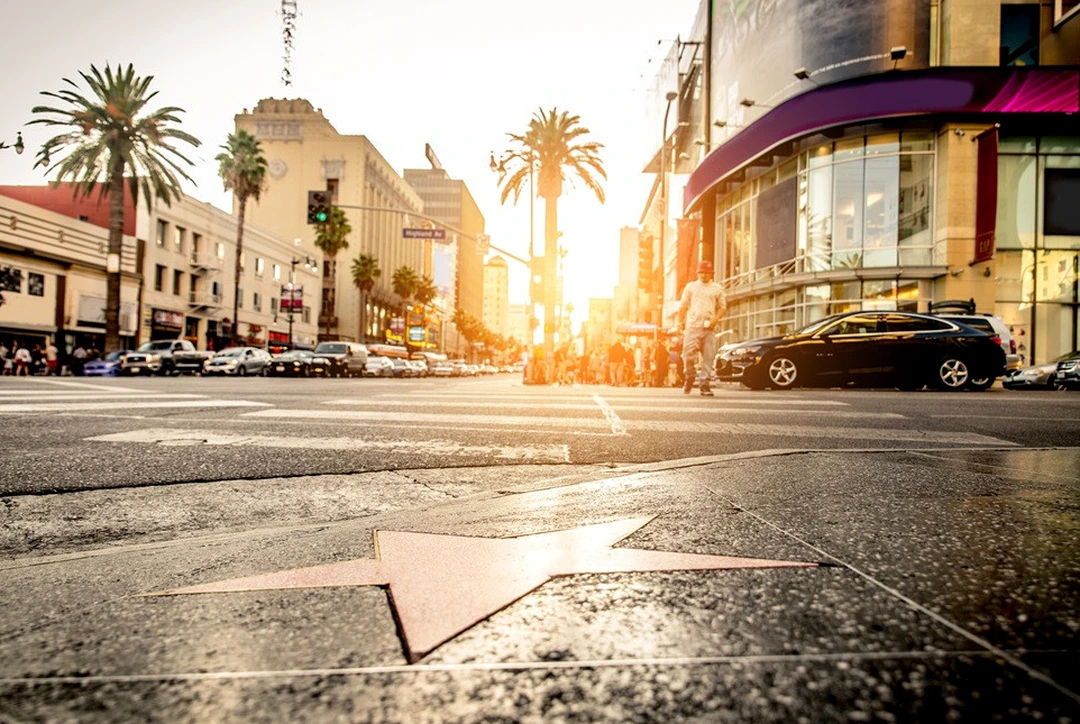
What completes the avenue’s lively atmosphere is the seamless pairing of climate and botanical landscaping. Hollywood enjoys a classic Mediterranean climate (Csa) with more than 300 sunny days a year, providing ideal natural light for outdoor strolling. Lining both sides of the street are tall Washington fan palms (scientific name: Washingtonia robusta) with slender trunks and broad, fan-shaped fronds. These striking palms do more than moderate the urban microclimate and ease summer heat; they cast dappled shade across the walkway. When Southern California’s golden sunlight filters through the palm fronds and glints off the brass stars, it creates an unmistakable cinematic scene that captivates anyone walking by.
From an urban planning and spatial structure perspective, the Hollywood Walk of Fame — also known in East Asian cultural contexts by its Chinese name 好莱坞星光大道 — is not merely a pedestrian sidewalk, but an architectural showcase spanning two major corridors in the city of Los Angeles, California. This iconic layout extends roughly 1.3 miles (about 2.1 km) east-west along Hollywood Boulevard, paired with a 0.4-mile (roughly 0.6 km) north-south stretch along Vine Street. Their meeting at the legendary Hollywood & Vine intersection creates a signature cultural axis where more than 2,700 stars unfold in a visual rhythm that feels both disciplined and radiant under Southern California skies. This spatial arrangement guides millions of visiting fans each year while turning every step along the pavement into a large-scale open-air art experience.
Beneath the gleaming surface lies a rugged structural engineering solution calculated to endure heavy pedestrian foot traffic and the seismic realities of the U.S. West Coast. The Walk of Fame’s subsurface foundation relies on a heavy-duty reinforced concrete slab roughly 15 to 20 cm thick. This solid base acts as a shock-absorbing frame, dispersing repeated downward loads from pedestrians while damping subtle ground vibrations from deep fault lines beneath Los Angeles. Combining high-strength concrete engineering with a long-term mindset creates a dependable support system that protects the stars above from wear and external stress.
Crafting the Walk of Fame’s surface reflects meticulous aesthetic judgment and master-level workmanship. The pavement uses traditional terrazzo technique elevated with a proprietary material mix. Each five-pointed coral-pink star gets its signature tone from crushed natural marble chips blended with colored cement and high-grade mineral pigments. That warm coral hue pops against the understated charcoal terrazzo surrounding it, creating a crisp, upscale contrast. Grinding and polishing the terrazzo to a smooth finish brings out a rich sheen in direct light and keeps the color steady across decades of dry, sunny weather.
At the heart of each star is an emblem representing one of the five core creative disciplines of the global entertainment industry, each cast in solid brass with fine mechanical detail. The star border and inner icons — a classic movie camera for motion pictures, a television set for television, a phonograph record for recording, a radio microphone for broadcast radio, and comedy/tragedy theatrical masks for live theatre — are cast in warm golden brass, crisply finished, and seated flush inside the terrazzo. Pairing the warm metallic luster of brass with the rich tone of ground marble creates a timeless design language that turns every inscribed name into a miniature tribute to talent and dedication.
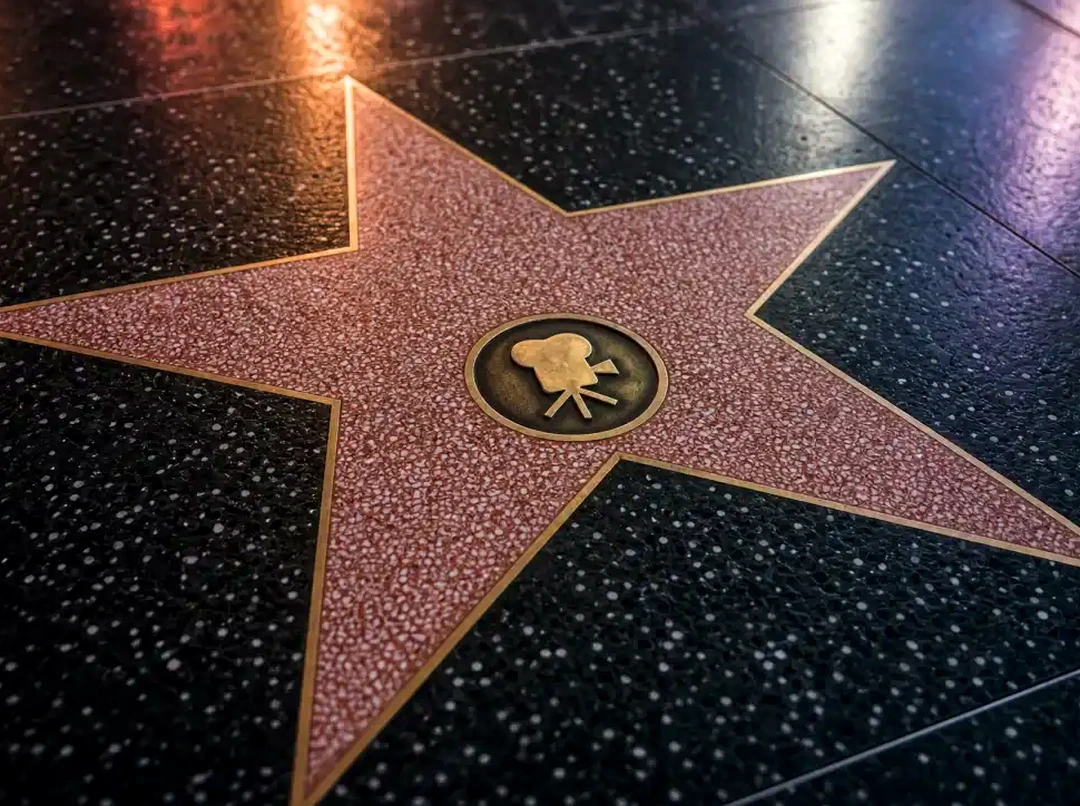
To maintain structural integrity and prevent mechanical deterioration, installation requires care down to every material joint. Every seam where brass meets terrazzo is sealed with a specialized, flexible, high-adhesion epoxy resin. This chemical barrier blocks rainwater, air moisture, and grit from seeping underneath. As a result, staining oxidation, micro-cracking from uneven thermal expansion between brass and terrazzo, and surface spalling are kept in check. Attention to these fine engineering details makes the Walk of Fame not only a priceless historic and cultural landmark, but also a strong example of modern urban landscape craftsmanship.
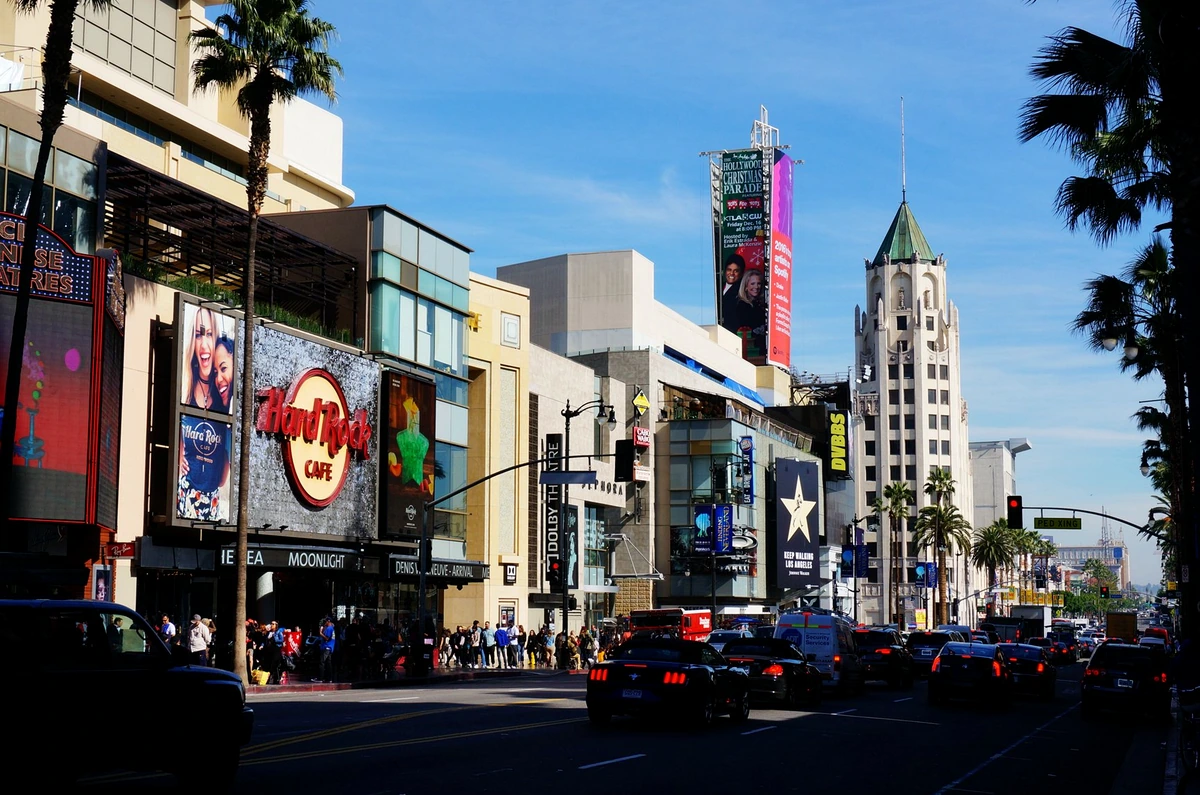
As dusk settles over the historic crossroads of Hollywood Boulevard and Vine Street, the district takes on the look of a grand open-air light gallery where contemporary illumination meets Mid-Century Modern architectural heritage. Concealed high-output LED fixtures cast colorful washes across landmark facades such as the Dolby Theatre and the TCL Chinese Theatre. Under subtle digital lighting, angular Art Deco reliefs, stepped masses, and vintage moldings come alive against the night sky like a living film set. Down below, thousands of coral-pink terrazzo stars catch the glow of oversized neon signs nearby, forming a luminous galaxy right beneath visitors’ feet.
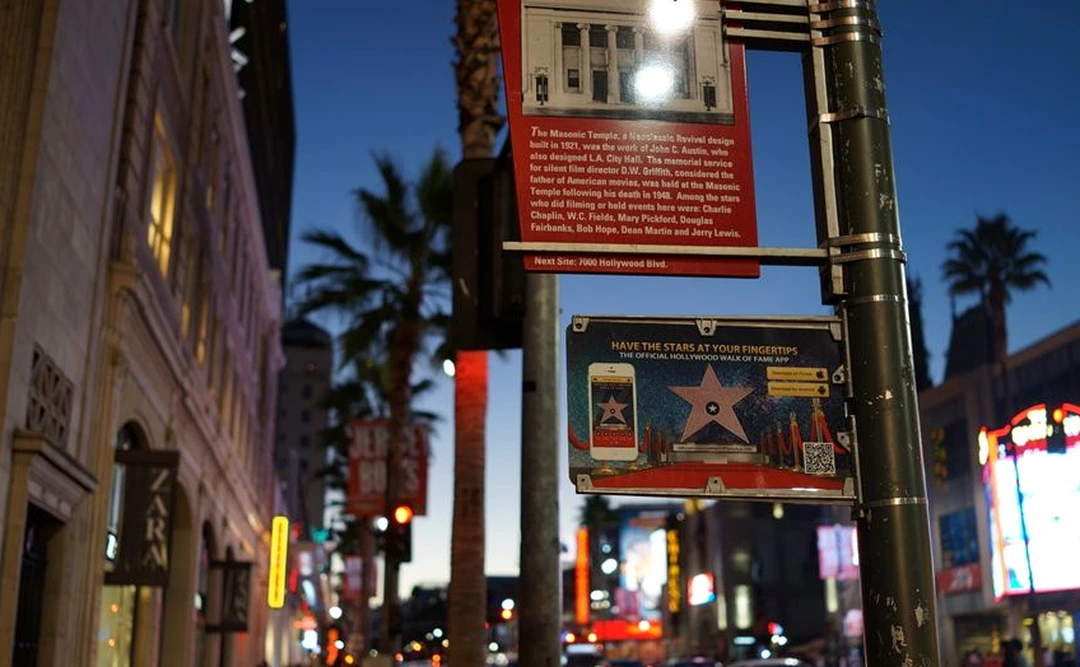
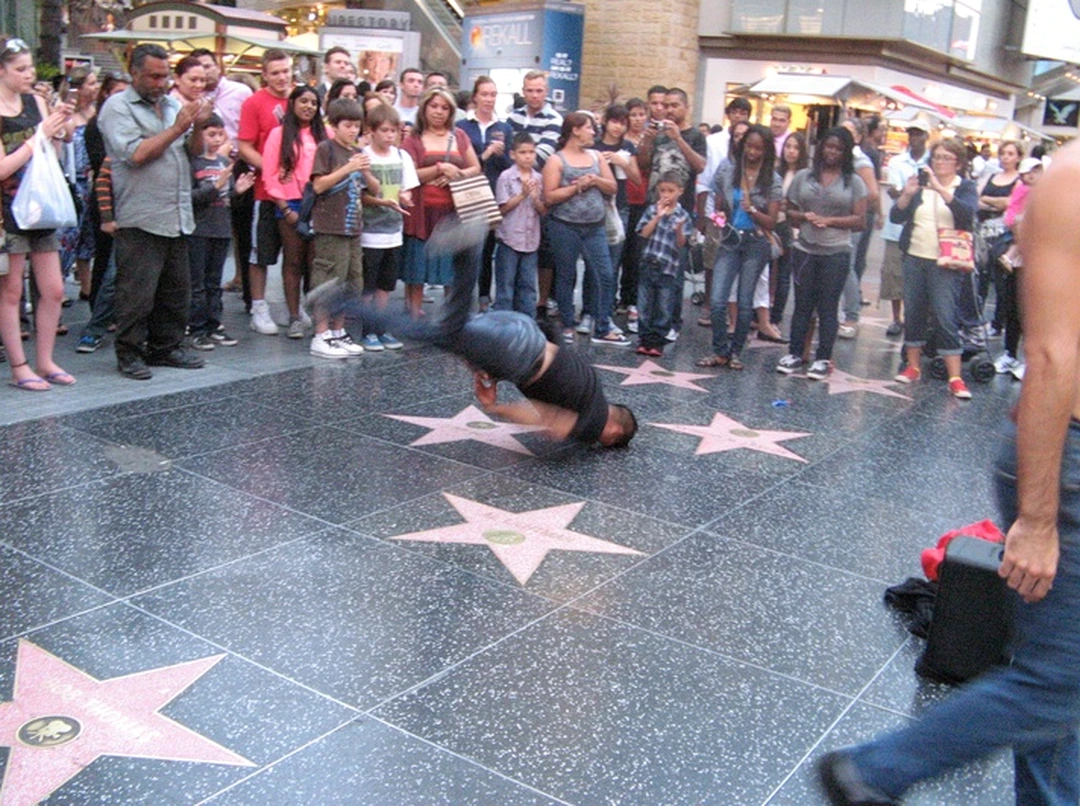
Nighttime along the Walk of Fame goes beyond passive sightseeing into an all-night street stage where the line between silver screen and real life blurs. Los Angeles’s bohemian spirit fills the corners through an array of independent street performers. Visitors often spot a Marilyn Monroe recreating her famous smile and white dress, a swaggering Captain Jack Sparrow, or a Spider-Man pulling off agile flips right over the terrazzo tiles. Weaving through the crowd are spontaneous acoustic sets, plaintive mandolin lines, and warm saxophone riffs, turning the avenue into a lively street scene shaped by the dreams and ambitions of people drawn to the film capital.
Evening energy around the boulevard also flows through its lively dining and nightlife venues. Rooftop bars atop heritage hotels look out over long ribbons of street lights, where guests can sip classic cocktails while watching evening traffic illuminate the corridor. Warm aromas from street carts blend with Pacific breezes drifting down from the Hollywood Hills, creating a full multi-sensory experience. Restaurants near the Chinese Theatre and surrounding entertainment complexes serve upscale fare while drawing culture lovers, film critics, and night owls exploring Los Angeles after dark.
Taken together — from lighting that highlights Art Deco heritage and free-spirited bohemian character performers to evening dining and nightlife — the Hollywood Walk of Fame operates as a grand open-air stage. It is more than a place that records screen legends; the setting itself stays alive, sparking inspiration and carrying pop-culture history across generations.
Exploring the art and history of the Hollywood Walk of Fame (好莱坞星光大道) feels incomplete without sampling its dining scene, which blends classic Hollywood cinema heritage with California fusion cuisine. Around the star-lined route, kitchens that have stayed busy for decades serve memorable meals while holding stories and anecdotes tied to global screen icons. From refined dining rooted in Hollywood’s Golden Age to late-night street bites on corner blocks, the local food scene carries its own pull, turning every flavor into a nostalgic trip back in time.
The flagship of the film capital’s oldest dining heritage is Musso & Frank Grill, an architectural and cultural landmark founded in 1919. Proud to be Hollywood’s oldest continuously operating fine-dining restaurant, it once welcomed legends such as Charlie Chaplin and Marilyn Monroe, alongside literary figures like Ernest Hemingway and F. Scott Fitzgerald. Stepping past Musso & Frank Grill’s dark oak doors feels like entering the 1920s, complete with classic red leather booths and tuxedo-clad servers upholding old-school hospitality. Signature menu staples center on dry-aged steaks cooked over real wood or charcoal for deep flavor, alongside rich Fettuccine Alfredo prepared in the classic style that delighted silent-era stars. In particular, a Prohibition-era Martini mixed by seasoned bartenders to exact proportions and poured from classic silver shakers has become a signature drink any food lover wants to experience at least once.
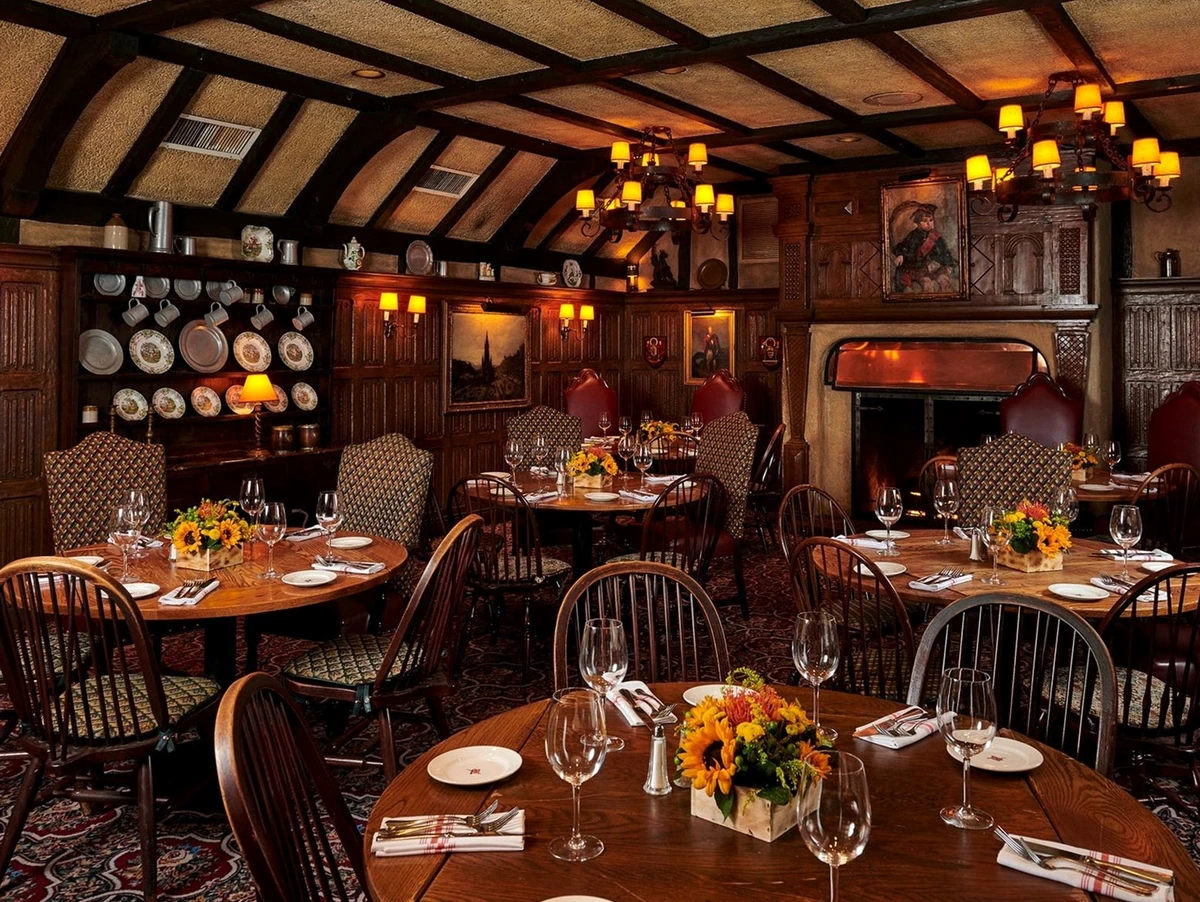
A short distance away, another storied heritage spot with nostalgic charm is Tam O’Shanter, opened in 1922 with a distinctive Scottish theme. Known for its thatched-style roof detailing and timber accents, this is the spot Walt Disney visited regularly over the years for creative inspiration. Inside, Booth 31 is still remembered as a second creative workshop for Walt Disney and his early studio collaborators. The dish that has defined Tam O’Shanter for over a century is slow-roasted prime rib, cooked for tenderness while keeping the natural sweetness of prime beef. Served traditionally from classic silver carving carts with crisp British-style Yorkshire pudding and zesty horseradish cream, it offers a warm, European-inflected meal in the middle of energetic California.
A lively contrast on Hollywood’s food map comes from the street-food culture that picks up after dark along the Walk of Fame. That is when food carts fill the air with the mouthwatering aroma of Los Angeles bacon-wrapped hot dogs (LA street hot dogs). Sausages wrapped tightly in savory bacon sizzle on hot griddles alongside onions and jalapeños, finished with squiggles of mayonnaise, mustard, and ketchup. Spicy, savory, and rich, this late-night staple has long been a familiar comfort for visitors and locals winding down after strolling past the brass stars.
Dining around the Hollywood Walk of Fame therefore reflects Los Angeles’s layered history and diverse urban character. Bringing together century-old restaurants, creative landmarks tied to pioneering storytellers, and lively street-food energy makes for a distinctive culinary trail. For visitors, sharing a historic dinner or grabbing a late-night street bite right in central Hollywood is one of the most direct ways to feel the pulse of the world’s film capital.
Planning a visit to the Hollywood Walk of Fame (好莱坞星光大道) does not require rigid timing or a steep entry budget, since the outdoor landmark is open freely 24/7 with no admission fee. Visitors can stroll over the terrazzo stars at any hour of the day, from quiet early morning light until neon signs brighten the Los Angeles night. However, if your plans also include shopping, visiting historic venues like the TCL Chinese Theatre, or exploring the Hollywood & Highland complex, surrounding shops and attractions typically run best between 10:00 AM and 10:00 PM. Knowing that daily rhythm helps you pace your schedule to take in both the streetscape and nearby entertainment.
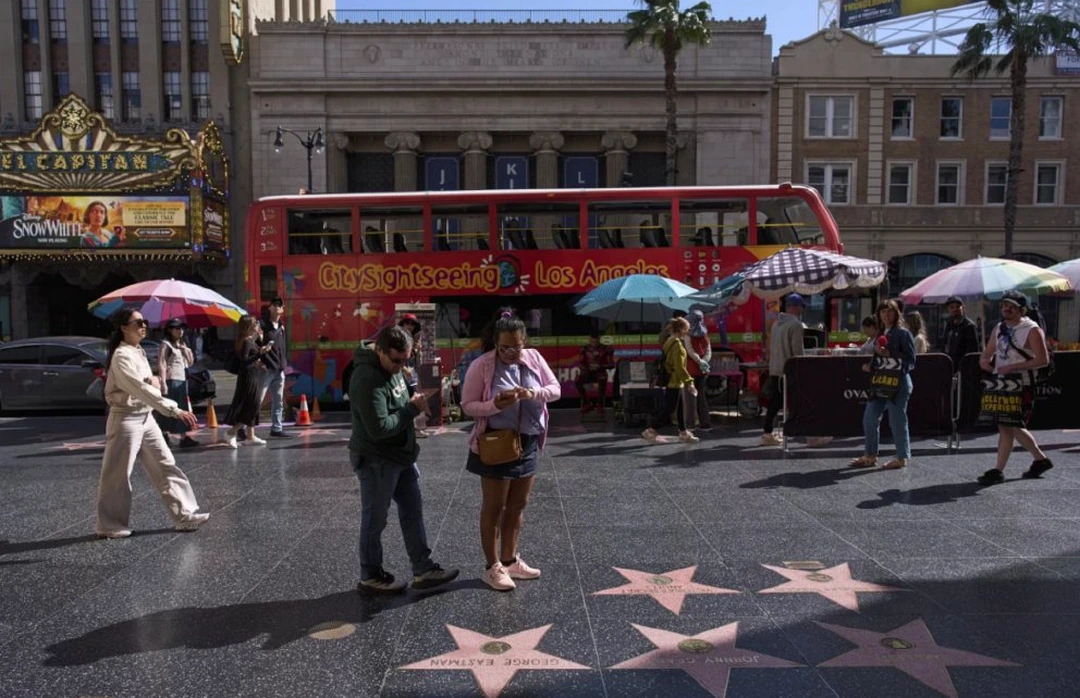
To make the most of your visit and avoid the notorious traffic jams that plague Los Angeles, travel planners widely recommend taking the Metro B Line (formerly Red Line) subway. Rather than circling for parking that can cost tens of dollars per hour in central lots, you can step out right at either Hollywood/Vine or Hollywood/Highland. From those transit hubs, a practical walking route starts near La Brea Avenue, heads east past Highland Avenue, and finishes around Vine Street. This 1.5- to 2-hour walk covers major film and music stars while letting you notice how the boulevard’s architecture shifts along the way.
Walking the star-lined pavement also calls for practical personal prep so your day stays comfortable and hassle-free. Because heavy foot traffic over decades leaves occasional stuck gum and firm terrazzo underfoot, supportive sneakers with good cushioning are essential for a long walk. Another distinct feature along the avenue — one that can cause headaches — is costume characters posing as fictional film icons. If you chat with or take photos alongside them, agree clearly on photo fees or tips upfront so you avoid awkward pressure or surprise charges after the shutter clicks.
Behind the bright lights of the entertainment capital, basic street safety in central Los Angeles is something visitors should never overlook. Dense crowds and mixed foot traffic make the area attractive to pickpockets and petty thieves, so keep valuables, passports, and electronics in secure bags with reliable closures. In addition, heading east toward Gower Street after dark, the street gets noticeably quieter and sparser; avoid walking alone through side alleys or quiet stretches there after 10:00 PM to steer clear of unnecessary safety risks.
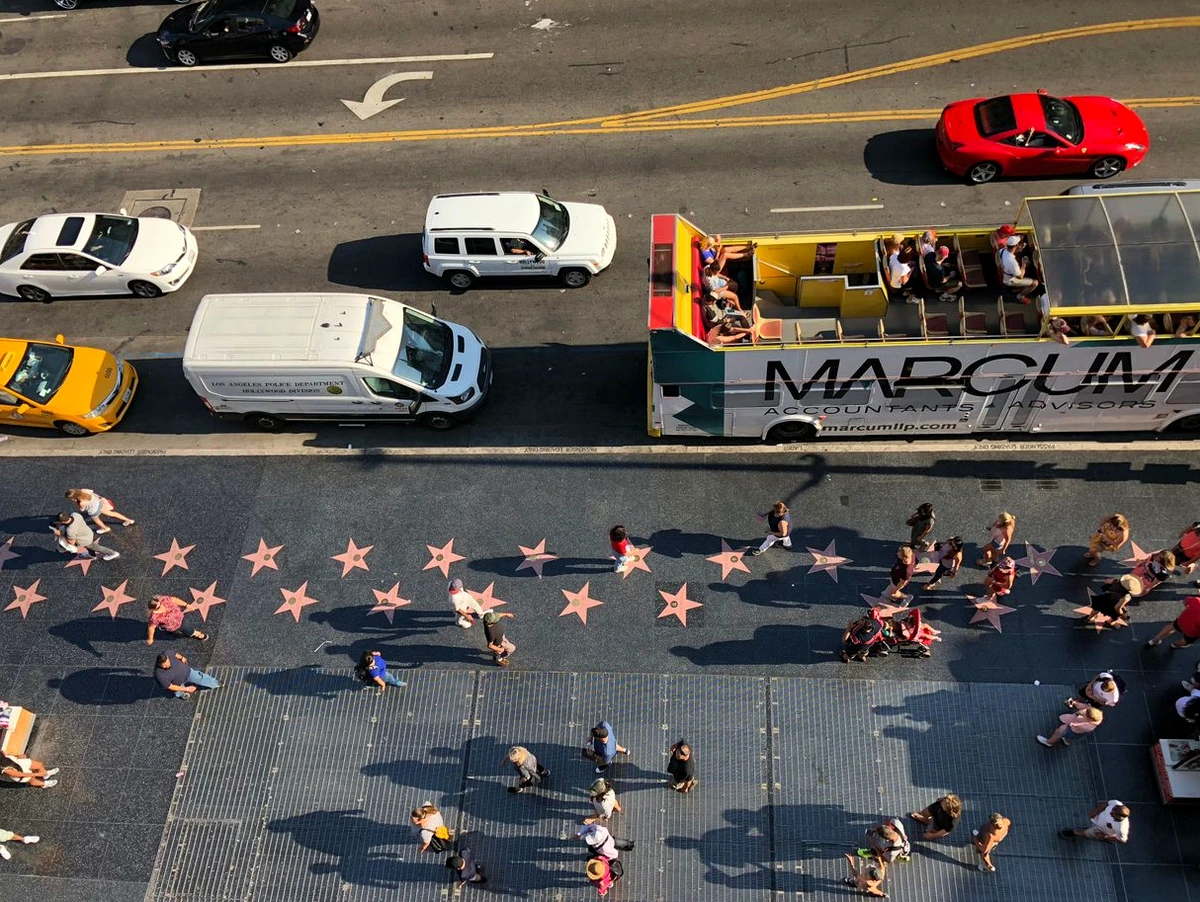
Wrapping up your journey into landmarks of the seventh art, the Hollywood Walk of Fame is more than a busy photo stop — it is a wide-open encyclopedia set right into the city grid. Keeping practical tips in mind, from riding the subway and handling street interactions to staying alert around personal security, helps make your visit smoother, calmer, and more rewarding. To turn the dream of seeing legendary stars into reality while taking in modern West Coast life, check out the detailed itinerary in our US West Coast tour for a well-paced trip filled with lasting memories.