Nestled at the foot of the pine-covered Longquan Mountains, Luodai Ancient Town (洛带古镇) unfolds like a vivid chronicle from the dawn of the Ba-Shu civilization. Originating in the distant Western Han Dynasty, this fertile land was once a roadside market known as Wanjing Street (万景街). It was not until the turbulent Three Kingdoms period, when the Shu Han (221–263) established its base in this fertile basin, that the town truly entered an era of brilliant prosperity. During the Jianxing era, Prime Minister Zhuge Liang, with his exceptional economic and military foresight, established a bustling trade hub, renaming it Wanfu Street (万福街), affectionately called “Wankepan” (万客盘) by the scholars and travelers of the time. The name “Luodai” was etched into folklore through a fascinating legend: during a royal inspection, the Crown Prince of Shu Han, Liu Shan (known as A Dou in his childhood), accidentally dropped his precious jade belt into an ancient octagonal well. From this “belt-dropping” (Luo Dai) anecdote, the land became known as Luodai (落带). Later, ancestors cleverly changed the character “Luo” to the one with the water radical (洛), symbolizing the use of auspicious water to suppress fire and harmonize the thousand-year-old dragon vein energy.
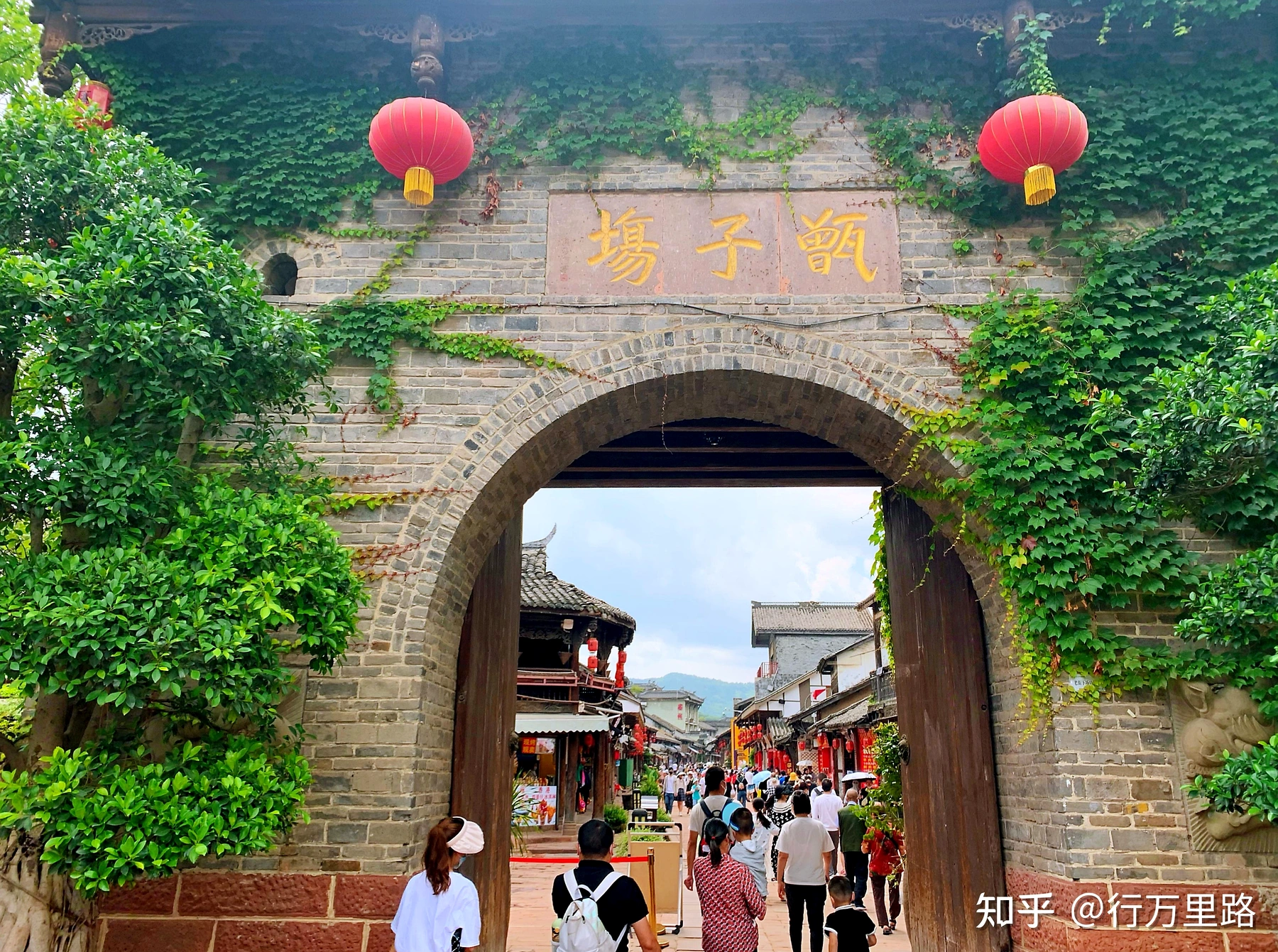
Through the shifting tides of successive dynasties, Luodai’s strategic importance on the regional geopolitical map grew. During the Tang and Song dynasties, the ancient town was incorporated into Lingquan County (灵泉县) under the Chengdu Prefecture, serving as a vital relay station on the Dongchuan arterial road, hosting countless supply troops, imperial envoys, and bustling merchant caravans. By the Ming Dynasty, it fell under the jurisdiction of Jianzhou. In the early Qing Dynasty, the town was known as Zhenzichang (甑子场) due to its basin-like topography resembling a traditional rice steamer, before the imperial court and the people officially restored the dignified name of Luodai, returning the town to its glory as a cultural gathering point of the South.
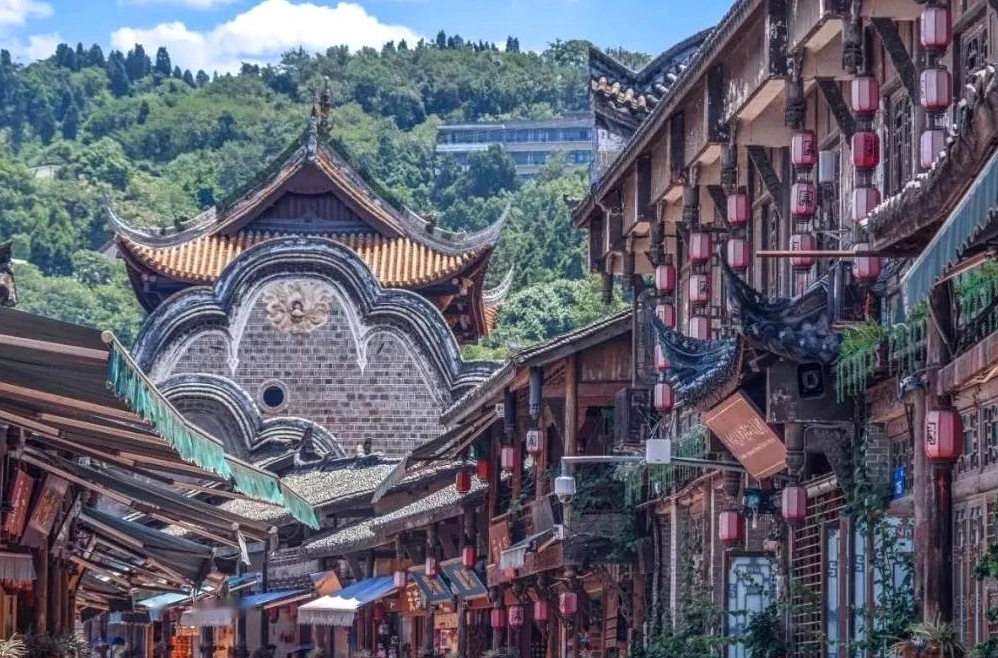
Strolling through the heart of the ancient town today, visitors can easily feel the quietude of a heritage space that retains the breath of time. The winding stone-paved streets are lined with dark wooden houses, their yin-yang tiled roofs undulating with moss, punctuated by rows of vibrant red lanterns hanging high along the cool, shaded eaves. In the background, standing out against the lush, green-covered hills, is a massive ancient architectural structure with sturdy brick walls and elegant curved roofs, exuding a solemn, antique charm amidst the peaceful atmosphere of the old trading port.
However, the most profound historical turning point that transformed Luodai into a unique cultural oasis within the Sichuan Basin stemmed from the violent events of the late 17th century. After the tragic years of the Zhang Xianzhong war left the Shu region in ruins, with barren land and sparse population, the Manchu Qing court issued a policy that would forever change the destiny of this land. In the 33rd year of Kangxi (1694), the “Encouraging Migration to Sichuan” edict, part of the great “Huguang Fills Sichuan” (湖广填四川) movement, was officially promulgated. Waves of resilient Hakka migrants crossed thousands of miles of mountains from Meizhou and Huizhou in Guangdong, Ganzhou in Jiangxi, as well as regions in Fujian and Lianghu, flocking here to reclaim the land and build their lives. Through their industrious hands and iron will, they turned Luodai into the “Number One Hakka Town in Southwest China” (中国西部客家第一镇). To this day, over 85% to 90% of the local population are pure-blooded Hakka descendants, persistently preserving their ancient dialect and unique customs in the heart of Sichuan.
Located at coordinates 30°38’24″N and 104°19’35″E in the Longquanyi District, Luodai Ancient Town has held a key feng shui position on the eastern edge of the Chengdu Plain since time immemorial. Since ancient times, this territory has been revered by geomancers and feudal strategists as the “Eastern Gateway,” acting as a crucial bolt guarding the entire eastern entrance to the Shu capital, controlling the vital trade artery connecting the fertile plains with Chongqing. From a grand feng shui perspective, Luodai fully enjoys the classic “backed by mountains, facing water” topography. Behind the ancient town, it rests firmly against the vast, undulating Longquan Mountains, which act as a natural screen shielding it from cold northern winds, while the front opens expansively toward the fertile alluvial fields nourished by the historic Jinjiang River.
This natural positioning places Luodai entirely within the invaluable ecological buffer zone of the Longquan Mountain Urban Forest Park – the world’s largest urban forest park with an impressive scale of 1,275 km². The perfect synergy between dense vegetation and the gentle slopes of the mountains creates a microclimate that is exceptionally pure and mild year-round. On quiet mornings, moisture rising from the valley condenses into wisps of mist clinging to the trees and mossy roofs, softening the sweltering heat of the South. The fertile soil at the foot of the Longquan Mountains is also the cradle of famous sprawling peach orchards; every spring, around March and April, they bloom in unison with charming pale pink hues, embracing the entire ancient settlement structure.
The feng shui lifeblood of this land is not only concentrated in the mountains but also flourishes through the intricate water veins winding through the town. The gentle Luoshui canal meanders through every house and gray brick wall, harmoniously combined with abundant groundwater originating from the Octagonal Well, which dates back to the Song Dynasty. According to traditional geomancy, the combination of the natural flow and the sacred octagonal well creates a perfect “gathering water, gathering wealth” structure, ensuring that vital energy (qi) is not dispersed but accumulated abundantly, bringing sustainable prosperity and dispelling negative energy from afar.
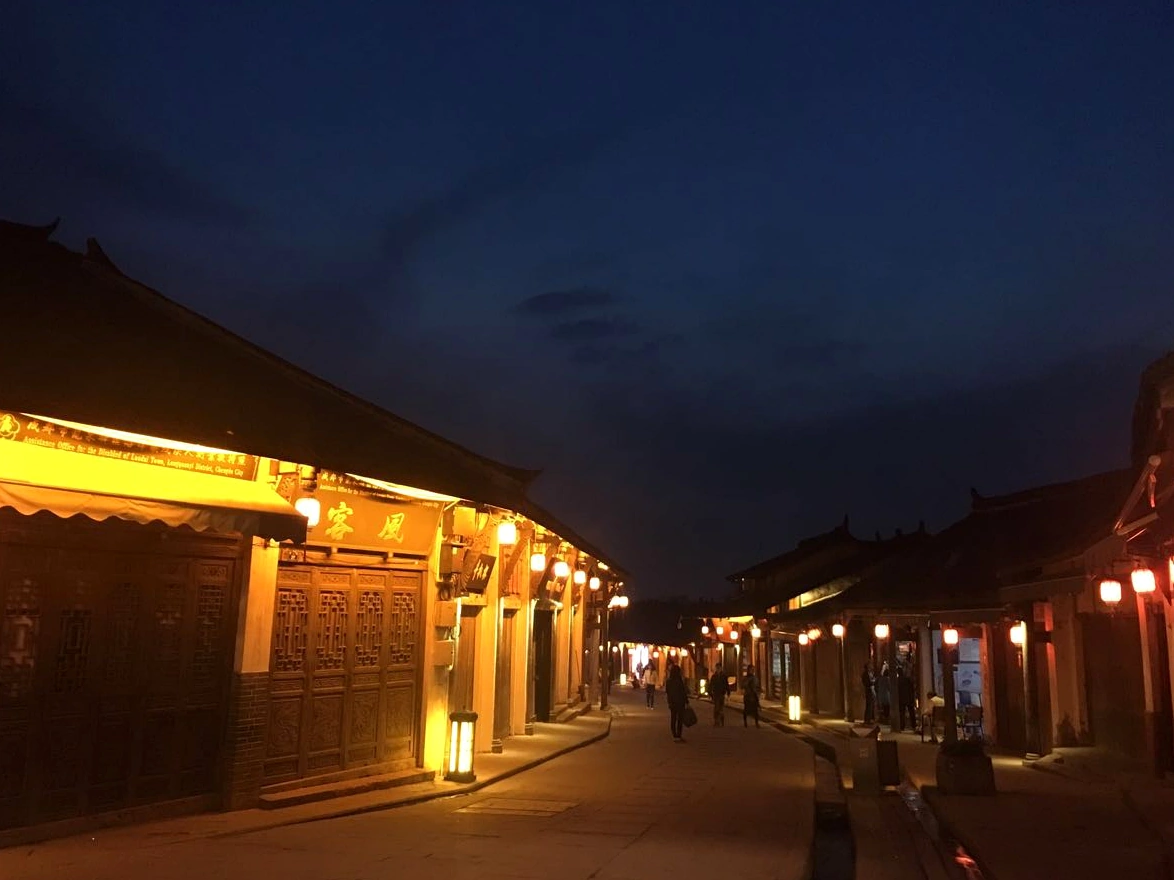
The town’s landscape unfolds vividly along the main street paved with smooth blue stone, where the bustling crowds create an atmosphere of endless prosperity. Along the left side of the street, traditional wooden houses stretch their curved tiled roofs toward the sky, brightened by rows of crimson lanterns hanging along the facades of the closely packed shops. Standing out in the center is a massive structure featuring a multi-tiered roof and incredibly intricate dragon and phoenix reliefs. From this nostalgic perspective, the silhouettes of modern skyscrapers occasionally appear in the distance, creating a surreal visual intersection between a tranquil heritage space and the pulse of contemporary urban life.
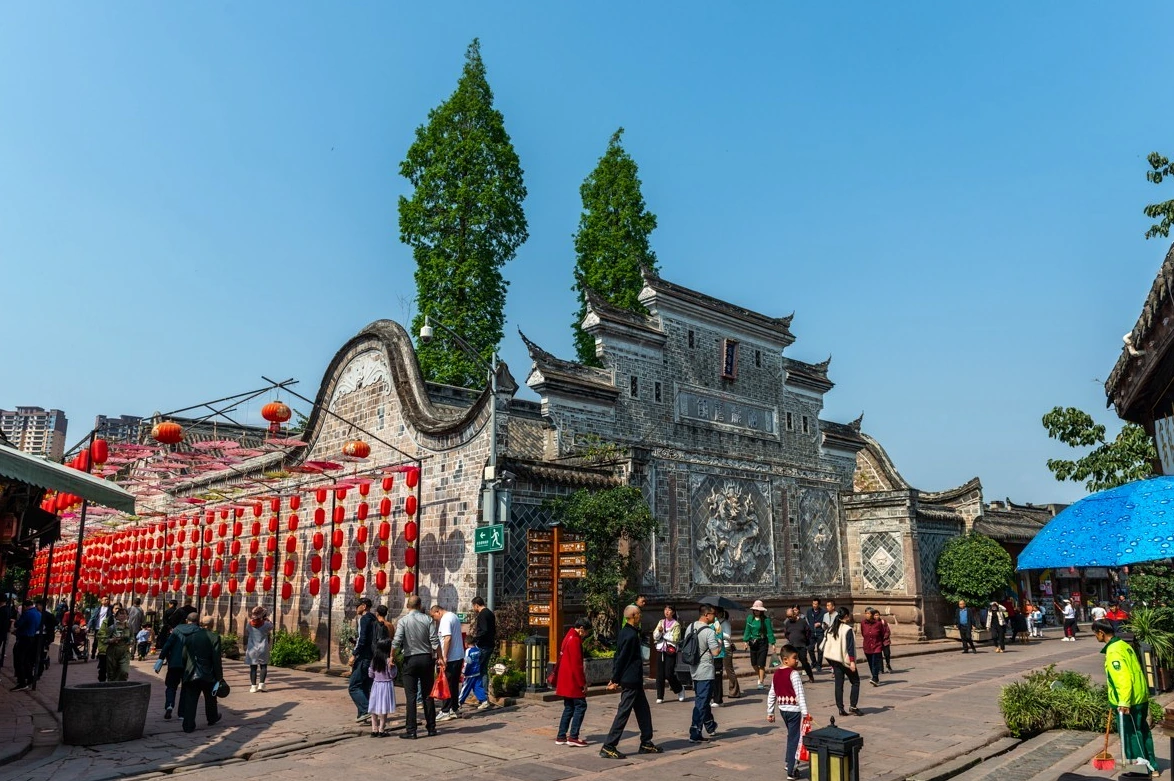
The town’s overall layout is deeply rooted in the topography of the semi-mountainous terrain. Instead of flattening the land, the ancestors cleverly followed the gentle slopes of the hills to design a fishbone-style street grid, creating a perfect natural drainage system that keeps the area free from flooding even during the harsh rainy seasons of the Sichuan basin. Located approximately 18 km from the center of Chengdu city, this place serves as an ideal ecological stopover, where people can immerse themselves in the expansive nature of the mountains and forests while being sheltered within a peaceful settlement structure that has endured for centuries.
The master plan of Luodai Ancient Town strictly adheres to the classic “One Street, Seven Alleys” pattern, which was established during the prosperous wave of migration in the early Qing Dynasty. The town’s backbone is a long, blue slate-paved road that divides into two sections, Upper Street and Lower Street, branching out into seven mossy, ancient alleys such as Tulai Alley and Bagua Well Alley. Along these paths are rows of ancient commercial townhouses, built with wooden frames held together entirely by traditional mortise and tenon joints without the use of iron nails. Each facade features flexible folding doors, topped with dark gray yin-yang tiles covered in a layer of time-worn moss, while the base of the walls is clad in sturdy red sandstone to prevent moisture from the basin region. Notably, beneath the stone road surface lies a solid underground drainage system dating back to the Qianlong era, ensuring the entire residential area remains free from flooding even during the torrential rains of the Shu region.
The most valuable highlight that defines the reputation of the Luodai heritage is the Four Great Guild Halls complex, recognized as a National Key Cultural Relic. Most prominent among them is the Guangdong Guild Hall, also known as the Nan Taiping Palace, which was founded in the eleventh year of the Qianlong reign and underwent a major renovation in the eighteenth year of the Jiaqing reign, covering an area of over three thousand square meters. The structure bears the distinct Lingnan architectural style with massive ironwood columns, multi-tiered curved roofs, and exquisite ridge decorations featuring the “two dragons playing with a pearl” motif alongside intricate Shiwan ceramic figurines. Not far away is the Jiangxi Guild Hall, named Wanshou Palace, built by merchants from Ganzhou in the mid-eighteenth century. The building makes a strong visual impression with its towering “horse-head” firewalls, which provide both a sense of majesty and fire protection, while inside it houses an ancient opera stage with a carved wooden ceiling featuring scenes from the Three Kingdoms, representing the pinnacle of wood carving art.
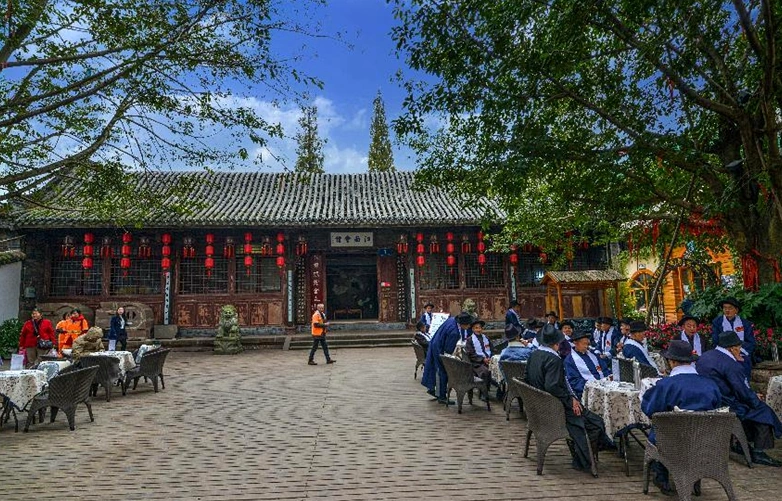
Completing this diverse community architectural picture are the Hu-Guang Guild Hall, dedicated to Dayu, and the rustic Chuanbei Guild Hall. The Hu-Guang Guild Hall features a continuous courtyard structure covering nearly two thousand eight hundred square meters, where ancient stone steles remain intact, recording the arduous migration journey of thousands of compatriots from Huangzhou to Sichuan to build their lives. In contrast to the ornate beauty of the southern guild halls, the Chuanbei Guild Hall distills a pragmatic spirit through its simple beam-frame system and wide, overhanging eaves that shield against persistent rains, creating a harmonious blend of ancestral identity and local customs.
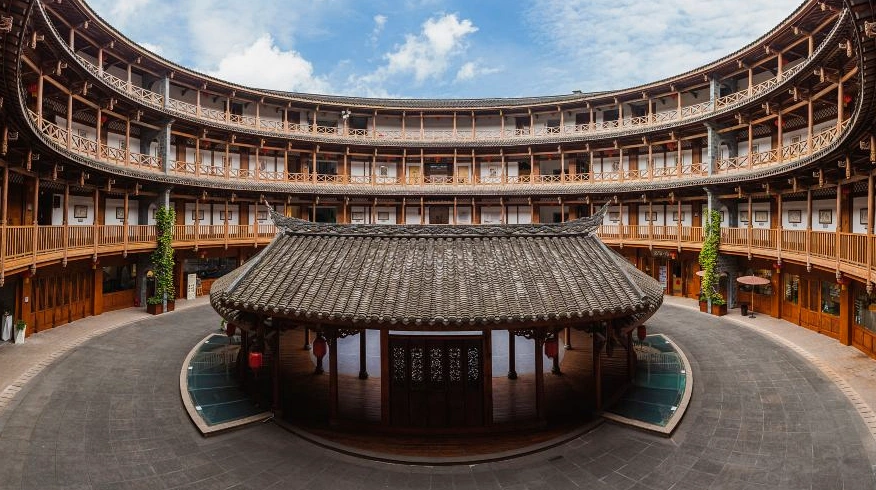
Standing majestically and prominently within the heritage complex is the Hakka Building (Kejia Lou), a masterpiece of circular multi-story Tulou architecture modeled after the famous Yongding style of the coastal Hakka people. The interior space opens into a vast, airy circular courtyard, where an ancient octagonal pavilion with dark tiled roofs and rustic wooden columns stands at the center, serving as an ideal resting place for travelers from all over. The concentric tiers of the building rise high, highlighted by balconies with elegant X-shaped wooden railings and rows of vibrant red lanterns, evoking a deep, mysterious beauty reminiscent of a classic period film.
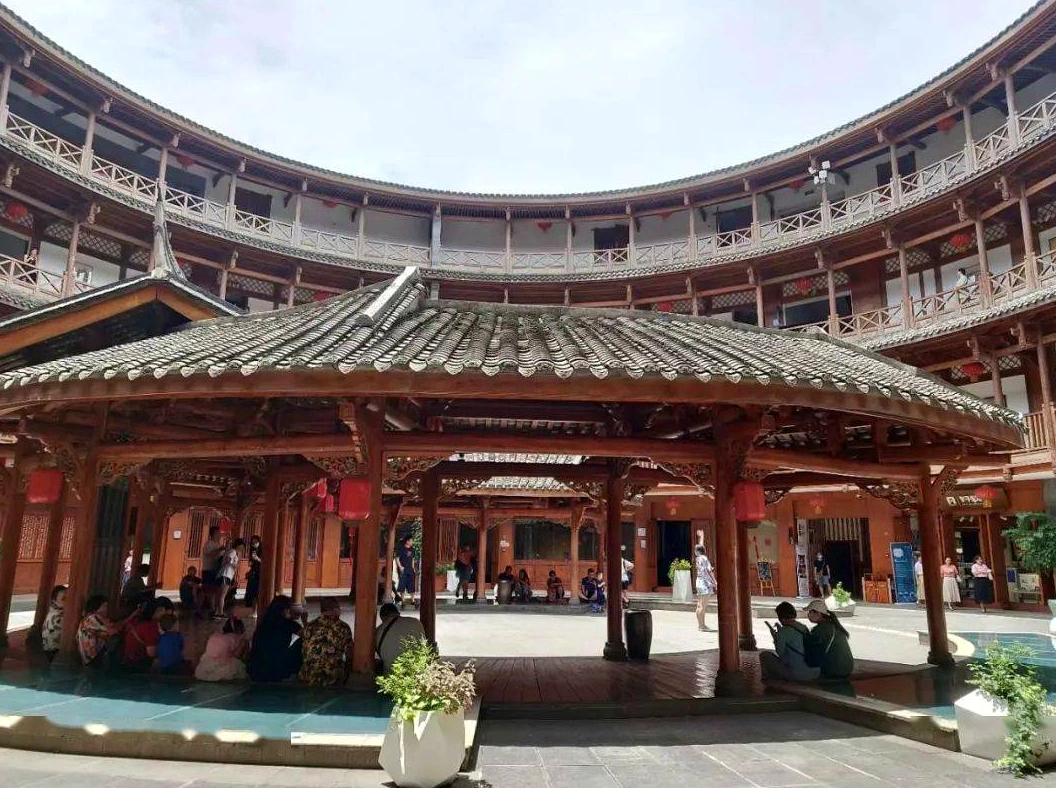
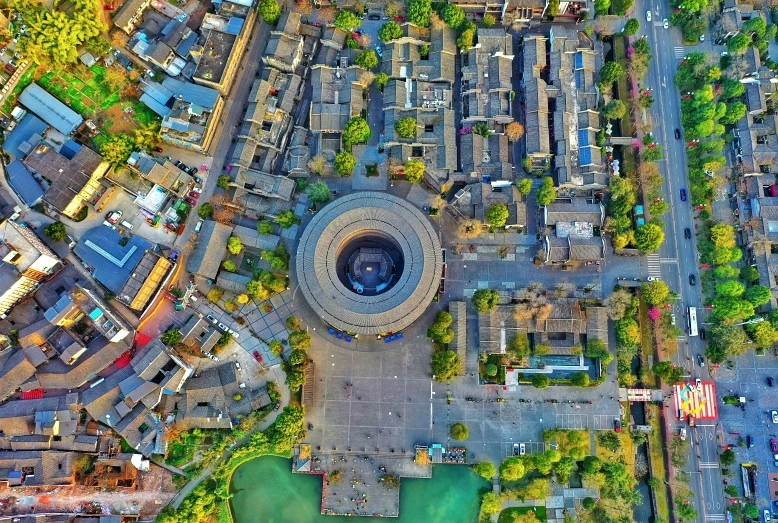
The scale of Bake Lou reflects an extraordinary defensive mindset and sense of clan cohesion, with a base diameter exceeding fifty meters. The outer walls are constructed using traditional rammed-earth techniques, reaching up to a meter in thickness. Their muted ochre hue provides perfect insulation against both harsh winters and sweltering summers. Inside, the four-story enclosed structure focuses its view toward a central skylight opening up to the deep blue sky; it currently serves as the premier Sichuan Hakka Culture Museum. The contrast between the sturdy rammed-earth exterior and the intricately carved wooden interior makes this tulou a vivid symbol of the resilience and determination of migrants who put down roots in a new land.
As the last rays of the day fade behind the Longquan Mountains, Luodai Ancient Town sheds its daytime tranquility to undergo a magical transformation between 6:00 PM and 9:30 PM. Warm golden lights and hundreds of crimson lanterns begin to illuminate the slate-paved alleys and follow the contours of the old walls, turning the historic heritage site into a mystical scene reminiscent of the classic animated film “Big Fish & Begonia.”
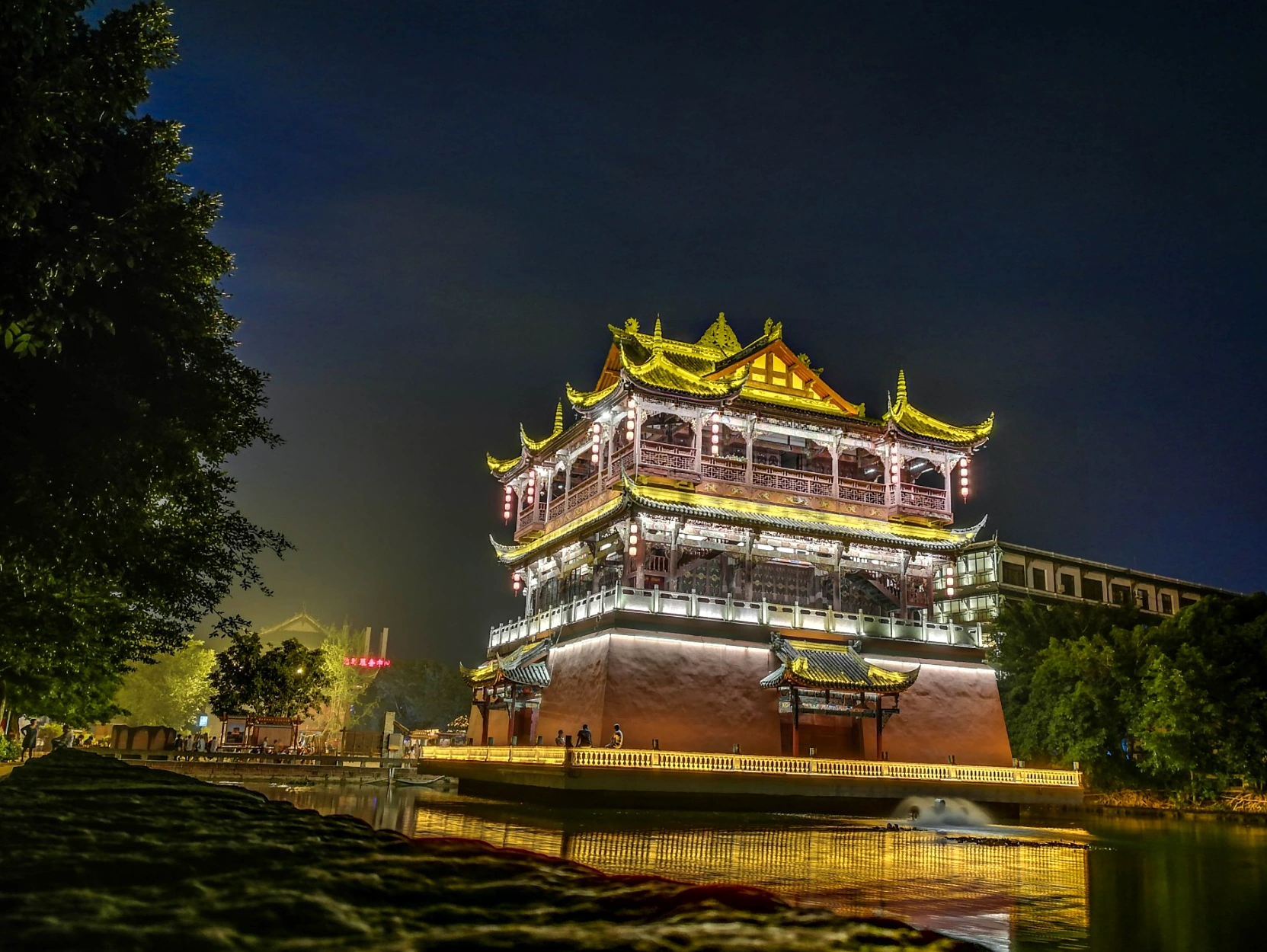
Standing proudly beside the serene Luoshui Canal, the multi-story traditional architecture shines brilliantly in the night, with its curved, tiled eaves gilded in golden light. Rows of red lanterns hanging along the floors cast a warm glow, reflecting shimmering patterns on the calm water. The lush, ancient trees on both banks sway gently in the breeze, framing the waterfront promenade where visitors stroll leisurely to admire the grandeur of the ancient building in the quiet atmosphere.
A breakthrough highlight elevating the ancient town’s night economy to an artistic peak is the “Night Tour of Luodai” (洛带夜游) project, with a total investment of 180 million RMB. Moving beyond simple landscape lighting, the project utilizes complex 3D mapping technology combined with state-of-the-art laser lighting that covers the entire surface of the massive curved walls of the Bake Lou Tulou. Against the backdrop of the monumental rammed-earth architecture, vivid light projections magnificently recreate the epic “Huguang fills Sichuan” – the historic, arduous, yet resilient migration of the Hakka ancestors as they traveled thousands of miles to the Sichuan Basin to establish their new homes.
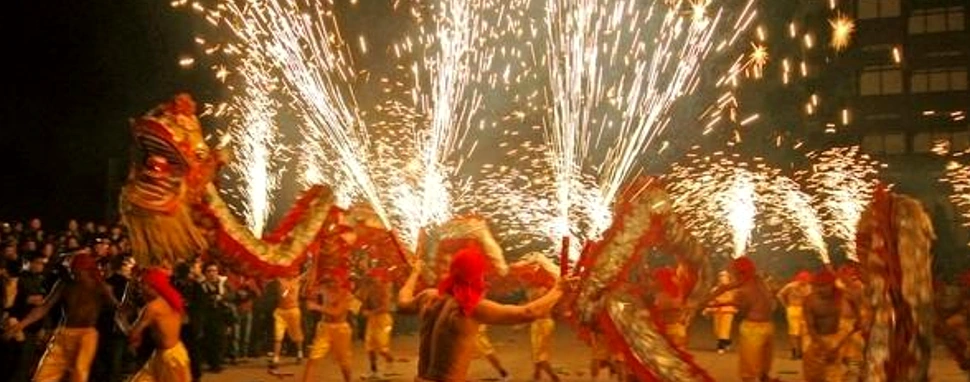
During traditional festivals or major celebrations, the ancient town is ignited by a primal and exhilarating cultural ritual: the Hakka Fire Dragon Dance, a national intangible cultural heritage. Before the eyes of thousands of travelers, robust performers dance with a flaming straw dragon, weaving rhythmically through a shower of molten iron sparks known as “Da Tie Hua” (Iron Flower Smelting). At temperatures reaching over 1,600 degrees Celsius, the liquid iron is flung into the air, creating a waterfall of sparks that illuminates the night sky of the Bashu region, offering a sacred ritual of warding off evil and praying for blessings that provides a breathtaking visual experience.
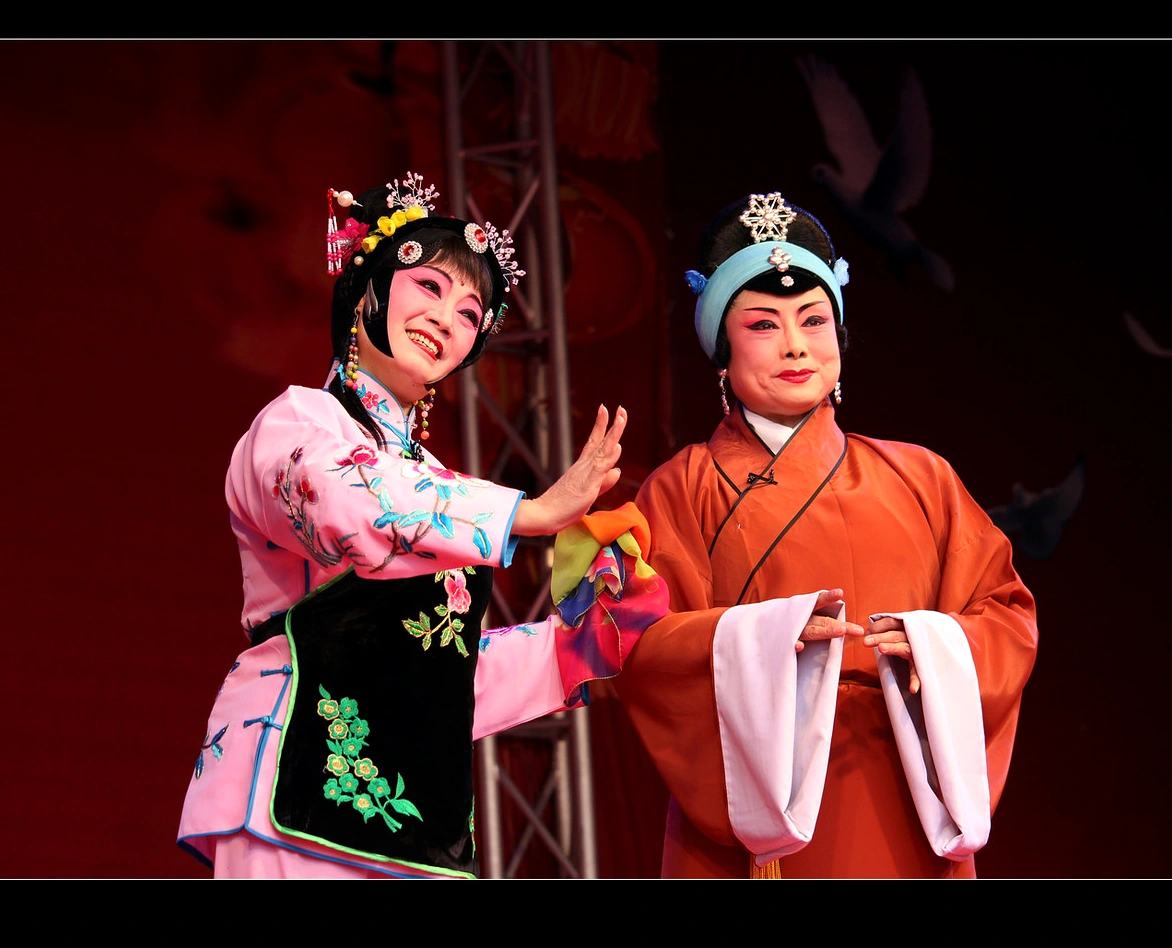
The nightlife in Luodai is marked by a sophisticated harmony between nostalgia and contemporary flair, embodied by the “New Chinese Style” tea bar ecosystem. Within the solemn, ancient courtyard of the Guangdong Guild Hall, visitors can sip Tieguanyin or Eight-Treasure tea while being mesmerized by the legendary Sichuan Opera, featuring the lightning-fast “Face-Changing” (Bian Lian) technique and powerful fire-breathing performances. As the night deepens, the ancient town belongs to the youth, with immersive historical role-playing workshops (LARP/Jubensha) running through the night at the Bo Ke Lou complex. Donning traditional Hanfu and searching for clues through winding, enclosed wooden corridors transforms every visitor into a living character within a vivid historical novel set in the heart of this thousand-year-old town.
The cultural soul of Luodai Ancient Town is deeply crystallized in its unique culinary landscape. Like a cultural oasis in the heart of the Sichuan Basin, Luodai boasts an exquisite gastronomic map where the delicate, wholesome Lingnan culinary philosophy of the Hakka people meets the fiery, numbing intensity of the Shu region. The great migration from centuries ago did not just bring people to a new land; it carried ancestral taste memories, which, when blended with the abundant produce of the Ba-Shu region, transformed local dishes into living symbols of the community’s vitality and consciousness.
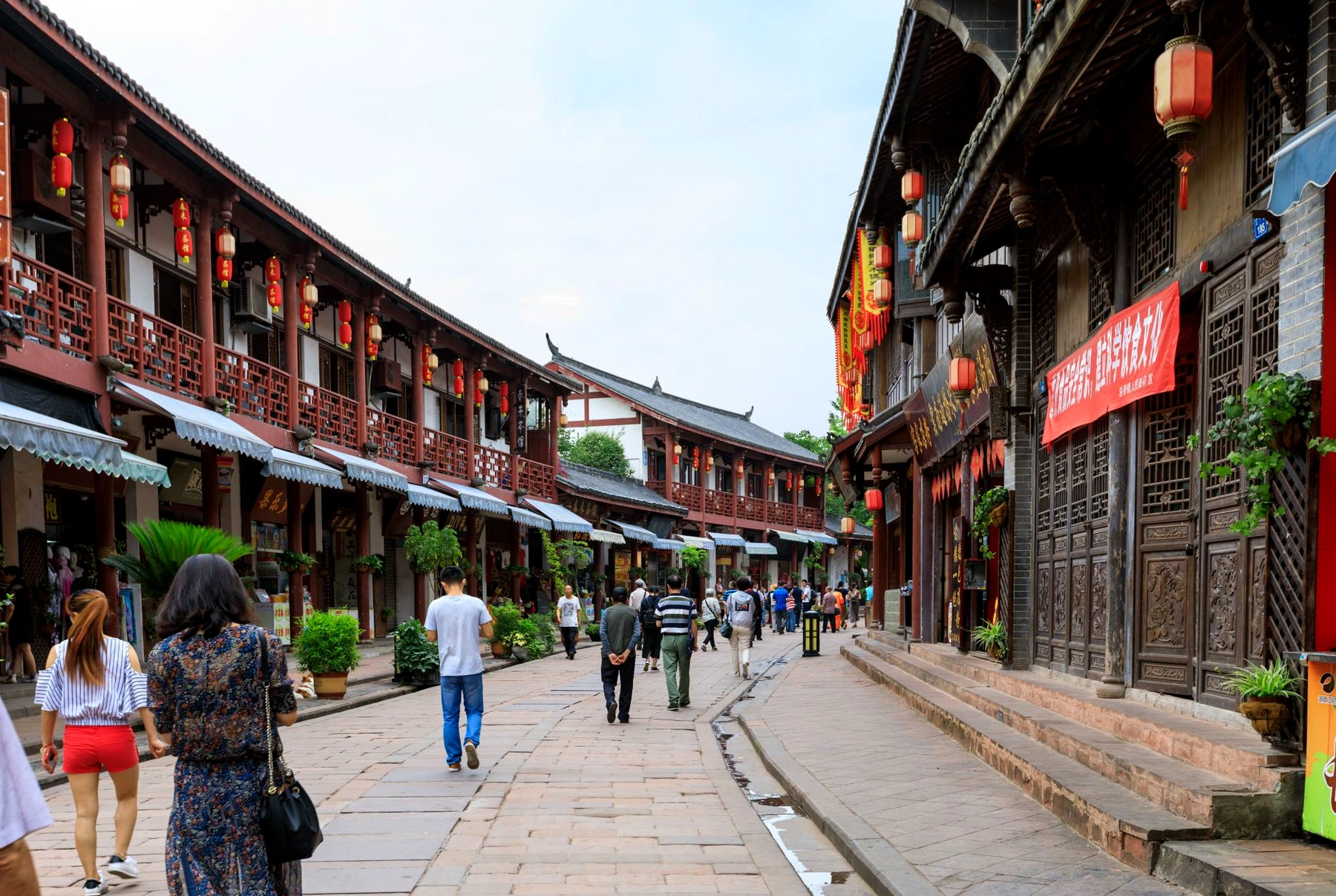
Strolling along the ancient bluestone food streets of Luodai, visitors feel as if they have wandered into a vivid, nostalgic space rich in human flavor. Flanking the mossy paths are two-story buildings featuring traditional Chinese architecture with intricately carved wooden balconies, brightened by rows of red lanterns stretching into the distance. Amidst the misty, ancient scenery, crowds stroll leisurely, immersing themselves in the bustling sounds of the town and the fragrant aromas wafting from family-run eateries.
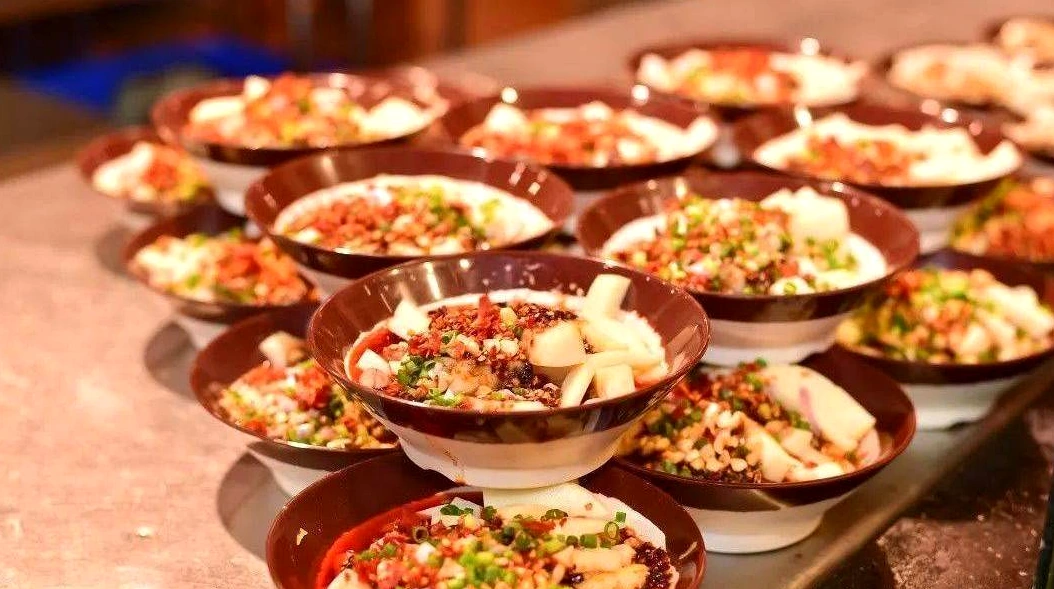
When it comes to the legendary delicacies of Luodai, no gourmet can overlook the “Heartbreak Jelly” (Shangxin Liangfen) at the famous Chu Ji shop, founded by the Guangdong-originated Chu family. This cold mung bean jelly is sliced into soft, silk-like strands that are both chewy and refreshing. The soul of the dish lies in its amber-colored sauce, crafted from seven types of Seven-Star chili peppers roasted over charcoal and crushed, blended with numbing Hanyuan peppercorn oil, minced fresh garlic, and black vinegar aged in traditional Baoning clay jars. The name “heartbreak” stems from the intense, burning sensation that brings tears to the diner’s eyes—a subtle metaphor for the immense bitterness and hardships endured by the Hakka ancestors on their long, arduous migration.
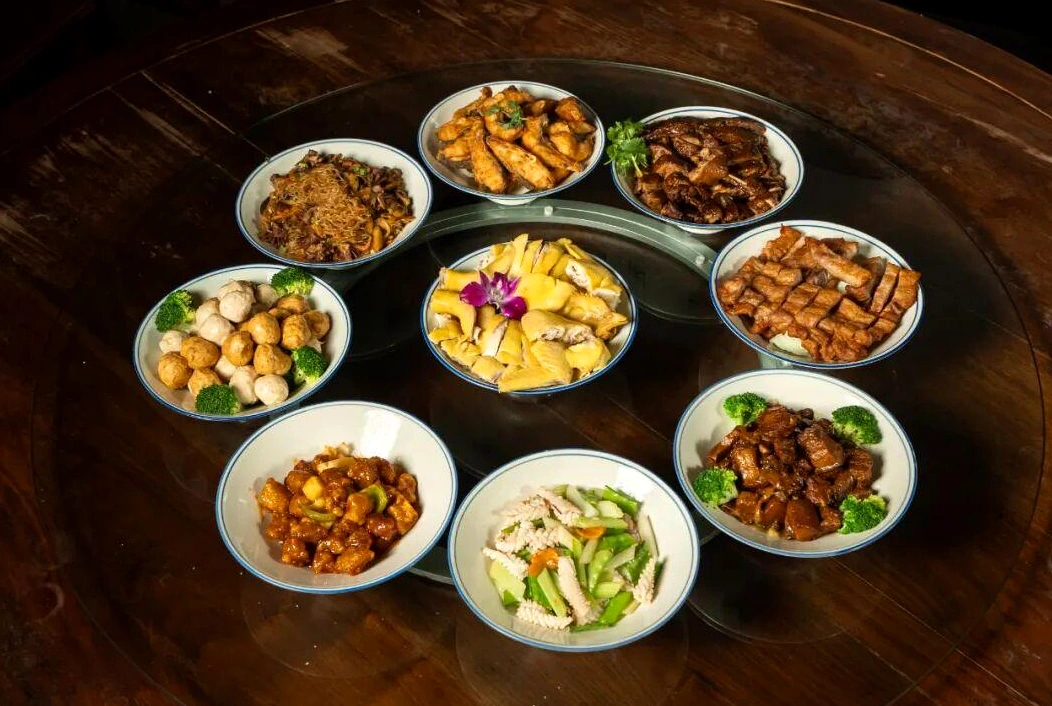
In contrast to the intense heat of the street-side jelly, the pinnacle of local culinary ritual is fully realized in the “Hakka Nine-Bowl Feast” (Hakka Jiudaowan), a banquet traditionally served during festivals and clan weddings. The table is meticulously arranged according to the Bagua Nine-Palace formation, featuring nine rustic glazed ceramic bowls containing classic steamed and braised dishes, such as melt-in-your-mouth pork belly with preserved mustard greens (Mei Cai Kou Rou), braised pig trotters with mountain bamboo shoots, delicate fish balls with snow vegetables, aromatic Huadiao wine-steamed chicken, and sweet sticky rice steamed with savory pork fat. This feast strictly adheres to the Southern philosophy of balancing Yin and Yang, eschewing spicy chili to honor the original, fresh flavors of the ingredients, creating a wholesome, rich, and non-greasy finish that embodies wishes for fulfillment, longevity, and family reunion.
The culinary essence of Luodai is further extended by the famous Kai Bao Rabbit clay pot, a specialty of the Longquan mountain region. Firm rabbit meat is stir-fried with aged ginger and fragrant chrysanthemum wine, then slow-cooked in a clay pot with cardamom, cinnamon, and fresh wild mushrooms, resulting in a rich flavor where the tender, sweet meat is infused with natural herbs. As dusk falls over the mossy tiled roofs, visitors can nibble on Swan Egg pastries—crispy shells filled with brown sugar syrup and sprinkled with fragrant sesame, featuring a nutty black sesame filling—or enjoy a plate of Du Tang Goose with its crispy, aromatic skin, deep-fried tofu with spicy soy sauce, and slices of Lao La Rou smoked meat, which carries the rich flavor of time.
The journey to discover Luodai Ancient Town begins with understanding the rhythm of life and the infrastructure network surrounding this land adjacent to the Longquan Mountains. The entire ancient town is open to visitors day and night without any entrance fees, allowing for leisurely sightseeing. However, key architectural heritage sites like the Ba Ke Lou and the famous system of four major guild halls are only open to visitors during fixed hours from 09:00 to 17:30 daily. To travel conveniently from Chengdu city center, the optimal public transport option is to take Metro Line 4 to the final stop, Xihe Station, then transfer to the L024 express bus or the 219 bus line, which takes only about fifteen minutes to reach the North Gate of the ancient town. If departing directly from Chengdu Tianfu International Airport (TFU), a 42 km highway drive will get taxis or shuttle buses to the destination in 35 to 40 minutes, while Chengdu East High-Speed Railway Station is only about 18 km away, equivalent to a smooth 25 to 30-minute journey.
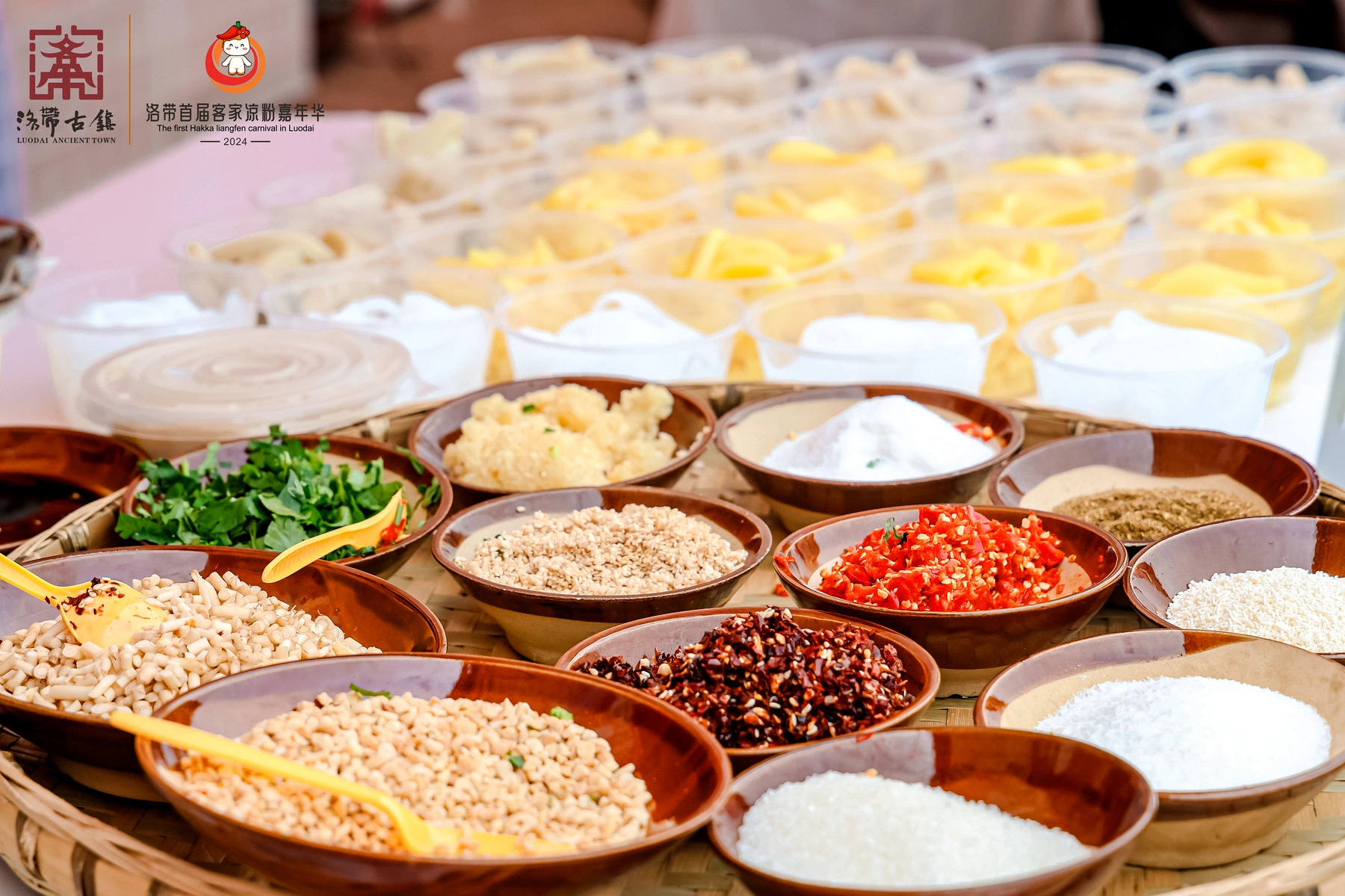
Beyond its solemn structures, Luodai also impresses with a colorful sensory festival at the stalls serving the famous Hakka mung bean jelly (liangfen). On a rustic bamboo tray, a large platter displays dozens of small bowls filled with a variety of spices and ingredients: from fiery minced fresh chili and fragrant roasted chili powder to finely chopped herbs, crushed roasted peanuts, nutty sesame seeds, and a touch of sweet sugar. Right behind, transparent containers hold portions of cool, silky-smooth jelly, waiting for the Hakka artisan’s nimble hands to season them, creating a bowl of spicy, sour, and savory jelly—a testament to the sophistication of local street food.
For group travelers, one of the most important practical notes is to be wary of “bottom-of-the-barrel” cheap tour traps, which often range from 9 to 12 million VND for a 6-day itinerary. These discounted programs often only allow visitors a rushed 45 to 60 minutes at the entrance gate for photos before immediately pressuring them onto buses to visit silk shops, synthetic latex mattress outlets, and jade jewelry stores along the national highway in Longquanyi District. To fully appreciate the cultural depth of this place, travelers should prioritize standard, “Pure Play / No Shopping” itineraries, ensuring a minimum stay of 3.5 to 4.5 hours in Luodai to leisurely explore every alley, guild hall, and ethnographic museum.
The most ideal time to capture artistic shots in Luodai occurs during the two golden hours of the day. The morning from 07:30 to 09:30 is when thin mists from the Longquan mountain slopes still linger in the stone alleys; the streets are free of noisy tour groups, and the early sunlight creates beautiful Tyndall light effects through the gaps in the yin-yang roof tiles of the ancient pavilions. As dusk falls, the period from 18:00 to 19:30 drapes the ancient town in a mystical beauty, with warm light from hundreds of red lanterns illuminating the commercial streets.
Alongside the excitement of sightseeing, visitors must strictly adhere to the rules for protecting key cultural heritage. All the exquisite 18th-century Shiwan ceramic reliefs attached to the roof ridges and walls of the Guangdong Guild Hall are under strict protection; visitors must not touch or climb onto the stone pedestals to reach the artifacts. Furthermore, the use of drones (Flycam) in this area is strictly controlled because Luodai’s airspace lies entirely within the landing and flight safety corridor of Chengdu Tianfu International Airport. For a relaxing and well-organized trip—from transportation and heritage routes to authentic culinary experiences without worrying about complex logistics—travelers can proactively choose a high-quality all-inclusive tour package to fully enjoy every historical moment of the Shu region.