Tucked away in the ethereal realm of the Huong Son scenic complex (My Duc District, Hanoi), Thien Tru Pagoda—also known as the Outer Pagoda—emerges as a sacred, solemn, and tranquil highlight amidst the vast mountainous wilderness. Boasting a prime geographical setting right at the foot of Than Lan Mountain along the basin of the romantic Yen Stream, this ancient temple occupies terrain characterized by Eastern geomancy as exceptionally auspicious for gathering water and mountains. The topography here resembles a giant lotus pedestal bestowed by nature upon the Doai region, where heaven and earth harmonize and all things converge, creating a serene, secluded yet majestic and expansive spiritual energy field.
Tracing back through history, the historical roots and origins of the pagoda’s name are intertwined with ancient cultural strata. According to historical records, stele inscriptions, and Le–Nguyen dynasty woodblocks preserved at the Institute of Han-Nom Studies, the name “Thien Tru” (天廚寺) in Chinese characters translates to “Heaven’s Kitchen” or “Heavenly Kitchen.” This unique name stems from folk legend and Buddhist philosophy, likening the area to a resting station where pilgrims prepare their minds and offerings before delving deeper into the supreme Buddha realm at Huong Tich Cave (the Inner Pagoda). Originally, it was merely a modest hermitage established in the late Early Le to early Mac dynasty (16th century) by virtuous eminent monks. Through the vicissitudes of time, feudal imprints from succeeding dynasties continually enriched the pagoda with invaluable historical depth.
Particularly during the Later Le dynasty—specifically the 16th year of Chinh Hoa (1695)—with the staunch patronage of the royal court and devotees from all directions, Zen Master Chan Khong of the Cao Dong Zen sect initiated a major expansion, laying down the grand architectural foundations for Thien Tru. Successive large-scale restorations during the Le dynasty (Canh Hung era) and the Nguyen dynasty (Minh Mang, Tu Duc) transformed the site into a premier Buddhist center of Dang Ngoai (the Outer Realm). Historical figures, enlightened Zen masters, and the feudal court spared no effort in embellishing it, leaving behind a system of stelae, ancient stupas, and priceless relics. More than just a religious architectural structure, Thien Tru Pagoda also embodies the characteristic geological and ecological values of millions-of-years-old karst limestone mountains, where lush vegetation blends with the ethereal ringing of temple bells to create an enduring travel and cultural heritage that captivates generations of literati and Buddhist followers from near and far.
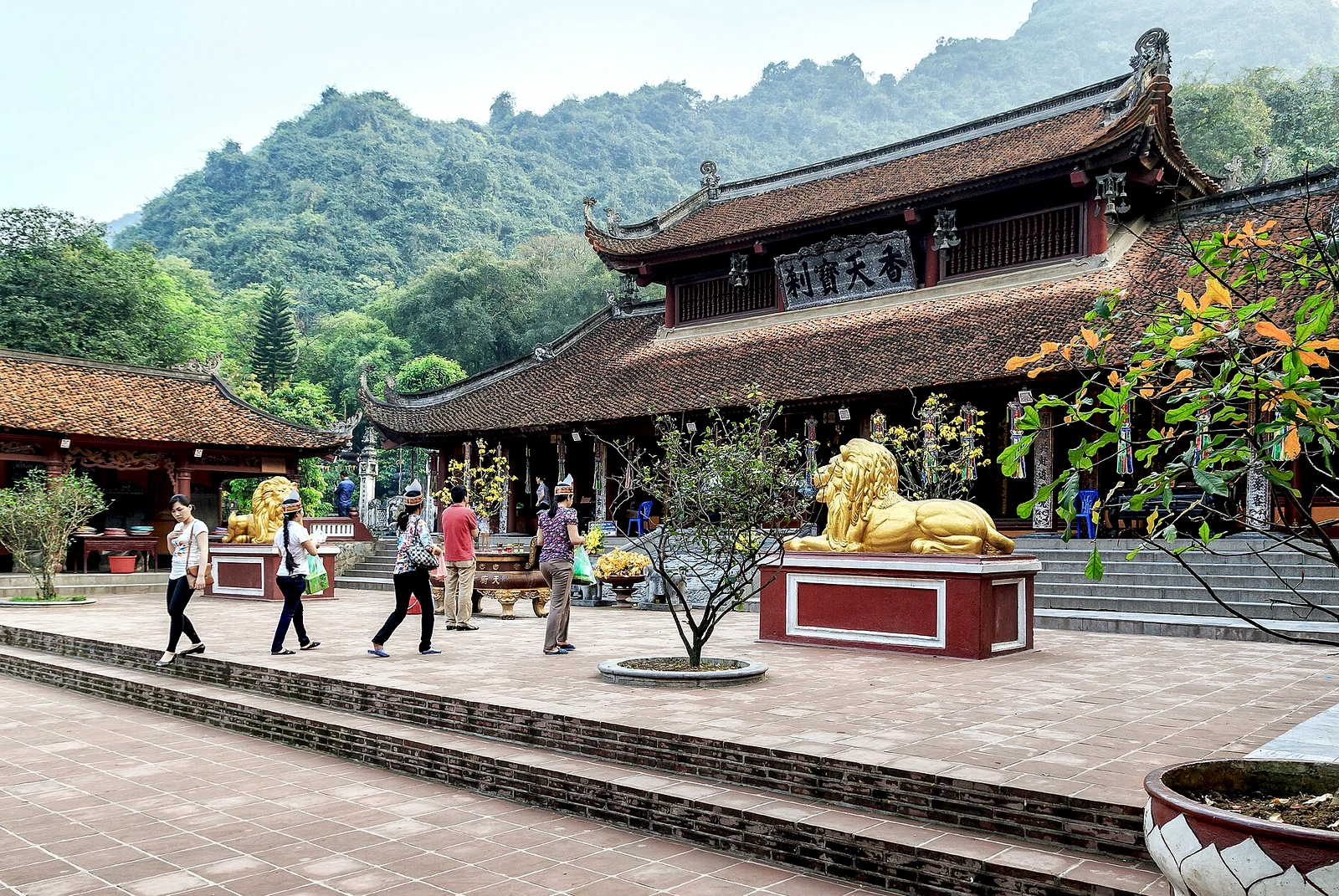
Nestled against the majestic cliffs of Than Tru Mountain within the Huong Son complex, Thien Tru Pagoda presents itself as a magnificent Buddhist architectural wonder harmonizing pristine nature with the skillful craftsmanship of the ancients. Seen from afar, the pagoda resembles a literal heavenly kitchen as suggested by its Sino-Vietnamese name, with mist and clouds swirling around moss-covered green stone steps and centuries-old tree canopies. The terrain possesses the characteristic geomantic features of a mountainous region, opening out to the peaceful Yen Stream valley in front and ringed by dozens of undulating limestone peaks forming a majestic, tranquil, and deeply meditative dragon-crouching formation.
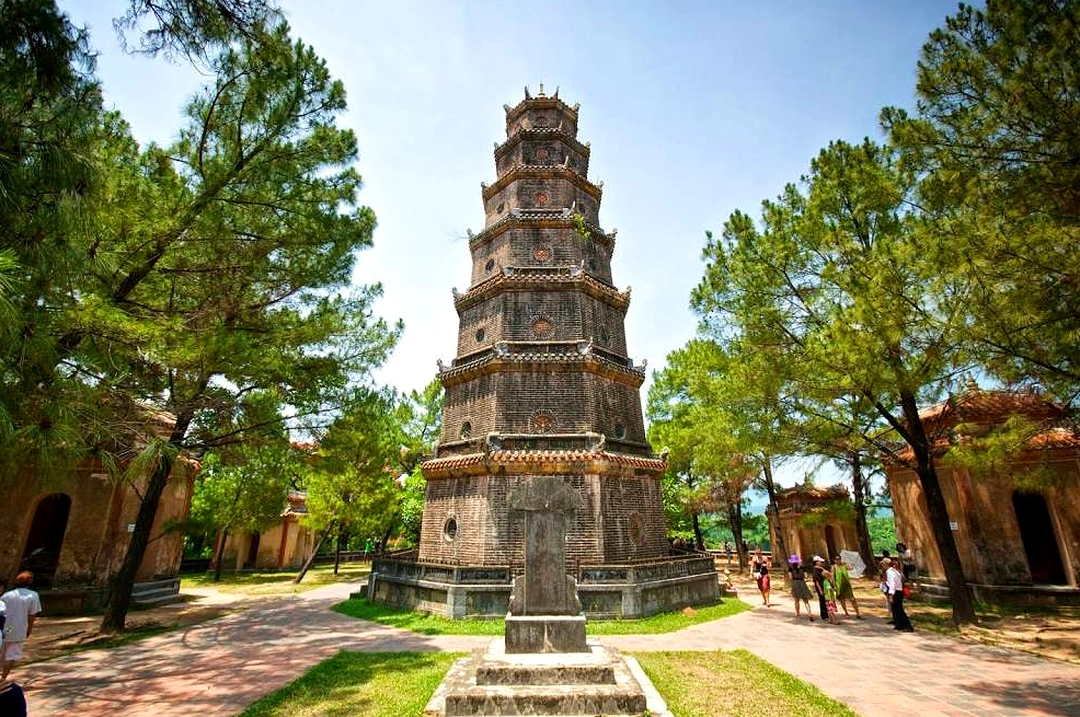
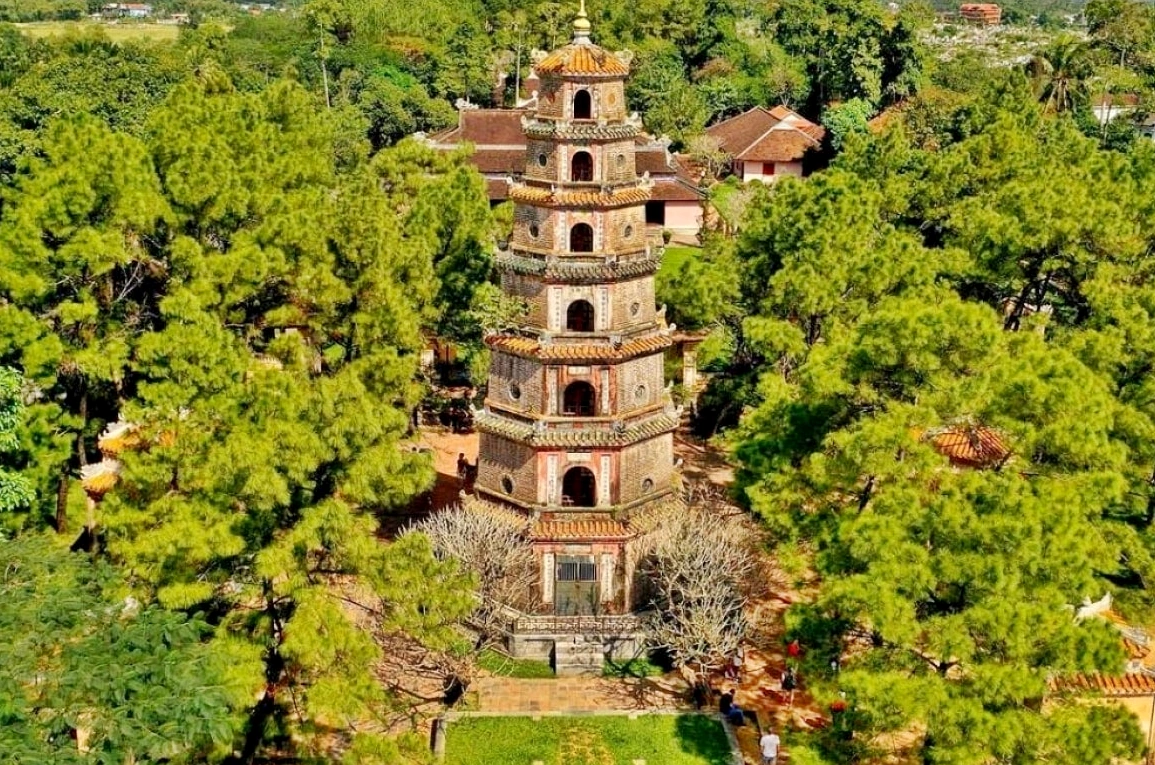
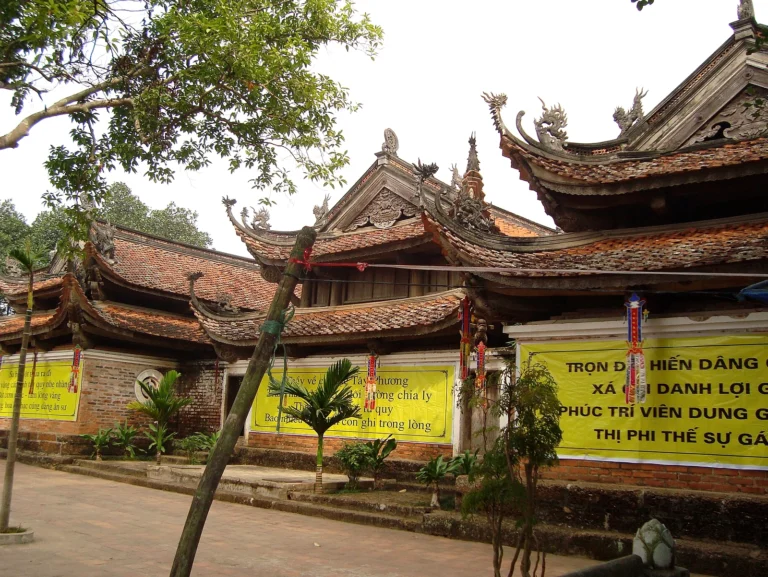
Having weathered numerous historical upheavals and elaborate restorations, the current architecture of Thien Tru Pagoda retains its grand, solemn appearance with a symmetrical, harmonious spatial layout styled after the traditional “inner craft, outer nation” (nội công ngoại quốc) plan. Passing through the imposing triple-arch gate (tam quan), visitors are struck by expansive stone courtyards leading up to the main sanctuaries, ancestral house, and the Thuy Toa bell tower rising proudly amidst a clear blue pond. Every wooden architectural detail here is meticulously carved with traditional motifs such as the four sacred animals, flora, and swirling clouds, representing the pinnacle of Le–Nguyen wood-carving art. Notably, the soaring Thien Tru Stupa (Vien Cong Stupa) rising gracefully into the cloudy sky with its multi-tiered monolithic stone structure stands out as an architectural highlight of immense historical and sculptural value for the entire outer pagoda precinct.
To capture the most precious moments in this sacred realm, seasoned photographers and travel journalists often recommend two classic photo angles not to be missed. The first vantage point lies along the corridor looking diagonally across the Thuy Toa bell tower, where the ancient architectural scenery blends with the calm pond surface reflecting sky and clouds to form a subdued, tranquil ink-wash painting. The second angle is from the high slope of the upper hall, casting a sweeping view down over the entire pagoda courtyard and the distant Huong Son valley. The ideal lighting window for photographers is early morning—roughly 6:00 AM to 7:30 AM when ethereal mist still lingers on mountain peaks—or at sunset when the day’s final rays bathe moss-covered brick walls and curved tile roofs in gold, lending unmistakable nostalgic and sacred depth to the frame.
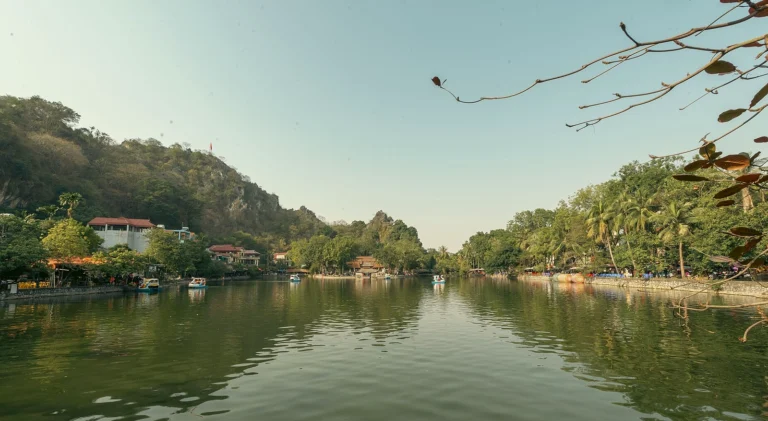
A journey to Thien Tru Pagoda has never been an ordinary excursion, but rather an emotional immersion into the magnificent spiritual and ecological space of the Huong Son mountains and forests. Right from Duc Wharf, visitors begin their first memorable hands-on experience: riding a wooden sampan along the romantic Yen Stream. As the small boat parts the crystal-clear water, gliding past vibrant blooming water lilies and towering limestone cliffs rising vertically on both banks, all the hustle and bustle of urban life seems to melt away. The sensation of crisp mountain breezes, the rhythmic splash of oars against the boat hull, and the tranquil atmosphere of the mountains induce an uncanny serenity, fully awakening the senses before stepping into the sacred realm of the Buddha.
Stepping ashore from the boat, visitors test their endurance along a winding trail nestled beneath ancient tree canopies to enter the Outer Pagoda grounds. A sense of awe washes over travelers as the pagoda looms grandly midway up the mountain, solemn and serene. Standing before the majestic triple-arch gate and gazing out across the vast green valley wrapped in swirling clouds, visitors fully grasp the exquisite harmony between religious architecture and untamed nature. The air here carries a faint scent of frankincense mingled with early morning mountain mist, inspiring a state of profound mental stillness that naturally prompts everyone to set aside worldly concerns and devoutly pay homage before the Buddha altar.
Beyond spiritual contemplation, exploring Thien Tru Pagoda captivates visitors with its rich and distinctive local culinary culture. Right along the paths winding around the scenic complex, rustic stalls display celebrated specialties of the Huong Son region, such as crisp mountain wild bitter greens (rau sang), juicy sweet-and-sour Huong Tich apricots, and fragrant, chewy yam cakes bursting with countryside flavor. Savoring a lightly bitter cup of green tea paired with the lingering sweetness of local delicacies after hours of climbing is an unforgettable experience. Everything blends together—from majestic natural scenery and solemn spiritual space to rustic culinary flavors—creating a vibrant symphony of indigenous culture that leaves a lingering, deeply resonant echo in the heart of every traveler.
To make your pilgrimage and exploration of Thien Tru Pagoda – Outer Pagoda smooth and solemn, keeping practical information regarding timing, fees, attire, and routes in mind is essential. The Huong Son scenic complex welcomes visitors and pilgrims year-round, bustling especially from the first to the third lunar months during the traditional festival season. The ideal time of day to visit the pagoda is early morning or late afternoon, when the weather is cool and mist drifts gently across the limestone ranges, allowing visitors to fully enjoy the serene, tranquil atmosphere at the Buddha’s doorstep.
Regarding transportation, departing from downtown Hanoi, the optimal route follows National Highway 21B or the extended F1 racing circuit route through Ha Dong, continuing toward Van Dinh and arriving at Duc Wharf (My Duc District). Visitors can travel by personal vehicles such as cars and motorbikes—with ample parking available near the entrance gate—or opt for dedicated bus routes for a budget-friendly journey. Upon reaching Duc Wharf, the adventure continues aboard a sampan gliding down the romantic Yen Stream—a scenic highlight before stepping onto the stone steps leading into the Thien Tru Pagoda grounds.
Regarding admission fees, the scenic management board applies entrance tickets for the Huong Son complex in accordance with state regulations, covering general sightseeing admission and sampan boat service fees on the Yen Stream. Visitors should prepare small-denomination cash for purchasing tickets, paying parking fees, or making offerings and donations at the altars inside the halls. All ticket price lists are publicly posted right at the central ticket gate of Duc Wharf, ensuring clarity and transparency for all visiting pilgrims.
Given the sacred nature of the sanctuary and its mountainous terrain, attire should adhere to spiritual cultural etiquette. Visitors should wear polite, modest clothing, prioritizing respectful outfits when offering incense in the main hall. Furthermore, because the visit involves extensive walking on stone steps, climbing slopes, and hiking along trails, a pair of supportive, comfortable sneakers or hiking boots with reliable traction is an indispensable companion. Thoughtful preparation regarding attire, timing, and travel logistics will help everyone maintain inner peace and comfort throughout their pilgrimage to this sacred Buddhist land.
To enjoy a seamless getaway and fully appreciate the beauty of Thien Tru Pagoda without worrying about arranging transportation, booking attraction tickets, or managing travel itineraries, travelers can choose premium all-inclusive Hanoi tour packages from VDS Travel. Each tour is meticulously designed to optimize check-in timing when the scenery is at its most radiant, accompanied by a team of guides deeply knowledgeable in local culture and backed by top-tier hotel and dining service standards.