Amid the vast, overlapping mountain ranges of Vietnam’s northeastern frontier, where the Quay Son River winds gently around the foot of majestic Phia Nham Mountain, Phat Tich Truc Lam Ban Gioc Pagoda rises as a pure spiritual sanctuary and a steadfast symbol of national culture and sovereignty. Located in Dam Thuy Commune, Trung Khanh District, Cao Bang Province—less than half a kilometer from the natural wonder of Ban Gioc Waterfall—this celebrated landmark occupies an unmatched geographical setting where borderland skies meet the thousand-year spiritual energy of Vietnam.
From a feng shui perspective, the pagoda’s setting achieves the pinnacle of traditional “mountain-backed, water-facing” architectural harmony. Its rear rests firmly against the sheer cliffs of Phia Nham Mountain, while its front looks directly over the expansive Ban Gioc valley, where emerald-green waters cascade day and night in a magnificent display of natural power. This interplay between monastic stillness and the dramatic motion of the falls creates a one-of-a-kind geological and cultural space where visitors come not only to admire the scenery and pay respects to the Buddha, but also to feel the vibrant pulse of the borderlands.
While imbued with the sacred spirit of the Truc Lam Yen Tu Zen lineage—the purely Vietnamese Buddhist tradition founded by Buddhist Emperor Tran Nhan Tong—Phat Tich Truc Lam Ban Gioc Pagoda is a modern landmark whose construction began in June 2013 and concluded with its inauguration in December 2014. Built at the northernmost tip of the country, the pagoda serves both the spiritual needs of highland ethnic communities and a vital historical mission: affirming Vietnam’s cultural, spiritual, and territorial sovereignty at the frontier. The name “Phat Tich Truc Lam Ban Gioc” unites Buddhist compassion, the philosophical depth of Truc Lam Zen, and the site’s historic geography, testifying to the enduring vitality of Vietnamese culture on the front lines.
Stepping inside the temple grounds, the sanctuary is arranged with solemn dignity in accordance with traditional Vietnamese Mahayana Buddhist rites. It features a revered Main Buddha Hall, a compassionate statue of Bodhisattva Avalokiteshvara watching over all sentient beings, and an altar honoring national heroes and martyrs who gave their lives for the nation’s independence and freedom. Every upturned tiled roof corner and moss-covered stone courtyard evokes the country’s ancient cultural roots. Heritage researchers and domestic media examining the landmark share a common assessment: this is far more than a pagoda for worship—it is a strategic cultural institution and a “living milestone” in spirit and architecture, linking hearts across the country—and maintaining a particularly strong cultural bridge with the thousand-year-old capital of Hanoi—to the northern frontier.

Perched majestically on the slopes of Phia Nham Mountain, Phat Tich Truc Lam Ban Gioc Pagoda stands as a masterpiece of spiritual architecture set against the dramatic backdrop of the Cao Bang frontier. Feng shui and architectural experts regard its position as second to none: firmly backed by towering mountain cliffs and looking straight out over a broad valley and the jade-green, silt-rich Quay Son River. Gazing out from this vantage point, visitors take in a sweeping panorama of rolling mountain ranges stretching into the distance, mist and clouds lingering year-round, and the gentle roar of Ban Gioc Waterfall echoing from nearby—creating a tranquil harmony between earth, sky, and the human spirit.
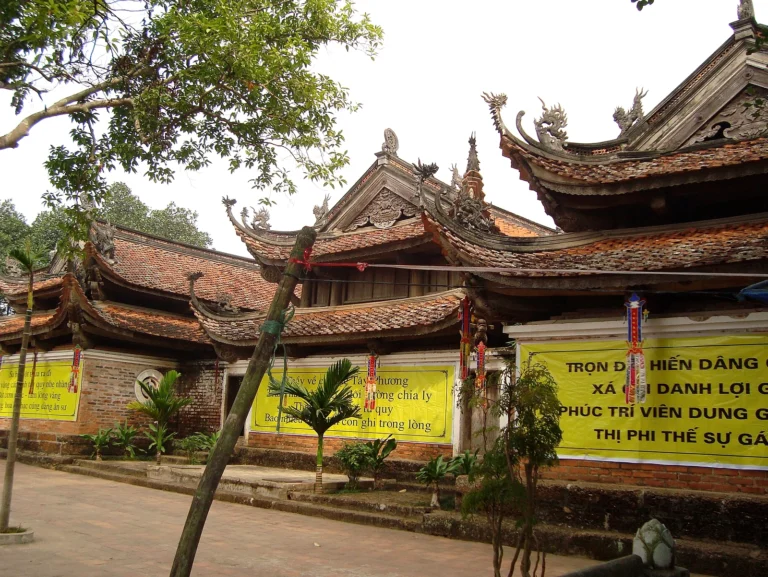
Architecturally, the pagoda was designed and built in traditional Vietnamese Buddhist style, strongly reflecting Ly–Tran dynasty aesthetics while blending seamlessly into the northern highland landscape. The complex encompasses key structures including the Three-Arched Gate, Bell Tower, Drum Tower, Patriarchs’ Hall, Mother Goddess Shrine, and Main Buddha Hall. Its architecture makes a striking impression with sturdy ironwood columns, graceful shoe-nose tiled roofs curving into dragon and phoenix motifs, and intricate floral carvings along wooden beams and eaves. The spacious courtyard is paved with clean natural bluestone and framed by lush trees and vibrant flowerbeds, evoking an atmosphere that is serene and secluded yet warm and closely connected to nature.
To capture the most stunning moments at this frontier sanctuary, photographers and travel journalists frequently share two unmissable camera angles. The first and most iconic photo spot is the arched frame of the Three-Arched Gate: standing inside the courtyard looking outward, your lens captures the verdant valley below and the Quay Son River winding like a soft silk ribbon shimmering in the sunlight. The ideal window for this shot is early morning (from 6:00 AM to 8:00 AM), when wisps of mist still cling to the mountain peaks and the first golden sunbeams filter gently through the archway, creating an ethereal, deeply meditative scene.
The second highly praised vantage point is from the upper balcony of the Main Buddha Hall or the Bell Tower. From this elevated perch, visitors can frame the sweeping red tiled roofs of the pagoda in bold contrast against the deep emerald mountains behind. Sunset (from 4:30 PM to 5:30 PM) is the perfect time to shoot from here, as the sun turns a brilliant orange-red and bathes the borderland sky in warm gold, evoking nostalgic emotional depth and profound inner peace for travelers from afar.

Arriving at the Cao Bang borderlands and stepping directly into Phat Tich Truc Lam Ban Gioc Pagoda immediately immerses travelers in an awe-inspiring, deeply moving experience. Set against Phia Nham Mountain, the pagoda opens onto an expansive view embracing a picturesque landscape of mountains and rivers. Reaching its tranquil grounds involves a gentle climb up winding stone steps, where each step upward brings fresher air as resonant temple bells mingle with mountain breezes and drifting mist from the great waterfall nearby, creating a naturally sacred harmony.
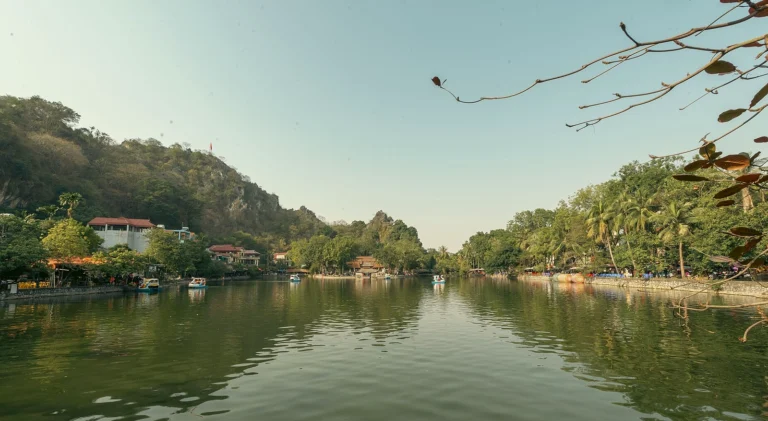
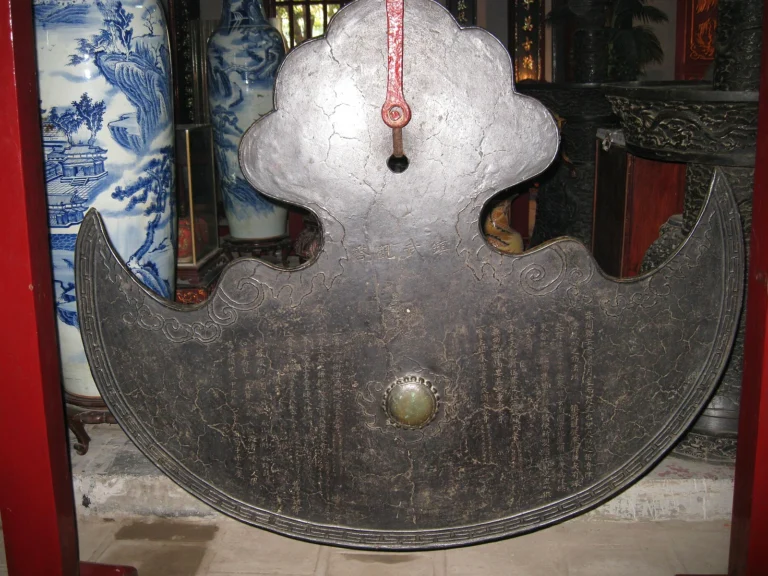
Standing in the main courtyard and looking out into the distance reveals one of the Northeast’s most magnificent natural panoramas. Directly ahead, the jade-green Quay Son River winds like a soft silk ribbon around the mountain base, peeking through veils of mist and the white spray of mighty Ban Gioc Waterfall. The sight leaves travelers breathless at the untamed splendor of the homeland. Here on the frontier, standing before the serene Great Bronze Bell and lighting fragrant incense before the Main Buddha Hall and altars of national heroes, one’s heart grows light as everyday worries melt away, giving way to deep spiritual stillness and fierce national pride.
Stepping out from the quiet sanctuary, vibrant local cultural experiences invite travelers onto the Quay Son River for unforgettable moments on the water. Gliding aboard rustic bamboo rafts across mirror-calm waters brings you closer to nature’s pulse, offering up-close views of dramatic limestone formations and stories of local life along the border. Floating gently on the cool current beneath open skies and lush green terraced fields awakens every sense and restores complete tranquility to the soul.
Rounding out the journey is the celebrated regional cuisine of the Tay and Nung communities surrounding the site. After hours of climbing and sightseeing, visitors can savor authentic highland specialties such as crispy-skinned roast duck fragrant with mat khau leaves, sweet grilled Quay Son River tram fish, fragrant five-color upland sticky rice, and hearty bitter bamboo shoot soup rich with forest flavors. Every taste, genuine smile, and warm welcome from local residents completes the picture, anchoring lasting memories in the heart of everyone who visits this sacred frontier pagoda.

Located near Ban Gioc Waterfall in Dam Thuy Commune, Trung Khanh District, Cao Bang Province, Phat Tich Truc Lam Ban Gioc Pagoda is a spiritual and scenic destination attracting crowds of visitors from near and far. To ensure a smooth, rewarding pilgrimage to Vietnam’s northern frontier, keep in mind the practical tips on visiting hours, routes, and temple etiquette below.
Regarding operating hours, the pagoda grounds welcome sightseers and pilgrims every day of the week, typically from early morning until dusk. Notably, admission is completely free for visitors coming to offer incense, worship, and admire the scenery. The ideal time of year to visit this sacred pagoda is from September through May of the following year. This corresponds to the dry season when Cao Bang enjoys cool, pleasant weather—especially from September to October, when terraced rice fields around Ban Gioc Waterfall turn a radiant gold, and from November to December, when the river runs crystal clear and buckwheat flowers burst into bloom.
The journey to the pagoda starts from central Cao Bang City via National Highway 3 combined with Provincial Road 206 over Ma Phuc Pass, covering roughly 80 kilometers. Travelers can ride a motorbike to take in the dramatic northeastern mountain scenery at their own pace, or travel by intercity bus or private car. The winding road through limestone mountain slopes requires steady driving and caution around sharp hairpin bends, but rewards you with breathtaking natural vistas at every turn.
Because this is a solemn spiritual landmark situated in a border zone with hilly terrain, visitors must strictly observe dress codes: wear modest, respectful clothing and avoid overly short or revealing outfits when entering the main sanctuary. Additionally, since both the pagoda grounds and the Ban Gioc Waterfall area feature steep slopes, numerous stone steps, and expansive walkways, wearing sneakers or sturdy walking shoes with good traction is recommended so you can explore comfortably without sore feet.
To enjoy a seamless getaway and take in the full beauty of Phat Tich Truc Lam Ban Gioc Pagoda without worrying about transportation, sightseeing tickets, or itinerary planning, travelers can choose VDS Travel’s premium all-inclusive Hanoi tour packages. Every itinerary is thoughtfully timed to capture photo spots at their most radiant, accompanied by knowledgeable local guides and top-tier hotel and dining standards.