Nestled within the untamed, mystical transitional ecological belt of the semi-mountainous region on the outskirts of the capital, Duc Pagoda emerges as a singular spiritual landmark where the earth and sky of the Xu Doai region converge in millennia of sacred energy. The setting of this ancient temple is steeped in traditional feng shui philosophy: resting beside imposing sedimentary cliffs while opening out to an expansive vista of rivers and deep valleys, it forms a steadfast “crouching tiger, coiling dragon” configuration. It is this wondrous harmony between millions of years of geological formation and the pioneering imprint of human hands that has bestowed upon this site a one-of-a-kind indigenous landscape, completely removed from the hustle and bustle of bustling urban life.
According to research archives from the Vietnam Institute of Cultural Heritage and History, the name “Duc Pagoda” is far more than a simple geographical marker—it serves as a keystone of linguistic history and folk culture. Legend has it that the name originated directly from its extraordinarily unique architectural technique: the ancients chiseled (“đục”) straight into the heart of the natural rock cliffs and magnificent caves to carve out a solemn sanctuary for worship. Through the vicissitudes of time and the rise and fall of dynasties, the pagoda once bore the Sino-Vietnamese names Tram Tich Tu or Thien Tru Duc Tu depending on administrative shifts, yet the rustic moniker “Duc Pagoda” remains the deepest nostalgia anchoring the hearts of countless generations of pilgrims.
In terms of historical progression and founding dates, through archaeological stratigraphic surveys combined with stele inscriptions, researchers have determined that Duc Pagoda’s core structure dates back to the Revival Le Dynasty (17th–18th centuries). However, the spiritual roots of this space actually took hold during the Ly–Tran dynasties, emerging upon the foundation of an ancient indigenous religious site. The subtle fusion of profound Buddhist architectural philosophy, free-spirited Taoism, and Le-era folk beliefs breathed vibrant life into every grain of stone and stalactite. By the first half of the 19th century, under the Nguyen Dynasty, the pagoda underwent major restorations, adding layers of majestic architectural heritage that posterity continues to revere today.
This sanctuary becomes all the more sacred through its connection to the footsteps of eminent Zen masters from the Linji (Lam Te) and early Truc Lam traditions. According to preserved temple legends and stone steles, this secluded mountain retreat was once chosen by devoted monks as a place for solitary meditation and spiritual cultivation, seeking awakening in stillness. Beyond practicing the Dharma, these masters immersed themselves in the lives of the local people, guiding villagers in reclaiming land, establishing settlements, and safeguarding the cultural frontier surrounding the ancient capital of Thang Long. This enduring accumulation of devotion has transformed Duc Pagoda into a living heritage site—where geology, scenery, and cultural history merge into one, making it an indispensable pilgrimage destination on Vietnam’s cultural travel map.

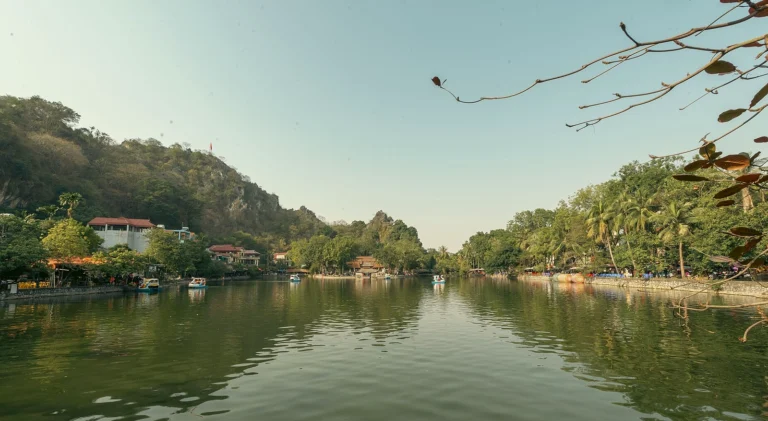
Set amid picturesque mountains and waters deeply imprinted with the sacred aura of Xu Doai, Duc Pagoda stands as an architectural masterpiece seamlessly blending skillful human craftsmanship with nature’s grand creation. The ancient temple occupies a remarkably auspicious position, leaning firmly against towering limestone cliffs while facing a lush green valley draped in drifting mist year-round. Stepping onto the grounds, visitors immediately feel a complete detachment from the clamor and rush of city life, sinking instead into the serene tranquility of earth, sky, and thousand-year-old spiritual energy.
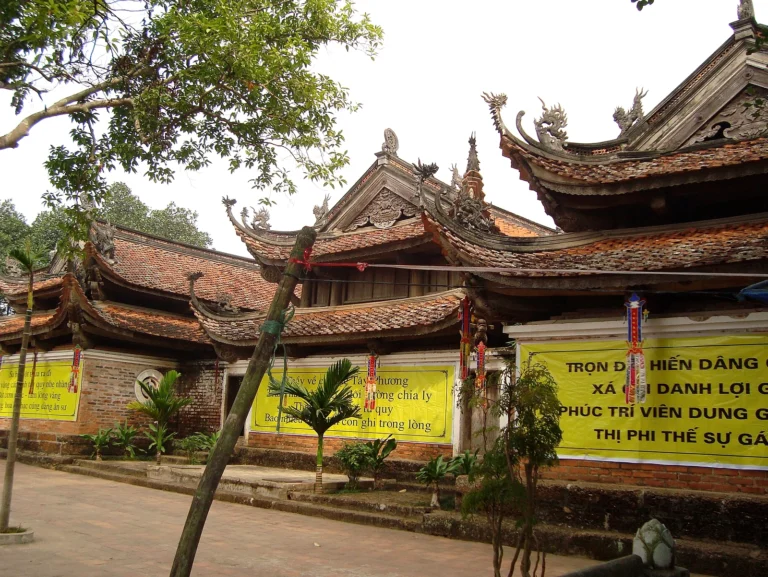
The architecture of Duc Pagoda holds unparalleled value thanks to the art of maximizing existing natural caves combined with intricate stone-carving techniques from the Revival Le and Nguyen dynasties. Rather than conventional wooden columns, the pagoda’s centerpiece consists of worship chambers chiseled directly into sheer vertical rock walls. Those raw yet powerful hand-carved chisel marks remain intact across the stone surfaces, creating a spiritual realm that is both solemn and mysterious while remaining intimately connected to nature. Its open architectural layout, featuring terraced courtyards clinging to the mountainside, welcomes cool mountain breezes and natural sunlight filtering through the canopies of centuries-old trees.
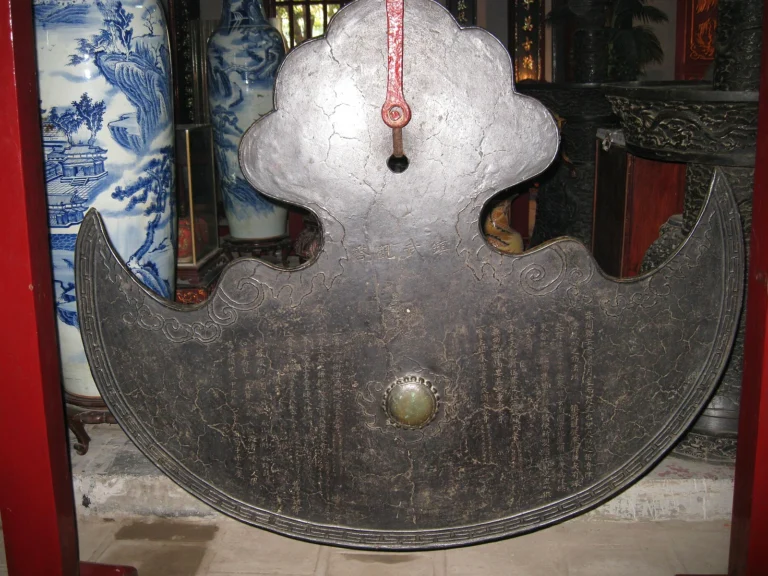
Inside the caves, traditional sculptural artistry reaches a remarkable level of refinement with ancient Buddha statues either carved monolithically out of the living rock or crafted from precious gilded and lacquered wood. The intricate motifs etched onto altars, horizontal lacquered boards, and parallel sentences reflect a synthesis of imperial court artistry and folk aesthetics, testifying to a golden era of Vietnamese Buddhism. Every corner of the pagoda breathes history, from moss-blanketed stone slabs to sedimentary rock faces telling stories spanning centuries.
For photographers and experiential travelers alike, Duc Pagoda boasts countless “million-view” photo spots capable of captivating anyone who sets foot here. The premier vantage point is the view from the main hall’s veranda looking straight out over the vast valley, where your lens can capture rolling mountain ranges veiled in ethereal wisps of mist. A second striking angle lies along the ancient stone footpath leading up to the upper caves, creating artistic depth with weathered sedimentary cliffs in the foreground and the misty sanctuary in the background. Additionally, close-up shots of the naturally chiseled rock walls illuminated by shafts of light streaming through the cave mouth yield deeply cinematic, timeless photographs.
The most ideal times of day to capture unforgettable moments at Duc Pagoda are at dawn or as dusk settles in. As the first rays of morning light pierce the early mist and illuminate the cliff faces, they bathe the grounds in an ethereal, sacred glow. Meanwhile, sunset washes the entire mountain forest of Xu Doai in warm golden hues, evoking a contemplative, nostalgic, and deeply peaceful atmosphere that allows photographers to effortlessly capture breathtaking frames.

Arriving at Duc Pagoda, visitors do not merely step back into a quiet, solemn historical space—they embark on a breathtaking and deeply rewarding real-world journey. From your very first steps, the semi-mountainous landscape of Xu Doai envelops you in crisp, fresh air scented with wild herbs mingling with fragrant incense smoke. To reach the ancient sanctuary tucked halfway up the cliffside, travelers ascend a mountain trail of moss-covered stone steps beneath the shade of hundred-year-old trees. With every upward step, the horizon widens, while the distant tolling of the temple bell seems to wash away the worldly dust and fatigue of noisy urban life.
A true sense of awe washes over you upon reaching the summit and standing before the entrance of the ancient cave temple. Gazing out into the distance, the entire majestic panorama of Hanoi’s outer countryside unfolds like a slow-motion film: undulating mountain ridges cradling lush green valleys, ribbons of white cloud drifting lazily across mountain passes, and an endless expanse of open sky. If you pair your visit with a boat ride along the winding waterway at the foot of the mountain, you will be treated to a full view of the rugged yet poetic beauty of the sheer cliffs, where time seems frozen within stone strata hundreds of years old.
Stepping inside the pagoda, that sense of outward wonder seamlessly transforms into a profound, reverent stillness. Amid the dim glow of candlelight and curling wisps of incense, paying homage to ancient Buddhist statues, touching cool moss-covered stone surfaces, or listening to the gentle trickle of water inside natural caverns brings a deep inner peace. This harmonious marriage of human-made sacred architecture and natural cave wonders creates a realm both real and surreal, touching the subtlest depths of human emotion.
Rounding out the spiritual and scenic exploration, the vibrant local culture around Duc Pagoda entices travelers with renowned regional specialties from the lands bordering ancient Thang Long. Pulling up a seat at small roadside eateries to savor fragrant bamboo-tube sticky rice (com lam), sweet and tender free-range hill chicken, or rustic country treats steeped in the soul of Xu Doai, visitors experience the genuine warmth and hospitality of the local people. Everything blends together into a multi-sensory journey, leaving lasting memories of a living, heroic heritage region.
Duc Pagoda (Tram Tich Tu) is a unique spiritual and sightseeing destination in the capital, drawing visitors from near and far with its awe-inspiring cave architecture woven into the long history of Xu Doai. To ensure your pilgrimage and exploration go smoothly and rewardingly, keeping practical tips on timing, transportation, and temple etiquette in mind is essential.
As for the best time of year to visit, you can make a pilgrimage to Duc Pagoda in any season. However, the period from the first to the third lunar month brings mild spring weather and fresh, vibrant scenery, making it ideal for spring outings, temple worship, and nature appreciation. If you prefer a quieter, more contemplative atmosphere for paying respects and studying ancient architecture, the autumn or early winter months—with their crisp, cool air and expansive skies—make a wonderful choice.
Duc Pagoda welcomes sightseers and worshippers daily from early morning until late afternoon, specifically from 6:00 AM to 6:00 PM. Notably, admission to the historic site is completely free for all visitors and Buddhist devotees. Regarding transportation and routes, starting from downtown Hanoi, you can travel by motorbike, private car, or suburban bus heading toward the semi-mountainous outskirts. The most optimal route follows the Thang Long Boulevard axis or connecting national highways before turning onto inter-provincial roads leading toward the capital’s outer districts. The roads are generally smooth and accessible, though the final stretch approaching the pagoda features steep rocky inclines and narrow trails, so stay alert and drive carefully.
Given the site’s terrain as a cave temple set into rocky cliffs alongside its sacred spiritual character, visitors should wear neat, modest, and respectful attire (sleeved tops and long pants or skirts below the knee). Opt for sneakers or flat-soled shoes with good traction to safely climb stone steps and navigate potentially slippery rock surfaces. Furthermore, once inside the main sanctuary and cave shrines, walk softly, speak quietly, maintain general cleanliness, and refrain from touching ancient statues or carving and writing on the rock walls so this precious heritage remains intact for generations to come.

To enjoy a seamless getaway and take in the full beauty of Duc Pagoda without worrying about arranging transportation, booking tickets, or planning itineraries, travelers can choose VDS Travel’s premium all-inclusive Hanoi tour packages. Each itinerary is thoughtfully designed to optimize photo stops when the scenery is at its most radiant, accompanied by knowledgeable local guides deeply versed in regional culture and top-tier hotel and dining standards.