Perched atop pine-breezed Mingfeng Mountain in northeastern Kunming, Taihe Palace Golden Hall—commonly known in folk usage as the Golden Hall Bronze Temple or Tongwa Temple—stands like a quiet imprint settled across centuries of change in Yunnan. The historical roots of this celebrated Taoist sanctuary trace back to the thirtieth year of the Wanli reign under the Ming Dynasty—1602 AD. At that time, Yunnan Grand Coordinator Chen Yongxin, observing the rolling mountain terrain and seeing Mingfeng Peak shaped like a phoenix taking flight with rare geomantic vitality, personally oversaw the founding of a grand Taoist complex. During its initial Ming construction, the layout centered on three interconnected core structures: Lüxian Shrine honoring Lü Dongbin, Taihe Palace as the main ceremonial hall, and Sanyuan Palace venerating the deities of Heaven, Earth, and Water—forming a complete secluded mountain retreat.
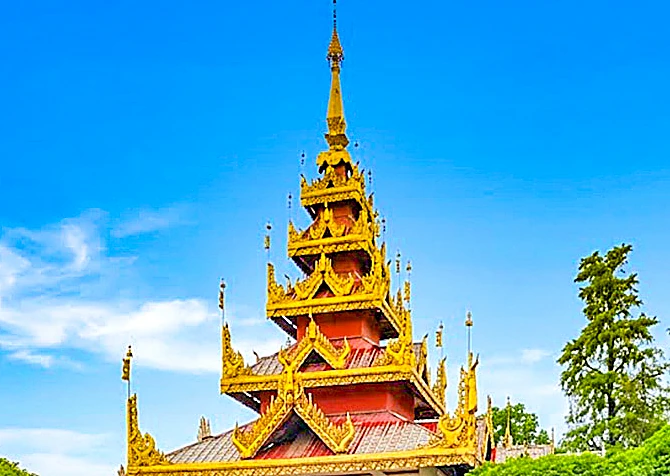
As time carried the Ming Dynasty into history and ushered in turbulent early Qing years, Kunming became the power base of Pacifying-the-West Prince Wu Sangui. In the tenth year of the Kangxi reign (1671), while regional lordly power along the southwestern frontier stood at its peak, Wu Sangui ordered the older hall dismantled and mobilized vast resources alongside top metalworkers to rebuild the entire hall in solid brass. Casting a worship hall on such a scale reflected not only devotion to Xuanwu (Supreme Emperor of the Dark Heaven), a major Taoist guardian deity, but also a calculated political move—borrowing sacred authority to bolster Wu rule in southern Yunnan ahead of the Revolt of the Three Feudatories.
Under the skilled hands of Kangxi-era bronze founders, the hall honoring Perfected Warrior Zhenwu rose with columns, rafters, roof tiles, and coiling dragon reliefs cast completely in gleaming metal beneath Kunming’s skies. Even more notably, inside the main hall are preserved ritual weapons tied to legends of that storied ruler: a pure-metal statue of Zhenwu radiating solemnity, a refined Seven-Star Sword symbolizing the power to ward off evil, and a heavy broadsword modeled on the Green Dragon Crescent Blade weighing dozens of catties of solid metal. Lore says this war blade once followed Wu Sangui through fiery campaigns before finding rest in a Taoist sanctuary—like an act of reflection and entrusting fate to ancient deities.
Through the tides of warfare, shifting political fortunes, and changing dynasties, the Golden Hall atop Mingfeng Mountain has endured as a living chronicle cast in metal. It remains one of Yunnan’s most revered Taoist sanctuaries dedicated to Xuanwu while preserving remarkable medieval metal-casting artistry. In recognition of its singular historical and cultural value, on February 23, 1982, the State Council officially placed Taihe Palace Golden Hall on the second batch of Major Historical and Cultural Sites Protected at the National Level, affirming its status as an enduring architectural treasure.
Situated at No. 771 Chuanjin Road in Panlong District on the northeastern outskirts of Kunming City, the Golden Hall Bronze Temple rises amidst the Mingfeng Mountain scenic complex just about seven kilometers from bustling central streets. Viewed through classical Chinese geomancy, its setting ranks among rare mountain-and-water landscapes across a 1,773-mu estate. Its spiritual axis and supporting grounds are oriented facing west—a deliberate choice in Taoist symbolism evoking the Western Paradise and Queen Mother of the West’s Yaochi realm, while catching late-afternoon sunset light across the valley that glints off metal surfaces in an ethereal glow.
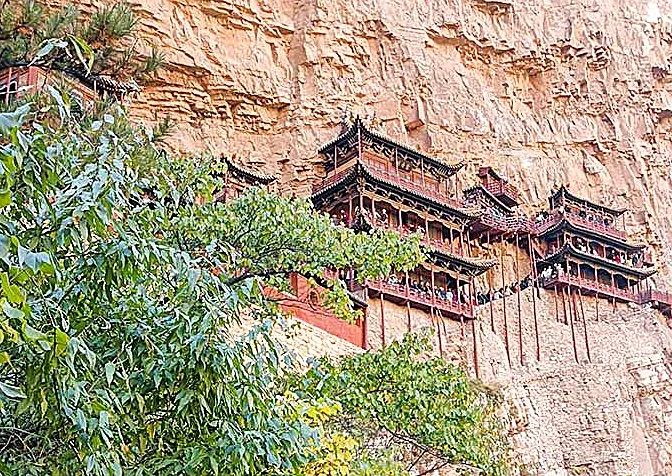
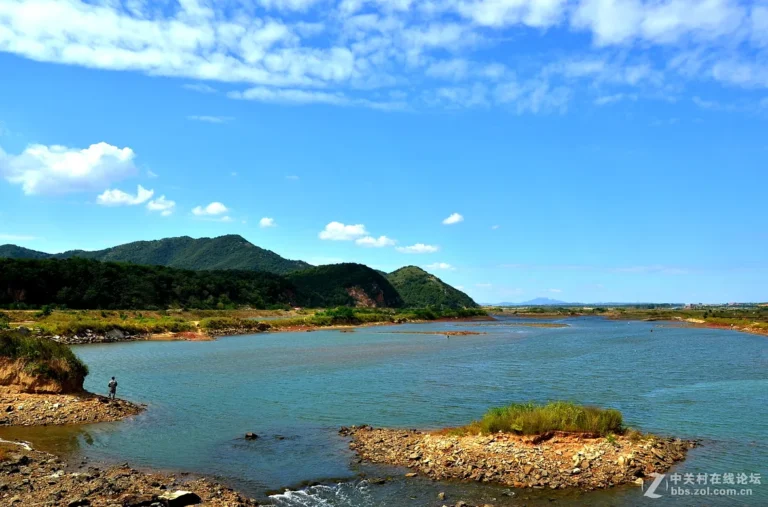
The Golden Hall’s site enjoys a firm dragon vein with its back resting against the layered ridges of Mingfeng Mountain, whose name evokes a phoenix calling out an omen of peace and prosperity. From this mountain summit, looking across drifting clouds reveals a sweeping vista where five hundred li of Dianchi Lake shimmer alongside the lush panorama of Kunming, the “Spring City.” This mountain-backed, lake-facing setting satisfies strict geomantic principles of sheltering vital energy from northern chills while drawing fresh breath from ancient waters, creating peaceful vitality across centuries.
Woven closely into this landscape is lush primeval greenery clothing slopes from base to summit. Thanks to Kunming’s mild, spring-like highland climate year-round, ancient pine forests, old cypresses, and graceful bamboo groves blanket the hillsides in a verdant shield. Pine needles sing in mountain breezes year-round—a scene ancients praised among central Yunnan’s loveliest views. Blending Taoist solemnity with babbling streams and moss-grown stones helped Mingfeng Mountain achieve national AAAA tourist scenic status, uniting natural beauty with imperial-era religious heritage.
Fertile soil and crisp air on Mingfeng’s slopes also nurture a celebrated floral realm that earned the complex international recognition as an Outstanding International Camellia Garden. As late winter gives way to spring, amidst dark green cypresses and pines, tens of thousands of camellias across hundreds of prized varieties burst into bloom in rich crimson and soft pink like woven brocade. Standing out among them are centuries-old camellia trees still thriving, said in lore to have been tended since the days of ancient Taoists and commanders. Vibrant seasonal blossoms turn a mountain climb to the bronze hall into a calming retreat where everyday bustle seems to fade.
Standing tall amidst sighing pines on Mingfeng Peak, Kunming’s Golden Hall is hailed by scholars and archaeologists as a crowning achievement of ancient Chinese architectural bronze casting, distilling craftsmanship across the Yuan, Ming, and Qing dynasties. Far more than a typical Taoist shrine, it is one of the largest surviving pure-metal worship halls modeled on timber framing in China. What immediately amazes visitors is this material alchemy: a structure displaying the graceful, supple lines of traditional East Asian woodworking yet cast and forged entirely in enduring metal.
The main hall follows strict high-court architectural rules on a square plan crowned by a double-eaved hip-and-gable roof with sweeping upturned corners piercing the clouds. Each side measures roughly two zhang by traditional measure—about 6.15 meters long and wide—rising to a height of 6.7 meters. Every structural and decorative element—from pillars, tie beams, and crossbeams to intricate dougong bracket sets, lattice doors, turned balusters, undulating ridge tiles, and gilded plaques—is cast in solid metal and joined with precision tenons and pins. Requiring no timber or brick load-bearing supports, this metal monument weighs over 250 tons, giving it remarkable stability against earthquakes and centuries of weather.
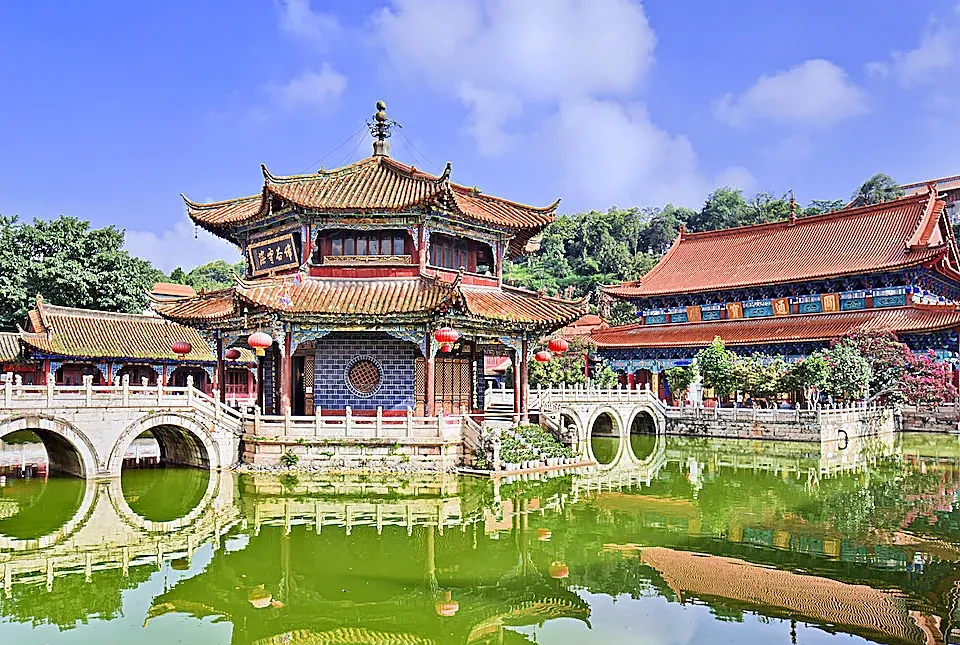
Following moss-kissed stone steps toward the quiet rear slope, the complex’s spatial layout rises to a new elevation at the stately Bell Tower resting calmly along a gentle hillside. Designed as an imposing three-story tower with thirty-six gracefully sweeping corner eaves, it reaches 29 meters into clear highland skies. Balancing the quiet antiquity of the Golden Hall in front with the lofty presence of the Bell Tower behind creates a solemn geomantic axis guiding visitors from earthly routines into Taoist serenity.
The sacred centerpiece and mountain anchor of the Bell Tower hangs beneath the third-story ceiling: a massive bronze bell originally cast in the twenty-first year of the Yongle reign under the Ming Dynasty (1432). Measuring 3.5 meters tall with a mouth circumference of 6.7 meters and weighing a full 14 tons of solid bronze, this antique treasure is known as the “Number One Great Bronze Bell of Yunnan.” When struck, its resonant voice carries for miles across mountain ravines toward Dianchi Lake—evoking a golden era of metalworking skill and southwestern spiritual heritage.
As bright central-Yunnan sunlight fades behind the Western Hills, Mingfeng Peak enters its most magical hour of the day. In slanting twilight, the solid metal structure of the Golden Hall catches deep amber light—a glow ancients described as gleaming gold and jade. Bronze tiles, dragon-and-phoenix eaves, and cast columns shift from golden sheen to antique bronze tones against dark surrounding pines, while crimson sunset clouds crown the roof like a celestial Taoist palace resting amidst mountain mist.
As dusk closes in, the quiet sanctuary speaks through the deep resonance of “evening bell chimes.” Struck bronze echoes roll across Mingfeng Valley, brushing away city dust from distant Kunming. Cast during an earlier imperial era, the great bell sends layered, unhurried soundwaves drifting through old pine needles—a meditative acoustic moment that sets visitors apart from modern city rush.
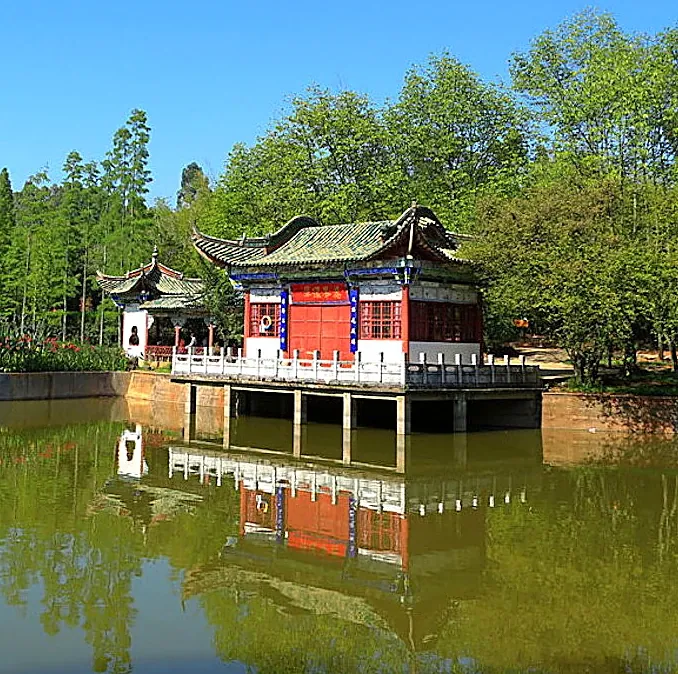
Unlike tourist spots that overdo flashy modern light shows, evening scenes at the Golden Hall keep a solemn, contemplative spirit. On auspicious days, traditional festivals, or Xuanwu’s birthday celebrations, gentle lighting highlights antique metal surfaces. Red paper lanterns hung along stone steps through the three Heavenly Gates cast a warm glow guiding pilgrims through light mist, while soft uplighting from white marble bases picks out waves, rolling clouds, and mythical creatures carved into bronze walls—making the multi-hundred-ton hall seem to float over a shimmering night sea.
Nighttime feels even more enchanting as fragrant incense mingles with cool mountain air and traditional southern-Yunnan Taoist music drifts from quiet courtyards. Bamboo flutes, lutes, and gentle bronze chimes guide listeners into serene reflection. Standing in Kunming’s quiet night before a bronze sanctuary that has weathered centuries of change, watching light glint across fine relief work, visitors feel the enduring depth of southern spiritual heritage.
Visiting Mingfeng Mountain and the Golden Hall Bronze Temple extends beyond quiet temple sounds into Yunnan’s rich culinary world, where highland mountain produce blends with imperial and folk traditions across generations. Leaving century-old pines behind, appetites awaken at traditional eateries at the foot of the hill or along old Kunming lanes. A refined highlight is freshly baked flower pastry from time-honored brand Jixiangtang—flaky multi-layered pastry cradling sweet organic double-petal red rose jam harvested in morning dew, capturing Spring City sweetness in every warm bite.
Alongside floral pastries, Kunming’s traditional potuo pastry showcases remarkable dough craft. Unlike ordinary steamed buns, potuo dough is laminated with lard and fine flour so it flakes into delicate, silky layers when steamed. Inside sits a savory filling of diced fresh pork, fragrant highland shiitake mushrooms, and Yunnan’s signature Xuanwei ham—whose cured savory richness and subtle woodsmoke aroma leave a lasting impression of the southwest.
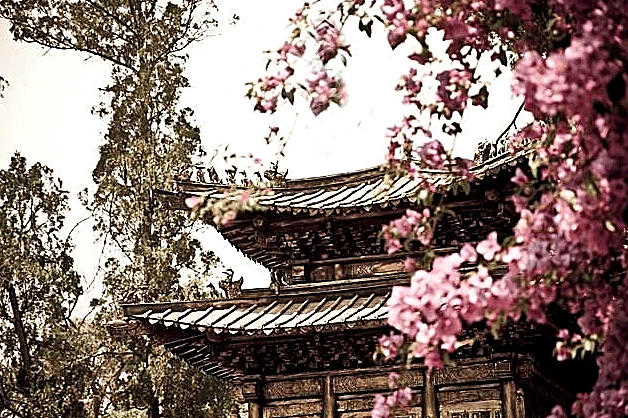
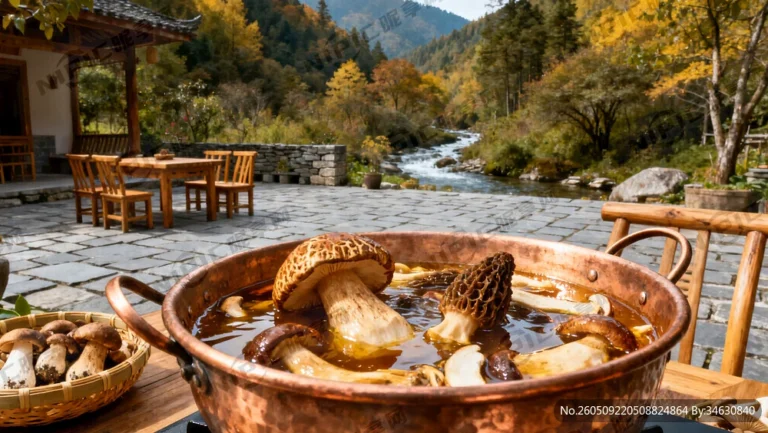
As sunset settles over the Golden Hall’s bronze roof tiles, nearby dining warms up with steaming pots of free-range chicken and Yunnan wild mushroom hotpot. Broth simmered for hours from local black-bone hill chicken forms a clean, sweet base for forest mushrooms gathered in misty woods—such as pine-scented matsutake, crisp morels, and rich boletes—yielding a nourishing golden soup. Meals can also feature crisp-skinned Yiliang roast duck, a century-old tradition roasted over dry pinewood in brick ovens for glossy red skin and flavorful meat.
No food experience around the Golden Hall is complete without traditional Crossing-the-Bridge Rice Noodles, where bubbling broth insulated by a layer of chicken oil lets diners scald paper-thin fish slices, quail eggs, and wild greens right at the table. For lovers of bold highland flavors, copper-pot beef hotpot cooked over glowing charcoal alongside black-goat stew with ginkgo nuts showcases Yunnan’s diverse ethnic kitchens—each dish a living piece of local culture.
The Golden Hall Bronze Temple Scenic Area sits at No. 771 Chuanjin Road in Panlong District, roughly eight kilometers northeast of Jinma Biji Square in central Kunming. Thanks to well-connected city transit, reaching Mingfeng Mountain is straightforward via public buses No. 10 or No. 71 directly to the Golden Hall stop, or by taxi/ride-hailing in about twenty to thirty minutes. At the base of the hill, walkers can climb pine-shaded steps at an easy pace, while families with older travelers or young children can take the aerial cableway to save energy and enjoy hillside views before entering the sanctuary gates.
To take in the cultural and architectural depth here smoothly, set aside roughly half a day to connect key landmarks in order. After passing through the three Heavenly Gates and admiring the Kangxi-era bronze hall at Taihe Palace, visit the Wu Sangui Relics Exhibition Hall—where a heavy broadsword and finely forged Seven-Star Sword quietly recall the drama of the Wu Zhou era. Next door rises the three-story Great Bell Tower housing the 14-ton bronze bell cast in the twenty-first year of Yongle (1423) and moved here from South Gate. Finish with a peaceful walk through the hundred-mu Camellia Garden, home to over four hundred camellia varieties including ancient trees linked in lore to poet Chen Yuanyuan.
Because the Golden Hall Bronze Temple is a major nationally protected heritage site with priceless metal artistry, strict conservation rules apply. Never touch, lean against, or scratch bronze walls, dragon columns, altars, or ritual weapons. Because the scenic area sits above two thousand meters on a wooded mountain, air can feel dry while UV rays are strong—so bring insect repellent, sunscreen, sunglasses, and a sun hat in spring and summer. Mossy bluestone steps near the gates can turn slick after sudden mountain showers, making grippy walking shoes essential.
For travelers arriving from Vietnam, crossing overland via Lao Cai–Hekou and taking a high-speed train to Kunming is a popular, convenient option. Make sure your passport has at least six months of validity along with a valid Chinese visa or border travel permit as required. Carrying some RMB cash alongside Alipay or WeChat Pay linked to an international card makes everyday spending smooth. For those hoping to experience Wu Sangui’s historical traces amidst pine breezes and Spring City scenery on a seamless route, a 4-Day 3-Night Hekou–Kunming–Jiaozishan Snow Mountain Tour connects sacred bronze halls with snow-dusted peaks in one memorable trip.