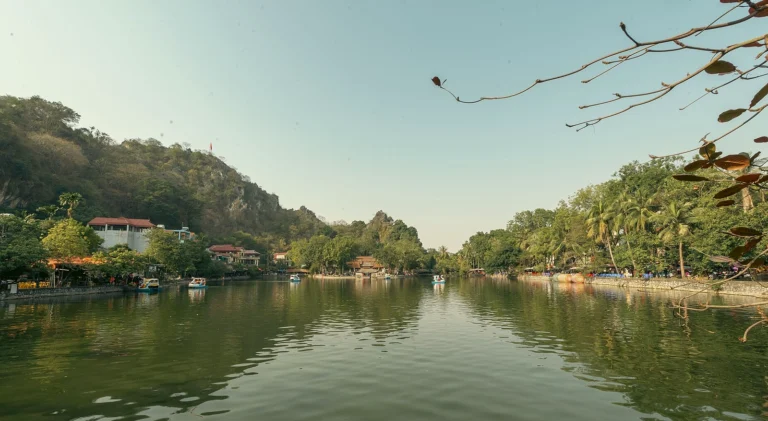
Nestled within the thousand-year-old cultural heartland of Thang Long – Hanoi, Ba Vang Pagoda (Bao Quang Ancient Pagoda) emerges as a tranquil heritage landmark imbued with the imprint of Dai Viet Buddhism across historical eras. Unlike common misconceptions associating it with modern religious complexes of the same name along the coast, this original ancient pagoda occupies a distinctive geographical setting where the sacred aura of the old capital converges with the serenity of its western frontier outskirts. Ancient masters shaped the pagoda’s layout according to traditional feng shui principles—”backed by mountains, facing the water”—resting its back against rolling hills characteristic of the northern midland transition zone while looking out over fertile alluvial river plains that gather vital energy. This vantage point not only creates an architectural sanctuary tucked beneath solemn ancient canopies far removed from urban clamor, but also forms a singular landmark on the spiritual and heritage tourism map of the capital.
Regarding the origins of its name and founding era, Bao Quang Ancient Pagoda is closely tied to the turbulent vicissitudes of the Revival Le Dynasty. Field research and stone steles preserved in the front hall date the pagoda’s construction to around the Vinh Huu reign (1735–1740) under Emperor Le Y Tong and Lord Trinh Giang—a period marked by concerted efforts to revive Buddhism in Tonkin following decades of upheaval. The name “Ba Vang” is in fact a localized phonetic evolution of the original Sino-Vietnamese titles “Bao Vang” or “Bao Quang,” reflecting a philosophy oriented toward compassionate radiance, the brilliance of the Dharma, and the local villagers’ aspirations for prosperity and peace. Through subsequent dynasties from the Tay Son to the Nguyen (most notably under Emperors Minh Mang and Tu Duc), the pagoda was repeatedly restored and expanded by both the royal court and local residents, becoming a renowned monastic landmark of ancient Son Tay Garrison and Hanoi.
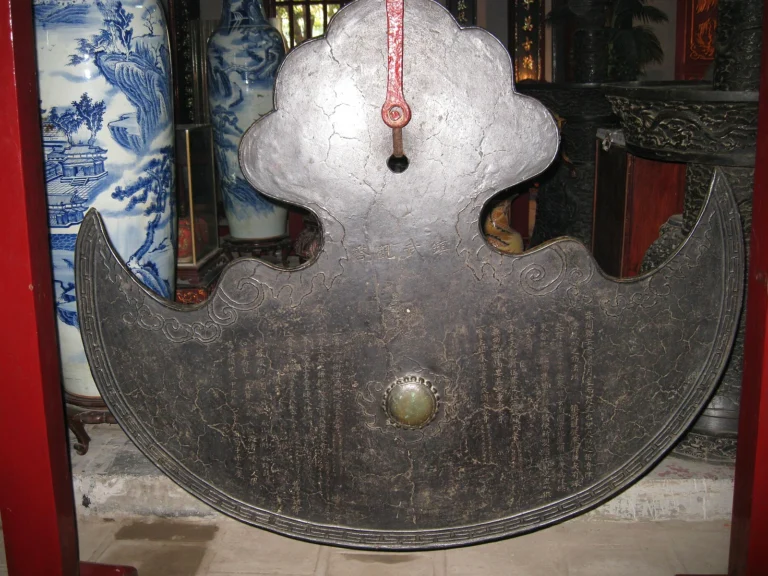
The monument’s historical tapestry grows even richer through the figures and cultural milestones recorded in surviving woodblocks and royal decrees. Although time has dimmed the name of the founding Zen master, the pagoda’s chronicles preserve the immense contributions of successive abbots, notably Most Venerable Thich Chan Tinh (Dharma name Patriarch Van Thong), who established monastic lands, safeguarded canonical scriptures, and fostered spiritual ties with northern literati in the early 19th century. Major renovations during the Tu Duc reign—documented by the casting of a bronze bell in the 15th year of Tu Duc and imperial deity decrees—attest to the enduring vitality of a spiritual institution deeply rooted in community life.
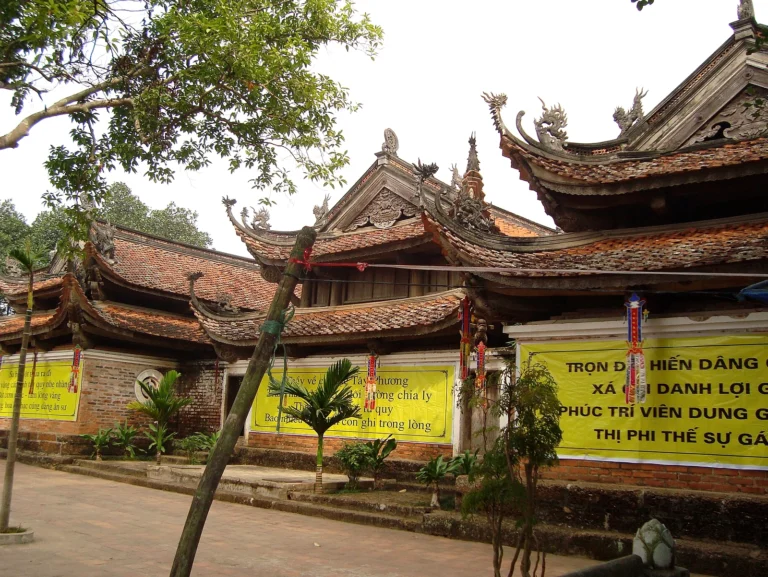
Assessing its heritage and geological value, cultural management agencies and specialized press reviewing these records affirm that Ba Vang Pagoda (Hanoi) is a living museum of traditional wooden architecture and folk building techniques. Le–Trinh era bricks, Bodhi-leaf carvings, and roof ridges adorned with two dragons flanking the moon in late 18th- to 19th-century artistic styles quietly recount the masterful craftsmanship of traditional village artisans. Across the passage of time, this ancient pagoda preserves not only the tangible fabric of a historical architectural monument, but also the cultural soul of Trang An—serving as an erudite sanctuary for those seeking to return to their roots and contemplate truth, goodness, and beauty amid a millennium-old heritage space.
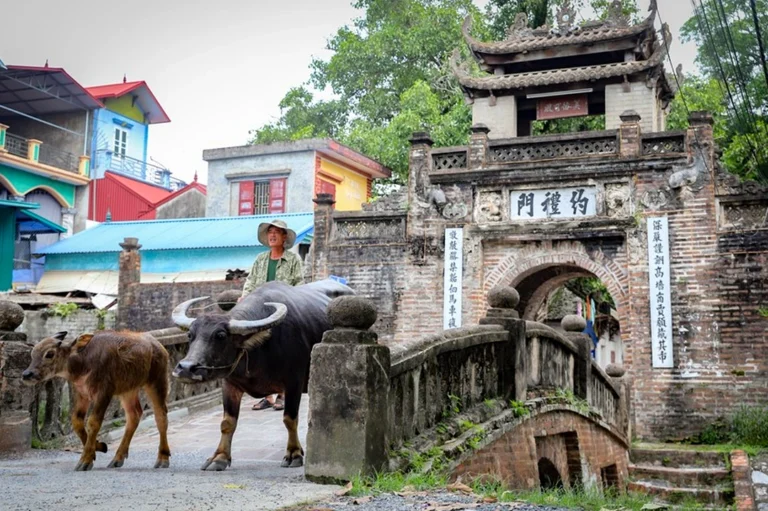
Situated in the cultured land of Thang Long – Hanoi, Ba Vang Pagoda (Bao Vang Ancient Pagoda) stands as a Buddhist architectural masterpiece bearing the unmistakable stamp of the Revival Le Dynasty, harmoniously blended with refined Nguyen-era restoration artistry. Ancient geomancers praised its terrain as a “coiling dragon, crouching tiger” posture, resting beside tranquil earthen mounds and facing the expansive spiritual currents of the ancient capital. Stepping through the timeworn three-arched gate with moss blanketing its shoe-nose roof tiles, visitors feel transported into another dimension, where the resonance of evening temple bells mingles with mountain breezes rustling through centuries-old trees. The natural scenery here is a sublime interplay between monastic solemnity and the quiet, refined grace of courtyard gardens and ancient stupas.
The defining highlight of Ba Vang Pagoda’s architecture is its sanctuary complex arranged in the imposing noi cong ngoai quoc (“inner I-shape, outer enclosure”) layout. The Main Buddha Hall features a solid ironwood frame intricately carved with traditional motifs such as the four mythical creatures, stylized foliage, and classic Buddhist parables. Every chiseled line across the rafters and tie beams showcases the pinnacle of 18th- and 19th-century hand-carved woodwork—graceful yet commanding and majestic. Original Buddha statues inside are sculpted from precious timber and finished in red lacquer and gold leaf, radiating serene compassion amid drifting curls of incense smoke. A long winding corridor embraces the Patriarchs’ Stupa Garden, which houses the relics of eminent abbots across generations, further elevating the monument’s solemn, antique, and timeless aura.
To capture the most rewarding moments during a visit to this ancient temple, seasoned photographers and travel journalists often recommend two artistic camera angles. The first is from the front courtyard looking straight toward the main hall, where your lens can frame the stately curves of the tiled roof peeking beneath ancient freshwater mangrove canopies, creating a composition that is both classic and poetic. The second is along the pathway skirting the stupa garden at sunset, when late-afternoon sunbeams slant through the treetops and illuminate moss-covered historic bricks for an ethereal, nostalgic glow. The ideal windows for artistic photography are early morning (6:00 AM to 8:00 AM), while morning mist still lingers among the foliage, or late afternoon (4:30 PM to 5:30 PM), when soft golden dusk washes across the pagoda’s tranquil architecture.

When visiting the thousand-year-old cultural land of Thang Long to uncover the historical roots of Ba Vang Pagoda (Bao Quang Pagoda), travelers do more than touch the storied chronicles of the Revival Le era or immerse themselves in the nostalgic aura of moss-covered stone steles—they also experience a vibrant, deeply moving journey into local heritage. Far removed from commercialized spiritual attractions, exploring this ancient temple stirs a sense of wonder and awe at the seamless harmony between expansive nature and centuries-old spiritual traditions.
Early mornings at this monastic sanctuary begin with a gentle climb up weathered stone steps leading to the pagoda gate. Along a shaded trail lined with centuries-old trees, bright birdsong blends with the resonant chime of temple bells drifting through the morning mist, composing a peaceful symphony of nature. The higher you ascend, the broader the horizon opens. Looking out into the distance, visitors are captivated by a picturesque panorama of suburban Hanoi—prosperous villages, lush green rice paddies, and a winding river veiled in gossamer mist. Any fatigue from the climb melts away, replaced by awe at nature’s grandeur and a rare sense of lightness and freedom.
Stepping through the three-arched gate, a quiet spiritual atmosphere envelops every footstep. Here, visitors take part in reverent worship rituals, lighting fragrant incense sticks in gratitude to ancestors and eminent monks who founded the sanctuary. The steady rhythm of the wooden fish drum and wisps of agarwood smoke curling around aged wooden beams invite deep inner stillness. Standing before the main sanctuary rich in Le–Nguyen artistic heritage, visitors feel everyday worries and urban dust washed away, rediscovering an inner peace rarely found elsewhere.
Beyond spiritual contemplation, the journey delights travelers with celebrated culinary specialties of the ancient capital region. Right at the foot of the hill, street vendors and small roadside eateries serve traditional northern delicacies—from delicately sweet bun thang noodle soup and steaming, chewy rice pudding drizzled with savory fish sauce to refined rural treats like Vong village green rice flakes fragrant with new harvest aroma, sipped alongside mild lotus tea. These humble yet exquisite flavors, paired with the warmth and hospitality of local residents, complete a vivid multisensory experience.
At the close of a visit to the original Ba Vang Pagoda, every traveler departs carrying an unforgettable resonance—a seamless fusion of historical depth, majestic scenery, and warm local culture. More than a monument for historical study, this ancient pagoda is truly a sanctuary for the soul, safeguarding authentic values that endure across time at the heart of the thousand-year-old capital.

Visiting Bao Quang Pagoda (commonly known as Ba Vang Pagoda) in Hanoi gives travelers not only the opportunity to admire Buddhist architecture steeped in Revival Le heritage, but also a chance to immerse themselves in the serene ambiance of an ancient monastic retreat. To ensure a smooth, fulfilling, and respectful pilgrimage, the pocket guide below outlines all essential practical details for visitors.
Regarding opening hours, the pagoda welcomes Buddhists and visitors from near and far every day of the week, Monday through Sunday. Standard visiting hours typically begin at 6:00 AM and close around 6:00 PM daily. On major Buddhist holidays, full-moon and new-moon days, or during special ceremonies, temple authorities often extend opening hours to accommodate devotees offering prayers for peace. Notably, admission to the grounds and architectural halls is completely free for all visitors coming to worship and explore its historical heritage.
To reach Ba Vang Pagoda from central Hanoi, travelers can choose from flexible transport options including motorbikes, private cars, or public buses. The most convenient route follows main arterial roads leading toward the historical and scenic heritage zones of ancient Thang Long. Thanks to modern, well-connected road infrastructure, travel time from the inner city to the ancient pagoda is brief, making it effortless to complete a day trip without any road difficulties.
As a sacred site steeped in centuries of cultural heritage, visiting Ba Vang Pagoda calls for neat, respectful attire. Guests—especially women—should wear polite, modest clothing, favoring traditional outfits or understated temple attire in muted tones that cover shoulders and knees. Additionally, because the surrounding terrain features stone steps and open-air grounds, wearing comfortable sneakers or flat walking shoes is ideal for keeping your feet protected and comfortable throughout your visit.
The best time of year to visit this ancient pagoda is in spring, from the first to the third lunar month. During this season, northern weather is cool and dry—ideal for New Year temple pilgrimages, spring festivals, and spiritual activities. Autumn (September through November) is also a wonderful window, offering crisp air and tranquil scenery for a deeply peaceful journey back to the roots of Vietnam’s cultural heritage.

To enjoy a seamless getaway and take in the full beauty of Ba Vang Pagoda without worrying about transportation, sightseeing arrangements, or itinerary planning, travelers can choose VDS Travel’s premium all-inclusive Hanoi tour packages. Every itinerary is thoughtfully timed to capture photo spots at their most radiant, accompanied by knowledgeable local guides and top-tier hotel and dining standards.