Standing majestically along the northernmost frontier of the Yunnan Plateau, Jiaozi Snow Mountain (轿子雪山 — Jiaozi Xueshan), crowned by its 3,850-meter lookout summit, is far more than a breathtaking geomorphological wonder—it is a silent witness to millions of years of tectonic upheaval. Originating during the Quaternary period roughly 2.5 million years ago, intense crustal uplift forged this rugged massif as a key link in the Wumeng Mountain Range (乌蒙山), branching proudly along the eastern flank of the Hengduan Mountains (横断山脉). Sculpted across countless cycles of glacial erosion and harsh weathering, sheer cliffs and ancient cirque valleys have formed an impregnable natural rampart—channeling atmospheric currents while preserving the earliest geological strata of Southwest China intact.
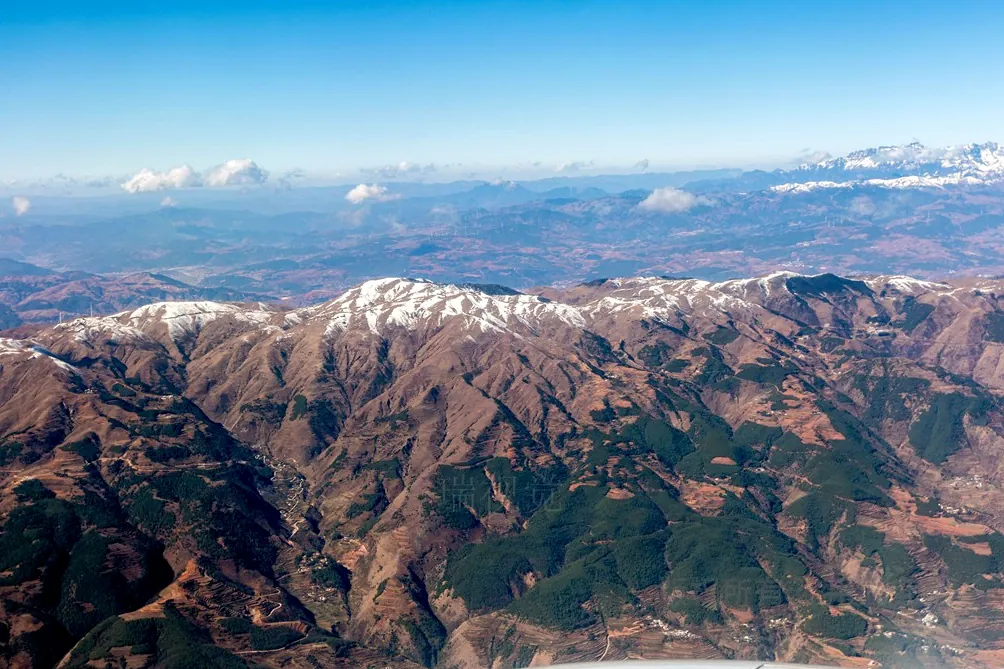
In panoramic view, Jiaozi Snow Mountain rises boldly against a deep azure sky, draped in a mantle of pure white snow contrasting sharply against rugged dark-gray ancient basalt cliffs. Broad and sloping at its base before thrusting steeply upward toward its flat-topped summit, the massif takes the stately silhouette of an imperial feudal sedan chair suspended amid drifting clouds. Snowfields soften high-altitude alpine flora while wisps of mist curl through deep gorges, painting a subarctic highland realm at once untamed, majestic, and serene.
Tracing history back to the Nanzhao and Dali kingdoms from the 8th to the 13th centuries, ancient chronicles recorded the peak under evocative names such as Shimiao Mountain (石苗山) and Bishan. In the spiritual worldview of indigenous mountain peoples—particularly the Yi and Sani communities—this snow-crowned range was revered as an inviolable sacred peak inhabited by guardian deities and ancestral spirits. Ancient harvest-thanksgiving rites and prayers offered beside sacred boulders have been passed down across generations as an enduring bond uniting human resilience with unforgiving alpine nature. The mountain’s sanctity lies not merely in its year-round snows, but in its role as a spiritual protector watching over villages nestled along the Wumeng foothills.
During the Ming Dynasty, the strategic stature of Jiaozi Snow Mountain entered a new chapter when imperial military cartographers mapped the range in detail to secure vital overland corridors linking Yunnan and Sichuan. This rugged highland served as a critical outpost safeguarding strategic branches of the Ancient Tea Horse Road—the legendary trade artery carrying tea, warhorses, silk, and mineral salt across snow-draped peaks. Beneath the shadow of Shimiao Mountain, merchant caravans navigated steep stone passes, turning the foothills into an enduring military relay post and commercial waystation trodden by traders and frontier garrisons across dynasties.
Also during the Ming Dynasty, the famed geographer and explorer Xu Xiake paused with his companions at the foot of this snow mountain to conduct its earliest scientific field surveys. His vivid travelogues documented the remarkable vertical transition of plant life—from warm temperate woodlands up into harsh alpine ecosystems—laying foundational knowledge for regional ecology. Across centuries of change, these irreplaceable historical and natural treasures were formally safeguarded when the scenic area opened to the public on December 13, 2011, earning national AAAA-rated scenic status in 2017 and bridging an illustrious past with modern wonder.
Straddling the border between Luquan County and Dongchuan District under the administration of Kunming City, Jiaozi Snow Mountain stands like a granite protective screen shielding the northern Yunnan Plateau. In historical gazetteers and traditional Eastern geomancy, the massif occupies a commanding position within the Wumeng range, drawing abundant vital energy from the roaring Jinsha River coursing through deep canyons below. Seen from afar, its square-shouldered profile, four sheer cliff faces, and elevated crown resemble a traditional eight-bearer royal sedan chair tilting gracefully amid the clouds—giving rise to the enduring name Jiaozi (Sedan Chair) Snow Mountain.
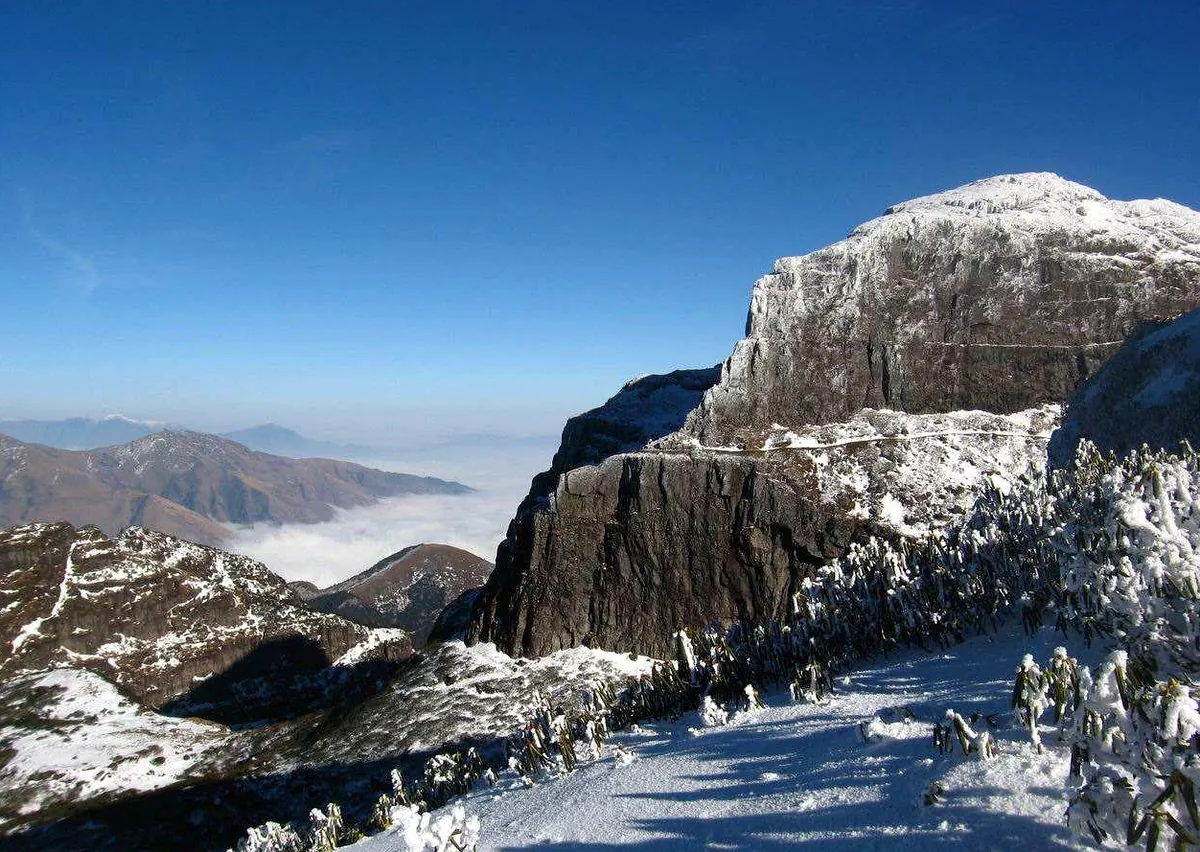
Gazing upward from steep flanks toward the 3,850-meter summit, Jiaozi’s terrain reveals imposing tiers of limestone and basalt where lush forest canopy meets snow and ice along a razor-sharp ecological boundary. Dark gray rock ledges carved over millions of years stand exposed to brisk alpine winds, softened by snow blankets filling rock hollows and winding trails—exuding quiet, untamed vitality in a tranquil plateau sanctuary.
Through the lens of geological science, Jiaozi Snow Mountain is an invaluable natural museum, recognized as the lowest-latitude mountain in China preserving intact Quaternary glacial relics. Its geodetic summit elevations—ranging between 3,835 and 3,850 meters above sea level—emerged from powerful tectonic uplift paired with sculpting by ancient glaciers. Clear glacial signatures endure in U-shaped trough valleys, ice-scoured roches moutonnées, moraine boulder fields, and mirror-still alpine lakes such as Tianchi and Mubanghai reflecting sheer cliffs frozen in time.
Steep vertical relief drives a dramatic vertical succession of climates and ecosystems. Ascending from valley floor to summit unfolds like a living botanical journey: beginning amid fertile agricultural valleys where terraced fields curve beside traditional Yi wooden homes, passing through warm evergreen broadleaf woodlands, and entering primeval temperate forest. Between 2,500 and over 3,000 meters thrives a kingdom of ancient rhododendron trees rooted deeply into rocky slopes, draped in thick emerald moss and wild orchids before giving way to stark alpine tundra meadows.
Nature’s calendar at Jiaozi revolves around two extraordinarily scenic seasons. From November through March, winter blankets the entire massif in pure white snow, transforming cascading cliffside waterfalls into translucent jade-blue ice pillars resembling sculpted crystal. Come April and May, melting snows unleash the plateau’s most vibrant awakening: wild rhododendrons burst into simultaneous bloom, painting high slopes in vivid shades of pink, crimson, violet, and pure white against lingering snowfields near the sky.
Beginning at roughly 2,800 meters above sea level, the Jiaozi Snow Mountain visitor and service center serves as a graceful bridge between authentic local heritage and modern alpine engineering. Drawing inspiration from traditional Yi timber dwellings of the Wumeng grasslands, architects echoed sturdy exposed wood framing, steep snow-shedding pitched roofs, and carved motifs symbolizing sacred hearth flames. Contemporary engineering shines through expansive multi-layered tempered-glass walls and high-tensile steel bracing—opening panoramic views across billowing cloud seas while sealing out biting plateau winds.
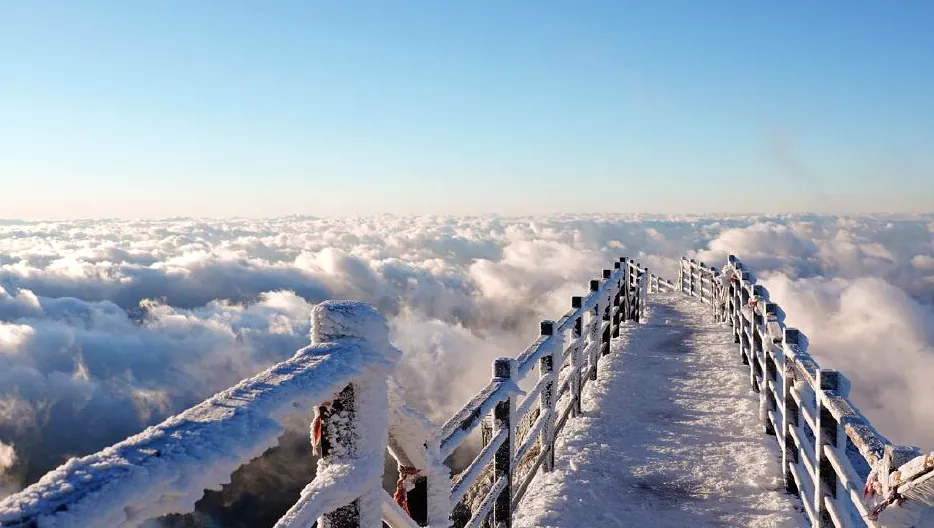
Suspended dramatically across pristine snowfields and towering basalt cliffs is a network of elevated mountain boardwalks, where weathered silver-gray cedar planks contour gracefully along rugged terrain like a silk ribbon draped across the sky. Every handrail, stair tread, and cantilevered lookout platform is anchored securely into solid bedrock via hot-dip galvanized stainless-steel piers, projecting over mist-filled chasms to reveal sweeping valley vistas while demonstrating harmonious human engineering in harsh alpine terrain.
Passenger transport across Jiaozi Mountain operates as a seamless multi-tiered system backed by hundreds of millions of RMB in infrastructure investment. From the main transfer hub, zero-emission clean-energy eco-buses navigate hairpin mountain bends through red pine forests to reach the lower cableway terminal. A two-stage detachable-grip gondola system—engineered with shock-absorbing cabins capable of withstanding Gale Force 10 winds—glides smoothly across nearly a thousand meters of vertical elevation in minutes, moving thousands of visitors per hour while eliminating road congestion and vehicle emissions.
A standout triumph of sustainable design is the multi-kilometer elevated plank boardwalk linking Dapingba Station all the way to Mubanghai Lake and the Jiaozi summit ridge. Rather than blasting rock or clearing forest corridors, the entire elevated walkway was assembled from prefabricated components suspended 30 to 50 centimeters above the ground. Cantilevered steel brackets anchored into natural rock crevices allow sunlight and rain to reach the forest floor unimpeded—safeguarding the delicate root systems of millennium-old rhododendron groves and fragile alpine lichens from foot traffic.
To uphold rigorous safety standards above 3,000 meters, support facilities are positioned strategically along the entire route. Field first-aid stations equipped with medical hyperbaric oxygen chambers, infrared warming zones, and satellite-linked emergency rescue posts stand ready at key high-altitude junctions—ensuring visitor safety during peak winter icefall season while honoring sustainable stewardship that leaves every alpine blade of grass unharmed.
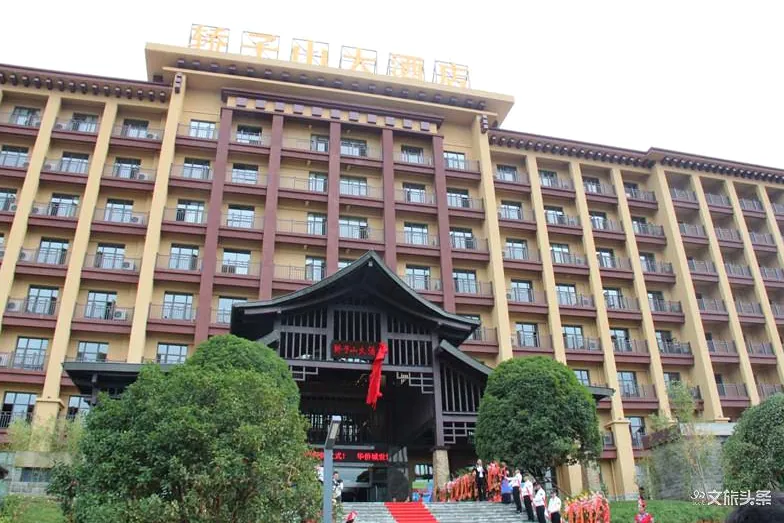
As sunset fades across the icy ridges of the Wumeng Mountains, Jiaozi Snow Mountain closes its daytime pageant of snow and stone to enter a completely different nocturnal rhythm. Free from loud theatrical spectacles or laser beams piercing the mountain night, the foothills above two thousand meters embrace serene cultural depth. At dusk, wooden lodges and eco-retreats tucked in the valley glow with warm lantern light, mingling with fragrant pine woodsmoke drifting on crisp breezes descending from the sacred summit.
Against sub-zero chill rolling down from snowy peaks, cozy dining rooms at mountain base lodges become warm havens of sight and taste, where soft golden lighting highlights steaming hotpots. Across rustic timber tables, golden Tangdian free-range chicken broth bubbles merrily, surrounded by platters of freshly foraged mushrooms gathered from Yunnan’s primeval forests—casting rising plumes of fragrant steam against frost-rimmed windows in a heartwarming alpine scene.
Evening dining at Jiaozi Mountain distills the pure bounty of deep highland forests. A steaming wild mushroom hotpot is the ultimate reward after conquering 3,850 meters of altitude. Celebrated as China’s mushroom kingdom, this climatic transition zone yields prized varieties including golden porcini, crisp-sweet termite mushrooms (Jizong), delicate bamboo pith fungus, and rare matsutake. Infused with rich marrow sweetness from pasture-raised local chicken and paired with fiery mountain corn liquor, every spoonful chases away fingertip chill and restores vitality in the crisp mountain night.
Nocturnal life here also beats to the timeless cultural pulse of indigenous Yi communities inhabiting Luquan County. When bonfires are kindled in bluestone courtyards, young Yi men and women in vibrant red-embroidered traditional dress strike up resonant melodies on the yueqin moon lute. Performing the traditional Zuoba circle dance around crackling flames serves both as an ancestral blessing warding off mountain spirits and a heartfelt welcome to distant travelers—honoring ancient Nanzhao-era reverence for supreme mountain deities watching over the peaks.
For guests staying overnight in hillside eco-villas or luxury alpine glamping lodges, stargazing above Jiaozi Mountain offers an unforgettable celestial spectacle. Completely insulated from the light pollution of Kunming over 150 kilometers away, the night sky opens like black velvet encrusted with millions of brilliant stars. Standing on a timber balcony gazing toward Jiaozi’s moonlit crest while wind whispers through icy crevices invites travelers to slow down and listen to their own inner stillness.
Amid the demanding climate of windswept passes in the Wumeng Range, culinary traditions around Jiaozi Snow Mountain are far more than indulgence—they represent centuries of survival wisdom forged by Yi and Hui communities in Xundian County. When darkness falls across frozen cliffs near four thousand meters, wood-fired village hearths become the beating heart of local life, celebrating honest highland ingredients shaped by frost, forest loam, and heirloom recipes.
Reigning as the soul of highland gastronomy is Yunnan Wild Mushroom Hotpot, born from arduous foraging treks across Wumeng’s forested slopes. Slow-simmered for hours with free-range hill chicken to yield a rich, golden, naturally sweet broth, the copper pot welcomes dozens of prized wild fungi—including porcini, matsutake, Jizong, and golden chanterelles—all at once. Locals uphold an unbreakable safety ritual: a wooden hourglass is flipped, and no chopstick may touch the pot until a full twenty minutes of vigorous boiling neutralizes any natural toxins. The first steaming ladleful releases an intoxicating aroma of rain-drenched forest earth and deep umami that melts away alpine chill in an instant.
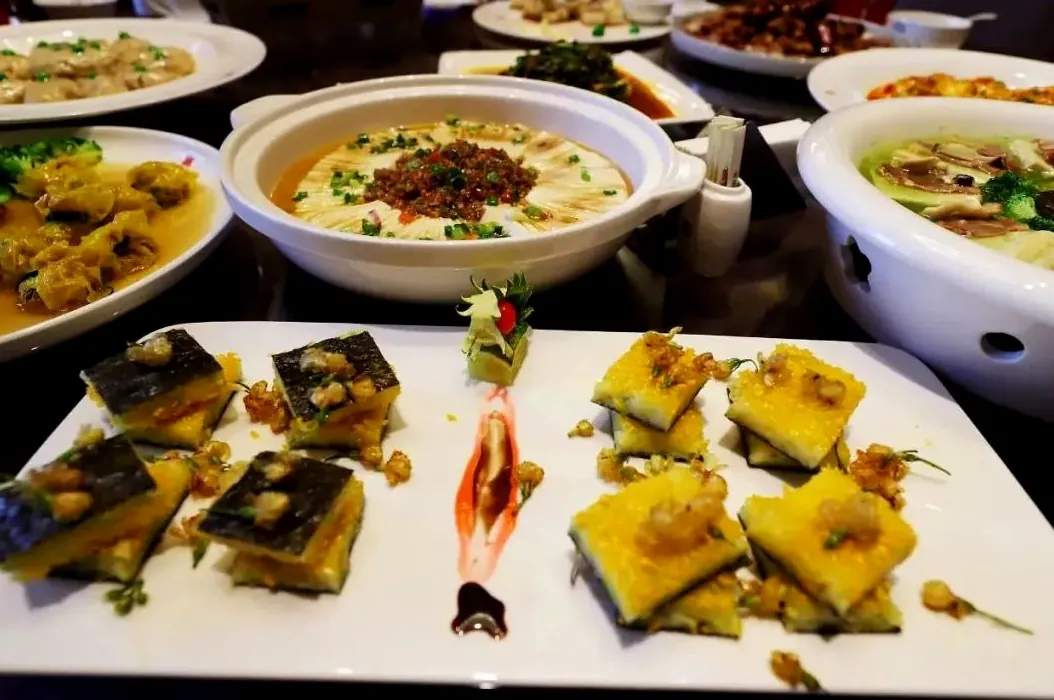
Pairing seamlessly with wild mushrooms is renowned Rubing—handcrafted goat’s milk cheese passed down from Zhaotong to Xundian mountain villages. Made purely from fresh pasture-raised goat’s milk curdled with natural herbal sour whey without chemical additives and pressed in rustic pine molds, thick ivory slices are pan-fried in hot oil until golden-crisp outside while remaining tender and milky inside. Dipped in fragrant roasted Sichuan peppercorn salt, each bite reflects a fascinating culinary crossroads between ancient nomadic herding traditions and southern mountain cooking.
No highland feast is complete without Xundian Bamboo-Tube Rice, born from long hunting expeditions by Yi woodsmen. Fresh young bamboo joints brimming with sap are packed tightly with plump upland glutinous rice, sweet young corn kernels, and strips of winter-cured pine-smoked bacon, then buried directly in glowing charcoal embers. Turned steadily until the outer bamboo chars black, splitting the tube reveals glistening, chewy rice wrapped in a delicate inner bamboo membrane—infused with smoky richness and sweet green bamboo aroma.
To chase away bone-chilling cold from Jiaozi’s snowy peaks, highland purple-corn and glutinous rice liquor serves as an essential toast at every gathering. Brewed with heirloom forest herbal yeast and distilled slowly in earthenware pots, this potent yet remarkably smooth spirit sends warmth radiating from throat to stomach—renewing energy for icy stone stairways ahead.
Reaching the 3,850-meter summit of Jiaozi Snow Mountain rewards thoughtful physical preparation and familiarity with the Mile–Kunming highland terrain. Along winding timber boardwalks hugging frost-covered cliffs, crisp air grows noticeably thinner with altitude as snow-laden conifers frame seas of cloud rolling across Xundian’s deep valleys beneath a brilliant subtropical alpine sky.
Timing your journey determines which face of this legendary peak you experience. November through March offers peak winter magic, turning the summit into a white jade sculpture gallery crowned by towering cliffside icefalls. Conversely, April and May usher in the spring thaw and blazing rhododendron blooms carpeting slopes above three thousand meters in crimson, violet, and white. Regardless of season, note standard scenic area hours from 8:30 AM to 5:30 PM daily, and keep in mind that upper cableways typically stop boarding uphill passengers at 3:30 PM to ensure safe descents before sunset temperatures plummet.
Located roughly 150 kilometers from central Kunming, Jiaozi Snow Mountain is easily reached via a modern dedicated expressway passing through Xundian Hui and Yi Autonomous County—a scenic 2.5- to 3-hour drive past limestone gorges and terraced hillside fields to Xinshan Visitor Center. Modern travel itineraries increasingly favor pure-sightseeing (“Chunwan”) formats free from forced commercial shopping stops, maximizing peaceful immersion in geological and ecological wonders.
Because elevations approach 4,000 meters above sea level, altitude sickness is a real consideration for lowland visitors. Local wisdom recommends taking Rhodiola rosea (Hongjingtian) supplements starting one week prior to departure to support oxygen transport. Essential summit gear includes a compact high-pressure portable oxygen canister, a waterproof insulated down jacket, deep-lugged snow-grip trekking boots with ankle support, and polarized sunglasses to block intense UV glare off snowfields.
Entry through Yunnan’s international gateways is smooth thanks to electronic visa processing and automated border lanes, though travelers should ensure passports carry at least six months of validity alongside valid visas. Carrying small denominations of RMB cash alongside mobile payment apps is also helpful at rustic mountain eateries serving steaming black-cardamom chicken soup at the foothills. For a worry-free snow-and-cloud adventure complete with dedicated transport and altitude support, consider booking a reputable all-inclusive China tour package to experience Jiaozi Snow Mountain in complete comfort.