Straddling both Europe and Asia, the Anatolian peninsula has long served as a stage witnessing the rise and fall of the most brilliant civilizations in human history. The heart of this legendary land began beating powerfully along the shores of the Golden Horn, where the metropolis of Istanbul emerged in the seventh century BCE under the name Byzantion, founded by Byzas of Megara following an oracle from Delphi. In 330 CE, a monumental turning point for the Western world unfolded when Emperor Constantine the Great relocated the imperial capital from Rome to this site, laying the foundation for New Rome, or Constantinople. For more than ten centuries, this city towering beside the Bosphorus Strait stood as the impregnable bastion of Eastern Christianity and the Byzantine Empire, before Sultan Mehmed II’s heavy cannons breached the Theodosian Walls in 1453, officially establishing Istanbul as the supreme seat of power of the illustrious Islamic Ottoman Empire.
Tracing history deeper into the Anatolian interior, the shifting tapestry of time leads travelers to the awe-inspiring region of Cappadocia, known as Katpatuka in ancient Persian rock inscriptions under Cyrus the Great and Darius I, carrying the sacred meaning of “Land of Beautiful Horses.” Before the Persians established satrapies here, the area was a strategic homeland of the mighty Hittites in the second millennium BCE. When waves of religious persecution from the Roman Empire swept across Asia Minor, Cappadocia’s soft volcanic tuff terrain became an ideal sanctuary for early Christians. Guided by the Church Fathers Basil of Caesarea, Gregory of Nyssa, and Gregory of Nazianzus, raw rock caves were carved into hundreds of rock-cut churches and multi-level underground cities such as Derinkuyu and Kaymakli, forging a resilient spiritual space amid the turmoil of war.
Moving toward the Lycus River valley, the site of Hierapolis—now intertwined with the snow-white limestone terraces of Pamukkale—tells a story of ancient medical knowledge and the art of restorative healing. Built by King Eumenes II of the Kingdom of Pergamon in the second century BCE, Hierapolis rapidly transformed into one of the most renowned mineral spa and wellness centers in the Greco-Roman world. Warm mineral waters rich in calcium bicarbonate welling up from beneath the earth not only sculpted enchanting terraced pools but also turned the site into a vast sanatorium where nobles, campaigning soldiers, and sages came to recover their strength, leaving behind one of the largest ancient necropolises in Asia Minor.
The historical journey comes full circle along the sun- and wind-swept Aegean coast at Ephesus, one of the twelve most dazzling cities of the Ionian League from the tenth century BCE, founded by Prince Androklos of Athens. Ephesus’s height of prosperity was closely tied to the Temple of Artemis, an architectural masterpiece celebrated as one of the Seven Wonders of the Ancient World with its towering marble columns. Later, after falling under the rule of the Roman Republic and then the Roman Empire under Emperor Augustus, Ephesus rose to become one of the busiest commercial ports on the eastern Mediterranean, while also marking the arduous missionary years of Saint Paul and the peaceful final years of the Virgin Mary, etching a poignant yet serene epic across every moss-covered stone.
Stretching across the vital crossroads between the mystical East and the splendor of the West, Turkey possesses a geographic structure akin to a living geological and human museum, where every vein of earth and river course has shaped the destiny of ancient civilizations. Starting in the far northwest, the former imperial capital of Istanbul commands a triangular peninsula of extraordinary strategic value, embraced by the deep waters of the Bosphorus Strait and the Golden Horn. The Bosphorus is more than a submerged tectonic valley dividing Europe and Asia; it is a maritime lifeline linking the Black Sea to the Sea of Marmara. The commanding terrain of Sarayburnu was planned along seven rolling hills echoing Rome, creating a natural feng shui of complete offense and defense that welcomed thriving maritime trade while offering sweeping views across the wide sea approaches.
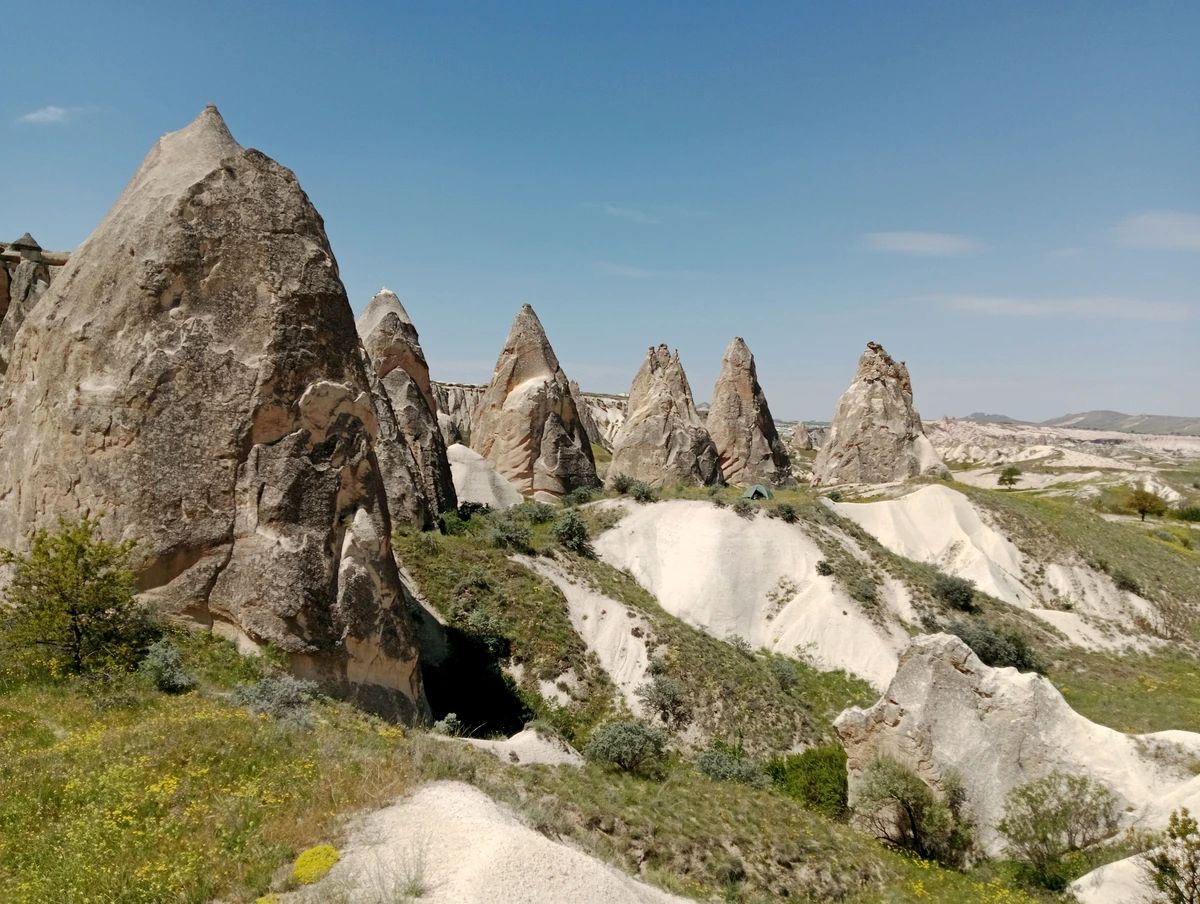
Venturing deep into the mountainous core of Central Anatolia, the landform shifts dramatically to the untamed plateau of Cappadocia, a masterpiece forged over millions of years by violent ash eruptions from the ancient volcanic trio of Erciyes, Hasan, and Güllü. Soft layers of settled volcanic ash compacted into porous tuffite, and harsh weathering from rain, snow, and gales sculpted magnificent stone pillars shaped like giant mushrooms, poetically called fairy chimneys (peri bacaları) by locals. Beyond the surreal scenery above ground, the ease with which tuffite can be carved—yet its durability when exposed to dry air—paved the way for a one-of-a-kind engineering feat. Ancient inhabitants hollowed out the valley floor to build vast multi-story underground cities like Derinkuyu and Kaymaklı, complete with vertical ventilation shafts dozens of meters deep, heavy monolithic rolling stone doors to block invaders, livestock stables, wine presses, and subterranean churches tucked seamlessly underground.
Heading southwest along the Büyük Menderes River valley, the landscape transitions into one of the world’s foremost geothermal wonders at Pamukkale, where tectonic fault lines of the Menderes Graben system intersect. Here, geothermal pressure forces hot mineral water rich in calcium bicarbonate up to the surface at steady temperatures ranging from 35°C to over 100°C. Upon meeting the atmosphere, a natural chemical reaction releases carbon dioxide gas, causing calcium carbonate to precipitate into pure white mineral mud that gradually builds up over the years into layered travertine terraces cascading like a frozen waterfall down the hillside. This natural thermal energy not only shaped the fantastical “Cotton Castle” scenery but also sustained the resort city of Hierapolis for centuries.
The geomorphological journey concludes on the Aegean coastal plain, which preserves the ruins of the ancient city of Ephesus, a shining symbol of Greco-Roman civilization. Originally laid out at the mouth of a narrow bay as one of Asia Minor’s busiest commercial ports, Ephesus held a prosperous trade artery thanks to direct access to the open sea. However, the relentless alluvial deposition of the Küçük Menderes River brought a harsh geological transformation. Millions of tons of sand, gravel, and mineral silt carried down each flood season gradually filled the harbor basin, turning a deep blue sea inlet into stagnant marshland and pushing the shoreline more than five kilometers inland, forcing the once-thriving port city to yield to nature’s dramatic shift.
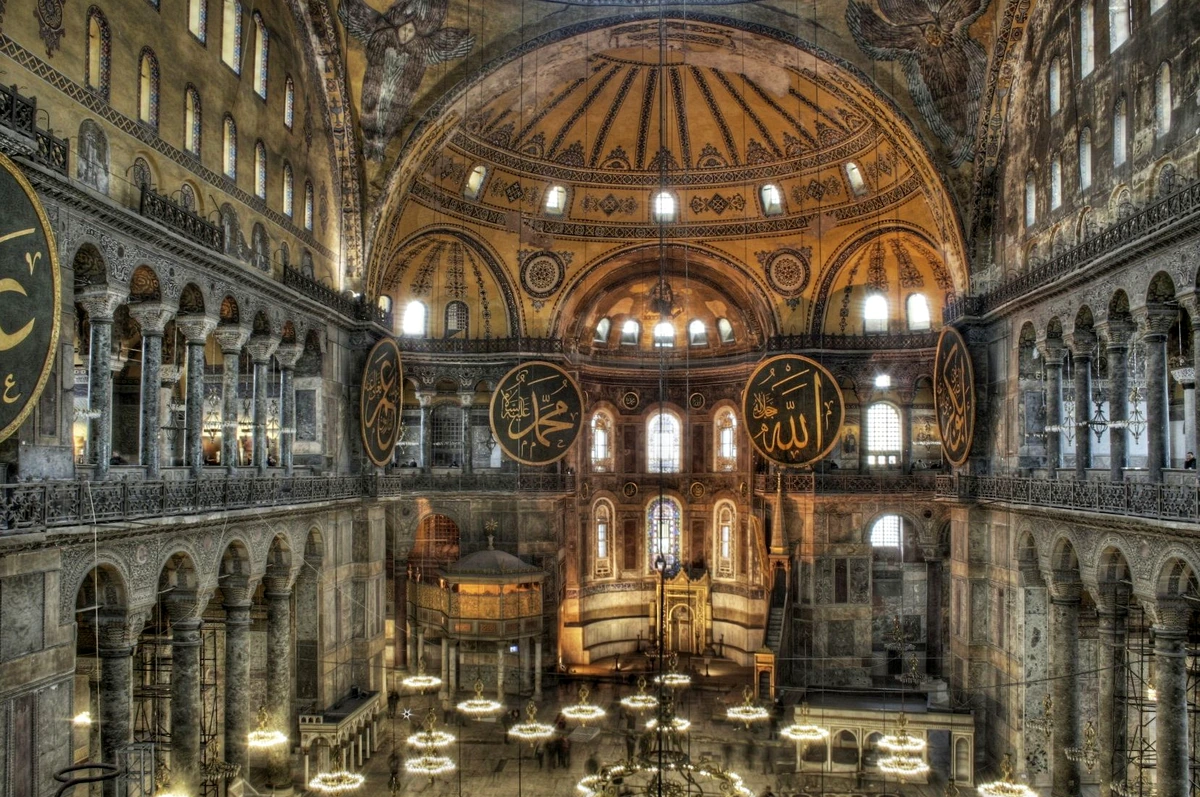
The Anatolian lands unfold a living chronicle of architectural art and building engineering spanning millennia, where the Byzantine, Roman, and Ottoman empires displayed the pinnacle of human spatial design. At the Europe–Asia crossroads of Istanbul, Hagia Sophia stands as an ultimate testament to sixth-century architectural geometry under Emperor Justinian I. Two brilliant mathematicians and architects, Anthemius of Tralles and Isidore of Miletus, achieved an unprecedented feat: resting a massive hemispherical dome over 31 meters in diameter atop a square plan through curved triangular spandrels known as pendentives. This technique channeled the dome’s enormous weight down into four massive granite piers concealed within the walls, opening up the floor space and allowing a ring of 40 arched windows around the dome’s base to let in natural light, creating a mystical illusion that the dome floats weightlessly in midair without earthly support.
Building upon and advancing the legacy of Byzantine domes, the Ottoman Empire’s legendary chief architect—Mimar Sinan—shaped Istanbul’s skyline through an exemplary model of social space planning known as the külliye. Exemplified by the Süleymaniye Mosque complex, a külliye is far more than a place of worship; it is a multifunctional architectural ensemble designed with strict symmetry and practical utility. Surrounding the central sanctuary with its tiered domes are theological schools (madrasa), a soup kitchen providing free meals (imaret), a hospital (darüşşifa), a library, and a public bathhouse (hamam). Mimar Sinan skillfully applied aerodynamic principles by routing natural convection currents to draw smoke from thousands of beeswax candles into a dedicated soot-collecting chamber, where it was refined into top-grade black ink for imperial calligraphers.
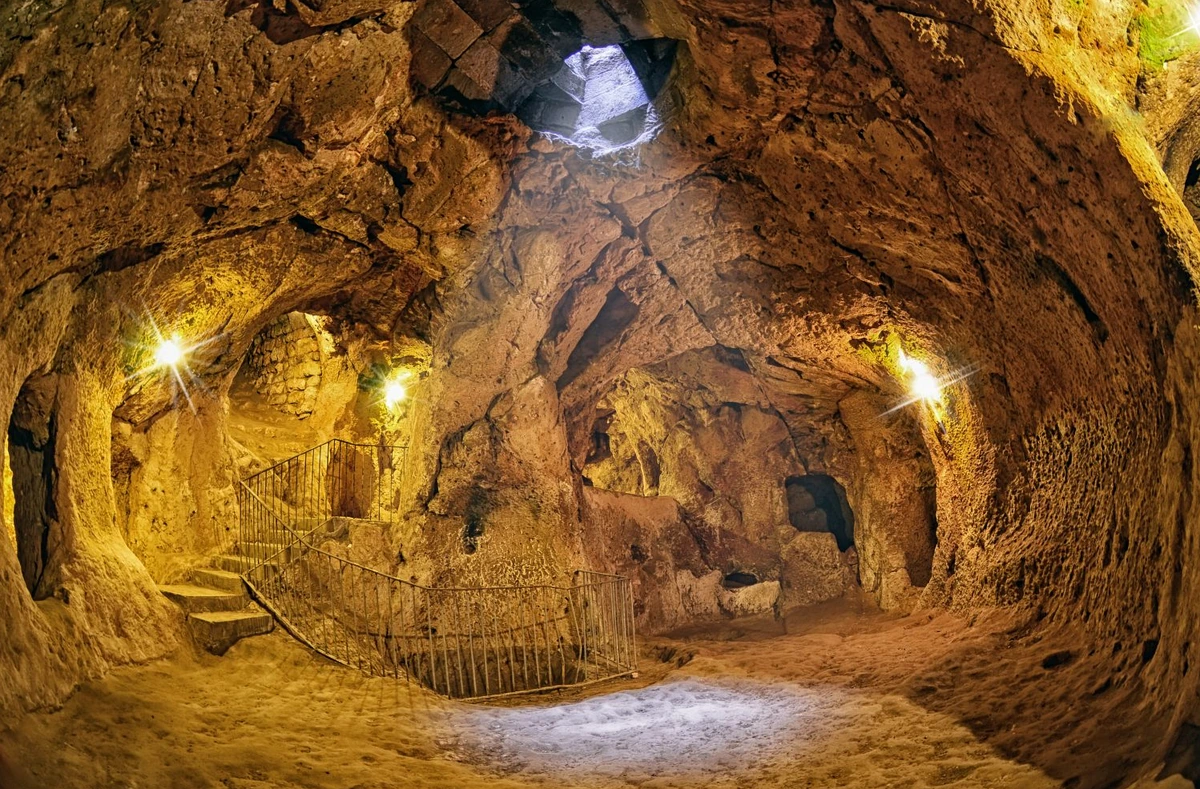
Leaving behind structures that soar toward the clouds, the Cappadocian plain draws travelers underground through subterranean cave architecture carved meticulously into soft volcanic tuff. Most notable are the two multi-level underground cities of Derinkuyu and Kaymaklı, subterranean complexes whose origins trace back to Phrygian times and were completed by early Christians seeking refuge. At Derinkuyu, spatial structures plunge up to 85 meters below ground across at least eight levels packed with living facilities, capable of sheltering around 20,000 people along with livestock during months of isolation. At the heart of the system is a central ventilation shaft over 55 meters deep, acting as a lung circulating fresh air into the deepest corners while also serving as a subterranean water well. Military defense reached near perfection through massive, multi-ton circular stone slabs with interior locking mechanisms that functioned like one-way valves to seal off narrow, winding corridors whenever danger struck.
Heading toward the Lycus River valley, the ruins of Pamukkale preserve the masterpiece of the Ancient Theatre of Hierapolis, begun under Roman Emperor Hadrian and completed during the Severan dynasty. Set against a natural travertine slope, the semicircular auditorium (cavea) holding over 12,000 spectators is divided into two sweeping tiers, making full use of the steep incline to absorb seismic waves from the tectonic fault line below. The three-story marble stage wall (scaenae frons) represents the height of Greco-Roman mythological sculpture, featuring intricate relief panels depicting the life of Apollo, god of light, and Artemis, goddess of the hunt, paired with the rhythm of Corinthian columns and statue niches that produce striking visual depth and acoustics carrying clearly to the top rows.
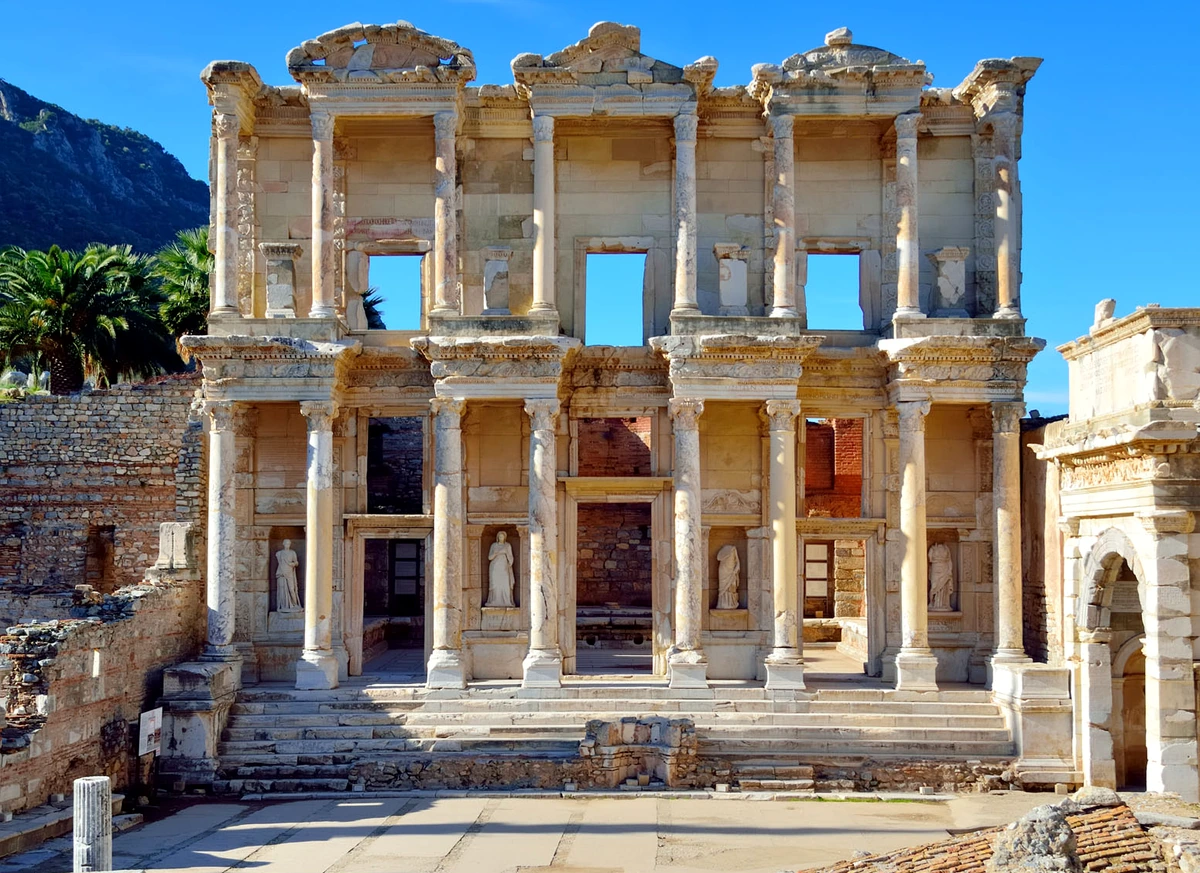
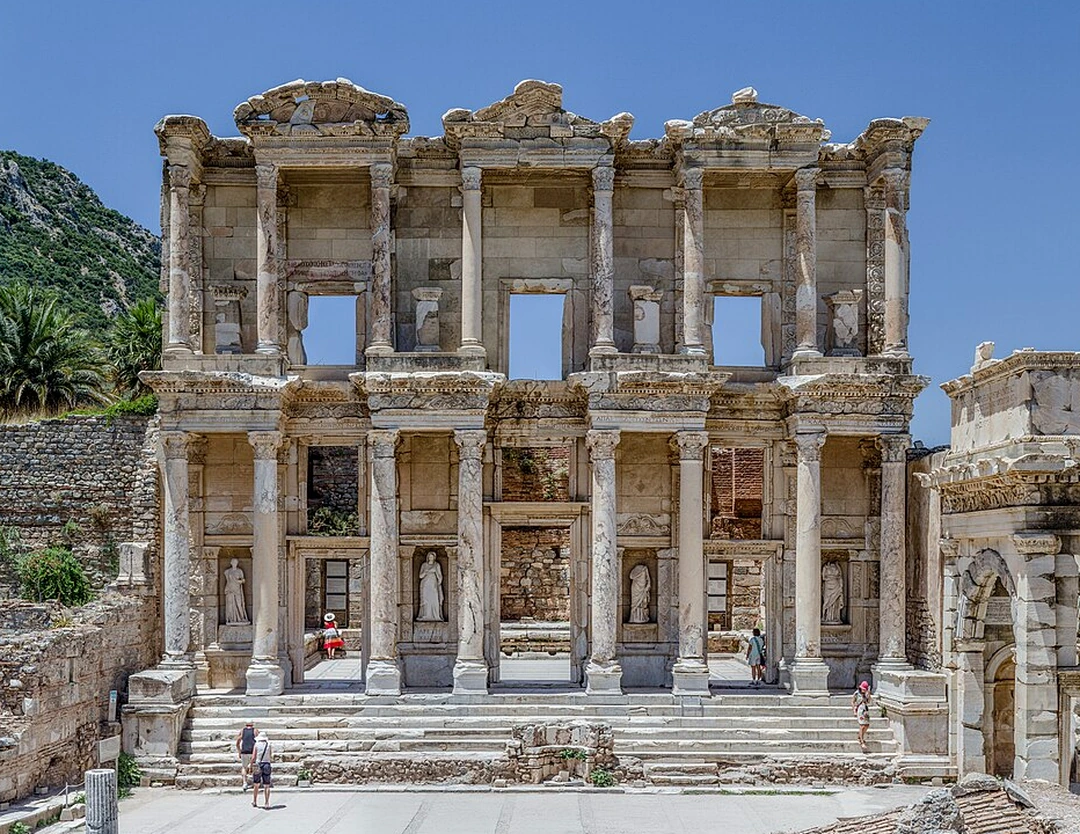
At the Aegean city-state of Ephesus, facade design reaches classical perfection with the Library of Celsus—built in honor of Governor Tiberius Julius Celsus Polemaeanus by his son. Its two-story granite facade employs clever optical perspective: the columns near the center are cast slightly larger and set further forward than those on the outer wings, combined with a gently curving pediment to create the illusion that the building is grander and deeper than it actually is. Inside, thick insulating double walls kept a collection of more than 12,000 parchment scrolls dry against coastal humidity. Directly across from the library lie the magnificent Terrace Houses, revealing the elite lifestyle of Roman aristocracy through townhouses with peristyle courtyards framed by slender columns, intricate geometric mosaic floors, and vibrant fresco wall paintings preserved through millennia of weathering.
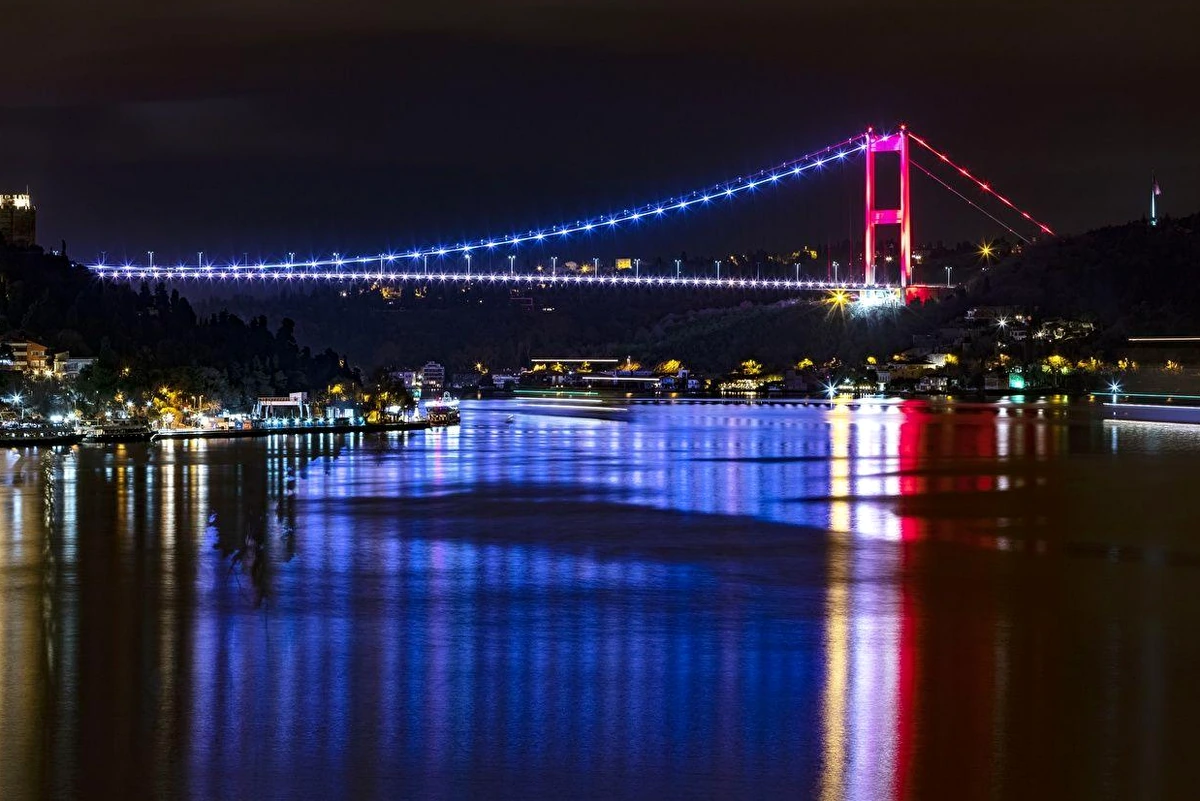
As dusk settles over the crossroads of Europe and Asia, Turkey sheds the dust of thousands of years of history to put on the dazzling guise of a living museum immersed in light and sound. In Istanbul, the Bosphorus currents become a mirror reflecting countless sparkling lights from grand suspension bridges linking two continents alongside the stately silhouette of the late-Ottoman Dolmabahçe Palace. Winding up the historic cobblestone slopes toward Galata Tower, nightlife in the Beyoğlu district awakens around İstiklal Avenue with the chime of the heritage tram mingling with clinking glasses in traditional meyhane taverns. Here, travelers are introduced to authentic Anatolian evening dining around a generous spread of meze—featuring white cheese (Beyaz Peynir), chilled melon, and aromatic Rakı turning a milky, effervescent hue when diluted, affectionately called “lion’s milk” by locals and serving as a catalyst for kindred conversations stretching late into the night.
Back on the Central Anatolian plateau, nightfall over Cappadocia opens up a surreal realm like a primeval wilderness, where bright moonlight silver-plates thousands of mushroom-shaped rock pinnacles across the Göreme and Uchisar valleys. Deep inside 13th-century Seljuk caravanserais, darkness gives way to the mystical Semazen whirling ceremony of Sufi dervishes of the Mevlevi order, founded by the great poet Jalal al-Din Muhammad Rumi. To the plaintive, haunting strains of the reed ney flute and the bowed kemençe, dervishes wearing black cloaks symbolizing the earthly tomb and tombstone-shaped felt hats (sikke) slowly shed their outer robes to reveal pure white garments representing the soul’s shroud. As they spin endlessly around their body axis with their right palm turned upward to receive divine grace and their left palm turned downward to bestow love upon the earth, the entire room seems suspended in time, drawing viewers into a state of pure spiritual contemplation amid the highland night.
The Menderes River valley at night is where Pamukkale appears like a frozen glacier under gentle artistic lighting, highlighting the pure white of thousands of tons of travertine limestone accumulated over tens of thousands of years. Right atop the sacred hill of Hierapolis’s ruins, the ancient Cleopatra mineral pool offers a singular experience as 36°C carbonated warm water embraces fallen second-century BCE Ionic marble columns. Soaking in the warm waters beneath a starry night sky and brushing your fingertips against moss-covered Roman carvings submerged on the pool floor blurs time, making the boundary between present reality and ancient memory feel fainter than ever.
The finale of Turkey’s nighttime arts reaches its peak in the ancient city-state of Ephesus, where modern architectural lighting awakens the remains of one of the Roman world’s most splendid cities. The grand two-story facade of the Library of Celsus—built in 114 CE by Governor Tiberius Julius Aquila in honor of his late father—shines proudly in the quiet dark with four female statues symbolizing Wisdom, Virtue, Knowledge, and Valor. At the Great Theatre of Ephesus, seating 25,000 spectators in a semicircular bowl tucked against the slope of Mount Panayır, classical chamber concerts are staged without any electronic amplification. The astonishingly precise acoustics engineered by ancient Greco-Roman builders allow every note of stringed instruments and operatic voice to carry clearly up to the highest tier, completing a magical journey of nighttime artistic appreciation across a land spanning two sides of history.
Turkish cuisine is a multisensory artistic heritage forged from the imperial kitchens of the Ottoman palace to rustic daily life in timeless valleys. In Istanbul, the culinary imprint of the court shines brightest in the famed Hünkar Beğendi, meaning “The Sultan’s Delight.” Tied to a tale of a banquet hosting French Empress Eugénie in the nineteenth century under Sultan Abdülaziz, it artfully pairs tender braised lamb in a herb-fragrant tomato sauce over a bed of smoky roasted eggplant mashed with butter, milk, and rich kaşar cheese. This royal dining experience is balanced to perfection with glasses of traditional şerbet brewed from rose petals, tamarind, cloves, and cinnamon, offering a refined fragrance that soothes the palate after rich stews.
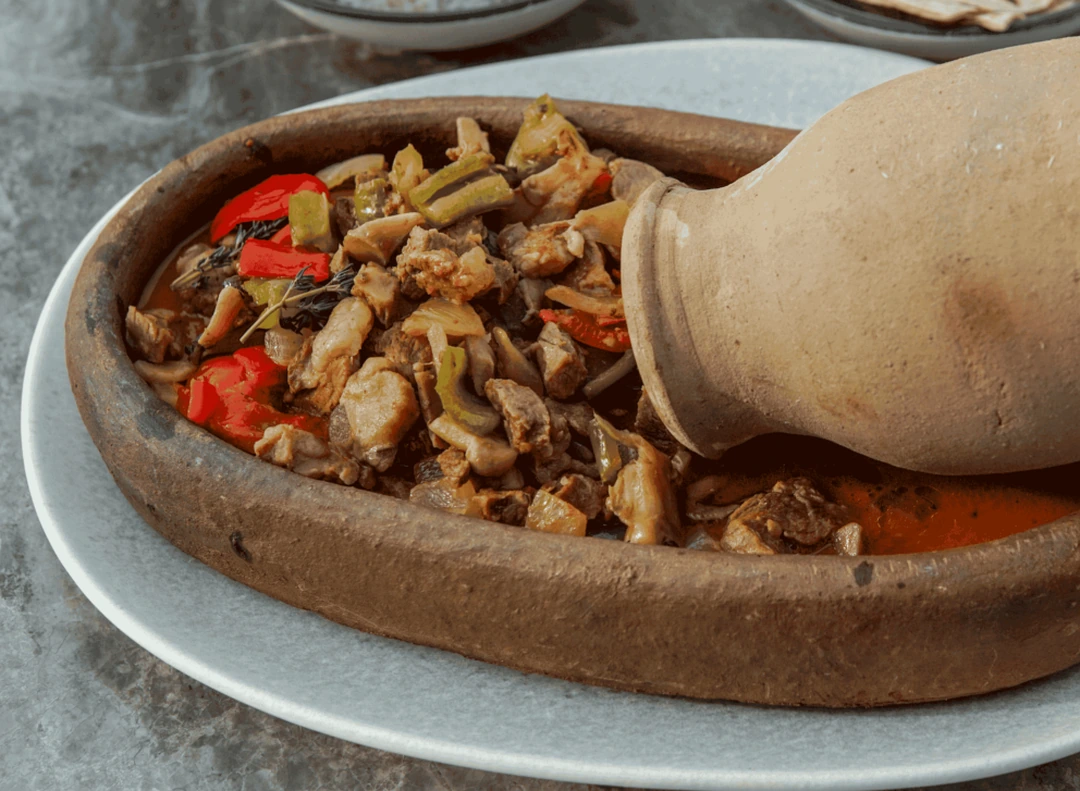
Leaving the splendid capital for the limestone land of Cappadocia, diners step straight into a culinary world tied to clay and fire in the traditional pottery village of Avanos along the Red River (Kızılırmak). Its celebrated specialty is Testi Kebabı, a clay-pot slow-braised meat dish demanding master-level patience. Diced lamb or beef is marinated generously with single-clove garlic, shallots, tomatoes, and long peppers, then sealed tightly inside a clay vessel with a dough lid before being buried deep in oak charcoal embers for hours. Serving is a dramatic ritual as the chef taps the glowing neck of the pot with a blade, splitting the clay apart so steaming heat and alluring aroma burst forth right at the table. The stew’s richness shines even brighter alongside local wine fermented from the indigenous Emir white grape, which draws abundant minerals from millions of years of volcanic ash to yield a crisp structure and rare, delicate acidity.
Traveling south toward Pamukkale and the textile city of Denizli, the culinary experience shifts toward a rustic, elemental character with strict roasting technique in Denizli Kebabı. With a lineage stretching back more than a century, cuts of young lamb are hung vertically on copper hooks inside brick pit ovens (kuyu), heated entirely with resinous pine wood. Melting lamb fat slowly bastes every fiber of meat, creating an amber, crisp skin wrapping tender flesh that practically melts on the tongue, traditionally eaten by hand with warm pide flatbread and smashed onions. To cut the richness of roasted lamb, locals pair the meal with Zafer Gazozu, an iconic carbonated drink bottled in glass in Denizli since the 1930s, notable for its subtle hint of banana and refreshing, fizzy sweetness.
The final stop on the Aegean coast in the town of Selçuk around the ruins of Ephesus opens a wholly different culinary chapter, where Mediterranean breezes infuse every drop of cold-pressed extra-virgin olive oil. Local cooking is a haven for olive-oil-braised vegetable dishes (zeytinyağlılar)—from tender young artichokes and wild asparagus tips to wild herbs gathered on coastal hillsides—preserving natural sweetness and a cleansing lightness. Alongside that delicacy is Selçuk’s famed çöp şiş, tiny cubes of lamb alternated with back fat threaded onto slender reed skewers and grilled sizzling over hot coals with dried chili flakes and pungent oregano. Biting into a hot skewer tucked inside thin lavash bread, followed by a sip of frothy, savory ayran, is the ideal way to conclude a symphony of flavors spanning millennia of Asia Minor’s food culture.
Grasping the operating rhythm of heritage sites is essential when exploring layers of history thousands of years old across Anatolia. Most museums and archaeological sites managed by Turkey’s Ministry of Culture and Tourism open from 08:30 AM to 07:00 PM in summer, and typically close earlier at 05:00 PM or 05:30 PM when winter arrives. At landmarks such as Topkapı Palace, the Istanbul Archaeology Museums, or the Hierapolis archaeological site, the Museum Pass Turkey is a helpful tool. The pass lowers individual admission costs across dozens of attractions nationwide while offering access through priority lanes, making it smoother and more seamless to experience historical treasures across Europe and Asia.
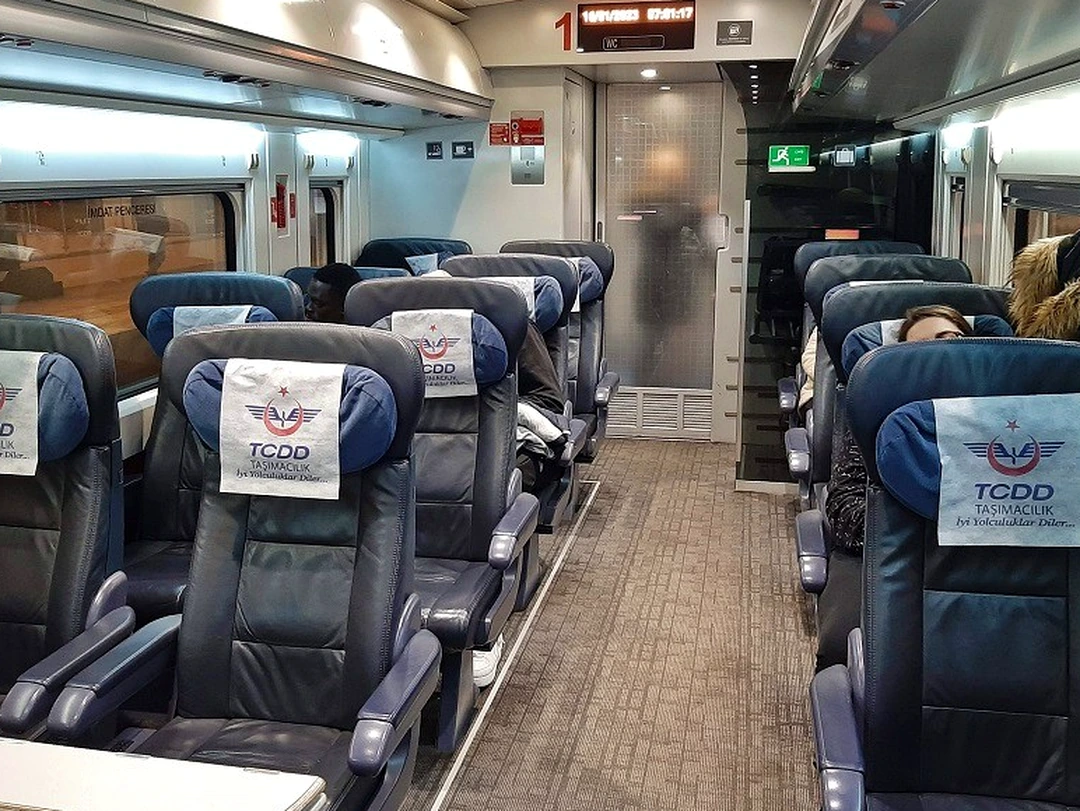
Wide distances between heritage hubs call for a smart, well-planned transport strategy. The YHT high-speed rail line connecting Istanbul with the political capital Ankara glides smoothly across breezy plains at speeds up to 250 km/h, offering a scenic view of the landscape shifting from coast to interior. For longer legs linking Cappadocia, Pamukkale, and Ephesus, domestic flights operating out of Istanbul Airport and Sabiha Gökçen are the optimal choice. Direct flights into Nevşehir Kapadokya or Kayseri Erkilet airports bring travelers right to the threshold of the mystical cave world, while flights to Denizli Çardak and İzmir Adnan Menderes serve as ideal gateways to reach the travertine cotton castles and grand Roman ruins.
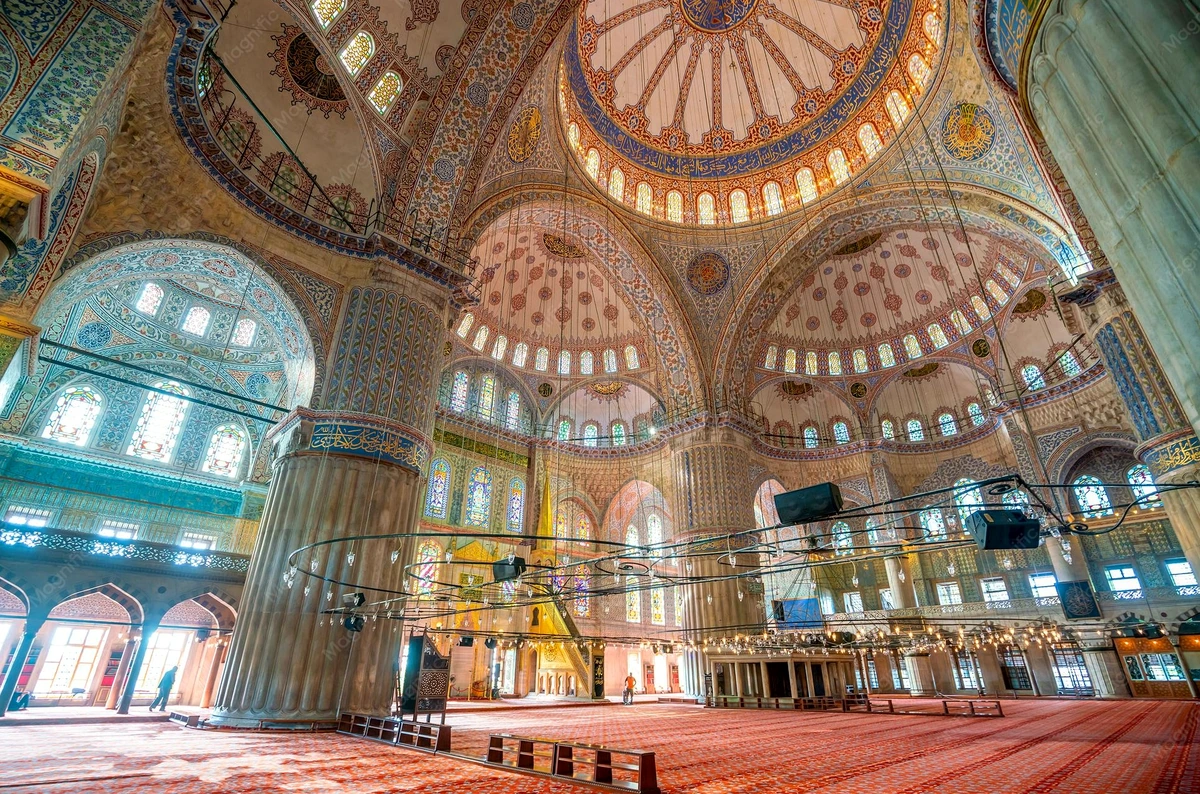
Alongside transport infrastructure, understanding local customs makes the trip richer and more gracious. When visiting sacred religious sites such as the Sultanahmet Blue Mosque or Süleymaniye Camii, travelers must strictly observe dress rules by wearing clothing below the knee and tops covering the shoulders, and women must always cover their hair with a headscarf before stepping onto the carpeted floor. Shoes must be removed and carried in a personal cloth bag. In Cappadocia’s Göreme valley, hot air ballooning at sunrise over masterpiece rock pillars is always a highlight, yet it is an activity completely subject to strict weather conditions monitored by Turkey’s Directorate General of Civil Aviation. Booking at least two weeks ahead is a crucial step to avoid sold-out spots or itinerary disruptions from shifting weather.
Specifically at the ancient sanctuary of Ephesus, the ideal moment to hear the echo of history is at 08:30 AM, right as the gates open. Starting early not only helps travelers avoid the harsh Aegean coastal sun but also lets them admire the vast beauty of the Library of Celsus in quiet calm before thousands of cruise passengers arriving at Kuşadası port pour in. Combining international credit cards with some Turkish Lira cash for convenience when enjoying crisp simit bread along the Bosphorus or sipping rich sand-brewed coffee lets travelers experience the country’s warm hospitality to the fullest. To turn a dream journey through millennia of history into reality without worrying about complex logistics, you can always choose a thoughtfully designed, premium all-inclusive Turkey tour package.