Tucked deep within the fertile valley of the Menderes River in southwestern Anatolia, the history of Pamukkale begins in a radiant golden age known as Hierapolis, meaning “Sacred City.” In the second century BCE, under the flourishing rule of the Attalid dynasty of the famed Kingdom of Pergamon, King Eumenes II ordered the construction of a major urban center right atop the steaming geothermal limestone plateau. Ancient Greek chronicles and stone inscriptions from this era record that the name Hierapolis stems from two sacred cultural roots: on one hand, it reflects the dense concentration of sanctuaries (hieron) dedicated to ancient deities; on the other, it serves as an enduring tribute to Hiera—the valiant, accomplished queen of the legendary Amazon warrior tribe and consort of Telephos, the founding hero of Pergamon’s lineage in Greek epic tradition.
The formation and evolution of this land have always been intertwined with powerful tremors from deep subterranean fault zones. In 17 CE, during the reign of Roman Emperor Tiberius, a severe earthquake heavily damaged the early Pergamene structures. Once control over all of Asia Minor passed fully to the Roman Empire, the resilient vitality of the mineral-spring plateau surged once again through the hands of master Roman engineers. Particularly after the devastating earthquake of 60 CE under Emperor Nero, Hierapolis was comprehensively rebuilt along a sturdy grid layout, rising into one of the most luxurious hydrothermal healing metropolises of the ancient world. Roman nobles, senators, and exhausted campaign soldiers flocked here to soak and restore their strength in waters rich in calcium bicarbonate, while also seeking spiritual solace beside the Plutonium—the mysterious gateway to the underworld, where toxic carbon dioxide fumes rising from a tectonic fissure once captivated ancient philosophers and priests.
Entering the Byzantine era alongside the spread of early Christianity, the religious character of Hierapolis underwent another profound historical turning point. In the first century, Saint Philip the Apostle arrived here to preach and breathed his last in a poignant martyrdom, turning the site into one of the most sacred pilgrimage destinations for Eastern believers. By the fourth and fifth centuries, the city was elevated to an influential episcopal see under the Metropolitan of Ephesus, marked by the rise of the imposing octagonal Martyrium of Saint Philip overlooking the sloping hillside. Even so, the ebb and flow of medieval history steered the region into a period of constant transformation. From the twelfth century onward, the arrival of Seljuk Turks and later Ottoman tribes reshaped local demographics, bestowing upon this travertine wonder the evocative everyday name Pamukkale—Cotton Castle—calling to mind snow-white limestone terraces like pure wisps of cotton crystallized between sky and clouds.
The thousand-year-old saga of this resort and spiritual capital came to a close after a catastrophic earthquake in 1354. Nature’s fury dealt a decisive blow, toppling Roman marble colonnades, the outdoor arena, and ancient aqueduct systems, and forcing the last remaining inhabitants to evacuate and abandon the city. Centuries of quiet oblivion followed, leaving the mineral-rich hot springs to flow unchecked and patiently layer pure white travertine over millennium-old ruins until modern civilization unearthed this priceless heritage once more.
Commanding attention at the rugged geomorphological crossroads of the Çürüksu valley—the waterway revered by ancient Greeks as the Lykos River—Pamukkale stands tall along the edge of the Denizli plateau as a singular structural masterpiece of southwestern Anatolia. Viewed through the lens of geology and natural feng shui, the site enjoys a majestic setting right at the intersection of deep tectonic faults originating in the Menderes Massif. This ancient, seismically active metamorphic block in the Mediterranean basin has been repeatedly compressed through epochs of Earth’s crustal shifts, fracturing the bedrock into a network of fissures that lead straight down to scorching magma heat below. This powerful synergy between endogenic tectonic energy and surfacing groundwater transformed the arid floor of the Lykos valley into a boundless hydrothermal basin, laying a firm geomantic foundation for the birth of a pure white mineral fortress.
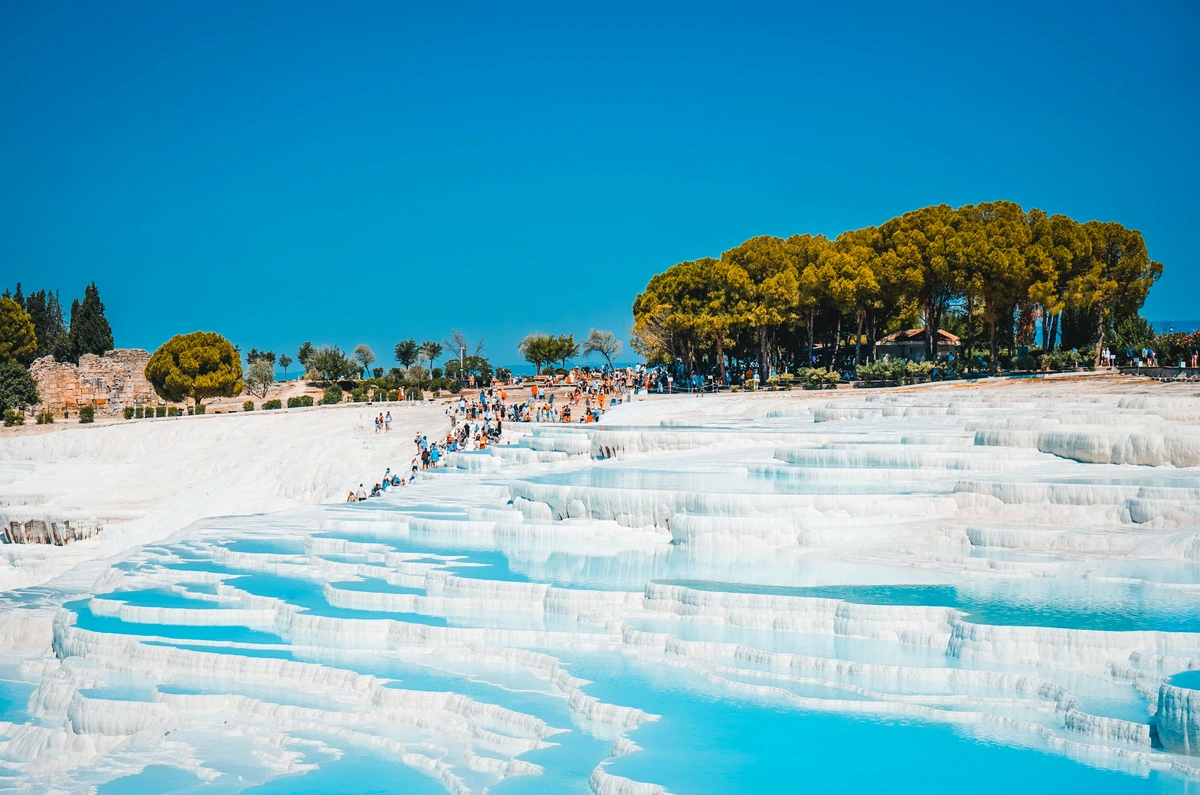
Seen as a whole, Pamukkale’s natural layout presents a towering wall of mineral rock stretching continuously for 2,700 meters and rising up to 160 meters above the valley floor. Its spatial structure forms a dramatic system of stepped karst travertine terraces stepping down from the gentle upper ridge to the base of the hill, evoking vast agricultural terraces or giant jade bowls stacked in staggered tiers. Hundreds of open-air crescent pools, rimmed by naturally curved limestone dams like a waning moon, divide the terrain into tiered basins holding warm mineral water. This orderly, undulating layering creates a natural infinity-pool complex suspended mid-air—much like an opulent palace meticulously planned by the unseen hands of nature itself.
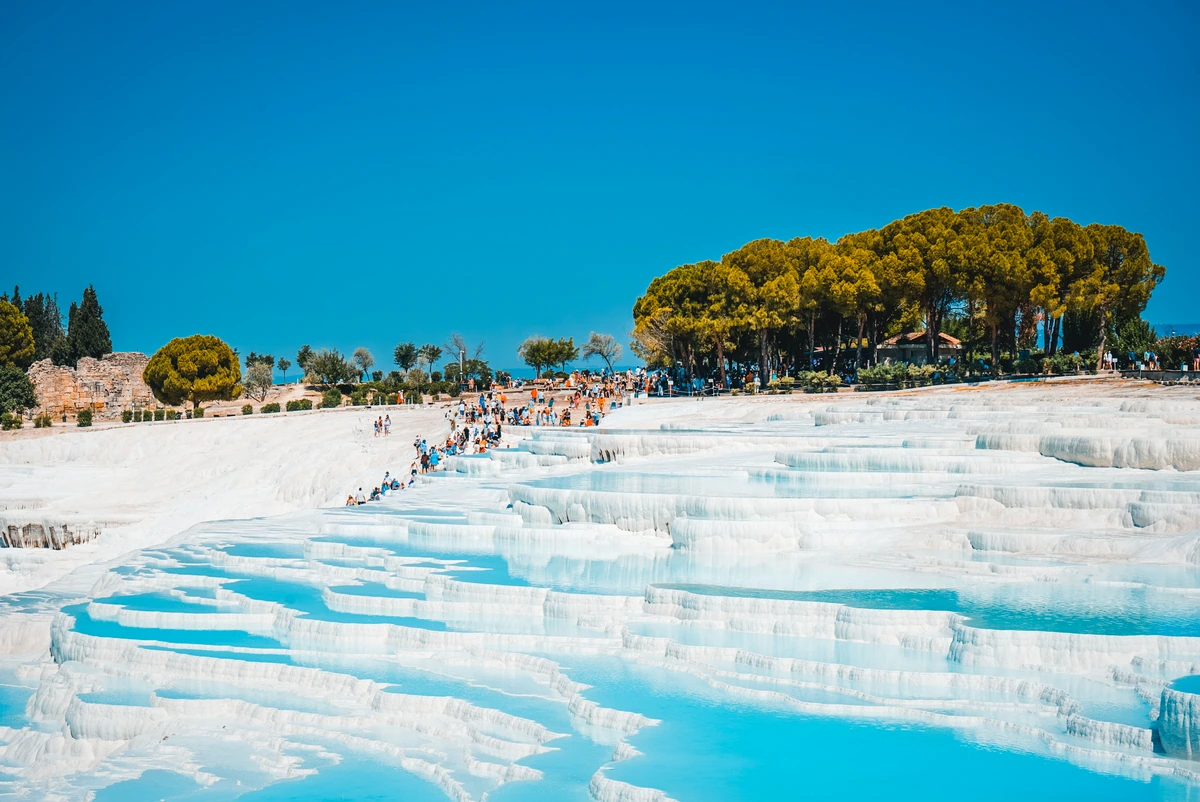
Behind this serene, otherworldly silhouette lies a natural geochemical process running tirelessly over hundreds of thousands of years. Pamukkale’s origin traces back to seventeen geothermal springs, where water is heated under immense pressure deep underground, reaching temperatures swinging dramatically from 35°C to 100°C. As this water percolates upward through ancient limestone strata toward the surface, it dissolves abundant minerals and becomes saturated with calcium bicarbonate. The moment the hydrothermal water bursts through surface fissures into the open air, the sudden drop in pressure triggers the release of carbon dioxide (CO2) gas. As CO2 escapes rapidly into the air, calcium carbonate (CaCO3) precipitates out as a soft, creamy gel-like mud. Warm mineral water carries this precipitate over the rock rims, depositing it gradually over time until it hardens into snowy travertine sheets and graceful hanging dripstone curtains.
Pamukkale’s signature landscape therefore carries a captivating aesthetic contrast, blurring the line between polar snow and warm subterranean heat. Beneath a sun-drenched Mediterranean sky, the sweeping hillside gleams with a crisp whiteness like a thick snowpack right after a winter storm, yet the water spilling across the basins feels warm and soothing against the skin. The pure white limestone reflects the sky, highlighting mineral waters that shift magically from turquoise to sparkling aquamarine depending on depth and the angle of light. As dusk settles, sunset hues wash the travertine faces in peach and deep violet, turning the entire limestone cliff into a grand, one-of-a-kind karst panorama where deep tectonic warmth and timeless chemistry unite to form an eternal cotton castle.
Set atop the singular geological terrace of the Büyük Menderes River basin, the ancient city of Hierapolis emerges as a supreme achievement of Greco-Roman spatial planning. Founded in the second century BCE under the Attalid kings of Pergamon and grandly rebuilt after earthquakes during Rome’s golden age, the city harnessed the stepped limestone topography to build a model urban layout following the Hippodamian grid plan. The grand Colonnaded Street, paved with massive stone slabs stretching from the North Gate of Domitian to the South Gate, rhythmically links public landmarks—from sophisticated city water conduits and monumental travertine bath complexes to ceremonial temples standing proudly along the dramatic cliff edge.
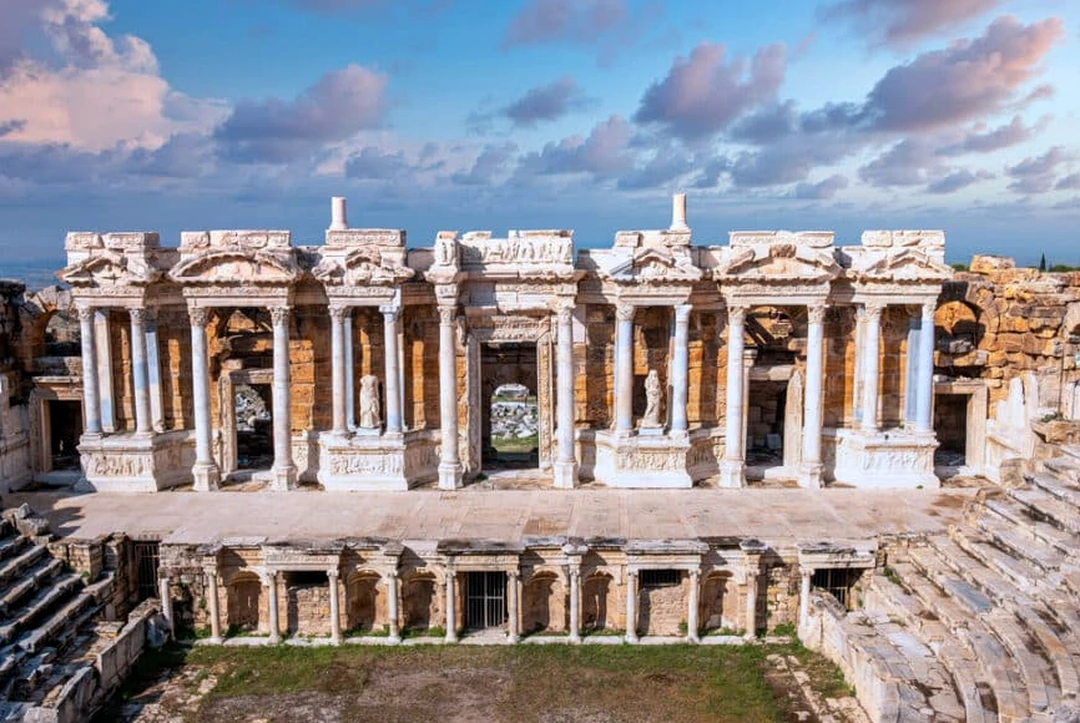
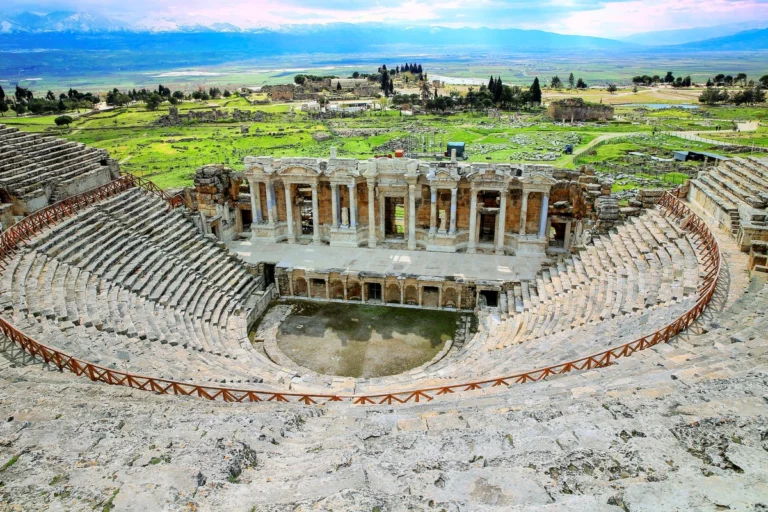
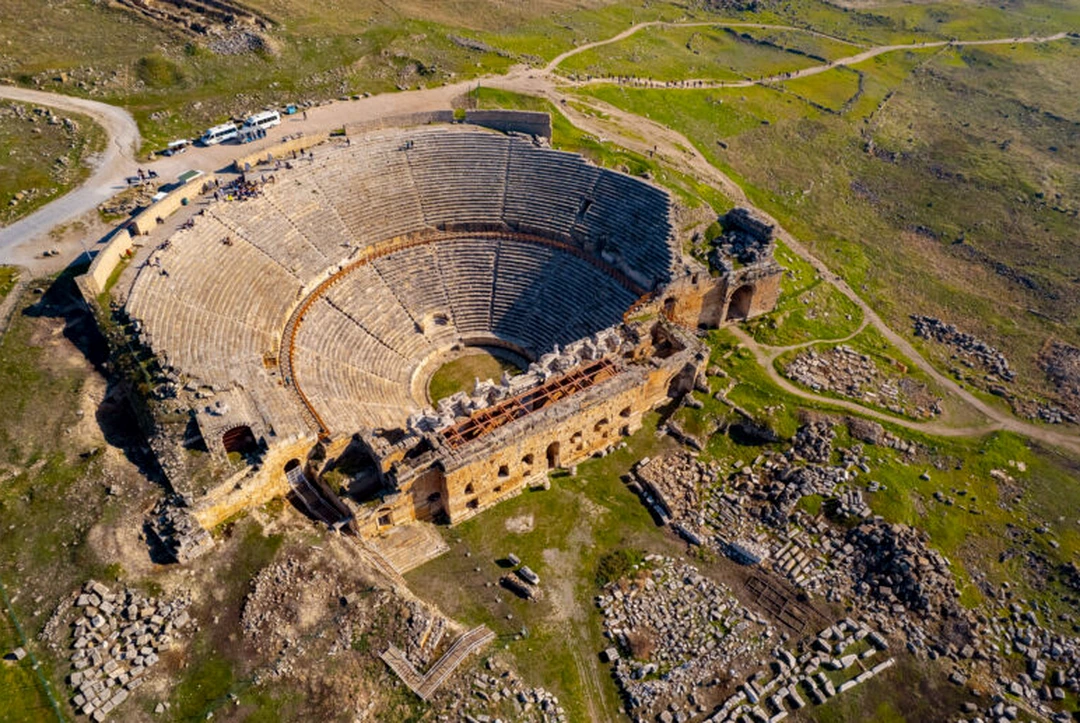
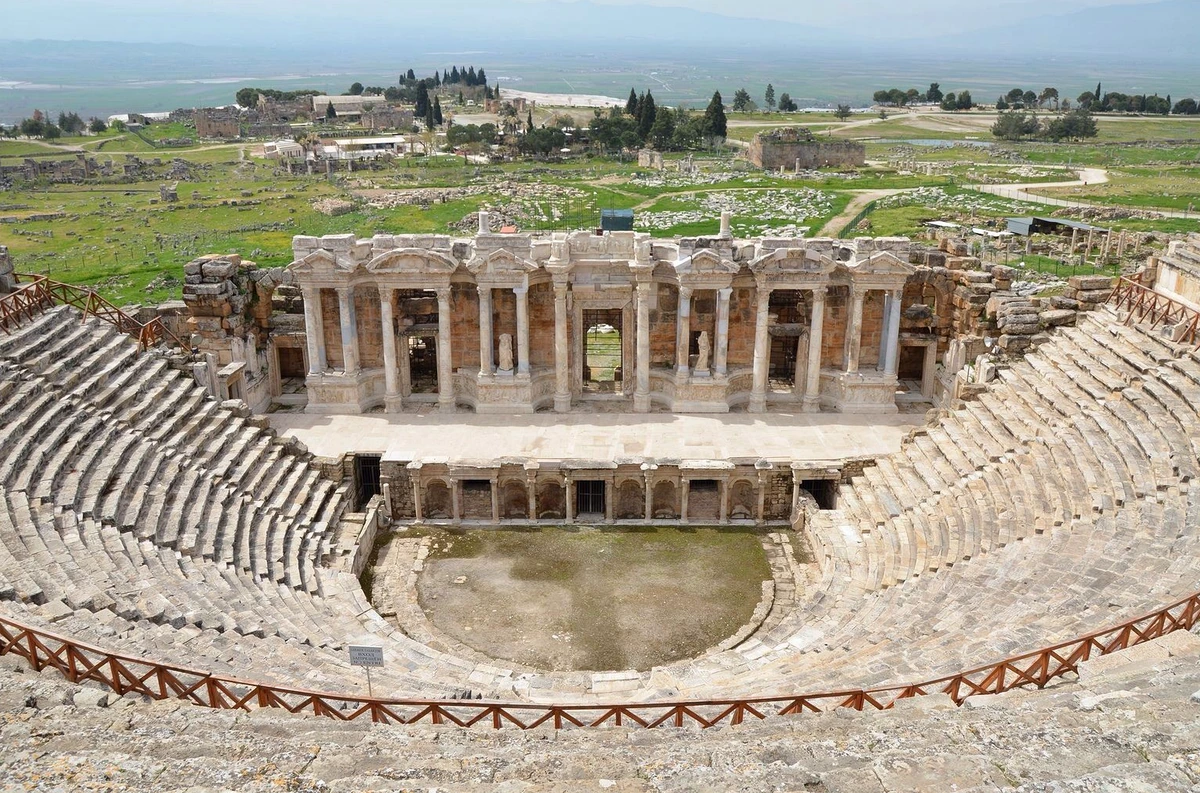
The iconic architectural centerpiece of Hierapolis is the ancient Roman Theater, estimated to hold up to 15,000 spectators, nestled smoothly against the hillside slope to achieve natural acoustic resonance without any electronic amplification. Built solidly under Emperor Hadrian and completed in grand style under the Severan dynasty, the sweeping semicircular auditorium is divided into two tiers by a wide diazoma aisle. The three-story scaenae frons stage backdrop showcases exquisite marble columns and relief carving at the pinnacle of ancient craftsmanship. Each white marble relief vividly depicts mythological episodes of the divine twins Apollo and Artemis—the city’s patron deities—from their birth on sacred Delos and solemn ritual sacrifices to the punishment of mortal hubris, rendered with flowing drapery and exact anatomical proportion.
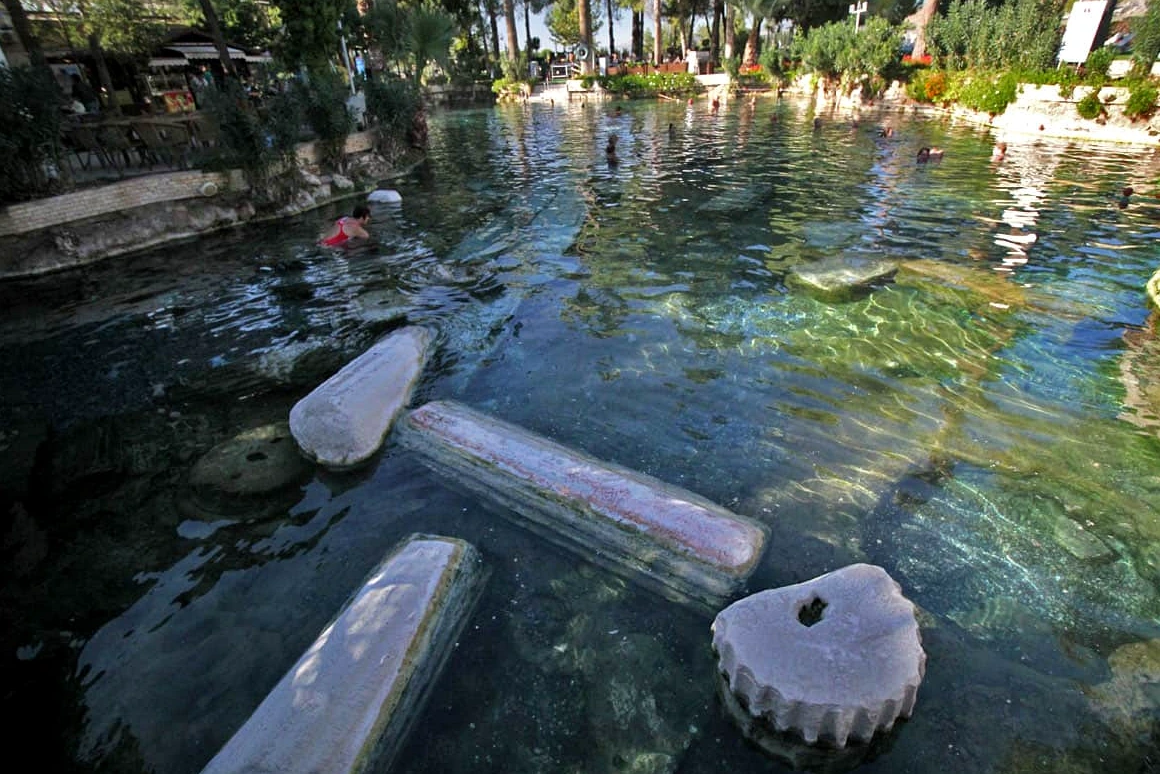
Right beside the sanctuary of the god of light lies the Antique Pool—popularly and romantically known as Cleopatra’s Pool—a living testament to the remarkable interplay between natural upheaval and classical architecture. A severe seventh-century earthquake toppled the Doric and Ionic colonnades framing the sacred plaza of the Temple of Apollo, burying architraves, bases, and fluted column shafts beneath the warm mineral spring. Effervescent, champagne-like thermal waters rich in calcium and bicarbonate have preserved these remnants remarkably well across the centuries. Wading through the crystal-clear water feels like strolling through a submerged open-air sculpture gallery, where ancient acanthus-carved marble column segments rest quietly on the pool floor, creating a surreal scene no modern staging could ever replicate.
Outside the city gates, stretching for more than two kilometers along the barren hillside, lies the ancient Necropolis—one of the largest and best-preserved burial complexes in all of Anatolia. With over 1,200 tombs scattered across the slope, the Necropolis reflects an astonishing variety of ancient funerary architecture spanning multiple historical eras. Here gather intricately carved sandstone sarcophagi set upon high pedestals, Hellenistic mound-style tumulus tombs with long dromos entryways, and sturdy travertine heroon family mausoleums shaped like miniature houses. Each tomb stands as a lasting hymn to life and eternity, where royals, traveling merchants, and patients from across the Mediterranean who sought the healing waters of Phrygia were laid to rest in the embrace of the earth.
As southwestern Turkey’s fiery sunset fades behind the Çökelez Mountains, Pamukkale sheds its bright daytime glare to don the enchanting cloak of night. At this hour, the gleaming white travertine does not vanish into pitch darkness; instead, it transforms into a giant mirror reflecting bright moonlight across the Anatolian plateau. Pure calcium carbonate accumulated over tens of thousands of years catches every speck of silver light from the night sky, producing an eerie luminescence like a glowing glacier in the Lykos valley. Cool night breezes sweep across the travertine steps, carrying a delicate mist rising from thermal pools that retain the day’s warmth—painting a surreal scene that leaves travelers feeling suspended between the mortal world and ancient myth.
The crowning highlight of the heritage site at night is the refined architectural lighting celebrating the ruins of the ancient theater of Hierapolis. Begun in the second century under Roman Emperor Hadrian and finished under Septimius Severus, the grand curved auditorium nestled into the hillside is now framed by discreet recessed illumination. Carefully angled warm golden beams bring out every molding, Corinthian column line, and relief carving honoring Apollo and Artemis. Amid the surrounding darkness, the majestic silhouette of the ancient Roman stage rises as an enduring witness to time, bridging more than two millennia of history to offer an extraordinary setting for cultural appreciation.
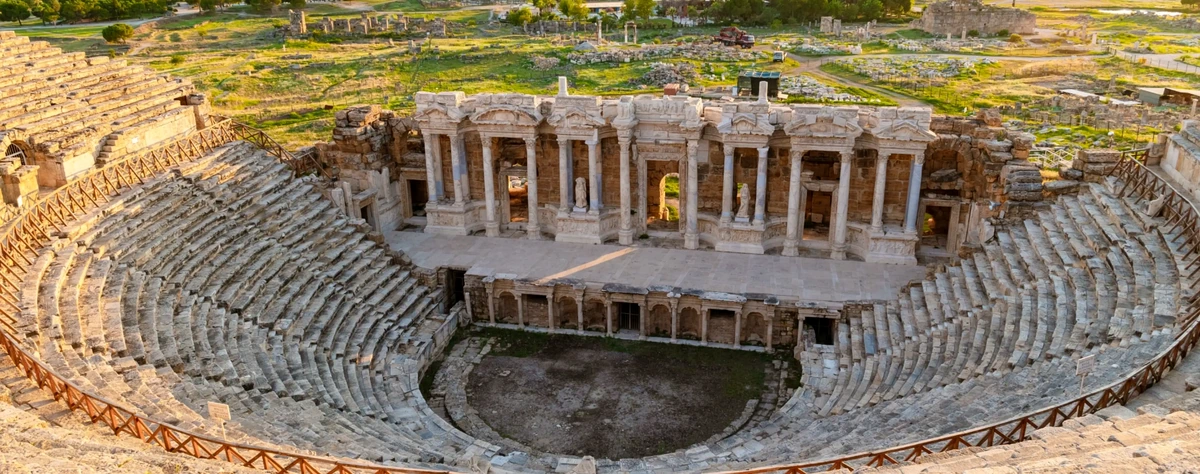
This hallowed space becomes a one-of-a-kind live stage for acoustic concerts and curated chamber performances. Thanks to ancient Greek acoustic design, every resonant note of a traditional bağlama lute, an expressive violin, or an unamplified operatic voice carries naturally with minimal reliance on electronic sound reinforcement. The rich sound ripples across the limestone tiers, blending with the gentle murmur of mineral water flowing continuously through ancient channels. As the music fades, the setting opens into quiet stargazing. Far from city light pollution, the night sky over Denizli reveals a crisp, sparkling Milky Way, illuminating every time-worn fracture across the scattered marble columns of the ancient sacred city.
The tranquil evening rhythm at the foot of Pamukkale continues with authentic local flavors and neighborhood hospitality. After leaving the shimmering white slopes, visitors often head to unpretentious eateries along the town pond to savor traditional Denizli Kebabı—young lamb seasoned with mineral salt, slow-roasted for hours in a brick oven fired with aged oak wood, and served alongside warm pide flatbread glistening with rich meat juices. An Anatolian evening feels all the more complete over a steaming cup of fragrant sage tea (adaçayı) or slow sips of anise-flavored raki that turns milky white just like the waters of Cotton Castle. Looking back up the slope, the snow-white limestone still glows softly into the late night, leaving a lasting visual and emotional impression on discerning travelers.

Positioned at the fertile geographical crossroads between the Büyük Menderes River valley and towering limestone ridges, the local cuisine around Pamukkale is more than a reflection of soil and terrain—it is a harmonious blend of Yörük nomadic herding traditions and millennia of settled Anatolian culture. Unlike the fiery, heavily spiced dishes of southeastern Turkey, Denizli’s culinary craft celebrates the pure character of fresh ingredients, keeping complex seasonings to a minimum to honor the clean, unadorned flavors of pasture and mountain.
At the peak of this family-passed culinary heritage stands the renowned roasted lamb dish Denizli Kebabı, a gastronomic treasure protected by geographical indication and preserved across generations of master cooks. Unlike typical charcoal-grilled minced meat skewers, Denizli Kebabı is made from free-range young mountain sheep that graze on fragrant grasses and mineral-rich wild herbs. After careful preparation, the meat is hung vertically inside traditional heat-resistant brick ovens or solid copper-lined hearths fueled exclusively by dry frankincense/terebinth wood (mastic/turpentine tree wood). Gentle embers and aromatic smoke infused with the wood’s natural oils permeate the meat slowly over many hours, rendering the outer fat so it bastes the lean cuts—yielding a crisp, amber crust while the meat inside becomes tender enough to slip right off the bone. The dish’s essence lies in using zero spicy marinades, adding only a touch of coarse deep-sea salt once roasted. Following a local custom dating back to feudal lords who once governed the region, diners tear off warm pieces by hand and wrap them in thin pide flatbread so the rich lamb drippings soak evenly into the fragrant dough.
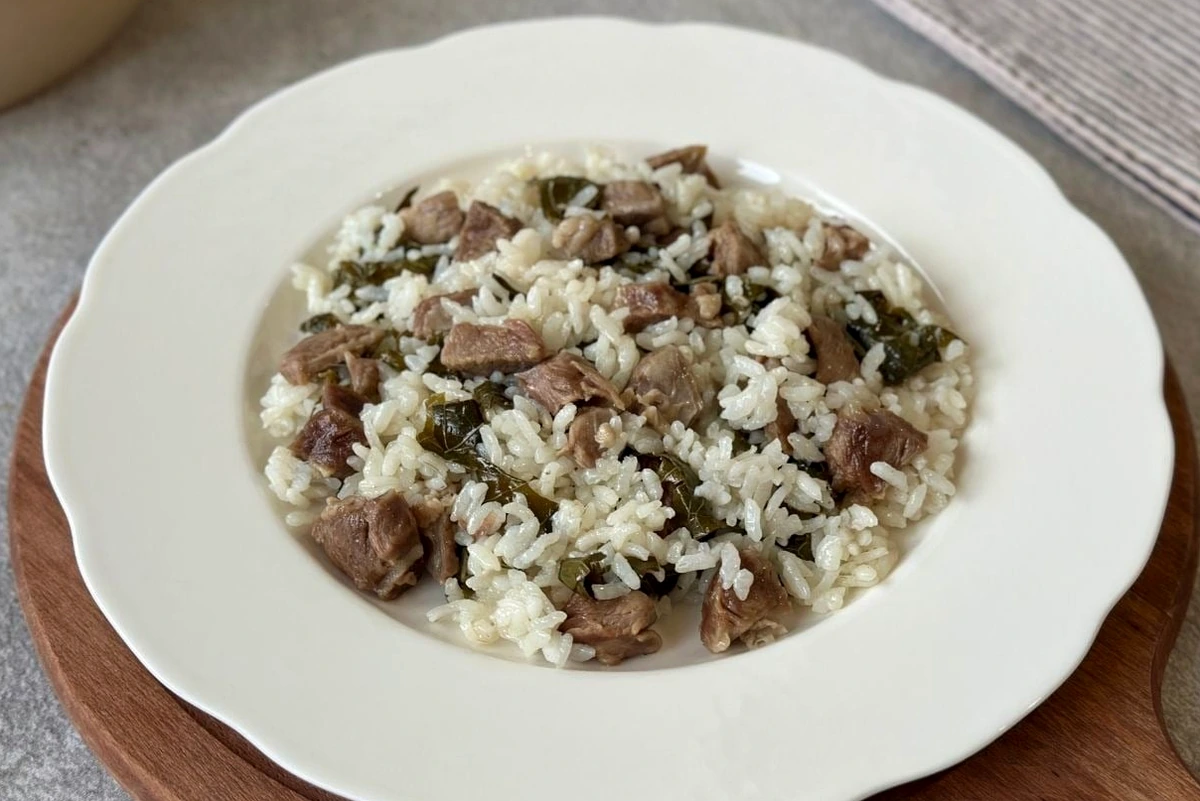
Alongside the refined roasting craft of town eateries, hearty dishes inherited from Yörük nomadic tents reveal a grounded, nature-bound side of the local table. A prime example is Çaput Aşı, a distinctive dish pairing coarse bulgur wheat with young grape leaves harvested straight from the sprawling vineyards of the Denizli valley. Rather than rolling them tightly like traditional Ottoman sarma, nomadic women historically tore the young grape leaves and tossed them with plump bulgur, rendered lamb fat, and dried herbs in a heavy cast-iron pot over an open campfire. The gentle tang of natural acid in the grape leaves meets the rich, nutty fullness of bulgur in a well-balanced dish that evokes a free-spirited nomadic life across wide open meadows.
The local food map is further enriched by Tavas Pidesi, originating from the nearby highland district of Tavas. Kneaded from naturally leavened wheat dough and baked on the hot stone floor of a domed oven, this boat-shaped pide carries generous fillings of sautéed minced lamb with onions, rich kaşar cheese, or fragrant black sesame tahini—achieving a crisp, airy rim while staying tender and savory at the center.
Rounding out a visit to the white travertine slopes is a refreshing sip of Zafer Gazozu, a nostalgic carbonated soda that has accompanied everyday life in Denizli through changing times. Lightly sweet with subtle fruity aromatics and lively effervescence, this chilled drink cuts through the richness of roast meats while offering a charming cultural pause that links past heritage with present-day life below the wooded slopes.

Reaching Pamukkale’s Cotton Castle unfolds across the fertile alluvial plain of the Menderes River, where main transit routes smoothly connect modern travel with ancient landmarks. Travelers arriving at Denizli Çardak Airport need only about an hour by dedicated shuttle across roughly sixty-five kilometers, passing expanses of olive groves and red pomegranate trees before reaching the base of the limestone hillside. For those setting out from central Denizli, minibuses known as dolmuş depart regularly every twenty minutes from the lower level of Denizli Otogar central bus station, bringing travelers into Pamukkale village in under half an hour. One smart routing tip favored by seasoned explorers is entering through the North Gate of the site rather than the South Gate or town center gate. Starting from the north gives you a gentle downhill stroll past the two-kilometer-long Necropolis with more than twelve hundred Greco-Roman stone tombs, saving energy on uphill climbs under the dry sun of southwestern Anatolia.
The heritage complex welcomes visitors from 8:00 AM until 9:00 PM during the summer season, offering a generous window to take in the shifting light of the day. Strict conservation rules set by UNESCO and Turkish heritage authorities require all visitors to remove shoes, sandals, and socks before stepping onto the white travertine terraces. Walking barefoot protects the delicate calcite deposits from artificial wear while offering a remarkable sensory experience as the soles of your feet feel the textured limestone and warm, bicarbonate-rich thermal water flowing steadily from deep underground. To prepare well for this stretch, bring a soft cloth bag to store your footwear neatly in your daypack and keep a small cotton towel handy to dry your feet before walking across dry ruin areas above.
Because the geological formation spans dozens of hectares in bright white, light reflection at Pamukkale reaches very high levels—much like glare over permanent snowfields in the Alps. Polarized UV sunglasses, broad-spectrum sunscreen, a wide-brimmed hat, and electrolyte water are essential to protect eyes and skin from sunburn or visual glare. Visitors should also pack swimwear if they wish to see and soak in the ancient Cleopatra Pool, where naturally effervescent thermal water surrounds Ionic and Corinthian marble column sections that collapsed in the seventh-century earthquake. Standard admission to the complex covers both the Pamukkale travertine terraces and the ancient city of Hierapolis, while soaking in Cleopatra’s Pool requires a modest additional fee for those wanting to float among archaeological remains in clear mineral water.
To cap off a day wandering through the white limestone wonderland, the cultural experience feels truly complete when you stop at a traditional eatery to enjoy the famed roasted lamb dish Denizli Kebabı. Rooted in centuries of local tradition, it is prepared from young lamb with minimal seasoning and hung inside a domed brick oven fired with pine wood for hours, resulting in melt-in-the-mouth tenderness and crisp, aromatic skin. Locals always eat this roast by hand, wrapping it in warm pide flatbread with a few slices of onion dusted with tangy sumac and sipping creamy fermented yogurt drink ayran. If you want to enjoy these remarkable sights at an unhurried pace without worrying about coordinating transport or piecing together complex itineraries, you can explore a full-package Turkey tour itinerary designed for depth and authentic local experiences.