Located in the heart of Buon Ma Thuot City, the World Coffee Museum rises as a contemporary architectural icon infused with the soul of Vietnam’s Central Highlands. Strategically positioned in the country’s coffee capital, the complex is far more than an ordinary tourist stop—it is a vibrant living cultural institution where the deep-rooted geological, historical, and anthropological heritage of this legendary red basalt land converges.
From a geomantic perspective, the museum sits across the expansive Dak Lak plateau at an ideal elevation of 500 to 600 meters above sea level, forming a rare “plateau bedrock, returning dragon gathering vital energy” terrain. To the east and southeast, the structure welcomes prosperous energy from the mighty Serepok River basin, while rolling hills undulate along its west and northwest flanks. Its foundation rests upon rich red ferralsol soil formed by volcanic eruptions millions of years ago. Beyond symbolizing the convergence of the five elements in Eastern philosophy, this distinctive terroir is the very cradle of world-renowned Robusta and Arabica coffee beans.
Turning back the pages of local history, long before emerging as the coffee capital of Indochina, this land served as the enduring homeland of indigenous Austronesian ethnic groups, most notably the Ede people—including the Ede Kpa and Ede Bih subgroups. In local folklore, Buon Ma Thuot is inextricably linked to Chieftain Ama Thuot, the historical pioneer who united surrounding villages along the pristine Ea Tam stream. His legend and name stand as a sacred bridge between a heroic past and a thriving present, embodying resilience and the aspiration to rise amid the great highlands.
Through the eyes of heritage scholars and international media, the World Coffee Museum is recognized as a rare “Living Museum” in Vietnam. Rather than adhering to traditional feudal archaeological conventions, it tells its story through the architectural language of traditional Central Highlands longhouses seamlessly blended with Eastern philosophy. Every design curve and exhibited artifact pays tribute to the Space of Gong Culture in the Central Highlands—a UNESCO Masterpiece of the Oral and Intangible Heritage of Humanity—while weaving in the pulse of global coffee culture. This refined harmony of majestic natural topography, indigenous historical depth, and contemporary conservation philosophy has turned the site into an unmissable heritage destination for travelers eager to explore the cultural soul of Vietnam.

Continuing the geo-cultural narrative of the highlands, the World Coffee Museum stands as an architectural marvel in the heart of the Dak Lak plateau, representing a seamless intersection of modern form-making and indigenous soul. Viewed through the lens of architectural anthropology, the overall complex is a spatial synthesis inspired by the traditional longhouse of the Ede people—a communal living space woven into generations of collective memory. The soft, flowing curves of the longhouse roof are boldly stylized, soaring like undulating basalt waves across the forest landscape and completely breaking away from the rigidity of conventional reinforced concrete blocks. The exterior facade is clad entirely in natural basalt stone quarried directly from the Central Highlands earth; having weathered millions of years of harsh sun and wind, the stone bears a mysterious, contemplative, and timeless charcoal-black hue. Pairing raw, rustic stone with expansive tempered glass panels creates a striking visual effect, flooding every interior corner with natural light and dissolving the boundary between curated indoor galleries and the untamed outdoors.
Beyond the main exhibition hall, the surrounding grounds form an open ecological sanctuary designed in harmony with nature and deep respect for the native ecosystem. Lush green lawns, centuries-old shade trees, and endless rows of vibrant Robusta coffee plants envelop the complex—a living testament to this global coffee capital. Winding natural stone pathways lead visitors on a multisensory journey where the whisper of wind through the trees mingles with the earthy aroma of basalt soil and freshly roasted coffee beans. Outdoor sculptures are thoughtfully interspersed with historical artifacts such as rice-pounding mortars and waterwheels, creating a dynamic open-air museum where past and present walk side by side, telling the story of coffee culture through space and time.
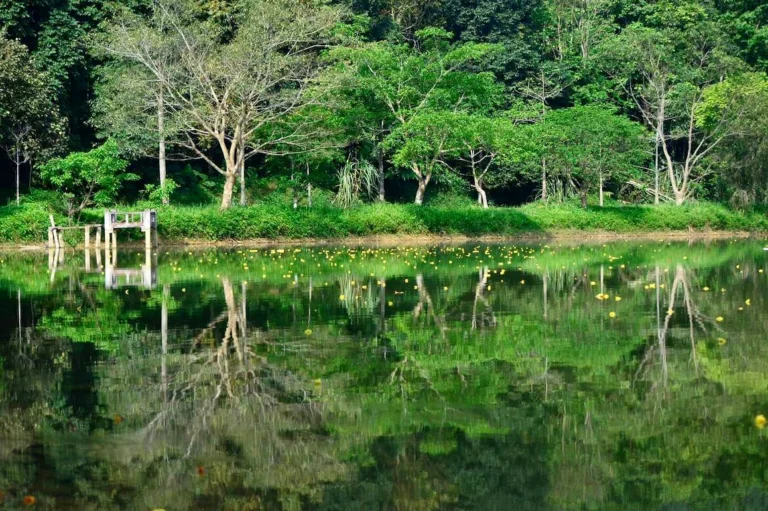
For photographers and avid travelers alike, the World Coffee Museum offers countless iconic vantage points, with two signature “million-view” photo spots standing out above the rest. First is the exterior walkway framed by dramatic stacked basalt walls and sweeping curved arches—an ideal backdrop for minimalist, contemporary portraits imbued with historical depth. Second are the paths lining the reflecting pools that mirror the colossal longhouse silhouettes, producing a mesmerizing symmetry between reality and reflection. The optimal lighting windows to capture extraordinary shots here are at dawn (5:30 AM to 7:00 AM), when morning mist still clings to the coffee leaves and early sunbeams slant through stone crevices to cast ethereal shafts of light, or at sunset (5:00 PM to 6:00 PM), when the Central Highlands sky blazes in vibrant hues of orange and violet, bathing the basalt facades in majestic, nostalgic warmth.
Stepping through the gates of the World Coffee Museum, visitors are immediately drawn into an entirely different spatial dimension, where the rush of modern life slows to make room for authentic indigenous culture. The very first experience awakens every sense as you encounter thousands of rare, curated artifacts—from antique European roasting machines to traditional rice-pounding tools and coffee-harvesting implements crafted by the Ede people. Unlike hushed conventional museums, this space breathes with the whispers of the Central Highlands through resonant gong chimes and the rich, captivating fragrance of freshly roasted Robusta beans drifting beneath soaring, curved longhouse ceilings.
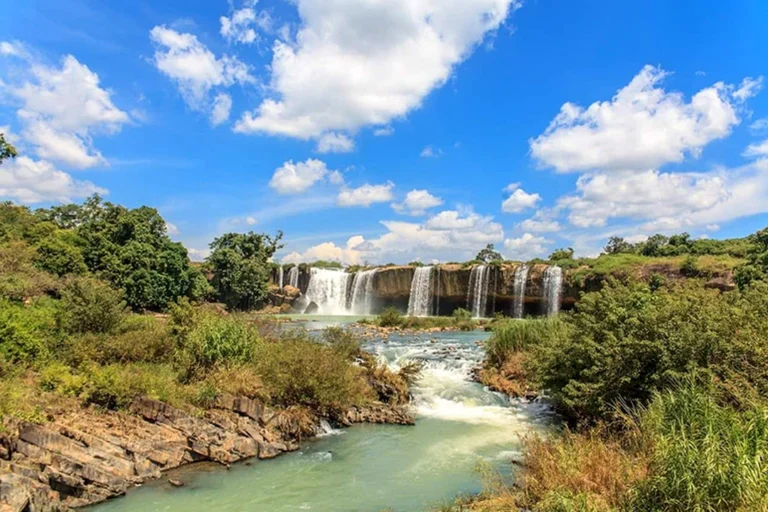
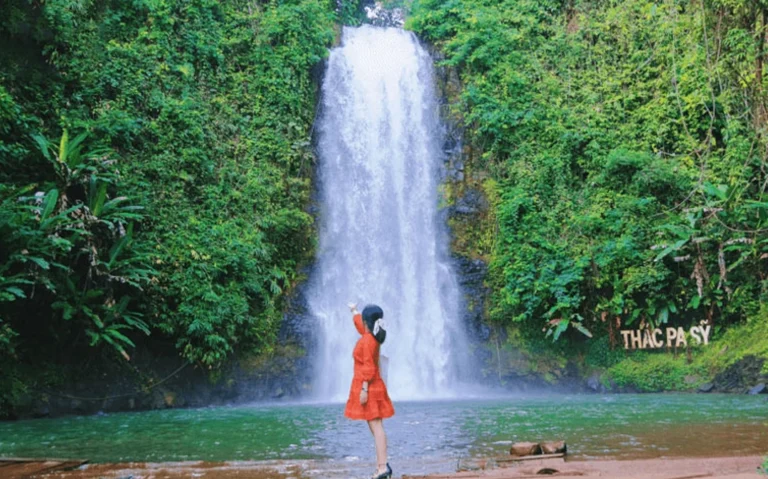
Venturing beyond the world-class exhibition galleries, the journey expands into the dramatic natural landscapes surrounding Buon Ma Thuot, delivering unforgettable moments of wonder. Travelers can challenge themselves with gentle treks across rolling basalt hills overlooking sprawling coffee plantations that stretch to the horizon. Even more memorable is gliding down the legendary Serepok River aboard a traditional dugout canoe, drifting along cool waters while admiring pristine riverside ecosystems and listening to mountain winds rustle through ancient forest canopies. This seamless harmony of earth, water, and humanity evokes a profound awe for the rugged yet deeply welcoming spirit of the red basalt plateau.
Beyond natural beauty, the exploration reaches spiritual and cultural depths through the living rituals of local indigenous communities. In nearby villages, visitors can witness traditional health-blessing ceremonies and new-rice harvest festivals accompanied by vibrant gong ensembles, or pay respects at sacred spaces rooted in animist beliefs. The sincerity and humility of the local people touch the deepest chords of emotion, transforming travelers from mere spectators into participants immersed in the sacred lifeblood of the community.
Crowning this evocative journey are unforgettable culinary experiences that awaken the palate with celebrated highland flavors. Seated beside a glowing hearth inside a traditional longhouse, guests can savor a cup of rich, slow-dripped phin coffee with a lingering sweet finish alongside signature local specialties—bamboo-tube sticky rice (com lam), Ban Don grilled chicken served with wild e-se chili salt, and fragrant bitter cassava-leaf soup infused with lemongrass. Amid the breezy expanse of the great forest, taking a sip of aromatic coffee while savoring authentic highland cuisine melts away urban fatigue, leaving behind serenity, reflection, and deep pride in a living heritage.
To ensure your visit to the “Living Museum” at the World Coffee Museum goes smoothly and leaves lasting memories, this practical guide covers the most essential and up-to-date details. The museum welcomes visitors every day of the week, including weekends and major public holidays, typically operating from 8:00 AM to 7:00 PM. These generous hours give travelers ample time to admire the architecture at an unhurried pace, explore interactive artifact galleries, and savor authentic Central Highlands coffee.
Regarding admission fees, the museum offers flexible ticketing across different zones and thematic exhibitions so visitors can tailor their experience. Access to the outer public grounds and landscaped gardens is generally free of charge. For entry into the main exhibition galleries inside the central building, ticket prices are reasonably tiered by package (typically starting from 150,000 VND per adult), while children, students, and senior citizens enjoy discounted rates in accordance with current management policies. Visitors are advised to check exact pricing at the ticket counter or on the official website prior to entry.
Getting to the museum from downtown Buon Ma Thuot is remarkably quick and straightforward. Situated along Nguyen Dinh Chieu Street within the CityLand urban area in Tan Loi Ward, the site is just a 10- to 15-minute drive by car, motorbike, or taxi from the city’s central six-way roundabout. The route is wide, well-marked, and lined with the lush shade trees characteristic of this mountain town. For those arriving by private vehicle, the museum provides a spacious, secure, and well-attended parking area.
Additionally, because the museum’s layout features expansive open-air spaces, concrete walkways, basalt stone steps, and elevated artistic galleries, visitors should opt for comfortable, breathable, and respectful attire paired with flat shoes or sneakers for effortless walking and photography. The best times of day to visit are early morning or late afternoon, when soft golden sunlight illuminates the stylized traditional longhouse silhouettes, creating a breathtaking setting for unforgettable travel photos.
To enjoy a seamless getaway and experience the full splendor of the World Coffee Museum without worrying about transportation, ticket bookings, or itinerary logistics, travelers can choose VDS Travel’s premium all-inclusive Buon Ma Thuot tour packages. Every itinerary is thoughtfully timed for photo stops when the scenery shines brightest, accompanied by knowledgeable local guides and top-tier hotel and dining standards.