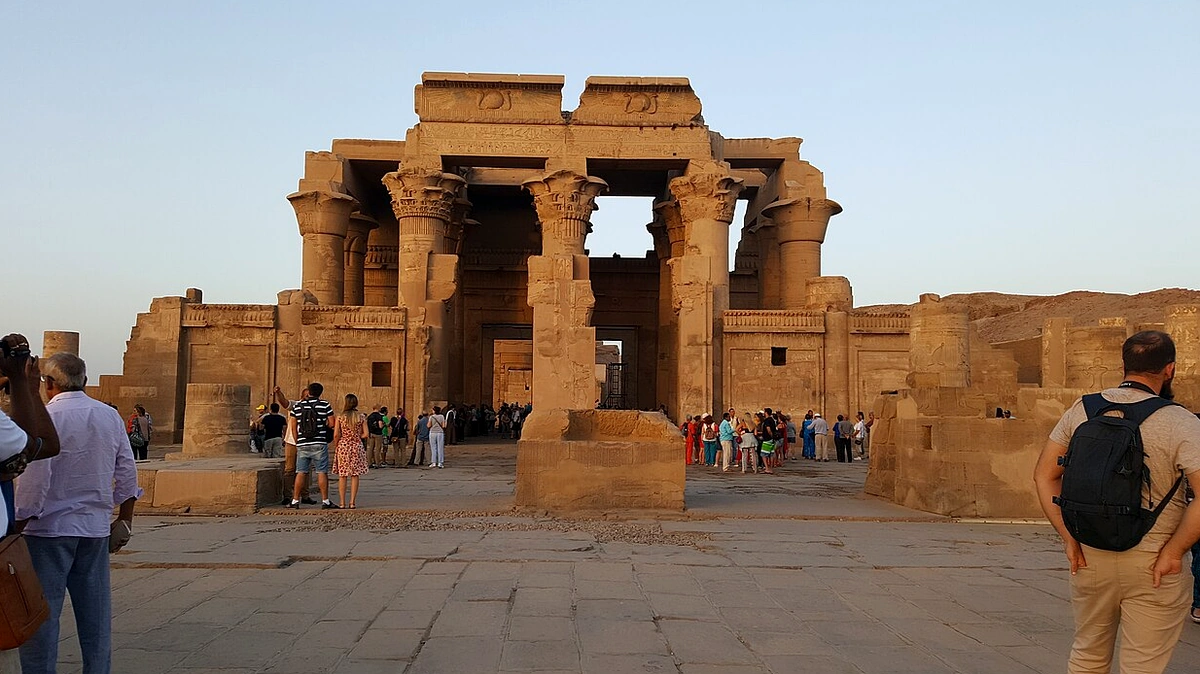
Along the timeless current of the legendary Nile, where the desert sunset bathes ancient sand dunes in gold, the Twin Temple of Kom Ombo rises as a monumental architectural masterpiece bearing witness to the convergence of power and devotion across the glorious eras of ancient Egyptian civilization. Tracing the historical origins of this singular sanctuary leads straight back to the Ptolemaic dynasty—the Hellenistic royal house that ruled Upper and Lower Egypt following the conquests of Alexander the Great. Exploring the reigns and royal lineages embedded within Kom Ombo’s stone walls takes us to the 2nd century BCE, an era when indigenous kingship and Hellenistic culture merged seamlessly to create spiritual monuments of unprecedented grandeur.
The core construction phase that laid the foundations for the temple’s inner sanctuary began during the reign of Pharaoh Ptolemy VI Philometor, who ruled from roughly 181 to 145 BCE. Under his royal patronage, court architects designed and erected the sacred core of the complex, uniting traditional religious iconography to legitimize a foreign dynasty on the sacred banks of the Nile. Driven by shifting political tides and royal piety, successive rulers continued to expand the sanctuary’s scale. By the reign of Ptolemy XII Auletes—father of the legendary Queen Cleopatra VII—the outer courts, grand corridors, and hypostyle halls were further enlarged and adorned with exquisite reliefs proclaiming the supreme authority of the Ptolemaic throne.
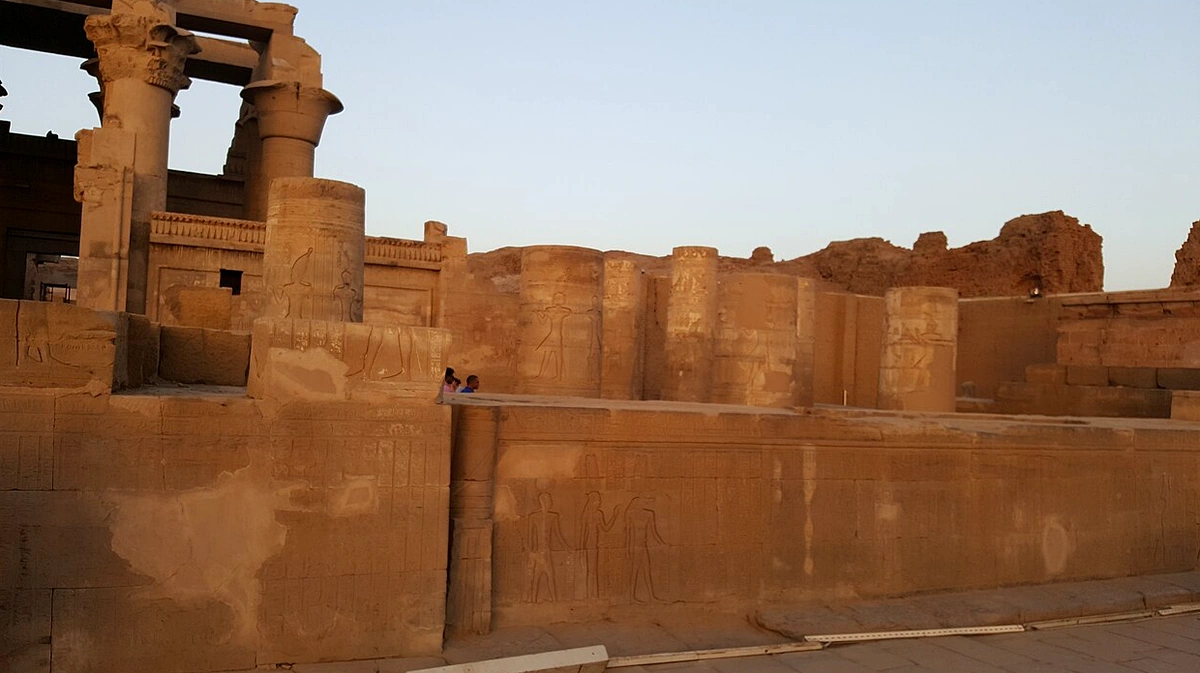
The shifting tides of empire did nothing to diminish Kom Ombo’s vitality; on the contrary, when the Roman Empire expanded its dominion over Egypt from 30 BCE through the 4th century CE, the sanctuary continued to enjoy dedicated imperial patronage from Rome. Augustus, the founding emperor of Rome, along with numerous predecessors and successors, repeatedly renovated the temple and added outer enclosure walls and forecourt structures. This politico-religious initiative by the Roman emperors not only appeased the local populace but also asserted their lawful and divine succession to the ancient Egyptian pharaohs. Consequently, Kom Ombo’s sandstone walls bear the imprint of multiple historical strata, blending Hellenistic refinement with the monumental solidity of Roman imperial architecture.
What makes Kom Ombo historically and spiritually unique is that it stands among the very few temples in ancient Egypt designed to honor two supreme deities simultaneously, creating a perfectly symmetrical layout that divides the sacred precinct in half. Theologically, the northern half of the temple is dedicated to the falcon-headed god Haroeris, also known as Horus the Elder, while the southern half is consecrated to Sobek, the crocodile god governing fertility, water, and the untamed power of the Nile. In ancient indigenous memory, this settlement was cherished under the name Nubt—meaning “City of Gold”—a vital commercial and strategic hub along major caravan routes. Under Hellenistic and Roman rule, the town became known as Omboi, reflecting the linguistic evolution of generations living along the desert’s edge.
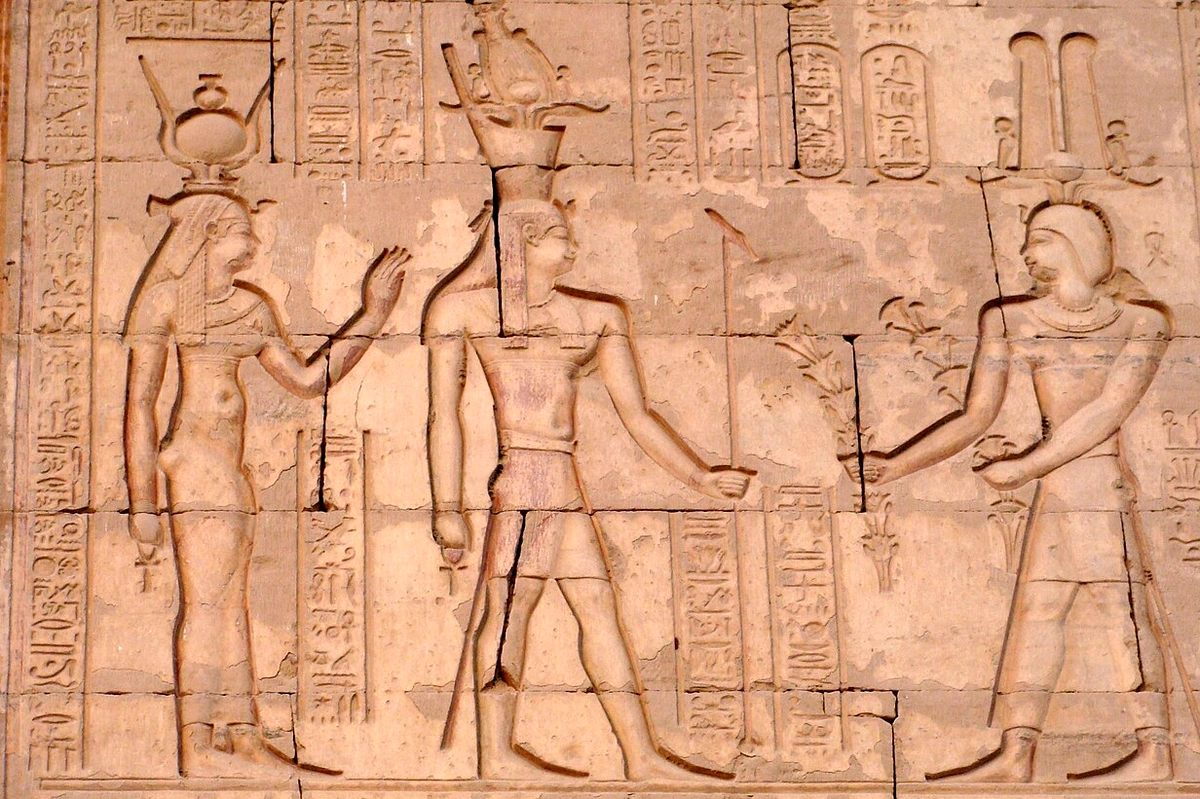
Beyond royal lineage and dual-deity theology, Kom Ombo preserves priceless chapters in the history of human science, etched directly into its stone walls. Located in the southeastern outer corridor, remarkably detailed reliefs depicting ancient surgical instruments—including scalpels, bone saws, forceps, and obstetric tools—transcend conventional religious iconography to serve as an invaluable archive of early medical history. These carvings attest to the advanced medical knowledge of ancient Egypt, where temple priests simultaneously served as skilled healers. Through the fall of dynasties, natural disasters, and the slow erosion of millennia, the Twin Temple of Kom Ombo has endured as a chronicle in stone, preserving the triumphant memory of a brilliant Nile civilization.
Journeying south into Upper Egypt, where the swirling currents of the Nile wind past golden sand dunes in Aswan Governorate, an on-site exploration reveals an architectural marvel unlike any other. Perched atop a natural sandstone promontory where the river narrows abruptly into a swirling bend, the Twin Temple of Kom Ombo rises like a spiritual fortress along the eastern bank. This commanding site not only controlled vital trade corridors linking Central Africa to the Mediterranean basin, but according to geological and mythological records, it was once a primordial sanctuary where giant Nile crocodiles gathered to nest during the annual inundation. This wild, perilous, yet deeply sacred ecosystem shaped the geomantic vision of Ptolemaic architects, transforming the headland into a nexus where nature’s raw power met divine sovereignty.
In terms of topographical planning and spatial composition, Kom Ombo departs from the single-axis layout typical of most ancient Egyptian temples, standing instead as a triumph of flawless bilateral symmetry and audacious axial division. Viewed from above, the entire temple complex is aligned strictly along a north-south axis, using this central line to split the structure into two completely independent yet seamlessly unified halves. This division directly mirrors the dualism of the ancient Egyptian worldview: the western half facing the vast expanse of the Nile is dedicated to the falcon-headed sky god Horus the Elder, whereas the eastern half turning toward the rugged desert interior belongs to the crocodile-headed water god Sobek. This clear yet harmonious bifurcation produced a twin architectural system unmatched in human history.
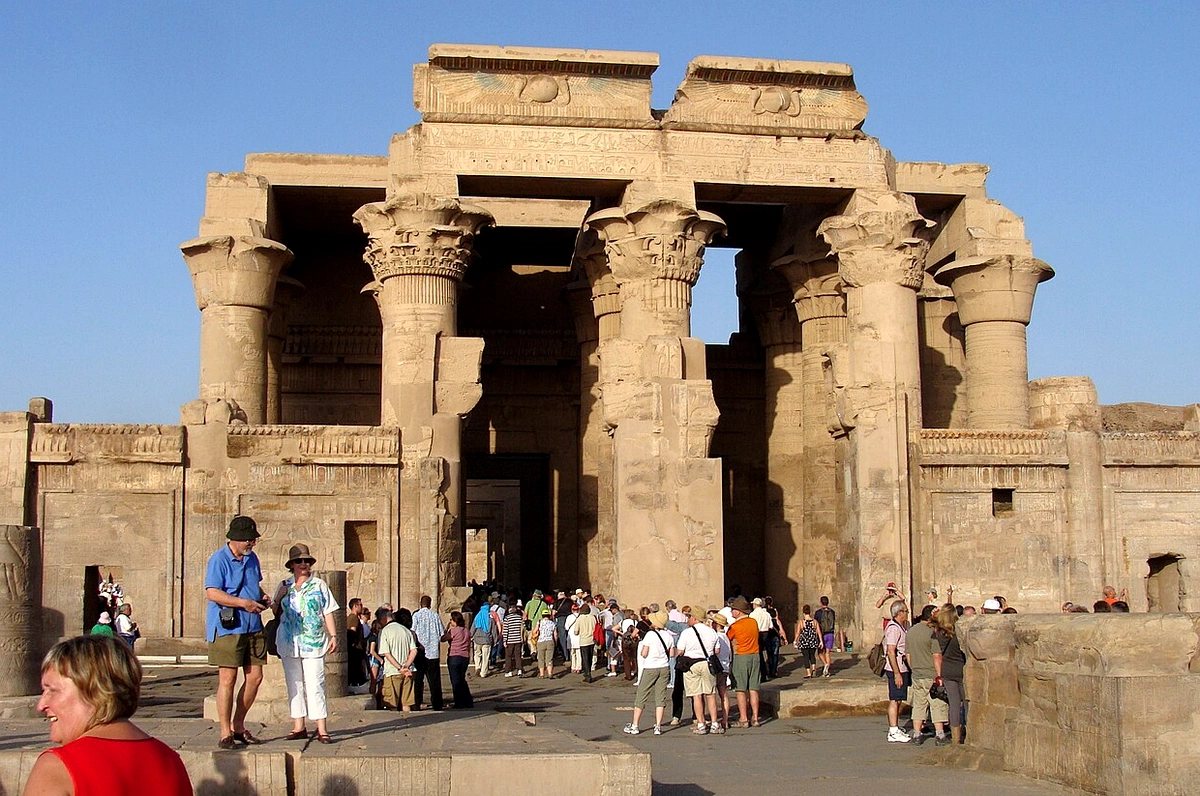
Examining the construction engineering and floor plan in detail, archaeologists and architectural historians have long marveled at the pinpoint precision of Greco-Roman stonemasons. Kom Ombo boasts a parallel dual-space layout found nowhere else along the Nile Valley. Passing through the main entrance, visitors encounter two separate portals finely carved into the sandstone facade, leading into parallel processional corridors lined with towering columns. This twin alignment continues uninterrupted through two distinct hypostyle halls and culminates in two side-by-side sanctuaries at the innermost heart of the temple. Every element—from offering tables and raised wall reliefs to scenes of sacred libations—is designed in mirror symmetry, presenting Horus and Sobek with strictly equal divine stature. This arrangement not only reconciled the worship of two distinct cults within a single community, but also embodied the cosmic principle of Ma’at—eternal balance, cosmic order, justice, and harmony between opposing forces of nature.
Surrounding this auspicious setting is the signature landscape of southern Upper Egypt, where the tranquil Nile suddenly turns turbulent around submerged shoals and sharp river bends. Each late afternoon, the blazing Saharan sun casts a warm glow across the temple’s honey-colored sandstone, bathing the sanctuary in an ethereal halo that accentuates intricate carvings preserved over two millennia. The union of a dramatic riverbend basin, waters once teeming with sacred crocodiles, and supreme symmetrical architecture makes the Twin Temple of Kom Ombo a living museum where history, culture, sacred geography, and faith converge in defiance of time.
Stepping inside the grounds of the Twin Temple of Kom Ombo along the legendary Nile, travelers are struck by a masterpiece of dual symmetry in which ancient artisans translated grand cosmic philosophy into stone and light. Unlike single-deity temples elsewhere in Upper Egypt, Kom Ombo’s spatial plan follows a strict central axis dividing the sanctuary into two independent yet organically intertwined halves—the northern half honoring Horus the Elder, and the southern half dedicated to the formidable Sobek. Today, the surviving ruins of the complex span an impressive footprint measuring roughly 50 meters from east to west and approximately 95 meters from north to south.
To raise a monument capable of enduring millennia in a harsh desert climate, Ptolemaic architects carefully quarried and selected local Nubian sandstone for the temple’s superstructure. When illuminated by the intense southern Egyptian sun, the warm golden-ochre tones of this regional stone lend the sanctuary an aura at once majestic and mystical. Meanwhile, for critical load-bearing foundations and subterranean hydraulic channels, ancient engineers judiciously employed ultra-dense granite to resist groundwater erosion and moisture seeping from the Nile.
Structurally, the temple exemplifies the classic post-and-lintel system of Nile Valley civilization. Standing beneath its towering colonnades, visitors cannot help admiring the stonecutters’ artistry in capitals finely sculpted into graceful palm fronds, soaring papyrus stalks, and blooming lotus blossoms. Even more remarkable is the masonry joinery: rather than relying on conventional mortar, master builders secured the massive stone blocks using wooden dovetail ties paired with vertical mortise-and-tenon grooves. This interlocking precision gave the structure natural resilience, allowing it to absorb minor seismic tremors without structural collapse.
Within the temple precinct, alongside offering chambers, vestibules, and hypostyle halls, stands an extraordinary monument deeply tied to ancient Egyptian agrarian life that remains remarkably intact: the circular stone Nilometer well. Constructed from carefully dressed stone blocks arranged in concentric rings, this specialized hydrological shaft connects directly to the Nile’s groundwater table via sturdy underground conduits. Throughout the Pharaonic and Greco-Roman eras, temple priests used the Nilometer as an essential scientific instrument to measure the river’s annual flood levels. By reading the graduated scale carved along the interior well wall, royal administrators not only forecasted the scale of upcoming harvests or droughts, but also calculated agricultural tax rates across the surrounding estates.
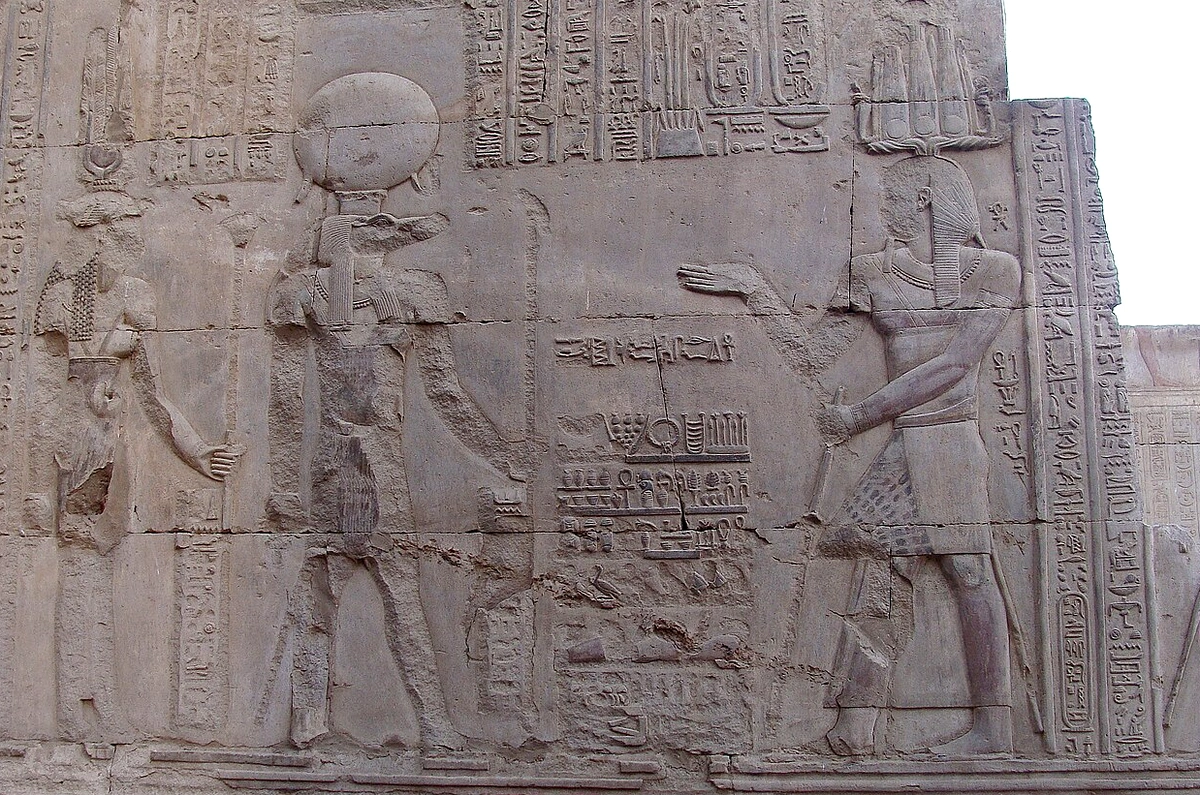
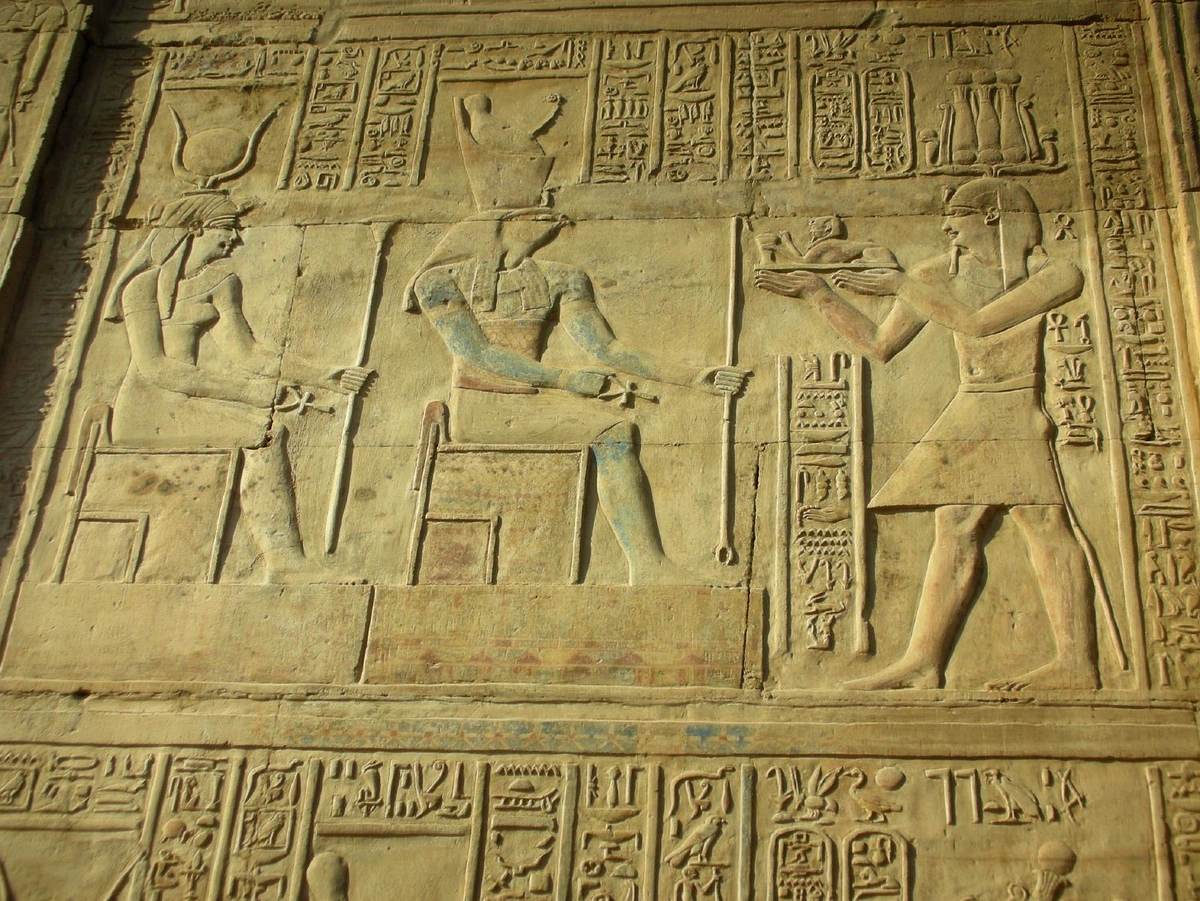
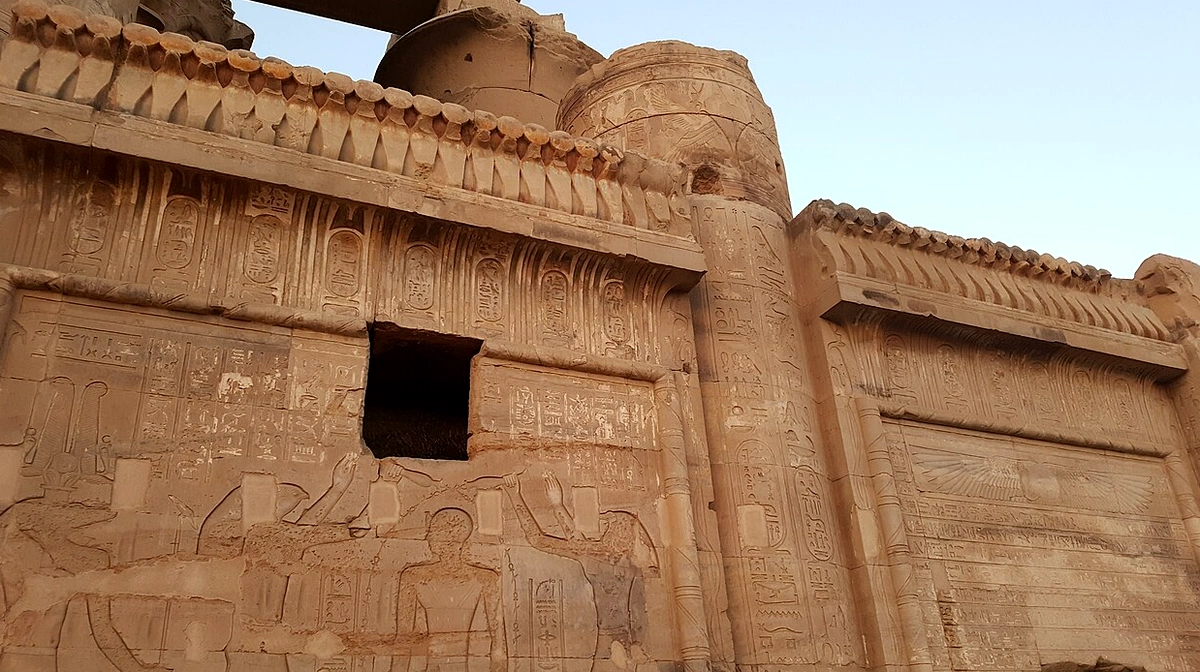
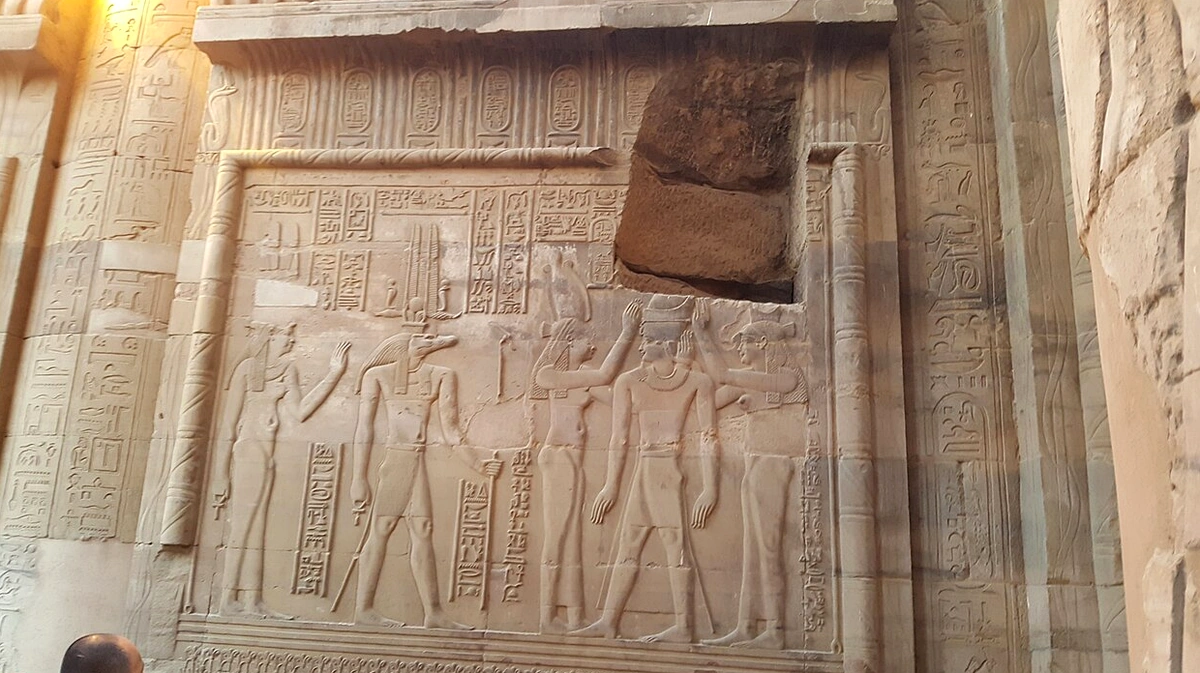
Every bas-relief adorning Kom Ombo’s walls—from meticulously rendered surgical tools to scenes of deities bestowing royal blessings—reflects a pinnacle of sculptural mastery and architectural engineering unmatched in antiquity. Across centuries of upheaval and the ceaseless flow of history, the sanctuary stands proud as an enduring testament to human ingenuity harmonizing with the gifts of the Nile.
As night descends over the legendary Nile, the scorching heat of Upper Egypt gives way to cool evening breezes, awakening an entirely different facet of this thousand-year-old monument. Through a close collaboration between Egypt’s Ministry of Tourism and Antiquities and leading international lighting engineers, the Twin Temple of Kom Ombo is draped in a dramatic nocturnal illumination scheme that transforms the sanctuary into a monumental open-air stage set against the stillness of river and desert. Far from appearing as weathered ruins under harsh daylight, the symmetrical temple of Sobek and Haroeris emerges with regal mystery beneath architectural lighting calibrated to the millimeter.
The technological highlight of this illumination project lies in high-precision LED uplighting tuned to a warm color temperature of 3000K. Rather than glaring or overwhelming the sacred ancient atmosphere, this golden amber glow faithfully evokes the flickering warmth of ancient ritual torches while bringing out the rich earthy tones of desert sandstone. Sculpted by light and shadow, the towering colonnades gain dramatic three-dimensional depth, while intricate shaft carvings—from papyrus and lotus clusters symbolizing Upper and Lower Egypt to complex geometric friezes—stand out in crisp relief as if animated beneath a full moon.
Joining a nighttime visit to Kom Ombo offers an evocative, contemplative experience completely distinct from daytime sightseeing. Visitors stroll unhurriedly through a forest of illuminated stone pillars bathed in desert quiet, listening to breezes whisper through stone portals and the gentle lap of the Nile against the embankment below. The hush of night paired with warm artistic lighting allows the imagination to slip effortlessly back through time, recapturing the sacred ambiance of Ptolemaic temple rituals. Here, light does far more than illuminate pathways—it guides emotion, turning every footstep through the sanctuaries into a deeply atmospheric journey.
Stepping out from the serene stillness of the main temple complex toward the exit gate, the tempo shifts instantaneously into the lively rhythm of the Kom Ombo Bazaar night market. Offering a vibrant tapestry of folk culture that contrasts delightfully with the solemnity of the ancient sanctuary, the market glows beneath colorful lanterns and flickering stall lights, filling the night air with the enticing aromas of Middle Eastern spices, traditional hibiscus tea (karkadeh), and freshly grilled Upper Egyptian specialties.
The cultural heart of the night bazaar beats with traditional performances by the Nubian community—the indigenous people who have lived along this stretch of the Nile for millennia. Visitors are immediately captivated by the deep, resonant pulse of sheepskin drums interwoven with lively oud melodies and rhythmic handclapping. In an open-air square brimming with light and music, performers dressed in vibrant traditional attire execute energetic Nubian folk dances marked by agile, rhythmic footwork celebrating river life, resilience, and desert hospitality. Swept up in the infectious joy, travelers are warmly invited to join hands in the communal dance circle, bringing a day of exploring the Twin Temple of Kom Ombo to an unforgettable, heartfelt close.
Nestled quietly at a dynamic cultural crossroads between the storied Nubian world and the broader Arab sphere, the region of Kom Ombo along the Nile preserves not only a singular twin-temple masterpiece, but also a richly distinctive local culinary heritage. Here, regional gastronomy dissolves boundaries between the rustic simplicity of desert nomad traditions and the abundant sweetness of the fertile Nile Valley. Passed down through local families for generations, Kom Ombo’s cuisine offers a living chronicle of flavor that reflects daily life bound to the mother river and Egypt’s sun-drenched golden sands.
Savoring the celebrated flavors of this twin-temple town begins with a time-honored starter steeped in regional tradition: Shorbat Adas, better known as Nubian-style yellow lentil soup. Crafted from golden lentils cultivated directly in the rich alluvial soil along the Nile, this comforting dish demands patience and care from local cooks. Simmered slowly in earthenware pots alongside onions, crushed garlic, and aromatic cumin, the lentils break down into a velvety, fragrant broth capable of chasing away the chill of crisp desert nights. Every spoonful delivers earthy nuttiness infused with the wholesome essence of southern Egypt’s riverbanks.
Following this comforting opening comes a main course that captivates every traveler: Samak Baladi—renowned grilled tilapia caught fresh from the legendary Nile. Rejecting modern shortcuts, cooks in Kom Ombo preserve the traditional method of roasting over open embers inside rustic clay ovens. Freshly caught Nile tilapia are cleaned and generously stuffed with a vibrant herb paste of crushed garlic, fresh cilantro, dill, cumin seeds, and minced dried chili. Roasted over palm-wood embers or glowing charcoal, the fish develops a crisp, smoky, blistered skin while the tender white flesh inside stays succulent and saturated with warm, aromatic spices.
No traditional feast in Kom Ombo would be complete without warm loaves of Aish Baladi, the iconic Egyptian flatbread woven into both daily sustenance and ancient spiritual tradition. Baked directly over glowing coals or on the blistering stone floor of family clay ovens, these round, puffed flatbreads boast a crisp, lightly charred exterior and a soft, airy crumb rich with whole-wheat aroma. Enjoying Aish Baladi the local way means tearing off steaming pieces and dipping them into creamy, tangy sheep’s-milk cheese paired with velvety, nutty sesame tahini for an explosion of classic flavors.
To conclude an evocative culinary journey beneath the bright Upper Egyptian sun, nothing rivals a glass of Karkadeh—Egypt’s beloved national refreshment brewed from crimson hibiscus petals. Sun-dried in the desert heat and steeped slowly to extract their deep ruby essence, hibiscus blossoms yield a naturally tart, floral infusion. Sweetened lightly with pure cane sugar and served chilled over ice, Karkadeh offers an instant revitalizing tonic for travelers stepping out from the sacred halls of Sobek and Haroeris. More than a simple meal or refreshment, the local table is a distillation of history—family heritage seasoned with the warmth of people forever bound to the eternal flow of the Nile.
Rising dramatically above a sweeping bend of the legendary Nile, the Twin Temple of Kom Ombo ranks among ancient Egypt’s most extraordinary architectural treasures. To catch the sanctuary in its most breathtaking light beneath the Saharan sun, knowing the site’s operating schedule is essential. According to heritage management regulations, Kom Ombo’s opening hours adjust seasonally to suit extreme desert temperatures. During summer, when intense heat blankets the upper Nile, the complex welcomes visitors from 06:00 AM until 08:00 PM, offering a prime opportunity to watch sunset turn the sandstone columns to burnished gold. In winter, visiting hours shorten to 06:00 AM through 05:00 PM so guests can conclude their visit safely before dusk falls across the semi-arid valley.
In terms of transportation, Kom Ombo occupies a prime position along the vital river corridor linking Luxor and Aswan, making it an indispensable stop on Nile journeys. The most popular and seamless way to arrive is aboard a luxury Nile cruise ship, which docks directly at the Kom Ombo pier just a short stroll through leafy date palms from the temple entrance. For travelers arriving overland from Aswan—located roughly 45 kilometers to the south—hiring a private car or taking a scenic Nile Valley train provides flexible scheduling alongside glimpses of tranquil rural life along the riverbanks.
Ticketing at Kom Ombo offers straightforward options worth choosing strategically. Standard admission to the main temple complex costs approximately 360 Egyptian pounds (EGP). However, travel specialists strongly recommend upgrading to the combined ticket priced at around 400 EGP. That modest difference grants entry to the adjacent Crocodile Museum, which houses rare stone crocodile statues and remarkably preserved mummified crocodiles thousands of years old—vivid testimony to the supreme cult of Sobek practiced here throughout the Ptolemaic and Roman eras.
To experience the quiet majesty of Kom Ombo at its finest, cultural scholars recommend arriving either at dawn when the gates open at 06:00 AM or in the late afternoon around 04:30 PM. At these hours, low-angled sunlight creates striking visual depth across the deeply incised wall reliefs while sparing visitors the peak midday desert heat. When visiting this historic sanctuary, modest attire is strongly advised—wearing neat clothing that covers shoulders and knees shows respect for local cultural traditions and the site’s sacred heritage.
Finally, a few practical tips will help ensure a smooth, rewarding visit to Kom Ombo. Politely decline persistent solicitations from unlicensed freelance guides outside the entrance to avoid unexpected fee disputes. Strict site conservation rules also prohibit flash photography inside the temple chambers to protect fragile traces of ancient pigment on the reliefs. And under the intense Upper Egyptian sun, carrying plenty of bottled water along with a wide-brimmed hat, sunglasses, and sunscreen is essential throughout your excursion. To gain deeper insights and turn your dream of exploring the land of the Pharaohs into reality, explore our Egypt Tour featuring a thoughtfully curated itinerary.