Tucked deep within the rolling limestone range of Huong Son Commune, My Duc District, at the southwesternmost edge of Hanoi, Huong Tich Cave stands as a majestic masterpiece bestowed by nature upon this thousand-year-old land of culture. Its distinct geographical setting places the monument complex in an ideal feng shui formation where the spiritual energy of mountains and rivers converges, embraced by winding peaks that cradle the Yen Stream as it flows like a blush-pink silk ribbon. For generations, this “crouching dragon, resting tiger” terrain has not only created a unique ecological sanctuary rich in the geological and geomorphological value of a tropical karst valley, but has also shaped a premier spiritual haven where the boundary between the Buddhist realm and the mortal world seems to dissolve amid echoing temple bells drifting through the clouds.
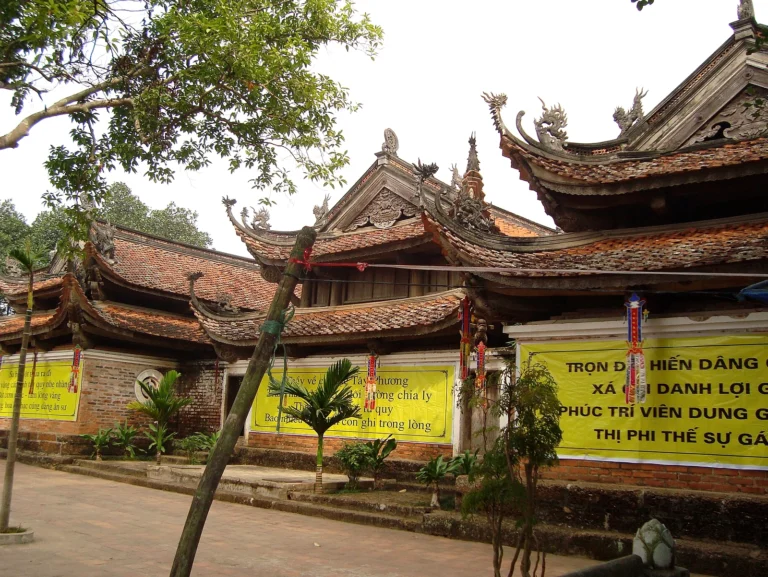
Looking back across the sweep of history and culture, the origin and development of Huong Tich Cave represent a centuries-long journey closely intertwined with the flourishing of Vietnamese Buddhism. Spanning prehistoric archaeological traces with artifacts from the Dong Son culture down to Ly–Tran cultural layers scattered throughout the valley, this area served from its earliest days as a sacred gathering place for indigenous communities before being fully woven into the current of Mahayana Buddhism. However, it was not until the Early Le Dynasty—and especially the Later Le Dynasty (17th–18th centuries)—that the architectural form of the sanctuary truly took shape. Historical chronicles and stone inscriptions preserve evidence that in the 16th year of the Chinh Hoa era (1695), under the erudite guidance of Most Venerable Chanuyen—an eminent high monk of the Lam Te Zen lineage—the entire complex of pagodas, stupas, and hermitages at Huong Son was revived and expanded into a major monastic center, drawing countless devotees and scholars from near and far to worship and chant scriptures.
The cultural and historical prestige of Huong Tich Cave is further enriched by the legacy of Vietnam’s most prominent historical figures. The pinnacle of this distinction was recorded in the 31st year of the Canh Hung era (1770), when Lord Trinh Sam, during a royal inspection tour through the region, was so moved by the breathtaking landscape where clouds and waters meet that he shed tears of admiration and personally inscribed five large Chinese characters onto the cliff face right above the cave entrance: “Nam Thiên đệ nhất động” (The Greatest Cave Under the Southern Sky)—affirming its unrivaled status as the finest cavern in the southern realm. This rock-carved calligraphy is not only an extraordinary historical treasure of Sino-Vietnamese scholarship, but also an official royal endorsement of a national scenic landmark. Through the Tay Son and Nguyen dynasties, with special patronage from emperors such as Tu Duc and Khai Dinh through royal offerings, imperial decrees, and restoration projects, Huong Tich Cave has forever preserved its stature as a signature cultural and historical heritage site, safeguarding the spiritual soul of the land and the enduring spiritual roots of the nation across the centuries.
Setting foot in Huong Son, visitors are immediately captivated by a striking landform shaped like a dragon stretching out and turning its head back. The path leading to Huong Tich Cave is far more than an ordinary mountain trek; it is an immersion into pristine nature where drifting clouds mingle with the gentle murmur of the Yen Stream. After ascending hundreds of stone steps worn smooth by time, a colossal cavern mouth opens before your eyes, rising amid sheer limestone cliffs like the wide-open jaw of a dragon. Right on the rock face outside the entrance, Lord Trinh Sam’s calligraphy from the 31st year of Canh Hung (1770)—the five ancient Chinese characters “Nam Thiên đệ nhất động”—stands deeply and boldly carved, proclaiming its title as the finest cave under the southern sky across the centuries.
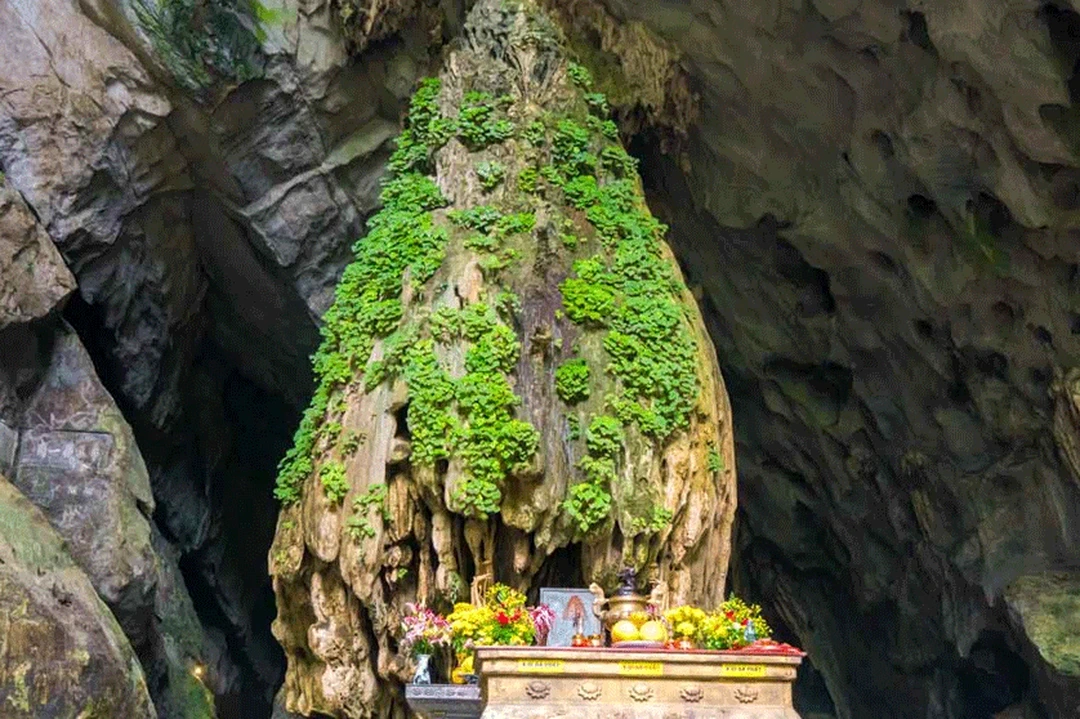
Stepping through the grand arched portal to venture deep inside the cavern, the atmosphere shifts abruptly from bright daylight to a secluded, mystical world steeped in spirituality. Seen from above, the interior opens up like a gigantic overturned bowl beneath an awe-inspiring natural vaulted ceiling. Shaped by the hand of nature and human restoration across the Le and Nguyen dynasties, the stalactite formations inside take on remarkably vivid forms. Most prominent at the center is a natural stalactite formation universally revered as the Thousand-Eyed, Thousand-Armed statue of Avalokitesvara Bodhisattva, surrounded by evocative stalactites resembling a mother pig and piglets, mounds of rice, heaps of coins, gold trees, silver trees, and more. All have been polished smooth by the reverent touch of millions of pilgrims over generations, creating a grand sculptural masterpiece jointly crafted by nature and time.
To capture this majestic beauty at its finest, professional photographers and seasoned travel writers swear by two unmissable “million-view” photo angles. The first and most coveted spot is standing on the cavern floor looking upward toward the main arched entrance, where morning sunlight pours straight down in glowing golden beams piercing through swirling, incense-laced mist. The ideal window for this shot is early morning—roughly between 7:00 AM and 9:00 AM—when early sunbeams slant through the forest canopy and spill into the cave mouth, creating an extraordinarily mystical and sacred atmosphere.
The second angle prized by photography enthusiasts is the terrace directly facing the rock wall inscribed with the five characters “Nam Thiên đệ nhất động.” From this vantage point, your lens can capture the ancient calligraphy set against the moss-draped cliff while framing the lush green valley of the Huong Son mountains in the background. As dusk approaches and soft late-afternoon sunlight casts slanting rays across the mountainside, the setting takes on a quiet, nostalgic mood, allowing photographers to effortlessly compose atmospheric frames rich in historical depth.
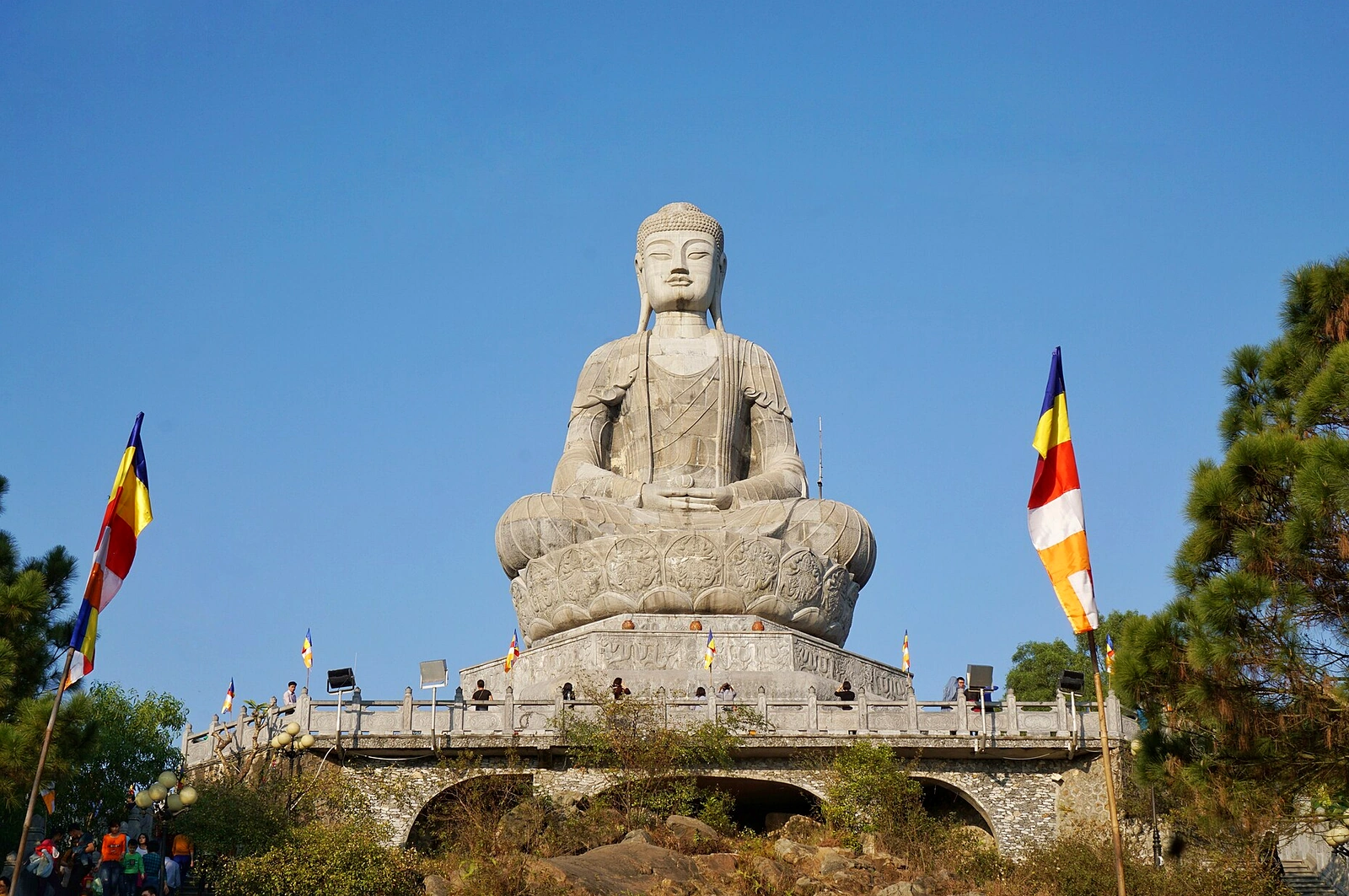
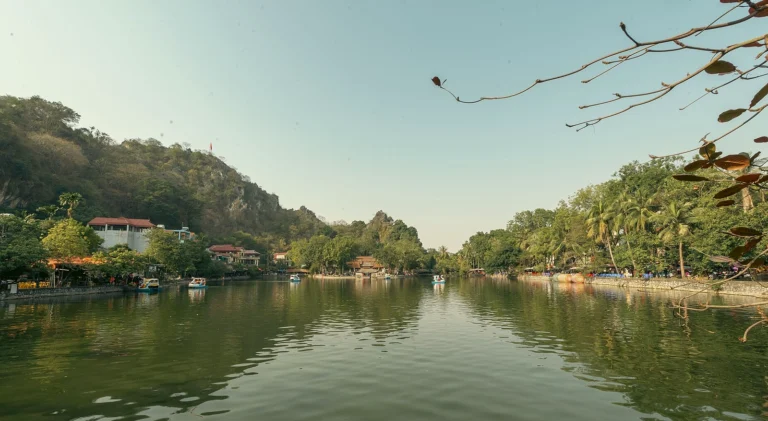
A trip to Huong Tich Cave is not merely conventional sightseeing, but a deeply moving journey into the spiritual realm and breathtaking scenery of the Xu Doai region. Right from the moment you step aboard at Duc Wharf, you experience the serene sensation of gliding along the romantic Yen Stream in a small wooden rowboat. Crystal-clear waters mirror the towering limestone peaks lining both banks, while a cool breeze carries the subtle scent of young rice paddies and blooming water lilies. This tranquil, idyllic scenery washes away the rush and worries of everyday life, gently guiding the soul back to unspoiled calm.
Stepping ashore from the boat, the journey continues to test your stamina along a winding mountain trail that climbs beneath dense forest canopies. The higher you ascend, the crisper and cooler the air becomes, lingering in the morning mist. Birdsong harmonizing with the distant chime of temple bells composes a serene symphony of mountains and woods. Though your legs may grow slightly tired on the mossy stone steps, the reward is the pure exhilaration of immersing yourself completely in untamed, majestic nature.
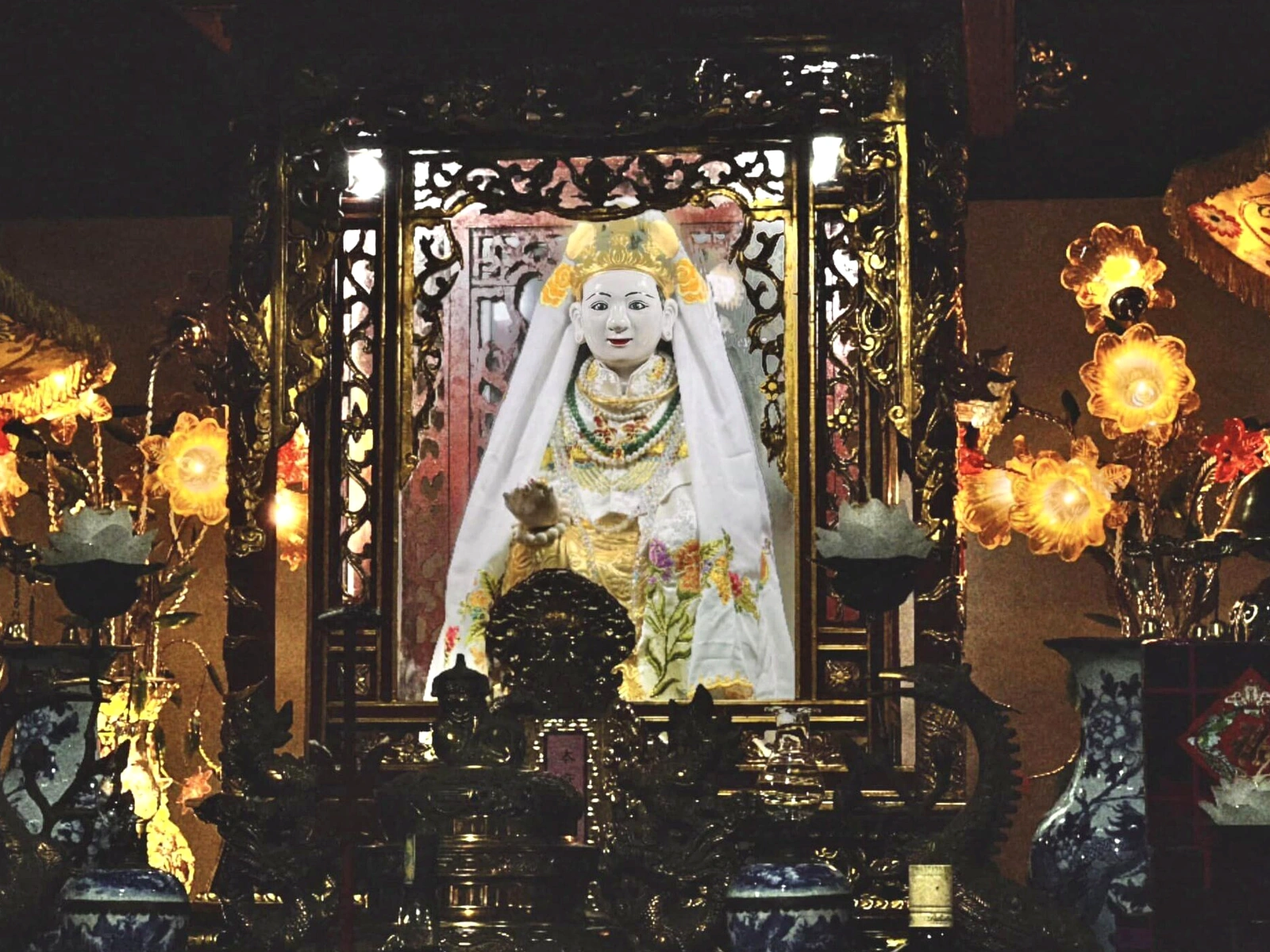
Reaching the entrance of Huong Tich Cave marks the emotional peak of the journey. Sheer cliffs rise before you bearing the five ancient Chinese characters “Nam Thiên đệ nhất động” inscribed by Lord Trinh Sam in the 18th century—weathered with moss yet radiating timeless grandeur. Passing beneath the cave portal and descending dozens of stone steps deep into the earth, an enchanting subterranean world unfolds with stalactites of endless shapes. Soft light glinting off shimmering formations reveals wondrous silhouettes resembling Buddha statues, lotus thrones, dragons, and phoenixes. The hushed sanctuary, fragrant with curling incense smoke, moves visitors to clasp their hands in quiet reverence before the green stone statue of Avalokitesvara Bodhisattva seated on a lotus pedestal, offering prayers for peace and good fortune for their loved ones.
To round out the pilgrimage, do not miss the chance to savor the rich and distinctive local cuisine. After hours of uphill trekking, travelers gather around a comforting meal featuring celebrated Huong Son specialties such as fragrant rau sang (sweet leaf) soup simmered with tender pork ribs, sweet-and-sour Huong Tich apricots, creamy yam sweet soup, and rustic dishes brimming with countryside flavor. The wholesome warmth of the food mingling with the crisp mountain air creates a memorable culinary finale, leaving every visitor with lasting impressions of a sacred and vibrant land.
Your exploration of the “Greatest Cave Under the Southern Sky” will be far smoother and more rewarding when you plan ahead with practical details on timing, costs, and transportation. Huong Tich Cave welcomes visitors year-round, with daily operating hours running from 6:00 AM to 5:00 PM to ensure visitor safety across the hilly trails and cavern terrain. To beat the crowds and enjoy unhurried time soaking in the peaceful atmosphere, plan to set out early in the morning.
Regarding costs, the management board enforces clearly posted rates for admission and transportation services. Entrance tickets to the Huong Son scenic complex are collected at the main gate, alongside boat fees for the Yen Stream crossing and cable car tickets (should you opt for the cable car rather than hiking up on foot). All prices are publicly and transparently displayed, making it easy to plan your travel budget.
The most convenient route from central Hanoi to the Huong Son scenic area (My Duc District) spans just over 50 kilometers. You can travel by private car or motorbike via National Highway 6 or the Phap Van – Cau Gie Expressway, turning off toward Te Tieu. Alternatively, public buses paired with a short taxi or motorbike-taxi ride offer an easy option for travelers who prefer not to drive. Upon arrival, gliding down the poetic Yen Stream during water lily season serves as an unforgettable prelude before beginning your climb to the cave.
The most popular time of year to visit Huong Tich Cave runs from the first to the third lunar month, coinciding with the traditional Huong Pagoda Festival, when spring weather is pleasantly cool and the scenery along the Yen Stream and surrounding valleys bursts with life. However, if you prefer quiet solitude, visiting during the summer or autumn months offers a completely different charm, free from festival crowds.
Finally, given the sacred nature of the sanctuary and its rugged mountain terrain, keep a few practical guidelines in mind. Dress modestly and respectfully when entering Buddhist worship areas. Since the visit involves extensive walking and climbing stone steps, wear supportive sneakers or flat shoes with good traction, and bring an umbrella, a sun hat, and personal drinking water to stay comfortable throughout the journey.
To enjoy a seamless getaway and experience the full splendor of Huong Tich Cave without worrying about arranging transportation, booking tickets, or planning itineraries, travelers can opt for VDS Travel’s premium all-inclusive Hanoi tour packages.