Standing majestically atop a rugged rocky outcrop where the Mtkvari and Aragvi rivers merge in the ancient capital of Mtskheta, Jvari Monastery in Georgia (known locally as ჯვრის მონასტერი) is far more than a religious monument—it is a living witness to centuries of triumph and upheaval in ancient Iberia. To fully grasp the sacred aura of this sanctuary, travelers must turn back the clock to the 4th century, a pivotal era that shaped the entire cultural and spiritual identity of this Caucasian nation.
According to the prized chronicles preserved in the Life of the Kings by historian Leonti Mroveli, the sanctuary’s origins are intertwined with a monumental turning point during the reign of King Mirian III. In the early 4th century, the Kingdom of Kartli officially converted to Christianity, becoming one of the first states in the world to embrace the faith thanks to the missionary devotion of Saint Nino. Amid a wild and turbulent ancient landscape, Saint Nino erected a large wooden cross atop the precipitous cliff overlooking the majestic river confluence. That cross was not merely a symbol of sacred devotion; it signified spiritual consecration, bestowing grace across the surrounding realm and giving rise to the name “Jvari”—which in Georgian purely means “Cross.”
Although the original wooden cross drew tens of thousands of pilgrims from far and wide, the imposing stone structure we admire today was the achievement of a later construction phase that marked the rise of local feudal power. Between 586 and 604 CE, Grand Duke Guaram I and his successor son, Stepanos I of Iberia, commissioned the building of this sturdy stone monastery. The monument defined the classic tetraconch style, laying a solid foundation for medieval Georgian ecclesiastical architecture and serving as the archetype for countless churches built across the country in subsequent centuries.
Yet the historical journey of Jvari Monastery in Georgia was never paved with roses. Confronted by fierce historical upheavals, this sacred site weathered countless storms of war and devastation. In 735, during the brutal campaign of the Arab general Marwan ibn Muhammad, the monastery was engulfed in flames, suffering severe damage to both its architecture and its religious treasures. Across the shifting sands of time, the sanctuary also endured invasions by Mongol forces and powerful Central Asian empires. Each time it fell, the resilient Georgian people painstakingly restored it, transforming Jvari into an immortal fortress of national independence.
Stepping inside the monastery today, amid weather-worn stone walls, travelers can still touch the heroic memories of ancestors through invaluable ancient Asomtavruli inscriptions carved directly into the stone surfaces. These archaic characters not only immortalize the monarchs and grand dukes who founded and restored the sanctuary, but also stand as a testament to the endurance of one of the Caucasus region’s oldest independent literary civilizations. More than a millennium and a half later, Jvari Monastery still stands proud as clouds swirl above the Mtkvari and Aragvi rivers, whispering to the world a story of devotion, resilience, and Georgia’s eternal cultural roots.
Setting foot on the steep limestone plateau along the sedimentary foothills of the Greater Caucasus, every visitor is left breathless by the extraordinary geomantic setting of Jvari Monastery. This architectural masterpiece stands atop an isolated rocky promontory at an elevation of roughly 656 meters above sea level, rising nearly 200 meters above the valley floor below. Jvari’s natural terrain resembles an impregnable fortress surrounded by water on three sides, sculpted over millions of years by the relentless erosion of the Mtkvari and Aragvi rivers. In the local tongue, “Jvari” means Cross, honoring the legend of the grapevine cross raised by Saint Nino—the evangelist who converted the Kingdom of Iberia in the 4th century—on this very strategic summit. Such a commanding site not only met strict ancient military defense criteria but also reflected a cosmic spatial vision held by pre-modern Georgians.
In terms of topographical planning and structural engineering, medieval architects and master masons faced extreme challenges building on weathered limestone exposed to fierce winds from every direction. Rather than leveling the mountaintop, they skillfully followed the natural contours of the cliffside, turning the rugged geological base into a seamless architectural pedestal integrated with nature. Local sandstone and limestone blocks were quarried on site, meticulously dressed, and bound with traditional lime mortar, creating a resilient masonry shell capable of withstanding violent earthquakes along the Caucasus tectonic fault line. Jvari’s engineering adheres strictly to an inscribed-cross layout featuring four corner chambers and a central space crowned by an iconic octagonal dome. The downward thrust of the vaulted masonry was calculated with precision to distribute weight evenly into thick supporting walls, anchoring the edifice to the crag as if it had grown organically out of the earth itself rather than been built by human hands.
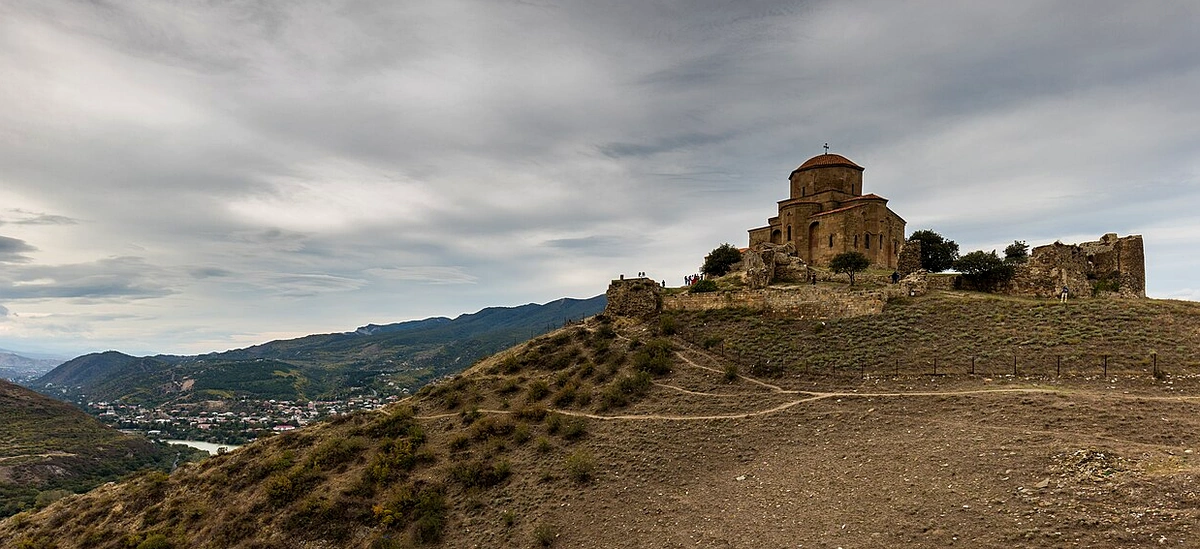
From the monastery’s terrace, sweeping panoramic vistas open in every direction across one of the South Caucasus’s most breathtaking landscapes, overlooking the historic capital of Mtskheta nestled in the valley below. The visual highlight that has captivated generations of travelers is the remarkable natural phenomenon directly beneath the mountain, where two waterways of strikingly different hues converge. The silt-laden, earthy waters of the Mtkvari meet—yet do not immediately mix with—the crystal-clear, turquoise waters of the Aragvi, forming a distinct two-toned ribbon curving around the base of Jvari hill. This “two-color river” spectacle is not only a rare geological wonder but also carries deep symbolic resonance in local consciousness, representing the harmonious convergence of cultures, faiths, and the turbulent historical currents of ancient Iberia.
Viewed through the spatial philosophy of Eastern Orthodox Christianity, Jvari’s setting is the quintessential embodiment of a Holy Mountain, where the boundary between earth and heaven seems to dissolve. Choosing a towering summit as the seat of the sanctuary reflects an upward-reaching architectural philosophy in which the church serves not merely as a place of worship, but as a spiritual lightning rod—a cosmic axis uniting humanity with the divine. From its cruciform floor plan symbolizing salvation to the vertical thrust of its dome reaching toward the boundless sky, every element of Jvari Monastery serves a unified design vision. Here, rugged terrain was tamed by faith and architectural artistry, bequeathing to humanity a supreme cultural treasure that stands timeless beneath the Caucasus sky.
Paused along the sheer cliff overlooking the confluence of the Mtkvari and Aragvi rivers, Jvari Monastery rises like a sculpted masterpiece emerging from the untamed nature of the Caucasus region. To historians of art and Byzantine architecture, Jvari is far more than a centuries-old house of worship—it is the earliest, purest, and most canonical example of the “tetraconch domed church,” formally celebrated by scholars as the “Jvari Type.” From its overarching floor plan down to its finest stone carvings, the monument sparked an architectural revolution across the South Caucasus, establishing the foundational blueprint for generations of religious landmarks across Georgia and neighboring lands.
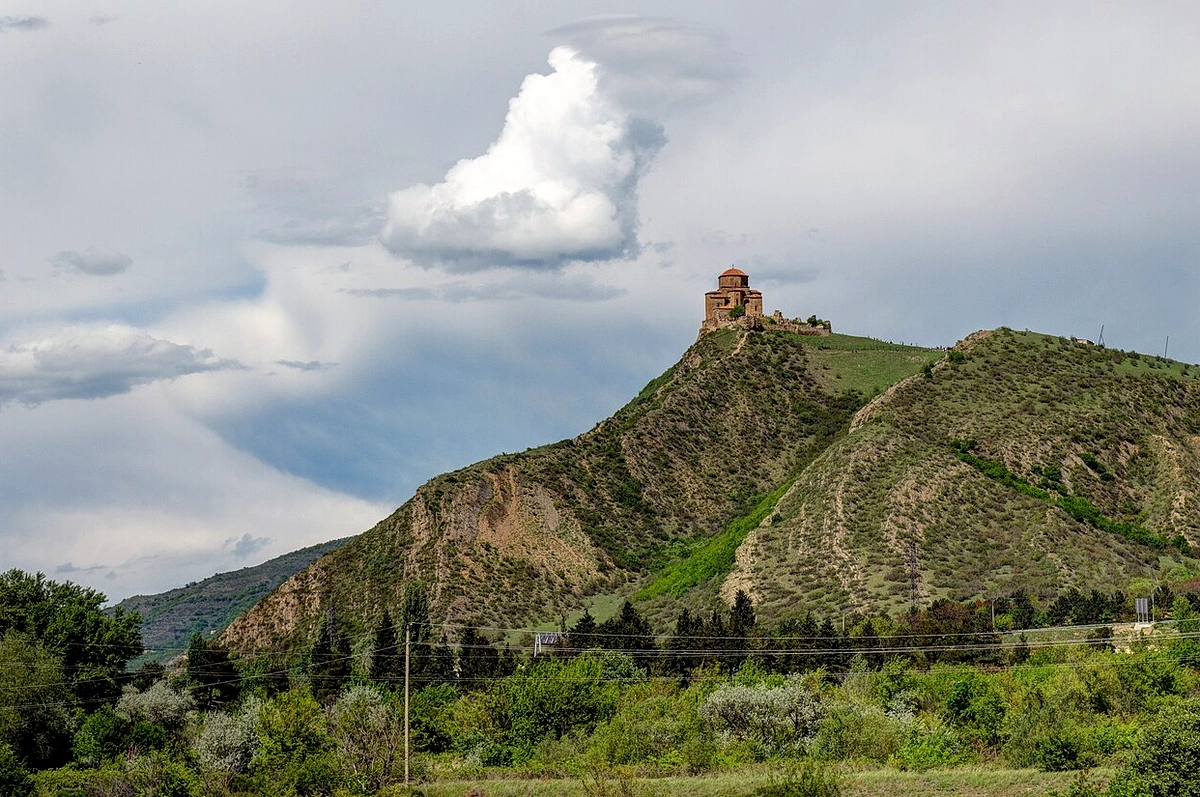
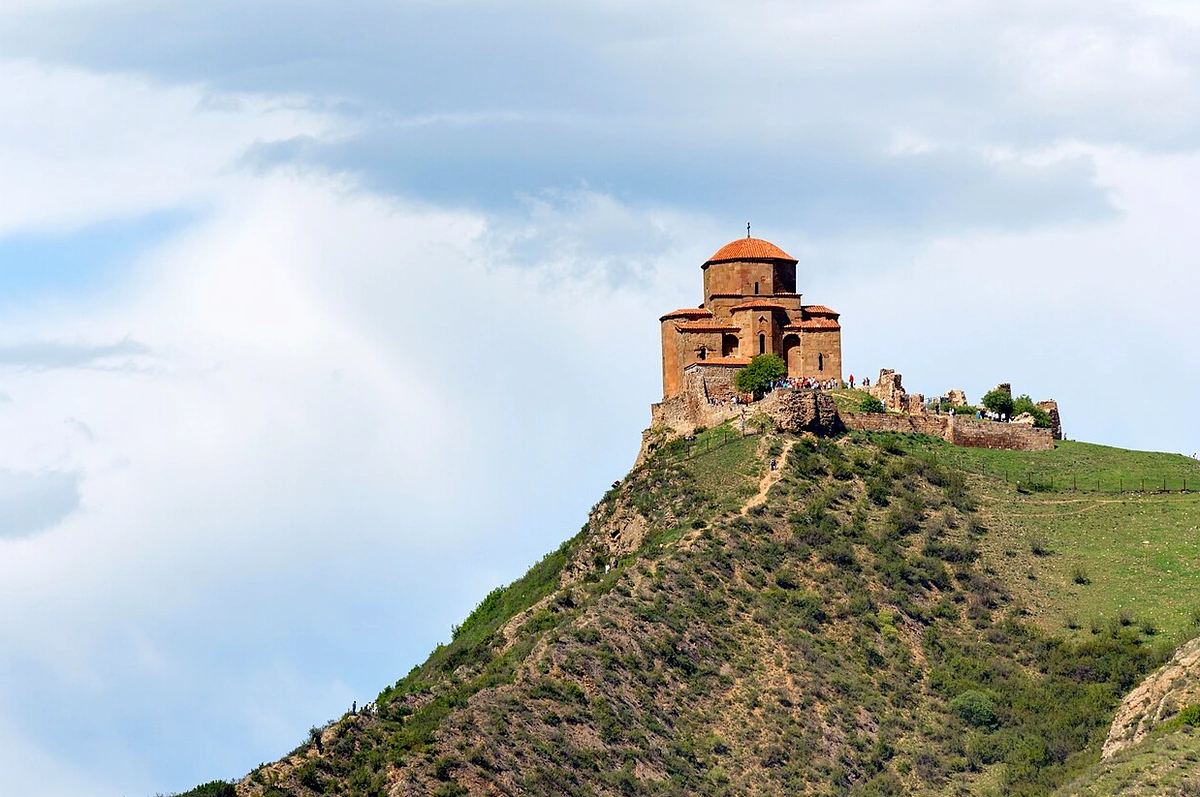
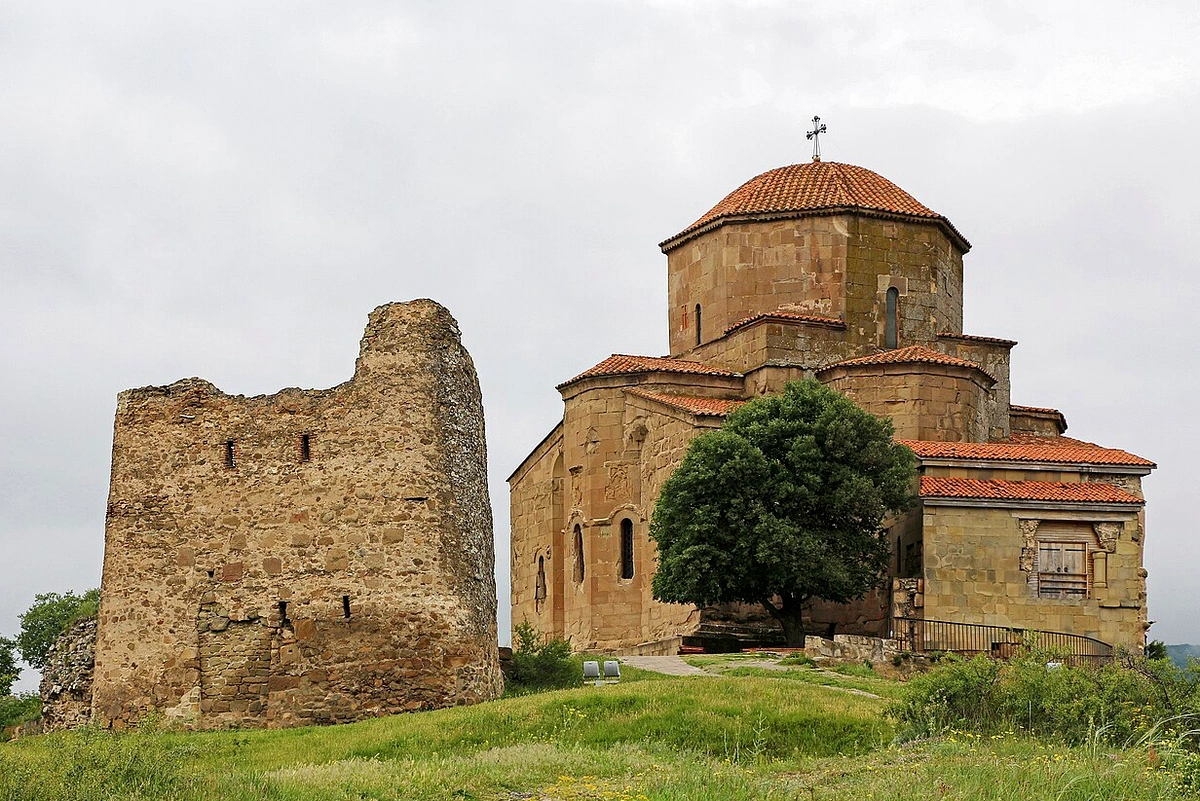
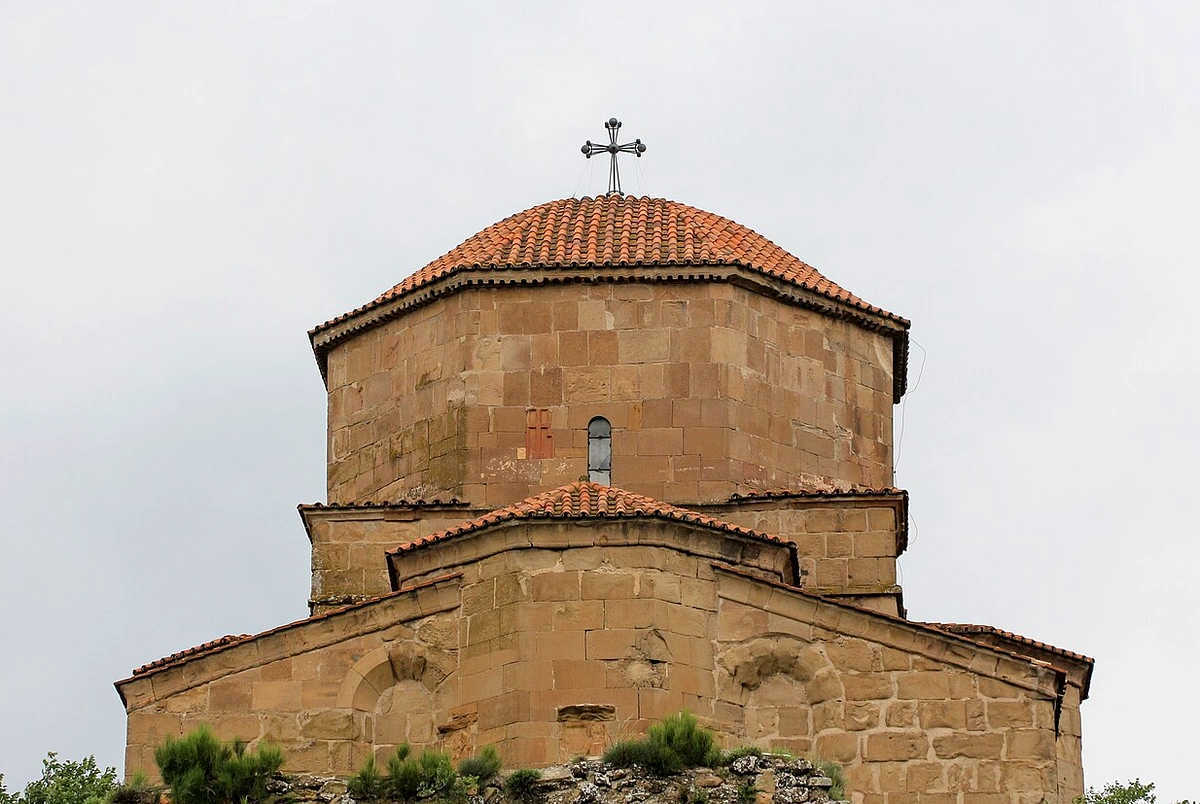
Examining the monastery’s spatial layout, visitors cannot help marveling at the exquisite harmony of its Greek-cross ground plan, where four cardinal arms expand into grand semicircular apses. At the heart of the ensemble rises the central sanctuary bay, where a tall octagonal drum supports a distinctive conical pointed dome that pierces the sky like a spiritual lance bridging the earthly realm and eternity. Early medieval engineers and artisans wisely made full use of indigenous materials, quarrying local sandstone and limestone in muted shades of warm gray and ochre. Dry-stone masonry techniques skillfully combined with traditional lime mortar and a rubble-filled structural core have enabled the sanctuary to defy fierce mountaintop gales and the ravages of time for over 1,500 years.
Stepping closer to inspect the exterior, travelers and scholars alike are captivated by stone cladding adorned with remarkable refinement, completely free of the heavy monotony of a sheer stone block. The perimeter walls are articulated by blind arcading and deep triangular niches that cast graceful plays of light and shadow as the sun arcs across the sky. Most notably, ancient stone bas-reliefs carved along the main facades serve as priceless historical chronicles in stone. They depict sacred biblical scenes such as the Ascension of Christ alongside lifelike portraits of the royal patrons who funded the monument. Intricately carved floral and animal motifs reveal a fascinating cultural synthesis, blending the bold elegance of Sasanian Persian art with the spiritual depth of early Byzantine Christianity—testifying to Jvari’s role as a vibrant highland crossroads of civilizations.
When night falls over the Mtskheta valley, Jvari Monastery does not vanish into pitch darkness; instead, it enters an entirely different temporal dimension where a thousand years of history converse with contemporary lighting artistry. Through a strategic collaboration between Georgia’s National Agency for Cultural Heritage Preservation and leading international lighting designers, an artistic nocturnal illumination scheme has been thoughtfully installed. Its centerpiece is precision LED spotlighting calibrated strictly within a warm color-temperature range of 2200K to 2700K. Soft, golden light gently embraces the signature conical dome and weather-beaten sandstone walls, highlighting every ancient architectural contour against the deep night sky with reverence and dignity. Unlike modern tourist attractions that often overindulge in glaring floodlights, the Jvari lighting project adheres strictly to anti-light-pollution standards, safeguarding the pristine night sky while preserving the sanctuary’s solemn tranquility.
Stepping through the portal into the monastery’s interior at twilight, visitors experience a profound, undisturbed stillness completely free of commercial noise. There are no neon-lit souvenir stalls or bustling background music here—only the faint fragrance of frankincense mingling with the crisp highland air of the Caucasus, creating a sacred sanctuary for reflection and inner peace. Beneath the flickering candlelight filtering through narrow lancet windows, long shadows of sacred icons stretch across worn stone flagstones, evoking over a millennium of devotion stretching back to when King Mirian III, Queen Nana, and Saint Nino raised the very first cross upon this sacred peak.
Yet nocturnal life around Jvari is not solely defined by silent stone and subtle illumination. During major traditional celebrations—most notably the Jvaroba festival held annually on the first Sunday of October—the foothills of Mtskheta and the grounds surrounding the monastery awaken with vibrant cultural vitality. On this occasion, visitors can witness live performances of Georgian polyphonic singing, an Intangible Cultural Heritage of Humanity recognized by UNESCO. Ancient harmonies echo across the open mountain air, blending resonant bass drones with soaring upper voices to create a timeless sound that stirs the human soul. Paired with moonlit panoramas of the Mtkvari and Aragvi rivers winding below, this artistic experience leaves an indelible historical and cultural impression on every traveler fortunate enough to visit legendary Jvari Monastery.
As dusk casts golden rays across the ancient stone slopes of Jvari Monastery and bathes the Mtskheta valley below—where the Aragvi and Mtkvari rivers weave together like ribbons of silver—no heritage journey here is complete without an immersive chapter of local gastronomy. The historic region of Kartli and the Mtskheta basin surrounding this sacred shrine have nurtured an agrarian culinary tradition rooted in local produce, where every dish and drink tells a story of warm hospitality, deep harmony with nature, and culinary techniques passed down across generations. Standing atop windswept Jvari and gazing toward the ancient capital below, one can almost catch the evening breeze carrying the fragrant smoke of grapevine embers and wild mountain herbs.
Your culinary journey through this region begins with traditional Mtskhetis Lobio, an emblem of how humble ingredients can be transformed into a gastronomic masterpiece. Lobio consists of red kidney beans slow-simmered in traditional unglazed clay pots—a cooking method that distributes heat evenly while locking in pure, earthy flavors. Gently stewed over low embers, the tender beans meld seamlessly with crushed fresh cilantro, fragrant sautéed garlic, onions, and the essential signature ingredient: finely ground walnuts. The addition of walnuts lends a velvety richness that elevates this seemingly simple dish into a hearty, nutty symphony—ideal for scooping up with warm flatbreads in the crisp highland air.
Alongside the comforting warmth of clay-pot beans, the traditional Kartlian table bursts to life with Kakhuri Mtsvadi, the region’s famed grapevine-charcoal pork barbecue. Unlike cultures that rely on elaborate marinades, local cooks honor the natural sweetness of free-range pork by keeping seasoning minimal—using nothing more than coarse salt. Cut into bite-sized chunks, the meat is skewered onto dried grapevine cuttings and grilled directly over glowing embers of aged vine wood. The aromatic heat rising from the grapevine coals infuses every seared morsel with a distinctive herbal smokiness that lingers unforgettably on the palate.
The richness of this sacred region’s culinary heritage shines further through Mkhlovana, a rustic stuffed flatbread embodying the soul of the mountains. Baked inside blistering clay ovens, Mkhlovana pairs a crisp, blistered crust with a generous filling of creamy Sulguni cheese and wild mountain spinach foraged from nearby hillsides. The tangy, pleasantly chewy richness of melted Sulguni balances the fresh, slightly astringent notes of wild greens, creating a nourishing delicacy that awakens every sense and evokes twilight gatherings around family hearths.
The crowning jewel of the region’s gastronomic landscape is Amber Wine—also known as Orange Wine—crafted using Georgia’s 8,000-year-old UNESCO-listed winemaking tradition. Unlike conventional white wine production, indigenous white grapes are fermented together with their skins, seeds, and stems inside giant beeswax-lined clay amphorae called Qvevri, which are buried underground to maintain steady natural temperatures for months. This ancient technique imparts a luminous amber hue alongside complex notes of dried apricot, candied citrus peel, and warm beeswax. Sipping a glass of traditional Qvevri wine in the shadow of thousand-year-old Jvari Monastery, surrounded by timeless mountain vistas, feels like tasting the very cultural essence and immortal spirit of Georgia.
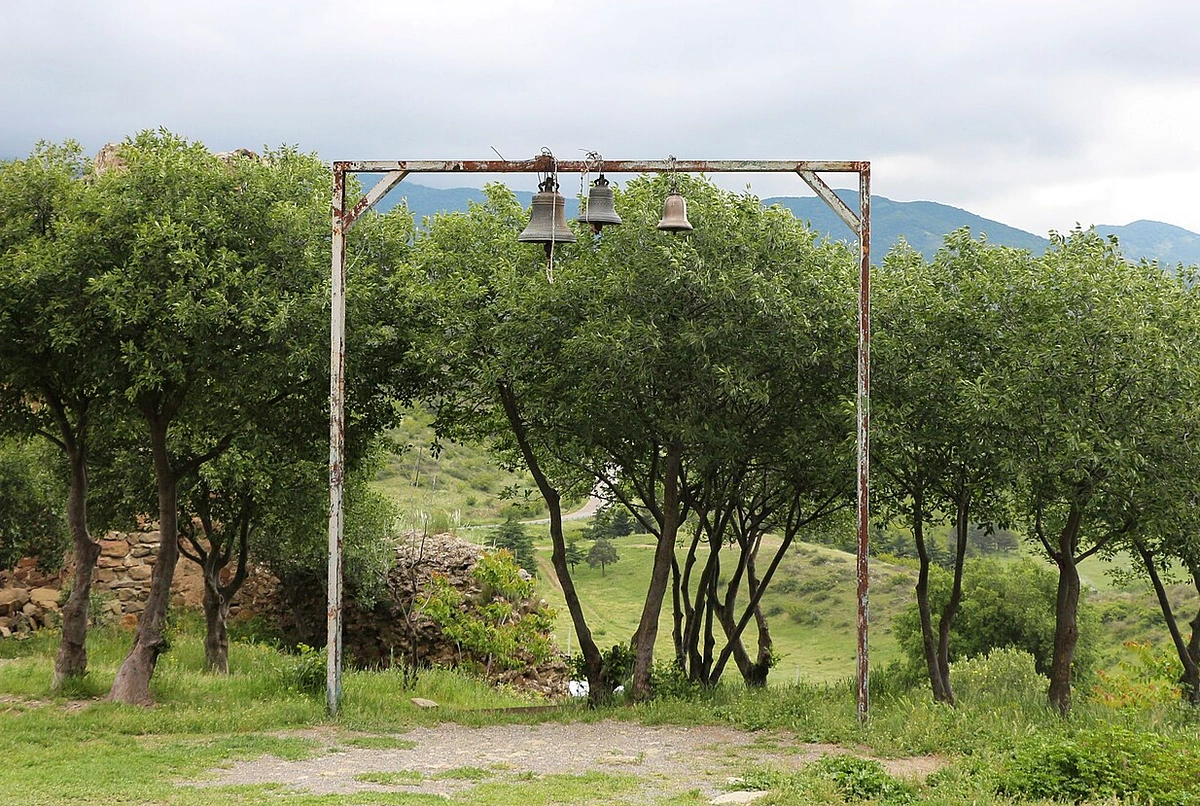
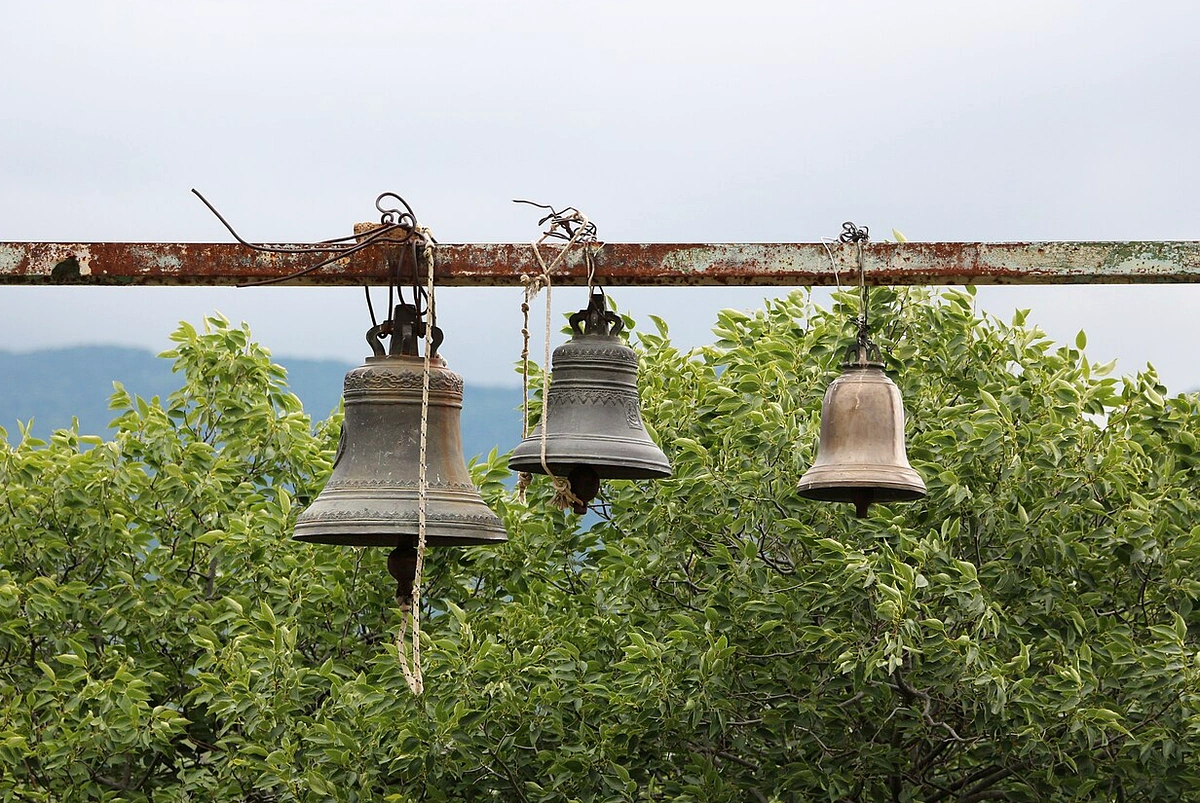
Visiting Jvari Monastery in Georgia—where mountain breezes sweeping up from the Aragvi and Mtkvari valleys mingle with the chime of ancient church bells—rewards thoughtful planning in both logistics and cultural etiquette. To make the most of your visit to this UNESCO World Heritage site, understanding seasonal hours, transport options, and sacred dress codes is essential. The monastery welcomes visitors year-round with seasonal operating hours adapted to highland daylight and weather conditions. During summer, from April through October when skies are clearest and weather is mildest, the gates open from 08:00 AM until 08:00 PM. In the colder winter months from November through March, hours adjust to 09:00 AM through 06:00 PM. Admission is completely free of charge, though visitors are welcome to leave a voluntary contribution in the donation box inside the main sanctuary to help preserve this thousand-year-old architectural treasure against the elements.
Getting to Jvari from Georgia’s capital, Tbilisi, is straightforward thanks to modern road infrastructure. Located roughly 20 kilometers northwest of Tbilisi, the scenic drive takes only about 30 minutes. For independent travelers, the most convenient and popular option is hiring a private round-trip taxi, typically combined with sightseeing in Mtskheta at the foot of the hill. A private hire reasonably costs between 40 and 60 GEL; just be sure to agree upfront with your driver on waiting time at the summit—ideally around one hour so you can explore the architecture, take in the views, and capture photos without feeling rushed. For active travelers seeking an authentic pilgrimage experience, hiking up from Mtskheta is a rewarding alternative. The 3-kilometer trail climbs 200 meters in elevation and takes roughly one hour on foot. While the views along the path are picturesque, be sure to carry plenty of drinking water in summer when the Caucasus region sun can become intense.
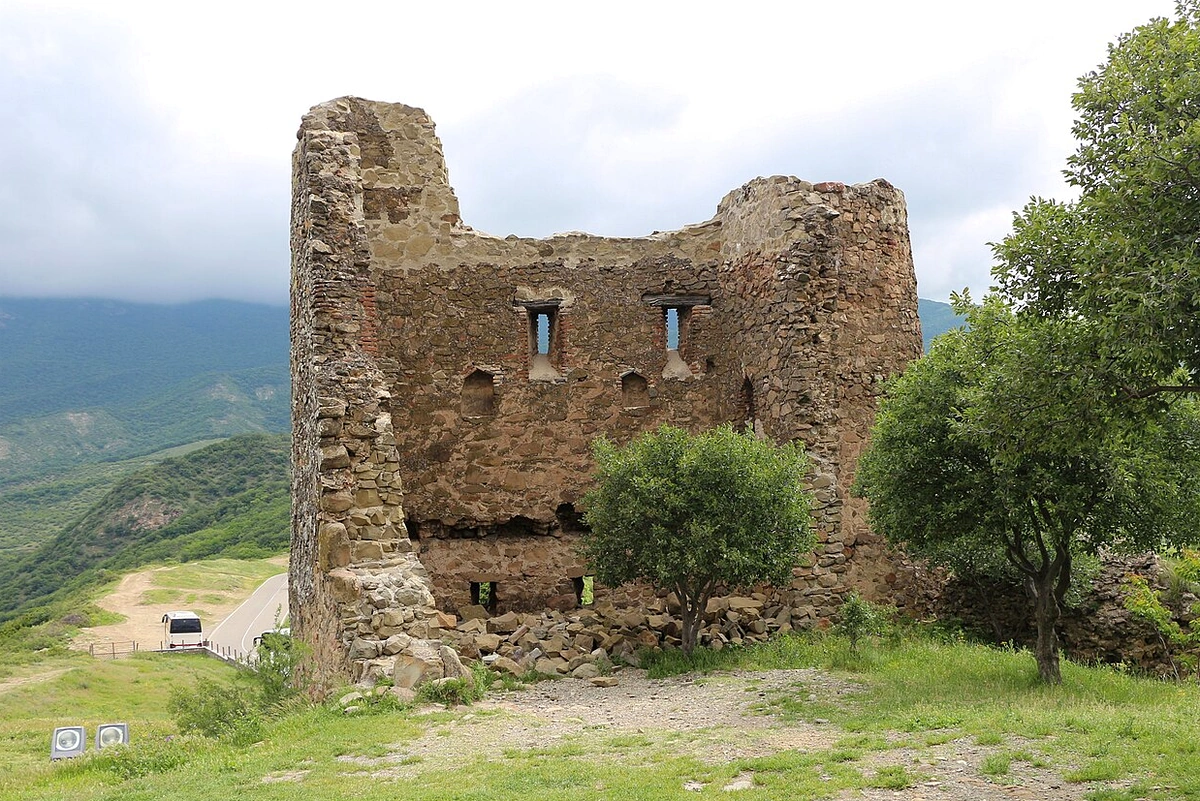
The most magical window for photography at this sacred sanctuary is Golden Hour just before sunset, when warm amber light washes across centuries-old gray stone walls and illuminates the river confluence valley far below. Beyond its breathtaking scenery, remember that Jvari remains an active Georgian Orthodox monastery where strict reverence and dress codes are observed. Men must remove hats and wear long trousers before entering the church. Women are required to wear a headscarf and a skirt or dress extending below the knees as a mark of respect for the sacred space. Additionally, photography and video recording are strictly prohibited during active religious services. Observing these customs not only honors the quiet prayer life of the resident monks but also reflects thoughtful cultural respect as a guest. To gain deeper insights and turn your dream of exploring this captivating crossroads of Europe and Asia into reality, explore our 8-Day 7-Night Two-Country Caucasus Tour to start planning the journey of a lifetime.