Kashgar Old City, situated at the westernmost tip of China’s Xinjiang Uyghur Autonomous Region, stands as an enduring milestone of human civilization at a pivotal crossroads of the Eurasian continent. Shaped by the natural topography where the Tarim River basin meets the towering Tian Shan and Pamir mountain ranges, this city has long transcended the bounds of an ordinary settlement to become a vibrant geopolitical and economic entity. The origins of Kashgar trace back to the need for a strategic waystation along the ancient Silk Road, where vital trade arteries extending from inland China across the Tarim Basin split into northern and southern branches to skirt the unforgiving Taklamakan Desert. The presence of a fortified urban center here not only facilitated the exchange of goods, but also served as a bastion controlling military and diplomatic corridors between East and West for more than two millennia.
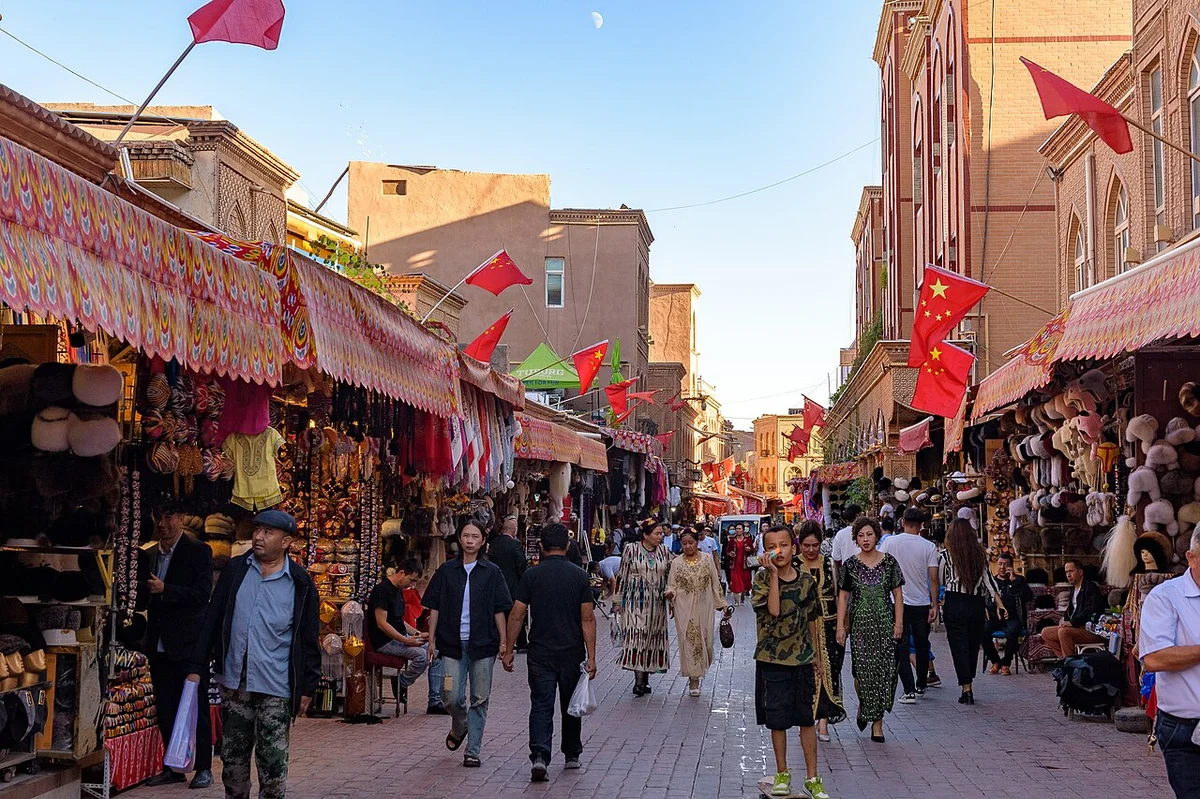
From archaeological and historical perspectives, Kashgar bears the imprint of countless empires, kingdoms, and peoples that shaped the cultural tapestry of Central Asia. From the Han Dynasty’s Protectorate of the Western Regions to the expansion of the Turkic Khaganate, and from the golden age of the Kara-Khanid Khanate to the rule of the Ming and Qing dynasties, Kashgar consistently maintained its status as a regional center of power. During the tenth and eleventh centuries under the Kara-Khanid Dynasty, the city underwent profound Islamization, transforming into one of the foremost centers of scholarship and religion in the eastern Islamic world. Renowned travelers such as Marco Polo, passing through in the thirteenth century, documented the prosperity of its bazaars, the diversity of its religious and ethnic communities, and the formidable scale of the city walls safeguarding merchants and oasis farmers on the desert’s edge.
The spatial structure of Kashgar Old City visually reflects centuries of social and military adaptation. Its rammed-earth city walls—despite repeated restorations and alterations caused by warfare and tectonic earthquakes—preserve the traditional defensive principles of Central Asian oasis towns. Inside the old city, the street network is laid out as an intricate labyrinth of winding lanes, blind alleys, and multi-story earthen dwellings linked by overhead archways spanning public thoroughfares. This architectural typology not only optimized localized defense against sudden raids, but also fostered a protective microclimate capable of buffering extreme temperature swings between scorching desert summers and bitter winters. Built primarily from local clay, straw, and poplar wood, the urban fabric presents a unified palette of earthy browns and sandy ochres that blends seamlessly into the surrounding arid landscape.
Kashgar’s symbolic significance within Xinjiang’s cultural landscape is inseparable from its preservation of traditional Uyghur ways of life. Unlike many ancient cities across mainland China whose historic cores were erased by modernization, Kashgar has sustained traditional artisan guilds operating continuously across generations. Neighborhoods within the old city remain clearly defined by specialized crafts and trades—from coppersmithing, handwoven carpet making, and ceramics to intricate woodcarving workshops. This spatial division reflects a highly autonomous urban social organization in which artisanal skills are passed down through family lineages, upholding remarkable cultural authenticity amidst contemporary globalization.
Beyond its economic and artisanal heritage, the system
Kashgar Old City lies at the western extremity of the Xinjiang Uyghur Autonomous Region, at the junction of the northern and southern branches of the ancient Silk Road, occupying a strategic position on the alluvial plain of the Tuman and Kashgar rivers. Topographically, the city is shaped by a semi-arid desert oasis landscape nestled between the Tian Shan Mountains to the north and the Taklamakan Desert to the east. Its urban spatial layout was directly dictated by harsh ecological realities, including limited groundwater supplies, wide diurnal temperature fluctuations, and constant dust storms sweeping in from the Tarim Basin. Centuries ago, traditional builders adapted to these geographical constraints by utilizing elevated natural earthen mounds as solid foundations for residential quarters, protecting settlements from seasonal snowmelt floods descending from nearby peaks while maximizing defensibility against external threats.
The master layout of the old city evolved organically, departing entirely from the orthogonal grid patterns typical of traditional Chinese imperial capitals. Instead, its spatial organization bears the unmistakable hallmark of Central Asian Islamic cities, anchored at the core by monumental religious and commercial complexes surrounded by densely clustered residential quarters. At the heart of the city stand the Id Kah Mosque and the Grand Bazaar, from which radiates an intricate, web-like circulation network of hundreds of major and minor lanes. Rather than following straight axes, these thoroughfares wind organically along natural contours and existing structures, creating a spatial matrix that ensures high security while moderating the microclimate under severe desert conditions.
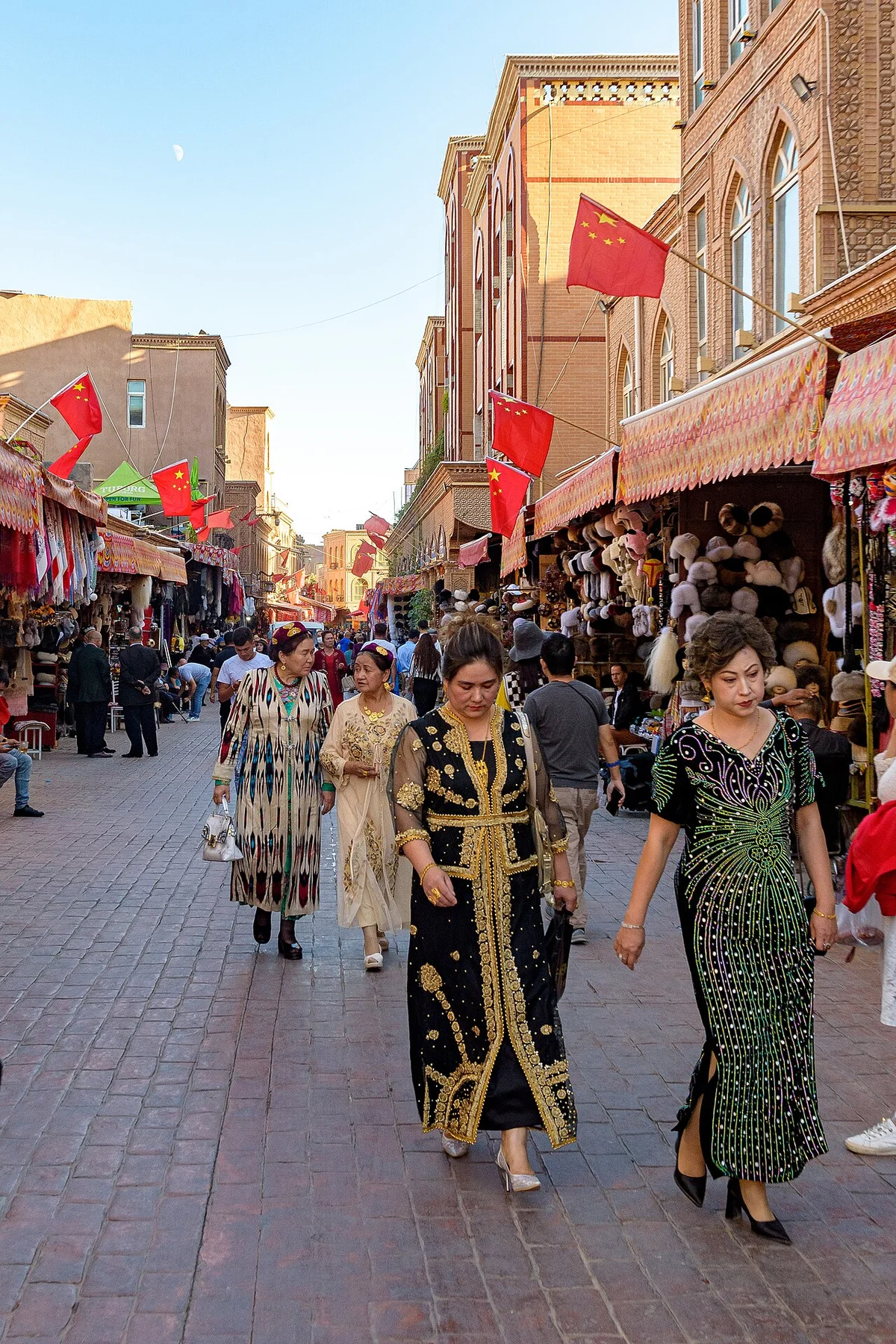
The spatial subdivision of residential quarters in Kashgar vividly expresses the traditional social structure of the Uyghur community, organized around networks of cul-de-sacs known as “dolan” or “kocha.” These blind alleys serve as semi-public spaces where daily social interactions unfold among clusters of households connected by kinship or extended clan ties. Designing streets as dead-end lanes not only enhanced neighborhood security and controlled the entry of strangers, but also minimized windblown desert sand sweeping into homes from main thoroughfares. Individual residences turn thick, windowless, unadorned rammed-earth walls toward main streets and alleys, safeguarding complete domestic privacy in accordance with Islamic cultural traditions.
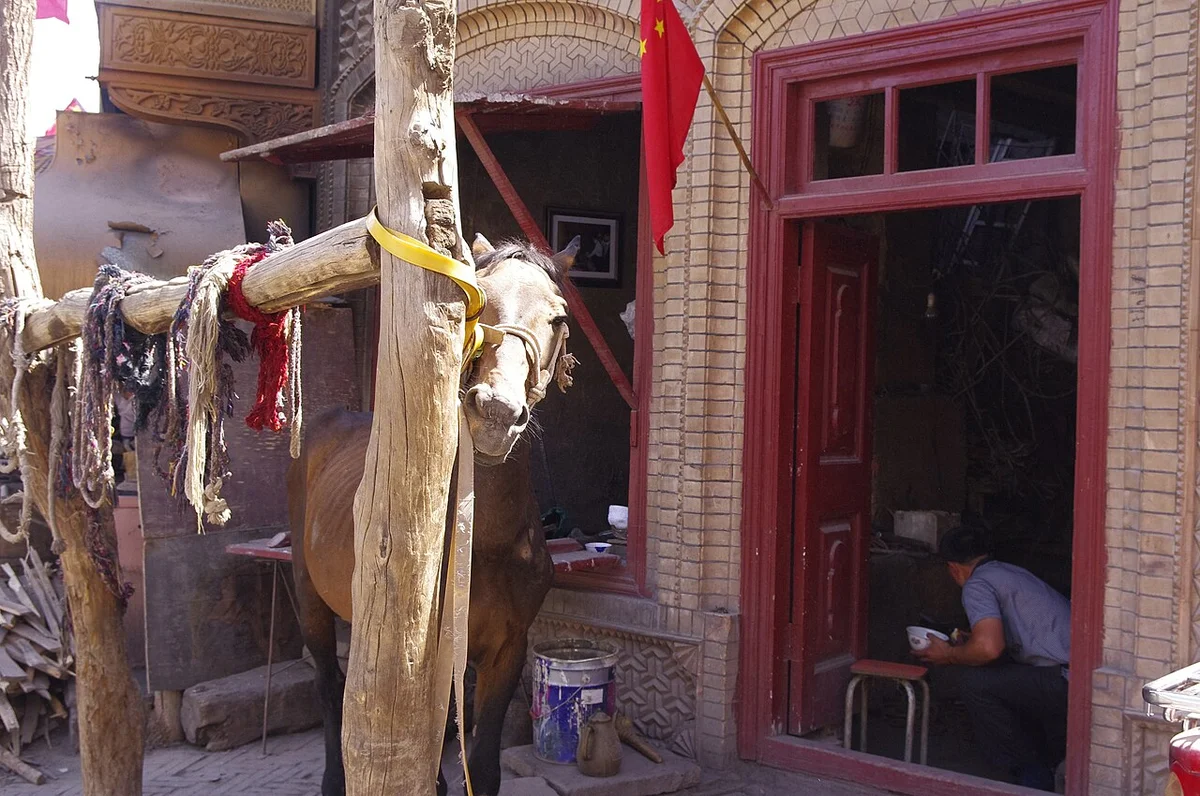
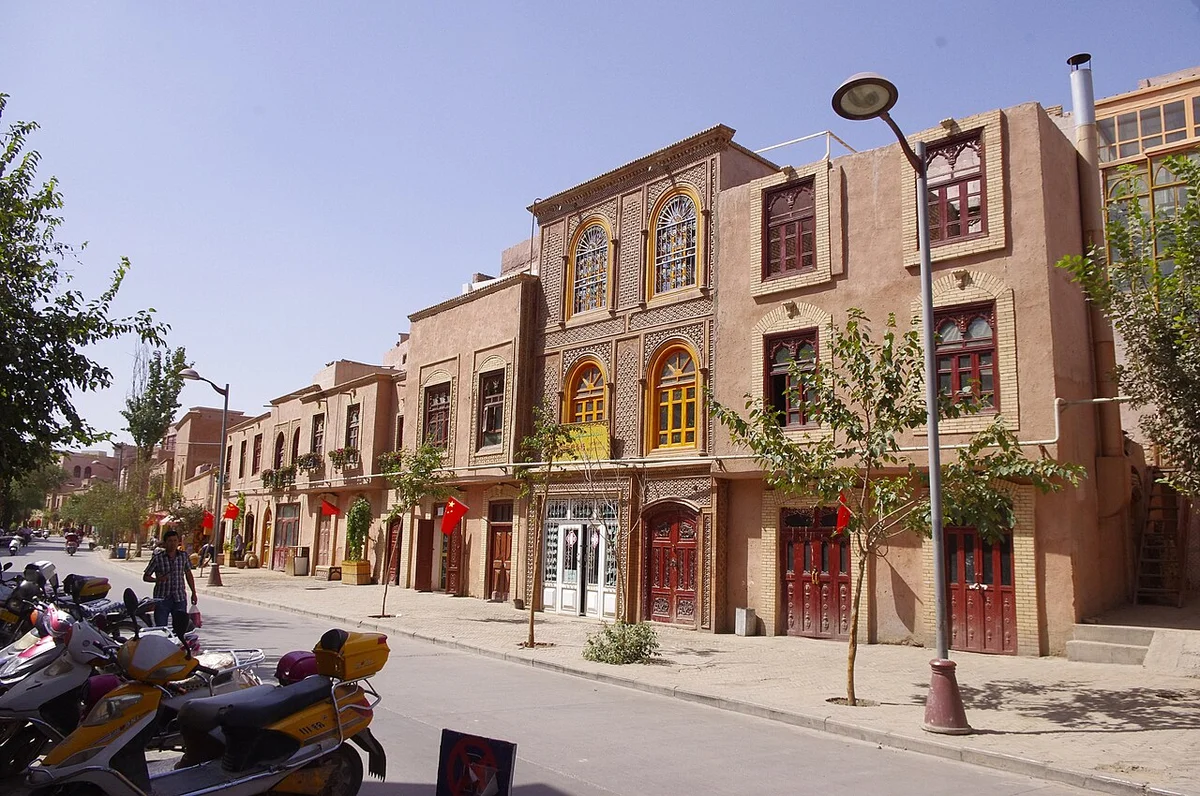
Residential architecture in Kashgar Old City is constructed primarily from locally sourced materials—poplar timber framing, mud mixed with chopped straw, and sun-dried mudbrick—demonstrating deep mastery of climate-responsive building physics. Houses typically rise two to three stories high, combining enclosed living quarters with open internal courtyards. The courtyard serves as the heart of every family home, admitting natural daylight, facilitating cross-ventilation, and cooling surrounding rooms during sweltering summer months. Flat rooftops are put to practical use for drying agricultural produce, storing fuel, or serving as open-air family gathering spaces in the cooler evening hours.
One of the most distinctive features of Kashgar’s architectural planning is the widespread presence of overhanging upper-story projections known as “hayvan” or intricately carved wooden balconies. Homes frequently expand upper-floor living space by projecting rooms or verandas over the narrow lanes below, forming natural canopies that shade pedestrians beneath. Wooden pillars supporting these overhangs are richly carved with geometric motifs and traditional patterns, reflecting both household prosperity and the master craftsmanship of local carpenters. This configuration produces a narrow, vertical street-canyon proportion between opposing rows of houses, trapping cool air down in the alleys during the hottest hours of summer.
The landscape surrounding Kashgar Old City is heavily shaped by an ancient network of irrigation canals built centuries ago to channel glacial meltwater from high mountain rivers into the heart of the oasis. This hydrological system not only sustains agricultural irrigation and the lush orchards ringing the city, but also supplies essential domestic water to urban residents. Although the historic defensive ramparts have undergone repeated restorations and transformations over the centuries, they still delineate a clear boundary between the built urban core and surrounding farmland, creating an abrupt ecological transition from dense, earth-toned architecture to verdant orchards of pears, grapes, and wheat fields on the outskirts.
Kashgar’s spatial evolution is equally intertwined with an urban commercial system organized into highly specialized artisan guilds. Market streets are distinctly zoned by craft—such as Potters’ Street, Traditional Musical Instrument Street, Blacksmiths’ Street, and Carpet Weavers’ Street—forming self-sustaining micro-economic ecosystems within the historic core. This seamless integration of production, commerce, and residential life stands as a prime model of pre-industrial urban sustainability, harmonizing human activity with the natural resource limits of an arid frontier environment.
Overall, the spatial artistry and architectural planning of Kashgar Old City in Xinjiang represent a remarkable achievement of indigenous knowledge in adapting to and thriving within a desert environment. From selecting elevated terrain and weaving an organic, dense urban fabric to buffer sandstorms, to balancing public and private realms through cul-de-sac networks, every element contributes to a morphologically cohesive urban organism. Closer examination affirms that Kashgar’s historical and architectural significance lies not merely in isolated monuments, but in the holistic fabric of a desert oasis city that has endured for millennia.
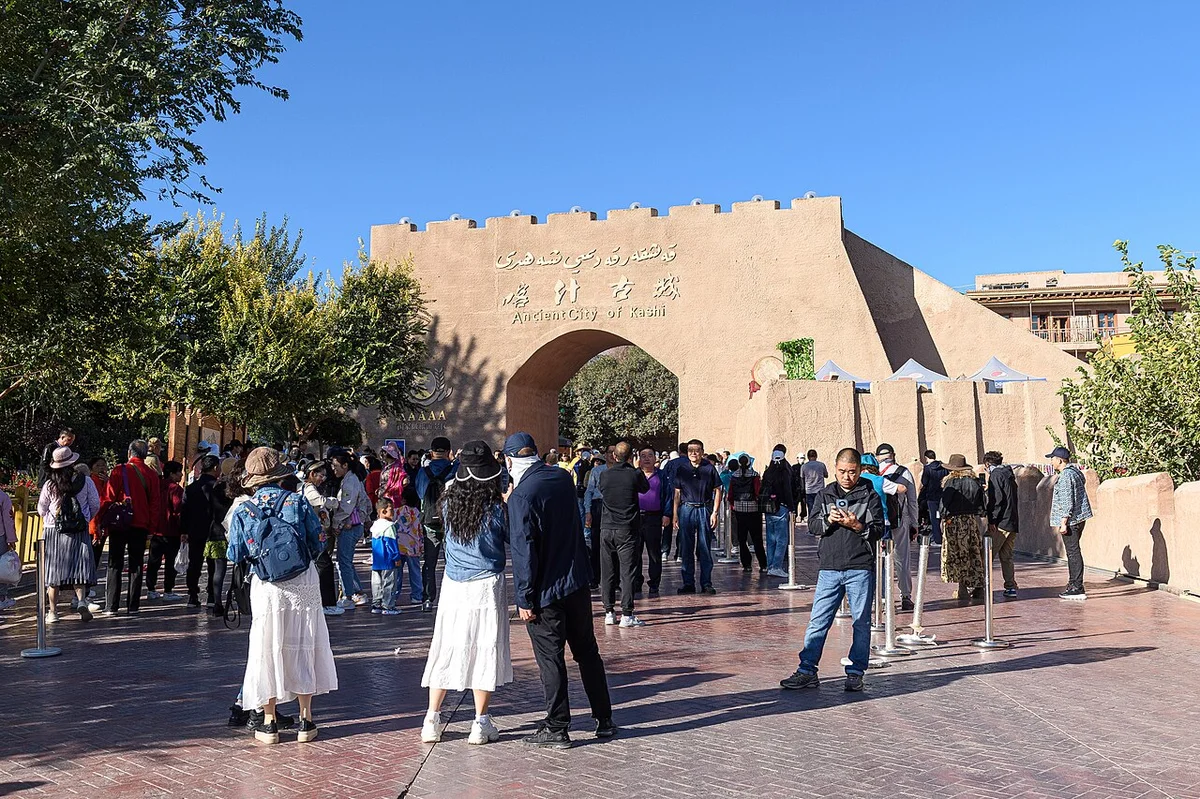
Kashgar Old City stands in northwestern Xinjiang as the finest surviving embodiment of Central Asian oasis civilization along the ancient Silk Road. Across more than two millennia of geopolitical shifts, Kashgar’s urban fabric took shape through intricate interactions among Uyghur, Han, Tajik, and steppe nomadic populations. Rather than following the rigid checkerboard grid characteristic of feudal capitals in central China, the city grew organically in direct response to harsh desert conditions and medieval defensive imperatives. Interlacing lanes and dead-end alleys—known locally as “kuruq”—form an architectural labyrinth that deflects sand-laden winds from the Taklamakan Desert while organizing extended family compounds along patrilineal clan lines.
The material foundation of Kashgar Old City reflects an ingenious, resourceful reliance on indigenous materials. Sandy clay, chopped straw, and desert poplar timber form the essential triad underlying both vernacular homes and religious monuments. Owing to the scarcity of firewood for high-temperature kilns, local builders compressed earth by hand into large wooden molds and cured the blocks directly beneath the intense solar radiation of Inner Asia. Once sun-baked, these mudbricks attain remarkable hardness; paired with mud mortar reinforced with goat or camel hair, they deliver exceptional thermal insulation. In summer, walls sixty to eighty centimeters thick block extreme external heat; during frigid winters, the same thermal mass retains daytime solar warmth to heat interior rooms, exemplifying ecological building wisdom far ahead of its time.
The load-bearing structural systems of multi-story homes in Kashgar rely entirely on traditional joinery without iron nails, showcasing a synthesis of Persian, Central Asian, and ancient Chinese woodworking techniques. Solid desert poplar trunks are hewn
Kashgar Old City, located at the western edge of China’s Xinjiang Uyghur Autonomous Region, is one of the oldest continuously inhabited oasis cities along the western branch of the fabled Silk Road. Spanning over two thousand years of geopolitical upheaval—from ancient Buddhist kingdoms such as Shule to the rule of the Islamic Kara-Khanid Dynasty and nineteenth-century Great Game rivalries—Kashgar’s urban landscape evolved into an intricate tapestry of architectural and cultural quarters. Exploring and experiencing Kashgar Old City firsthand calls for a multidisciplinary lens blending urban anthropology, architectural history, and cultural geography to fully appreciate the spatial logic of this historic ensemble.
An immersive exploration typically begins at the East Gate, where a traditional Uyghur city-opening ceremony reenacts the bustling medieval entrepôt welcoming camel caravans laden with silk, spices, and jade from China en route to Central Asia. The gate area and adjacent plaza serve as a transitional threshold, guiding travelers from the modern rhythm of new Kashgar into an authentic labyrinth of rammed-earth architecture. Here, the street plan eschews conventional grids in favor of organic growth radiating around communal hubs, reflecting both historical defensive necessities and adaptation to an arid desert climate.
Venturing deeper inside, distinct quarters emerge along streets dedicated to traditional handicrafts, testifying to family-run trades passed down across generations. The pottery and woodcarving quarter is a highlight, where master artisans practice turquoise-glazed ceramic firing and carve intricate Islamic geometric patterns into willow and cypress doorframes. Observing these artisanal processes firsthand reveals a deep synthesis of Persian, Chinese, and indigenous Turkic artistic traditions. Residences here typically rise two to three stories in sun-dried mudbrick and desert poplar, featuring projecting wooden balconies known as “erwan” that create a distinctive architectural dialogue between public streets and private homes.
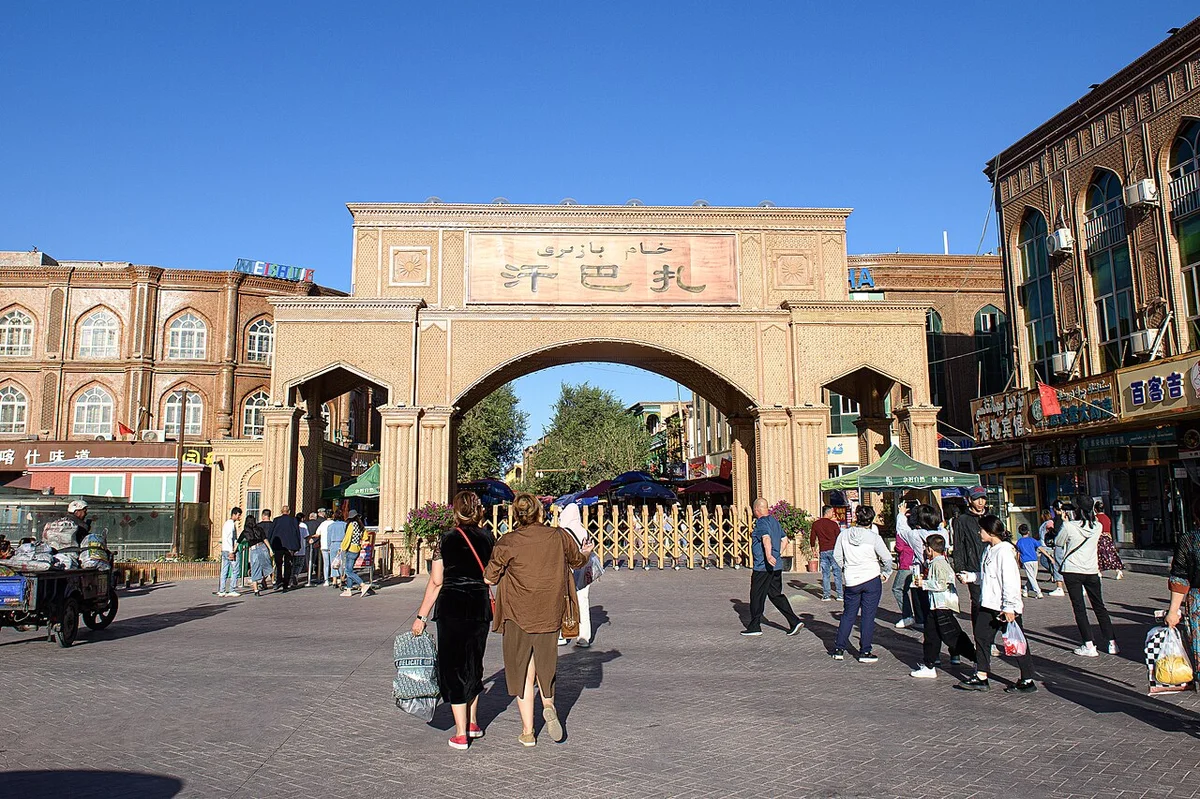
Following the main thoroughfares leads travelers to Coppersmiths’ and Silversmiths’ Street, where the rhythmic ringing of hammers against metal fills the air all day, forming the signature soundscape of the old city. Local craftsmen fashion teapots, ewers, and traditional stringed instruments such as the dutar and tambur from reclaimed copper and alloys, sustaining a rare pre-industrial craft ecosystem thriving in the twenty-first century. The spatial layout here incorporates dead-end alleys called “tuyuk,” designed historically to deter intruders during periods of conflict while fostering secluded communal courtyards for extended kin groups. Neighboring homes connect via internal courtyards and open staircases, nurturing a tightly knit social fabric grounded in Islamic ethics and customary traditions.
The spiritual and social focal point of the old city centers on the Id Kah Mosque, the largest Islamic architectural complex in Xinjiang and the spiritual heart of Kashgar’s Uyghur community. The complex encompasses a vast prayer hall, imposing entrance portals clad in yellow and green glazed tiles, and expansive colonnaded verandas supported by hundreds of finely carved wooden pillars. Visiting the mosque requires strict respect for local cultural protocols while offering insight into how Central Asian Islamic architecture adapted to an arid desert setting. During major religious festivals such as Eid al-Fitr and Eid al-Adha, the square fronting the mosque becomes a gathering ground for tens of thousands of worshippers performing the traditional Sama dance, presenting a living anthropological spectacle of immense historical resonance.
An optimal exploration route continues toward the traditional spice and agricultural bazaar along the southwestern edge of the old city, where aromatic treasures from Central and South Asia converge. Here, saffron threads, star anise, cumin seeds, specialty raisins, and herbal teas are displayed openly in handwoven wicker baskets, underscoring Kashgar’s historic role as a continental trading hub. This vibrant marketplace engages both sight and scent, illustrating the richness of an oasis agricultural ecosystem sustained for centuries by ancient Karez irrigation channels drawing meltwater from the Tian Shan and Pamir mountains.
To complete an authentic exploration, visiting a century-old teahouse beside the canal or at a lively cultural crossroads is essential for any student of history or traveler. These venerable teahouses serve not only traditional black tea steeped in porcelain pots with rock sugar, but also act as living performance venues where folk musicians perform the Uyghur Muqam—a UNESCO-recognized Masterpiece of the Oral and Intangible Heritage of Humanity. Lingering in these spaces and observing the unhurried pace of local elders dressed in traditional doppa skullcaps and chapan robes offers profound insight into cultural resilience and identity preservation amidst global modernization.
Conservation planning in Kashgar Old City over recent decades has employed careful, house-by-house restoration of rammed-earth dwellings using traditional building techniques to safeguard the authenticity of the historic urban fabric. Strict engineering standards have been applied to reinforce foundations against seismic activity and soil salinity erosion while preserving the raw, rustic textures of traditional facades. As a result, experiencing Kashgar Old City avoids excessive commercialization, retaining the genuine atmosphere of an authentic Central Asian historic town where history, architecture, and daily human life converge as an invaluable living archive of Silk Road culture.
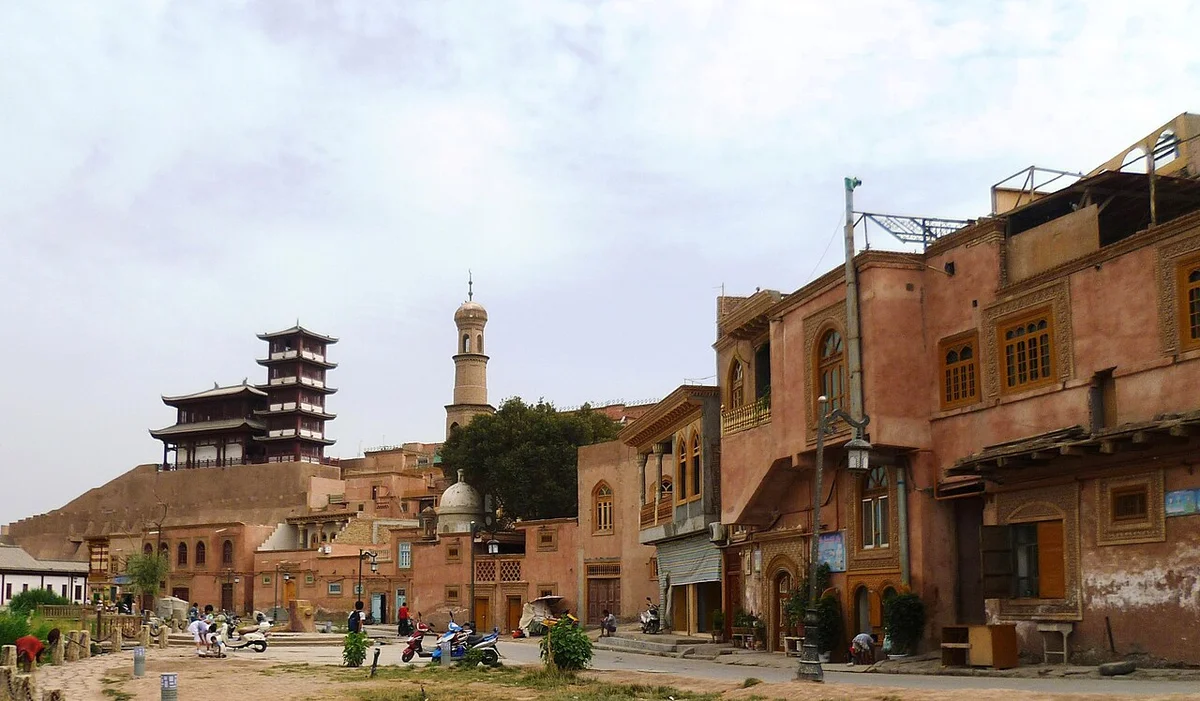
Kashgar Old City, perched at the western edge of China’s Xinjiang Uyghur Autonomous Region, stands as one of the most intact oasis urban environments surviving along the legendary Silk Road. Across more than two millennia of history, it has served not only as a vital bridge between East and West, but also as a self-sustaining ecosystem of services, amenities, and indigenous culture. Rather than eroding local identity, modern commerce and cultural tourism have acted as a connective thread linking time-honored traditions with the contemporary daily life of the Uyghur community. Laid out in sweeping arcs laced with winding alleyways, every corner of the old city integrates economic livelihoods and cultural practices rooted in both nomadic heritage and settled oasis agriculture.
Examining the local service ecosystem reveals a clear yet harmonious synergy between traditional artisan guilds and modern hospitality amenities. Strolling along thoroughfares such as Handicraft Street, travelers and cultural researchers can directly witness local masters at work. Cultural experiences here extend far beyond souvenir shopping into living heritage workshops, where visitors can watch the complete crafting of traditional instruments like the dutar and rawap, intricate copper engraving, and hand-knotted carpet weaving passed down through generations. Boutique accommodations are thoughtfully integrated inside restored traditional rammed-earth courtyard houses (“dawayi”), allowing guests to experience vaulted ceilings, straw-mud insulated walls, and sunlit inner courtyards while gaining firsthand appreciation for desert-adapted living.
Regional gastronomy occupies a central pillar of the old city’s commercial life, reflecting a rich culinary fusion of Central Asian and Chinese influences. Traditional eateries, teahouses, and tandoor ovens baking fresh naan bread are woven throughout every lane, forming a dining culture that is both deeply communal and faithful to ancestral recipes. Hand-pulled pilaf (“polu”), simmered from local rice, fresh lamb, yellow carrots, and cottonseed oil, is served on generous communal platters that embody Uyghur hospitality and social solidarity. Alongside it, charcoal-grilled lamb skewers (“kawap”) and flaky baked meat pastries (“samsa”) fill the alleys with irresistible aromas. Sipping chrysanthemum or rosehip tea paired with dried raisins, dates, and almonds at centuries-old teahouses in the afternoon remains a cherished social ritual where local elders gather to converse, play music, and welcome travelers from afar.
Community gathering spaces across Kashgar Old City are anchored by open plazas fronting neighborhood mosques and periodic traditional bazaars. These civic squares host religious observances, community assemblies, and performances of traditional Muqam music and folk dance—an Intangible Cultural Heritage of Humanity. On weekends and major holidays, lively street performances draw locals and visitors alike into the infectious rhythms of dap frame drums and urna horns. Interactions between residents and travelers unfold with warmth and openness grounded in mutual respect for longstanding customs, cultivating a social atmosphere that feels simultaneously intimate and cosmopolitan.
The everyday life of local residents forms a vital dimension of the old city’s living heritage. Even after large-scale municipal infrastructure upgrades improved seismic resilience, water supply, drainage, and fire safety, residents have preserved their traditional lifestyle virtually intact. Multi-generational families continue to reside together in centuries-old homes, sustaining hereditary trades and time-honored commercial customs. Local women embroider intricate geometric motifs onto garments and doppa caps, while men manage carpentry workshops, metalworking ateliers, and neighborhood shops. This unhurried rhythm of life, anchored in spiritual observance and natural seasonal cycles, endows Kashgar Old City with enduring vitality—transforming it from a static monument into a living urban organism where past and present coexist seamlessly.
Visiting Kashgar Old City, situated at a historic crossroads of ancient trade routes in Xinjiang, calls for careful, well-informed preparation from explorers and international travelers alike. Identifying the optimal travel window during the year is crucial to a rewarding journey, as the region experiences a pronounced arid continental climate marked by sharp day-to-night temperature swings. September through October is widely regarded by scholars and travel specialists as the ideal season to visit. By autumn, the fierce summer heat of the Taklamakan Desert subsides into crisp, clear days with comfortable daytime temperatures averaging 15°C to 25°C (59°F to 77°F)—ideal for walking tours of traditional courtyard architecture and cultural exchanges with local Uyghur residents.
Conversely, peak summer from June through August frequently brings temperatures exceeding 40°C (104°F) accompanied by intense solar radiation, whereas winter from November through February ushers in biting cold, heavy snowfall, and temperatures regularly plunging below -15°C (5°F). Visiting during extreme seasons can strain physical endurance and limit access to the vibrant outdoor street life that defines this historic city. Within a given day, morning hours between 8:00 AM and 10:00 AM (Beijing Time) offer sublime natural light for photographing the earthen streetscapes as daily life awakens with early morning markets and shop-opening rituals. Late afternoon from 5:00 PM into the evening is equally magical, capturing warm shifting light across mud-and-straw walls alongside the lively bustle of night bazaars in the old city core.
Packing appropriate clothing and personal essentials for Kashgar requires sensitivity to both desert conditions and local cultural norms. Because the arid desert environment keeps relative humidity low year-round—often below 30 percent—travelers should pack rich moisturizers, hydrating lip balm, high-UV-protection sunglasses, and a wide-brimmed hat to guard against strong daytime sun. Regarding attire, Kashgar is home to a predominantly Muslim population, and local etiquette calls for modest, respectful dress. Both men and women should avoid wearing shorts, sleeveless tops, or short skirts when exploring traditional residential quarters, mosques, or central bazaars out of respect for longstanding local customs and religious traditions. Sturdy, well-cushioned walking shoes or sneakers with reliable grip are essential, as the old city’s labyrinthine alleys are paved with uneven brick and cobblestone suited for extended exploration on foot.
Transportation access to Kashgar has expanded dramatically in recent decades, offering multimodal connections via air and rail. Kashgar Laining International Airport sits roughly ten kilometers from the city center, operating regular direct flights from regional capital Urumqi as well as major hubs including Beijing, Shanghai, and Chengdu. From the airport, licensed taxis and public airport buses provide convenient transfers to the old city in twenty to thirty minutes depending on traffic. For overland rail travelers, Kashgar Railway Station receives intercity passenger trains from Urumqi along the Southern Xinjiang Railway, offering sweeping views across the Tian Shan foothills and northern edges of the Tarim Basin. Once inside the boundaries of Kashgar Old City, private automobiles are strictly prohibited to preserve historic structures and protect pedestrians, leaving walking and rented electric bicycles at the main gates as the primary ways to explore.
Legal regulations and administrative procedures across the Xinjiang Uyghur Autonomous Region—and Kashgar in particular—require strict compliance from all domestic and international visitors to maintain border-region security and order. Carrying a valid Chinese national ID card (for citizens) or a passport with a valid visa (for foreign nationals) at all times is mandatory, as electronic security checkpoints routinely operate at transit hubs, commercial entrances, and old city gates. Travelers should also note that operating unmanned aerial vehicles (drones) for aerial photography over Kashgar Old City is tightly restricted and generally prohibited without explicit permits from aviation and local security authorities due to the region’s strategic frontier location. When photographing local residents—especially women and elders—courtesy requires asking permission beforehand, and photography is strictly forbidden near law enforcement facilities or security checkpoints.
Health and financial preparation also play an important role in ensuring a smooth visit to Kashgar. Tap water is not suitable for direct consumption, so travelers should rely on bottled water or carry a personal filtered water bottle to avoid digestive discomfort from unfamiliar mineral content. A compact personal medical kit containing basic remedies for colds, stomach upset, oral rehydration salts, and bandages is advisable, as local pharmacies inside the old city primarily operate in local languages and stock domestic brand equivalents. Financially, while mobile digital payments dominate everyday commerce across the city, carrying a modest reserve of physical Chinese Yuan (RMB) in small denominations remains practical for purchases at traditional handicraft stalls run by elderly artisans deep inside the old city’s alleys, who may prefer cash or experience intermittent mobile signal.
A deeper appreciation of local cultural rhythms and genuine respect for community values unlock the most rewarding experience in Kashgar Old City. Uyghur residents are renowned for their warmth, openness, and gracious hospitality toward guests from afar, often greeting visitors by placing their right hand over their heart accompanied by a traditional salutation. Conversely, any behavior that intrudes upon sacred spaces inside mosques or disregards dietary customs—such as bringing pork products into traditional eateries—is regarded as a serious breach of cultural etiquette. With thoughtful preparation regarding timing, attire, transportation, and familiarity with local laws and customs, travelers will be well equipped to experience one of the grandest and best-preserved earthen architectural heritages remaining along the legendary Silk Road.
To experience this journey seamlessly with a knowledgeable local guide, explore our 8D7N Northern Xinjiang No-Shopping Tour featuring a thoughtfully curated itinerary.