Situated along the southern bank of the natural saltwater inlet of Dubai Creek, the Al Fahidi Historical Neighbourhood—originally and widely known as Bastakiya—represents one of the oldest intact urban architectural heritage sites in the Emirate of Dubai, United Arab Emirates. Geographically, the quarter lies at approximately 25°15′ North latitude and 55°18′ East longitude, extending across a low-lying, virtually flat coastal plain with an average elevation of just two to five meters above the Persian Gulf. This creekside terrain once served as a strategic anchorage for traditional dhow sailing vessels, fostering maritime trade and pearl diving long before the oil era transformed the region’s economic landscape. The geographical formation of Dubai Creek, combined with a harsh subtropical desert climate—where summer temperatures routinely exceed 40°C alongside high Gulf humidity—shaped a singular vernacular architectural style in which environmental adaptation techniques were refined to an extraordinary degree.
Key historical milestones marking the birth and growth of Bastakiya date back to the closing years of the 19th century, specifically around 1890, during the reign of the Sheikhs of the Bani Yas tribe. This period witnessed a major wave of migration by Persian merchants—hailing primarily from the town of Bastak in southern Iran’s Hormozgan Province—who crossed the Persian Gulf in search of economic freedom, political stability, and the open tax policies established along the creek by Dubai’s rulers at the time. These settlers brought sophisticated construction techniques and substantial commercial capital, rapidly transforming the salt flats and sandy banks along the creek into a thriving trading hub specializing in pearls, textiles, and spices. The prosperity of the Bastakiya merchant community in the early decades of the 20th century laid a solid foundation for Dubai’s international commercial standing, establishing the settlement as a vital gateway linking the emirate with India, Persia, and neighboring ports across the Arabian Peninsula.
Across eras of historical upheaval, the old quarter endured profound highs and lows, even facing the threat of complete demolition during the rapid urbanization boom of the 1970s and 1980s. As oil revenues began flowing into Dubai, authorities and residents increasingly favored modernization projects, clearing older neighborhoods to build Western-style roadways and high-rise developments. Rows of traditional courtyard houses in Bastakiya fell into abandonment as wealthy merchant families relocated to newer, more modern districts in the southern part of the city. In 1989, an urban planning decision was even approved to demolish half of the historic quarter to make way for road expansion. However, timely awareness of its cultural heritage value emerged following the intervention of British royalty—specifically a visit by the Prince of Wales in 1989, who expressed admiration for the authenticity of its traditional architecture and urged the preservation of the entire district rather than its demolition.
This timely intervention turned the tide, ushering in a large-scale restoration and conservation phase under the direct guidance of the Government of Dubai and designating Bastakiya an official architectural heritage conservation area. Traditional dwellings constructed from local materials—such as marine coral stone, seashells mixed with lime mortar, rammed earth, and teakwood imported from India—were painstakingly restored using authentic methods. The quarter’s most iconic architectural feature is its system of wind towers, known locally as barjeel: cylindrical or rectangular structures rising above the rooftops to capture breezes from every direction and channel them directly down into the living quarters below. This passive ventilation system functioned as an ingenious pre-industrial air conditioner, demonstrating the remarkable ingenuity of early builders in conquering an extreme desert climate without artificial energy. Thick coral-stone walls, intricately carved wooden window screens, and a labyrinth of narrow, shaded alleyways created an enclosed urban microclimate that shielded residents from blinding sunlight and sandstorms.
As a national symbol, the Al Fahidi Historical Neighbourhood today stands as a living witness to Dubai’s pre-oil past, offering a powerful cultural counterpoint to the dazzling glass-and-steel skyscrapers of the modern city. The government of the United Arab Emirates has designated the area a premier national heritage district safeguarding the collective memory and cultural identity of the local community prior to globalization. Officially renaming the quarter from Bastakiya to Al Fahidi honored the nearby Al Fahidi Fort while affirming the authenticity of Arab heritage at the heart of a multicultural metropolis. Far more than a preserved physical space, the district embodies the resilience, ecological adaptability, and strategic vision of the forebears who laid the earliest foundations of a global megacity.
Al Fahidi’s cultural reach extends well beyond national borders, establishing it as a major hub for contemporary art and international cultural exchange in the Middle East. Historic mansions that once belonged to wealthy merchants have been thoughtfully repurposed into specialized museums, art galleries, sculpture exhibition spaces, traditional cafes, and the Sheikh Mohammed bin Rashid Al Maktoum Centre for Cultural Understanding. Flagship cultural events such as the annual Sikka Art Fair draw hundreds of painters, sculptors, visual artists, and researchers from around the world to showcase contemporary works within an ancient heritage setting. This interplay between 19th-century heritage architecture and 21st-century artistic expression has transformed Al Fahidi into a cross-generational cultural dialogue where past and present converge harmoniously, offering scholars and visitors alike deep insight into the social, anthropological, and urban evolution of the Gulf emirates.
The Al Fahidi Historical Neighbourhood, historically referred to as Bastakiya, spans approximately thirty hectares along the southern bank of the saltwater inlet of Dubai Creek, representing one of the rare surviving examples of original vernacular urban architecture in Dubai. Initiated in the late 1880s under the rule of the Al Maktoum dynasty, the quarter developed as a prosperous commercial enclave established by immigrants from Bastak in southern Persia’s Hormozgan Province who settled here permanently. These affluent merchants combined traditional building methods from the arid Persian plateau with locally available materials from the Persian Gulf to forge a singular urban architectural ecosystem—vividly illustrating human ingenuity in adapting to a harsh desert environment where summer temperatures routinely surpass 45°C.
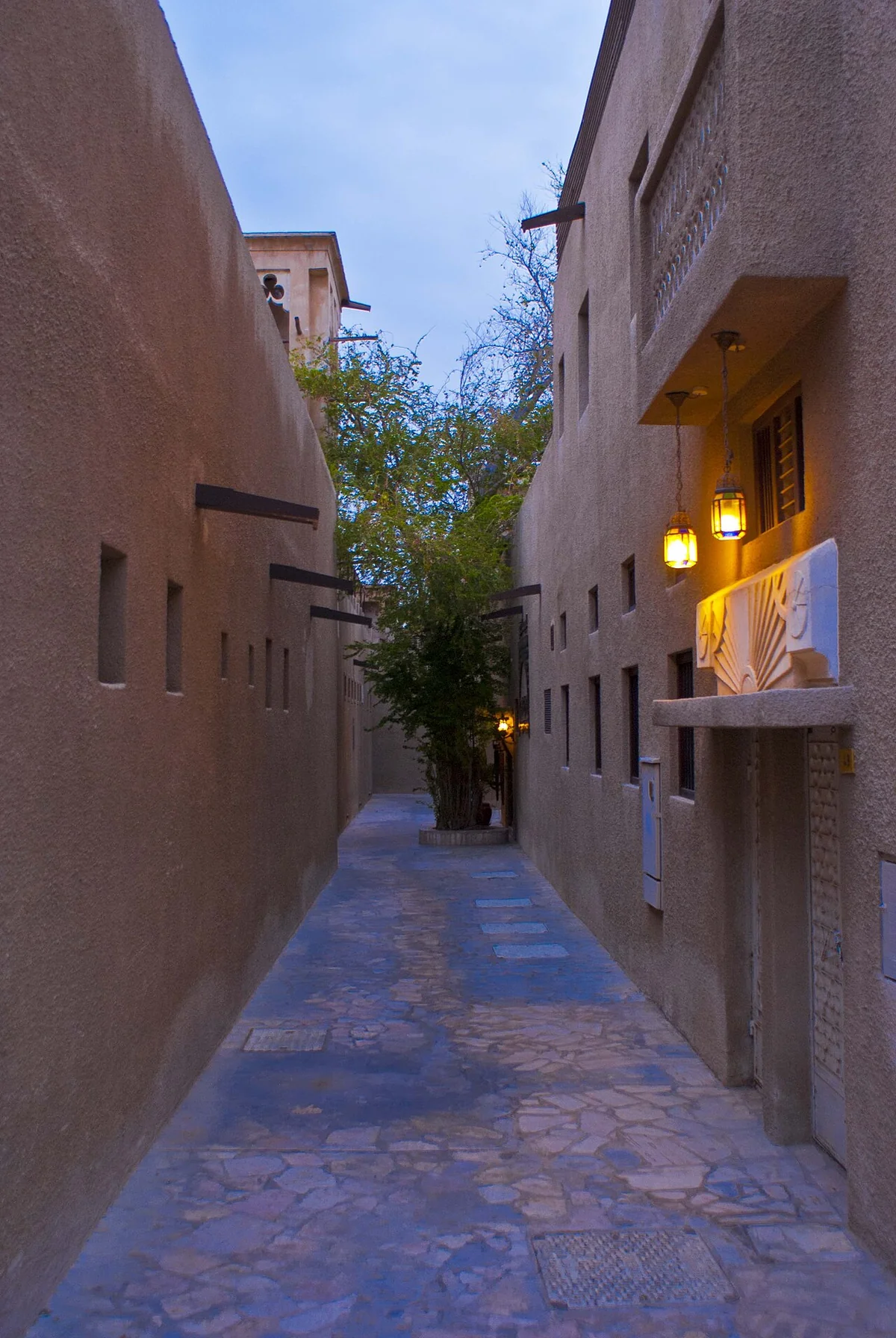
Al Fahidi’s urban spatial layout is characterized by a tightly woven network of narrow lanes—known locally as sikkat—and covered passageways engineered to maximize shade throughout the day. Residential structures are built closely together in compact blocks, presenting solid exterior walls to the outside that minimize direct solar radiation and shield against frequent desert sandstorms. At the heart of every traditional mansion lies a spacious open courtyard serving as both the nucleus of family life and a vital engine in the home’s passive cooling cycle. Beyond admitting natural daylight, this central courtyard creates a convective air pocket in which heavier cool air sinks while lighter warm air rises, maintaining a stable, comfortable microclimate throughout the surrounding rooms.
Building materials employed across Bastakiya exemplify pre-oil Gulf craftsmanship, drawing primary resources directly from the adjacent coastal mangrove ecosystem and desert terrain. Walls were constructed from coral blocks quarried from shallow reefs along Dubai Creek, bound with mudstone and mortar made from slaked lime and finely crushed sea sand. Coral stone not only provided sturdy structural mass, but also possessed natural porosity that delivered far superior thermal insulation compared to solid stone. Beams, columns, and load-bearing rafters utilized teakwood imported from the Indian subcontinent aboard traditional dhow merchant vessels, prized for termite resistance and exceptional flexural strength in high humidity. Exterior walls were finished with a smooth layer of gypsum plaster known as juss, which waterproofed the masonry while reflecting intense sunlight in crisp white tones to significantly reduce indoor heat absorption.
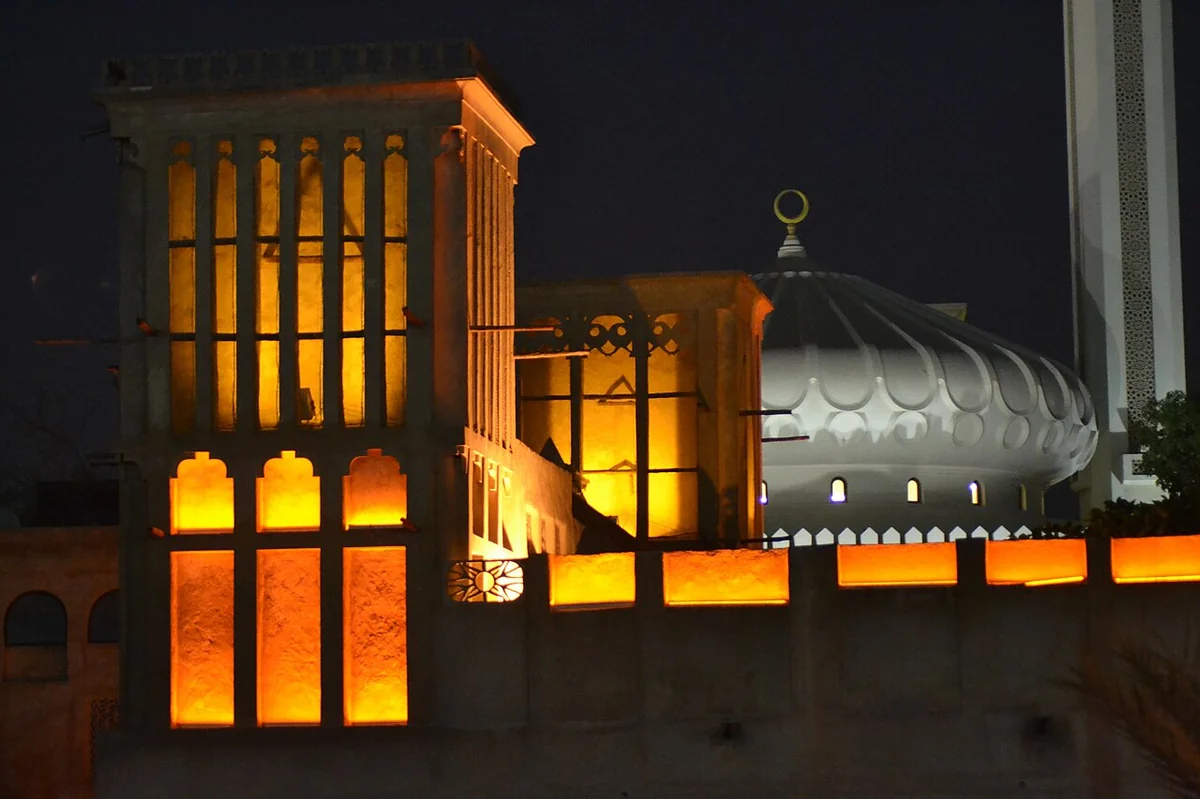
The most iconic architectural hallmark defining Al Fahidi is its array of wind towers, known technically as barjeel. Rising two to three stories above the roofline, these towers feature open louvers oriented toward all four cardinal directions to capture prevailing breezes. Operating on fundamental aerodynamic principles, high-altitude winds entering the openings are drawn down the shaft via pressure differentials and narrowing vents, passing over dampened walls or ground-level water basins to cool and humidify the air before circulating through the living spaces. This passive cooling system stands as a masterpiece of ancient bioclimatic architecture, enabling merchants and prominent families to live comfortably through scorching summer months without any mechanical power.
Interior spatial layouts within each mansion were strictly zoned in accordance with social etiquette and Islamic cultural traditions, establishing a clear division between the public reception area (majlis) and private family quarters (andar). The ground floor typically housed merchandise storerooms, kitchens, and spacious reception halls where merchants hosted international trading partners. Upper levels served as private family living quarters screened by intricately carved wooden lattice windows known as mashrabiya. Crafted with complex geometric patterns, these wooden screens enabled women of the household to observe street life below through small apertures while preserving complete privacy, filtering harsh glare, and inviting cool breezes indoors.
Amid the dramatic transformations of rapid modernization as Dubai evolved into a metropolis of glass and steel in the late 20th century, Bastakiya narrowly escaped complete clearance for new infrastructure projects. Thanks to the strategic foresight of the late Ruler Sheikh Rashid bin Saeed Al Maktoum—followed by rigorous municipal conservation initiatives in the 1980s—dozens of historic wind-tower residences were rescued and painstakingly restored using authentic traditional techniques. The restoration project not only utilized original materials such as coral stone, lime-sand plaster, and teakwood, but also preserved the exact alignments and proportions of the historic sikkat alleyways, safeguarding the district’s authentic urban fabric.
Today, the entire Al Fahidi Historical Neighbourhood operates as an open-air cultural heritage preserve, welcoming hundreds of thousands of international visitors each year to study and experience pre-oil Emirati residential life. Visitor foot traffic is thoughtfully managed to protect the structural integrity of delicate coral-and-plaster edifices. Rather than introducing large-scale commercial hotels, the quarter is curated around specialized museums, contemporary art galleries, heritage cafes, and cultural centers. Modest one- and two-story mansions finished in warm earthen and lime-washed tones create a striking visual dialogue with the gleaming glass skyscrapers across the creek, completing a multi-layered historical portrait of this Gulf city’s remarkable journey.
The Al Fahidi Historical Neighbourhood, historically celebrated as Bastakiya, stands as one of the oldest surviving urban architectural treasures along the southern shore of Dubai Creek in the Emirate of Dubai, United Arab Emirates. Founded in the closing years of the 19th century—specifically around 1890 according to local chronicles—the district was originally settled by an affluent community of merchants from Bastak, a town in southern Persia’s Hormozgan Province, who migrated across the Arabian coast in pursuit of trade privileges and prosperity in the pearl diving and maritime commerce industries. The emergence of this urban quarter reflects a pivotal chapter in history as Dubai transitioned from a modest fishing village into the Persian Gulf’s premier mercantile hub, where cultural, economic, and architectural currents converged deeply and enduringly.
Examining the urban layout of Bastakiya Al Fahidi reveals an intricate circulation network of winding narrow lanes, shaded passages, and central courtyards engineered with remarkable climatological and sociological sophistication. Known in Arabic as sikka, these narrow alleyways were proportioned to cast continuous shade throughout the hottest hours of the day while channeling natural breezes via localized pressure differentials between tall walls. Beyond solving the survival challenge of an extreme desert climate where summer temperatures routinely top 50°C, this spatial design fostered a social order rooted in privacy and tight-knit community cohesion, delineating public lanes from private family compounds through intricately carved wooden doors and thick coral-and-lime perimeter walls.
Al Fahidi’s signature architectural innovation lies in its wind-tower system, known locally as barjeel—a pre-industrial passive cooling achievement rooted in ancient Persian architecture and refined by Dubai artisans to suit the coastal environment of the Persian Gulf. Rising squarely above flat rooftops, these towers open on all four sides to catch prevailing winds, divided internally by diagonal partition walls that trap higher-altitude air currents and direct them down into lower living quarters or semi-subterranean rooms known as sirdab. As hot, dry air descends the shaft, it is cooled through natural evaporation across dampened surfaces or earthenware water jars placed below, forming an ingenious, zero-energy air-conditioning system that exemplifies human adaptability in an arid coastal desert.
Construction materials throughout the historic quarter bear a distinctly ecological signature, maximizing resources harvested from the surrounding sea and desert. Load-bearing walls of merchant residences were built primarily from coral stone extracted from shallow coastal reefs, combined with seashells, sea sand, and quicklime mortar burned from sedimentary rock—forming a resilient natural composite capable of withstanding salt-air corrosion and high humidity. Roof framing and ceilings were crafted from sturdy palm trunks overlaid with woven palm fronds and a thick layer of compressed clay for thermal insulation, while window frames and doors were fashioned from teakwood imported from the Indian subcontinent via bustling maritime dhow routes.
From a decorative arts standpoint, both the interiors and exteriors of Bastakiya Al Fahidi showcase a refined synthesis of traditional Islamic artistry and rich Persian-inspired geometric motifs. Exterior facades are frequently accented with molded gypsum cornices, rosette ventilation grilles, and parallel lattice screens that serve not only aesthetic harmony, but also reduce direct solar heat gain on wall surfaces. Heavy wooden doors feature meticulous hand carvings of stylized vines, symmetrical geometric patterns, and recessed calligraphic inscriptions quoting verses from the Quran or blessings of prosperity and peace for the household—reflecting the spiritual depth and worldview of Dubai’s pre-oil merchant community.
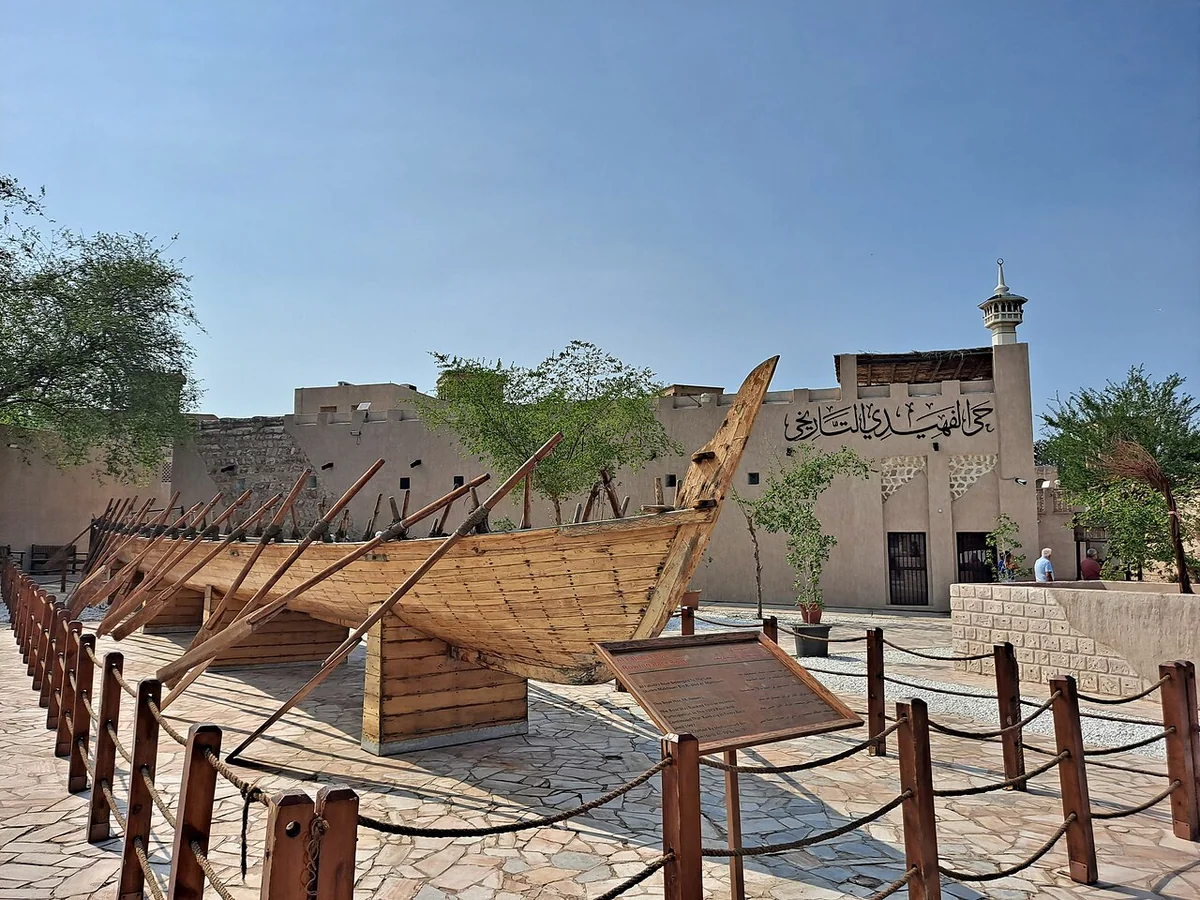
Living spaces inside grander residences—exemplified by the mansions of prosperous pearl merchants—were organized around a central courtyard and reception hall (majlis) where diplomatic hospitality, commercial negotiations, and extended family gatherings unfolded. Serving as the biological heart of the home, this courtyard received cooled convective air descending from the wind tower and distributed it into surrounding chambers, while guaranteeing complete domestic privacy for women and children in keeping with traditional Islamic customs. Flanking the courtyard are arched colonnades or slender columns adorned with stained-glass transoms and pierced gypsum screens (qamariya) patterned in symmetrical geometry, filtering harsh sunlight into a soft, contemplative glow.
Beyond its architectural significance, Al Fahidi functions as an invaluable repository of Dubai’s cultural artifacts through an array of specialized museums, galleries, and preserved heritage houses. Exhibits include antique silver and copper coins from successive Islamic dynasties, traditional pearl-diving gear such as tortoiseshell nose clips and rudimentary sharkskin goggles, and delicate brass scales once used to weigh prized pearls destined for Indian and European markets. Collections of antique maritime charts, handwritten diplomatic manuscripts on parchment, and imported Ming-dynasty Chinese porcelain alongside ancient Persian ceramics attest to Dubai’s role more than a century ago as a vital international crossroads linking East and West.
The spatial philosophy and worldview embedded in Bastakiya Al Fahidi reflect a deeply symbiotic relationship between humanity and the harsh coastal desert, where every design detail—from porous coral blocks to the four-way orientation of wind towers—honors ecological balance and Islamic hospitality. Preserving this historic quarter intact—after intense urban redevelopment debates during the 1970s oil boom gave way to comprehensive restoration by royal decree in the 1980s—demonstrates strategic leadership in safeguarding cultural roots at the heart of one of the world’s most futuristic global cities. Today, exploring the distinctive architecture of Bastakiya Al Fahidi yields not only invaluable archaeological and anthropological insights into a formative era of the Arabian Peninsula, but also timeless lessons in adaptive ingenuity, ecological sustainability, and the power of cultural heritage to anchor a nation’s soul.
The Al Fahidi Historical Neighbourhood, recorded in Gulf chronicles under its original name Bastakiya, stands as a singular urban enclave preserving the pre-oil spirit of the Emirate of Dubai. Stretching along the saltwater inlet of Dubai Creek, the quarter was established in the late 19th century by merchants arriving from Bastak in southern Iran. Viewed through the lens of urban anthropology, daily rhythms here follow a disciplined temporal cadence governed directly by the desert climate and traditional social structure. Transitions from hour to hour across Al Fahidi involve far more than shifting natural light; they unfold as subtle transformations in foot traffic, soundscape, and atmosphere, vividly recreating the daily world of the seafaring merchants who laid the foundations of Dubai’s maritime prosperity.
Dawn in Al Fahidi begins in serene stillness as the first rays of morning sun strike the raw coral-plaster and gypsum facades of historic dwellings. Soft golden light spills down winding alleyways, slicing through narrow gaps between thick walls to cast crisp geometric patterns of light and shadow. At this early hour, before daytime heat builds, the air retains a gentle coolness rising off Dubai Creek. Early caretakers emerge to sweep packed-earth lanes and swing open hand-carved teakwood doors. The soft brush of brooms, sparrows chirping atop date palms peeking over courtyard walls, and the faint aroma of traditional gahwa coffee brewing over glowing embers evoke an atmosphere of deep nostalgia—making morning the ideal window to appreciate original architecture before crowds arrive.
As the sun climbs higher and desert heat settles over the city, daily life shifts inward into shaded, enclosed spaces. The iconic barjeel wind towers come fully into their own, capturing upper-level breezes through four-sided openings and funneling refreshing air downward into ground-floor rooms and shaded courtyards—an aerodynamic cooling system perfected centuries before modern air conditioning. Art galleries, cultural museums, and artisan workshops open their doors, allowing visitors to watch local craftspeople weave intricate Sadu geometric textiles, shape traditional pottery, or engrave metalwork. Past and present meet vividly as contemporary curators exhibit modern paintings inside centuries-old rooms, fostering a lively dialogue between Emirati heritage and global contemporary art.
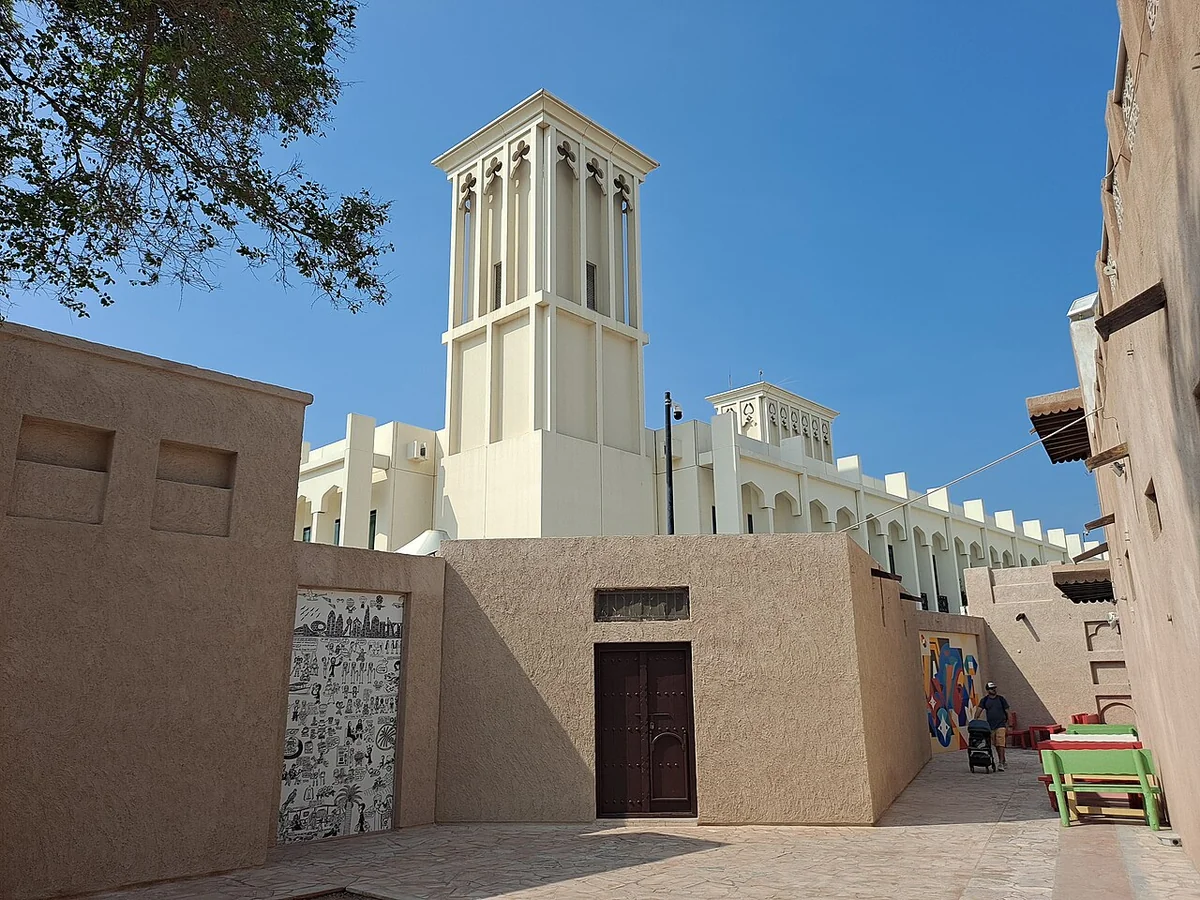
Late afternoon transitioning into dusk brings a dramatic visual transformation across Bastakiya. As harsh sunlight softens into desert shades of amber, crimson, and deep violet, coral-plaster walls shift from pale sand to warm ochre tones. Traditional lanterns suspended beneath eaves flicker to life, casting warm pools of golden light across stone-paved lanes. This is the liveliest social hour of the day: locals and visitors gather inside intimate courtyard teahouses to sip sweet mint tea paired with saffron-infused pastries. Melodies of traditional instruments such as the oud and ney flute drift from cultural centers, blending with relaxed conversation from those seeking tranquility amid hyper-modern Dubai—evoking an era when commerce moved at an unhurried pace as elders conversed on shaded verandas.
Once night falls completely, Al Fahidi glows under subtle architectural lighting designed to accentuate its historic forms. Recessed uplights and warm spotlights highlight arched doorways, intricate wooden latticework, and the silhouettes of wind towers rising against the dark night sky. During major cultural celebrations such as the Sikka Art Fair or UAE National Day, the entire quarter transforms into an open-air stage for contemporary arts and heritage showcases. Performances of traditional Ayala folk dances—featuring rhythmic drumming and raised ceremonial canes—alongside digital light projections mapped onto historic walls draw tens of thousands of spectators, affirming that living heritage thrives when celebrated through both ancestral tradition and contemporary creativity.
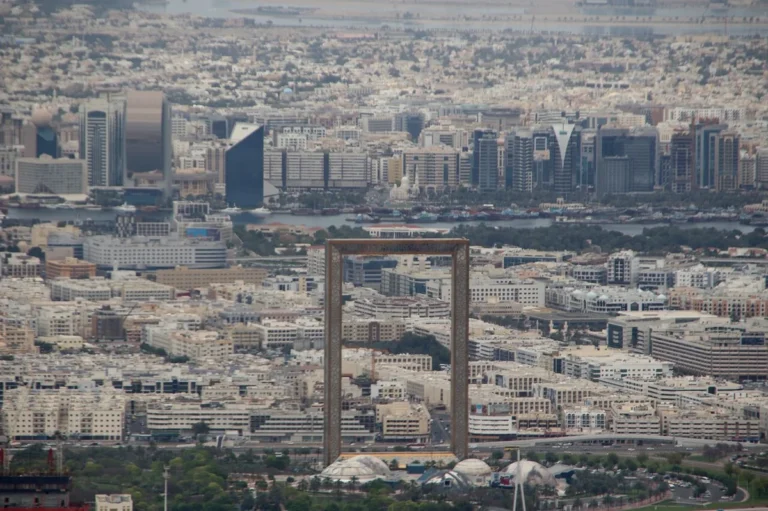
To take in the finest panoramic perspective of Al Fahidi, urban explorers often head to elevated vantage points along the northern edge bordering Dubai Creek. From the rooftop terrace of the Sheikh Mohammed Centre for Cultural Understanding or aboard a traditional wooden abra ferry gliding across the creek, the full architectural tableau of Bastakiya unfolds in striking contrast: on one bank stands a quiet cluster of 19th-century coral-stone houses and wind towers, while across the water rise the gleaming glass-and-steel towers of Dubai’s modern financial skyline. This juxtaposition captures Dubai’s extraordinary evolution in a single frame, where maritime heritage and futuristic ambition coexist within less than a century of history.
The Al Fahidi Bastakiya quarter preserves a rich culinary heritage shaped by centuries of maritime commerce connecting the Arabian Peninsula, Persia, and the Indian subcontinent. Local gastronomy reflects the social traditions of pearl merchants and families migrating from Bastak, who brought time-honored preservation methods, aromatic spice blends, and desert culinary ingenuity to forge a distinctive food culture. Positioned along Dubai Creek at the crossroads of ancient spice routes, the neighborhood has long been infused with the scents of frankincense, saffron, cardamom, and cumin carried on salty sea breezes. Here, traditional dishes represent far more than sustenance in an arid coastal climate—they embody a cultural language of hospitality, generosity, and multi-generational family life.
Traditional Emirati cuisine around Bastakiya Al Fahidi transforms modest desert-and-coastal ingredients through patient, refined culinary craftsmanship. Machboos, the quintessential dish of the Emirates, requires unhurried preparation: lamb, chicken, or fresh Persian Gulf fish is simmered for hours in a complex spice blend known as bezar—combining coriander, cumin, black pepper, cinnamon, and cloves—before being cooked together with long-grain basmati rice steeped in rosewater and saffron. The result is fragrant, fluffy rice infused with deep savory richness from the meat and aromatic spices. Another foundational dish is harees, traditionally served during major festivals, Ramadan, and communal gatherings. Combining cracked wheat with lamb or chicken, harees is slow-cooked overnight in large copper pots over wood embers until it melds into a velvety, nourishing porridge, finished with a drizzle of clarified butter (ghee) and a dusting of cinnamon.
Traditional flatbreads and flour-based delicacies in the quarter further attest to resourceful adaptation to the desert environment. Paper-thin regag bread is spread by hand across a hot domed iron griddle known as a tava, then brushed with local muhalla cheese, egg, or date syrup before being folded into crisp, delicate layers. Meanwhile, balaleet showcases the historic culinary dialogue between Arabia and Eastern maritime trade: sweet vermicelli noodles scented with cardamom, saffron, and rosewater are topped with a thin, savory omelet, creating a harmonious interplay of sweet aroma and rich savoriness. Hearty meat-and-vegetable stews such as saloona also anchor family meals, simmering tomatoes, onions, ginger, and garlic with regional produce like pumpkin, eggplant, and potatoes in a tribute to every precious drop of water and harvest of the land.
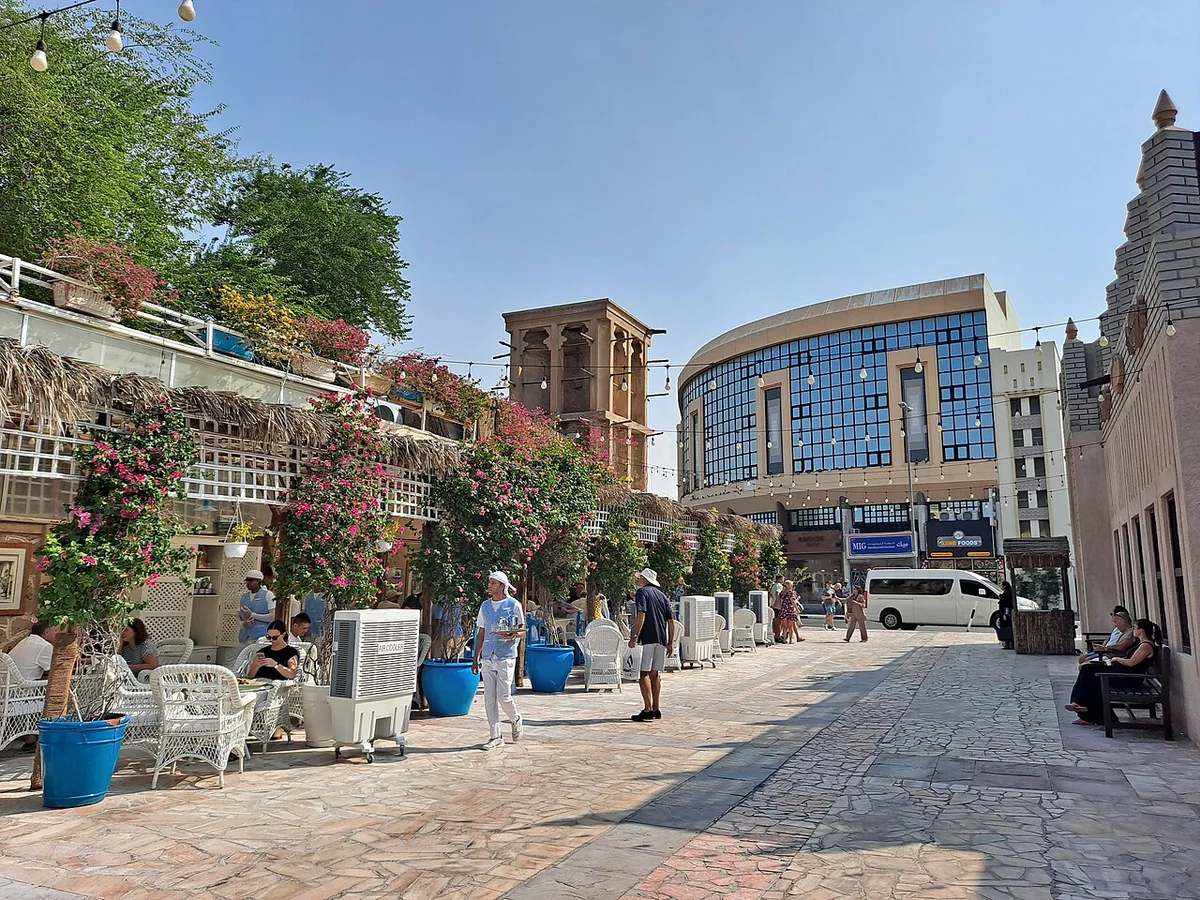
Hospitality etiquette and traditional beverage service in Al Fahidi center around gahwa, traditional Arabic coffee served according to time-honored social custom. Distinct from Western coffee, gahwa is brewed from lightly roasted beans infused with crushed cardamom—and occasionally cloves or saffron—and poured from a long-spouted brass or silver pot called a dallah. Hosts pour only a small splash—about one-third full—into handleless porcelain cups known as finjan as a gesture of respect and attentiveness, as filling a cup to the brim traditionally signals that a guest’s visit has concluded. Gahwa is always accompanied by sweet fresh or dried oasis dates, balancing the coffee’s aromatic bitterness with natural caramel sweetness. Refills continue until the guest gently tilts or shakes the empty cup from side to side to signal satisfaction.
Throughout the winding lanes and historic barjeel wind-tower homes of Bastakiya Al Fahidi, culinary venues have been thoughtfully curated to honor and preserve living heritage. Restored coral-stone houses now host cultural dining centers, the Coffee Museum, and heritage restaurants preparing authentic Emirati recipes. Along smooth stone walkways leading toward the creek, visitors can watch local artisans roast coffee beans by hand in small iron pans while inhaling the fragrant smoke of burning agarwood (oud) and spices lit to welcome honored guests. Designed around shaded courtyards furnished with woven palm mats, Bedouin-patterned cushions, and natural breezes drawn down by wind towers, these spaces offer an inviting microclimate ideal for unhurried communal meals.
Alongside savory specialties, local sweets and desserts carry unmistakable echoes of historic maritime trade. Luqaimat—crisp golden dumplings fluffy on the inside, drizzled generously with thick date syrup (dibs) and sprinkled with toasted sesame seeds—remain an essential centerpiece of afternoon hospitality and family celebrations. Pairing the deep sweetness of dates with nutty sesame reflects ancestral preservation traditions from eras when refined sugar was a rare luxury. Whole-wheat pastries enriched with clarified butter and honey are likewise crafted for festive occasions, passed down through generations via hands-on kitchen tradition.
Experiencing the culinary traditions of Al Fahidi Bastakiya therefore goes far beyond ordinary dining, becoming a rich anthropological exploration of how desert communities turned scarcity into warmth and generosity. Every flavor—from the aromatic warmth of bezar spice in a pot of machboos to the delicate cardamom notes of a cup of gahwa—tells a story of resilience, community solidarity, and enduring Emirati hospitality that continues to thrive at the heart of a hyper-modern metropolis.
The enduring presence of the Al Fahidi Historical Neighbourhood—cherished in Dubai’s urban memory as Bastakiya—preserves an illustrious chapter written by Persian merchants who migrated from Bastak to the shores of the Persian Gulf in the late 19th century. Standing amid one of the world’s most futuristic skylines, this quarter retains intact layers of coral stone, gypsum plaster, and iconic barjeel wind towers that pioneered passive desert cooling. Exploring this cultural sanctuary rewards travelers not only with practical planning for transport and timing, but also with mindful respect for fragile heritage amid rapid modernization. Located along Dubai Creek in the Bur Dubai district, Al Fahidi functions as a living museum where every winding lane and sand-hued wall whispers stories of bustling maritime commerce before the oil age transformed the emirate.
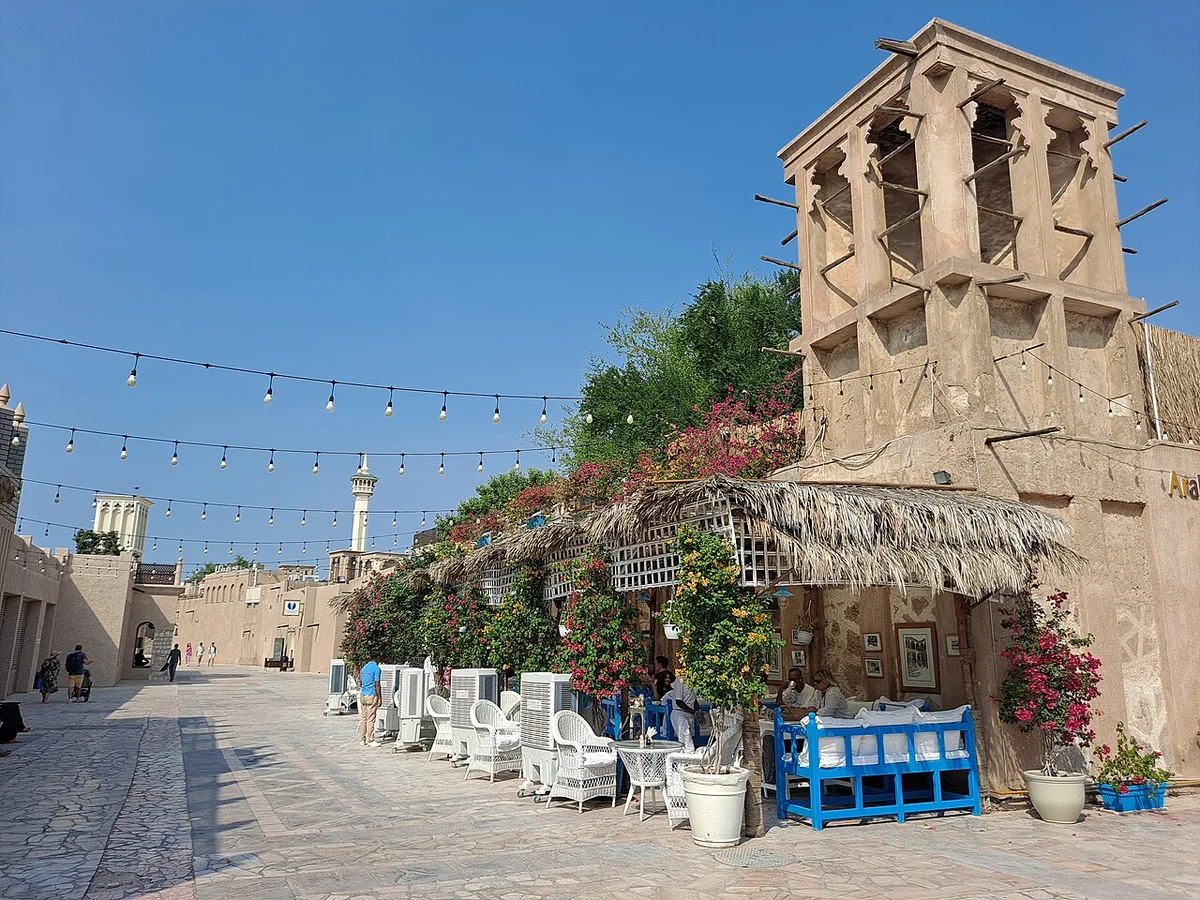
Dubai’s climate shapes both daily life and the travel experience across the region. The annual weather cycle divides cleanly into two primary seasons: a scorching summer from May through September, when daytime temperatures frequently surpass 45°C alongside high coastal humidity that makes extended outdoor walking strenuous; and the golden winter season from October through April, when pleasant daytime temperatures between 20°C and 30°C create ideal conditions for strolling Al Fahidi’s historic lanes. These cooler months also host major cultural festivals, attracting artists, scholars, and international travelers eager to experience contemporary exhibitions woven seamlessly into heritage architecture.
Dubai’s public transit network—renowned globally for cleanliness, punctuality, and extensive reach—makes reaching Al Fahidi effortless without a private car. The Dubai Metro Red and Green Lines form the backbone of city transit: travelers can alight at Sharaf DG Station (formerly Al Fahidi) or Al Ghubaiba Station on the Green Line, followed by a pleasant five- to ten-minute walk through lively commercial streets to reach the historic quarter’s entrance. Public buses also stop directly adjacent to Al Fahidi, while metered taxis and ride-hailing apps offer fast, transparent door-to-door transfers from any hotel in the city.
Choosing the right time of day to explore Al Fahidi enhances both visual appreciation and comfort. Early morning—just after sunrise between 7:00 AM and 9:00 AM—offers tranquil solitude as low-angle golden sunlight rakes across ancient coral walls, creating dramatic contrasts of light and shadow ideal for architectural photography. Late afternoon from 4:00 PM onward brings magical sunset hues glowing across the barjeel wind towers as cooling breezes drift inland from Dubai Creek. It is best to avoid midday visits between 12:00 PM and 3:00 PM during warmer months, when solar intensity peaks and outdoor walking becomes tiring.
Dress etiquette when visiting Al Fahidi reflects respect for local Islamic culture and heritage traditions. While Dubai is cosmopolitan and welcoming, the historic quarter maintains a dignified atmosphere; both men and women should dress modestly in clothing that covers shoulders and knees out of respect for local residents and cultural exhibits inside historic houses. Comfortable, supportive walking shoes with good grip are also essential, as lanes are paved with traditional stone and cobbles across a sprawling network of interconnected alleyways.
Observing local customs and cultural etiquette ensures a smooth, respectful visit. While visitors are welcome to photograph architecture and streetscapes freely, taking close-up photos of local residents—particularly Emirati women—without asking permission first is considered a serious breach of privacy. Public displays of affection are also frowned upon under UAE law and social norms. Additionally, during the holy month of Ramadan, visitors should refrain from eating, drinking, smoking, or chewing gum in public spaces between dawn and sunset out of courtesy to those observing the fast.
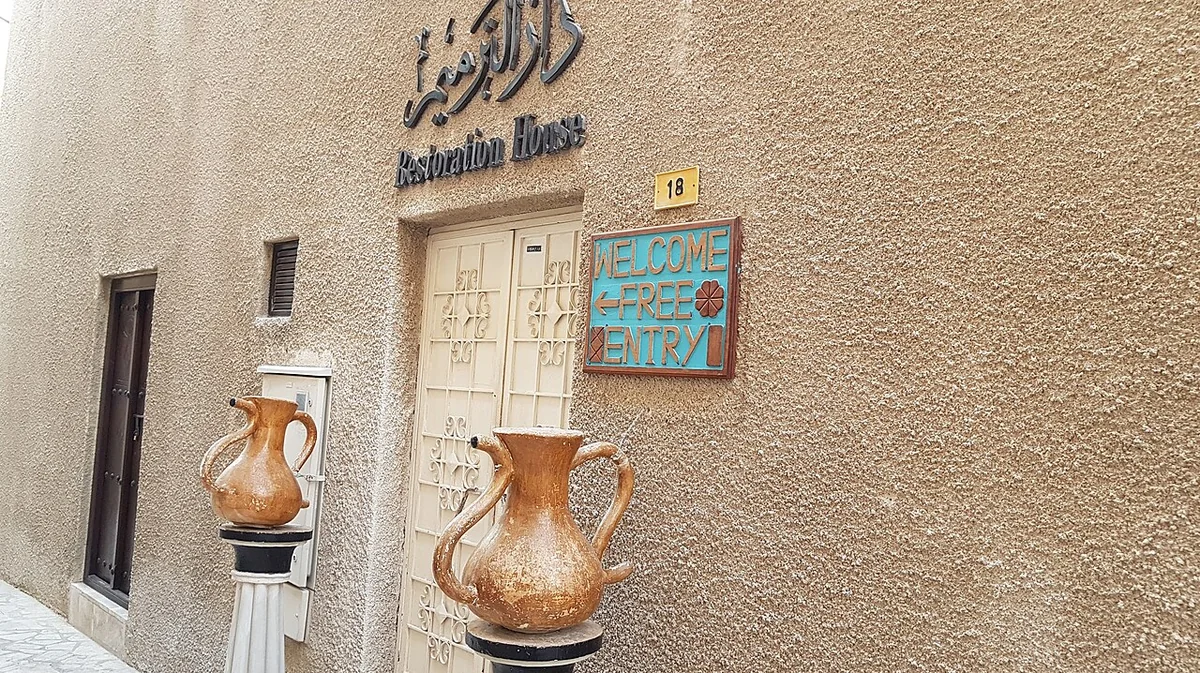
Admission to Al Fahidi’s outdoor lanes and courtyards is pleasantly accessible—strolling the entire open-air historic district is completely free of charge. Inside specific cultural venues such as the Coffee Museum, Coin Museum, Sheikh Mohammed Centre for Cultural Understanding, private art galleries, or ceramic studios, modest entrance or workshop fees may apply depending on each institution. Carrying a small amount of cash in UAE Dirhams (AED) is handy for purchasing artisanal crafts, enjoying traditional Arabic coffee in hidden courtyard cafes, or paying the nominal fare aboard a traditional wooden abra ferry across Dubai Creek to explore the Deira Spice Souk and Gold Souk on the opposite bank.
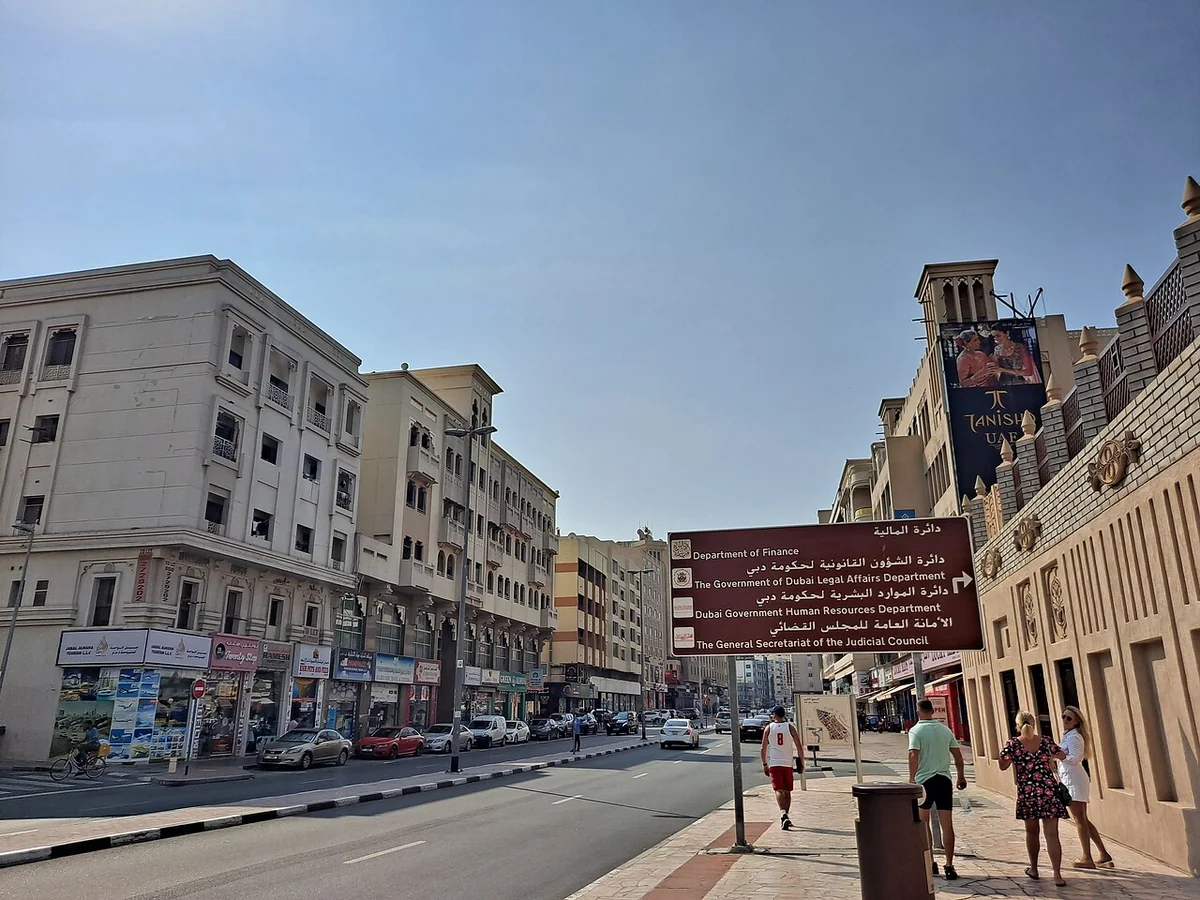
Approaching Al Fahidi with an appreciation for its spatial design, climate rhythms, transit links, and cultural etiquette transforms a visit into a meaningful dialogue between past and present. Rather than a fleeting photo stop, the neighborhood opens a serene space for reflection where desert architectural ingenuity endures intact at the heart of one of the planet’s most dynamic cities. Those who explore with curiosity, patience, and respect discover in Al Fahidi not merely coral-stone walls and ingenious wind towers, but the authentic soul of traditional Dubai—where maritime heritage continues to flow quietly through every breath of time.
To experience this journey to the fullest alongside a local guide, travelers can explore our 6D5N Dubai – Abu Dhabi – Desert Safari tour featuring a thoughtfully curated itinerary.