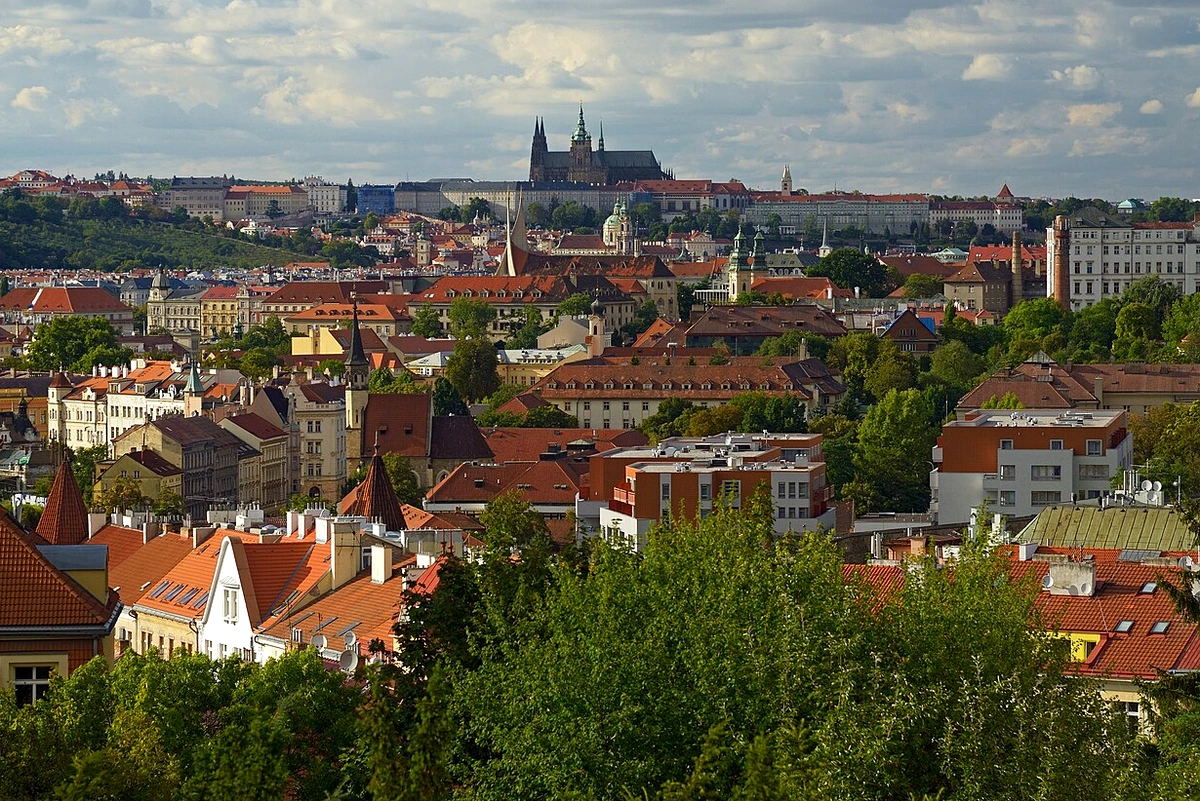
Situated at the heart of the Prague Castle complex atop Hradčany Hill, St. Vitus Cathedral rises majestically at a strategic geographical vantage point on the left bank of the Vltava River in Prague, the capital of the Czech Republic. With a natural elevation towering above the rest of the city, this hill served for centuries as a natural fortress and the center of political and religious power in Bohemia. The cathedral’s overall architecture completely dominates the city skyline, forming a monumental silhouette visible from every corner of the Vltava basin. The steep terrain of the Hradčany slopes posed formidable engineering challenges for generations of medieval and Renaissance architects, yet this very height accentuated the supremacy, grandeur, and sovereign authority of the Church united with the feudal Bohemian crown throughout Central European history.

The historical journey of this monument began in the 10th century—specifically in 925—when Duke Wenceslas I commissioned a Romanesque rotunda chapel to house a sacred relic: the arm of St. Vitus, a prized gift from Holy Roman Emperor Henry I. This original structure reflected the earliest Christianization of the Slavic tribes in Central Europe, laying the spiritual foundation for the entire Prague Castle complex. Amid political upheavals and the growth of the kingdom, the modest initial sanctuary soon proved too small for liturgical demands and the rising stature of the Bohemian state. By 1060, under Prince Spytihněv II, construction began on a larger three-aisled Romanesque basilica over the old foundations to accommodate an expanding congregation.
The turning point that shaped the cathedral’s iconic appearance occurred in the 14th century during the golden reign of King of Bohemia and Holy Roman Emperor Charles IV. Recognizing Prague’s pivotal role within the European power structure, Charles IV elevated the Bishopric of Prague to an Archbishopric in 1344 and immediately initiated the rebuilding of the church in an entirely new High Gothic style. This visionary emperor invited the distinguished French architect Matthias of Arras to serve as master designer, bringing the finest architectural achievements from the great cathedrals of Paris and northern France. Following Matthias’s death, the brilliant German architect Peter Parler took over the project, leaving an invaluable legacy through his innovative net vaulting, intricate sculptures, and pioneering choir design.
Construction on this grand architectural undertaking suffered severe interruptions due to bloody historical upheavals, most notably the outbreak of the Hussite Wars in the 15th century. Prolonged religious conflict and political instability left the edifice unfinished for centuries, with the Gothic structure completed only in the choir and part of the transept, while the main tower and western section remained cluttered with building materials. Not until the second half of the 19th century and early 20th century did the Czech National Revival reignite the resolve to complete this monumental landmark. The Union for the Completion of St. Vitus Cathedral was established, bringing together renowned architects such as Joseph Kranner, Josef Mocker, and later Kamil Hilbert, who faithfully honored Peter Parler’s medieval plans to seamlessly unite the new construction with the ancient structure in 1929.
Beyond its timeless Gothic architecture, the national symbolic value of St. Vitus Cathedral is deeply defined by its role as a royal mausoleum and repository for Bohemia’s most sacred national treasures. It is the final resting place of numerous kings, Holy Roman Emperors, dukes, and members of the Habsburg dynasty, housing masterfully sculpted marble and bronze tombs such as those of Emperor Charles IV and King Rudolf II. In particular, the St. Wenceslas Chapel at the heart of the cathedral—adorned with walls inlaid with gleaming semi-precious stones and medieval frescoes—stands as its holiest sanctuary, enshrining the tomb of the nation’s patron saint, who embodies the indomitable spirit and independent identity of the Czech people across centuries of foreign rule.
The cultural and artistic influence of the cathedral reaches far beyond conventional religious boundaries to stand as the supreme spiritual emblem of the Czech nation across the vicissitudes of history. During the Catholic Counter-Reformation and the rule of the Austro-Hungarian Empire, the cathedral remained a bastion preserving national language, art, and identity through traditional royal coronation ceremonies held here since the Middle Ages. Stained-glass windows designed by gifted 20th-century artists—most notably Art Nouveau master Alfons Mucha—infused a modern sensibility that harmonizes effortlessly with medieval heritage, narrating the story of Slavic cultural roots and enduring communal unity.
Today, viewing St. Vitus Cathedral from any vantage point across Prague reveals not merely a grand religious edifice, but a historical chronicle carved in stone over more than a millennium. The seamless fusion of original Romanesque foundations, High Gothic mastery, and later Renaissance and Baroque additions forms a living museum of architecture. This landmark stands proudly as an enduring testament to the vitality of Central European art, maintaining its sacred role as the keeper of the soul and historical memory of the Czech Republic against the relentless passage of time.
The greatest religious architectural complex in Central Europe, the Metropolitan Cathedral of Saints Vitus, Wenceslas, and Adalbert stands in the third courtyard of Prague Castle in the Czech Republic, testifying to the endurance of spatial design and construction engineering across nearly a millennium. Geologically and topographically, the cathedral sits upon a promontory of shale and limestone on Hradčany Hill, a commanding defensive position rising above the left bank of the Vltava River. The initial foundations faced major challenges from steep slopes and natural geological shifts, requiring generations of architects to execute painstaking grading, retaining walls, and foundation reinforcement using sandstone and granite quarried from nearby river valley deposits. The architectural evolution of the monument unfolded across three primary building campaigns rather than a single era, beginning with the Romanesque rotunda founded by Duke Wenceslas in the 10th century, advancing through the radiant Gothic era of the 14th century under the House of Luxembourg, and reaching full completion in the early 20th century in the Neo-Gothic style. The cathedral’s overall scale is awe-inspiring, measuring 124 meters in total length and 60 meters across the main transept, while the central vault rises to 33 meters—creating an expansive interior space that directs the human spirit toward eternity through sacred geometric proportions.
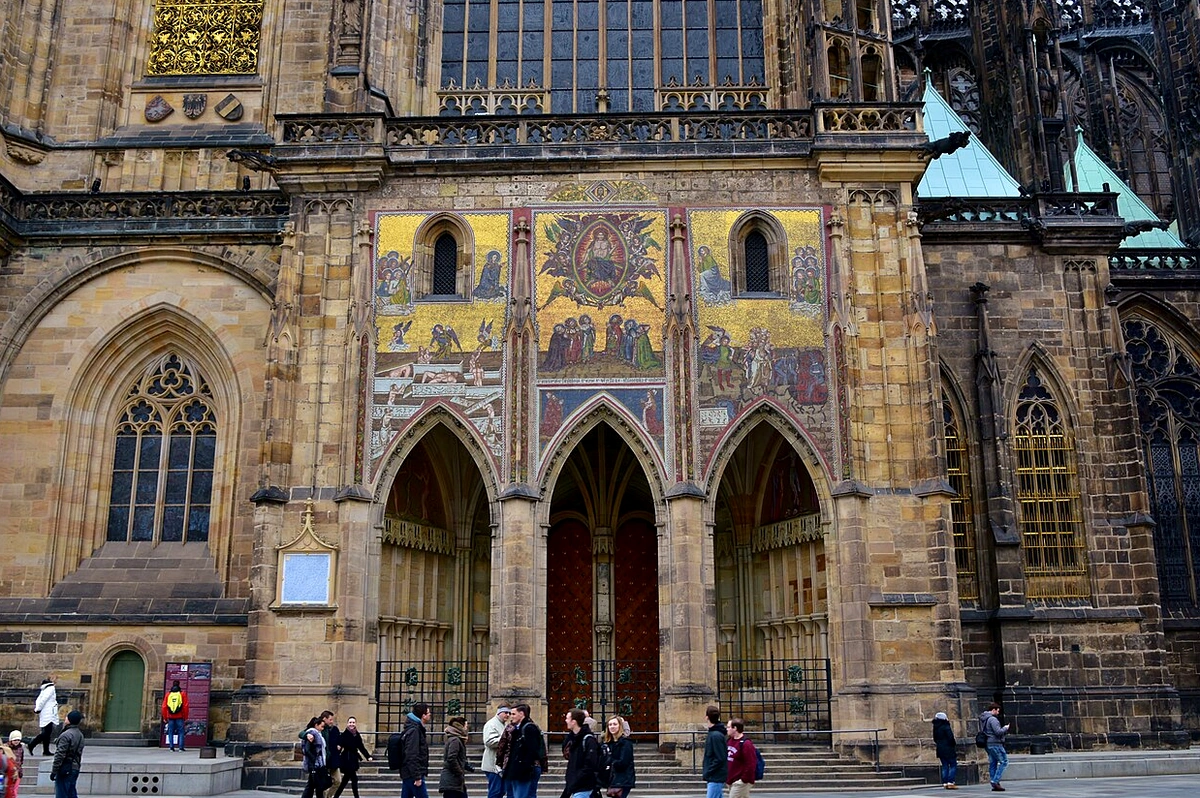
The spatial planning of St. Vitus Cathedral strictly follows the classic Latin cross floor plan of Western Christian tradition, shaped distinctly by Avignon-born French architect Matthias of Arras and subsequently carried forward by the gifted German master builder Peter Parler in the 14th century. Matthias of Arras introduced the disciplined geometric precision of southern French Gothic architecture, designing the choir with towering pointed-arch windows and an encircling ring of flying buttresses. Upon assuming leadership of the project, Peter Parler revolutionized masonry engineering by inventing unique diamond-patterned net vaults, which not only maximized structural load distribution across the ceiling but also created a dazzling, intricate visual tapestry. Primary building materials include Bohemian sandstone in hues ranging from pale gold to deep gray, paired with dressed granite blocks in critical load-bearing zones. The interplay between natural daylight and stone was meticulously calculated through vast stained-glass windows, where artisans fused glass with metallic oxides to craft luminous religious tableaux that shift the interior’s mood with every hour of the day and season of the year.
Examining the structural engineering and load-bearing systems of the cathedral reveals the mastery of medieval builders in solving the dual challenge of weight and height. Flying buttresses projecting from the exterior walls channel lateral thrust from the high central vaults down into massive outer piers, allowing traditional load-bearing walls to be largely replaced by soaring expanses of stained glass. Bonding stone blocks with slaked lime mortar mixed with crushed brick imparted vital elasticity to withstand temperature fluctuations and fierce winds atop Hradčany Hill. The cathedral’s western facade, completed in the late 19th and early 20th centuries under architects Josef Mocker and Kamil Hilbert, features twin Neo-Gothic spires soaring 82 meters high, creating harmonious proportional balance with the monumental Great South Tower. Rising to 96 meters, this main bell tower houses the 16th-century Zikmund Bell—the largest bell in the Czech Republic—requiring a specialized internal framework of heavy timber beams and steel reinforcement to absorb vibrations when it tolls.
The interior zoning of St. Vitus Cathedral vividly reflects the hierarchy of authority among the Church, the Crown, and the congregation through a ring of distinct chapels encircling the central sanctuary. Foremost within this sacred layout is the St. Wenceslas Chapel, enshrining the relics of Bohemia’s patron saint, whose walls are encrusted with thousands of polished semi-precious stones—including amethyst, agate, and jasper—arranged in geometric patterns alongside 14th-century frescoes depicting scenes from the saint’s life. Beneath the chapel floor lies the Royal Crypt, the resting place of Bohemian kings, Holy Roman Emperors, and Habsburg royals, arranged as a solemn chamber housing gilded bronze sarcophagi and finely carved white marble tombs. The central nave is divided into rhythmic bays by clustered sandstone piers that guide pilgrims from the western portal eastward toward the high altar, establishing a powerful longitudinal visual axis. Side aisles wrapping around the choir form an ambulatory that allows visitors to move continuously through sacred spaces without disrupting liturgical services in the main sanctuary.
Encompassing an expansive footprint and welcoming millions of visitors and scholars annually, managing foot traffic while conserving the historic fabric demands sophisticated engineering and urban planning solutions. Natural ventilation through high clerestory openings and thick masonry walls helps stabilize indoor temperature and humidity, safeguarding wooden sculptures, historic oil paintings, and stained-glass windows from deterioration caused by moisture and body heat from large crowds. Heritage managers collaborate regularly with archaeologists to conduct ultrasonic and X-ray inspections of primary load-bearing piers, detecting microscopic fissures caused by thermal expansion early on. Visitor entry is regulated through controlled gates integrated seamlessly into the castle grounds, ensuring that stepping inside the cathedral preserves the awe-inspiring solemnity and monumental grandeur befitting one of humanity’s greatest Gothic achievements.
St. Vitus Cathedral, standing majestically at the center of the Prague Castle complex, is a supreme masterpiece of European Gothic architecture where centuries of stone masonry mastery, theological spatial thought, and traditional artisanship converge. Begun in 1344 during the reigns of King John of Bohemia and Emperor Charles IV, the cathedral replaced an earlier Romanesque rotunda, embodying the political and spiritual ambitions of the Kingdom of Bohemia as Prague became the imperial capital of the Holy Roman Empire. The contributions of visionary architects such as Matthias of Arras and especially Peter Parler forged an unmistakable architectural language in which soaring columns and intricate vaulting serve not merely structural loads, but symbolize the medieval soul’s ascent toward the eternal.
Exploring the floor plan and interior spaces reveals a clear evolution from classical French Gothic toward an inventive Central European Late Gothic style. The soaring central nave and Peter Parler’s late-14th-century net vaulting dissolved the heavy boundaries of traditional structural masonry, transforming the ceiling into a graceful, interwoven web of stone. Natural light pours through immense stained-glass windows where master glaziers depicted biblical narratives and sacred legends using painstaking hand-fired enameling techniques. The contrast between shadowed gray stone and refracted jewel-toned beams creates a mystical ambiance that fosters inner contemplation while affirming the supreme authority of the Church and the Bohemian Crown throughout the Middle Ages.
Advancing deeper into the sanctuary and ambulatory chapels, the spiritual and artistic centerpiece is the Chapel of St. Wenceslas, dedicated to the nation’s patron saint. Preserved largely intact since the 14th century, this chamber dazzles with walls inlaid with multicolored semi-precious stones, murals chronicling the saint’s martyrdom, and hand-forged iron doors exemplifying early Gothic metalwork. Carefully polished agate, quartz, and jasper stones are fitted tightly into symmetrical geometric patterns symbolizing the New Jerusalem described in the Book of Revelation. Directly beneath this hallowed chamber lies the Royal Crypt, housing the tombs of Bohemian kings, Holy Roman Emperors, and royal family members—transforming the cathedral into a national pantheon of memory preserving the soul and historical sovereignty of the land.
Alongside the Chapel of St. Wenceslas, the cathedral safeguards countless treasures and sculptures of inestimable art-historical value, notably the solid silver tomb of St. John of Nepomuk on the south side of the choir. This monumental Baroque work uses tons of silver to depict the saint ascending heavenward borne aloft by angels, surrounded by relief panels recounting his life and martyrdom from Charles Bridge. Metalwork artistry here reaches extraordinary refinement, from flowing drapery folds to expressive lifelike faces. Furthermore, the stained-glass windows in the western section of the cathedral—created in the 20th century by Art Nouveau master Alfons Mucha—establish a seamless dialogue between medieval Gothic tradition and modern aesthetic vision, proving that the cathedral is no static relic, but a living cultural organism enriched across generations.
The exterior sculptural program of St. Vitus Cathedral also plays a vital role in conveying the religious ideology and aesthetic ideals of its era. The western facade, crowned by towering spires and richly carved portals, features stone reliefs depicting the cathedral’s construction and scenes of the Last Judgment. Flying buttresses ringing the exterior not only distribute the massive thrust of the high vaults, but are adorned with symbolic gargoyles and grotesques designed to ward off evil spirits and protect the sanctity of the interior. The harmonious union of monumental engineering, master stone carving across generations, and profound Christian philosophy has turned the cathedral into an immortal icon of human architecture—where inanimate stone is breathed with life to narrate the enduring story of Central European civilization.
The passage of time across Central Europe’s grandest religious complex unfolds to its own distinctive cadence, weaving historic solemnity into the contemporary pulse of ancient Prague. As the sacred centerpiece of Prague Castle, St. Vitus Cathedral shapes the cultural life and local rhythms surrounding it from hour to hour. As night recedes and the first rays of dawn brush the tip of the soaring bell tower, the precinct awakens from mysterious stillness into a sensory symphony. Morning light strikes ancient limestone and sandstone, casting a warm amber glow across the exterior of massive stained-glass windows. At this early hour, before bustling crowds arrive, heritage conservators, art historians, and clergy begin their day with quiet footsteps across the stone courtyard. Cathedral bells ring out across the Vltava valley, awakening a vast historic cityscape and setting the temporal rhythm for the entire neighborhood.
As the sun climbs high overhead, activity around the cathedral reaches the lively crescendo of a UNESCO World Heritage landmark. Waves of visitors from across the globe converge on the central castle courtyards, creating a vibrant multicultural tapestry. Footsteps echo across cobblestone lanes beneath towering Gothic arches accompanied by the murmur of dozens of languages. Street musicians play classical melodies on violin or recorder near historic ramparts, blending with chiming tower clocks to compose Prague’s unmistakable soundtrack. Locals—particularly cultural stewards and castle staff—move between the royal gardens and sacred precincts with unhurried familiarity. The contrast between centuries-old architectural majesty and modern human movement generates a captivating energy where past and present converge with every step.
Sunset descending over the Bohemian sky brings a dramatic visual and emotional transformation to St. Vitus Cathedral. As golden late-afternoon rays yield to deep twilight purples and blues, the cathedral’s stonework seems draped in an ethereal patina of time. This is the finest moment of the day to witness a magical optical phenomenon inside the nave, when the final slanting sunbeams pierce stained-glass masterpieces by Alfons Mucha and his contemporaries. Light filtering through ruby reds, sapphire blues, and amber golds splashes across towering piers and stone walls, bathing the sanctuary in radiant color and drawing observers into a deeply spiritual realm. Artisans and museum staff begin their end-of-day inspections, ensuring the safety and preservation of priceless treasures before nightfall settles in.
At night, when high-powered architectural floodlights illuminate the complex, St. Vitus Cathedral emerges like a mythical apparition crowning Hradčany Hill, captivating gazes from every corner of the City of a Hundred Spires. Upward-cast golden light accentuates delicate carvings along exterior buttresses, fantastical gargoyles, and needle-sharp pinnacles piercing the night sky. Daily commotion subsides into solemn tranquility enveloping the entire ensemble. Visitors strolling the castle grounds after dark experience the distilled weight of history, with daytime crowds replaced by wind whispering through stone tracery and faint echoes rising from the Vltava River below. Occasionally, that serene nocturnal stillness is gracefully broken by chamber music drifting from neighboring historic halls, where works by great Czech composers are performed in tribute to the nation’s cultural heritage.
Throughout this daily cycle, exploring the cathedral’s interior offers profound insights into medieval engineering and aesthetic thought. Moving from chamber to chamber—from the jewel-encrusted, frescoed St. Wenceslas Chapel to the Royal Crypt where Bohemian monarchs rest—rewards unhurried, attentive observation. Every vista inside the sanctuary opens a chapter on power, religious devotion, and architectural evolution across the Romanesque, Gothic, and Baroque periods. Scholars and art lovers frequently spend hours studying intricate woodcarvings on the choir stalls or analyzing Peter Parler’s complex 14th-century vaulting ribs, gaining a true appreciation for a masterpiece that took nearly six centuries to complete.
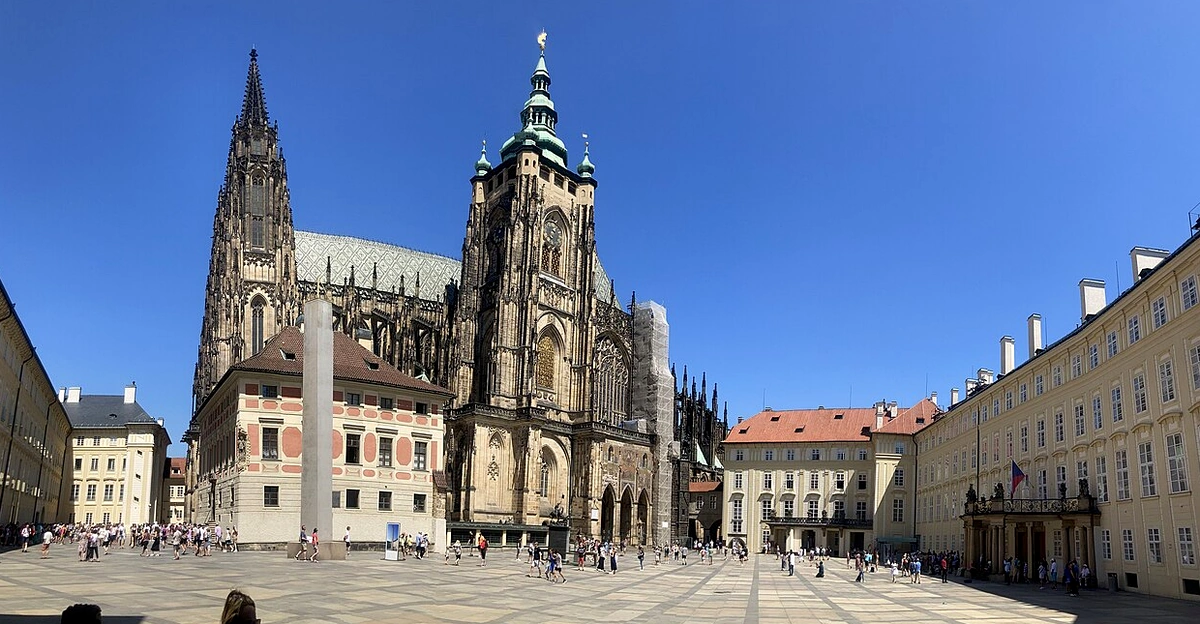
For travelers seeking the most rewarding panoramic viewpoints to photograph or admire the full scale of St. Vitus Cathedral alongside Prague’s cityscape, the South Gardens ramparts and elevated observation terraces around the castle are unmissable. From these vantage points, the cathedral’s cruciform layout stands out sharply with massive transept arms rising above the sea of traditional red-tiled roofs across Malá Strana and Old Town. Viewed from above during seasonal transitions, when wisps of morning mist still linger over the Vltava River, the cathedral emerges through the haze as an eternal symbol of Czech resilience and national spirit across turbulent centuries. Standing here, listening to cathedral bells mingle with the unhurried rhythm of local life, fosters a deep appreciation for the enduring bond between humanity and architectural heritage across the ages.
The majestic architectural ensemble of St. Vitus Cathedral crowning Hradčany Hill at Prague Castle represents not only the pinnacle of Central European Gothic art, but also the focal point of a culinary landscape steeped in Bohemian history. From the 9th-century Přemyslid dynasty through the reigns of the Holy Roman Emperors, this region nurtured a courtly gastronomy deeply intertwined with everyday folk traditions. Surrounding this sacred sanctuary, historic lanes such as Nerudova Street and the Nový Svět quarter preserve time-honored recipes passed down across centuries. A continental climate marked by snowy winters shaped a hearty, energy-rich cuisine centered on slow-braised red meats, fermented wheat and barley staples, and aromatic herbs that deliver unmistakable depth of flavor.
Traditional culinary craftsmanship around St. Vitus Cathedral revolves around slow braising and balancing savory, sweet, and subtly tart notes. The quintessential dish symbolizing Bohemian culinary heritage here is Svíčková na smetaně, featuring prime beef sirloin cured with salt, root vegetables, and dried herbs such as thyme and black pepper, then slow-braised for hours in a velvety cream sauce made from parsley root, carrots, and celery. Its culinary hallmark lies in achieving a naturally smooth, rich sauce thickened purely with blended root vegetables rather than flour, served alongside thinly sliced steamed bread dumplings (knedlíky), a dollop of tart-sweet cranberry jam, and whipped cream. Knedlíky—an indispensable staple of virtually every traditional meal here—are crafted from wheat flour mixed with white bread cubes and yeast, kneaded thoroughly and steamed to achieve a light, airy elasticity ideal for soaking up rich braising sauces.
Venturing deeper into the alleys around Prague Castle, open-hearth roasting also holds a cherished place in local dining culture. Vepřo knedlo zelo—crispy-skinned roast pork served with sweet-and-sour braised cabbage (kapusta or zelí) and steamed bread dumplings—epitomizes hearty traditional fare refined enough for noble banquets. Pork is rubbed with crushed caraway seeds, garlic, and fresh lard, then slow-roasted in traditional brick ovens until the rind blisters into crisp perfection while the meat inside stays succulent and naturally sweet. Flavor balance is achieved through finely shredded white or red cabbage sautéed with smoked bacon fat, caramelized sugar, and apple cider vinegar, providing a bright acidity that cuts through the richness of the roast.
Traditional soups in this quarter serve as an essential opening ritual, reflecting local ingenuity in making the most of regional ingredients. Česnečka, a robust garlic soup, is simmered from rich bone broth loaded with freshly crushed garlic, diced potatoes, smoked lard, and dried marjoram, topped with crunchy croutons fried in goose fat. Celebrated since the Middle Ages, this dish not only wards off brisk winds blowing up from the Vltava River toward the castle hill, but is prized for its restorative, cold-fighting qualities. Another iconic specialty is kulajda, a velvety wild mushroom soup gathered from Bohemian forests, combined with potatoes, freshly chopped dill, and a softly poached egg nestled in the center that enriches the broth when stirred into a fragrant harmony of woodland mushrooms and temperate herbs.
Exploring beverage traditions around St. Vitus Cathedral requires an appreciation for craft brewing rooted in local monasteries since the 10th century. Here, beer is far more than a simple refreshment—it is an intangible cultural heritage governed by strict purity traditions and centuries-old brewing mastery. Locals and travelers alike gather in historic taverns to enjoy golden pilsner crowned with dense, creamy foam, served at an ideal temperature of 6 to 8 degrees Celsius. Pouring beer is treated as a skilled craft in its own right, with distinct pouring techniques controlling foam density and carbonation to showcase the gentle bitterness of Saaz hops and the clean sweetness of Moravian barley malt.
Alongside beer culture, traditional pastries and confections have reached remarkable refinement through centuries of cross-pollination between Austro-Hungarian and native Czech traditions. The famous pastry Trdelník—though originating in Skalica—has become a familiar street-food fixture along the pathways descending from the castle, made from yeast dough wrapped around a wooden spit and roasted over glowing embers until golden brown. Fresh off the fire, its crisp exterior is rolled in fine sugar, crushed walnuts, and fragrant cinnamon, sometimes lined inside with dark chocolate or whipped cream. During religious feasts or royal celebrations at the cathedral, bakers also craft perník—intricately decorated honey gingerbread piped with white sugar icing, marrying folk decorative artistry with comforting spice.
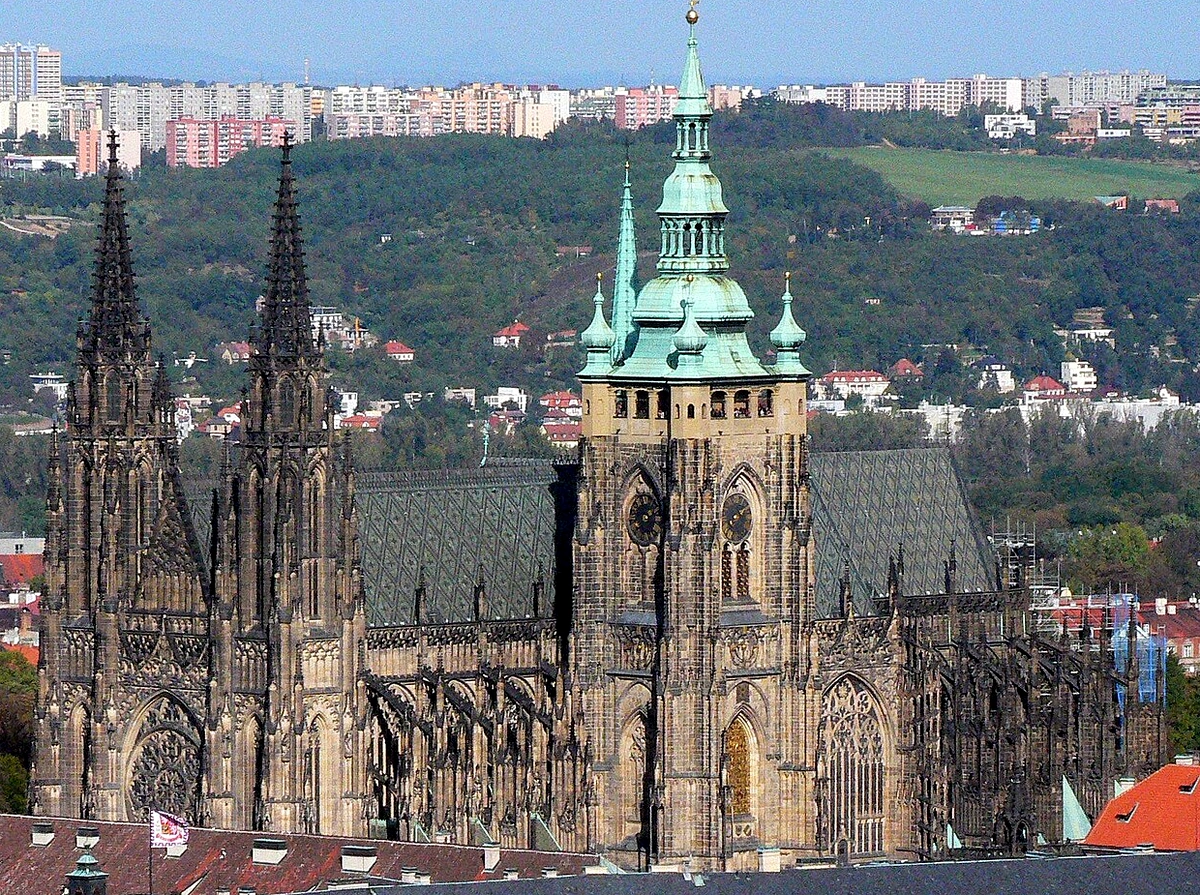
The urban fabric surrounding St. Vitus Cathedral forms a network of culinary lanes rich in historical and architectural character. Steep Nerudova Street, lined with Renaissance and Baroque townhouses that once formed the royal coronation route, now hosts traditional taverns serving elevated courtly dishes. Continuing up toward Hradčanské náměstí square and the Nový Svět quarter, historic cafés and centuries-old wine cellars open onto sweeping views over the City of a Hundred Spires. Dining here follows an unhurried rhythm where guests linger over discussions of dynastic history while savoring wood-fired bread alongside local cheeses marinated in olive oil and herbs.
Dining etiquette in traditional restaurants around Prague Castle blends formal historical courtesy with warm hospitality. Meals typically begin with a toast of Na zdraví, accompanied by a crisp clink of glasses and direct eye contact as a sign of respect in Central European custom. Light starters give way to hearty protein-rich mains, concluding with a digestif of herbal Becherovka liqueur or a cup of strong Turkish-style black coffee brewed in antique brass pots. The union of the cathedral’s awe-inspiring sacred architecture and the rustic yet refined flavors of local cuisine creates a multisensory cultural experience that preserves the essence of Bohemian history across the centuries.
As Central Europe’s grandest religious and royal monument, St. Vitus Cathedral—located inside the Prague Castle complex in the Czech capital—rewards careful logistical preparation and familiarity with historical etiquette prior to your visit. To reach this radiant Gothic landmark conveniently from central Prague, the city’s public transit network offers punctual, seamless connections. Metro Line A (the Green Line) carries passengers to Malostranská or Staroměstská stations, where you can transfer to the surface tram network. Tram routes 22 and 23 serve as vital arteries climbing Hradčany Hill, stopping at Pražský hrad or Malovanka for a brief walk along historic cobblestone streets straight to the main castle entrance. For travelers preferring privacy or carrying bulky luggage, licensed city taxis are available—though booking through reputable ride-hailing apps ensures transparent fares and avoids unexpected surcharges—while private cars face strict access restrictions around the historic monument core.
Choosing the right season to visit St. Vitus Cathedral directly shapes your visual experience and crowd levels. Central Europe experiences four distinct seasons, each lending a unique atmosphere to the castle hill. Spring (April through June) brings nature to life with mild temperatures between 10 and 20 degrees Celsius, ideal for unhurried outdoor walks without harsh summer heat or peak-season congestion. Summer (July through August) sees international visitor numbers peak alongside daytime highs that can exceed 30 degrees Celsius, requiring patience in long sunlit queues at castle security checkpoints. Autumn (September through November) ushers in a nostalgic, quieter ambiance as maple and oak trees surrounding the castle turn vibrant gold and crimson, paired with early morning mist drifting off the Vltava valley to create evocative, cinematic vistas. Winter (December through March) delivers crisp cold and snow blanketing the sharp Gothic spires, transforming the precinct into a medieval fairy tale—though short daylight hours and brisk northern winds call for waterproof, insulated outerwear.
Time of day plays a decisive role in experiencing the cathedral’s interior, particularly the optical splendor of sunlight streaming through its stained-glass windows. The golden hour from 8:00 AM to 9:00 AM, right when the basilica doors first open to the public, offers precious stillness to hear footsteps echo across ancient stone floors and watch early morning sunbeams pierce Alfons Mucha’s stained-glass panels, casting dancing spectrums across massive piers. Conversely, the midday window from 10:00 AM to 3:00 PM brings peak crowds, making it harder to linger over Renaissance sculptures or the solid silver tomb of St. John of Nepomuk amid localized bottlenecks. Late afternoon, as sunset approaches, bathes the colossal rose window in soft ambient light, fostering a contemplative, reverent atmosphere ideal for reflecting on religious history and architecture.
Admission to St. Vitus Cathedral is integrated into combined visitor circuits covering the broader Prague Castle complex, so understanding ticket tiers beforehand helps streamline entry. Standard circuit passes—typically valid for two consecutive days from issue—grant access to major highlights including St. George’s Basilica, Golden Lane, and the main interior of St. Vitus Cathedral. However, climbing the Great South Tower—rising over 90 meters for sweeping panoramic views across Prague, the City of a Hundred Spires—requires a separate timed supplementary ticket with strictly regulated capacity to protect the historic structure and prevent overcrowding. Purchasing tickets online in advance through official castle channels is strongly recommended to bypass lengthy ticket-office queues during busy summer months.
Dress codes and cultural etiquette inside this sacred space reflect centuries-old Roman Catholic traditions combined with national heritage conservation rules. Modest, respectful attire is mandatory for all visitors regardless of gender or nationality: shoulders and knees must be covered, avoiding shorts, sleeveless tops, or garments bearing irreverent graphics out of respect for the sanctuary’s solemnity. Hats and caps must be removed upon crossing the main threshold, except where worn for personal religious observance. Photography rules strictly prohibit flash anywhere inside the cathedral to protect fragile medieval frescoes and historic stained glass from degradation caused by intense light radiation. Professional filming using tripods or drones on cathedral grounds requires special advance permits issued by Czech national heritage authorities.
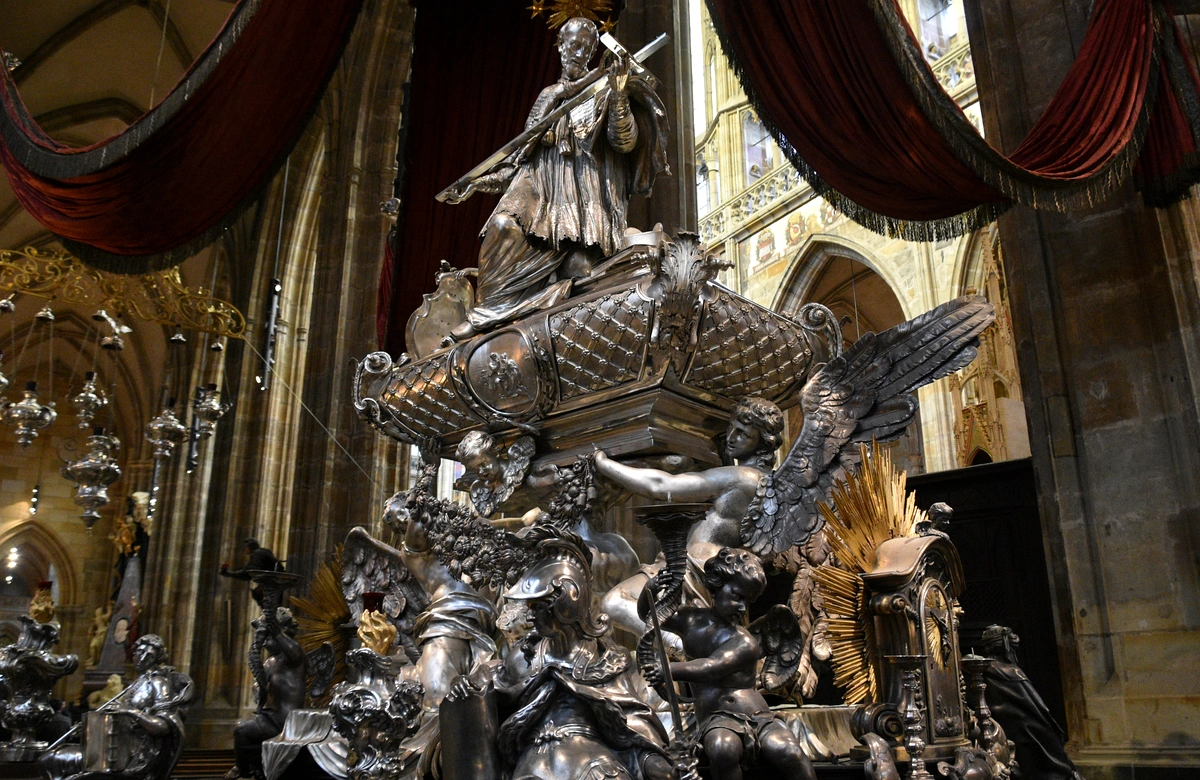
Additional essential etiquette includes maintaining quiet decorum and keeping voices low, as the cathedral remains an active house of worship hosting regular Masses and silent prayer for local congregants. Touching historic sculptures, ancient sandstone walls, or display artifacts is strictly forbidden so that skin oils and perspiration do not harm surfaces weathered over centuries. Smoking, eating, or bringing colored beverages inside the sanctuary is strictly prohibited and enforced by on-site security patrols. Following staff instructions, respecting protective barriers, and keeping the expansive surrounding courtyards clean reflect basic courtesy when standing before a UNESCO World Heritage treasure—helping preserve its priceless material and spiritual legacy for future generations seeking the historical roots of continental Europe.
To experience this journey seamlessly with a local guide, consider our curated 9-Day 8-Night Germany – Austria – Hungary – Czech Republic Tour with a thoughtfully arranged itinerary.