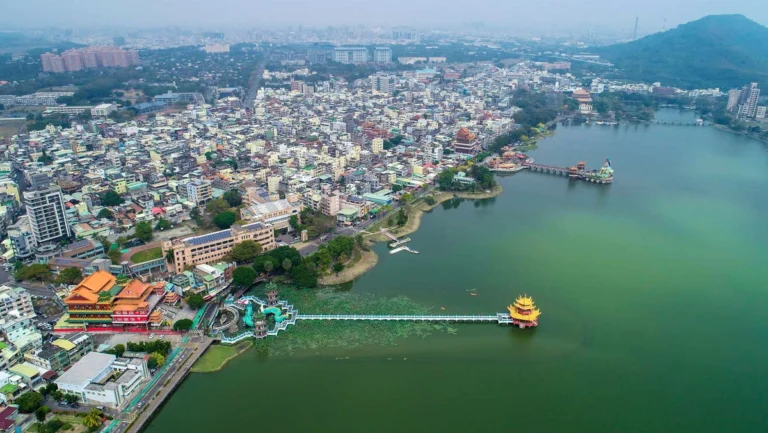
Nestled amidst the lush green hills of Shilin, in the northern suburbs of Taipei, Taiwan, the National Palace Museum emerges as an enduring symbol of Eastern civilization. With geographical coordinates approximately 25°06′13″ N and 121°32′47″ E, this institution is not merely a repository of antiquities, but a living body containing the five-thousand-year history of the Chinese empire, sheltered within the magnificent natural landscape of the Waishuangxi river valley. From a human geography perspective, the museum’s location carries profound strategic significance, where feng shui geomancy converges with dragon veins, backing onto winding mountain ranges resembling a traditional ink-wash painting and facing a fertile basin, creating an aura of majesty, tranquility, and complete separation from the bustling, prosperous rhythm of the modern metropolis outside.
The historical formation of the National Palace Museum is an epic and poignant saga of cultural reverence and the struggle to preserve elite values amidst the storms of war. The museum’s predecessor traces back to the Forbidden City in Beijing, which once served as the center of power for the Ming and Qing dynasties. When times changed and the threat of destruction by the smoke and fire of the Second Sino-Chinese War and subsequent civil war loomed, an unprecedented mass evacuation in human history was planned. Hundreds of thousands of crates containing priceless treasures of imperial dynasties were carefully packed, traversing thousands of kilometers of perilous overland routes and riding out turbulent voyages across the sea to find safe refuge across various mainland provinces. By the mid-20th century, this entire treasury officially set foot on the island of Taiwan and was temporarily stored at a small facility in Wufeng, Taichung, before officially moving to Shilin, Taipei, where today’s modern museum was fully constructed to welcome global devotees. That arduous migration journey inadvertently transformed the artifacts into living witnesses of modern history, bearing the scars of time and exile while retaining their pristine, innate pride.
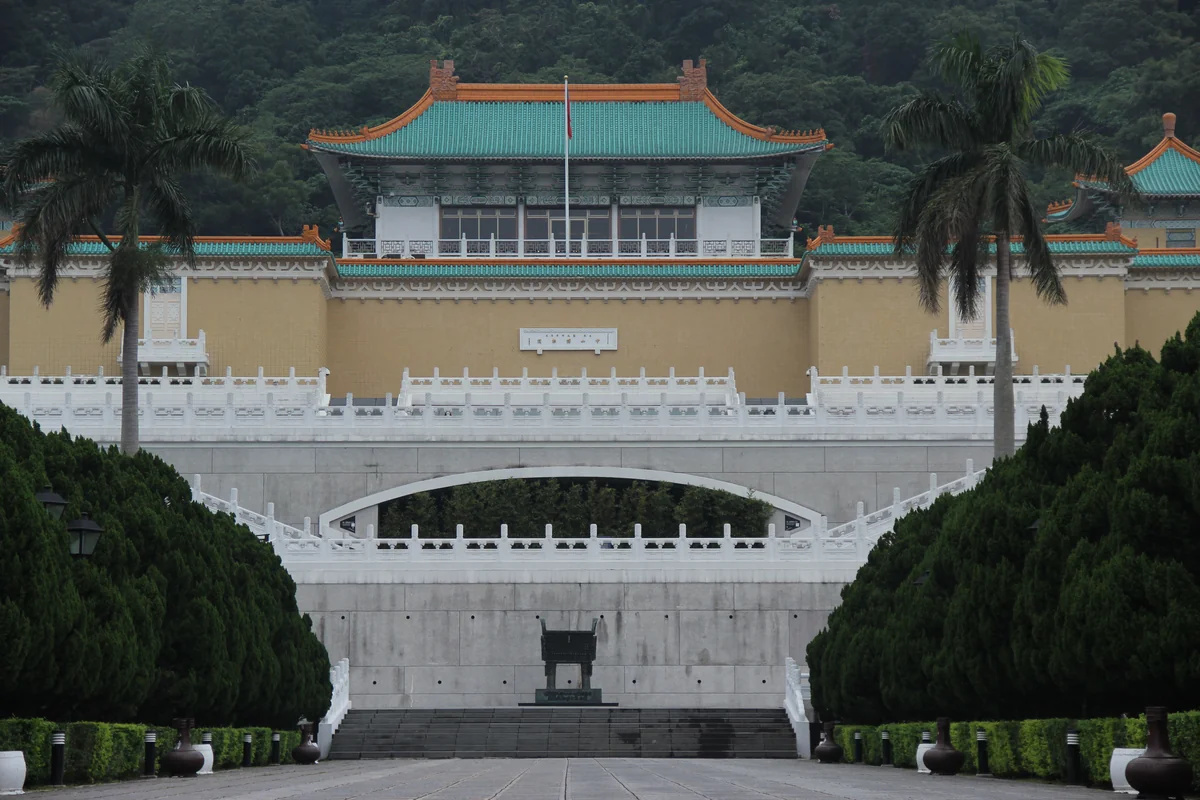
Panorama of the magnificent royal palace architecture of the National Palace Museum in Taipei
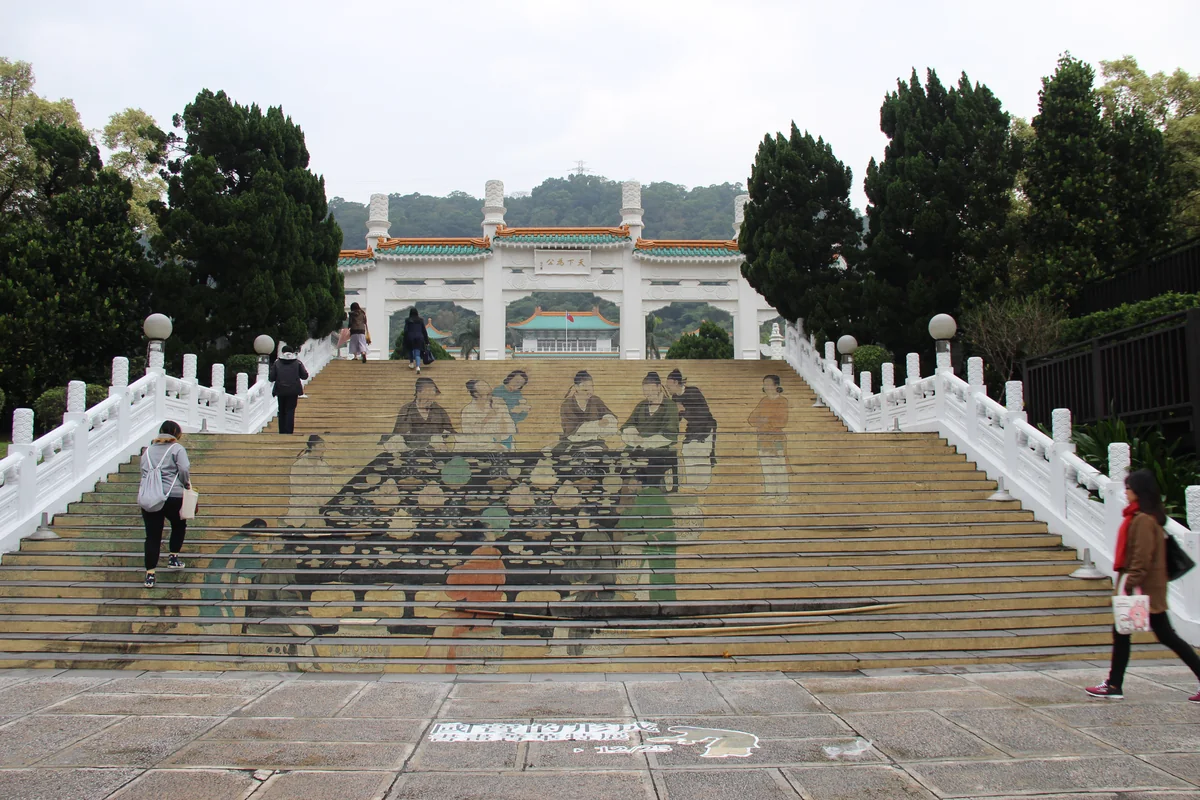
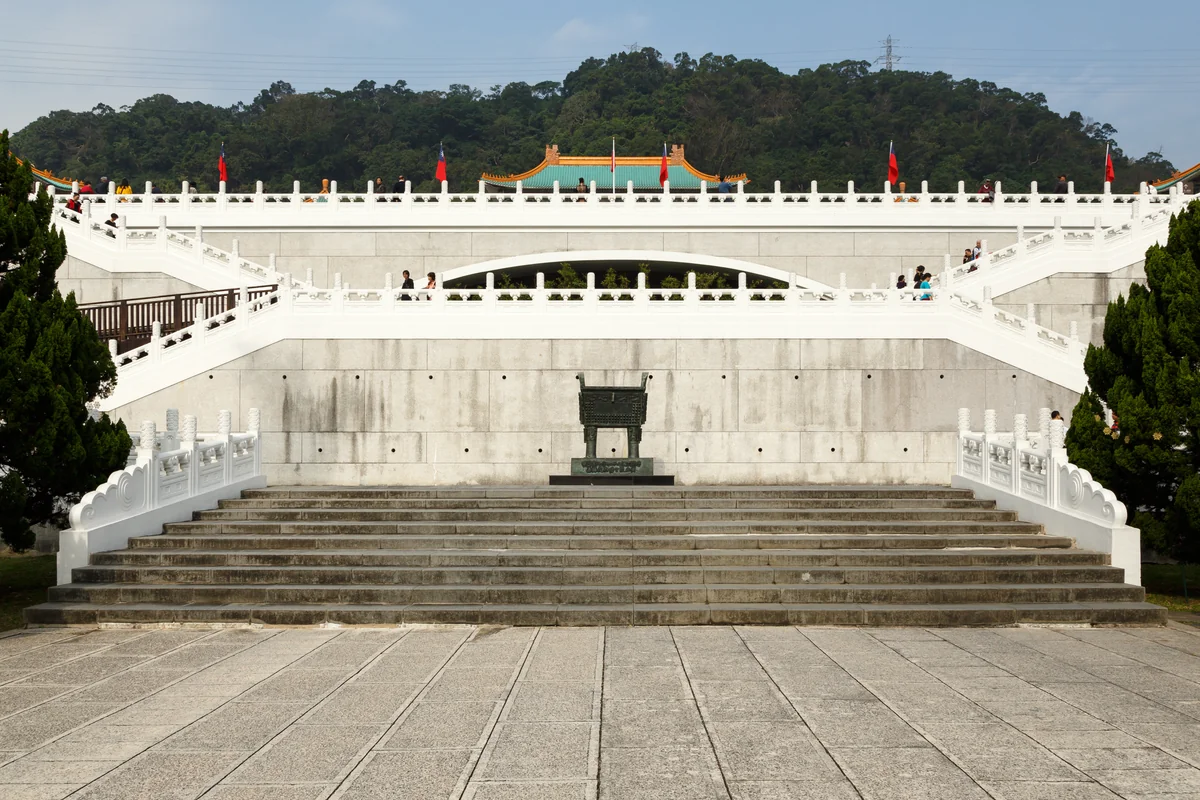
The museum’s architectural design is a masterpiece combining traditional Chinese palace design language with modern Western construction techniques. Designed by renowned architect Huang Bao-yu, the main building echoes northern palace styles with turquoise-green glazed tile roofs gleaming under the sun, forming a stunning contrast against pristine white-painted walls and majestic crimson pillars. The overall layout of the museum strictly adheres to symmetrical principles, creating an imposing, solemn yet graceful impression through skillful utilization of the hillside’s natural slope. Stepping through the main gate, visitors feel as though they are wandering into a space steeped in Eastern philosophy, where every stairway and courtyard harbors meticulous calculations of spatial proportion and light. Through multiple expansions and renovations in subsequent decades, the museum complex has now been supplemented with modern underground exhibition halls and a world-class microclimate control system to absolutely protect organic artifacts sensitive to temperature and humidity, establishing a steadfast fortress preserving human memory against the erosion of time.
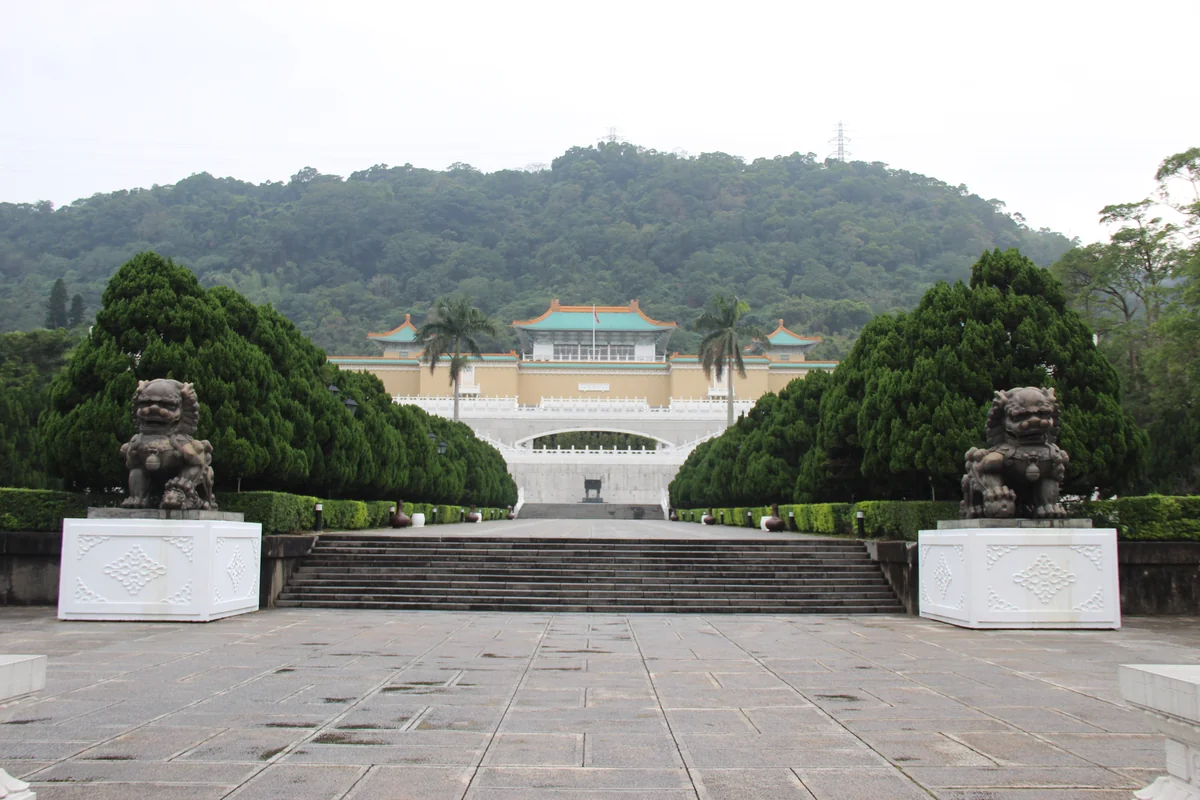
Jadeite-green glazed tile roofing and traditional palace columns at the Palace Museum campus
The National Palace Museum houses the largest collection of imperial Chinese art and artifacts on the planet, with an estimated count of nearly seven hundred thousand works spanning eight millennia of civilizational history, from the Neolithic period to the end of the Qing Dynasty. The cultural significance of this treasury lies not only in reflecting the extravagant aesthetic tastes of feudal dynasties, but also serving as a material encyclopedia of ancient Eastern philosophy, religion, science, technology, and social life. Among countless rare treasures, standing out above all are sacred symbols that have become legendary among international art lovers. The Jadeite Cabbage, carved from a natural jade stone combining white and green hues, cleverly utilizes cracks and impurities to perfectly recreate the shape of a tender young Chinese cabbage, upon which rest two tiny insects—a locust and a katydid—symbolizing fertility and royal blessings. Next is the Meat-shaped Stone, a natural agate stone transformed through the delicate carving and coloring hands of court artisans into a tender piece of boiled pork belly, with each layer of fat and skin absorbing seasonings so realistically that it tricks the visual senses of every visitor. Additionally, the museum preserves priceless collections of celadon ceramics from renowned kilns such as Guan, Ding, and Ru, subdued ink-wash silk scroll paintings by master landscape artists, alongside tens of thousands of historical documents, jade items, calligraphy, and Shang and Zhou bronze ware, all weaving together a brilliant panoramic tapestry of human cultural depth.
The solemn exhibition grand hall preserving hundreds of thousands of priceless imperial treasures
To fully appreciate the beauty and solemnity of the National Palace Museum, careful and methodical planning is paramount for every discerning traveler. The ideal time of year to visit Taipei and the museum is from November of the previous year to April of the following year, when weather is mild, skies are dry, and the crisp autumn-winter chill makes outdoor travel and sightseeing exceptionally pleasant. During the day, the golden timeframes to enter the museum space are right when doors open in the morning or during the late afternoon hours when visitor crowds thin out, creating an absolute tranquil atmosphere for direct dialogue with millennium-old artifacts. Upon entering, visitors should prioritize renting multilingual audio guide devices or booking specialized in-depth private guide services so as not to miss the layers of historical meaning hidden behind each exhibit. Breathtaking photo spots are not only found in the spacious main hall with natural light pouring down from the glass dome, but also manifest at Zhishanyuan (the Zhi Shan Garden) located right next to the museum—a space simulating a classical southern Chinese garden with serene ponds, winding stone bridges, pavilions, and poetic weeping willow trees, where visitors can find the perfect perspective to capture panoramic photos of the museum architecture emerging amidst Shilin’s clouds and sky.
The elegant traditional Zhishanyuan garden grounds within the Palace Museum complex
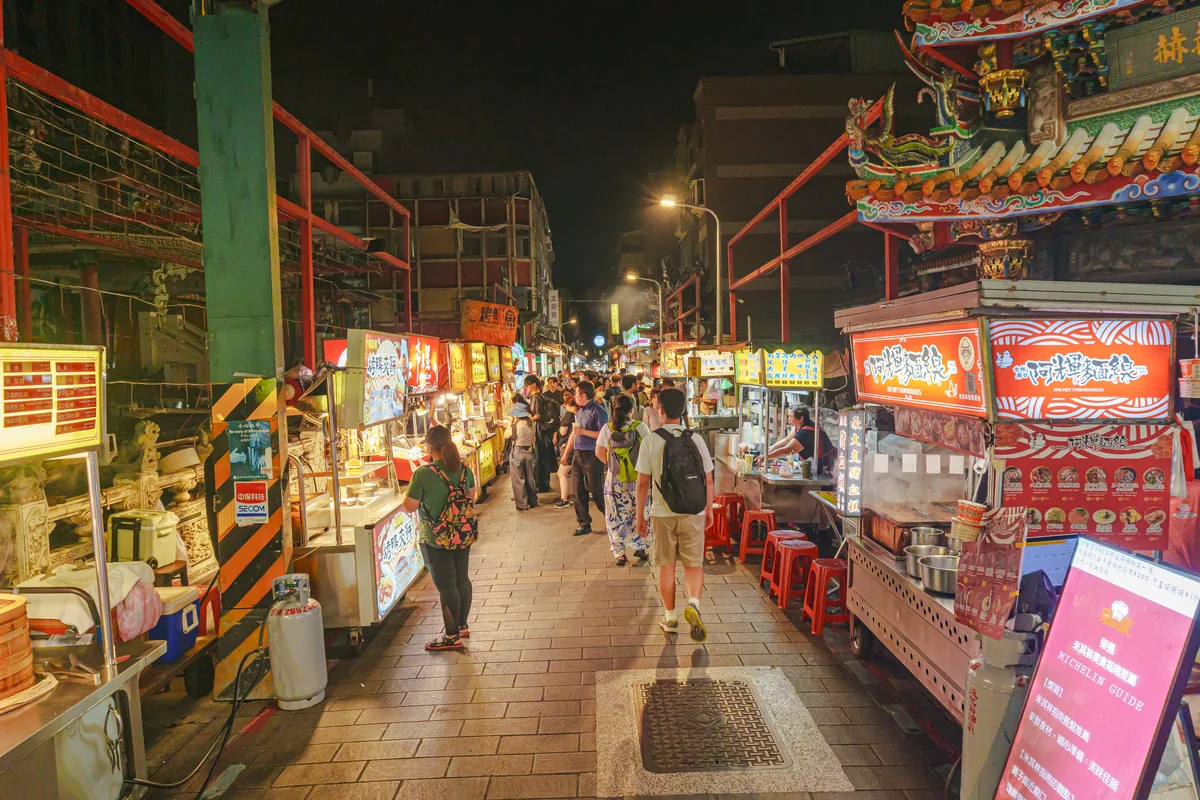
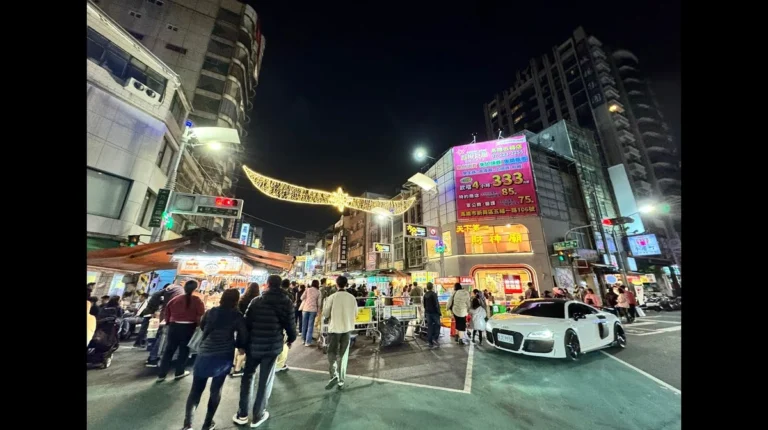
The artistic discovery journey becomes even more complete when combined with elite culinary experiences right at the museum campus or surrounding areas of Taipei. Inside the museum building itself reside upscale restaurants serving exquisitely reimagined Chinese imperial dishes, where diners can enjoy menus directly inspired by Qing Dynasty royal culinary documents, paired with traditional tea-ceremony arts masterfully performed by expert artisans. After leaving the museum, heading to the city center to savor renowned dishes such as beef noodle soup with rich herbal broth, exquisite dim sum, or strolling through Asia’s most famous night markets like Shilin to explore diverse street food culture is an unmissable experience. However, for a smooth and civilized trip, visitors must keep in mind strict behavioral codes within the museum. Absolutely no flash photography when snapping pictures of exhibits, as strong light can damage ancient materials; maintain order and speak at minimal volume in exhibition rooms to respect the shared contemplative space; and strictly follow regulations prohibiting food, drinks, or liquids inside exhibition zones to ensure maximum preservation of artifacts. These standards not only reflect the basic politeness of a civilized global traveler, but also demonstrate reverent bowing before the grand heritage painstakingly safeguarded by ancestors across countless trials of time.
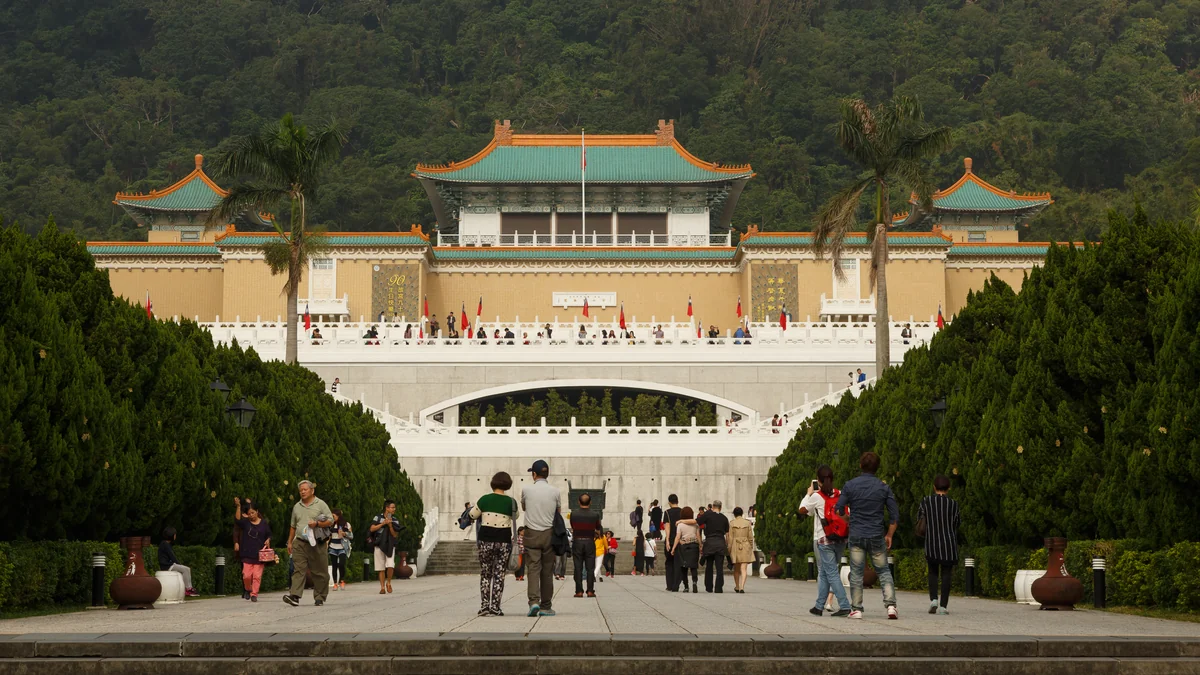
Panoramic perspective of the museum complex viewed from the base of the granite stone staircases
Every exhibition hall at the National Palace Museum not only preserves masterpieces of millennium-old jade, bronze, or ink paintings, but also retains the fluctuating historical current of a brilliant civilization. Leaving the magnificent palatial space amidst the Shilin hills, a deep sense of admiration for the talented hands and grand souls of ancestors lingers in the heart of every traveler.
The journey to discover the Palace Museum will be an unmissable cultural highlight during your Taiwan Tour excursion, accompanied by in-depth experiential guides to Taiwan.