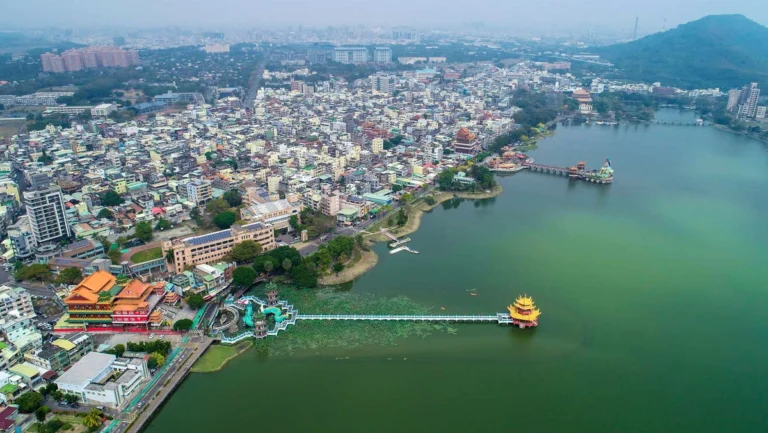
Looming faintly amidst endless layers of mountain mist and boundless canopies of ancient cypresses in the Central Mountain Range, the naming history of Alishan National Forest Recreation Area dates back to an era when this rugged highland was the solitary hunting ground of the indigenous Tsou tribes. In the collective memory of these native inhabitants, this steep, formidable range was once called by resonant names such as Pangcung or Paicung, tied to an age-old legend about a brave warrior and valiant chieftain named Abali. According to folklore, this extraordinary leader repeatedly guided his tribe across treacherous mountain passes, discovering a lush green realm teeming with wildlife and rare medicinal herbs. To honor his benevolence, later generations named the entire primordial forest after Abali, which gradually evolved phonetically into the name Alishan. In historical records from the Qing Dynasty, the region first appeared vividly on the pages of history through classic works such as the Taiwan Prefecture Gazetteer (Taiwan Fuzhi) and Miscellaneous Notes of an Envoy to Taiwan (Taishi Biji), documenting it as one of the deepest, most perilous mountain forests east of Chiayi Prefecture, shrouded in year-round fog and almost entirely isolated from the civilized lowlands.
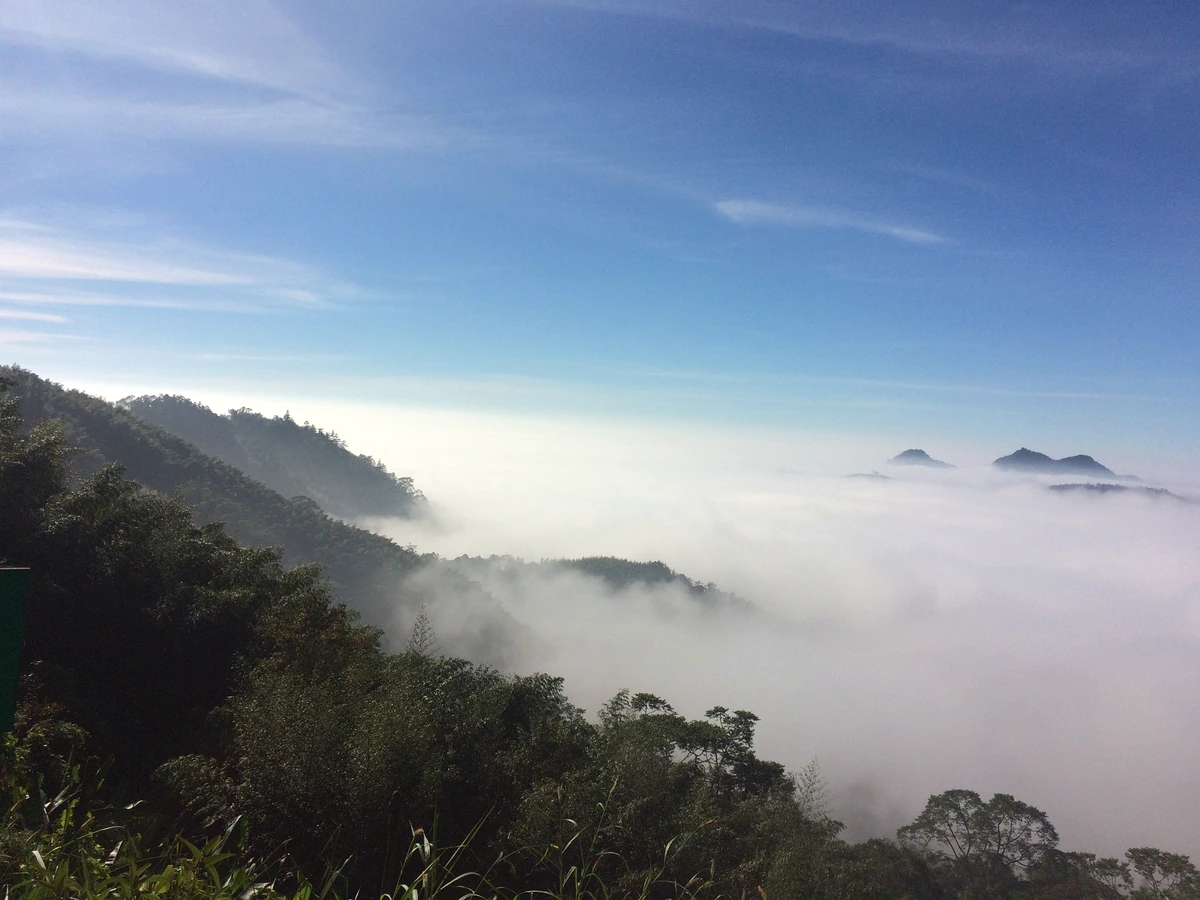
The historic turning point that completely transformed the fate of this primeval forest took place during the Japanese colonial period on the island. Following a large-scale preliminary expedition in 1899 that uncovered vast reserves of thousand-year-old red cypress trees, the Office of the Governor-General quickly recognized the economic and strategic value of the deep forest core. By the 36th year of Meiji (1903), Dr. Shitaro Kawai, an eminent professor of forestry at Tokyo Imperial University, personally trekked through dense forests and across mountain streams to survey the rugged terrain. With remarkable foresight ahead of his time, he not only laid the groundwork for the region’s master plan but is also revered by posterity as the father of the renowned Alishan Forest Railway. Confronted with dauntingly steep inclines, Kawai drafted a one-of-a-kind narrow-gauge mountain railway blueprint, combining nimble Z-shaped switchbacks with spiral loops hugging the mountainsides.
The construction of this monumental engineering feat endured numerous historical vicissitudes. In the 39th year of Meiji (1906), the Fujita-gumi trading conglomerate was granted exclusive concession rights to begin building the railway and forestry infrastructure. However, facing brutal construction conditions and spiraling costs beyond control, the enterprise was forced to abandon the project midway. Recognizing the paramount importance of this trans-mountain transport artery, the Governor-General decided in 1910 to nationalize the project, handing full control over to the Forestry Bureau under the Civil Administration Department. Through the extraordinary efforts of tens of thousands of laborers and surveying specialists, by December of the 1st year of Taisho (1912), the vital railway line from Chiayi up to Erwanping officially opened to traffic, ushering in a golden yet poignant era for millions of millennium-old cypress trees. In tribute to the lifelong contributions of the pioneering scholar, the Dr. Shitaro Kawai Monument (Qinshan Hehe Boshi Jinggong Bei) was solemnly erected amidst the endless greenery of Alishan, commemorating his academic legacy and the spirit of those who carved a path through the mountains.
Following the end of World War II in 1945, the Republic of China government formally took over the infrastructure and established the Alishan Forest District Office under the Taiwan Forestry Bureau. Industrial-scale logging continued intensively for decades to support postwar reconstruction and economic development. Nevertheless, the depletion of virgin timber resources alongside a growing ecological awakening eventually led to a landmark historical decision. In July 1989, authorities ordered a permanent halt to all natural timber logging across the entire Alishan region. Since the early 1990s, this solemn old-growth forest has completely reinvented itself, transforming dramatically from a massive timber extraction site into a national-level nature reserve that welcomes travelers from around the world to admire its heritage landscapes and listen to the thousand-year ballad of mountain winds and drifting clouds.
From a geomorphological and feng shui perspective, Alishan is not merely a solitary peak standing between heaven and earth, but an undulating massif of interconnected peaks belonging to the western spur of the legendary Yushan (Jade Mountain) Range. Towering prominently among these peaks is Mount Datashan, standing at 2,663 meters above sea level like a colossal limestone screen guarding the northern frontier. The core planned area of the national forest sits nestled within a highland basin at an average elevation of 2,216 meters, where deep geological fault lines combined with millions of years of intense weathering and erosion have sculpted a rolling basin topography. This geographical setting creates a flawless feng shui formation known as “sheltering the wind and gathering vital energy,” where moisture-laden sea breezes blowing inland from the Taiwan Strait are blocked by natural mountain walls, condensing and circulating continuously inside deep valleys.
The sheer vertical elevation gain from the foothills to the summit has created a marvel of ecological stratification, making Alishan a rare convergence point of four distinct climate zones—tropical, subtropical, temperate, and frigid—within a compact geographical area. Continuous shifts in temperature and atmospheric pressure nourish an invaluable highland cloud forest belt, perpetually bathed in saturated humidity and drifting blue mist. Layers of vegetation interlock in orderly succession, transitioning from lush broadleaf forests at lower elevations to towering stands of ancient pine, fir, and red cypress above two thousand meters, before giving way to hardy alpine shrubs clinging to bare rocky slopes near the summit.
Alishan’s famous Sea of Clouds and Sunset Glow phenomena stem directly from its prime elevation within the high-altitude fog belt between 1,500 and 2,500 meters. During the seasonal transition from autumn to winter, when strong radiative cooling of the ground after sunset combines with orographic temperature inversion, heavier cold air masses sink to the valley floors while a warm air layer hovers overhead like a giant lid. Rising water vapor is compressed beneath the inversion layer, accumulating and condensing into a fluffy white sea of clouds that surges in billowing waves against the mountainsides like a true ocean. As dusk falls, sunlight refracting through water crystals in the clouds produces a dazzling sunset glow, painting the western sky in mesmerizing shades of burnt orange, ruby pink, and deep violet.
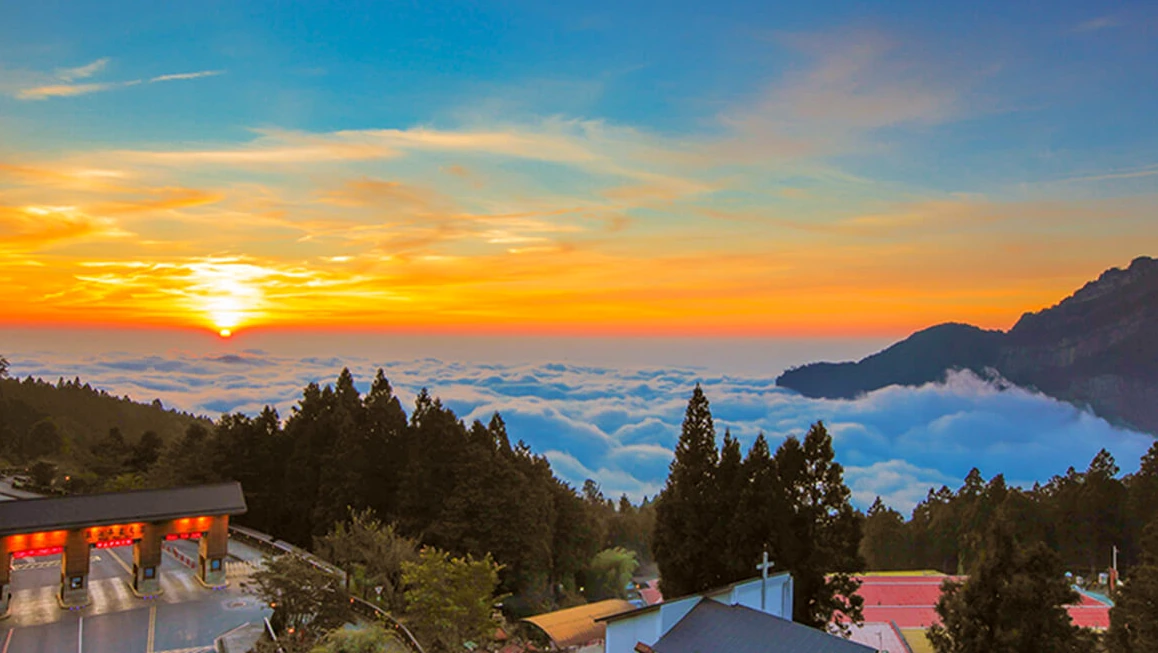
The spectacle of watching the sunrise at the Chushan and Duigaoyue observation platforms is an unmatched testament to the synergy between spatial vantage points and crystal-clear atmospheric conditions. Perched on rocky promontories jutting out toward the east, the thin, virtually dust-free mountain air allows visibility to stretch for dozens of miles all the way to the main spine of the Central Mountain Range and snow-dusted Yushan. Amid the biting chill of dawn, a radiant orange-red aura suddenly bursts from behind the jagged mountain ridges, piercing through the hazy mist to pour vibrant life energy over the thousand-year-old cypress groves, weaving a breathtakingly majestic landscape.
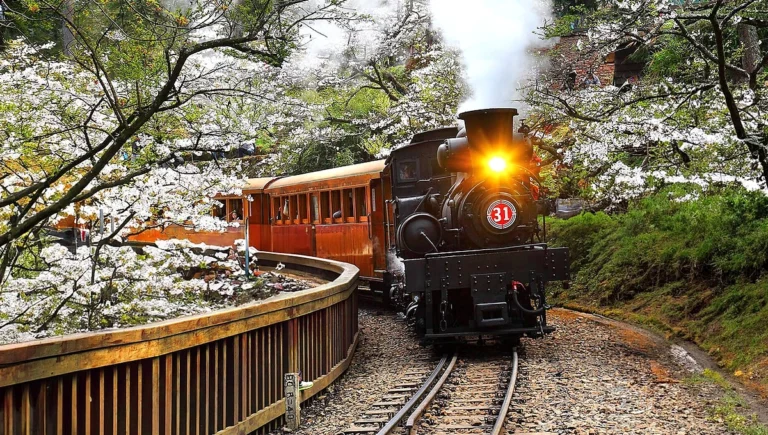
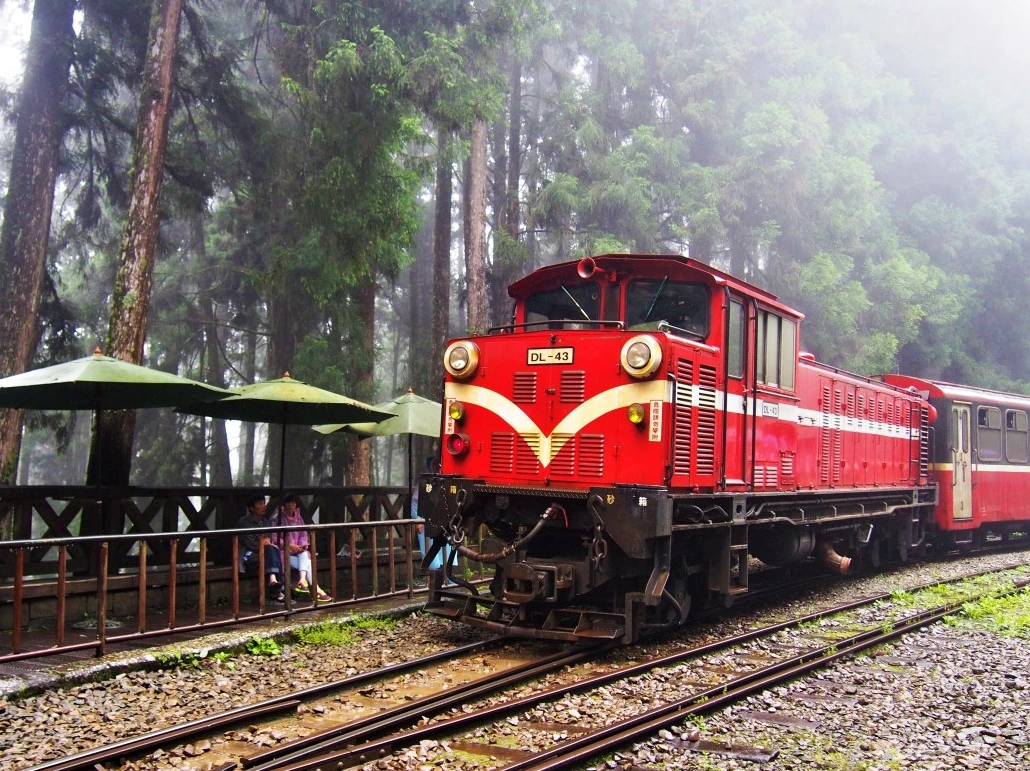
The infrastructure and timber architecture of Alishan National Forest Recreation Area represent the pinnacle of highland engineering, where human ingenuity found ways to harmonize with and adapt to extreme mountainous terrain. The crowning engineering achievement of this wilderness is the Alishan Forest Railway, one of the few remaining historic mountain railways still operating in the world. Featuring an ultra-narrow gauge of just 762 millimeters, the railway accomplishes an extraordinary feat by lifting train carriages across a dramatic elevation climb from 30 meters on the Chiayi plain to 2,216 meters above sea level in the heart of the recreation area. To conquer the sheer cliffs of Mount Dulishan, early twentieth-century engineers designed the track to spiral three full loops around the mountain before winding into a figure-eight toward the top. Higher up the precipitous slopes, trains must repeatedly execute Z-shaped reverse switchbacks—colloquially described by locals with the vivid expression “the train bumps against the cliff”—allowing the locomotive to alternate between pushing and pulling through track switches to ascend safely without leveling the natural terrain. Along this arduous route stand dozens of sturdy iron bridges utilizing classic Pratt Truss structures, alongside mountain tunnels handcrafted brick by red brick with durable stone mortar that has withstood the test of time.
Alongside this steel-rail marvel, historic lodges and stations such as Alishan Station, Zhaoping Station, and the old forestry dormitories showcase the finest standards of traditional carpentry. The architecture here is a harmonious blend of elegant Japanese wooden minimalism and Taiwan’s indigenous philosophy of living in unity with nature. Entire building frames, breezy verandas, and mist-sheltering eaves were constructed using intricate mortise-and-tenon joinery, minimizing the use of metal nails and screws. Precision-fitted structural elements such as standard mortise joints, ground-sill beam systems, and cross-bracing tie beams create a remarkably resilient framework capable of dissipating seismic shockwaves effectively right in the heart of the earthquake-prone Pacific Ring of Fire.
The soul of this wooden architectural ensemble lies in its premier building materials: Taiwan Red Cypress (Chamaecyparis formosensis) and Taiwan Yellow Cypress (Chamaecyparis obtusa var. formosana), selectively harvested from primeval stands in bygone eras. These prized timbers boast fine grain, crisp wave patterns, and an exceptionally high concentration of natural Hinokitiol essential oil. This valuable organic compound not only serves as a natural shield protecting every pillar, beam, and wooden floorboard from mold, termites, and the perpetual dampness of the cloud forest, but also continuously diffuses a refined, soothing aroma that refreshes the traveler’s spirit the moment they step across the threshold of the historic station.
Alishan’s spatial layout culminates in absolute reverence for nature through the symbol of its thousand-year-old Sacred Trees. Standing out among the grove of revered giants is the Xianglin Sacred Tree, a living treasure soaring 45 meters tall with a massive trunk circumference of 12.3 meters—requiring a dozen people holding hands to encircle it. After a severe storm in 1998 caused the original Sacred Tree to topple after being struck by lightning, the Xianglin Sacred Tree was officially voted and enshrined as the successor emblem of the entire forest in 2006. Its lush canopy reaches straight into the heavens like an eternal green parasol, standing as a living sculpture of nature that defines the grand scale and enduring vitality of this sacred mountain realm.
When dusk drapes a veil of deep blue mist across the forest slopes, nightlife in Alishan eschews the bustle of bright neon signs in favor of a quiet, deeply humane philosophy of sustainable ecotourism. The nocturnal environment here is governed by strict local lighting design principles: “low light pollution, warm color temperature, and localized downward lighting.” Along the cypress-wood plaza of Alishan Station and the quaint traveler’s commercial quarter, low-height LED bollard lights cast a soft, warm amber glow nestled beneath towering pines—just bright enough for visitors to navigate damp stone pathways safely while thoughtfully yielding the primeval darkness back to nocturnal wildlife and temperate flora.
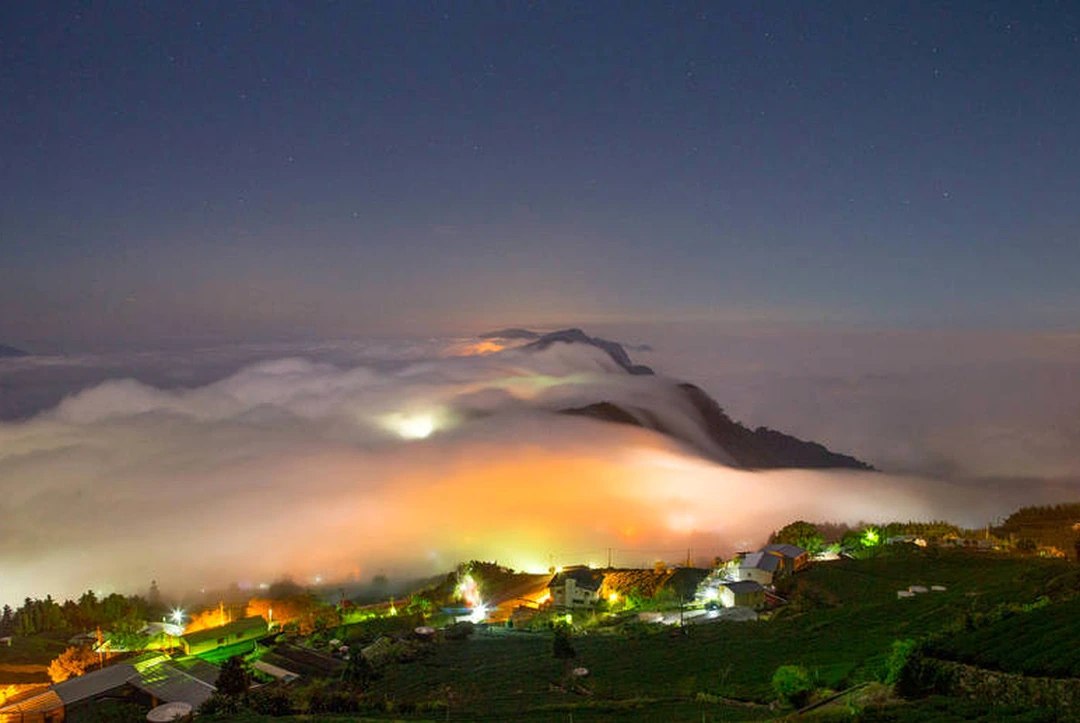
This profound respect for the biosphere is most evident along the trails winding through the Giant Trees Plank Trail. Once darkness blankets the thousand-year-old red cypress canopy, the pathways are closed off to restore tranquil solitude to the deep forest, opening exclusively for visitors joining strictly regulated Dark Sky Tourism and firefly-watching programs. Guided by local experts, guests are permitted to use only specialized red-light flashlights whose long wavelengths do not harm insect vision. This mystical red glow illuminates damp carpets of moss where tens of thousands of fireflies flicker and drift among ancient tree trunks like floating phosphor sparks, harmonizing with the brilliant Milky Way arching over Yushan to create an ethereal natural light show that no artificial spectacle could ever rival.
As the seasons turn toward the spring equinox, visual and performing arts in Alishan awaken with the celebrated Alishan Cherry Blossom Season spanning March and April. The moment thousands of Yoshino cherry trees, wild mountain cherries, and Chishima snow cherries simultaneously shed their petals into showers of pale pink blossoms beside the historic clock tower and zigzag railway tracks, nature becomes a grand stage for indigenous heritage performances. Traditional dances rooted in animist beliefs of the native tribes are brought vividly to life alongside the resonant rhythms of hide drums and bamboo percussion poles struck against the earth. These raw, earthy sounds not only evoke ancestral legends of pioneering the deep woods, but also serve as a heartfelt serenade to the eternal cycle of the mountain wilderness.
The pinnacle of open-air live performance in this misty wonderland is the Sunrise Impression Concert, a signature cultural event held at over 2,400 meters above sea level at the Chushan Observation Deck. While night still lingers, amid the biting cold and a churning sea of clouds in the valleys below, lyrical symphonic chamber melodies begin to rise, interwoven with the soaring, authentic vocals of indigenous artists. At the exact moment the sun breaks over the horizon, piercing the dense fog and bathing the billowing clouds in brilliant gold, a celebratory crescendo erupts to the awe-struck cheers of thousands of spectators. The resonance between classical instrumentation, mountain folk melodies, and natural wonder transforms Chushan’s sunrise deck into one of East Asia’s most magnificent open-air concert cathedrals, etching a sacred and priceless artistic memory into every traveler’s heart.
Exploring the vast wilderness of Alishan does not stop at visual awe before endless seas of clouds or the tactile chill of drifting mountain mist—it also unfolds a rich culinary depth that lingers on the palate. Local cuisine here is a one-of-a-kind fusion woven from three cultural streams: the untamed, free-spirited flavors of the indigenous Tsou people, the resourceful home-style cooking of Hoklo and Hakka settlers, and the hearty, compact fare of lumberjacks from the Japanese forestry era. Shaped by subtropical mountain ecology and rugged highland terrain, every local ingredient carries the pure essence of the forest soil, forming an heirloom culinary map steeped in rustic mountain character.
Few places in Taiwan possess the demanding microclimate and soil conditions found above two thousand meters in Alishan, where persistently cool temperatures and pure underground mineral spring water allow native mountain wasabi to thrive. Worlds apart from mass-produced tube horseradish paste, fresh Alishan wasabi is grated by hand on traditional wooden paddles wrapped in rough sharkskin, releasing a clean, aromatic pungency that rises briskly through the nasal passages before immediately giving way to a lingering, gentle sweetness in the throat. Discerning diners seek out rustic mountain taverns to savor paper-thin slices of cold-water spring sturgeon served sashimi-style with freshly grated wasabi, or nibble on crispy river shrimp tossed with wasabi salt and pepper, tasting the pristine purity of the mist-shrouded highlands.
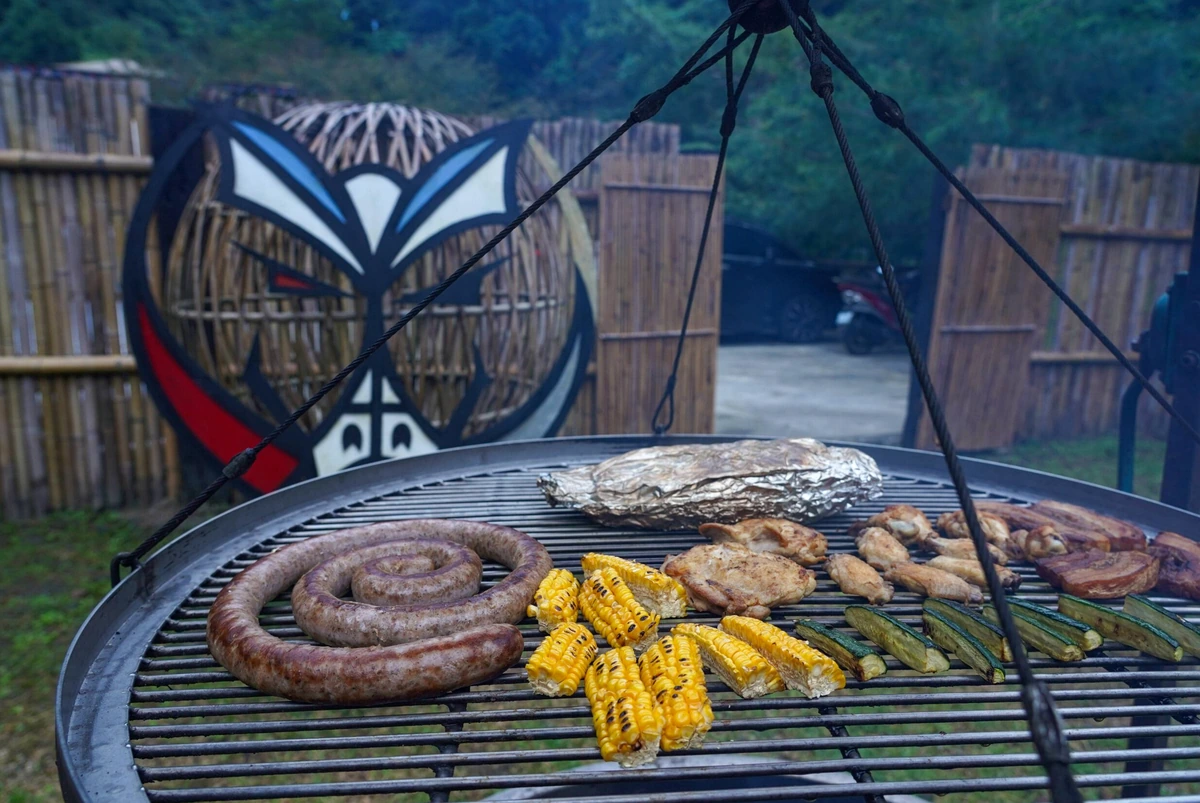
Venturing deeper into traditional Tsou villages, woodsmoke from hillside kitchens leads travelers to dishes steeped in primeval flavors. Most iconic is slate-grilled black pork, prepared from firm belly cuts of native mountain pigs marinated with wild maqaw mountain pepper—whose extraordinary aroma blends litsea cubeba and lemongrass—accented with fragrant mountain-ash leaves. Slices of pork sizzle evenly on flat stone slabs heated over dense hardwood charcoal, rendering golden fat without ever feeling greasy. Accompanying the grilled meat are bamboo-tube sticky rice rolls roasted over embers, cut from young Moso bamboo that retains its delicate inner membrane to wrap glossy, chewy upland glutinous rice infused with the fresh scent of newly felled forest bamboo.
Bringing a mountain feast to a refreshing close is the renowned cool sweetness of handcrafted Aiyu jelly. The creeping Aiyu fig vine grows epiphytically high up on centuries-old cypress trunks deep within the old-growth forest. Once harvested and sun-dried, the tiny seeds are enclosed in a raw cotton cloth bag, submerged in a bowl of mineral-rich mountain spring water, and rhythmically massaged by hand to extract natural pectin that sets into a shimmering golden jelly as smooth as jade. Served in a bowl drizzled with thick, dark cane sugar syrup and a squeeze of tart highland wild lemon, translucent Aiyu jelly delivers an instant wave of revitalizing coolness to every cell, washing away fatigue after long hours of trekking mountain trails.
At the very pinnacle of Alishan’s culinary philosophy stands High Mountain Oolong tea culture, a heritage cultivated in the ideal elevation belt between 1,000 and 1,600 meters above sea level. Enveloped in a microclimate of thick year-round mist and wide day-night temperature swings, tea shoots grow slowly, accumulating rich concentrations of amino acids and chlorophyll. Through partial oxidation and time-honored roasting craftsmanship passed down by master tea makers, a freshly poured cup of Alishan Oolong shimmers with a clear amber-gold hue, releasing a pure bouquet of wild orchid intertwined with ripe mountain peach. Just a single sip reveals a silky, gentle astringency on the lips that transforms into a deep, enduring sweet aftertaste, capturing the serene elegance of this storied mountain sanctuary.
Alishan National Forest Recreation Area keeps its gates open to the world twenty-four hours a day, three hundred and sixty-five days a year, sustaining a timeless rhythm amidst towering ancient trees. To enter the forest reserve, international visitors pay a full admission fee of NT$300, while local citizens enjoy a discounted rate of NT$200. The smartest and most convenient option is booking tickets in advance via the Forestry Bureau’s official digital platform, “Forest Fun” (Senlin Haohaowan). For travelers eager to ride the iconic red wooden carriages winding from the plains up to the clouds, tickets for the main Chiayi–Alishan Forest Railway line must be secured promptly through the railway booking system exactly fourteen days prior to departure. Meanwhile, tickets for the Chushan sunrise branch train go on sale in person at Alishan Station during the afternoon of the preceding day, requiring careful schedule coordination.
Reaching this highland wonderland offers diverse access routes for every type of traveler. Self-drive visitors typically follow National Freeway No. 3, exiting at the Zhongpu Interchange onto Provincial Highway 18—the famed Alishan Highway that winds past mist-draped oolong tea plantations in roughly two and a half to three hours. For those who prefer carefree public transit, the “Taiwan Good Trip” Alishan shuttle bus network (Route 7322 departing from TRA Chiayi Station and Route 7329 departing from HSR Chiayi Station) carries passengers smoothly through dramatic shifts in elevation and vegetation. Additionally, intercity bus Route 6739 links Sun Moon Lake directly across the mountains to Alishan, offering an unforgettable overland journey connecting two of Taiwan’s greatest natural treasures.
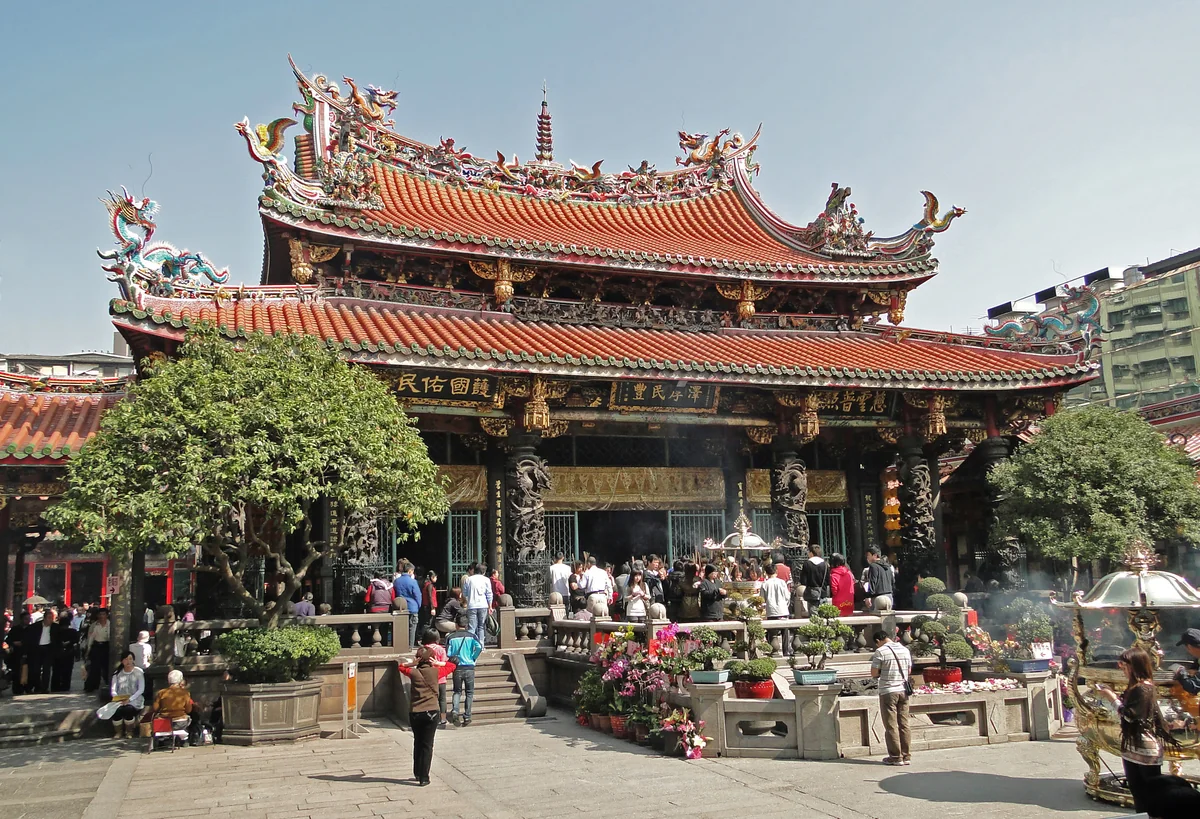
A well-paced two-day, one-night itinerary typically begins with arriving at the central station shortly after noon on Day 1 for a contemplative stroll along wooden boardwalks winding through the thousand-year-old giant tree groves. Along the way, travelers pause to marvel at the Three Generations Tree—where new life sprouts directly from a centuries-old fallen trunk—before paying quiet homage to the towering Xianglin Sacred Tree standing like a pillar supporting the sky. The afternoon route leads onward to Shouzhen Temple, a sacred Taoist sanctuary nestled beside Xianglin Elementary School, famously situated as the highest-elevation school across all of Taiwan. As twilight settles in, the misty village market beckons with the enticing aroma of indigenous Tsou stone-grilled meats paired with steaming cups of premium oolong tea in the crisp mountain air.
Day 2 reaches its visual climax before dawn as the Chushan train cuts through thick fog to carry visitors up the ridge. From Chushan Station, a brisk fifteen-minute walk to the Ogasawara Mountain Observation Deck rewards travelers with an unobstructed 360-degree panorama of the majestic Yushan Range as the sun rises above a billowing sea of clouds. Following a light breakfast amid the pines, the return walk winds past the tranquil, mirror-like waters of the Sister Ponds and the intriguing Three Brothers Trees, completing a restorative cycle of nature immersion before descending the mountain in the afternoon.
Sitting at over 2,200 meters above sea level, Alishan features a distinct mountain microclimate with dramatic swings between daytime and nighttime temperatures; even during mild summer days hovering around 20°C, early mornings can dip below 10°C, while winter dawns frequently drop near freezing. The golden rule for staying comfortable is dressing in onion-style layers paired with a windproof, water-resistant outer shell and high-traction hiking shoes. Acclimatizing to the thinner mountain air calls for a measured pace, staying well hydrated with warm fluids, and strictly honoring “Leave No Trace” principles by packing out all waste and never feeding wild macaques. To turn the dream of walking across mossy ancient forest trails into reality without worrying about complex transit logistics, choosing all-inclusive Taiwan tour packages provides the ideal foundation for a seamless, serene, and deeply memorable journey through sacred Alishan.