Nestled amidst the bustling rhythm of the modern metropolis, Vinh Nghiem Pagoda (Cau Giay district, Hanoi) emerges as a sacred sanctuary of stillness, a unique landmark preserving the thousand-year memory of the ancient Ke Cot region. Located in Yen Hoa ward, this ancient temple bearing the title “Vinh Nghiem Tu” (永嚴寺) is not merely a religious edifice, but also a cultural and historical institution deeply imbued with the identity of traditional Vietnamese villages. In the nostalgic consciousness of Trang An residents, this site holds a special place, evoking the pure, rustic ambiance of the Xu Doai culture bordering the royal capital.
From the perspective of geomancy and local landscape, Vinh Nghiem Pagoda enjoys a tranquil position, drawing upon the sacred energy of the legendary To Lich River—once the commercial and cultural lifeblood of Thang Long – Hanoi. Despite enduring historical upheavals and the encroachment of urban concrete, the temple grounds still maintain a solemn, serene atmosphere. The historical origins of the pagoda are closely tied to the land reclamation, village establishment, and spiritual life of the ancient Ha Yen Quan village community. According to research documents and stone stelae preserved on-site, Vinh Nghiem Pagoda dates back to the Later Le dynasty (17th century); across successive feudal dynasties, the temple has witnessed countless vicissitudes of time, from fierce years of war to periods of peaceful reconstruction.
The formation and development of Vinh Nghiem Pagoda stand as a vivid testament to the enduring vitality of Buddhist Zen traditions blended seamlessly with indigenous beliefs. Unlike grand national ancestral monasteries, Vinh Nghiem Pagoda in Cau Giay embodies the character of a pure “village monastery,” intimately bound to the lives of every Ke Cot resident. The esteemed abbots across generations were not only practitioners upholding the true Dharma, but also spiritual, medical, and cultural pillars for the entire community. Here, Mahayana Buddhist space harmoniously merges with Mother Goddess worship and village tutelary deity veneration, creating a rich, multi-layered belief system.
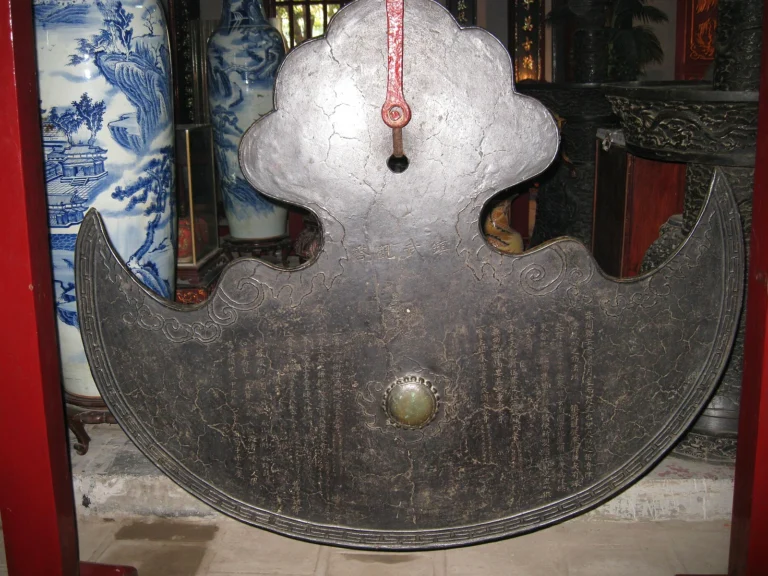
Through the lens of heritage studies and cultural journalism, Vinh Nghiem Pagoda also serves as a living museum housing priceless collections of antiques, stelae, and woodblocks. Ancient Buddha statues crafted in the late Nguyen dynasty artistic style, stone stelae recording merit from past restorations, and the cluster of ancestral stupas within the grounds provide authentic proof of the monument’s historical depth. Preserving and safeguarding Vinh Nghiem Pagoda in the heart of the capital today is not solely the responsibility of archaeologists or cultural managers; it is equally a journey of gratitude toward past generations, keeping alive the soul of a land blessed with a thousand years of civilization.

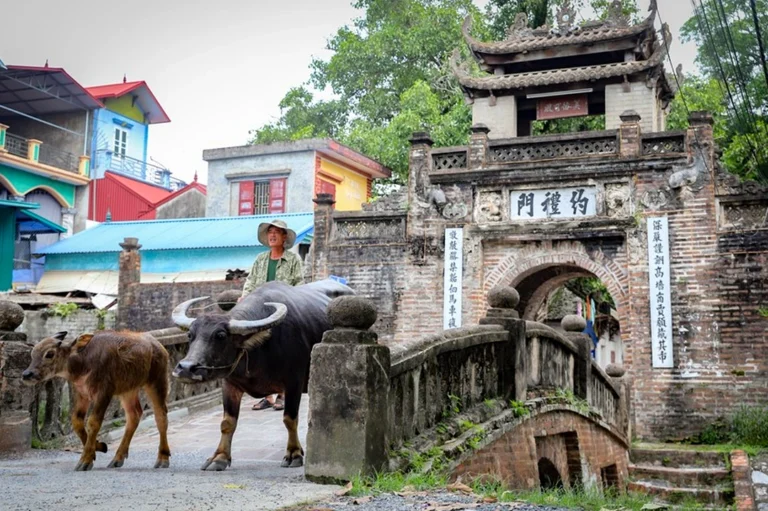
Situated in the heart of a busy city, Vinh Nghiem Pagoda (Yen Hoa, Cau Giay) nevertheless preserves a tranquil, secluded landscape imbued with traditional spirit. Local elders regard the temple’s terrain as a convergence point of sacred energy, leaning its back against the quiet atmosphere of ancient Ha Yen Quan village while opening its spacious front to absorb vibrant energy from the urban artery. Stepping through the moss-covered triple gate, visitors feel transported into another dimension, where the resonant evening temple bell mingles with falling leaves, washing away all the noise and rush of the streets outside. Although renovated several times, the pagoda grounds retain the complete spatial layout of an authentic Vietnamese “village monastery,” featuring courtyards shaded by ancient trees, a quiet ancestral stupa garden, and ornamental potted plants tended with devotion by the temple caretakers.
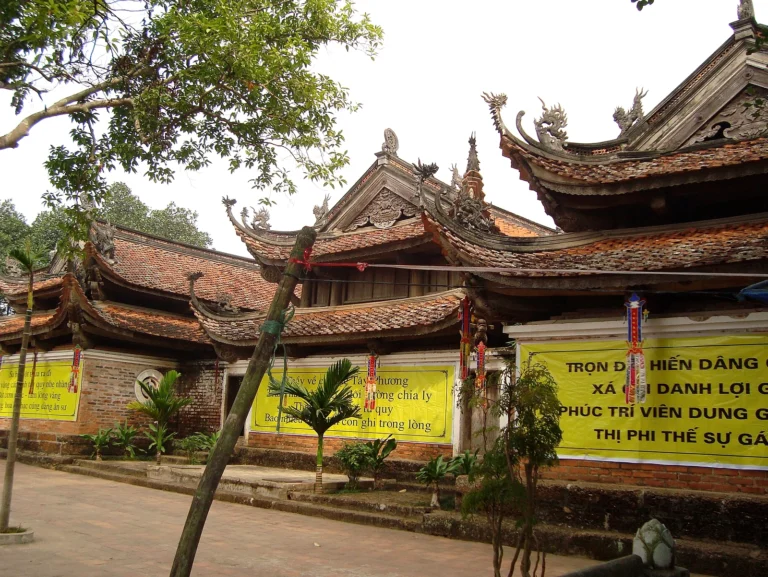
Most remarkable is the traditional wooden architecture and sculpture found in the front hall and main sanctuary. Wooden structural components—from trusses, beams, and purlins to the paneled wooden doors—are intricately hand-carved, bearing the distinct artistic signature of the late Nguyen dynasty. Familiar motifs in Buddhist fine arts, such as the Four Sacred Creatures (dragon, unicorn, tortoise, phoenix), stylized foliage, arhats, and cloud-scroll patterns, were brought to life by ancient artisans using vivid, multi-dimensional openwork and high-relief carving techniques. Beneath flickering candlelight and drifting wisps of incense smoke, every carved detail appears majestic yet graceful and fluid, testifying to the supreme craftsmanship of traditional carpentry villages from old Xu Doai.
To capture precious artistic and spiritual moments at this sacred sanctuary, photographers and travel journalists frequently share must-visit camera angles. The first and most highly praised check-in spot is the antique paneled wooden doorway at the main hall. Looking outward from inside the courtyard, the doorframe—with its red lacquer and gold gilding weathered gently over time—forms a natural frame ideal for capturing nostalgic photographs. The best lighting for this angle is early morning (from 7:30 AM to 9:00 AM), when soft morning sunbeams slant through the ancient tree canopies, casting golden streaks across the mossy threshold and intricate wood carvings to create a magical, cinematic visual effect.
The second unmissable camera angle is the ancestral stupa garden on the left wing of the temple grounds. This area gathers weathered stone and baked-brick stupas commemorating generations of deceased Zen masters. Sunset (around 5:00 PM to 6:00 PM) is the “golden hour” here, as the fading sun turns a warm reddish-orange, enveloping the solemn stupas amid the quiet surroundings. Shooting at this hour yields photographs that fully convey the stillness, sanctity, and historical depth of the site. Additionally, close-up shots of the curved dragon-head roof eaves reaching toward a clear blue sky at dawn offer another wonderful way to capture the enduring beauty of this ancient pagoda across space and time.

Stepping through the mossy triple gate of Vinh Nghiem Pagoda in Yen Hoa ward, Cau Giay district, Hanoi, visitors enter a completely quiet realm entirely removed from the urban hustle outside. The hands-on experience at this “village monastery” evokes a feeling quite distinct from visiting grand national monasteries. Without steep stone steps to climb up mountains or scenic boat rides along rivers, the charm here lies in slowly exploring every corner of a living local cultural space, where the thousand-year history of Ke Cot (ancient Ha Yen Quan village) whispers through every wood grain, roof tile, and wisp of solemn incense.
From the moment they enter the grounds, visitors are captivated by the subtle harmony between solemn Buddhist architecture and distinctly Vietnamese Mother Goddess and tutelary deity worship. Beneath the cool shade of ancient banyan trees, the tolling of the temple bell at dawn or dusk inspires a remarkably tranquil state of mind. Standing before the Three Jewels sanctuary, inhaling the gentle aroma of incense blended with shimmering candlelight, all the worries and pressures of modern life seem to dissolve. Visitors can light a stick of incense themselves, reverently admire ancient statues crafted in the late Nguyen artistic style, listen to the rhythmic chanting of Buddhist devotees, and vividly sense the enduring spiritual current of the local community across centuries of history.
The next rewarding highlight of the experience is immersing yourself in the rich local cultural life surrounding the site. As soon as you step outside the pagoda gate, you are greeted by the renowned traditional culinary flavors of the Ke Cot area. Nothing beats following a peaceful worship session with a stop at a small roadside eatery to savor rustic, comforting specialties such as fragrant Vong village green rice flakes, steaming hot banh gio, or a bowl of rich, traditional Hanoi heirloom pho. The interplay between the sacred spiritual space of the ancient temple and the warm, everyday rhythm of Yen Hoa residents creates a multi-dimensional, deeply moving travel experience.
Concluding a visit to Vinh Nghiem Pagoda, what lingers in every traveler’s mind is not merely dry historical or archaeological facts or stunning check-in photos, but a profound sense of inner peace. This place truly stands as a cultural “treasure” in the heart of the city, bearing witness to the enduring vitality of traditional heritage values. Initial awe before its solemn antiquity gradually gives way to deep appreciation and gratitude for the generations of ancestors who preserved and nurtured a vibrant, invaluable, and proud spiritual landmark in the thousand-year-old capital.

Vinh Nghiem Pagoda (Yen Hoa, Cau Giay) is a serene spiritual sanctuary in the heart of the bustling capital, drawing numerous Buddhists and visitors from near and far to worship and find inner peace. To ensure your pilgrimage and sightseeing visit goes smoothly, knowing practical details regarding opening hours, transportation, and cultural etiquette is essential.
Regarding operating hours, the pagoda welcomes visitors and worshippers every day of the week, opening from early morning around 06:00 AM until 06:00 PM. This schedule makes it convenient for travelers to plan their itinerary. Especially on full moon days, the first day of the lunar month, or major Buddhist holidays such as Vesak and the Ullambana Festival, the pagoda grounds typically open earlier and welcome large numbers of devotees coming to offer incense, chant sutras, and participate in charitable and Dharma activities.
One major advantage of visiting this ancient temple is that admission is completely free for everyone. Visitors coming to pay their respects do not have to pay any entrance fee. If you arrive by personal vehicle such as a motorbike or car, you can park in the designated area right outside the temple gate for a very reasonable standard parking fee.
Regarding directions, starting from the city center (such as Hoan Kiem Lake or the Old Quarter), reaching Vinh Nghiem Pagoda (Yen Hoa, Cau Giay) is very convenient thanks to the well-developed road network. You can travel by personal vehicle or public bus. If riding a motorbike or driving a car, the optimal route follows Nguyen Chi Thanh or Tran Duy Hung Street, turning onto Nguyen Khang or Trung Kinh Street to enter the Yen Hoa area. The roads are smoothly paved, easy to navigate, and straightforward to find. If taking public transit, numerous bus routes pass through the Cau Giay area near Yen Hoa Street, allowing travelers to connect easily without spending much time.
Because this is a sacred site of longstanding cultural heritage, visitors must strictly observe guidelines on attire and conduct. Please wear polite, modest clothing—tops with sleeves and trousers or skirts extending below the knee—avoiding overly short or tight outfits inappropriate for a Buddhist temple. Additionally, as the pagoda grounds are a space of stillness, visitors should walk softly, speak quietly, refrain from loud laughter, keep the premises clean, and never touch ancient artifacts, relics, or historic woodblocks without permission from the monastery management board.
The ideal time of year to visit Vinh Nghiem Pagoda is in the spring (from the first to the third lunar month), when Hanoi enjoys cool, pleasant weather well suited for spring outings combined with praying for peace. Furthermore, the first day and full moon day of each lunar month bring an especially solemn and tranquil atmosphere to the temple, helping the soul find calm and relaxation away from the pressures of modern life.

To enjoy a complete getaway and admire the full beauty of Vinh Nghiem Pagoda without worrying about arranging transportation, booking tickets, or planning itineraries, travelers can choose all-inclusive, premium Hanoi tour packages from VDS Travel. Each tour is designed to optimize photo check-in times when the scenery is at its most radiant, accompanied by knowledgeable local guides and top-tier hotel and dining standards.