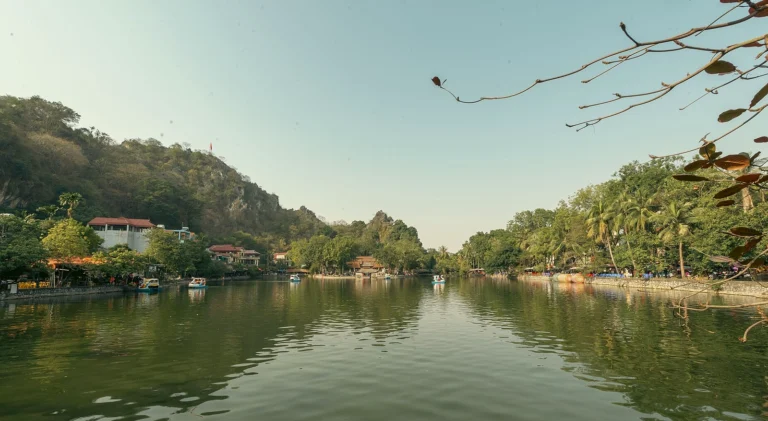
Nestled amidst the serene atmosphere of Hanoi’s outskirts, Cay Thi Pagoda (literarily named Thien Phuc Tu) emerges as a unique spiritual destination where the thousand-year cultural heritage of the cloud-draped Xu Doai region is deeply crystallized. Possessing a prime geographical location with a “water-gathering, mountain-facing” terrain, this ancient pagoda sits atop a dry, elevated mound, embracing the gentle curve of an alluvial watercourse in front while resting its back against undulating hills resembling a coiling dragon and crouching tiger. This ideal feng shui setting not only imparts a secluded, tranquil air to the Zen sanctuary, but also creates a year-round airy microclimate where the lingering chime of evening bells blends with the solemn resonance of a land steeped in a millennium of culture.
The historical origins of this heritage site are intertwined with the passage of time, yet its original imprints have never faded. Through meticulous field surveys conducted from 2018 to 2021 by the Vietnam Archaeological Association and the Hanoi Department of Culture and Sports, underground cultural strata and ancient architectural components—such as sandstone column bases carved with lotus bud motifs characteristic of the Tran dynasty, combined with square bricks dating back to the Early Le dynasty—have firmly verified the founding origins of Thien Phuc Tu during the Ly-Tran dynasties. This was once a serene monastic retreat where eminent high monks of the Truc Lam Yen Tu Zen sect paused along their travels to propagate the Dharma, kindling the flame of compassion amidst the secular world.
The folk name “Cay Thi Pagoda” (Persimmon Tree Pagoda) carries a strong local vernacular flavor, originating from a centuries-old persimmon tree towering right in the front courtyard of the temple. This sacred persimmon tree is not merely an ecological and geological landmark specially recognized by the press and heritage management agencies, but also a living witness to countless historical upheavals, sheltering the pagoda grounds through the vicissitudes of time. Under the Revival Le and Nguyen dynasties, the pagoda continued to receive land endowments (hau Phat) and royal decrees from meritorious officials and nobles, becoming a center for Buddhist religious activities intertwined with socially engaged Taoism, closely bound to the spiritual life of the local community.
A journey to explore Cay Thi Pagoda is therefore not merely a sightseeing excursion, but a magnificent encounter with the past. Here, every inch of soil, every stone slab, and every ancient tree root whispers stories of the Dong A heroic spirit and the resilience of the national cultural lineage across centuries. Thien Phuc Tu remains forever a grand sanctuary amidst the urban heartland, where people return to find inner peace and pay homage to the sacred roots of their ancestors.
Stepping across the moss-covered courtyard stretching beneath the shade of the centuries-old persimmon tree, Cay Thi Pagoda (Thien Phuc Tu) unfolds before visitors as a purely Vietnamese architectural space that is solemn, contemplative, and deeply marked by time. The terrain of the ancient temple was chosen by sages of old according to traditional feng shui philosophy: backed firmly against a high ridge like a dragon vein gathering vital energy, and facing an open expanse featuring a jade well and lush vegetation across all four seasons. The seamless harmony between unspoiled nature and the skilled hands of master sculptors over centuries has created a landscape masterpiece that is both grand and heartwarmingly intimate.
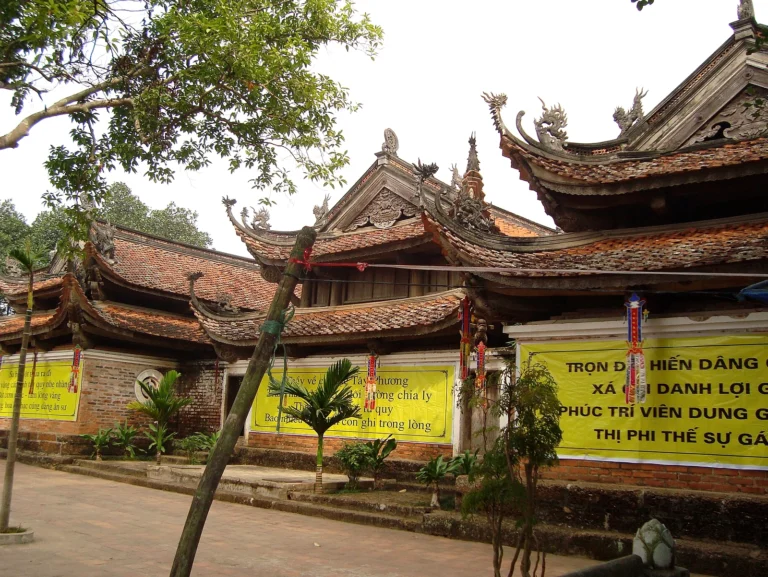
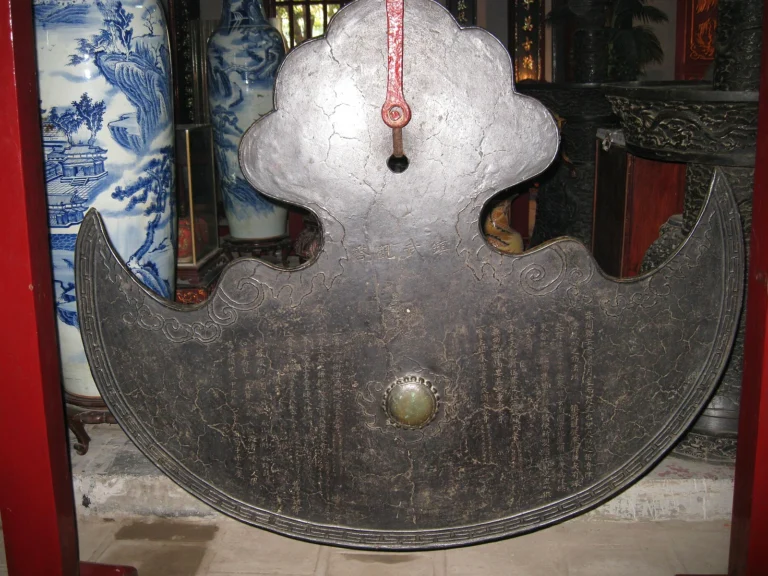
The overall architecture of the pagoda is laid out in the traditional “Dinh” (T-shaped) style, comprising the front hall and upper sanctuary with a sturdy ironwood truss system and stacked-beam gong-stand structures rich in the architectural artistry of the Revival Le and Nguyen dynasties. Every inch of wood and every carved detail on the tie beams and corbels comes alive with motifs of the four mythical creatures—dragon, unicorn, tortoise, and phoenix—alongside gracefully stylized foliage. Beneath the eaves, a moss-covered fish-scale tiled roof curves gently upward at the corners, casting protective shade over the sacred space. Standing out within this setting is the exquisite art of Buddhist statuary finished in gleaming gilded lacquer, alongside ancient horizontal lacquered boards and parallel sentences reflecting shimmering candlelight, imparting a sense of peace and transcendence to anyone arriving on pilgrimage.
For photographers and avid travelers, Cay Thi Pagoda offers nostalgic “million-view” shooting angles that preserve the timeless beauty of Northern Vietnamese Buddhist architecture. The first and most sought-after check-in spot is the view from inside the front hall veranda looking out toward the main courtyard, where the canopy of the ancient persimmon tree spreads like a giant umbrella sheltering the antique Bat Trang brick-paved yard. The ideal time to capture this shot is at dawn, when the first morning sunbeams pierce through the leaves, casting warm golden streaks onto the mossy steps to create an ethereal, poetic scene straight out of a film.
The second prized camera angle lies along the left-wing corridor paired with the raw brick perimeter wall and centuries-old stone steles. Under the soft golden glow of sunset, as the sun gradually dips behind the ancient tree canopy, the space becomes immersed in a rare, solemn stillness. From this vantage point, the camera lens can capture the graceful sweep of the curved tiled roof blending with the evening sky wisps of incense smoke. Not only a serene spiritual sanctuary for finding inner balance, Cay Thi Pagoda is also a destination that preserves the pinnacle aesthetic, architectural, and scenic values of Vietnamese cultural heritage.
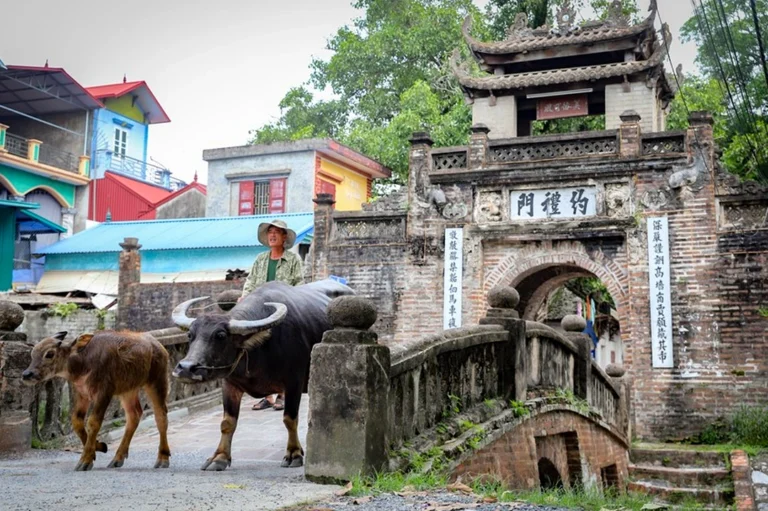
Stepping through the moss-grown three-entrance gate of Cay Thi Pagoda, what greets visitors is not merely an ancient space steeped in time, but also an overwhelming and deeply moving hands-on journey. Nestled in the tranquil surroundings of Xu Doai, the path to the ancient Thien Phuc Tu begins with leisurely footsteps ascending worn, moss-carpeted stone steps, winding beneath a lush canopy of primary forest. The fatigue of the noisy city seems to vanish completely, giving way to absolute stillness as the resonant chime of the temple bell mingles with the mountain breeze rustling through the ancient foliage.
In particular, an unmissable highlight of the exploration journey is a boat ride gliding along the crystal-clear stream winding right at the foot of the mountain, offering panoramic views of the pristine ecosystem and the majestic architecture of the pagoda emerging through the misty morning veil. Gazing out into the distance from above, visitors cannot help but marvel at the exquisite landscape of mountains and rivers: on one side rise majestic peaks, while on the other lies a peaceful countryside with lush green fields stretching endlessly. In the moment of standing beneath the shade of the centuries-old persimmon tree, breathing in the crisp, pure air and listening to the echoes of a thousand years of history, one’s heart feels remarkably light and serene.
Beyond the awe-inspiring scenery and sacred spiritual atmosphere, the trip is also an opportunity for travelers to immerse themselves in vibrant local culture through fascinating stories shared by village elders. Concluding the pilgrimage, stopping to savor renowned Hanoi specialties around the destination rounds out every traveler’s experience. The rich flavors of rustic countryside dishes, the enticing aroma of local produce, and the warm hospitality of the local people serve as lingering, heartfelt notes that stay with anyone who has ever visited Cay Thi Pagoda.

Cay Thi Pagoda (Thien Phuc Tu) welcomes Buddhists, travelers from near and far, and researchers for sightseeing and worship every day of the week. Standard opening hours typically run from 6:00 AM to 6:00 PM daily, making it convenient for everyone to plan their pilgrimage. In particular, during major annual festivals such as Vesak (Buddha’s Birthday), the Ullambana (Vu Lan) festival, or the first and fifteenth days of each lunar month, the pagoda grounds open earlier and extend visiting hours into the late evening to accommodate the spiritual needs of the community.
Regarding admission fees, the monument management board and the pagoda currently apply a policy of completely free admission for all domestic and international visitors. Pilgrims visiting here simply make voluntary donations into the pagoda’s official donation boxes to contribute to the heritage preservation fund, landscape restoration, and care of the centuries-old persimmon tree. Foregoing entrance fees allows this ancient temple to maintain its pure spiritual and cultural beauty, warmly welcoming every virtuous soul.
To ensure the most fulfilling exploration and pilgrimage experience at Cay Thi Pagoda, visitors departing from central Hanoi can choose from various modes of transportation, including motorbikes, private cars, or public buses. The most optimal route follows the main boulevard toward the outskirts or ring roads connecting conveniently with the interprovincial highway network. Upon nearing the heritage site, detailed directional signs guide travelers along peaceful, tree-lined village roads completely separated from the hustle and bustle of the crowded city.
The ideal time of year to visit Cay Thi Pagoda is in spring (from the first to the third lunar month), when the weather is cool and flowers are in full bloom, making it ideal for spring excursions combined with Buddhist prayers for peace. Additionally, autumn (around the ninth to eleventh lunar months) is another wonderful period when clusters of golden ripe persimmons shade the front courtyard, spreading a sweet, rich fragrance throughout the ancient temple grounds and bringing an extraordinary sense of tranquility to anyone who visits.
As a sacred site carrying long-standing historical and archaeological value, visitors to Cay Thi Pagoda must strictly observe regulations regarding spiritual etiquette and attire. Specifically, everyone should wear polite, modest clothing covering the shoulders and knees, prioritizing long trousers or skirts appropriate for the solemn atmosphere of a Buddhist sanctuary. At the same time, visitors must maintain general order, speak softly, refrain from littering on the grounds, and strictly avoid touching relics, antiquities, ancient stone steles, or venerable Buddha statues so as to preserve the heritage intact for future generations.

To enjoy a complete vacation and fully admire the beauty of Cay Thi Pagoda without worrying about arranging transportation, booking sightseeing tickets, or planning travel itineraries, visitors can choose VDS Travel’s premium all-inclusive Hanoi tour packages. Every tour is optimally designed to schedule check-ins when the scenery is at its most vibrant, accompanied by a team of tour guides thoroughly knowledgeable about local culture alongside top-tier hotel and culinary service standards.