Nestled quietly along the far western border of present-day Hanoi, where it closely meets Hoa Binh and Phu Tho provinces, Muong Lo Field (within the ancient Xu Doai region) emerges as a living geological and cultural museum occupying a unique ecological micro-region. Here, dramatic limestone mountain ranges blend seamlessly with fertile basin valleys enriched by ancient alluvial waterways, forming an auspicious “energy-gathering, coiling dragon and crouching tiger” landscape according to traditional feng shui philosophy. Classical chronicles such as Dai Nam Nhat Thong Chi and *Lich Trieu Hien Chuong Loai Chi* once depicted this territory as a rugged yet prosperous frontier where the sacred spirit of mountains and rivers harmonized with the resilient rhythms of indigenous communities since antiquity.
Tracing history back to the prehistoric and protohistoric eras under the Hung Kings and An Duong Vuong, Muong Lo was early recognized as one of the earliest settlement cradles of the ancient Viet people of the Van Lang state. Archaeological field excavations conducted by the Vietnam Institute of Heritage & Cultural History across surrounding rock shelters and caves have brought to light priceless artifacts—including shouldered stone axes, cord-marked pottery shards, and primitive stone tools dating back three to four millennia. These cultural strata prove that from the dawn of civilization, the Muong Lo valley witnessed the pivotal transition from hunting and gathering to valley wet-rice agriculture, laying the first cornerstones for the brilliant Dong Son culture.
Through the independent feudal dynasties of Ly and Tran, and later the Early Le and Revival Le periods, Muong Lo further affirmed its role as a vital military and commercial corridor west of the Thang Long capital. Under the Le Dynasty, when the imperial court reorganized the administrative system of Son Tay Garrison, this region fell under mountainous prefectural governance closely tied to the hereditary rule of local chieftains and quan lang nobility. During the Nguyen Dynasty under Emperors Minh Mang and Tu Duc, the central court maintained its flexible frontier governance policy—harmonizing the autonomous customs of the Thai and Muong ethnic groups while ensuring orderly taxation and border defense. Seventeenth- to nineteenth-century deity genealogies and Sino-Nom texts preserved locally remain living historical witnesses to the ebbs and flows of this borderland.
Today, returning to Muong Lo Field in the heart of thousand-year-old Xu Doai, travelers not only admire an unspoiled natural landscape of commanding topography, but also touch the deep cultural layers of a heritage space rich in identity. Here, winding terraced paddies, stilt houses peeking through wisps of evening hearth smoke, and the echoing strains of pi le horns in the morning mist continue to whisper stories of national origins. Through rigorous scholarly research, the enduring authenticity of Muong Lo (Hanoi) restores to Vietnam’s heritage map an intact gem—magnificent in terrain and deeply moving in spirituality and humanity.

Resting beneath the shadow of towering limestone ranges on the far western edge of Xu Doai, Muong Lo Field unfolds as a breathtaking natural panorama where nature and centuries of human labor merge into a scenic masterpiece. Muong Lo’s terrain forms a distinctive sunken basin encircled by overlapping mountain rings that shelter the valley from harsh external weather. Viewed from above, the field opens into an endless emerald expanse where terraced paddies curve gracefully like soft silk ribbons hugging the foothills, tier upon tier climbing halfway into the clouds. Generations of indigenous farming artistry have etched delicate geometric patterns across the earth, dressing the valley in radiant gold every harvest season while filling the ancient basin with the sweet fragrance of ripe rice.
Alongside its terraced fields, the landscape is adorned with traditional stilt-house architecture tucked beneath golden bamboo groves and millennia-old trees. The stilt homes of the Thai and Muong people feature sturdy timber frames topped with palm-leaf thatch or curved yin-yang tiled roofs shaped like tortoise shells, reflecting a worldview rooted in harmony with nature. Carvings along beams, railings, and staircases feature stylized ban blossoms, phoenixes, and sun motifs evoking the luminous Dong Son heritage. A cool, clear stream winds through the heart of the valley like an artery of life, depositing fertile silt and turning giant bamboo waterwheels day and night, filling the forest air with the cheerful murmur of rushing water. This seamless blend of dramatic yet poetic basin topography, lush flora, and peaceful villages makes Muong Lo a priceless landscape heritage that captivates every visitor.
To capture the full magic of this scenic masterpiece, professional photographers and leading travel magazines point to two unmissable “million-view” photo spots. The first sits atop the ancient Khau Pha Pass along the western rim of the valley, offering a sweeping bird’s-eye panorama of the entire Muong Lo expanse. The ideal lighting window here is dawn (from 5:30 AM to 6:30 AM), as wisps of mist lingering over the peaks slowly dissolve to let the first morning sunbeams spill into the valley, awakening the golden terraces and drifting village hearth smoke. The second vantage point lies deep inside the valley along wide paddy bunds near the headwaters, framing up-close views of timeworn stilt houses nestled amid vast fields and sky. Golden hour here arrives at sunset (from 5:00 PM to 6:00 PM), when the sun dips behind the northwestern peaks, setting the sky ablaze in enchanting orange hues that shimmer across freshly harvested waterlogged paddies—creating a serene, contemplative tableau steeped in the timeless soul of Xu Doai.

When the first rays of morning sunlight pierce the gossamer mist blanketing ancient Xu Doai to awaken Muong Lo Field, travelers arriving here are immediately drawn into an enchanting, deeply rewarding journey. Leaving urban noise far behind, exploration begins along winding mountain trails ascending the surrounding hills to take in a sweeping panorama of natural splendor. From above, Muong Lo Field spreads out like a giant multicolored silk tapestry, with softly curving rice terraces embracing tranquil villages. Standing high on the ridge, breathing in crisp air scented with fresh paddy and damp alluvial earth, visitors cannot help but marvel at the grandeur forged over millennia by nature and human hands.
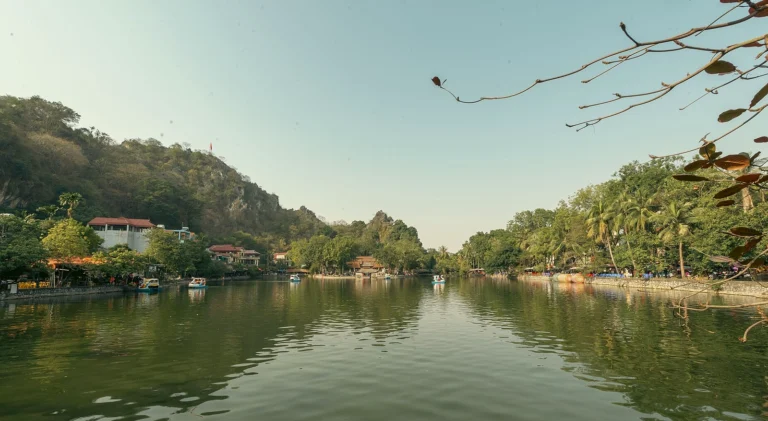
Descending from moss-covered stone steps on the heights, vibrant local life invites travelers aboard wooden boats for a poetic journey gliding down the cool, clear stream. Drifting gently through the quiet valley to the soft splash of paddles and wind rustling through golden bamboo, visitors feel transported into another dimension where time itself seems to pause. Crystal-clear water mirrors drifting white clouds above, while traditional stilt houses peek through lush orchard canopies along both banks—composing a heart-stirring scene of peace. It is an ideal moment to let your spirit drift freely, washing away modern stress and recovering inner clarity amid historic nature.
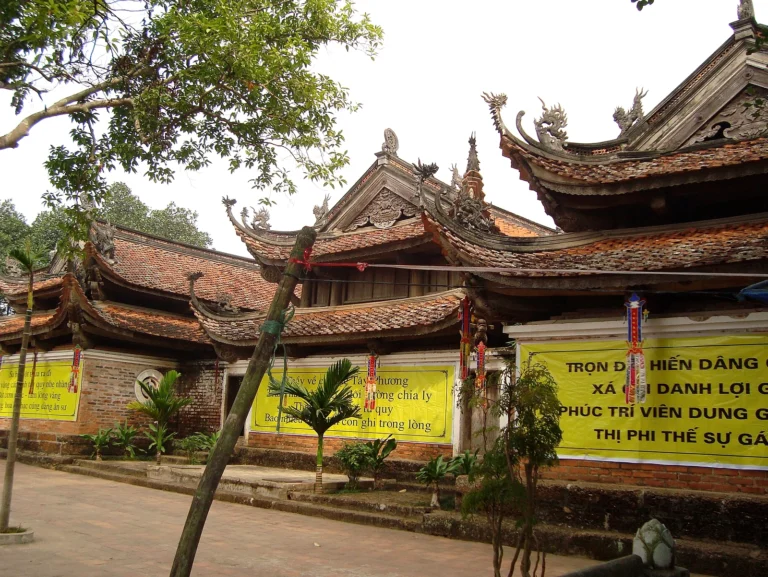
An exploration of Muong Lo Field would be incomplete without soulful spiritual encounters and celebrated local cuisine. Pausing at ancient temples and shrines tucked beneath venerable trees—where 17th- to 19th-century deity genealogies preserve the beliefs of ancient Viet and highland ethnic communities—travelers pay reverent tribute to ancestors who pioneered and settled this land. Evening temple bells echoing across the quiet valley bring an indescribable sense of serenity. As night falls around the warm glow of a stilt-house hearth, irresistible aromas of Xu Doai and northwestern borderland specialties awaken every sense: fragrant bamboo-tube sticky rice, smoky kitchen-hung buffalo meat, crispy grilled stream fish seasoned with distinctive forest spices, paired with warm cups of local rice wine. All these authentic, vivid experiences blend together, leaving every visitor deeply moved and proud of a living heritage flowing endlessly through time.

Situated along the far western border of Xu Doai – Hanoi adjoining Hoa Binh and Phu Tho, Muong Lo Field is a destination rich in historical heritage and unspoiled ecology. To make the most of your journey through this distinctive cultural micro-region, the pocket guide below provides complete details on visiting hours, costs, routes, and essential travel tips.
Regarding operating hours, the cultural landscape and valley grounds are open freely to visitors year-round, every day of the week. Because this is an open community heritage landscape intertwined with local village life, there is no entrance gate or admission fee. Visitors enjoy completely free access to admire the scenery, explore archaeological landmarks, and experience the traditional culture of indigenous communities.
The best times of year to visit the valley are during the golden rice harvest season or the early-summer water-pouring season. During these periods, Xu Doai enjoys mild, dry weather ideal for field exploration, artistic photography, and gentle trekking routes through ancient caves and rock shelters encircling the valley.
Departing from central Hanoi, the most convenient way to travel is by private car or motorbike along Thang Long Boulevard or the national highway toward Son Tay, passing through historic Xu Doai before continuing along interprovincial roads toward Hanoi’s western border with Hoa Binh and Phu Tho. This open, scenic route weaves between lowland plains and majestic mountains, bringing travelers directly to the archaeological sites and valley viewpoints.
When visiting Muong Lo, travelers should wear neat, respectful attire, prioritizing comfortable, breathable clothing and proper athletic shoes suited for hilly trails and valley terrain. In particular, when entering spiritual spaces, temples, shrines, or traditional ethnic minority villages, dress modestly, respect local customs, keep shared spaces clean, and help preserve the ancient historical heritage passed down through generations.
To enjoy a seamless getaway and take in the full beauty of Muong Lo Field without worrying about transportation, sightseeing arrangements, or itinerary planning, travelers can choose VDS Travel’s premium all-inclusive Hanoi tour packages. Every itinerary is thoughtfully timed to capture photo spots at their most radiant, accompanied by knowledgeable local guides and top-tier hotel and dining standards.