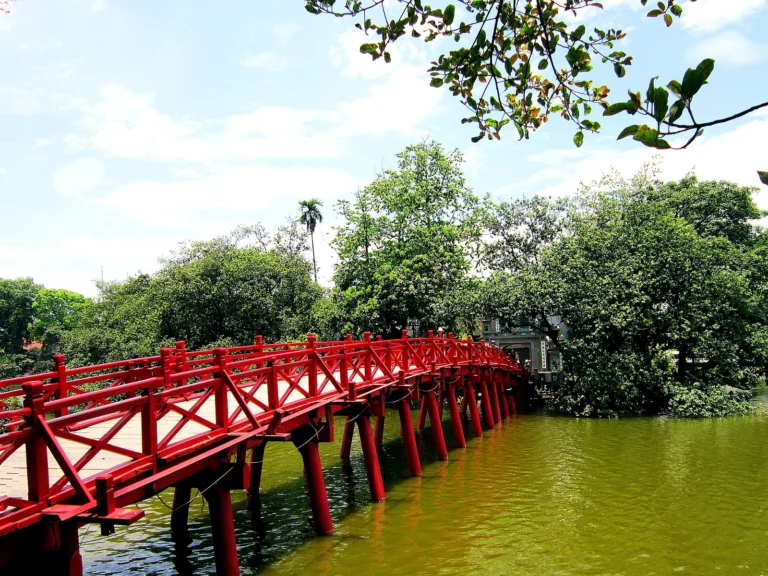
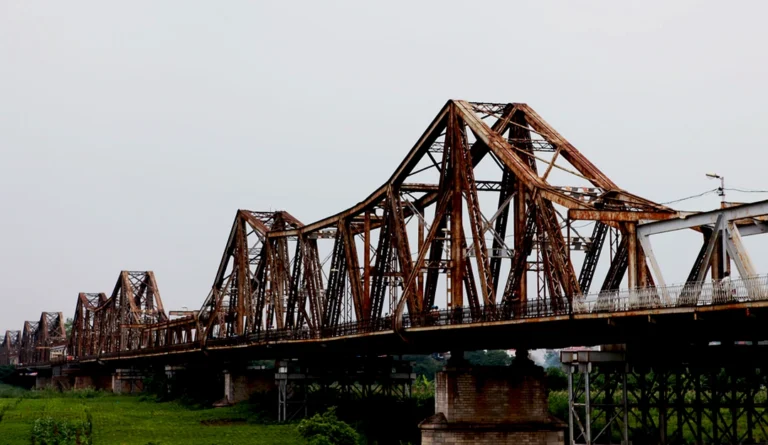
The land of Xu Doai, famed for its thousand years of drifting white clouds, holds countless sacred cultural sediments—among which the Ba Be Lake subregion within greater Hanoi (now straddling the border between Quoc Oai and Thach That districts) emerges as a singular coordinate of history and geology. Nestled right beside the majestic Tran Son limestone mountain range, this area boasts an extraordinary feng shui setting in the classic “coiling dragon and crouching tiger” formation, brimming with picturesque mountain-and-water scenery. Its ancient flooded karst valley system has shaped a distinctive hydrological structure consisting of three large interconnected basins linked by subterranean cave channels, known to locals since antiquity by a fitting name: Ba Be Lake (Three-Basin Lake). Distinct from its famous namesake in the highlands of Bac Kan, Ba Be Lake in the heart of Hanoi’s cultural sphere carries a tranquil, solemn beauty—a sublime harmony between untamed nature and the deep spiritual layers of wet-rice civilization.
In terms of historical origins and early settlement, this region bears the imprint of continuous human habitation stretching back to prehistoric times. Preliminary archaeological excavations at nearby rock shelters and caves have shed historical light on cultural strata belonging to the Hoa Binh culture, attesting to the remarkable resilience of ancient communities who harnessed the interconnected valley, wetland, and lake ecosystem for survival. Entering the era of feudal independence—particularly under the Ly and Tran dynasties—the landscape surrounding Xu Doai’s Ba Be Lake was chosen as a sacred sanctuary by eminent Zen masters of the Truc Lam and Thao Duong lineages. Thatched hermitages tucked behind veils of mist clinging to the limestone peaks, where monks blended early Buddhism with Taoist practices for meditation and breath cultivation, transformed the area into a serene center of spiritual practice far removed from worldly clamor.
By the Revival Le and Nguyen dynasties, the human geography of this subregion grew richer still. Renowned historical gazetteers such as Dai Nam Nhat Thong Chi (Comprehensive Gazetteer of Dai Nam) and Son Tay Tinh Dia Chi (Gazetteer of Son Tay Province) respectfully documented this unique hydrological system of interconnected lakes—which not only yielded abundant aquatic resources and sustained fertile agriculture for surrounding villages, but also served as a hallowed realm bound to local tutelary temples and sacred Taoist shrines. Over the centuries, these shores welcomed the wandering footsteps of countless Xu Doai luminaries and Confucian scholars who retreated into seclusion, entrusting their free-spirited souls to clouds, waters, and foliage while drawing inspiration from the poetic landscape to compose literature and discourse on the affairs of the world.
Today, through meticulous research conducted by the Vietnam Institute of Heritage & Cultural History, the geological significance and cultural heritage of Ba Be Lake (Hanoi) have been recognized by heritage authorities and the press alike as a “hidden gem” of the capital’s heritage tourism. Remnants of the ancient karst valley, mysterious submerged cave networks, and its specialized ecosystem serve not only as invaluable resources for geological and anthropological study, but also as an inviting pilgrimage into ancestral roots. Returning to Xu Doai’s Ba Be Lake today, travelers and heritage enthusiasts feel immersed once more in the echoes of a heroic and mystical past, where the sacred spirit of Thang Long – Hanoi’s mountains and rivers continues to whisper day and night through every layer of time.

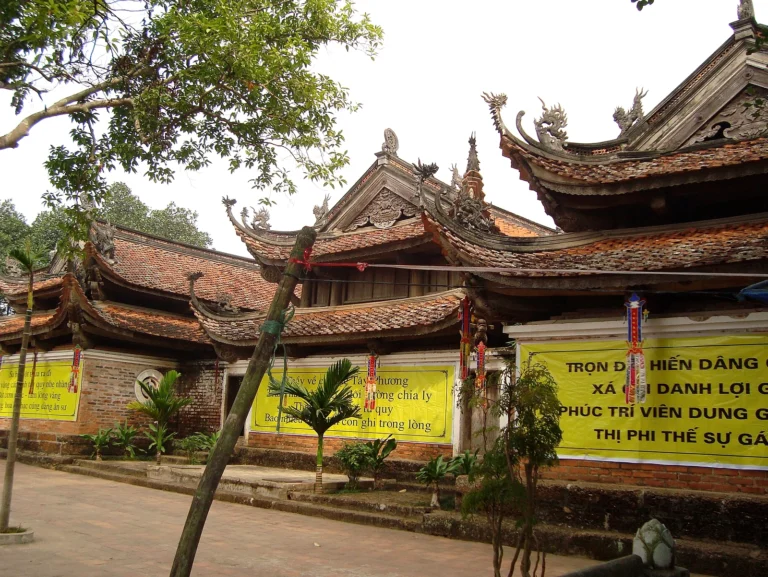
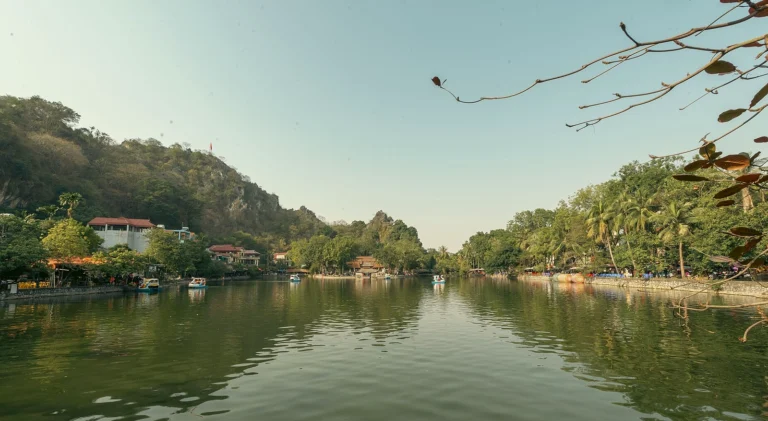
Set amidst the grand wilderness of Xu Doai, the Ba Be Lake scenic complex within greater Hanoi unfolds like a breathtaking natural tableau, where nature and creation have sculpted a one-of-a-kind landscape masterpiece. The terrain showcases classic karst topography, with million-year-old limestone ranges embracing three crystal-clear emerald lake basins linked together through a mysterious network of subterranean caves. Viewed from above, the glassy water surface acts like a giant mirror reflecting white clouds drifting across the sky and swathes of deep-green primeval forest, evoking a boundless, tranquil, and deeply contemplative sense of space. Standing out across this idyllic terrain is an ensemble of time-honored architecture woven seamlessly into nature—from the moss-covered tiled roofs of ancient shrines peeking through groves of centenarian trees to mossy stone steps leading into storied caverns. Traditional architectural artistry here merges effortlessly with the ecological setting, embodying the ancient philosophy of yin-yang balance and living in harmony with nature.
To capture the full grandeur and poetic charm of this scenic masterpiece, seasoned photographers and travel journalists frequently pass along two unmissable “million-view” vantage points. The first lies right at the junction of the second basin, where a limestone outcrop juts out close to the water’s edge, providing a natural foreground that frames the entire panorama of mountains and water in the distance. The golden hour to shoot here is at dawn, while gossamer mist still blankets the surface and the first rays of morning sunlight pierce through the foliage onto gently rippling waters, bathing the scene in an ethereal, dreamlike glow. The second vantage point sits atop a rocky slope overlooking the ancient flooded valley, commanding a sweeping view of the unique three-basin hydrological layout. At dusk, sunset from this spot leaves visitors spellbound as the Xu Doai sky erupts in vivid shades of rose and amber, reflecting directly off the mirror-still lake in a magnificent, nostalgic symphony of light.

Upon setting foot in the Ba Be Lake subregion of Xu Doai, visitors are immediately drawn into a world completely removed from the hustle and bustle of the capital’s streets. The first and most rewarding challenge is trekking up the limestone peaks beneath the mossy primeval forest canopy of the Tran Son range. Stepping across razor-sharp karst formations and weaving along ancient footpaths, travelers not only test their endurance but also feel the pulse of time etched into every moss-draped geological layer. The higher you climb, the purer the air becomes, carrying cool, refreshing moisture rising from the flooded valley floor to wash away the fatigue of the journey.
Reaching the highest summit and taking in the sweeping panorama of Hanoi’s Ba Be Lake delivers an indescribable sense of awe. Looking down from above, the three vast basins connected via underground karst channels glisten like giant jade mirrors, half-veiled in drifting mist and framed by rolling limestone ridges. The sheer majesty of Xu Doai’s landscape fills the horizon, making one feel delightfully small before such a vast, enchanting expanse. That initial rush of wonder soon settles into deep inner stillness as the distant toll of temple bells from ancient cave sanctuaries mingles with the whisper of mountain winds.
Descending from the peak, the journey continues aboard traditional wooden boats gliding smoothly across mirror-calm waters to venture deep into the mysterious caverns. Seated on the boat, gazing up at stalactites in myriad fantastical shapes hanging inches above the water while the rhythmic splash of oars echoes against stone walls, visitors feel as though they have drifted into a celestial fairyland. This is also a deeply sacred spiritual space, where pilgrims pause to pay respects at ancient hermitages and shrines, lighting sticks of fragrant incense in honor of past Zen masters and local deities while praying for peace and harmony with nature.
Rounding out this physical and spiritual exploration are the distinctive, celebrated culinary traditions of the Thach That – Quoc Oai region. Gathering around a warm hearth, visitors can savor authentic mountain specialties of Xu Doai, such as crispy, aromatic grilled fish freshly caught from the lake, fragrant upland sticky rice, firm free-range hill chicken, and crisp wild forest greens dipped in rich cham cheo spice sauce. Every flavor, paired with a cup of spicy, herbal leaf-fermented sticky rice wine, does more than warm travelers after a long day—it preserves the vibrant, authentic cultural soul of this proud heritage land.

To make the most of your journey exploring the historical and ecological subregion of Ba Be Lake in Xu Doai (greater Hanoi), it helps to equip yourself with practical tips on opening hours, transportation, and visitor guidelines for this unique destination.
Regarding operating hours, the historical relic site and scenic area welcomes visitors daily from early morning at 06:00 until 17:30 in the afternoon. The best times of year to visit are autumn and spring, when Xu Doai’s weather is dry and pleasantly cool—ideal for outdoor trekking, exploring the limestone karst formations, and experiencing its ancient spiritual sanctuaries.
Currently, the scenic grounds and historical relics of Ba Be Lake are completely open to locals and visitors free of charge for pilgrimage, research, and sightseeing, with no entrance ticket required. However, if you wish to hire a traditional wooden boat or rowboat operated by local residents to navigate through the submerged caves and interconnected lake basins, fees are arranged directly with local families providing eco-tourism services on-site.
For transportation, the fastest and most convenient route from central Hanoi follows Thang Long Boulevard or National Highway 32 heading west toward Quoc Oai and Thach That districts. Travelers can easily make the trip by private car, motorbike, or public bus combined with a local motorbike taxi to reach the trails leading into the limestone karst area.
Because the area features rugged limestone terrain, numerous flooded caves, and sacred shrines and temples, visitors should wear neat, modest, and respectful attire appropriate for spiritual and cultural sites. Opt for athletic shoes or hiking boots with strong traction to ensure safety on uneven rocky paths, pack extra essentials such as a light jacket and umbrella, and strictly follow environmental conservation rules to protect this heritage landscape.

To enjoy a seamless getaway and take in the full splendor of Ba Be Lake without worrying about arranging transport, booking tickets, or planning itineraries, travelers can choose from VDS Travel’s premier all-inclusive Hanoi tour packages. Each itinerary is thoughtfully timed so you arrive at top photo spots when the scenery is at its most radiant, accompanied by knowledgeable local guides and top-tier accommodation and dining standards.