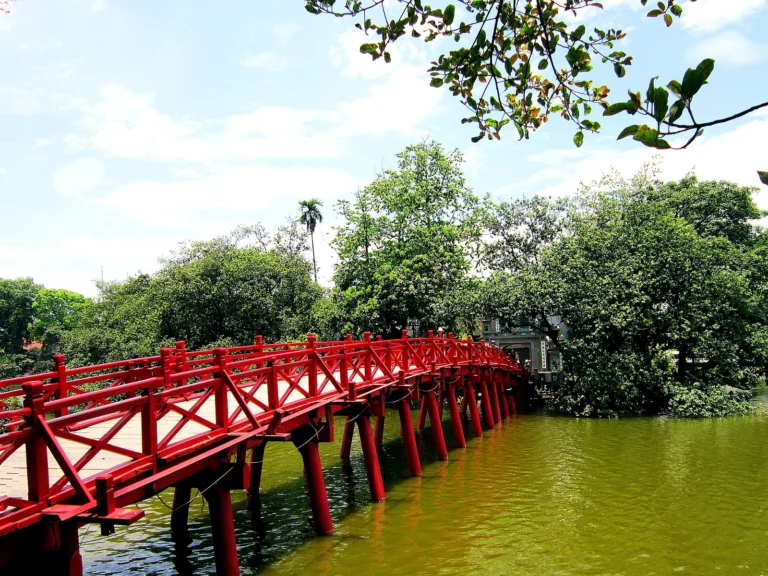
In the heart of the thousand-year-old capital, where the modern pace of life sometimes sweeps away ancient tranquility, the presence of the cultural space known as “Ly Son Island” in Hanoi emerges as a unique landmark, holding deep layers of history and priceless cultural heritage. More than just a name evoking the nation’s frontline island region in Central Vietnam, “Ly Son Island” in Hanoi is a one-of-a-kind heritage entity, converging the quintessence of traditional architectural art, indigenous beliefs, and the historical currents across Vietnam’s feudal dynasties.
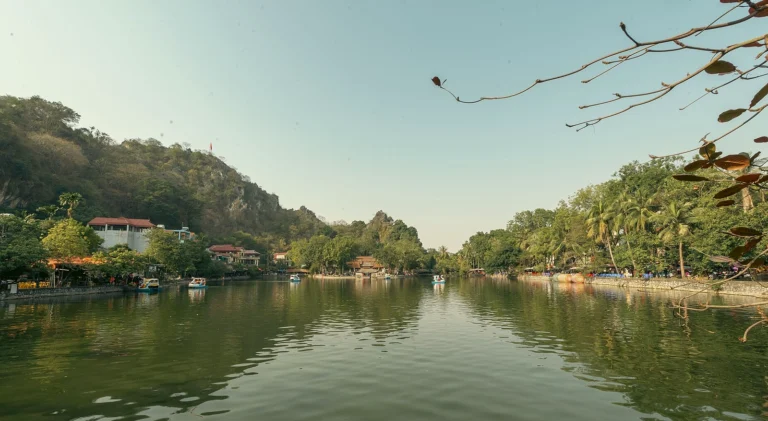
In terms of feng shui topography, this space commands a prime location according to the traditional Vietnamese geomantic principle of “relying on the mountain, facing the water” (tua son huong thuy). Nestled beside ancient underground springs and river systems intertwined with the historical formation of the former Thang Long Citadel, the terrain creates a distinct spiritual microclimate where expansive nature harmonizes with the sacredness of urban cultural sediments. Over generations, sages and spiritual leaders delicately chose this coordinate to establish religious institutions, transforming it into a peaceful “oasis” amid the bustling city, separated from the noise by shaded ancient trees and the serene ambiance of sacred shrines.
The origin of its name and historical roots are closely tied to the territorial expansion, settlement, and village-building efforts of ancient Vietnamese generations. Through the Ly, Tran, Le, and Nguyen dynasties, this land has witnessed numerous transformations while preserving its original cultural lifeblood intact. Han-Nom documents, stone steles, and village genealogies preserved on-site reveal that from the Revival Le (Le Trung Hung) period and strongly reinforced under the Nguyen emperors (such as Minh Mang, Thieu Tri, and Tu Duc), the site was officially recognized by the royal court through imperial decrees approving its sacred legends. The historical figures worshipped here include not only village tutelary deities credited with reclaiming land, establishing settlements, and defending the country, but also local guardian spirits protecting the peace and prosperity of the community.
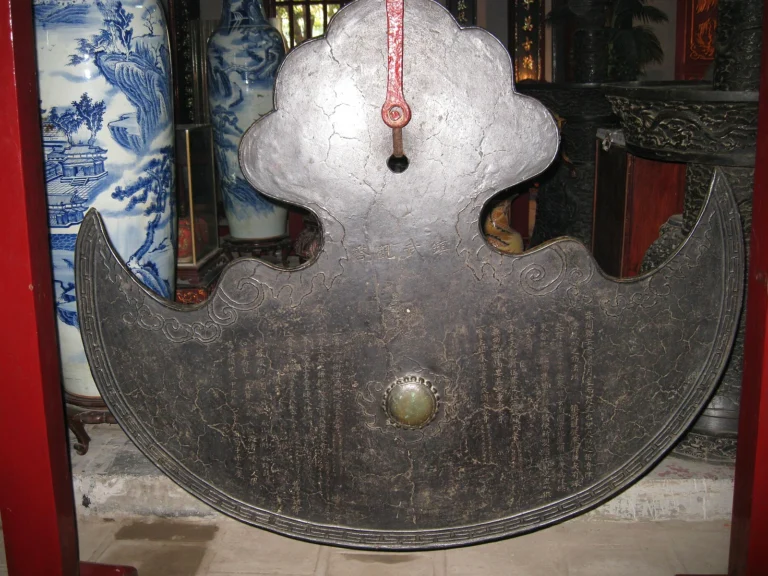
Alongside its historical significance, research institutions and specialized press studying this space highly value its geological and landscape architectural heritage. Its collection of artifacts and antiques—including old stone steps, large bricks bearing the mark of the Le dynasty, and gilded, red-lacquered horizontal boards and parallel sentences—creates a living open-air museum. The graceful synthesis of indigenous spirit worship, Mahayana Buddhism, and Taoism has endowed Ly Son Island (Hanoi) with a contemplative, solemn, yet deeply intimate beauty in the spiritual life of the capital’s residents.
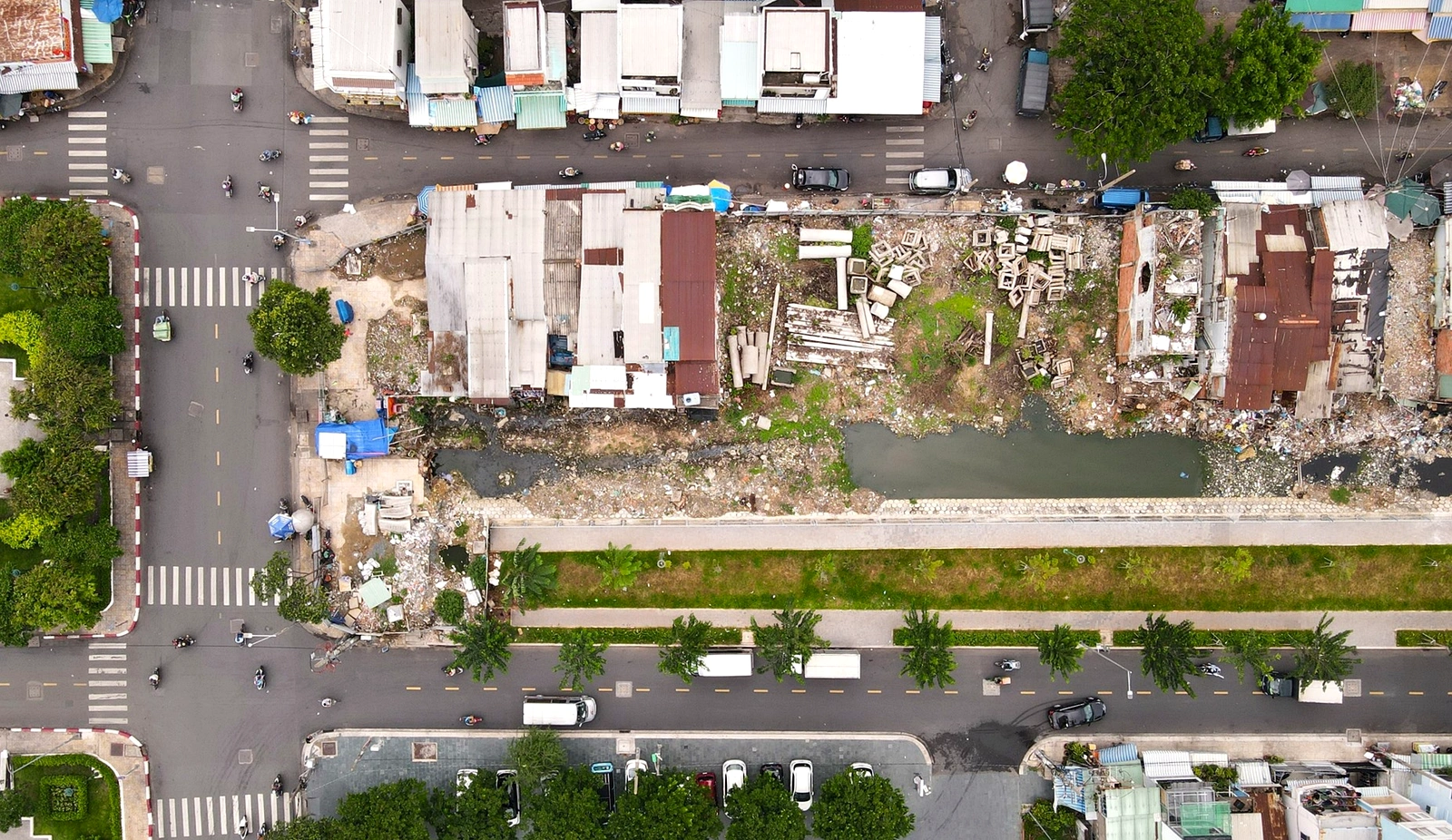
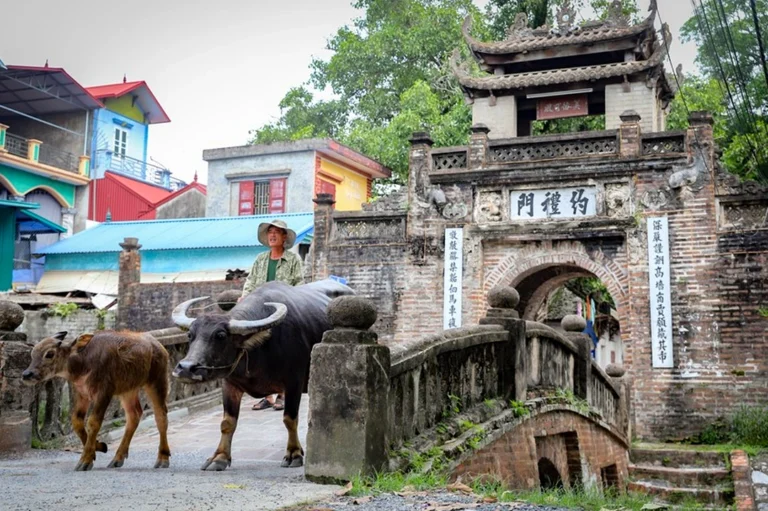
Situated in a prime location imbued with traditional feng shui in the heart of the capital, the cultural and spiritual space of Ly Son Island stands out as an architectural and landscape masterpiece seamlessly blending nature with the skillful hands of ancient artisans. The relic’s terrain is arranged according to the “relying on the mountain, facing the water” principle, opening out in front to a tranquil expanse of water that welcomes circulating auspicious energy year-round, creating a cool, quiet microclimate completely insulated from the hustle and bustle of the modern city. Viewed from above, the overall layout strictly adheres to traditional Vietnamese architectural artistry with harmoniously distributed structures: from the outer ceremonial gate and protective spirit screen to the moss-covered Bat Trang brick courtyard, the front ceremonial hall, and the solemn inner sanctuary.
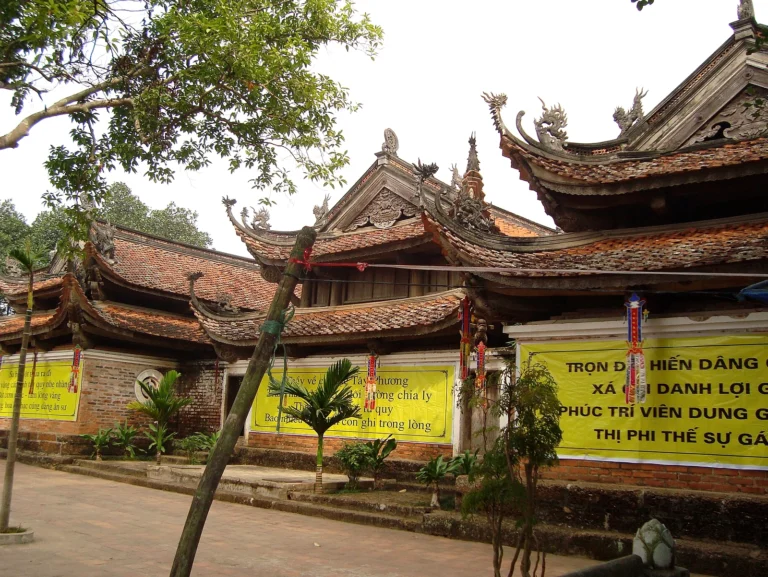
Delving into every architectural detail, ancient craftsmen poured the finest wood and stone carving techniques from the Revival Le and Nguyen periods into this site. The antique ironwood truss system is intricately carved with the “Four Sacred Animals” (dragon, unicorn, turtle, phoenix) frolicking amidst swirling clouds and waves, alongside sharply executed openwork and stylized floral reliefs. Every grain of wood displays a quiet beauty aged by time, paired with towering pillar columns supporting moss-grown shoe-tip tiled roofs, creating a spatial depth that is both majestic and intimately sacred. Antique red-lacquered and gilded horizontal plaques and parallel couplets hanging throughout the main hall not only hold high artistic value but also embody the profound life philosophies of our ancestors.
For photographers and cultural travel enthusiasts, Ly Son Island boasts unique camera angles where every perspective frames an invaluable shot. The top-rated check-in spot is the main courtyard viewed through the ornate arched frame of the ceremonial gate, looking toward the ancient stone spirit screen. The most ideal lighting here occurs in the early morning (from 6:00 AM to 7:30 AM), when the first rays of dawn filter through the canopy of ancient trees, casting warm golden streaks across the moss-covered brick courtyard to create a magical, deeply nostalgic scene.
A second unmissable angle is the front ceremonial hall veranda and side corridors, which house monolithic ironwood pillars and exquisite carvings. The interplay between natural daylight and the dim interior shadows produces strong contrast and spatial depth, ideal for capturing authentic footage or photographs of ancient architectural beauty. As sunset descends (from 4:30 PM to 5:30 PM), the late afternoon sun gilds the sweeping roof eaves shaped like dancing phoenix tails, casting a serene, quiet, and majestic tone over the entire heritage space.

Stepping into the cultural and spiritual space known as “Ly Son Island” in the heart of Hanoi, visitors do not merely encounter dry historical records on paper, but directly experience rich, vivid, and tangible moments. The journey begins with unhurried footsteps ascending moss-covered stone steps, where the topographical layout evokes a miniature space reminiscent of the distant island region. A sense of awe quickly washes over every visitor as the noisy urban world outside seems to recede, giving way to the quiet solemnity of a thousand years of civilization. Shaded canopies of ancient trees and intricate carvings on wood and stone crafted by the skilled hands of forebears emerge clearly, carrying the contemplative breath of time.
Moving beyond the physical ascent, visitors continue on a deeply moving spiritual pilgrimage through the sacred worship spaces. The resonant chime of temple bells drifting through fragrant incense smoke blends with the rustle of wind through grass to form a tranquil symphony that washes away everyday worries. Standing at the highest vantage point of the relic complex and gazing out over the harmonious panorama of nature and ancient architecture, travelers feel a profound stillness in their souls. It is a moment when the connection between modern people and the historical layers of ancestors and village tutelary deities—preserved through sacred genealogies and royal decrees—becomes closer and more sacred than ever.
Beyond visual and spiritual appeal, exploring “Ly Son Island” in Hanoi captivates visitors with refined local cultural experiences, particularly a culinary scene steeped in regional identity. Amidst a setting rich in traditional character, savoring renowned local specialties prepared by the skillful hands of native residents leaves an unforgettable aftertaste. The rich, rustic yet delicate flavors of hometown produce mingle with the nostalgic atmosphere, creating a complete experience for all five senses and affirming the enduring vitality of a heritage space in the heart of the capital.

To ensure a fulfilling journey exploring the cultural, spiritual, and heritage space of “Ly Son Island” in Hanoi, equipping yourself with practical information regarding visiting hours, transportation, and etiquette is essential. The relic complex welcomes compatriots from across the nation and travelers from afar for worship and research every day of the week. Standard opening hours typically run from 7:30 AM to 5:30 PM daily, giving visitors ample time to tour the grounds, offer incense, and explore the historical layers, stone steles, and original architecture preserved here.
Regarding admission costs, the relic site currently does not charge a fixed entrance fee for visitors coming to study and pay respects. However, when offering incense or participating in local religious activities, guests are welcome to make voluntary donations to support the site management board in maintaining, restoring, and preserving the precious heritage values left by our ancestors. These contributions play a practical role in keeping this cultural and spiritual space solemn and enduring over time.
Getting to the heritage site from central Hanoi is convenient and easily accessible via various modes of transport. Visitors can travel by motorbike, private car, or public bus routes passing through the area. The most optimal route starts from the Old Quarter or Hoan Kiem Lake, following main arterial roads toward the neighboring area where the relic complex is situated. Using digital map applications on a smartphone will help visitors pinpoint the exact coordinates of this unique cultural space without any difficulty.
Because this is a long-standing historical-cultural heritage site combined with sacred spiritual worship, visitors must strictly adhere to dress codes and behavioral etiquette. Guests should dress politely, modestly, and respectfully, avoiding overly short or revealing outfits when entering worship halls, Mother Goddess shrines, or sacred spaces. Additionally, the terrain at several spots within the complex features unique characteristics, including ancient stone steps and uneven surfaces, so visitors are advised to wear sneakers or shoes with good traction for safe and comfortable movement.
The most ideal times of year to visit “Ly Son Island” in Hanoi are spring and autumn. During these seasons, Hanoi’s weather is cool and dry, making it highly favorable for outdoor walking, architectural study, and experiencing the cultural and spiritual atmosphere. In spring, visitors also have the chance to immerse themselves in traditional festivals and observe vibrant, deeply authentic local religious practices. Avoid visiting on days with heavy rainstorms to ensure absolute safety throughout your heritage exploration.

To enjoy a seamless getaway and take in the full beauty of Ly Son Island without worrying about arranging transportation, booking entrance tickets, or planning itineraries, travelers can choose VDS Travel’s premium all-inclusive Hanoi travel tours. Each tour is thoughtfully designed to optimize photo opportunities when the scenery is at its most radiant, accompanied by knowledgeable local guides and top-tier hotel and dining standards.