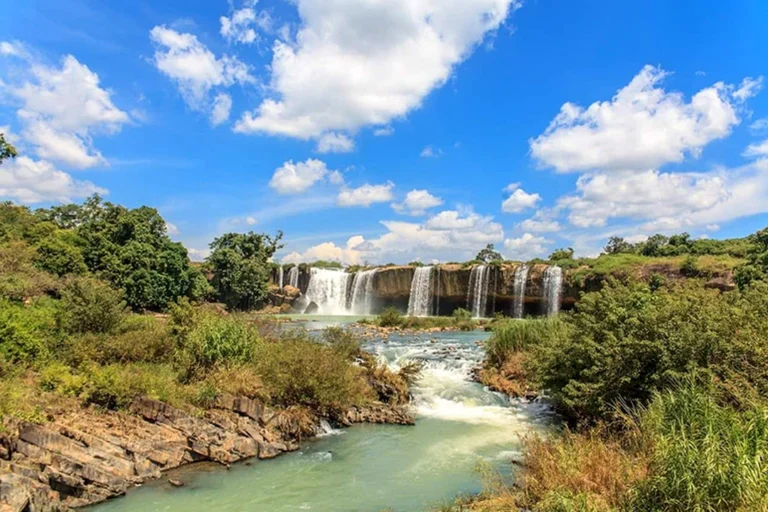
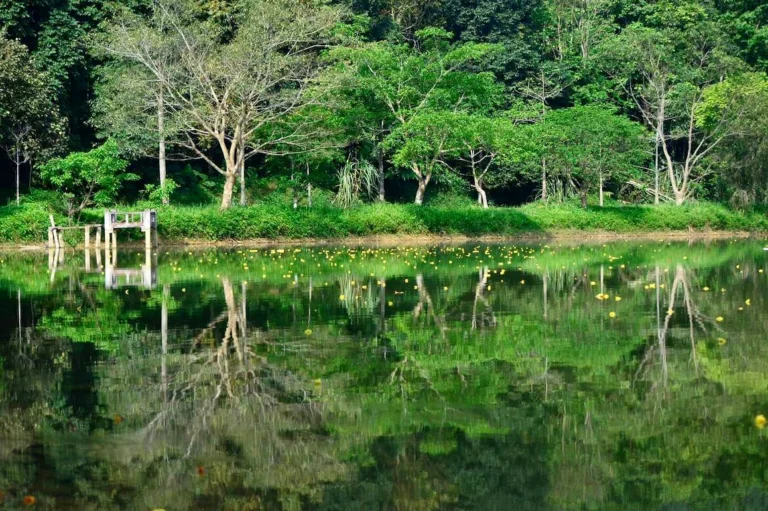
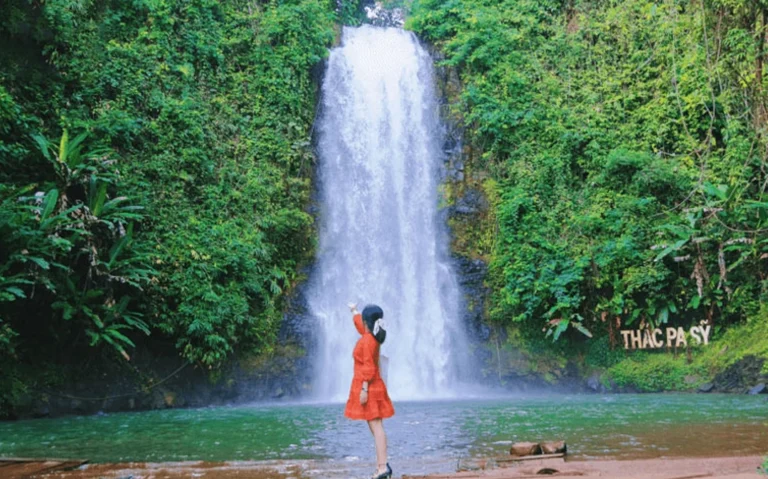
Nestled amid the majestic wilderness of the Central Highlands, approximately 25 kilometers southwest of Buon Ma Thuot city center, the Dray Nur Waterfall complex emerges as a rare geological wonder—a testament to the magnificent tectonic forces of nature over tens of millennia. From a topographical and feng shui perspective, the waterfall sits along the turbulent flow of the Serepok River system, formed by the confluence of the Krong Ana (Female River) and Krong No (Male River). The terrain here boasts an untamed, rugged, yet breathtaking beauty, defined by towering basalt cliffs fractured during the Quaternary period (Late Pleistocene–Holocene), forming a colossal curtain of water that plunges incessantly into the deep abyss below. This harmonious interplay between rushing waters, lush layers of primeval vegetation, and ancient basalt formations grants Dray Nur an unrivaled setting—a feng shui nexus where the spiritual energies of earth and sky converge, making it a shining landmark on Vietnam’s heritage tourism map.
Tracing history back through the centuries, chronicles and archival records of the Nguyen Dynasty once documented the Serepok river basin as a strategic frontier for both trade and military defense, bustling with commerce between the Ede and M’Nong ethnic groups and lowlanders via a network of customs stations. Unlike the feudal relics marked by royal architecture in Northern or Central Vietnam, however, Dray Nur bears no traces of man-made temples or imperial palaces. Instead, the waterfall’s profound historical significance is deeply intertwined with the anthropological evolution and living spaces of indigenous peoples dating back 3,000 to 4,000 years. Rather than commemorating emperors or famous generals from official dynastic histories, this site endures as a sacred “space of memory” honoring ancestral chieftains (Po Pin, Po K’ung) and the Ede Kpan communities who pioneered these highland villages at the dawn of time.
Dray Nur’s allure stems not only from its million-year-old geological landscape, but also from the rich cultural spirit woven through its epic folk legends. Foremost among these is the tragic tale of Lady H’Mi and Young Nur—an enduring symbol of faithful love and the yearning to transcend rigid customary laws. According to Ede oral tradition, torn apart by a bitter clan feud and the wrath of the deities, the young lovers chose to end their lives in the swirling depths of the Serepok River on a crescent-moon night. Moved by their unwavering devotion, the Water God Yang Dak worked a miracle, splitting the mighty river into two branches embracing both banks; the exact spot where Nur fell was forever transformed into the majestic Dray Nur Waterfall. Intertwined with the resonant chimes of gongs echoing across shifting cultivation seasons, this legend has elevated the waterfall into a sacred spiritual cradle that nurtures the soul and identity of the indigenous people.
Today, following extensive research by heritage authorities and widespread acclaim in the press, the Dray Nur Waterfall complex has solidified its status as an invaluable geological and cultural treasure of the Central Highlands. The seamless fusion of extraordinary geological formations, deep-rooted ethnic history, and immortal love legends has created a travel destination of national stature. Visiting Dray Nur is a journey back in time—a chance to touch the primal soul of the great forest, where nature and humanity unite in an epic harmony that endures across the ages.
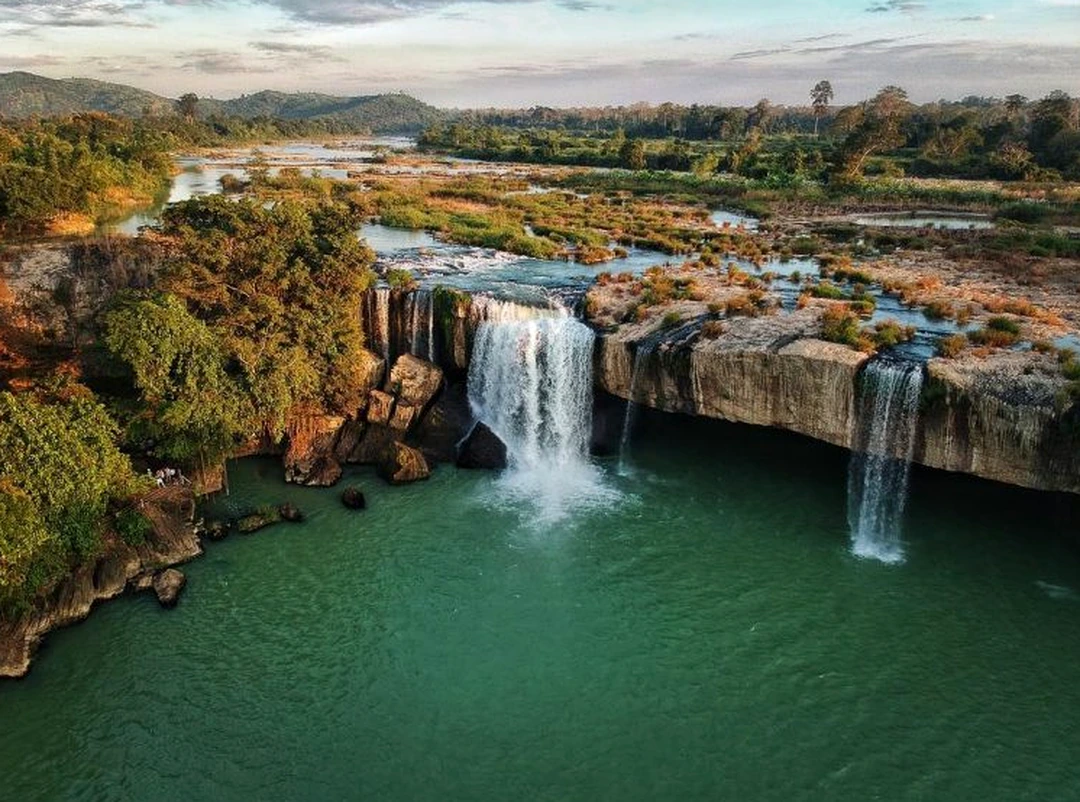
Set deep within the vast and imposing Central Highlands, the Dray Nur Waterfall complex rises like a grand architectural masterpiece sculpted by the boundless hand of nature over tens of thousands of years of geological evolution. Free from human intervention, Dray Nur exudes a raw, untamed, yet spellbinding beauty with a unique watercourse stretching over 250 meters in length and plunging more than 30 meters into the chasm below, churning up massive, white-foaming torrents that blanket the horizon. Its setting is remarkably auspicious, marking the fated crossroads of the legendary Serepok River as it divides and embraces ancient, jet-black basalt formations that stand defiant against time. From afar, the cascade resembles a colossal wall of water—a shimmering silver silk ribbon draped across the forested mountainside—where every droplet bursts into a fine mist that mingles with the thunderous roar of the jungle, creating a vivid symphony of sound and light that awakens the senses of every traveler who sets foot here.
The most distinctive and wondrous natural feature of Dray Nur is the expansive cave system hidden directly behind its roaring wall of water. Unlike most waterfalls that can only be admired from a distance, Dray Nur invites visitors to step right through the silver curtain of mist to explore a mysterious cavern spanning thousands of square meters, adorned with intricately shaped limestone stalactites glistening in ethereal reflected light. Sheer, moss-covered basalt cliffs interlocked with the sprawling roots of ancient trees form a remarkable semi-submerged ecosystem. The interplay between the enigmatic jet-black of primeval basalt, the deep emerald of tropical foliage, and the pure white of churning foam creates an extraordinary visual canvas, turning every angle into a work of art rich in depth and emotion.
To capture unforgettable moments and frame the “million-view” shots praised by professional photographers, travelers should not miss the vantage point from the suspension bridge spanning the upper reaches of the Serepok River. The ideal time to shoot is at sunrise (from 6:00 AM to 7:30 AM), when the day’s first golden rays pierce through the morning mist, striking thousands of airborne water droplets to spark a dazzling optical refraction—a shimmering seven-colored rainbow arching right across the falls. From this spot, your camera lens can encompass the full grandeur of the immense cascade thundering into the abyss, yielding a scene that is at once majestic and poetic.
A second vantage point, hailed as a “mecca” by avid wanderers, lies along the natural rock ledges inside the cavern behind the water curtain, or atop the dramatic boulders perched near the downstream gorge. Sunset (from 4:30 PM to 5:30 PM) offers the golden hour for photographers chasing the shot of a lifetime. As dusk descends, the setting sun paints the Central Highlands sky in fiery crimson hues, reflecting off the rushing waters to cast a warm, mysterious, and deeply nostalgic glow. This seamless blend of natural light, dramatic mountain topography, and the untamed breath of earth and sky transforms Dray Nur into a living landscape museum, where every frame preserves the eternal soul and beauty of the great forest.
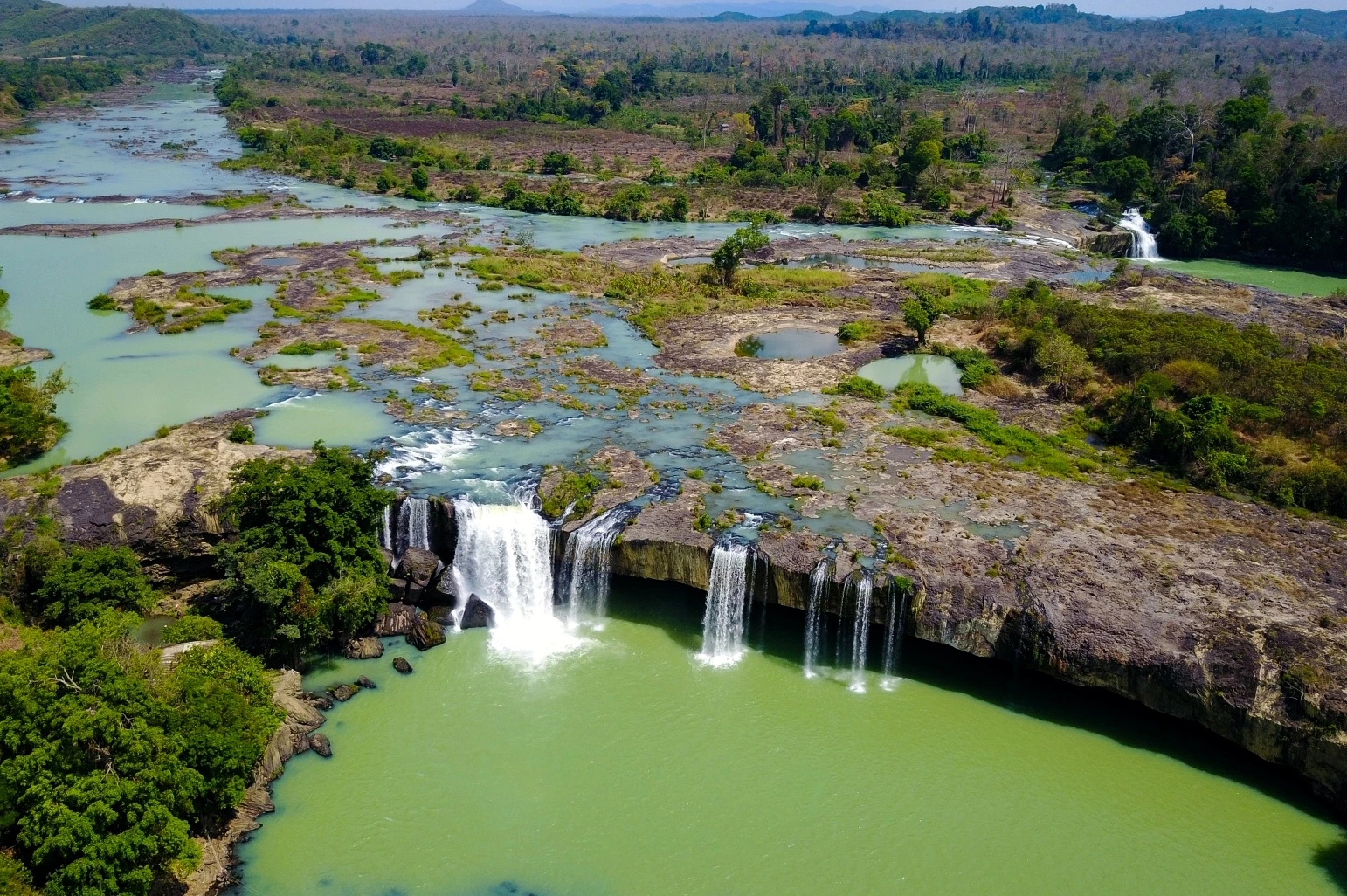
Upon arriving at the Dray Nur Waterfall complex, the very first sensation to awaken your senses is the thunderous roar of water plunging from dozens of meters above, crashing against towering basalt cliffs to compose a grand symphony of the Central Highlands. Initial awe swiftly gives way to wonder at the raw, majestic beauty nature has bestowed upon Dak Lak. Standing atop moss-draped boulders and breathing in the crisp, cool air infused with pure mist rising from the chasm, the stresses of urban life seem to melt away, leaving the soul serene within a sacred space steeped in epic heritage.
A journey through Dray Nur would be incomplete without its thrilling, hands-on adventures. Visitors can begin by tackling winding forest trails hugging the rock faces, stepping over the colossal roots of ancient trees to reach elevated viewpoints overlooking the swirling reddish-brown currents of the Serepok River. Undoubtedly the most exhilarating highlight is walking behind the massive curtain of falling water, where sunlight refracts through the dense spray to conjure enchanting rainbows. Standing within that mysterious chamber, the rushing water beside you seems to whisper the timeless love story of H’Mi and Nur, stirring a quiet sense of poignancy and a deeper reverence for ancestral roots.
Leaving the thunderous roar of the cascades behind, travelers can shift pace by gliding gently in a traditional dugout canoe across the calm, jade-green waters of the Serepok River. From water level, the primeval ecosystem along both riverbanks unfolds in full splendor, framed by ancient canopy trees casting cool shadows and uniquely sculpted basalt formations shaped over millions of years of geological activity. This tranquil moment also invites visitors to reflect and immerse themselves in the spiritual atmosphere of indigenous animist beliefs, feeling a sacred bond between humanity, the Water God Yang Dak, and the guardian spirits of the mountains and forests.
Rounding out this journey through nature and living history, experiencing the local culinary culture in the villages surrounding Dray Nur leaves a lasting impression. Beneath the roof of a traditional Ede longhouse, visitors can savor renowned highland specialties bursting with authentic forest flavors—bamboo-tube grilled chicken fragrant with lemon basil leaves, aromatic sticky rice cooked in bamboo (com lam), grilled free-range pork served with spicy green chili salt, and, of course, jars of traditional stem wine (ruou can) brimming with local hospitality. Beside a flickering fire and the resonant echoes of gongs, sipping warm, spicy wine while listening to ancient legends recounted by village elders immerses travelers in a vibrant cultural space where past and present merge as one in the heart of the Central Highlands.
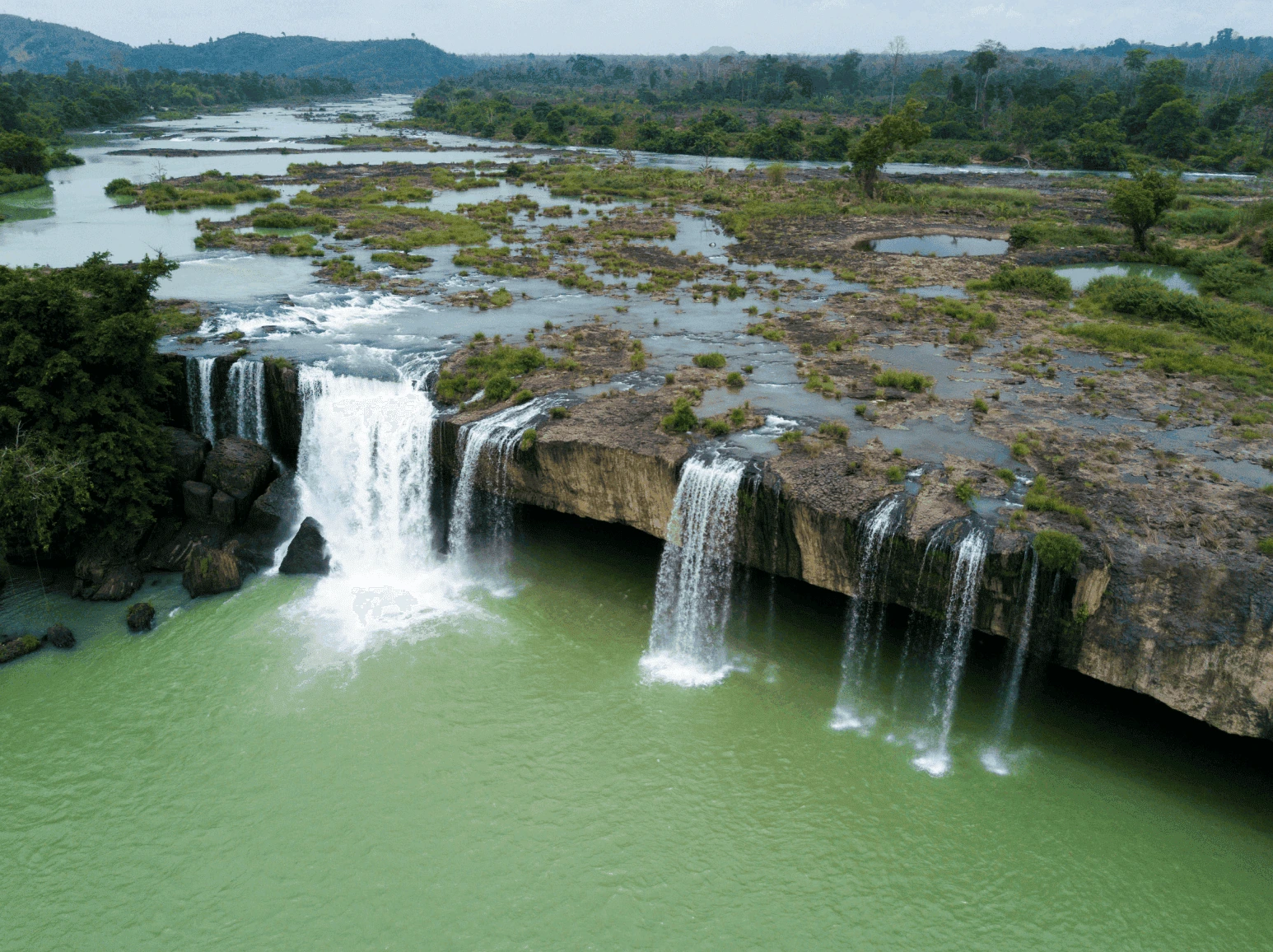
Welcoming travelers to explore the untamed wilderness of the Central Highlands, the Dray Nur Waterfall complex remains a premier destination thanks to its pristine scenery and rich indigenous culture. To ensure your trip goes smoothly and comfortably, knowing key practical details regarding the best time to visit, admission fees, and transportation is essential.
As for the ideal time to visit, the dry season from November to April is widely considered the best window of the year. During these months, Dak Lak enjoys pleasant weather with clear blue skies, warm golden sunshine, and—most notably—calmer, crystal-clear waters in the Serepok River that create a stunning jade-green pool at the base of the falls. Conversely, if you are drawn to the raw power of roaring, high-volume cascades, the rainy season from May to October delivers an unforgettable visual spectacle, though extra caution is required when navigating slippery rocks.
The Dray Nur Waterfall Ecotourism Area welcomes visitors daily from 7:00 AM to 5:30 PM, operating year-round including public holidays. Current admission prices are very reasonable, ranging from approximately 40,000 VND to 50,000 VND for adults, with discounted or free entry for children under one meter tall. This ticket covers general admission as well as access to the primeval forest trails, the suspension bridge, and the main waterfall viewing areas.
Regarding transportation and directions, departing from Buon Ma Thuot city center, you can either rent a motorbike to fully soak in the fresh highland breeze or hire a private tourist car. The most straightforward route follows National Highway 14 toward Dak Nong Province, turning left at the Buon Kuop junction as indicated by road signs. The entire journey spans roughly 25 kilometers and takes under 45 minutes along smooth paved roads flanked by endless, lush coffee plantations.
Additionally, because the site combines rugged basalt terrain with spaces sacred to the Ede people, visitors should dress neatly and practically. Opt for athletic shoes with good traction rather than high heels to stay safe while climbing rocks and exploring the cavern behind the water curtain. At the same time, wearing modest, respectful attire when entering traditional villages demonstrates courtesy toward the local culture and spiritual beliefs of the indigenous community.
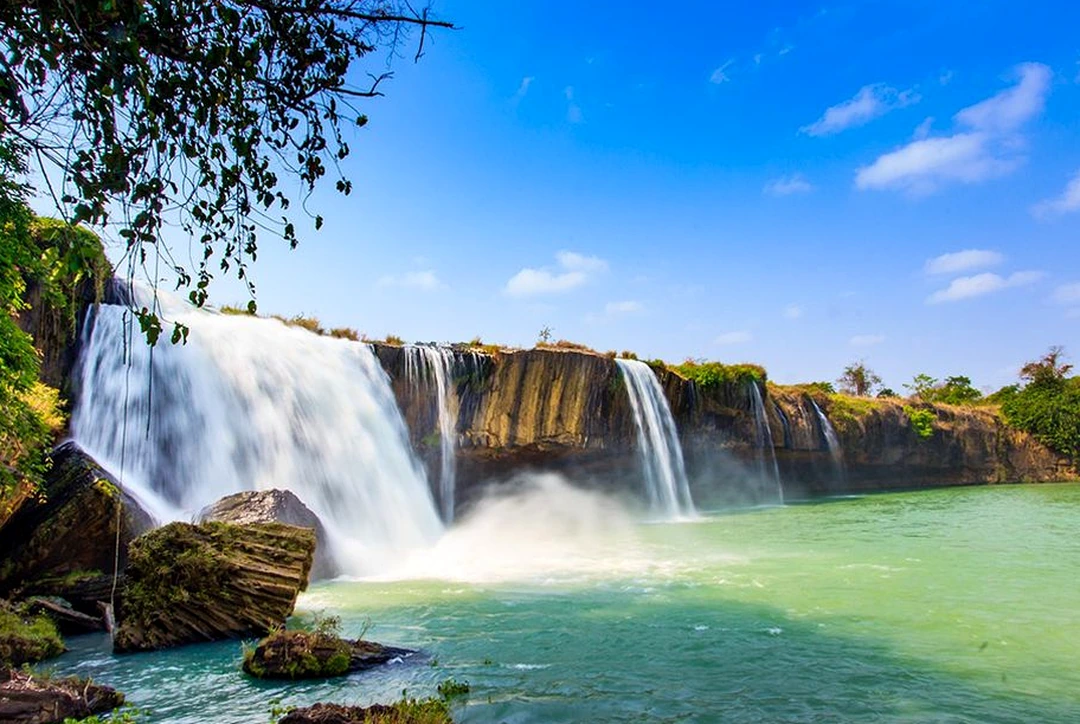
To enjoy a seamless getaway and experience the full splendor of Dray Nur Waterfall without worrying about arranging transportation, booking tickets, or planning itineraries, travelers can opt for VDS Travel’s premium all-inclusive Buon Ma Thuot tour packages. Each itinerary is thoughtfully timed to capture the scenery at its most radiant, accompanied by knowledgeable local guides deeply versed in regional culture alongside top-tier accommodation and dining standards.