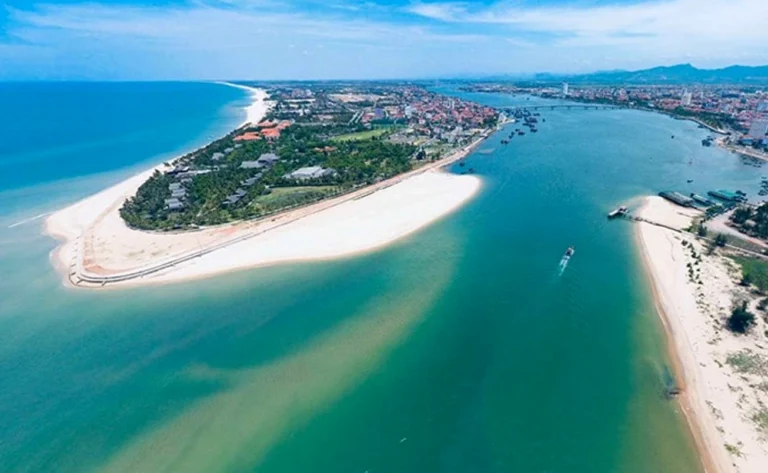
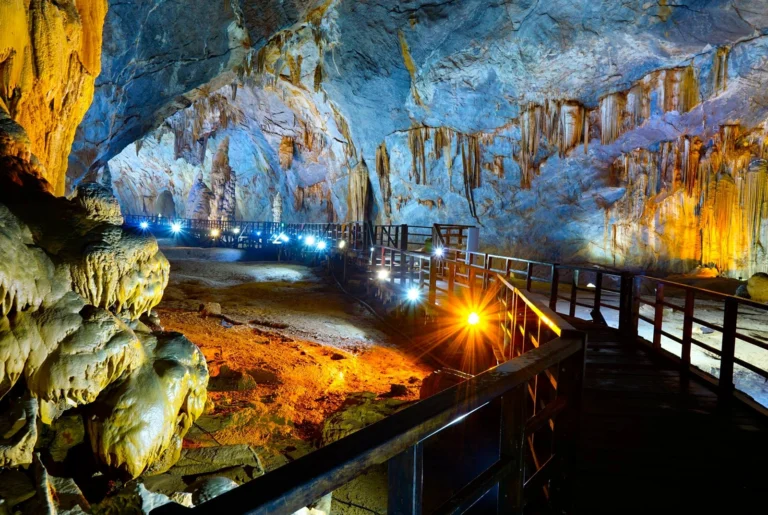
Originating from the deep underground streams of the Northern Truong Son limestone massif, the Son River (Quang Binh Province) emerges as a rare geological wonder where nature and history have carved enduring marks across millennia. Geographically, the river basin winds through the fertile communes of Bo Trach District before merging into the historic Gianh River. More than just a vital ancient waterway, the Son River holds a unique location intertwined with the Phong Nha – Ke Bang World Natural Heritage site, home to one of the planet’s most magnificent cave systems with a geological age spanning millions of years, specially honored by international organizations and heritage management bodies.
The name “Son River” (Lipstick River) – also recorded in ancient texts under the names Dinh Khe and Nuoc Son – holds a poetic yet dramatic natural legend. According to historical geographical records, every rainy and flood season, torrents of thick red silt rush down from the underground limestone headwaters, dyeing an entire stretch of the river crimson. This striking visual phenomenon inspired locals from ancient times to name the waterway after its vivid hue. Along its banks, generations of residents have also passed down spiritual legends of Mother Truong Son’s embrace and steadfast, loyal love, transforming the cool waters into sweet nourishment that has sustained an entire valley culture in western Quang Binh.
In terms of feng shui and military terrain, the Son River basin creates a textbook “backing the mountains, facing the water” layout, embodying the classic “coiling dragon, crouching tiger” posture of Central Vietnam’s mountainous region. Overlapping limestone mountain ranges rise sheer on both banks like natural fortresses, sheltering the river as it winds gracefully like a crimson silk ribbon. This rugged yet poetic terrain once served as a vital trade bottleneck and a strategic battleground across historical eras. From its early days as an untamed frontier during the Dai Co Viet era, through the Ly and Tran dynasties marked by the footsteps of Vietnamese settlers clearing land and establishing villages, the Son River bore witness to the entire journey of territorial expansion and border defense.
The river’s historical imprint grew even more pronounced during the Early Le and Revival Le periods. In 1471, on his personal military campaign against Champa, King Le Thanh Tong redrew the administrative map, officially incorporating Quang Binh into Dai Viet territory and turning the Son River into a vital military supply route for major southward campaigns. During the Trinh – Nguyen conflict (17th – 18th centuries), the river once again served as the strategic northern outpost of Dang Trong (Inner Region), situated near the monumental Thay Rampart engineered by the renowned scholar Dao Duy Tu. This area witnessed the heroic exploits of Dang Trong generals and soldiers in safeguarding the borderlands and maintaining peace for the people.
By the Nguyen Dynasty, under the reigns of Emperors Minh Mang and Thieu Tri, the Son River was meticulously documented in national geographical gazetteers such as Dai Nam Nhat Thong Chi (Comprehensive Gazetteer of Dai Nam). The Nguyen court not only prioritized irrigation management and harnessing the river’s resources but also deeply recognized the region’s value for frontier defense. Through countless historical upheavals, today the Son River stands not merely as a witness to a glorious past, but as a symbol of vibrant resilience—an invaluable cultural and geological heritage to be preserved and cherished in the country’s modern era of integration.
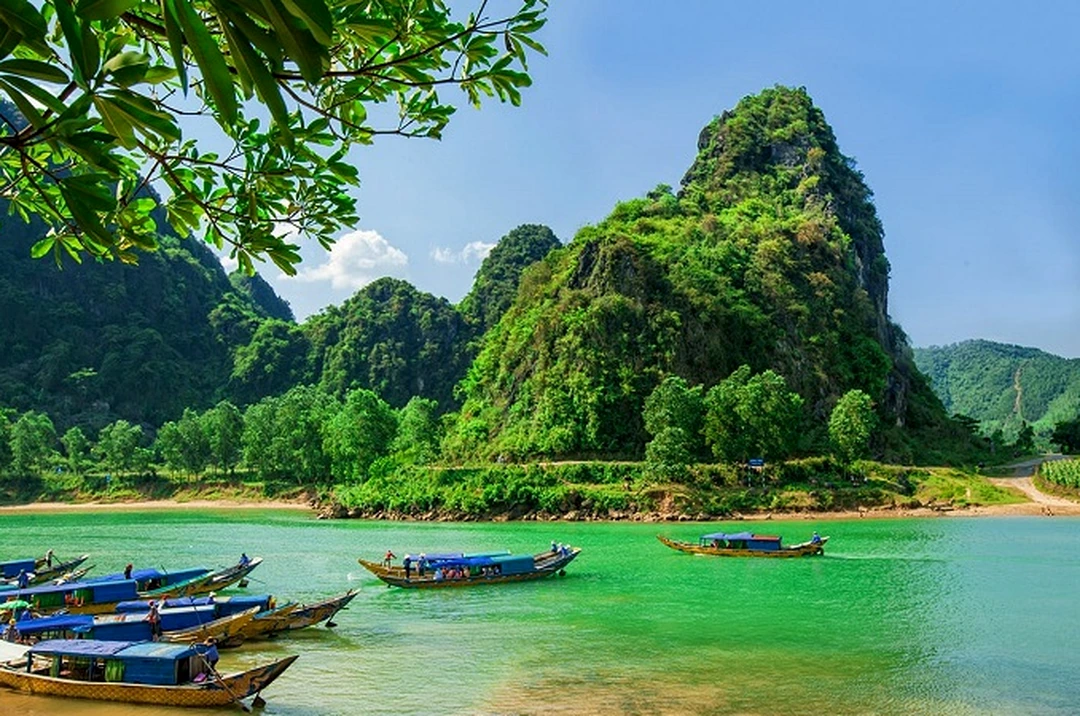
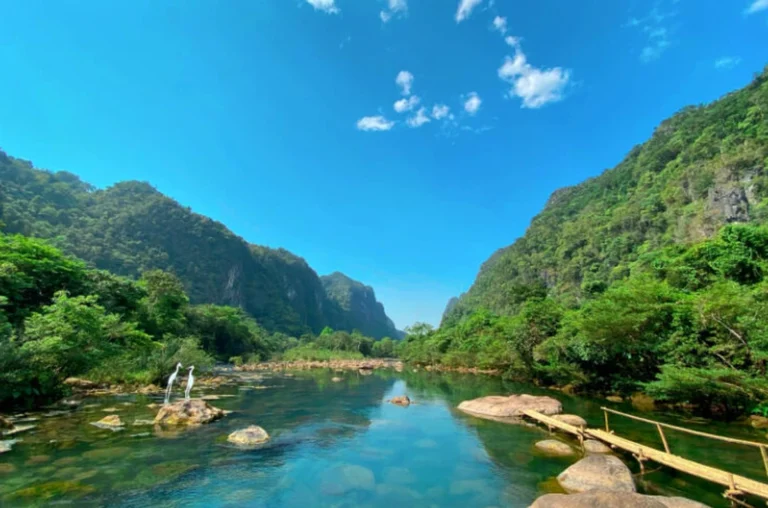
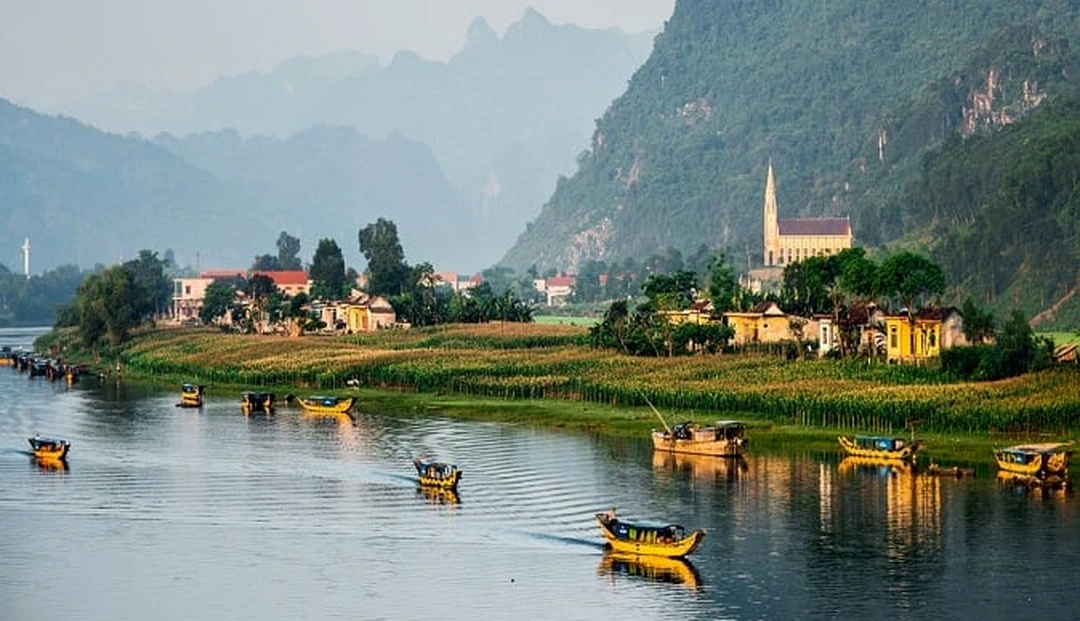
Cloaked in a mystical and majestic beauty crafted by nature’s masterful hand, the Son River is a rare scenic masterpiece in the heart of the Phong Nha – Ke Bang World Natural Heritage site. The river meanders gracefully like a giant jade silk ribbon, standing out against the solemn backdrop of millions-of-years-old limestone ranges. Year-round, its waters remain crystal-clear emerald green and refreshingly cool, reflecting the sky, clouds, and sheer cliffs to create a landscape that is both awe-inspiring and heart-stirringly poetic. The signature highlight of this scenic wonder is its magical wet cave system hidden deep inside the mountains, where the river flows directly through the karst massif to form the legendary Phong Nha Cave. Stepping into this space, visitors are left speechless by stalactites and stalagmites of every imaginable shape, intricately sculpted by natural water flows over millennia and shimmering under warm golden lights like a grand, regal subterranean palace.
Beyond its extraordinary natural scenery, the Son River basin is a hub of “million-view” photo spots that captivate wanderlust travelers and professional photographers alike. To capture the river’s rawest and grandest beauty, the first ideal vantage point is the entrance of Phong Nha Cave, where rustic rowboats glide smoothly into the dark cavern arch opening onto a deep tunnel bathed in natural light. Aerial shots looking down at the winding bends of the Son River embracing peaceful riverside villages also make for priceless frames, vividly capturing the tranquil charm of the Central Vietnamese countryside. Photographers regard sunrise (from 5:30 AM to 6:30 AM), when ethereal mist still lingers over the water, and sunset (from 5:00 PM to 5:30 PM), when the day’s final rays paint the sky brilliant gold and illuminate the limestone cliffs, as the ultimate lighting windows—creating a natural tableau that is vibrant, majestic, and deeply nostalgic.
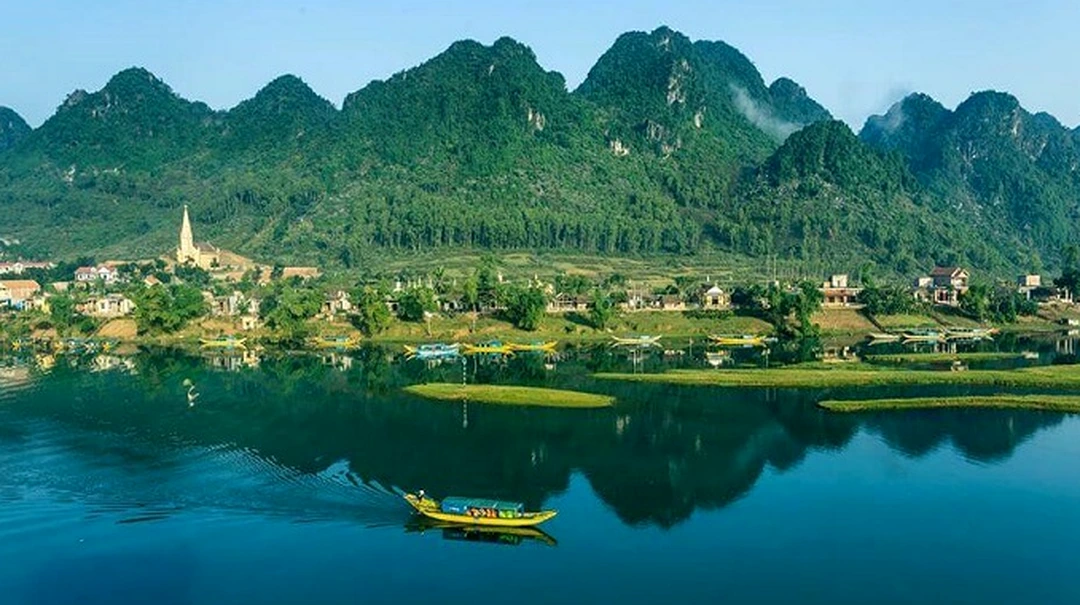
Setting foot in the Son River basin, visitors do not merely touch the heroic pages of national history—they open the door to a majestic, pristine, and vibrant natural world. Exploring this legendary river begins with unforgettable hands-on experiences, where every step and every paddle stroke evokes lasting emotions. The moment you sit aboard a dugout canoe or motorboat gliding down the crystal-clear current, you will be immediately captivated by the magical jade-green hue of the water, contrasting sharply with the towering limestone cliffs flanking both sides. Floating amid a vast expanse of clouds and water while breathing in the pure air of the Phong Nha – Ke Bang primeval forest brings absolute serenity to the soul, washing away the hustle and fatigue of city life.
The gently drifting boat carries travelers deep into the heart of the wonder, where the world’s largest wet cave system unfolds like a mystical fairyland. Myriad stalactite formations, sculpted over millions of years by nature’s invisible hand, glisten beneath soft golden lighting, leaving many visitors silent in awe of nature’s grandeur. Meanwhile, for adventure seekers, trekking up rugged limestone slopes to gaze out across the horizon offers a priceless reward. From above, the Son River curves softly like a silk ribbon draped across a picturesque landscape of mountains and water, cradling peaceful villages of local ethnic communities. It is a moment to feel humanity’s humble scale before the universe while swelling with deep pride in the breathtaking beauty of the land.
Not stopping at natural scenery, the local cultural depth here also resonates through spiritual life and distinctive culinary artistry. Stopping at ancient temples and shrines along the riverbanks, visitors can pay their respects and listen to mysterious legends about guardian deities protecting fishermen and river merchants across generations. The sacred, tranquil atmosphere of these spiritual sites blends with the whispering mountain breeze to create a reflective space that touches the emotions of every visitor. To complete the journey, Son River cuisine is the final piece that captivates travelers. Savoring renowned local specialties such as sweet, firm Son River grass carp, fragrant grilled stream shrimp bursting with mountain flavors, and traditional dishes crafted from local ingredients—all paired with a warm cup of highland rice wine—leaves an unforgettable aftertaste. The Son River is far more than a tourist destination; it is a living experience where nature, history, and humanity merge into one, leaving travelers with vivid, enduring memories.
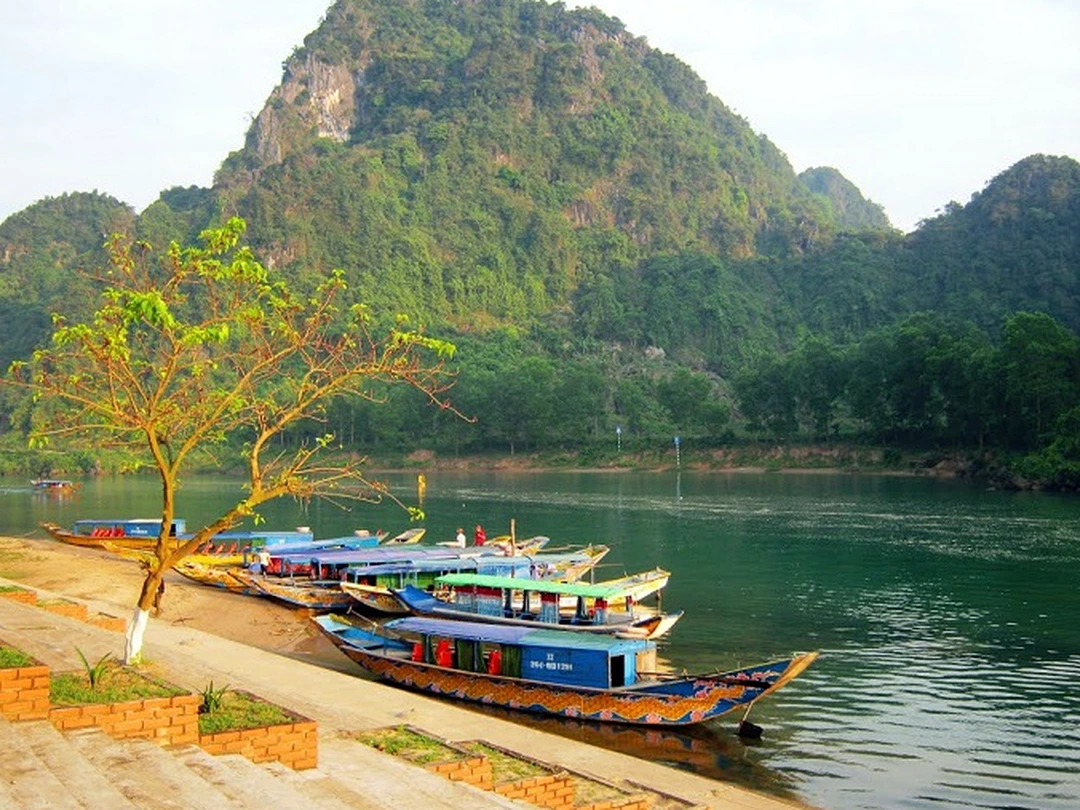
Welcome to the latest updated Son River travel guide, your all-in-one key to preparing seamlessly for an adventure along Quang Binh’s legendary waterway. To ensure a smooth trip, knowing the exact operating hours is essential. Boarding piers and Son River tourist boat routes officially open from 7:00 AM to 5:00 PM every day of the week, including weekends and public holidays. The ideal time of day to set off is in the morning between 8:00 AM and 10:00 AM, when early sunlight filters across the limestone cliffs to create a shimmering, magical scene and the weather remains cool and pleasant.
Regarding admission fees, the Son River itself is a natural waterway and charges no transit fee. However, to fully experience the beauty of the Phong Nha – Ke Bang cave system connected to the river, visitors need to purchase entrance tickets and boat services at the Phong Nha Tourism Center. Listed admission for adults is 150,000 VND per visit to Phong Nha Cave (excluding Tien Son Cave tickets), while children under 1.3 meters enter free of charge. Traditional motorboat rental costs roughly 550,000 VND to 600,000 VND per trip (accommodating up to 12 passengers, including children), making it ideal for families or groups of friends splitting the cost.
The most convenient route from Dong Hoi city center to the Son River follows National Highway 1A northbound to the Ly Trach T-junction, then turns left onto Provincial Road DT20 (the eastern branch of the Ho Chi Minh Trail) and continues straight for about 45 km to reach the tourism center. Travelers can opt for a private car, the Dong Hoi – Phong Nha public bus route, or a rented motorbike to fully soak in the roadside scenery of peaceful villages and rolling mountains. The best time of year to visit the Son River is from April to August, when the weather is dry, the river glows a crystal-clear jade green, and conditions are ideal for outdoor exploration.
Finally, given the combination of river travel and spiritual cave exploration, visitors should dress neatly, respectfully, and modestly when visiting riverside heritage sites. Prioritize breathable clothing paired with sneakers or non-slip sandals for easy footing on damp rock ledges inside the caves. Remember to wear a life jacket (provided on board) and bring a hat, sunglasses, and sunscreen for a safe, fulfilling journey packed with unforgettable memories along the historic Son River.
To enjoy a seamless getaway and admire the full splendor of the Son River without worrying about arranging transportation, booking entrance tickets, or planning itineraries, travelers can choose VDS Travel’s premium all-inclusive Quang Binh tour packages. Every itinerary is thoughtfully timed for photo stops when the scenery is at its most radiant, accompanied by knowledgeable local guides and top-tier hotel and dining standards.