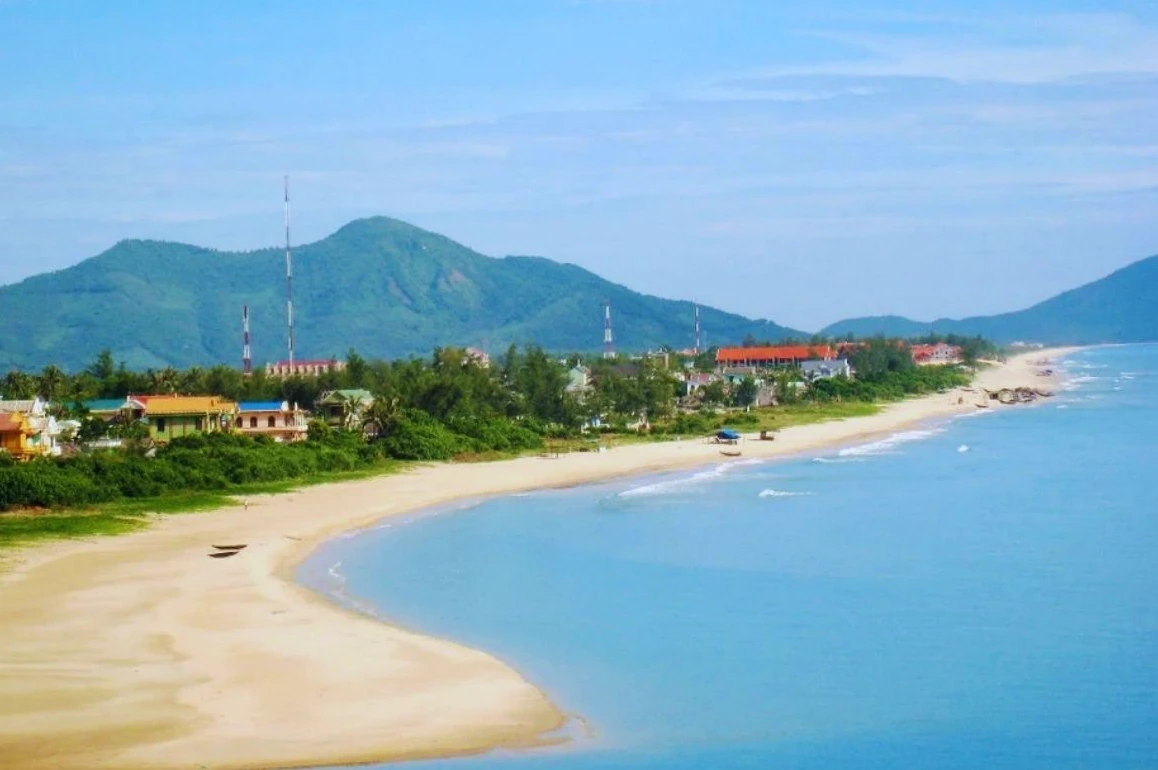
Stretching along Vietnam’s sun-drenched, windswept central coast, Nhat Le Beach emerges like a masterpiece sculpted by nature, where the river of the same name completes its winding, thousand-mile journey to merge into the vast ocean. Boasting a prime location right next to the heart of Dong Hoi City in Quang Binh Province, this scenic landmark is more than just a natural wonder bestowed upon a historic frontier region; it is also a cultural and historical space layered with the sediments of time. From a geomantic perspective, Nhat Le sits in a classic auspicious “water-gathering, blessing-converging” setting, where the estuary opens eastward to welcome pure ocean breezes, sheltered by undulating golden sand dunes resembling a winding dragon and accented by distant peaks of the Hoanh Son mountain range. The delicate harmony between rolling waves, powdery white sand, and the deep azure expanse of the sky creates a one-of-a-kind natural tableau—among the most captivating along Vietnam’s southern stretch.
Tracing back through the rich historical records compiled in the official chronicles of the Nguyen Dynasty, such as Dai Nam Thuc Luc (Veritable Records of Dai Nam) and Dai Nam Nhat Thong Chi (Comprehensive Gazetteer of Dai Nam), this place name was originally tied to the Hai Lenh River (Nhat Le River) and its estuary. According to local cultural researchers and archives at the Vietnam Institute of Cultural Heritage and History Studies, the name “Nhat Le” carries profound poetic resonance—symbolizing either the brilliant light of dawn shimmering across emerald waters or evoking poignant tears of farewell echoed in historic ballads. Under the Nguyen Dynasty, the strategic value and scenic grandeur of this coastline rose to national prominence when Emperor Minh Mang ordered the rivers and seas of Quang Binh to be ceremonially engraved onto the Anh Urn (Anh Dinh) in 1835, affirming steadfast sovereignty over the nation’s sacred maritime territory.
Beyond its breathtaking scenery, Nhat Le stands as a living witness to monumental turning points in Vietnamese history across the centuries. From remnants of the late Sa Huynh culture and the ancient Kingdom of Champa, this land absorbed and cultivated a vibrant Dai Viet cultural layer following Emperor Le Thanh Tong’s southward expedition in 1471 and the subsequent territorial expansion of the Nguyen Lords. It once served as a vital military chokepoint during the Trinh–Nguyen civil war, inextricably linked to the military genius of Marquis Le Thanh Hau Dao Duy Tu. The Thay Rampart (Luy Thay), Dong Hoi Citadel, and formidable defensive works anchored in the rugged terrain of the Nhat Le estuary formed an ironclad bulwark safeguarding the Thuan–Quang region. Entering the modern era, the Nhat Le ferry terminal resounded with heroic ballads during the resistance wars against French colonialism and American intervention, functioning as a strategic lifeline supplying the southern battlefields and etching the dedication and resilience of youth volunteers, naval forces, and the people of Quang Binh under the guidance of General Vo Nguyen Giap.
Having weathered centuries of historical transformation, Nhat Le Beach today is recognized not only by cultural authorities, tourism boards, and the press as an invaluable natural heritage site, but also as a symbol of the enduring vitality and soulful beauty of Quang Binh’s people. Its coastal ecosystem, unspoiled beaches embracing crystal-clear waters visible right down to the sandy seabed, and preserved ramparts and stone steles have made it a destination uniting scientific inquiry, authentic history, and premier heritage tourism in Vietnam. Every footstep along Nhat Le is a chance to touch a glorious past, listening to echoes of antiquity blending seamlessly with the vibrant pulse of today’s ocean waves.
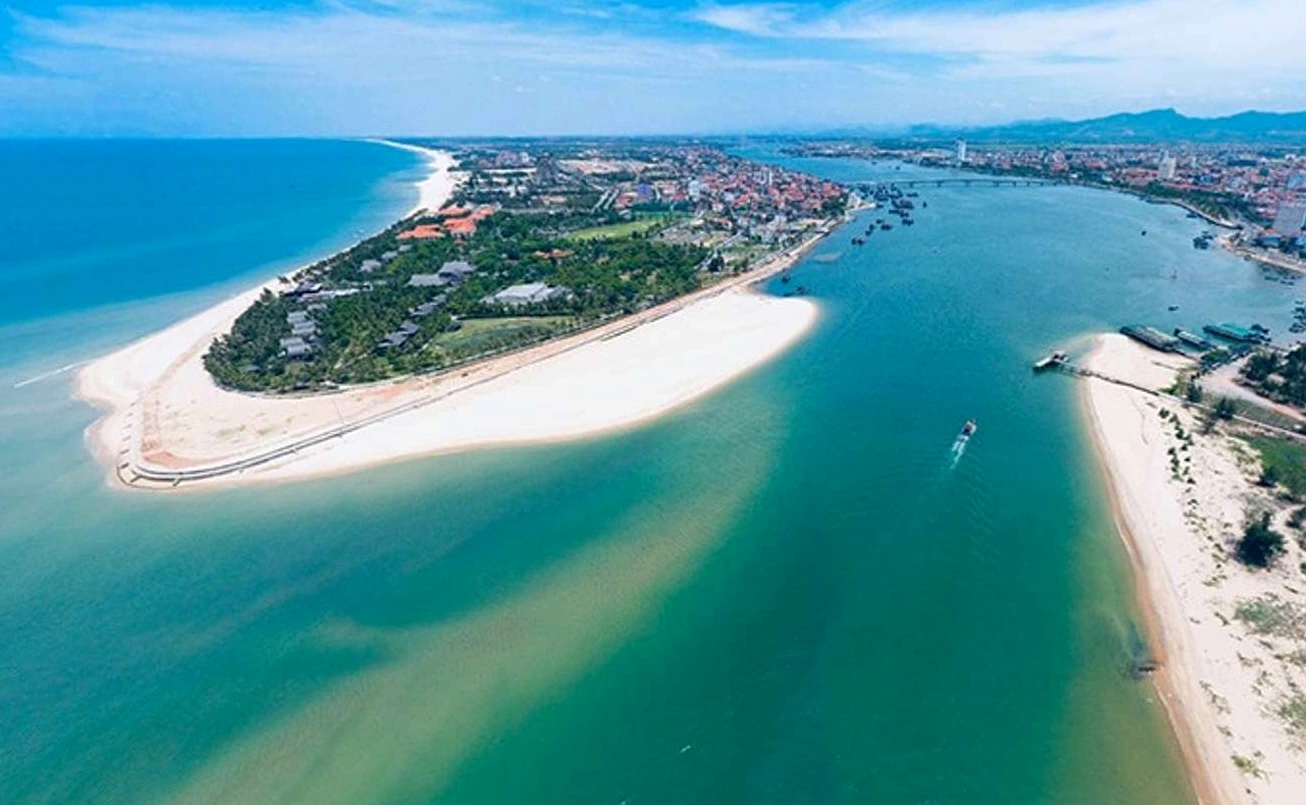
Resting gently beside the historic Hai Lenh River, Nhat Le Beach unfolds as a magnificent natural panorama generously gifted by nature to sun-kissed, wind-swept Quang Binh. The landscape exudes an untamed, expansive charm yet retains an air of majesty thanks to its “coiling dragon, crouching tiger” topography, where the river meets the open sea through a narrow estuary. Along the shoreline, fine white sand stretches endlessly into the distance, reflecting a golden shimmer beneath the central Vietnamese sun like a glistening silk ribbon cradling emerald-clear waters. Viewed from above, the commanding terrain of the estuary pairs with Dong Hoi Citadel and the ancient remains of Thay Rampart to form a striking feat of military architecture—a seamless bridge between heroic history and pristine nature. Day and night, Nhat Le’s waves break against the shore in a deep, resonant cadence, sounding like an enduring epic sung by earth and sky across the ages.
To capture the full splendor of this natural scenery, photographers and travel journalists frequently share two must-visit “million-view” vantage points. The first check-in spot is the rocky outcrop near the mouth of the Nhat Le River at sunrise. Between 5:00 AM and 5:30 AM, as the fiery red sun slowly rises above the eastern horizon and bathes the water in rosy hues, local fishermen heading out in traditional basket boats create a lively, deeply evocative tableau of coastal life. Every movement of the fishing village residents blending with the pure morning light yields truly priceless artistic frames.
The second standout vantage point favored by seasoned photographers lies right at the foot of Nhat Le Bridge at dusk. As twilight shifts gradually from warm amber-orange to deep violet, the entire estuary is draped in a mystical, contemplative aura. From this angle, a camera lens can capture the graceful curve of the river emptying into the sea alongside the gentle bobbing of fishing vessels anchored for rest after a day offshore. Soft end-of-day light reflecting off the glassy water creates a poetic, tranquil atmosphere that vividly portrays both the dramatic power and gentle grace of Nhat Le Beach in the heart of Quang Binh.
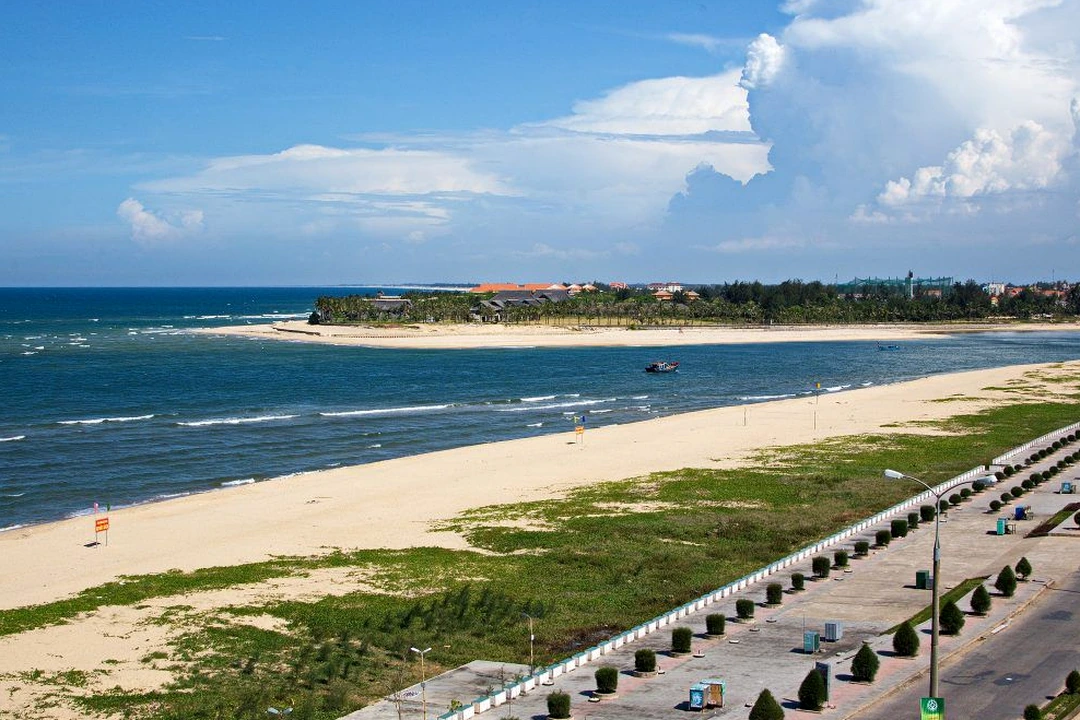
Stepping onto Nhat Le Beach, visitors are immediately captivated by a breathtaking coastal scene where golden-white sands embrace crystal-clear, jade-green waters. The first unmissable experience is waking up at the crack of dawn for a stroll along the soft sandy slopes to watch the sun rise slowly from the ocean depths. Dawn paints the sky and sea in shades of rose, awakening the colorful basket boats of fishermen returning from an overnight catch. At this hour, the atmosphere is remarkably serene, infused with the briny scent of the sea and the lively stirrings of a new day—inspiring awe at the pure, unspoiled beauty of Quang Binh’s nature.
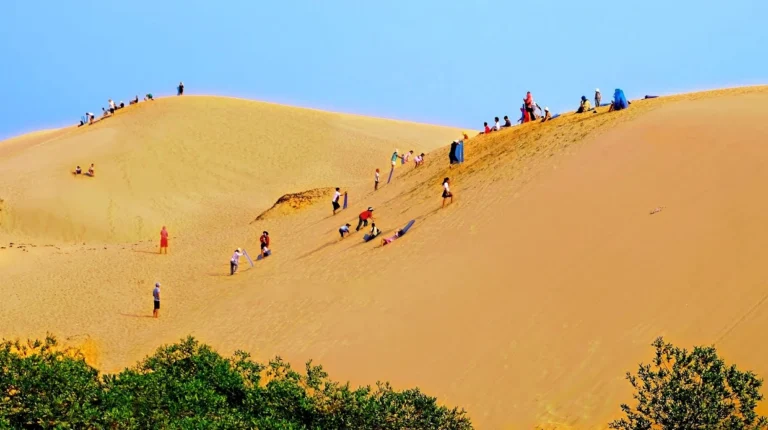
Stepping away from the water’s edge for a change of pace, travelers can climb the nearby towering sand dunes or visit elevated viewpoints to take in a panoramic vista of the historic Nhat Le estuary. Looking down from above, the Nhat Le River meanders gracefully like a soft silk ribbon flowing into the vast ocean, marking a site that witnessed centuries of struggles to defend the nation. Standing in the brisk sea breeze and gazing out across the boundless horizon brings a profound sense of calm. It is a wondrous intersection of majestic nature and thousand-year historical spirit, making one feel humble yet deeply proud while touching sacred milestones left by earlier generations.
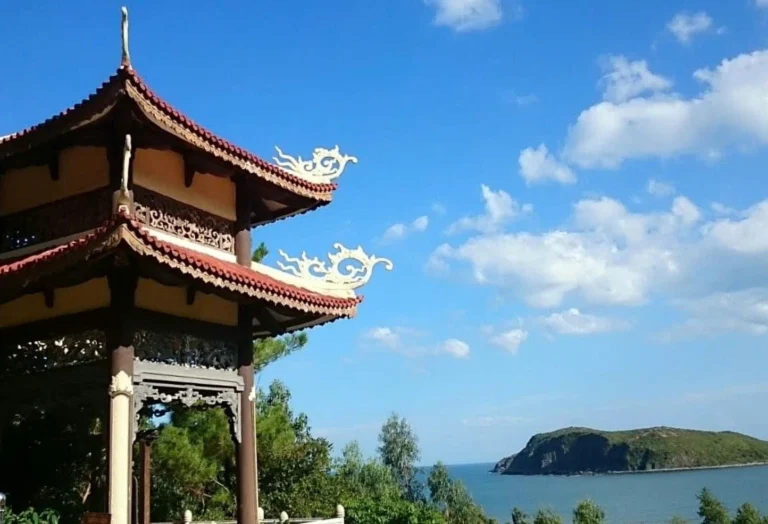
A cultural exploration here would be incomplete without soulful spiritual moments at ancient riverside and coastal shrines, or visits to the historic remains of Thay Rampart and Dong Hoi Citadel. Distant temple bells mingling with the gentle murmur of breaking waves feel like whispers from the past, reminding today’s generation of their roots and the timeless principle of honoring one’s heritage. Along the coastal fishing villages, visitors can listen to heartfelt ho khoan Le Thuy folk chants and chat with sincere, unassuming, yet warmly hospitable fishermen to gain deeper insight into the resilient rhythm of life of those who safeguard both sea and village.
Capping off a full day of discovery, Nhat Le Beach’s culinary paradise awakens every sense with renowned local specialties. Nothing compares to sitting by the breezy shore savoring a steaming, flavorful bowl of snakehead fish noodle soup (chao canh ca loc), fragrant grilled sea snake (den bien), or ultra-fresh seafood caught and prepared right on the spot. The rich sweetness of fresh catch paired with bold local spices creates a comforting meal that lingers long in memory. Nhat Le Beach is far more than a scenic stopover—it is a vivid, immersive experience that touches the deepest emotions of everyone who sets foot in Quang Binh.
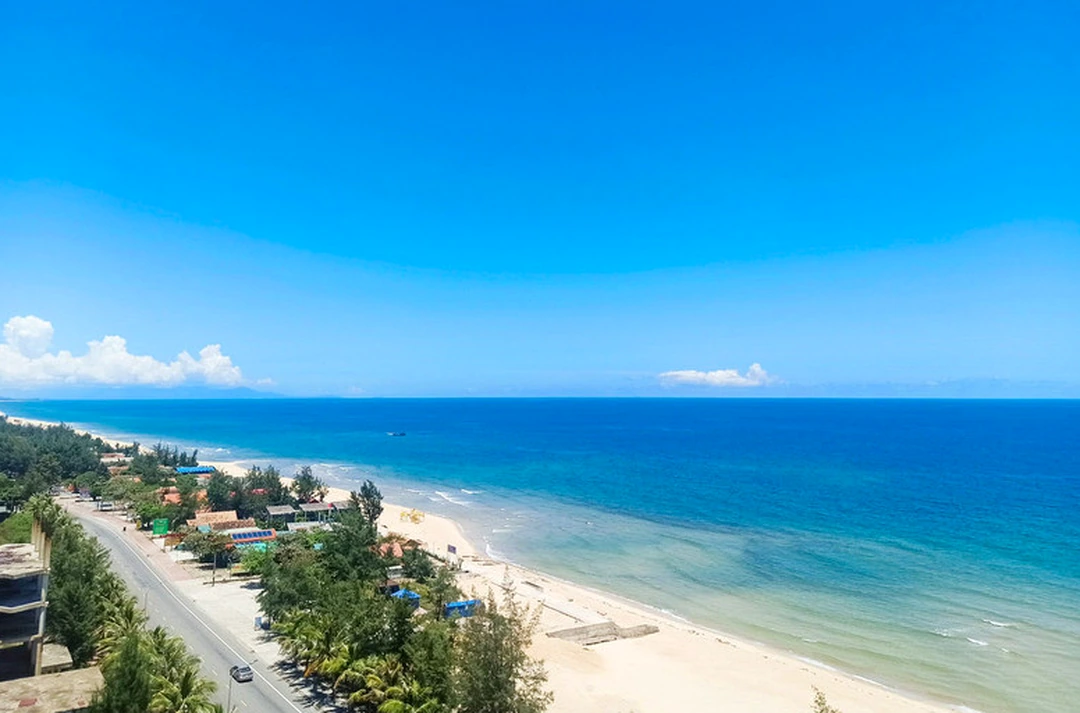
Welcoming travelers to sun-drenched, windswept Quang Binh, Nhat Le Beach continues to affirm its standing as one of Central Vietnam’s most alluring natural destinations. As a completely open public beach with unspoiled natural surroundings, the main swimming area and nearby attractions charge no entrance fee, making it effortless for visitors to explore, stroll, and swim freely year-round.
Regarding operating hours, the beach is open 24/7, though the best times of day for swimming and catching sunrise or sunset are from 5:00 AM to 8:00 AM and 4:00 PM to 6:30 PM. During the peak summer travel season, beachfront amenities, seafood restaurants, and lifeguard stations operate continuously from 6:00 AM to 10:00 PM to ensure safety and provide seamless dining and leisure services for visitors.
Getting to Nhat Le Beach is remarkably convenient thanks to upgraded, well-connected transport infrastructure. Departing from central Dong Hoi City, it takes only 5 to 10 minutes to cover the distance of less than 3 km. The best ways to get around are renting a motorbike in the city for young travelers seeking freedom, or taking a taxi or tourist electric cart for families with elderly relatives and young children. From the city center, simply follow Quach Van Trang Street, Nguyen Du Street, or cross Nhat Le Bridge to take in the poetic panorama of the historic estuary.
Alongside packing comfortable, active beachwear such as swimwear, sunglasses, a wide-brimmed hat, and sunscreen for enjoying the soft sands, travelers planning to visit spiritual sites, coastal shrines, or historic landmarks like Thay Rampart and Dong Hoi Citadel should dress modestly and respectfully, wearing clothing that covers shoulders and knees to honor local cultural traditions.
The best time of year to visit Nhat Le Beach is annually from April to August. During these months, while Quang Binh enjoys bright golden sunshine, the sea remains exceptionally calm with crystal-clear water and minimal storms—ideal for swimming, beach sports, indulging in fresh seafood, and combining your beach getaway with an exploration of the region’s rich historical and cultural heritage.
To enjoy a seamless getaway and take in the full beauty of Nhat Le Beach without worrying about arranging transportation, attraction tickets, or daily itineraries, travelers can opt for VDS Travel’s premium all-inclusive Quang Binh tour packages. Every itinerary is thoughtfully timed to capture photo spots at their most radiant moments, accompanied by knowledgeable local guides and top-tier hotel and dining standards.