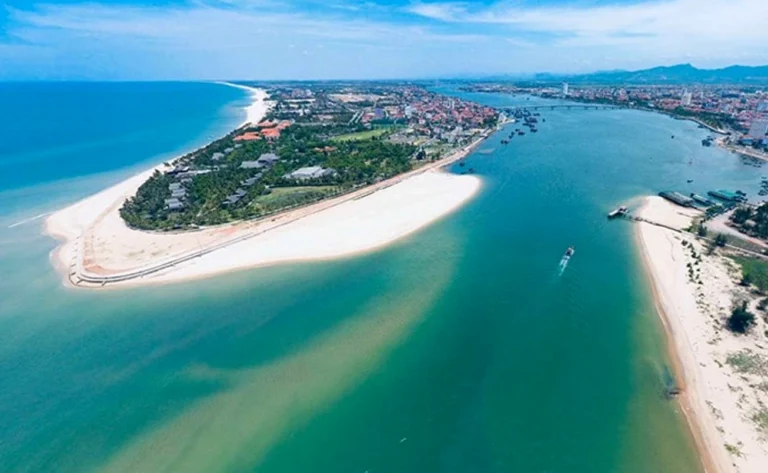
Nestled along Vietnam’s sun-drenched and windswept central coast, Quang Phu Sand Dunes stand out as a one-of-a-kind geological wonder in Quang Binh Province, situated right beside the poetic Nhat Le Beach in Quang Phu Commune, Dong Hoi City. Boasting a prime geographical position stretching from north to south, this site is not only a seamless convergence of the majestic Truong Son Mountain Range, the gently winding Nhat Le River, and the vast East Sea, but also a natural feng shui formation that held paramount strategic significance in the historic Thanh–Quang region. Its “mountain-backed, water-facing” terrain, featuring gleaming golden sand slopes reaching toward the open sea, creates a breathtaking, grand natural panorama where nature has sculpted a boundary of pride and resilience.
In terms of historical and geopolitical origins, the formation of this sand dune belt is tied to millions of years of accretion from marine sediment systems, coastal currents, and complex geological shifts across Vietnam’s feudal dynasties. According to rare historical records preserved in the Dai Nam Thuc Luc (Veritable Records of the Great South), Dai Nam Nhat Thong Chi (Unified Gazetteer of the Great South), and the Nguyen Dynasty Woodblocks, this area was once an untamed coastal strip inhabited by people of the Champa culture for centuries before being officially annexed into Dai Viet territory in 1069 under the reign of King Ly Thanh Tong. During the Early Le and Revival Le periods, when Lord Nguyen Hoang chose Thuan Hoa as his stronghold in 1558, ancient maps recorded the Quang Phu sand strip as the “Border-Guarding Desert”—a rugged terrain that served as a natural outpost during the turbulent Trinh–Nguyen conflicts.
The historical imprint of this land runs even deeper through its connection to the strategic vision of eminent historical figures, most notably the renowned military strategist Dao Duy Tu (1572–1634). Although the center of his military operations lay at the Thay Rampart and Nhat Le Rampart systems, his brilliant military doctrine of leveraging the treacherous terrain of Quang Binh’s coastal dunes as defensive fortresses indirectly made the Quang Phu sand area an integral part of the strategy to protect Dang Trong (the Southern Realm). Later, during the Nguyen Dynasty under Emperors Minh Mang and Thieu Tri, this shifting dune system received special attention from the imperial court and was meticulously documented on administrative geographical maps under Duc Vinh Canton, Quang Ninh District, Quang Binh Prefecture to manage coastal security and prevent wind-blown sand from encroaching on farmland.
Today, through scientific surveys conducted by the Vietnam Institute of Heritage & Cultural History Studies alongside recognition from national travel media, Quang Phu Sand Dunes hold value not merely as a living geological museum of natural formation, but also as a priceless cultural landscape heritage. Constantly shifting their contours with every sea breeze, their imposing elevation and golden hues transforming magically with the sunlight have turned this place into a symbol of vibrant vitality. That untamed, serene yet captivating beauty continues to affirm Quang Phu as a premier heritage coordinate, where a heroic past and a radiant present intertwine deeply within the heart of Central Vietnam’s heritage.

Dubbed one of the most magnificent shifting sand wonders in Central Vietnam, Quang Phu Sand Dunes rise like a monumental natural sculpture in the heart of sun-baked, windswept Quang Binh. Blessed with a distinctive layout where sandy slopes stretch right up to the turquoise shores of Nhat Le Beach, the area features a basin topography interspersed with towering dunes, some reaching peaks of over one hundred meters above sea level. Under the relentless erosion and deposition of East Sea winds combined with the intense thermal radiation characteristic of this fiery land, the dune surfaces continuously morph by the day and by the hour. Sweeping gusts of wind effortlessly etch delicate, undulating ripples across the sand, resembling shimmering ribbons of golden silk draped across the vast expanse of earth and sky. This natural architectural beauty lies not only in the grandeur of rolling peaks stretching endlessly into the distance, but is further elevated by the subtle harmony between the brilliant gold of fine sand, the emerald green of the ocean, and the deep azure of the wide-open sky—creating a picturesque landscape steeped in pristine, sweeping charm.
To capture the mystical and magnificent beauty of this natural masterpiece on camera, seasoned photographers and travel journalists typically prioritize two ideal golden hours of the day. The first is at dawn (from 5:00 AM to 6:30 AM), when the first rays of the new day slant through the thin morning mist, bathing the smooth, untouched sand slopes in a warm pinkish-orange glow before a single footprint marks the surface. The second is at dusk (from 5:00 PM to 6:00 PM), when the sun turns a deep crimson, casting magical glimmers of light across the landscape and transforming the entire dune field into a radiant, emotionally evocative stage of light.
Based on field surveys by professional photographers, visitors and photography enthusiasts should not miss the three most prized vantage points here. The first spot is right at the intersection between the foot of the dunes and the coastal vegetation, where your lens can capture the sheer vertical height of the massive dunes as a backdrop, making the subject stand out against the vast, majestic expanse. The second spot sits atop the highest peak of the central dune cluster, offering a sweeping panoramic view of the entire Nhat Le coastline and distant fishing villages, yielding wide-angle shots with extraordinary spatial depth. The third spot lies within the deep, sunken sand valleys, where soft S-curved ripples of sand meet the low-angled sunlight, creating artistic depth and striking visual effects for every viral-worthy frame.

Stepping onto Quang Phu Sand Dunes, travelers are immediately captivated by the vast, awe-inspiring expanse of a “desert in the heart of Central Vietnam.” Beneath the golden sunlight reflecting off smooth white-and-gold sand slopes that stretch all the way to the horizon, nature unveils an exquisite tableau that is both untamed and alluring. The thrill of conquering towering dunes through exhilarating sandboarding or challenging dune climbs brings an unmatched rush of excitement. Every step sinking into the warm, fine sand feels like a communion between humanity and nature, melting away the worries of daily life and making room for a surge of freedom and refreshment.
From the summits of the highest dunes, gazing out into the distance reveals a breathtaking sight as the entire deep-blue, tranquil Nhat Le Sea unfolds before your eyes. It is a moment where nature’s grandeur achieves complete harmony: on one side, the boundless ocean murmurs with rolling waves; on the other, sand dunes curve gracefully like ribbons of shimmering gold. Standing amid such wide-open space, visitors easily feel a profound sense of calm wash over their soul, realizing how small they are before the timeless beauty of creation. Many choose to linger until sunset, watching the sky shift into enchanting hues of purple and pink that paint the sand slopes—a visual feast that tugs at the heartstrings.
Beyond its overwhelming natural scenery, a journey to explore Quang Phu Sand Dunes also touches the depths of local culture through its spiritual sites and distinctive cuisine. Around the area, visitors can stop by sacred coastal shrines where generations of local fishermen have placed their faith, praying for safe voyages at sea and favorable weather. The quiet reverence of this maritime spiritual culture adds a contemplative, solemn dimension, enriching the travel experience with historical and human depth.
Wrapping up a dune-conquering adventure, one cannot overlook the renowned culinary flavors that captivate anyone who sets foot in sun-and-wind-kissed Quang Binh. After hours of energetic fun on the sand, visitors can savor the rich, fresh tastes of local specialties such as crispy Quang Hoa savory pancakes (banh xeo) served with fresh herbs, hearty snakehead fish thick noodle soup (chao canh), or freshly caught seafood hauled straight from nearby Nhat Le Sea. Everything comes together to create a vivid, fulfilling, and unforgettable real-life memory whenever travelers think back on Quang Phu.

Quang Phu Sand Dunes are among the most magnificent and compelling natural destinations in Central Vietnam, drawing large numbers of domestic and international travelers eager to explore and experience them. To ensure your journey to conquer this “desert in the heart of a coastal city” goes smoothly, completely, and memorably, the detailed travel guide below will be an indispensable companion.
Regarding opening hours, the sand dunes welcome visitors freely year-round with no strict fixed operating hours. However, the best times of day to visit are early morning (from 6:00 AM to 8:30 AM) or late afternoon (from 3:30 PM to 6:00 PM). During these windows, the sunlight is gentle and the weather is breezy rather than harsh, allowing you to comfortably admire the full gleaming beauty of the smooth sand slopes and savor magical sunrise or sunset moments over Nhat Le Beach.
Great news for travel enthusiasts is that admission to Quang Phu Sand Dunes is completely free. You are free to stroll around, take check-in photos, and explore the untamed natural landscape without paying any entrance fee. Visitors only need to pay when using optional recreational services such as renting sandboards or booking off-road dune buggies for a high-adrenaline ride over the towering slopes.
As for getting there, departing from downtown Dong Hoi City makes reaching the sand dunes remarkably convenient and quick. Simply follow Truong Phap Street running right along the coastline toward Dong Hoi Airport and Quang Phu Commune. The distance is roughly 8 to 10 km, taking about 15 to 20 minutes. You can flexibly choose from various modes of transport, including renting a motorbike for a scenic ride, taking a taxi, or hiring a private car, with smooth, wide paved roads that are very easy to navigate.
When packing clothing and personal gear, keep in mind the soft, sinking sand terrain and Central Vietnam’s sun and wind. Opt for active, streamlined outfits such as shorts, T-shirts, bright-colored swimwear, or bohemian styles for the most striking check-in photos. Because the dunes offer very little shade, be sure to bring sunscreen, sunglasses, a wide-brimmed hat, and a scarf. For footwear, walking barefoot on the fine sand is the most enjoyable experience, though you should bring flip-flops or lightweight sneakers to walk easily from the parking area deep into the dunes. Notably, since there are few sacred worship areas here requiring strictly formal attire, you simply need to maintain a respectful, courteous demeanor and strictly avoid littering to protect the pristine natural landscape of this sand heritage.

To enjoy a seamless getaway and take in the full splendor of Quang Phu Sand Dunes without worrying about arranging transportation, booking tickets, or planning itineraries, travelers can choose VDS Travel’s premium all-inclusive Quang Binh tours. Every itinerary is thoughtfully designed to optimize photo-op timing when the scenery is at its most radiant, accompanied by knowledgeable local guides and top-tier hotel and dining standards.